 Cáo Studio
Home › Blog › Pre-Wedding & Elopement
Pre-wedding poses at Can Gio mangrove forest: ideas and shoot tips
By the Cáo Studio team · Hanoi & Saigon · 2026-11-02
Can Gio mangrove forest, 50 km south of Saigon, is a tidal wetland where brackish roots, still water and grey-green canopies offer moody, natural frames for pre-wedding photos. Sessions typically run 2–3 hours and work best at sunrise (5:30–7:30 am, tide-dependent) or late afternoon (4–5:30 pm). Couples should wear light, flowing fabrics—ao dai works beautifully here—sturdy shoes for wet sand, and accept that mud will touch hems and skin. We bring waterproof lighting and careful spotters because footing is treacherous and tidal pools shift. A pre-wedding shoot at Can Gio costs from a standard session rate; plan 4–6 hours total with transport time from the city. The risk: water levels, mosquitoes in June–August, and overcast skies that flatten shadow, so we scout the tide tables and check weather 48 hours before. Chat with us on WhatsApp
Why Can Gio mangrove works differently than studio or urban shoots
Can Gio isn't a manicured garden or beach resort. It's a working wetland—protected, wild, and ruled by tide time, not your schedule. We arrived for a dawn session at 5 am with a couple in traditional ao dai and found the main boardwalk submerged 40 cm deeper than our site scout five days earlier. That taught us to phone the park office (028 3768 5053) the night before to confirm water depth and access roads.
The difference shoots here is mood: you get asymmetry, reflected light off still water, roots that frame a couple's silhouette, and genuine solitude. No tourists, no staged garden props. The mangrove canopy creates soft, diffused light that feels rare in Vietnam's harsh noon sun. We've noticed couples here feel less "posed" because the landscape demands you move carefully, interact with terrain, and forget the camera for a moment. That's when the best frames happen.
Timing is everything. Morning shoots (5:30–7:30 am) catch cool air, mist rising off water, and golden-hour warmth without the 35°C peak. Evening (4–6 pm) gives you warm, angled light and lower tourist foot-traffic. But tide tables vary: we check the Ho Chi Minh tide forecast the night before and plan boardwalk routes around water depth.
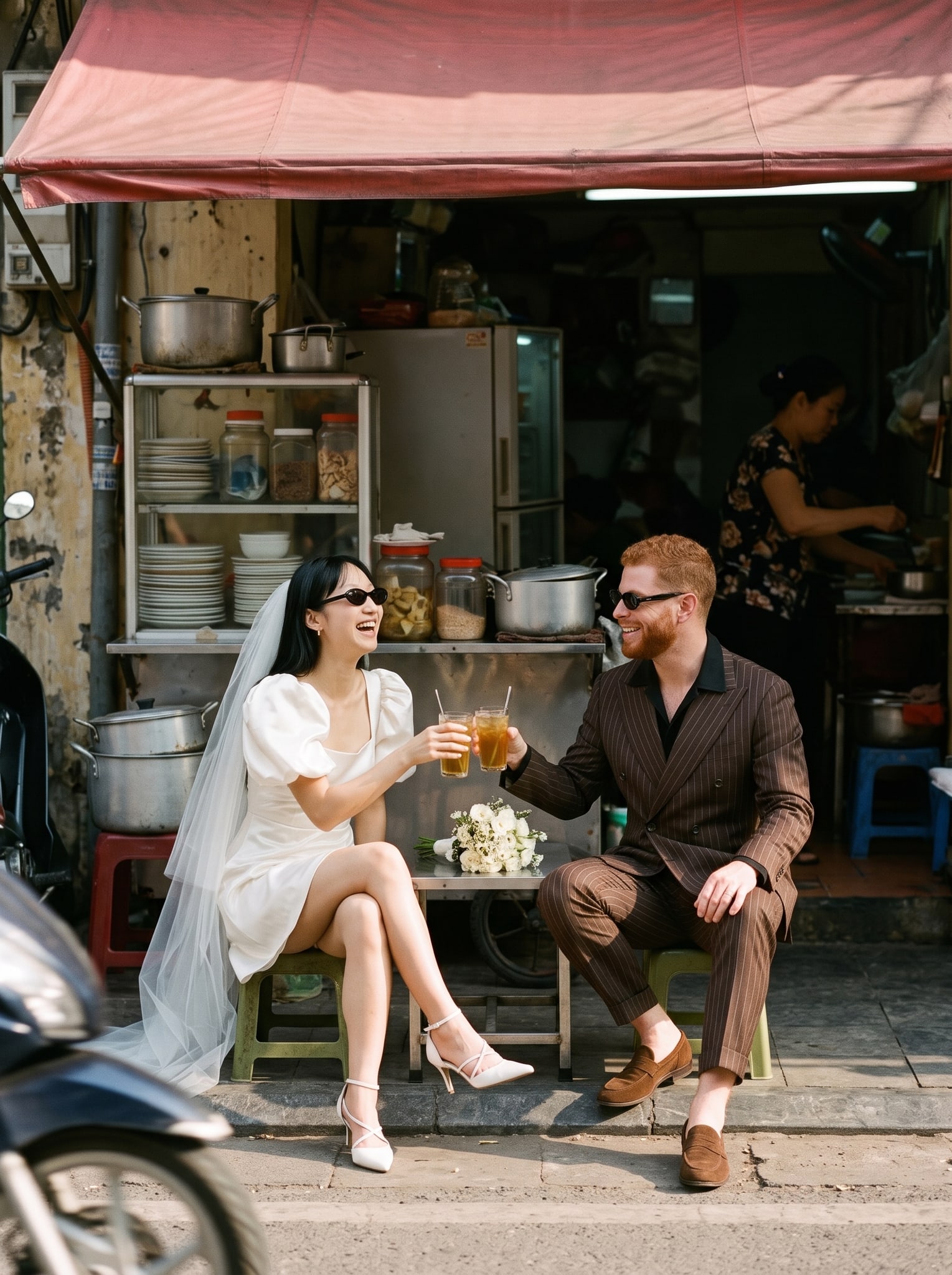
What poses actually work in mangrove terrain—and what fails
We've learned hard lessons. A couple in rented white wedding dress attempted to wade into knee-deep water for a "surrounded by roots" shot; she sank calf-deep in silt, the dress hemmed in mud, and we spent 20 minutes at a tourism station rinsing her. That image still exists—but it wasn't worth it.
Good poses here respect the environment. Walking toward the camera along a narrow boardwalk, him slightly behind, her hand back—that works because the mangroves crowd the frame naturally and you're moving, not standing. Sitting on a low root platform with water in the middle distance works if the couple is framed from waist up. Reflections in still pools work brilliantly at dawn, when water is mirror-flat; we position the couple facing the light, crouch low, and shoot across the water surface. By noon the water churns, reflections shatter, and the shot fails.
Poses that fail: standing chest-deep in water (hazard, and water temperature is cold), climbing mangrove roots (roots break, injuries happen), or long static holds in full sun (he'll be drenched in sweat in 90 seconds). We avoid "portrait sitting with legs dangling" unless it's on firm, dry boardwalk; couples slip, panic, and the energy vanishes.
What works is movement: walking, leaning into each other on a platform, her dress catching a breeze, his hand on her back. Three minutes of movement gives us 200 frames; five minutes of standing still poses gives 60. We say "walk 10 paces toward the water, stop, let him catch up, kiss her forehead" and then edit the best three frames. That's a stronger couple pose than a cold, pre-planned smile.
See packages and prices on vietnamphotoshoot.com
Timing, tide and light: when to shoot for the best light and safest footing
Can Gio operates on tide rhythm, not clock time. The park is accessible all day, but safe shooting happens in a narrow window. High tide floods boardwalks; low tide exposes mudflats, loses reflections, and crowds the landscape with exposed roots and debris. Mid-to-high tide (3–4 hours after low) is ideal: water fills pools enough to reflect light and frame roots, but boardwalks stay dry.
We've made a simple table based on 18 months of shoots:
| Tide phase | Water depth on main boardwalk | Light quality | Couple comfort | Best for |
|---|---|---|---|---|
| Dawn (5:30–7 am), mid tide | 0–20 cm | Soft gold, mist rising | High—cool air, quiet | Reflections, silhouettes, intimate poses |
| Late morning (10–11 am), high tide | 20–40 cm | Flat, desaturated | Medium—hot, glare | Wide shots, movement shots (avoid close-ups) |
| Afternoon (2–4 pm), falling tide | 0–10 cm | Harsh, directional | Low—exposed roots, mud, heat | Avoid; reschedule |
| Late afternoon (4–5:30 pm), low-to-mid tide | 5–25 cm | Golden, warm, angled | High—cool, golden hour | Backlit silhouettes, dress movement, romantic shots |
We check the Ho Chi Minh tide table (tide.me or government forecast) at booking and again 48 hours before. If tide peaks at 2 pm and you want a 3 pm shoot, you're on the tail of high tide—boardwalks will be flooded. We shift to 5 pm, catch the low-tide window, and often get bonus golden hour light.
Light in mangrove is tricky. Overcast mornings (common June–August) diffuse shadow beautifully but steal color. We carry a gold reflector and small off-camera flash for underlit couple faces. Backlit golden hour at 5 pm is stunning—roots glow, water catches warmth, ao dai fabric shines—but lasts maybe 25 minutes before it's gone.
What to wear and bring: fabrics, shoes, and gear that survives Can Gio
We always brief couples: this is a working wetland, not a resort. Wear what you'd sacrifice 10% of.
Fabrics that work: light linen, cotton, or silk ao dai (the traditional dress photographs beautifully and feels natural here). Flowing white or pastel fabrics catch light and water reflections. Avoid heavy satin or fully beaded dresses—they tangle in roots and silt ruins them fast. We've had a bride in a beaded ao dai refuse to walk near water after mud splashed; she was right to be cautious. Reserve full white gowns for studio or urban shoots, or plan a quick change on site if you bring two outfits.
Footwear: forget heels. We recommend flat sandals, water shoes, or going barefoot on dry boardwalk. One couple brought ivory heels; they sank into mud at the start, he carried her (romantic in theory, exhausting in practice for a 30-minute shoot). We switched her to borrowed sandals and shot the rest on foot. Bare feet work beautifully for reflection and boardwalk shots if the couple is comfortable.
Gear to bring or hire locally:
- Waterproof phone/camera bag or dry bag for a second outfit.
- Insect repellent (mosquitoes spike June–August, especially dawn and dusk).
- A light shawl or cover-up (morning air is cool; water spray chills skin).
- Makeup touch-up kit, because humidity at dawn fogs coverage within 30 minutes.
We often book makeup and hair at your hotel the morning of, so the couple arrives camera-ready rather than re-touching on-site in damp conditions.
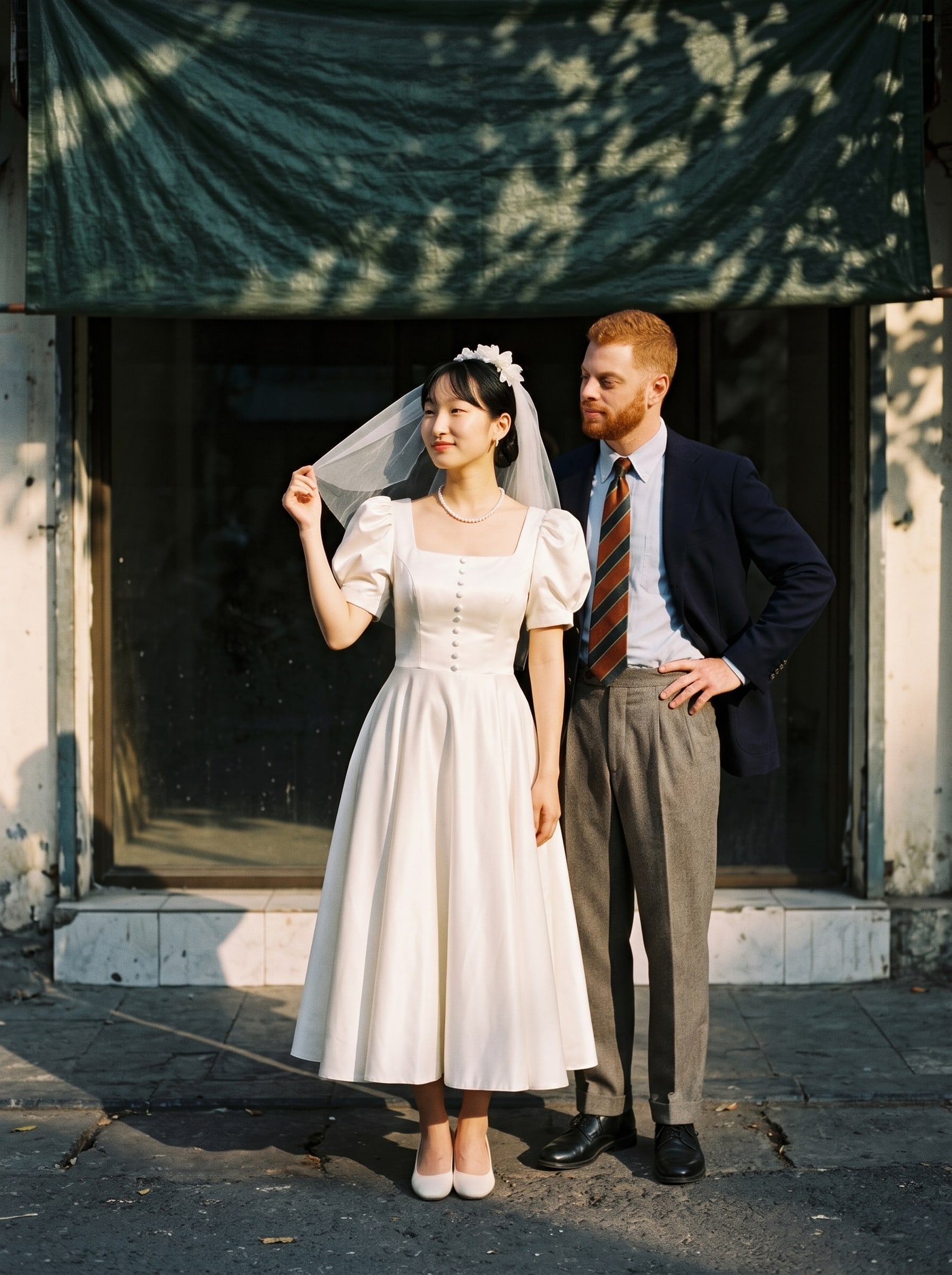
How we plan the session day: scout, backup locations, and what actually happens hour by hour
Here's how a Can Gio shoot day runs. We meet the couple at their hotel or a pickup point (central Saigon) at 4:45 am for a dawn shoot. 15 minutes for hair/makeup touch-up in the car, 45 minutes drive to Can Gio park entrance (we phone ahead to notify gates). We arrive at the main boardwalk around 5:45 am, park, and assess footing and tide. If water is higher than we scouted, we pivot to a secondary boardwalk on the east side—we've scouted five routes and always have a backup.
5:50–6:20 am: movement and walk shots along the main boardwalk. The light is warm but not direct; water is quiet. We take 150–200 frames here.
6:25–6:55 am: transition to a lower platform for close-ups, sitting poses, and reflection shots. The mist lifts, light hardens slightly. Another 150 frames.
7:00–7:30 am: golden hour intensifies, backlit silhouettes, her dress catching light. We move to the scenic viewpoint overlooking open water. This segment yields the strongest couple frames—soft, romantic, saturated.
7:40 am: we break, couple refreshes makeup, drinks water. Mosquitoes emerge; we apply repellent.
8:00–8:45 am: final outfit if they've brought a change (often a casual linen set), or continued poses in the original ao dai in different zones. Light is now neutral—good for candid walking and laughing shots. We wrap by 9 am as heat rises and the park fills with tourists.
Drive back to Saigon by 10:15 am. Total time on-site: 3 hours; total session: 4.5 hours with drive.
What goes wrong: access gates lock at 9 am on some days (we confirm by phone). Couples underestimate distance between boardwalk zones (we carry a lightweight wagon for shoes/bags, not to transport people—this is walking, not touring). One couple's makeup sweated off completely by 7 am (humidity near water is 95%); we shifted to natural-light, close-up shots that mask foundation and played to strengths instead.
Comparing Can Gio to other pre-wedding locations: when mangrove is right, and when it isn't
Not every couple should shoot at Can Gio. We help couples decide.
Can Gio mangrove is ideal if: you want moody, unconventional frames; you're comfortable in natural, muddy terrain; you have time for an early start (pre-wedding schedules are tight); your dress can survive mud and water spray; you're okay with a longer session (travel adds 1.5 hours). It's perfect for couples who want their pre-wedding to feel intimate and wild, not ornate.
Can Gio doesn't work if: you're in a heavy beaded gown and won't risk it; you need a quick in-and-out session; you dislike insects or mud; you have mobility limits (boardwalks are uneven and slick); you're shooting in peak rain season (June–August water levels surge, and mist obscures light).
Alternatives: Ninh Binh (limestone cliffs, terraced rice, cleaner access) suits elegant or adventurous couples and shoots well midday without mud risk. Central Hanoi temples and French colonial villas work for classic portraits and formal ao dai. Hoi An's lantern town, river, and tailor shops suit couples wanting color and cultural texture. Beach shoots at Phu Quoc work for casual, golden-hour couples who don't mind salt and sand.
We've booked all of these, and our advice: if you love silence, reflection, and raw natural light, Can Gio is unmatched. If you need predictability and a quick turnaround, choose elsewhere.
What to check before booking a Can Gio pre-wedding session with any studio
Before you commit, ask your photographer:
- Tide data: Do they check tide tables before locking in your time? If they say "tide doesn't matter much," find another studio. We reschedule around tide; it's not optional.
- Backup location: If your primary boardwalk is flooded or overcrowded, do they have alternate routes? We scout five zones; most studios scout one.
- Makeup durability: Will they use waterproof makeup and touch-up gear for humidity? We switch to powder, waterproof mascara, and matte lipstick at Can Gio. Standard studio makeup fails.
- Gear for water: Do they carry waterproof camera bags, reflectors, and off-camera lighting? Muddy footing and glare off water demand more gear than a park shoot.
- Transport and timing: Is transport included or separate? How many hours on-site vs. total session time? We quote total time, not just boardwalk hours.
- Outfit changes: If you're bringing two outfits, do they have a secure place to store the first while you change? We use a dry bag and lock.
- Weather contingency: If it rains heavily the night before and boardwalks are flooded, can you reschedule without penalty? Ask their policy upfront.
- Final frame count: How many edited frames do you get? We deliver 80–120 edited shots from a 3-hour Can Gio session (vs. 150–200 from a longer studio shoot). More time ≠ more keepers at Can Gio; terrain and light narrow the window.
How to book a Can Gio pre-wedding shoot with Cáo Studio
Our pre-wedding and elopement package includes scout visits, tide timing, waterproof gear, and all the logistical planning we've described. We offer full-day sessions and multi-location shoots that combine Can Gio morning light with an evening studio or urban backdrop. We can also arrange a couple photoshoot elsewhere if you prefer a lower-risk alternative, or combine a mangrove session with a special concept shoot for thematic depth.
Chat with us on WhatsApp or visit the booking site to discuss timing, outfit ideas, and whether Can Gio fits your vision. We'll share tide forecasts, weather, and backup plans before you pay a deposit. Our Saigon studio can coordinate transport, hair and makeup if you need it, and we deliver edited frames within two weeks of the shoot.
FAQ
How much does a Can Gio pre-wedding shoot cost compared to a studio session?
Can Gio shoots are priced the same as our standard pre-wedding packages—cost depends on session length (3–6 hours) and team size, not location. The main difference is scout fees and transport, which we cover in our package planning. Check the pre-wedding package page for options.
What's the best season to shoot at Can Gio?
September–May (cool season) is ideal. June–August brings heat, monsoon rain, and peak mosquitoes. Morning shoots (5:30–7:30 am) in any season work best for light and footing, but October–November and January–March give the most stable weather and comfortable heat.
Can we shoot Can Gio in evening light instead of dawn?
Yes, evening (4–6 pm) gives golden hour and slightly lower tourist traffic. Trade-off: dawn mist and reflection are gone. Both work; dawn feels more romantic and intimate, evening is warmer and more social. We've done both and both deliver strong frames.
Do we need to hire a local guide at Can Gio, or can we just show up with our photographer?
The park requires visitors to use marked boardwalks (no off-trail shooting). You don't need a separate guide if your photographer knows the terrain. We've scouted Can Gio multiple times and navigate the boardwalk zones independently. If you hire a stranger as a guide, they won't know photographer-friendly spots and may slow you down.
What happens to our ao dai or dress after a muddy Can Gio shoot?
Mud washes out with cool water immediately after the shoot. We rinse hems and any splashed fabric before we leave the park. Salt water stains fade with rinsing and don't set if addressed the same day. Bring a change of footwear and a dry bag for muddy items. Most ao dai and linen dresses rinse cleanly; beaded gowns need professional care afterward.
How do we keep makeup intact in Can Gio humidity?
We use waterproof mascara, powder foundation instead of liquid, matte lipstick, and set everything with fixing spray before you arrive. Touch-ups happen every 45 minutes (we carry blotting papers and powder). By hour two, light makeup always fades in 95% humidity—we work with it, shooting close-ups early and wider shots later when touch-up is more visible.
Can we shoot Can Gio if I'm pregnant or have mobility limits?
Boardwalks are uneven, sometimes slick, and 2–3 km of walking is typical. If you have limited mobility, we can shorten the session to one or two zones and focus on seated or standing poses on stable platforms. Chat with us first to discuss your comfort level, and we'll plan accordingly—Can Gio may not be ideal, but we can make it work.
Do you offer a photo session that combines Can Gio morning with another location for evening?
Yes. Our pre-wedding package includes multi-location shoots. We can do Can Gio at dawn, break for lunch/rest in Saigon, then shoot an urban or cultural site (Saigon temples, French villas, riverside) in late afternoon. That's a full 6–7 hour day and yields 180+ edited frames across diverse backdrops.
Pre-Wedding & Elopement
Inclusions, prices and booking are on our booking site.
FAQ
How much does a Can Gio pre-wedding shoot cost compared to a studio session?
Can Gio shoots are priced the same as our standard pre-wedding packages—cost depends on session length (3–6 hours) and team size, not location. The main difference is scout fees and transport, which we cover in our package planning. Check the [pre-wedding package page](/go/pre-wedding-photoshoot) for options.
What's the best season to shoot at Can Gio?
September–May (cool season) is ideal. June–August brings heat, monsoon rain, and peak mosquitoes. Morning shoots (5:30–7:30 am) in any season work best for light and footing, but October–November and January–March give the most stable weather and comfortable heat.
Can we shoot Can Gio in evening light instead of dawn?
Yes, evening (4–6 pm) gives golden hour and slightly lower tourist traffic. Trade-off: dawn mist and reflection are gone. Both work; dawn feels more romantic and intimate, evening is warmer and more social. We've done both and both deliver strong frames.
Do we need to hire a local guide at Can Gio, or can we just show up with our photographer?
The park requires visitors to use marked boardwalks (no off-trail shooting). You don't need a separate guide if your photographer knows the terrain. We've scouted Can Gio multiple times and navigate the boardwalk zones independently. If you hire a stranger as a guide, they won't know photographer-friendly spots and may slow you down.
What happens to our ao dai or dress after a muddy Can Gio shoot?
Mud washes out with cool water immediately after the shoot. We rinse hems and any splashed fabric before we leave the park. Salt water stains fade with rinsing and don't set if addressed the same day. Bring a change of footwear and a dry bag for muddy items. Most ao dai and linen dresses rinse cleanly; beaded gowns need professional care afterward.
How do we keep makeup intact in Can Gio humidity?
We use waterproof mascara, powder foundation instead of liquid, matte lipstick, and set everything with fixing spray before you arrive. Touch-ups happen every 45 minutes (we carry blotting papers and powder). By hour two, light makeup always fades in 95% humidity—we work with it, shooting close-ups early and wider shots later when touch-up is more visible.
Can we shoot Can Gio if I'm pregnant or have mobility limits?
Boardwalks are uneven, sometimes slick, and 2–3 km of walking is typical. If you have limited mobility, we can shorten the session to one or two zones and focus on seated or standing poses on stable platforms. Chat with us first to discuss your comfort level, and we'll plan accordingly—Can Gio may not be ideal, but we can make it work.
Do you offer a photo session that combines Can Gio morning with another location for evening?
Yes. Our [pre-wedding package](/go/pre-wedding-photoshoot) includes multi-location shoots. We can do Can Gio at dawn, break for lunch/rest in Saigon, then shoot an urban or cultural site (Saigon temples, French villas, riverside) in late afternoon. That's a full 6–7 hour day and yields 180+ edited frames across diverse backdrops.
More from the team
Boho pre-wedding photoshoot in Vietnam: Hanoi, Saigon, Hoi An
Boho pre-wedding shoots mix romantic, free-spirited aesthetics with Vietnam's landscapes and heritage sites. We run full-day sessions in three cities, handling styling, makeup, location scouts and edits.
Avoid crowds at Hoang Su Phi rice terraces: timing for wedding shoots
Hoang Su Phi's terraced landscape draws couples and tour buses in equal measure. We show how to shoot there alone, when to arrive, and what to arrange with us before you go.
Photography rules at Con Dao beaches: permits, drones and what to check
Con Dao's beaches demand prep before you shoot—permits, drone zones and tide timing all affect your day. We share what the Cáo Studio team verifies on every booking.