 Cáo Studio
Home › Blog › Pre-Wedding & Elopement
Pre-wedding poses at Hanoi French Quarter: what we shoot
By the Cáo Studio team · Hanoi & Saigon · 2026-11-02
The French Quarter (Hoan Kiem district, central Hanoi) is one of our most-booked pre-wedding locations, famous for its yellow shuttered buildings, narrow streets, and soft morning light. A typical session runs 2–3 hours; we arrive before 8 a.m. to avoid tour groups, shoot 200–400 frames, and focus on intimate couple poses near the Old Quarter's quieter lanes (Hang Trong, Hang Bac, Ta Hien's southern end). The backdrop includes crumbling stucco, wrought-iron railings, and leafy corners—perfect for both formal and playful shots. Cáo Studio books these sessions year-round, though March–April and September–October offer the clearest light and coolest temperatures. Most couples combine a French Quarter session with another location (a pagoda, a lake, or an ao dai change) in the same day. Ask us for a quote on WhatsApp before you book—timing, crowd control, and weather all affect session structure. Chat with us on WhatsApp
What light do the yellow walls actually give us?
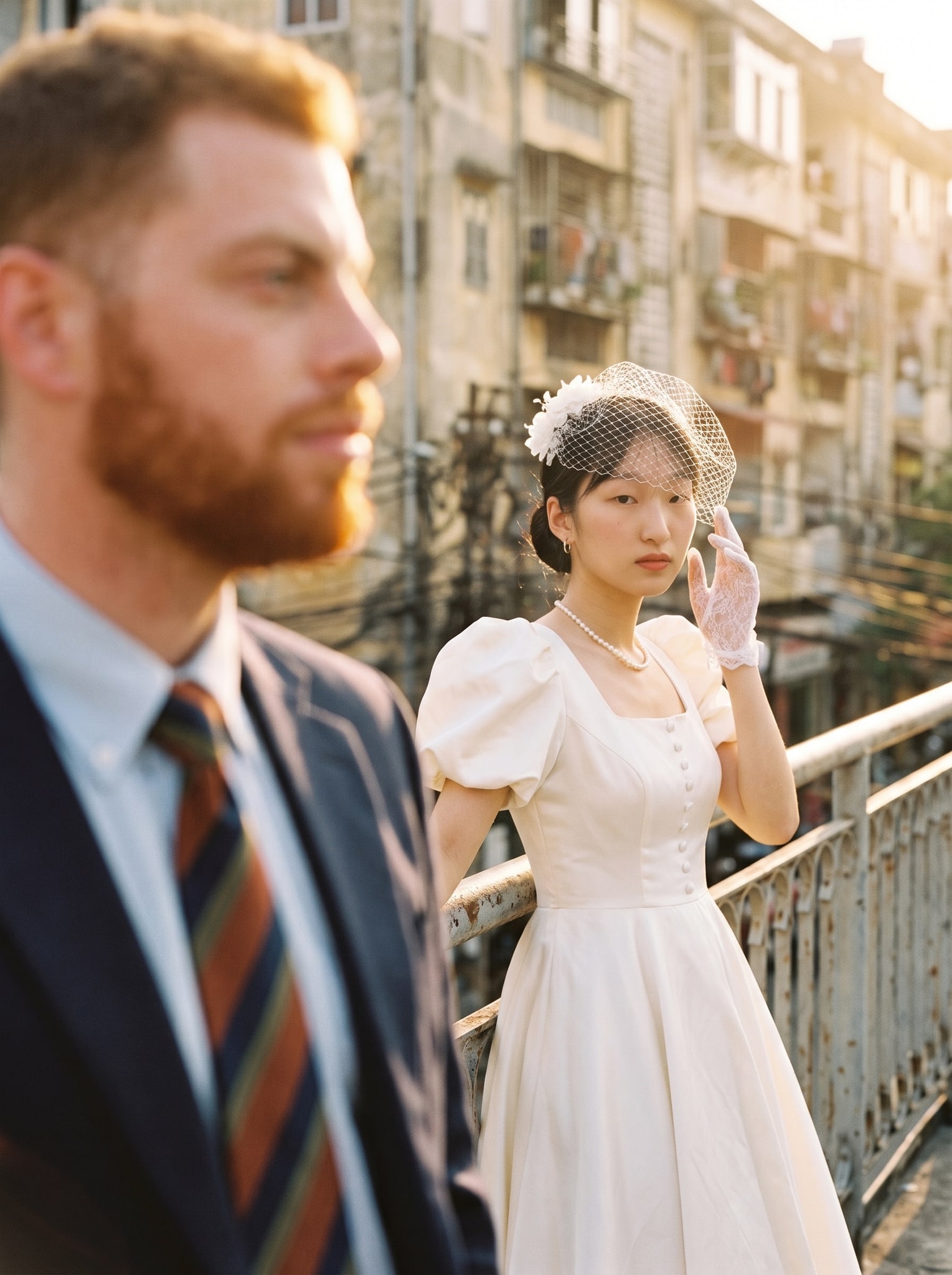
The French Quarter's signature yellow (and peach, cream, and rust) stucco acts as a natural diffuser and warm reflector. On clear mornings, we position couples against unlit walls to let diffused light from the street catch their faces—no harsh shadows across the eyes. By 10 a.m., direct sun bounces off the narrow lanes and creates patchy, contrasty light that works for silhouettes and backlighting but is harder for clear portraits. We've learned to shoot facing north (toward the Red River end of Hang Trong) after 9 a.m., because light comes softer from that angle. Couples often ask if the walls are too yellow; in reality, subtle color casts add character and are easy to adjust in post. The colonial geometry—arches, shuttered windows, iron railings—frames your couple naturally, reducing the need for props.
How do we handle the morning tour groups?
By 8 a.m., tour buses start dropping groups at the Old Quarter's entrance. We scout a quiet lane the evening before (usually Ta Hien's quieter southern section, or Hang Manh near the Ma May intersection), arrive with your couple 30 minutes early, and shoot the opening poses before foot traffic builds. If a tour group walks into frame, we pause, reposition, and resume—it costs 5–10 minutes but keeps the energy genuine. We never ask groups to move; instead, we shift down a lane or wait. By 11 a.m., the Quarter is packed; we either wrap the session, move to a second location (like the Hoan Kiem Lake shore, 5 minutes' walk away), or schedule makeup touch-ups while foot traffic peaks. Couples who arrive mid-afternoon (2–5 p.m.) often find fewer tourists but harsher light; the trade-off rarely works in their favor. Booking an early start isn't a luxury—it's how we guarantee the poses we promise.
See packages and prices on vietnamphotoshoot.com
Which pose styles work best here—formal, playful, or moody?
We've shot this location in every style; here's what the walls and light actually support:
| Pose style | Why it works | When to book it | What to check |
|---|---|---|---|
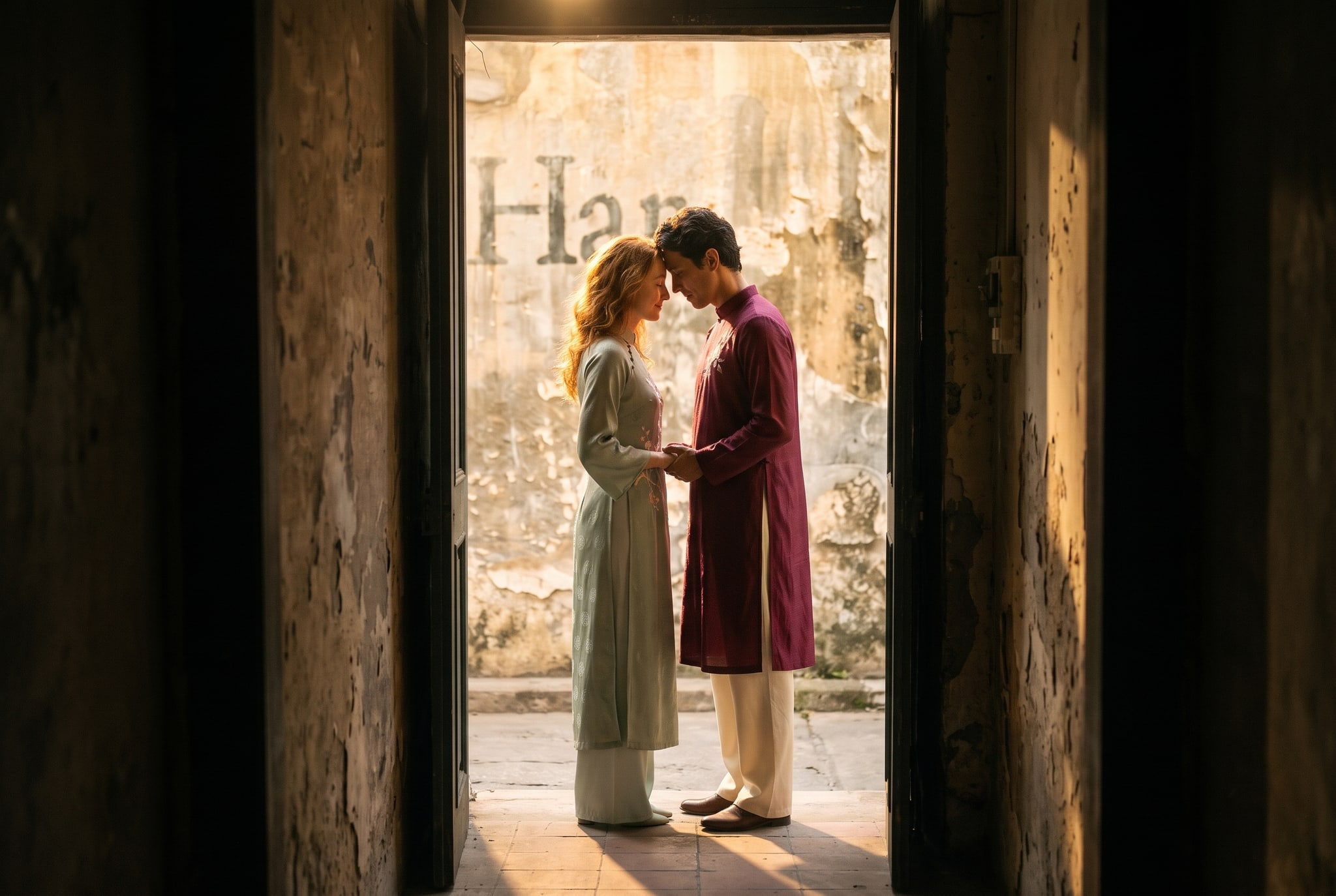
| Romantic + intimate (forehead-to-forehead, hand-holding detail shots) | Narrow streets, close walls frame tight compositions; warm stucco feels personal | Early morning, any season | Wear coordinated colors; avoid busy patterns that compete with the backdrop |
| Playful + candid (walking, laughing, looking away) | Movement hides any self-consciousness; colonial corners feel like a movie set | 7–9 a.m. before crowds; Sep–Oct light | Wear flexible shoes (many couples stumble on uneven cobbles); bring a comfort layer |
| Moody + editorial (strong shadows, backlighting, silhouettes) | Patchy midday light + yellow walls create high contrast; shutters frame strong geometry | 10 a.m.–12 p.m. or 4–5 p.m. | Expect bolder colors and grain; bring sunglasses or a sun hat for couple comfort between shots |
| Ao dai + formal | Silk reflects light beautifully against stucco; traditional dress looks iconic in colonial setting | Any time, but 7–9 a.m. light is safest | Ao dai rustles on cobbles; we carry a portable steamer; book our ao dai photoshoot package for styling help |
We typically mix two of these styles in one session—open with intimate shots in soft light, shift to playful movement as foot traffic picks up, and close with one moody statement image if the sun angle allows. Most couples are surprised how much we move during a session; the French Quarter isn't static. Bring water, comfortable shoes, and trust that what feels awkward in the moment usually looks natural in the frame.
Do we reshoot if the weather turns or light is flat?
Hanoi's humidity and occasional sudden rain are real risks, especially April–May and September. If rain starts within the first 30 minutes, we pause, find shelter (a colonial doorway, a café awning), and resume when it clears—sessions rarely stop entirely unless there's an electrical storm. We've learned to position couples in covered alleyways on gray days and use reflected light from wet stone, which can actually feel moody and intentional. If a session is rained out after just 5–10 frames, we reschedule at no additional cost; you only pay once for the full session. Flat, overcast light (rare but happens on industrial-haze days) is actually safe—no blown highlights, no squinting—but less "romantic." Couples often expect golden hour drama; cloudy mornings deliver clarity instead. We show you proofs the same day and always be honest: "We got strong images in this light, but we can reshoot if you'd prefer warmer tones." Most couples are happy with what the morning gave us. Chat with us before booking if you have weather concerns; we'll suggest a season and backup plan.
What should a couple wear to look their best here?
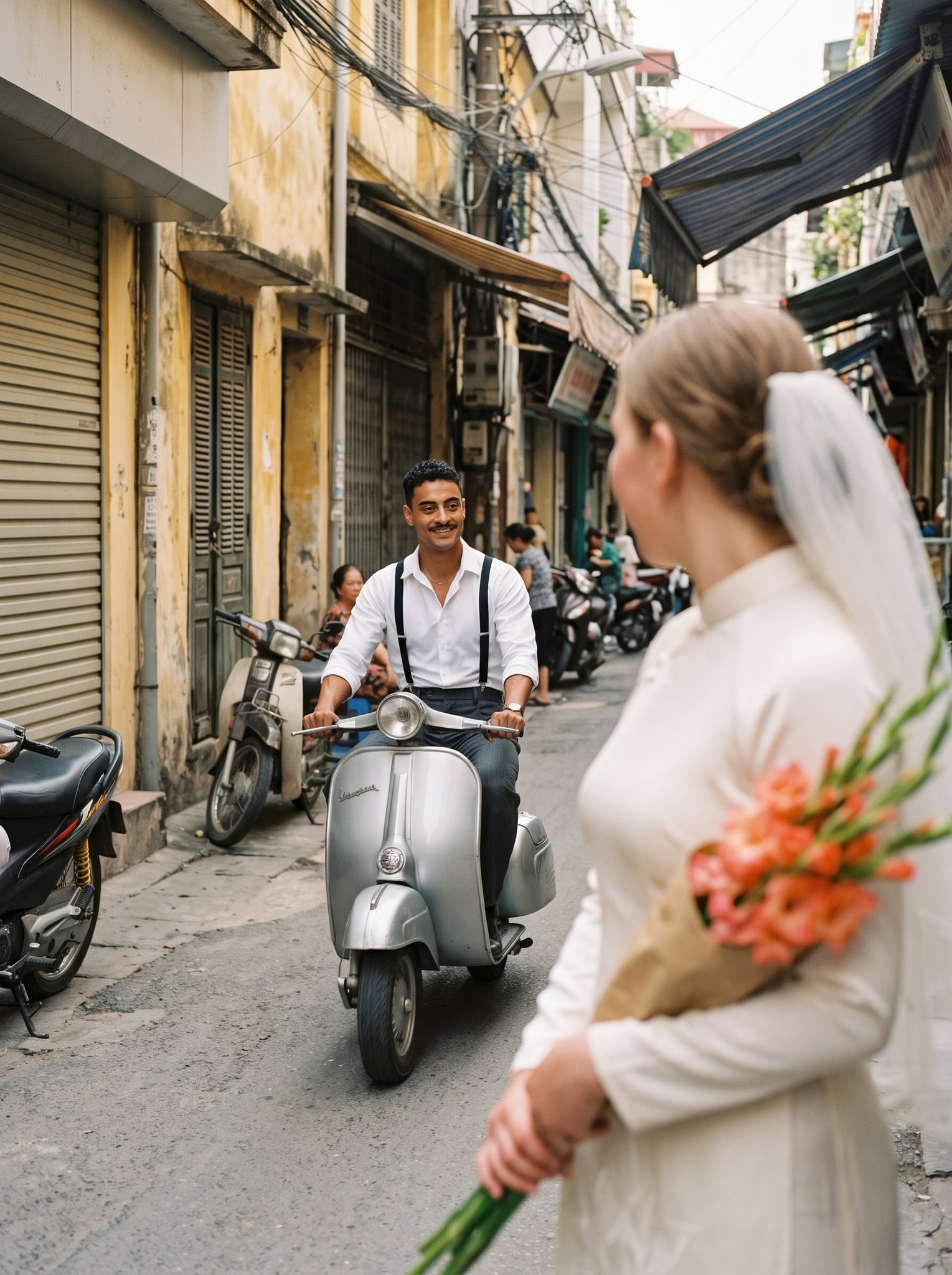
The French Quarter's warmth and history favor complementary colors over matchy outfits. We advise one partner in a neutral (cream, soft gray, pale blue) and the other in a richer tone (deep navy, forest, burgundy, blush)—the contrast reads better against yellow stucco. Solid fabrics work cleaner than busy patterns; busy prints compete with the building textures and date faster in photos. Flowy fabrics (linens, soft cottons, silks) move beautifully on the cobbled streets; structured, stiff outfits look tense in candid shots. Shoes matter: cobbles are uneven, so comfortable, flat or low-heel options keep couples relaxed and safe. We've had couples in heels slip on wet stone and get anxious; avoid that. If you're wearing an ao dai, allow extra time for changes—the lanes have limited private spots, and we usually step into a café or a nearby hotel lobby. Jewelry is subtle here: oversized statement pieces can catch light and distract, but simple rings, delicate necklaces, and watches read beautifully in close-up detail shots. Bring a light layer (a cardigan, a jacket) even in warm months; it adds visual depth and keeps you comfortable if there's a breeze near the lake.
See packages and prices on vietnamphotoshoot.com
How do we combine French Quarter with other Hanoi locations?
Most couples don't stop at the French Quarter alone. A typical pre-wedding session often includes the Quarter (2 hours), a quick change, and a second location—most commonly Hoan Kiem Lake shore (15-minute walk, perfect for softer, open-water light), Trang Tien Bridge (iconic red span, moody evening shoots), or the Hoan Kiem Lake's north end near Ngoc Son Temple. Some pairs add a third stop: a quiet pagoda like Quan Thanh or Tran Quoc for formal, contemplative shots. This three-location day typically runs 5–6 hours and is harder on energy than it sounds—outfit changes, travel between sites, and changing light all require flexibility. We usually suggest couples pick their two strongest locations, give themselves 30-minute buffer time between moves, and plan a meal or rest break mid-shoot. If you're considering a multi-location day, book our couple photoshoot package and discuss the route with us on WhatsApp; we'll map travel time and light windows to make sure each location gets its best moment.
What to check before you book a French Quarter session
- Timing: Book 7–9 a.m. for guaranteed light and low crowds. Avoid 11 a.m.–3 p.m. unless you specifically want editorial, high-contrast looks.
- Weather: Check the forecast 3 days before. March–April is warm and humid; September–October is cooler and clearer. Avoid late May–August (peak rain and heat).
- Outfit fit: Test your outfit on stairs and cobbles beforehand. Stiff fabrics and high heels cause posing tension.
- Backup plan: Ask us about a secondary location (lake, pagoda, bridge) in case light or crowds disappoint on the day.
- Makeup and hair: The humidity and movement demand long-wear makeup. Book our hotel makeup and hair service the morning of your shoot if you're not local.
- Digital proof timeline: Confirm when you'll see proofs (usually same day as a preview; full editing takes 2–3 weeks). Some couples want prints; ask about shipping to your country.
FAQ
Is the French Quarter busy in September or October?
Yes, but mornings (before 9 a.m.) are calm. We've shot dozens of pre-wedding sessions in these months; the light is golden and the temperature is cooler than summer. Afternoon is packed with tourists.
Do we need two outfits for the French Quarter, or can we wear the same clothes the whole time?
One outfit is fine for a 2–3 hour French Quarter session. If you're combining it with a second location, a change (especially into an ao dai or formal dress) refreshes the narrative and gives us a new visual direction.
How many usable photos do we get from a French Quarter session?
Typically 80–150 edited, delivery-ready images from a 2–3 hour session. Tour groups and rain sometimes reduce the frame count, but the quality stays consistent. We'll show you a preview before final editing.
Can we book a French Quarter session even if we're getting married outside Hanoi?
Yes. Many destination couples add a Hanoi pre-wedding day to their trip. Book at least 2 weeks in advance so we can coordinate with your other location shoots and travel.
What's the difference between a French Quarter session and a full pre-wedding package?
The French Quarter alone is a location focus (2–3 hours). A full pre-wedding package includes multiple locations, outfit changes, and 5–8 hours of shooting. Ask us on WhatsApp which fits your vision and timeline.
If we're not from Hanoi, how do we get to the French Quarter on shoot day?
Most hotels are within 10–15 minutes' taxi ride. We can recommend a driver or you can use Grab (the local ride-app). We always meet you at the location; you don't need transport before that. Allow 20 minutes buffer for traffic. Chat with us on WhatsApp
Pre-Wedding & Elopement
Inclusions, prices and booking are on our booking site.
FAQ
Is the French Quarter busy in September or October?
Yes, but mornings (before 9 a.m.) are calm. We've shot dozens of pre-wedding sessions in these months; the light is golden and the temperature is cooler than summer. Afternoon is packed with tourists.
Do we need two outfits for the French Quarter, or can we wear the same clothes the whole time?
One outfit is fine for a 2–3 hour French Quarter session. If you're combining it with a second location, a change (especially into an ao dai or formal dress) refreshes the narrative and gives us a new visual direction.
How many usable photos do we get from a French Quarter session?
Typically 80–150 edited, delivery-ready images from a 2–3 hour session. Tour groups and rain sometimes reduce the frame count, but the quality stays consistent. We'll show you a preview before final editing.
Can we book a French Quarter session even if we're getting married outside Hanoi?
Yes. Many destination couples add a Hanoi pre-wedding day to their trip. Book at least 2 weeks in advance so we can coordinate with your other location shoots and travel.
What's the difference between a French Quarter session and a full pre-wedding package?
The French Quarter alone is a location focus (2–3 hours). A full pre-wedding package includes multiple locations, outfit changes, and 5–8 hours of shooting. Ask us on WhatsApp which fits your vision and timeline.
If we're not from Hanoi, how do we get to the French Quarter on shoot day?
Most hotels are within 10–15 minutes' taxi ride. We can recommend a driver or you can use Grab (the local ride-app). We always meet you at the location; you don't need transport before that. Allow 20 minutes buffer for traffic. [📸 Chat with us on WhatsApp](https://wa.me/84338762340)
More from the team
Boho pre-wedding photoshoot in Vietnam: Hanoi, Saigon, Hoi An
Boho pre-wedding shoots mix romantic, free-spirited aesthetics with Vietnam's landscapes and heritage sites. We run full-day sessions in three cities, handling styling, makeup, location scouts and edits.
Avoid crowds at Hoang Su Phi rice terraces: timing for wedding shoots
Hoang Su Phi's terraced landscape draws couples and tour buses in equal measure. We show how to shoot there alone, when to arrive, and what to arrange with us before you go.
Photography rules at Con Dao beaches: permits, drones and what to check
Con Dao's beaches demand prep before you shoot—permits, drone zones and tide timing all affect your day. We share what the Cáo Studio team verifies on every booking.