 Cáo Studio
Home › Blog › Pre-Wedding & Elopement
Pre-wedding poses at Thanh Toan bridge: what we shoot, what works
By the Cáo Studio team · Hanoi & Saigon · 2026-11-02
Thanh Toan bridge sits in Hoi An's outskirts, a 18th-century Japanese bridge with a tile roof, narrow passages, and water reflections that suit pre-wedding frames. We've shot there dozens of times with couples booking our pre-wedding package: golden hour (5–6:30 p.m.) is least crowded, the bridge fits a 2–3 hour session, and most couples add an ao dai change because the timber tones match indigo fabric. Cost depends on session length and retoucher hours; ask us for a quote on WhatsApp. The bridge's tight spaces mean we favour close framing and detail shots—hands, fabric folds—over wide establishing shots. Crowds thin after 6 p.m., but light drops fast, so we plan arrivals by sunset time, not clock time.
Why couples love the bridge's timber and light geometry
The bridge's wooden beams and tile roof create natural frames within the frame. We shoot through vertical posts to isolate couple poses, using the water below for reflection work when the surface is still. The curved entry stairs give us height changes without leaving the structure. Light hits the timber at angles that require no flash or reflectors in the hour before sunset. At midday, the bridge becomes a silhouette against sky—useless for detail work, excellent for silhouettes if the couple wants that mood. We've learned not to fight the geometry: the narrow central passage means we position one photographer on the bridge, one below on the riverbank, so we catch the moment from two angles while the couple moves through once.
Which poses work on a 3-meter-wide timber structure?
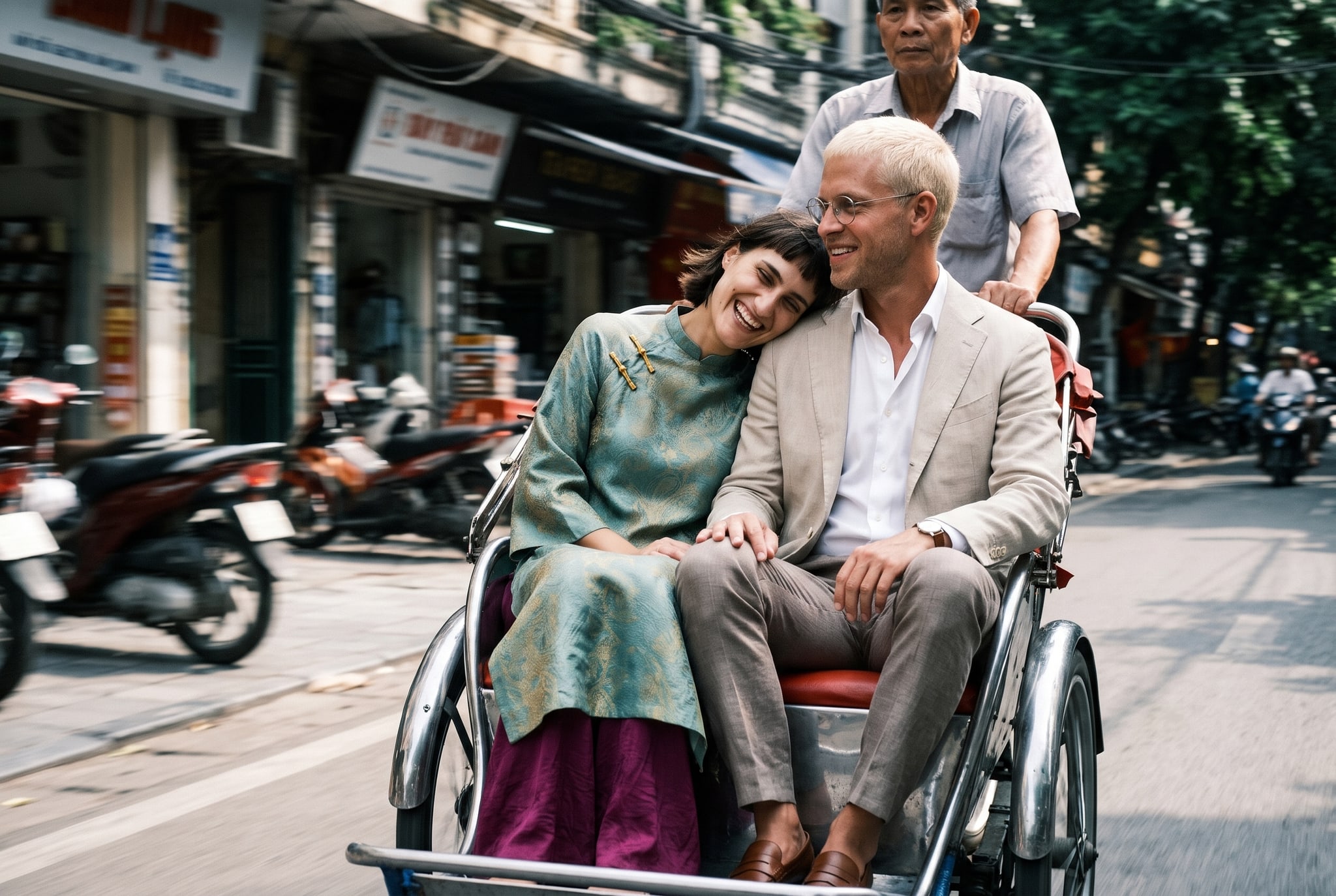
We don't use the sprawling poses that work in gardens. The couple stands close—facing the same direction, one behind the other, or side-by-side with hands overlapping. We frame sitting poses on the central bench: he behind her, both looking down at their hands or the water. Walking poses work best: we ask them to walk the bridge's length slowly, then loop back, so we get 20–30 frames of natural movement. Details: her hand on his chest as they pause; both looking at the water; his jacket open, her ao dai flowing. The bridge's railings mean we don't shoot jumping poses or wide-legged stances. We avoid poses where they face the camera dead-on—the bridge's width doesn't allow us to step far enough back to frame them comfortably without the wooden posts cutting their heads.
How does an ao dai change work on a bridge with no shelter?
Most couples bring an ao dai for a 15-minute change here. We scout a sheltered corner of the nearby old house (part of the bridge complex) where she can step behind a wall. The ao dai's long sleeves and high collar mean fewer reflector adjustments than Western dress; the indigo, emerald, or red fabric photographs warm against the grey timber. We time the change for the 20 minutes when light is still good but the main golden-hour rush is over—roughly 6–6:20 p.m. if sunset is at 6:45 p.m. The ao dai's tails and front panels create movement we encourage: walking poses capture the fabric in motion far better than standing. One of our stylists helps with the change and holds any Western dress or bags while we shoot. Couples often ask if they can do two ao dai changes; we usually suggest one here and a second somewhere with better shelter, like our Hanoi studio or a hotel for makeup and hair.
See packages and prices on vietnamphotoshoot.com
Timing: is early morning or golden hour better?
We always choose golden hour (5–7 p.m., depending on the season). Morning light at Thanh Toan comes from the east and is harsher; the bridge's open wooden construction means no soft shadows to flatter skin. Morning also brings tour groups and school children on bikes. By 5 p.m., foot traffic drops to almost zero, and the western sun hits the bridge's water-facing side, warming the timber and creating subtle backlighting on the ao dai or Western dress. Sunset time shifts: in winter (December–February) it's around 5:15 p.m.; in summer (June–August), 6:45 p.m. We tell couples to arrive 10 minutes early so we've scouted the light and cleared any locals before the couple's arrival. We've shot Thanh Toan in afternoon rain and overcast weather; cloudy skies reduce contrast but do flatten wrinkles and shine, so couples often prefer that texture.
What does a typical 3-hour Thanh Toan session include?
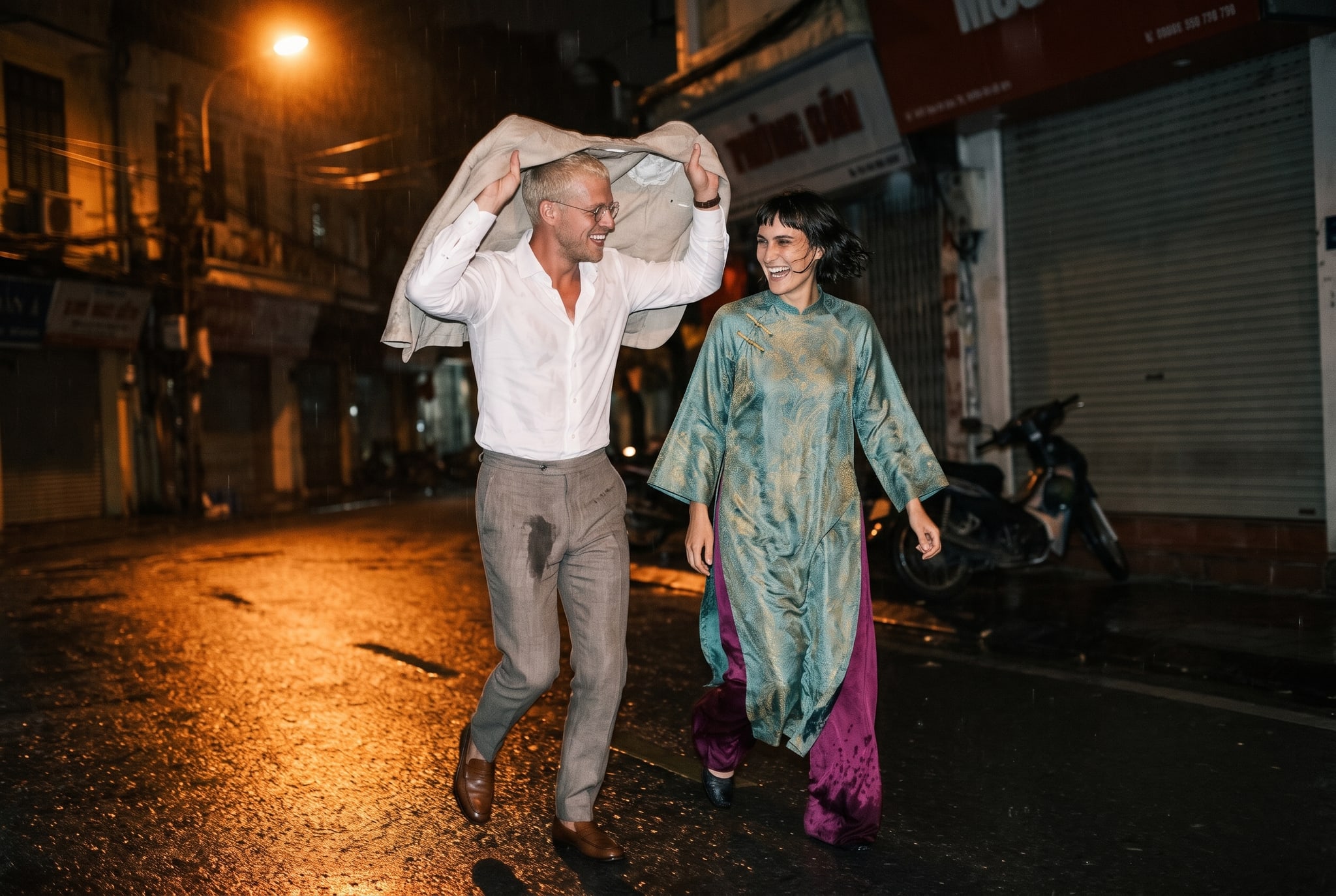
We book 3 hours because the 15-minute drive from Hoi An town, plus 20 minutes for an ao dai change, plus travel to nearby locations (Japanese Garden Bridge, rice paddies behind the village) uses up time. The first 90 minutes stay on and around the main bridge: walking, standing, sitting poses. We shoot 200–300 frames there. Then we either move to the adjacent Japanese Garden area (another 10 minutes) or to rice fields or local market scenes within the village. The third hour covers travel, a final ao dai series if time allows, and a slow walk-through of the bridge at magic hour to catch the last light. We include a makeup touch-up around the 90-minute mark—the humidity and river breeze require a powder reset. Most couples end at 7 p.m., which is still light enough to shoot details on the way back to town. If a couple books our full pre-wedding package, we often combine Thanh Toan with a second location in Hoi An (lantern old town, river quay) on the same day or a different day.
| Pose type | Best for which mood | Light requirement | Frames per pose |
|---|---|---|---|
| Walking through the bridge | Movement, candid joy | Golden hour, no overcast | 20–30 |
| Sitting on the bench, hands together | Intimacy, close detail | Soft sidelight (5–6 p.m.) | 8–12 |
| Standing, facing the water | Reflection, contemplation | Before sunset, still water | 5–8 |
| Standing close, one behind | Embrace, connection | Golden hour backlight | 10–15 |
| Ao dai detail shots (hands, fabric, veil) | Texture, dress showcase | Sidelight, no direct sun | 30–50 |
What to check before you book Thanh Toan
Light and weather: Always confirm sunset time with us; if you want golden hour, the hour before sunset matters more than clock time. Overcast days work and often look softer. Rain in the morning is fine; we need dry conditions by 5 p.m. Crowd timing: We don't shoot Thanh Toan on weekends after 4 p.m. because tourists pack the area. Weekday shoots (Monday–Friday) are calmer. Shelter and change space: Bring a light cardigan or shawl if you're changing from Western to ao dai; the old house nearby has walls, but no roof. Shoe backup: The bridge has gaps and slopes; bring flat shoes for safety, and we suggest photographing bare feet on the bench if you want a shot without shoes. Access for crew: Let us know if anyone in your party has mobility concerns; the bridge has steps and uneven timber surfaces. Other locations: If Thanh Toan is booked 3 hours, ask us about combining it with a second location; the Japanese Garden Bridge or rice fields nearby take 15–30 minutes and cost no extra. Ask us for a quote on WhatsApp.
Popular pose styles we've learned work best
We often suggest couples choose a pose aesthetic before the shoot. Candid-and-walking styles (she doesn't look at camera, both move naturally) suit Thanh Toan because the bridge's geometry creates movement naturally. Embracing styles (close, intimate, face-to-face) work on the bench or near the water's edge where backgrounds are simple. Dress-showcase styles (walking, fabric in motion, details large in frame) are popular with ao dai couples because the bridge's timber and water reflections emphasize the fabric. We've found that silhouette poses (backlit, outlines dark against water or sunset sky) are dramatic but only possible in the last 20 minutes of light; couples who want silhouettes need to arrive willing to stay until near-dark. We avoid overly posed styles (jumping, leg-around-waist, extreme dips) because the bridge's width and timber railings don't safely allow them.
Pages from our team you may need
FAQ
Can we shoot Thanh Toan in the morning?
Morning light is harsh and unflattering; the bridge faces east, so backlight is weak. Tour groups arrive by 8 a.m. We always recommend golden hour, 5–7 p.m., when light warms timber and crowds thin. Morning shoots are possible but require more reflectors and light direction work.
Is Thanh Toan one location or can we combine it with others?
Thanh Toan alone takes 2.5–3 hours. We often pair it with the Japanese Garden Bridge (10 minutes away) or rice paddies for a half-day pre-wedding session. Same-day multi-location shoots are standard; ask us about combined itineraries on WhatsApp.
How much space is there for an ao dai change?
The bridge itself has no shelter. The adjacent old house has a wall corner where couples change privately; no roof, so rain is an issue. Most couples change in 15 minutes and dry off quickly. If weather is uncertain, we reschedule the ao dai change to our Hanoi studio or hotel makeup service instead.
What if there are crowds when we arrive?
We scout the bridge 10 minutes before you arrive and ask any local visitors to step aside for 30–40 minutes. Weekdays are far quieter than weekends. If crowds persist, we shift to nearby side-angles or the Japanese Garden Bridge, which is 5 minutes away and always less busy.
Do you provide styling or just photography?
We handle the shoot only. For makeup and hair before the session, book our hotel makeup service. For styling advice (what ao dai colour suits sunset light, how to wear a veil), we guide you over WhatsApp before the shoot. Bring outfits ready to wear; we'll suggest poses that suit them.
How many frames will we get from a 3-hour session?
Typically 600–900 raw frames, which we review and deliver as 100–150 edited images. Thanh Toan's variety (bridge poses, water reflections, detail shots, possible second location) means we capture many keepers. Final count depends on whether you book add-on locations.
Pre-Wedding & Elopement
Inclusions, prices and booking are on our booking site.
FAQ
Can we shoot Thanh Toan in the morning?
Morning light is harsh and unflattering; the bridge faces east, so backlight is weak. Tour groups arrive by 8 a.m. We always recommend golden hour, 5–7 p.m., when light warms timber and crowds thin. Morning shoots are possible but require more reflectors and light direction work.
Is Thanh Toan one location or can we combine it with others?
Thanh Toan alone takes 2.5–3 hours. We often pair it with the Japanese Garden Bridge (10 minutes away) or rice paddies for a half-day [pre-wedding session](/go/pre-wedding-photoshoot). Same-day multi-location shoots are standard; ask us about combined itineraries on WhatsApp.
How much space is there for an ao dai change?
The bridge itself has no shelter. The adjacent old house has a wall corner where couples change privately; no roof, so rain is an issue. Most couples change in 15 minutes and dry off quickly. If weather is uncertain, we reschedule the ao dai change to our [Hanoi studio or hotel makeup service](/go/makeup-and-hair) instead.
What if there are crowds when we arrive?
We scout the bridge 10 minutes before you arrive and ask any local visitors to step aside for 30–40 minutes. Weekdays are far quieter than weekends. If crowds persist, we shift to nearby side-angles or the Japanese Garden Bridge, which is 5 minutes away and always less busy.
Do you provide styling or just photography?
We handle the shoot only. For makeup and hair before the session, book our [hotel makeup service](/go/makeup-and-hair). For styling advice (what ao dai colour suits sunset light, how to wear a veil), we guide you over WhatsApp before the shoot. Bring outfits ready to wear; we'll suggest poses that suit them.
How many frames will we get from a 3-hour session?
Typically 600–900 raw frames, which we review and deliver as 100–150 edited images. Thanh Toan's variety (bridge poses, water reflections, detail shots, possible second location) means we capture many keepers. Final count depends on whether you book add-on locations.
More from the team
Boho pre-wedding photoshoot in Vietnam: Hanoi, Saigon, Hoi An
Boho pre-wedding shoots mix romantic, free-spirited aesthetics with Vietnam's landscapes and heritage sites. We run full-day sessions in three cities, handling styling, makeup, location scouts and edits.
Avoid crowds at Hoang Su Phi rice terraces: timing for wedding shoots
Hoang Su Phi's terraced landscape draws couples and tour buses in equal measure. We show how to shoot there alone, when to arrive, and what to arrange with us before you go.
Photography rules at Con Dao beaches: permits, drones and what to check
Con Dao's beaches demand prep before you shoot—permits, drone zones and tide timing all affect your day. We share what the Cáo Studio team verifies on every booking.