 Cáo Studio
Home › Blog › Pre-Wedding & Elopement
Pre-wedding timeline: how many outfits do you really need?
By the Cáo Studio team · Hanoi & Saigon · 2026-11-02
Most couples bring three to five outfits to a pre-wedding shoot—one áo dài (traditional), one formal Western style, and one or two casual looks that reflect who they are. The real number depends on your shoot length (a half-day typically uses two to three outfit changes; a full day allows four to five), your vision (single location or city hopping), and comfort level. We've run pre-wedding shoots where a couple wore two dresses and felt rushed, and others where five carefully chosen pieces became a narrative arc across the images. Cáo Studio guides you through this conversation before booking—what story do you want to tell, and how many hours do you have? The biggest mistake is over-packing without a plan; the strongest shoots come from intentional choices. Chat with us on WhatsApp
Why does outfit count matter more than you think?
Each outfit change takes time we can't get back. On location, we're moving lights, resetting poses, checking focus—and your styling team is adjusting hair, touch-ups, and confidence. A four-hour shoot with four outfit changes means roughly 45 minutes per look if we account for location scouting and transitions. We've noticed that couples who arrive with three well-planned outfits and one backup actually finish happier than those who bring six "maybes." Quality beats quantity; each piece should feel like you, not a costume you're testing.
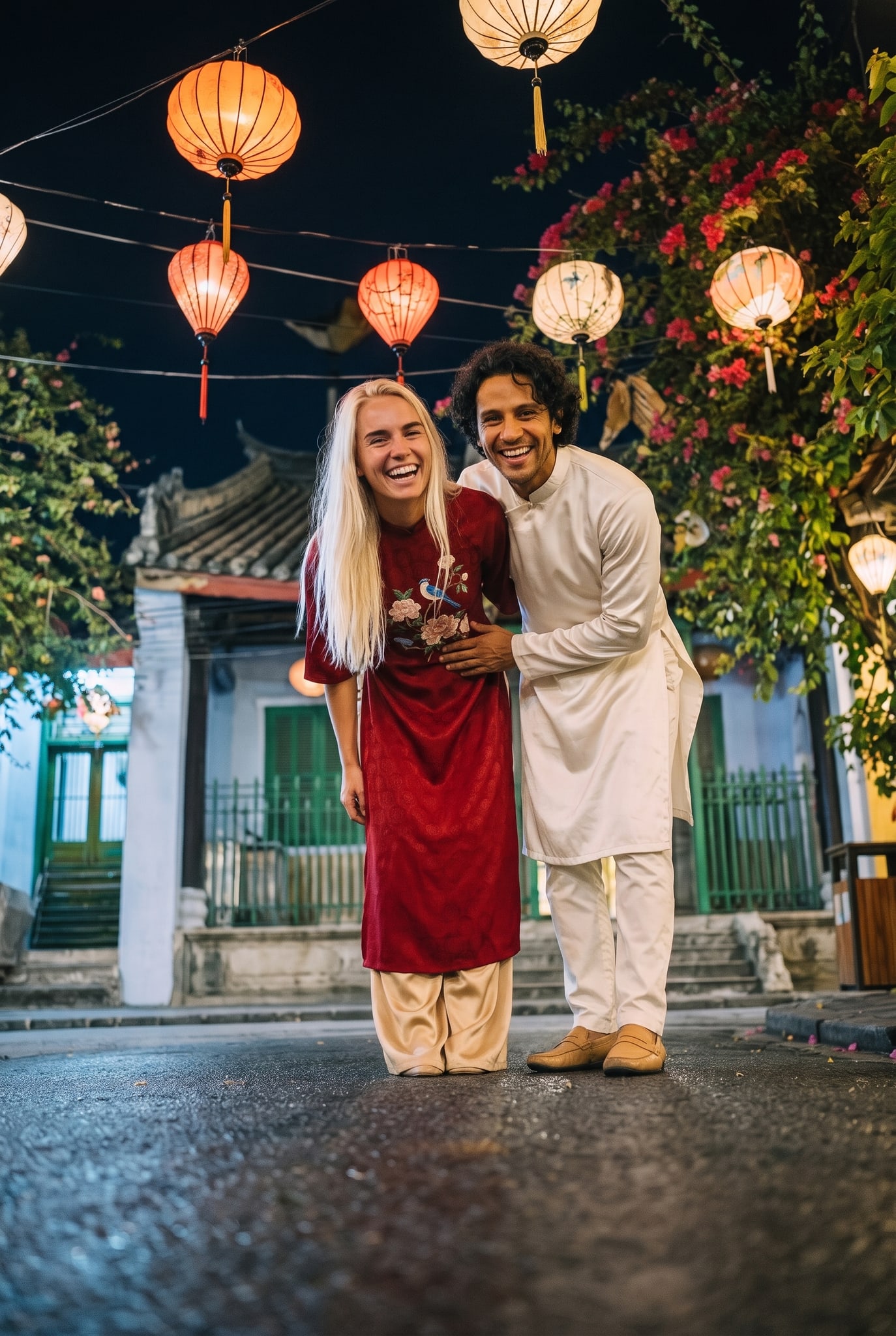
What does a typical day look like with outfit changes?
Hour 1–1.5: arrival, hair and makeup at your hotel or our studio (if you've booked makeup and hair), first outfit on. Hour 1.5–3: first location shoot, first outfit. Hour 3–3.5: travel to second location, outfit change (often in the car or a quiet corner—we always scout a private space beforehand). Hour 3.5–5: second location, second outfit. Hour 5–5.5: final outfit if doing a full day, or wrap if it's a half-day. On a full eight-hour shoot, you can comfortably fit three outfit changes plus a fourth if the styling is simple (same hair, just a different top). We've learned to warn couples: bathroom access and quick-dry fabrics matter more than you'd expect. Silk áo dài look incredible but wrinkle; cotton blends move faster.
See packages and prices on vietnamphotoshoot.com
How do location and season affect your outfit strategy?
Hoi An's ancient town in midday heat demands breathable fabrics; Ninh Binh's limestone cliffs need shoes you can walk in. Hanoi winter shoots (November–February) let you layer—think áo dài over a long-sleeve top, or a formal jacket over your dress. Saigon year-round heat means moisture-wicking foundations and makeup primers that hold. We've noticed that couples shooting in multiple locations often naturally plan four to five outfits because they want each place to look distinct in the album. A couple in Hoi An might do áo dài at the riverside, casual at a café, and formal at the temple—three looks, three stories. In contrast, a Hanoi studio shoot with a neutral backdrop lets you focus on fewer outfits and more pose variety. Ask yourself: are you telling a place story or a personality story? The answer shapes your wardrobe.
| Scenario | Outfit count | Why | Typical duration |
|---|---|---|---|
| Single location, half-day | 2–3 | Less travel time, more outfit depth | 4 hours |
| Two locations (city/nature mix) | 3–4 | One outfit per place + one repeat | 6 hours |
| Full-day city hopping (3+ spots) | 4–5 | Each location gets distinct energy | 8 hours |
| Destination shoot (Hoi An, Ninh Binh) | 3–4 | Travel time, heat, photo-walk balance | 6–8 hours |
| Studio + outdoor combo | 2–3 | Controlled + natural, clear styling shift | 5 hours |
What goes wrong when couples over-pack?
We've seen couples arrive with six outfits and only use two because decisions froze them up on the day. The energy shifts—you become focused on what you're not wearing instead of being present in what you are. Another real problem: mixed styling. You bring an urban streetwear vibe, a romantic dress, a formal gown, and a boho cover-up, but no clear through-line. Photos look scattered. Our stylists then spend energy trying to make it cohesive instead of letting your personality shine. We also notice that costume-y pieces—things you love in theory but don't actually wear—make couples feel stiff. The strongest pre-wedding photoshoots we run feature outfits the couple lives in: the dress they've already worn to an event, the suit they feel confident in, the casual jeans that are actually theirs. One more thing: luggage. If you're traveling to Vietnam for the shoot, packing five outfits on a 12-hour flight means wrinkled fabric when you arrive. We can iron and steam at our Hanoi or Saigon studios, but it costs time and effort. Three to four outfits, well-packed in a garment bag, saves stress.
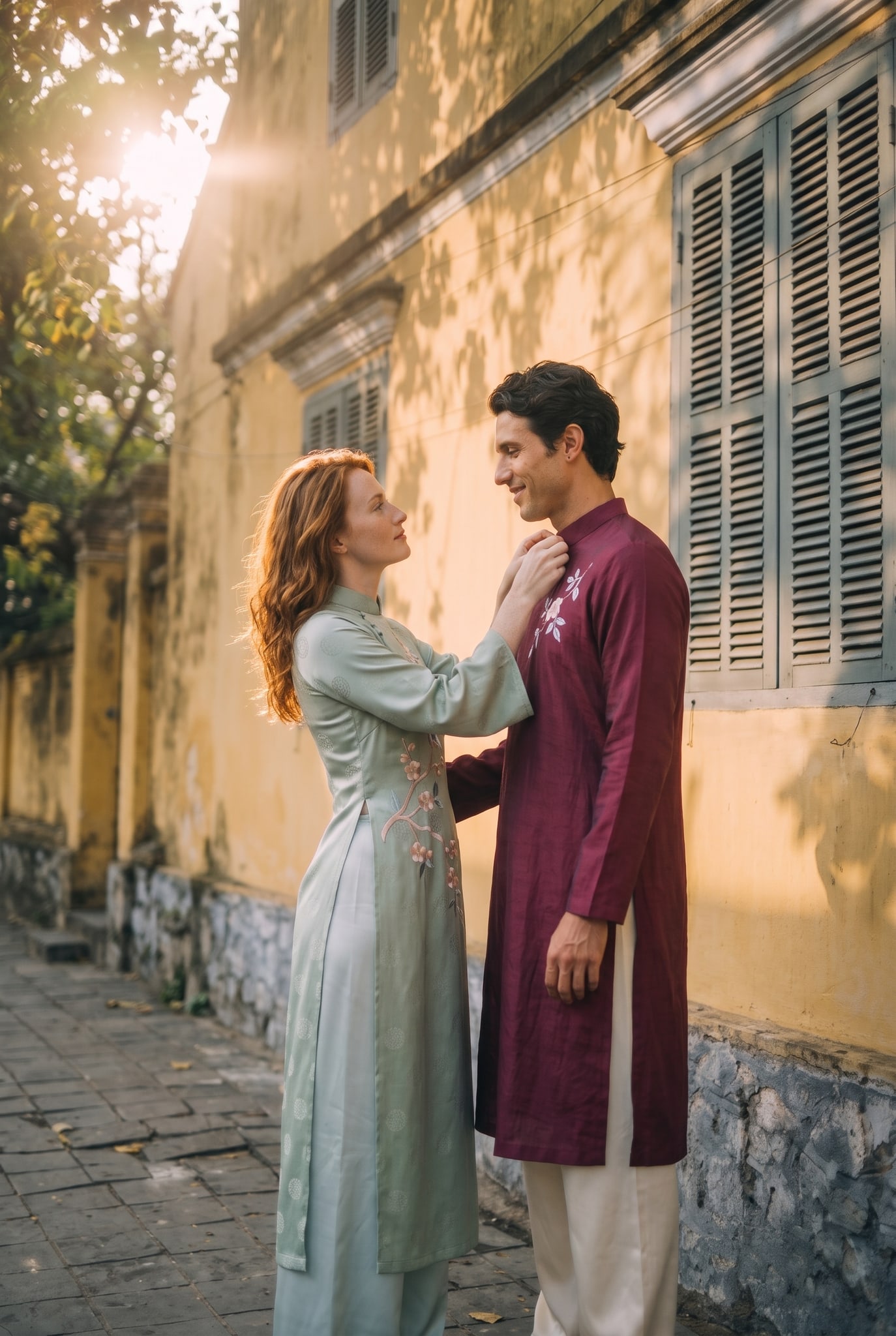
How do you choose between áo dài, Western formal, and casual?
This is the framework we walk couples through on WhatsApp before the shoot. Áo dài: one piece, always. It's woven into pre-wedding culture in Vietnam. Wear it if you're comfortable; if you're not, pick a style you love (classic silk, modern satin, trendy lace) rather than forcing a "traditional" version that feels foreign. Western formal (wedding dress, tuxedo, cocktail gown, suit): this is where couples often hesitate. Not everyone wants to wear what they'll wear on the actual wedding day. Some book a proposal and anniversary package if they want something lighter—a dressy jumpsuit, a tailored blazer, a midi in jewel tones. Casual: this is underrated. A couple in their favorite jeans, linen shirts, and sneakers can feel more "you" than any formal piece. We've seen casual outfits become the favorites in the final album because they capture genuine connection. The rule we use: two pieces should feel like a stretch (try something you've wanted to wear), and one should be pure comfort.
What should you check before finalizing your outfit list?
1. Fabric and fit: Try everything on. An áo dài that's too tight in the shoulders or a dress that's too long will distract you all day. We can tailor in Vietnam if needed—ask us on WhatsApp for recommendations in Hanoi or Saigon.
2. Undergarment plan: Visible panty lines and bra straps show up in photos. Sort this before arrival. Seamless options, or specific undergarments that match your pieces, matter.
3. Shoe count and comfort: You don't need five pairs of shoes, but you do need shoes you can walk in for an hour without pain. We scout locations on foot; if you're limping, photos feel tense.
4. Hair and makeup pairing: Does your updo work with all five outfits? Our stylists at makeup and hair sessions will ask this—some couples do one hair look and adapt makeup per outfit; others do two hair changes. Plan it together.
5. Backup plan: Bring one extra top or accessory that could work with multiple outfits. Weather, spills, and unexpected wrinkles happen. We once had a couple's dress catch on a temple step; a borrowed cardigan saved the final look.
6. Rental vs. purchase: If you're not wearing something again, ask about rental shops in Hanoi or Saigon. Many couples rent a second áo dài or a formal dress. Check sizing charts closely—Vietnamese sizing runs smaller than Western sizes.
See packages and prices on vietnamphotoshoot.com
Pages from our team you may need
FAQ
Can we bring more than five outfits to a full-day shoot?
Yes, but we'll only use three to four comfortably. Bring backup pieces for specific reasons (a second áo dài in a different color, or a rain backup), not extra options. We guide you on day-of based on light and energy.
Do we need a professional stylist for outfit choices?
Not required, but we recommend it if you're uncertain. Our makeup and hair team can offer styling advice. Many couples also hire a separate stylist or ask a trusted friend. We've seen all three work.
What if our outfits don't match the location vibe?
We help you restyle on the day. A formal gown at a casual café works if we find the right angle, light, and prop. But the better move is to think about location when choosing outfits beforehand. Ask us on WhatsApp what each location's energy feels like.
How long does an outfit change actually take?
Five to ten minutes if it's simple (just a top and bottom), 15–20 if hair is involved. We factor this into the timeline. On a four-hour shoot, allow 20–30 minutes total for transitions, including bathroom breaks and touch-ups.
Should we coordinate outfits with our partner, or go separate vibes?
Both work. Coordinated (like two formal pieces, or two casual sets) feels cohesive. Separate vibes (you in formal, him in casual) can feel intentional and modern. The key is intentional—avoid one person overdressed while the other is casual unless that's the story you want to tell.
Pre-Wedding & Elopement
Inclusions, prices and booking are on our booking site.
FAQ
Can we bring more than five outfits to a full-day shoot?
Yes, but we'll only use three to four comfortably. Bring backup pieces for specific reasons (a second áo dài in a different color, or a rain backup), not extra options. We guide you on day-of based on light and energy.
Do we need a professional stylist for outfit choices?
Not required, but we recommend it if you're uncertain. Our [makeup and hair](/go/makeup-and-hair) team can offer styling advice. Many couples also hire a separate stylist or ask a trusted friend. We've seen all three work.
What if our outfits don't match the location vibe?
We help you restyle on the day. A formal gown at a casual café works if we find the right angle, light, and prop. But the better move is to think about location when choosing outfits beforehand. Ask us on WhatsApp what each location's energy feels like.
How long does an outfit change actually take?
Five to ten minutes if it's simple (just a top and bottom), 15–20 if hair is involved. We factor this into the timeline. On a four-hour shoot, allow 20–30 minutes total for transitions, including bathroom breaks and touch-ups.
Should we coordinate outfits with our partner, or go separate vibes?
Both work. Coordinated (like two formal pieces, or two casual sets) feels cohesive. Separate vibes (you in formal, him in casual) can feel intentional and modern. The key is *intentional*—avoid one person overdressed while the other is casual unless that's the story you want to tell.
More from the team
Boho pre-wedding photoshoot in Vietnam: Hanoi, Saigon, Hoi An
Boho pre-wedding shoots mix romantic, free-spirited aesthetics with Vietnam's landscapes and heritage sites. We run full-day sessions in three cities, handling styling, makeup, location scouts and edits.
Avoid crowds at Hoang Su Phi rice terraces: timing for wedding shoots
Hoang Su Phi's terraced landscape draws couples and tour buses in equal measure. We show how to shoot there alone, when to arrive, and what to arrange with us before you go.
Photography rules at Con Dao beaches: permits, drones and what to check
Con Dao's beaches demand prep before you shoot—permits, drone zones and tide timing all affect your day. We share what the Cáo Studio team verifies on every booking.