 Cáo Studio
Home › Blog › Pre-Wedding & Elopement
Pre-wedding video in Hoi An: what we film and why
By the Cáo Studio team · Hanoi & Saigon · 2026-11-04
A pre-wedding video in Hoi An is a 3–8 minute narrative film—not a highlight reel—that follows you as a couple through real moments: walking the lantern-lit Japanese Bridge at dusk, stealing a kiss in a silk-weaving workshop, tea ceremony in a 400-year-old house. Cáo Studio films it across a full day or half-day shoot, usually 6–8 hours, with two camera operators, a sound person, and a director who choreographs natural motion rather than posed stills. The video includes colour grading, music, and voiceover options. Cost depends on shoot length, edit style (cinematic or documentary), and team size; ask us for a quote on WhatsApp. Avoid booking video-only without stills—most couples want both, so combined packages save money and creative effort. Chat with us on WhatsApp
Why Hoi An's light matters more in video than in photos
Video captures movement through light in ways still photography cannot. At 5 p.m., when the sun angles low over the Thu Bon river, we film you walking—not standing—so the light travels across your faces. A static photo freezes one moment; a 10-second video sequence lets viewers feel the warmth shift and breathe with the scene. In Hoi An, this matters because the town's best light only lasts 90 minutes per evening. We plan shoots around these windows: golden hour for riverside walks, blue hour (dusk, before full dark) for lantern shots, and overcast mornings for workshop interiors where soft light flatters skin without harsh shadows. What we've learned: couples who understand this usually request 7–9 a.m. starts so we can film the old town before crowds, then move to lantern locations after 4 p.m. The video will feel intimate because of timing, not because of luck.
How we structure a full-day video shoot in Hoi An
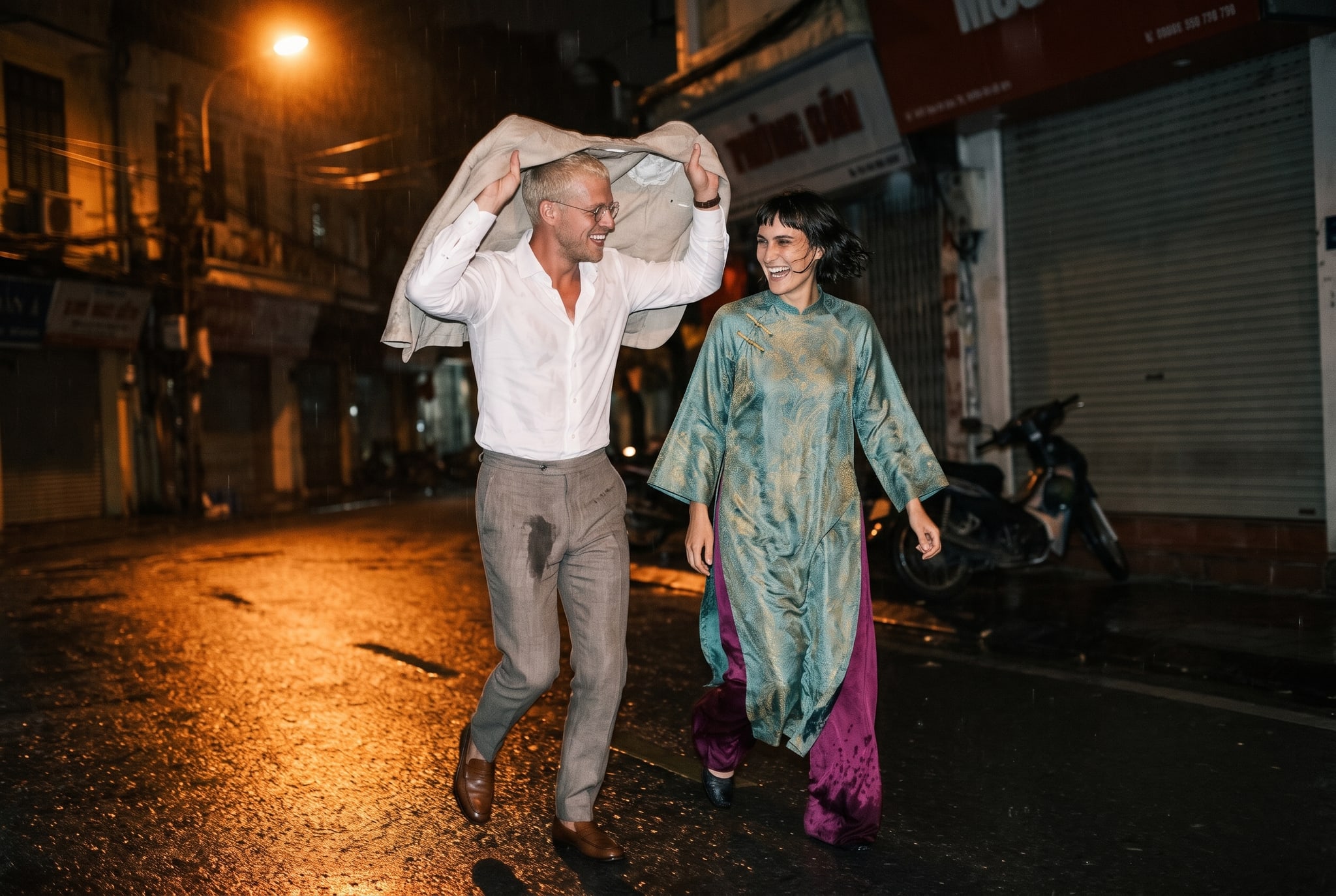
A typical Cáo Studio full-day pre-wedding video follows a narrative arc, not a location checklist. We usually start at your hotel or a quiet corner (6–7 a.m.) for getting-ready or intimate morning moments—no dialogue, just texture of fabric, your hands, light through a window. Then we move into town: Japanese Bridge (7:30–8:30 a.m., before tour groups), market or workshop (9–10:30 a.m., for natural activity), lunch break for you (11 a.m.–1 p.m.; our crew scouts or preps audio). Afternoon is lighter: portrait sequences on backstreets, temple steps, or a tailoring shop. After 4 p.m., we return for lantern sequences—this is often the emotional peak of the video, so we give it two hours and multiple angles. Sunset and early dusk offer the richest colours. Most full-day shoots wrap by 7:30 p.m. Half-day versions compress this: either morning (6–11:30 a.m.) focusing on light and texture, or afternoon-to-evening (2–8 p.m.) centred on lanterns and blue hour. The shoot day feels long, but our crew manages pacing so you don't spend hours standing still. We tell couples: wear comfortable shoes, bring water, and plan one outfit change if the video is longer than 4 hours.
See packages and prices on vietnamphotoshoot.com
What changes between video and photo teams on set
Video and photo crews solve different problems. A photo shoot (usually 4–6 hours) needs one main camera operator, a backup lens kit, and a reflector or light stand. A video shoot needs two cameras rolling simultaneously—one wide, one close—so we never miss a reaction or gesture. We also carry a gimbal (motorized camera stabilizer) to smooth walking sequences, wireless microphones for audio, and backup batteries because video drains power 3× faster than stills. Sound recording is invisible but crucial: we mic you both, capture ambient town noise (boats, bells, footsteps), and record room tone for editing. This equipment requires a third crew member—our sound recordist—who watches audio levels constantly. On set, our video director gives fewer pose instructions than a photo director; instead, we say "walk toward me, hold hands loosely, don't look at the camera." We film continuously for 30–60 seconds per sequence, which feels strange at first but reveals natural, unrehearsed expressions. Many couples feel less "on camera" during video because the pressure to hold a smile for 2 seconds dissolves. What's harder: video demands endurance. You're moving, talking softly, or sitting thoughtfully for long takes. We pace shoots deliberately so energy doesn't collapse by hour 6.
Comparing video + photo bundles against video alone for Hoi An
| Approach | Best for | What's included | Why couples choose it |
|---|---|---|---|
| Video only | Couples who prioritize storytelling, want one polished film, prefer narrative over albums | 6–8 min edit, colour grade, music, 1–2 revisions | Cinematic, sharable, one clear deliverable; suits smaller budgets |
| Video + stills combo | Most couples; want film for ceremony/reception + album for keepsakes | Same video plus 300–500 edited photos, album design | Video tells the story; photos let you pause on moments you love; albums last longer than videos trend |
| Video + Ao Dai session combo | Couples doing pre-wedding in Hoi An, want cultural authenticity, planning traditional ceremony | Video + separate ao dai photoshoot (2–3 hrs, different outfits) | Ao dai footage adds elegance to film; separate session is less rushed, photos are crisp stills not video frames |
We rarely recommend video-only unless a couple explicitly says "our wedding film will be separate; this is just engagement storytelling." Most choose video + stills because a 6-minute film cannot hold the joy of 400 photos, and a photo album doesn't move. The combo approach also spreads crew effort: our videographer focuses on narrative pacing during the video portion; our photo operator captures "in-between" moments and formal portraits during the same shoot. Cost-wise, bundling is more economical than booking video one day and photos another because we're already on location managing light, locations, and your energy.
How we plan Hoi An video locations and what to avoid
We scout Hoi An for video differently than for photos. A beautiful photo spot (narrow alley, temple doorway, silk-shop interior) doesn't always work for video because we need walking space, clear sound, and forgiving light for multiple takes. Japanese Bridge works beautifully in video when we film early morning (fewer tourists, soft light); by 9 a.m., crowds make natural motion impossible. Lan Phuong Street's tailoring row is excellent—we film you entering a workshop, interacting with seamstresses, trying on fabric—because it offers depth, activity, and a clear story. Riverside paths work for walking sequences but only if we secure permits or scout for police patrols (tourism police sometimes move crews). What doesn't work: indoor temples without permission (we always ask shop owners or the cultural office first), narrow lanes during high-noon sun (harsh, blown-out shadows), and locations where sound is dominated by traffic (riverside motorbike paths, main roads). We also avoid booking too many locations (more than 4–5) in a single shoot because travel time and setup steal creative hours. Our director usually picks 3–4 hero locations and uses backstreets for transitions and B-roll. Before confirming a shoot, we always ask couples about locations they love; sometimes a family home or a specific temple matters more than a "famous" spot, and that emotional anchor often makes the best video footage.
What to check before booking a pre-wedding video in Hoi An
Deliverables clarity: Ask how many minutes you're getting (3, 5, 8?), how many revisions are included, and in what format (download link, hard drive, cloud folder). Check if the price includes music licensing (some royalty-free tracks are included; expensive original scores cost extra—ask us).
Shooting schedule: Confirm start and end times, number of outfit changes included, and whether meal breaks are your responsibility or the crew covers them. Ask if overtime is available and how much it costs per hour.
Team composition: Verify you're getting a dedicated director (not a photographer juggling both), how many camera operators, whether a boom mic operator is included, and if there's a backup operator in case someone gets ill.
Weather backup: Hoi An is tropical; rain is common March–September. Ask what happens if weather forces a reschedule—is the date moved free of charge, or do you forfeit a deposit?
Editing timeline: How long from shoot to first draft (usually 2–4 weeks)? How many revisions? What if you hate the music—can we swap it?
Technical specs: What resolution will you receive (4K, 1080p)? Can you edit it further, or is it final-locked? Some couples want raw footage for future re-editing; ask if that's available.
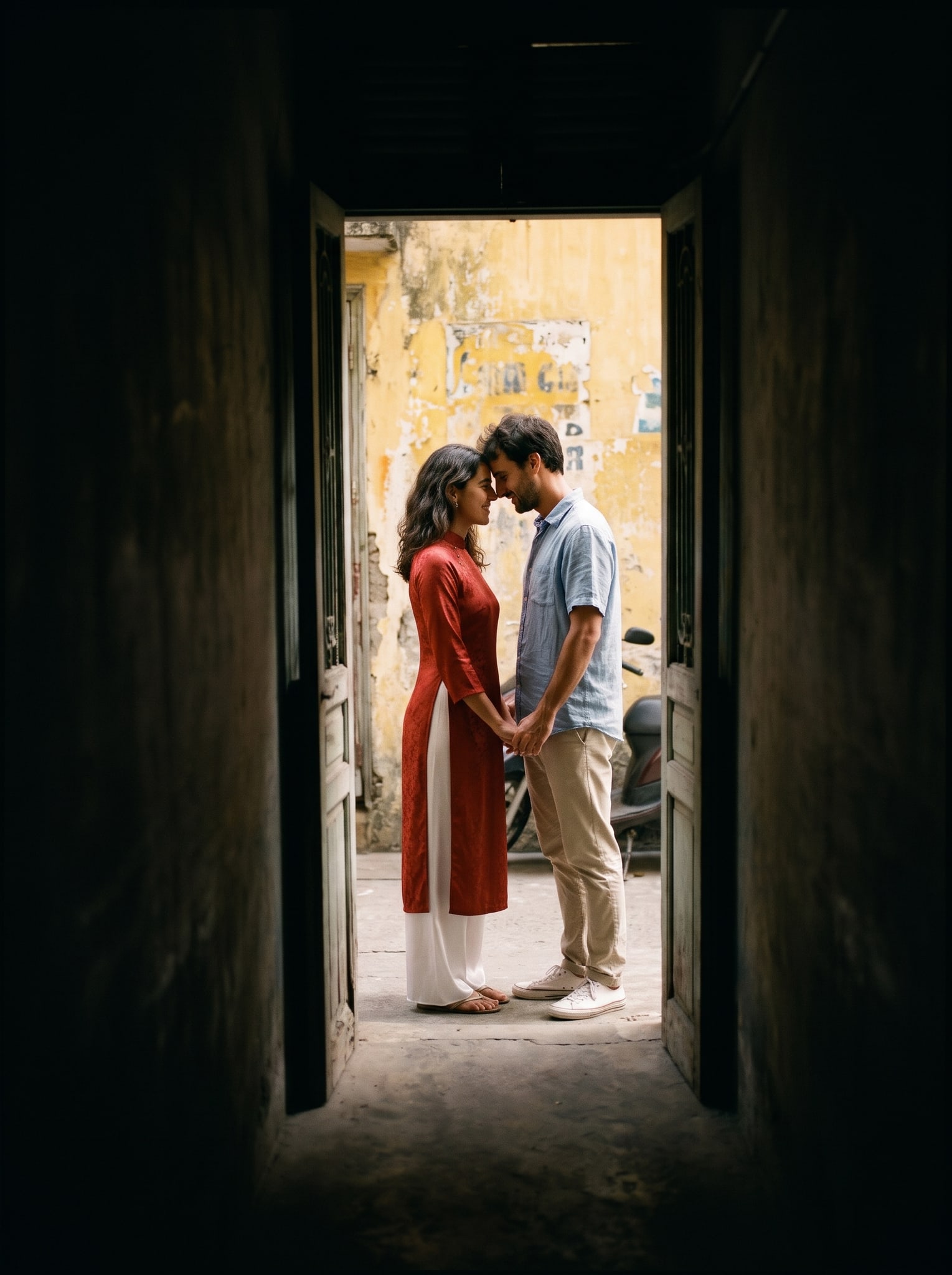
Ao Dai or costume: If you're wearing traditional ao dai or custom attire, confirm the videographer has experience filming that fabric's movement and colour. Certain fabrics fray in wind; certain reds blow out on camera. We'll advise on wardrobe choices that translate well to video.
Ask us for a quote on WhatsApp with your shoot date, preferred locations, and whether you want stills included. We'll send a custom proposal within 24 hours.
Combining pre-wedding video with other Hoi An services
Many couples add layers to their shoot day for efficiency and storytelling. A couple photoshoot can run parallel to or before the video: we film your movement and emotion, then pause for 30 minutes of formal couple portraits in natural light. Some couples book makeup and hair at your hotel that morning, so our makeup artist ensures your look is video-ready (matte skin, lip-proof colours, hair that moves naturally). Others layer in an ao dai photoshoot either as a separate session or as a 1-2 hour costume change within the same day—the ao dai footage adds cultural texture to the video and gives you a striking still album. A special concept shoot sometimes complements pre-wedding video: for example, a "first meeting" reenactment filmed as a short narrative within the larger video. We've also done couples who added proposal and anniversary package prep to their video day (renewing vows in a temple, or filming a surprise re-proposal). The advantage of booking multiple services in one day is that we manage locations, lighting, and crew efficiency. The disadvantage is fatigue—most couples cap it at 8–9 hours total, so video + stills + outfit change is the realistic limit before energy and light fade.
Real timing and weather challenges we've learned
We've shot pre-wedding videos in Hoi An every month except September (typhoon season), and each season presents trade-offs. March–May offers stable, warm light but peak tourist crowds (we shoot extra early, 5:30 a.m., to beat them). October–November is ideal: cool, clear light, fewer crowds, forgiving weather. December–February is cold and overcast (soft light, but sometimes too flat), and heavy rain forces reschedules. Our director always has a rain backup plan: shifting to covered market sequences, indoor workshops, or lantern-lit street shots under awnings. What catches couples off-guard: high humidity in May–August frizzes hair and makes makeup run; we apply extra setting spray and film in shaded areas. Noon-to-3 p.m. sunlight is unusable for most video (harsh shadows on faces), so we deliberately plan lighter content then—B-roll walks, market footage, or indoor sequences. Sunrise and sunset windows are narrow and non-negotiable; if a couple arrives late to a location, we lose 45 minutes of the best light and sometimes cannot recover it. We always build 15-minute buffers between locations for travel, but Hoi An traffic (especially on weekends) can cost us 30 minutes. When that happens, we shift schedules on the fly: maybe we skip the second temple and extend the riverside sequence instead. Communication is key—we send daily WhatsApp updates the week before confirming locations, pickup times, and weather forecasts.
Why some couples choose video over a second photographer
A few couples ask: "Should we book video instead of hiring two photographers?" The answer depends on your wedding schedule. If your actual wedding day will have two professional photographers already, a pre-wedding video adds a different layer—it's storytelling and emotion, not a second set of stills. It works as an engagement video, a ceremony highlight reel, or a ceremony-to-reception "story film." If you're eloping or having a small ceremony, pre-wedding video sometimes replaces a second photographer at the wedding itself because one videographer and one photographer offer good coverage. But if you have a large multi-event wedding (tea ceremony, legal signing, reception), you probably want two stills photographers on the day, and a separate pre-wedding video for a different purpose. We've noticed couples who do both usually report that the video became their most-watched content—family members shared it widely, and it's the piece they watched again on anniversaries. Stills are keepsakes; video is experience. Most couples end up wanting both.
See packages and prices on vietnamphotoshoot.com
FAQ
How many days before the wedding should we book a pre-wedding video in Hoi An?
Typically 2–8 weeks before. This gives time for editing (2–4 weeks) and lets you plan wardrobe and locations calmly. Booking within 2 weeks is risky if we're already booked; ask availability on WhatsApp immediately.
Can we book video and use it as our wedding ceremony film?
Yes. Many couples film a pre-wedding video 1–2 weeks before the actual wedding, edit it quickly, and show it during reception as a "best-of" or as opening entertainment. Timing is tight, so confirm the editing deadline with us first.
What if we have two outfit changes—does that cost extra?
One outfit change is typically included in full-day shoots. A second change costs extra; ask us for pricing. Plan outfit changes during natural crew breaks (lunch, travel between locations) to avoid dead time.
Do you film in English-language voiceover or Vietnamese?
Either. We ask during booking. Bilingual voiceover is possible but adds editing time. Pure music-and-sound (no voiceover) is most popular because it's timeless.
What if we hate the edit and want major revisions?
First draft usually includes 1–2 revisions free. Additional major re-edits (different music, different pacing, new sequences) may incur fees. Clarify revision limits when you book; honesty upfront prevents frustration later.
Can we use the video on Instagram, TikTok, YouTube, or sell it?
Yes to personal social sharing. We'll provide a high-quality download and web link. Commercial licensing (selling or licensing the video) requires separate negotiation; ask us if that's your plan.
Pre-Wedding & Elopement
Inclusions, prices and booking are on our booking site.
FAQ
How many days before the wedding should we book a pre-wedding video in Hoi An?
Typically 2–8 weeks before. This gives time for editing (2–4 weeks) and lets you plan wardrobe and locations calmly. Booking within 2 weeks is risky if we're already booked; ask availability on WhatsApp immediately.
Can we book video and use it as our wedding ceremony film?
Yes. Many couples film a pre-wedding video 1–2 weeks before the actual wedding, edit it quickly, and show it during reception as a "best-of" or as opening entertainment. Timing is tight, so confirm the editing deadline with us first.
What if we have two outfit changes—does that cost extra?
One outfit change is typically included in full-day shoots. A second change costs extra; ask us for pricing. Plan outfit changes during natural crew breaks (lunch, travel between locations) to avoid dead time.
Do you film in English-language voiceover or Vietnamese?
Either. We ask during booking. Bilingual voiceover is possible but adds editing time. Pure music-and-sound (no voiceover) is most popular because it's timeless.
What if we hate the edit and want major revisions?
First draft usually includes 1–2 revisions free. Additional major re-edits (different music, different pacing, new sequences) may incur fees. Clarify revision limits when you book; honesty upfront prevents frustration later.
Can we use the video on Instagram, TikTok, YouTube, or sell it?
Yes to personal social sharing. We'll provide a high-quality download and web link. Commercial licensing (selling or licensing the video) requires separate negotiation; ask us if that's your plan.
More from the team
Elopement photos at Ha Long Bay cruise: what we book on shoot day
Ha Long Bay elopements demand fast decisions: boat schedules, tides, light windows shift by the hour. We share how our team coordinates with cruise operators, what goes wrong, and the real workflow from WhatsApp to final images.
Planning a Ha Long Bay pre-wedding shoot remotely from overseas
Booking a Ha Long Bay pre-wedding shoot from abroad means planning five weeks ahead, syncing across time zones, and trusting your team on the water. Here's how we run it.
One-day pre-wedding photoshoot itinerary in Ha Long Bay
A one-day Ha Long Bay pre-wedding shoot combines limestone karsts, emerald water and tight timing. We share how our team runs it hour by hour.