 Cáo Studio
Home › Blog › Pre-Wedding & Elopement
Questions to Ask a Wedding Photographer in Mu Cang Chai Before Booking
By the Cáo Studio team · Hanoi & Saigon · 2026-11-04
Booking a photographer in Mu Cang Chai means betting on someone who knows when the terraces glow, where the light hits hardest, and how to move safely on narrow paths. We at Cáo Studio ask couples six core questions before we pack our gear: How many hours do you need? What's your shot list (ceremony, details, portraits, landscape)? Do you want the misty morning or golden afternoon? Can you handle a hiking pace to reach the best backdrops? Will you need makeup and hair on-site? And crucially—who's your backup if weather turns? These answers let us plan gear, scout locations, and brief your team the week before. Most couples underestimate how long rice-terrace shoots take: paths wind, altitude slows you down, and the light window is narrow. Ask photographers if they've shot there before, how they handle unpredictable fog, and whether they'll deliver edited files or raw. Pre-wedding shoots in Mu Cang Chai are magical but logistically demanding—choose someone who asks as many questions as you do. Chat with us on WhatsApp | See packages and prices on vietnamphotoshoot.com
How many hours should you really book in Mu Cang Chai?
Most couples arrive thinking four hours is plenty. We've learned it's almost always the bottleneck. Mu Cang Chai isn't a studio—it's a remote region where the drive from town takes 30–45 minutes, footpaths are steep, and the best light windows (06:30–07:30 for mist, 16:00–17:30 for gold) are short and unforgiving. We typically schedule six to eight hours: one hour for hair and makeup in your accommodation, one hour for travel and location scouting, four hours on-site for outfit changes and multiple backdrops, and buffer time for unexpected delays (a wrong turn on a terrace access road, fog rolling in thicker than forecast, or a family farmer asking to chat). Ask your photographer how many outfit changes they can realistically capture and how many locations they'll visit. We usually cover three to four distinct spots—the steep north-facing terraces near Y Ty village, the broader platforms near Che Cu Noi, and a quiet homestay garden—but that assumes no major setbacks. If you book only three hours, you'll get one location and one outfit. Be honest about your endurance too: the terrain is uneven, the humidity sits above 80%, and you'll be walking in heels or formal wear. A good photographer asks if you've hiked before and suggests sturdy footwear without making you feel rushed.
What should you ask about their experience with the landscape?
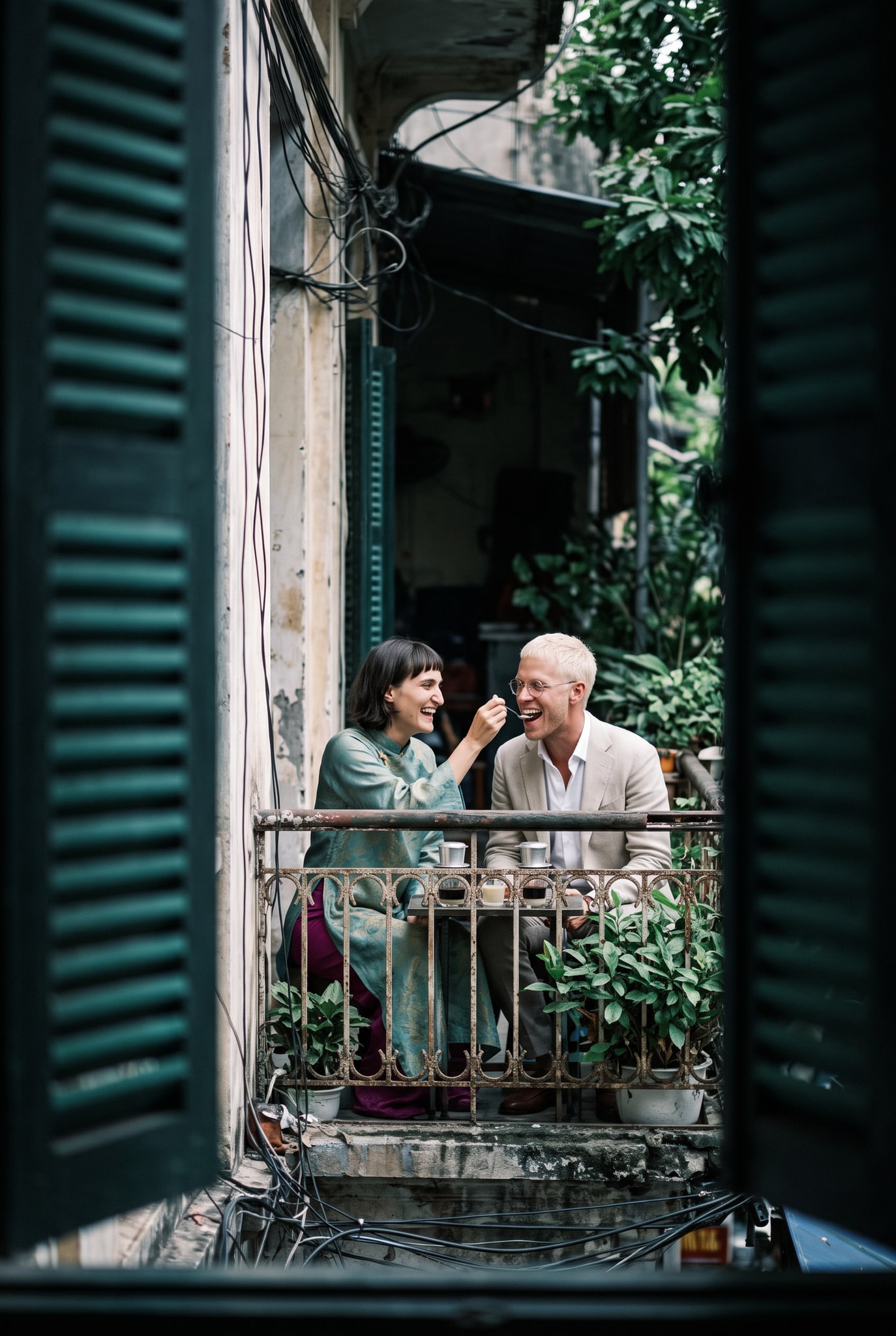
Don't accept "I've shot weddings before." Ask specifically: How many times have you shot in Mu Cang Chai? In what season? What did you shoot there—couple portraits, full family groups, or just details? The difference matters hugely. We've learned that a photographer comfortable in flat urban venues may panic in fog that fills the valleys at 07:00 and burns off by 08:15. The rice terraces have their own light physics: terraces act like mirrors, bouncing light upward into faces; midday sun creates harsh shadows in the valleys; and mist diffuses everything into a dreamy haze that some couples love and others find too soft. Ask if they shoot with reflectors or fill flash to control contrast, because ambient light alone can blow out skies or leave your faces dark. Ask too about their backup locations—what do they do if fog doesn't lift or rain comes? A photographer who shrugs hasn't scouted. We always have two or three fallback spots: a sheltered homestay garden, a local market area with texture and color, or a quiet rice paddy near road access if mobility becomes an issue. A strong answer sounds like, "I've shot Mu Cang Chai eight times, mostly in September and October when the rice is gold. I carry reflectors and a small flash for backlit terrace shots, and if fog doesn't clear by 08:30, I pivot to the market in Y Ty village where we can get morning light on textures and faces."
How do they handle weather and gear logistics?
Weather in Mu Cang Chai is the wild card. September through November brings mist in the mornings and clear afternoons; December to February is cooler and clearer but can rain without warning; March to August is green and less crowded but riskier for afternoon storms. Ask: What's your weather contingency? Do you shoot in rain? What gear do you bring for wet conditions? Do you have backup clothing or a dry bag? And critically—if the light is terrible all day, will you offer a reshoot? We've had shoots where fog never burned off, leaving us with moody but not-quite-right images. Our policy is to deliver what we capture (because a good photographer finds beauty in any condition) but also to offer a partial reshoot credit if the client genuinely feels the light failed them through no one's fault. A photographer who guarantees "perfect light" is lying; Mu Cang Chai is not controllable. But a photographer who carries weatherproof bags, knows how to shoot in overcast conditions, and has a reshoot plan is trustworthy. Ask if they've ever had to abandon a shoot location and how they communicated that to the couple. The best answer involves humility and process, not promises.
| Aspect | Question to Ask | Red Flag | Green Flag |
|---|---|---|---|
| Experience | How many Mu Cang Chai shoots have you done? | "A few," or vague | "Twelve, mostly Sept–Nov; I know the Y Ty market and three terrace zones" |
| Gear Readiness | What do you bring for fog, rain, or harsh sun? | No answer or "I'll improvise" | "Reflectors, fill flash, weatherproof bags, and backup lenses for low light" |
| Contingencies | What if the light is bad all day? | "It won't be" or no plan | "We pivot to textures, reshoot options, or deliver moody images with full transparency" |
| Pacing | How long do you block for the full shoot? | "Four hours, should be fine" | "Six to eight hours: travel, setup, multiple locations, buffer time" |
| Communication | Will you send a week-before brief? | Radio silence until shoot day | Detailed email with location map, weather forecast, outfit suggestions, parking plan |
What's the difference between a guided tourist shoot and a real pre-wedding session?
We see this often: couples book a photographer to tag along on a group tour, or hire a photographer who's learning English and treats your shoot like practice. The results feel rushed and disjointed. A real pre-wedding session at Mu Cang Chai means the photographer has scouted locations before you arrive, has a shot list, and directs your poses and movement intentionally. Ask: Will you scout Mu Cang Chai before my shoot date? Will I get a detailed shot list beforehand? How much direction do you give, and how much is candid? A photographer doing real work will say, "I scout one week prior, send you a mood board and shot list, and we walk through a rough timeline on a call. On the day, I direct your energy and placement precisely for the first hour, then ease into more candid moments as you warm up." That's different from "I'll just capture what happens." Our approach at Cáo Studio is to blend intention with authenticity: we pose you deliberately in the best light, but we also quiet down and shoot as you breathe, laugh, and steal glances. The couple feels both safe and natural. Ask your photographer to show you a full Mu Cang Chai gallery—if all the images look identical or look like they were taken in five minutes, that's a sign they're not invested in the location.
What should you ask about delivery, editing, and ownership?
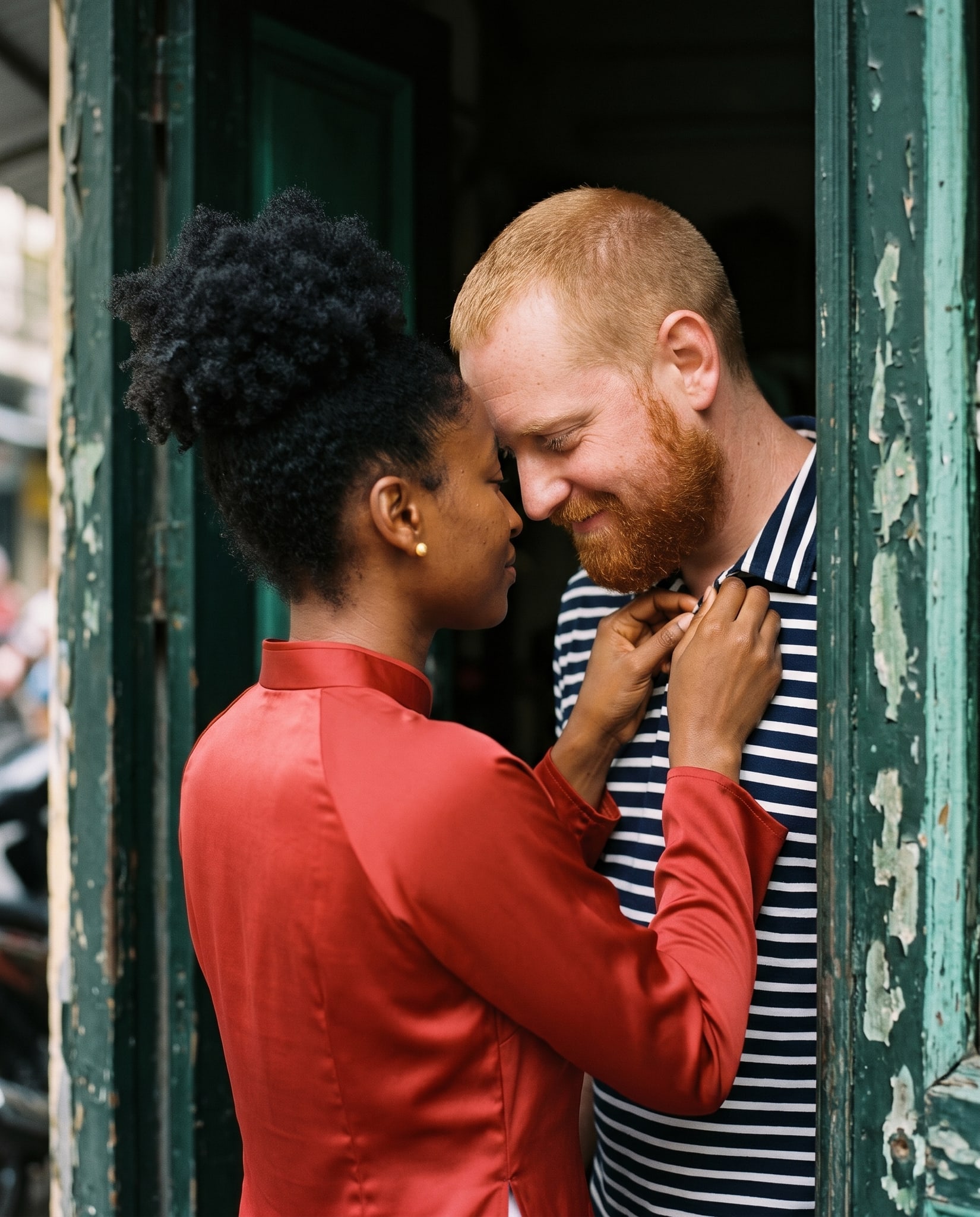
Many couples don't discuss this until after the shoot, then clash on expectations. Ask upfront: How many images will I receive? How long until I get them? Will they be color-graded or just edited for exposure and sharpness? Do I get RAW files or JPEGs only? Can I reuse images for commercial purposes (a wedding invitation, a blog post, or your album business)? Who owns the copyright? Our studio policy: all clients receive between 400–600 color-edited, curated images in high-resolution JPEGs, delivered within two weeks. We don't include RAW files (they require skill to process and can look flat to untrained eyes). Couples can reuse images for personal and non-commercial uses without asking; commercial use needs permission. We retain copyright to prevent others from claiming our work, but that's transparent in every contract. Ask if your photographer will offer unlimited edits or if edits are "as shot." We do light edits—color tone, exposure, skin smoothing, blemish removal—but not complete reimagining (we're not Photoshopping you into a different body or erasing half the terrace). Be clear on this. If you want fashion-magazine editing, you'll pay more and wait longer. If you want natural, quick turnaround, you're getting lighter processing. Ask what's included and what costs extra. A hidden fee for prints or albums after the shoot is a betrayal; a photographer who says upfront "I offer digital files only" or "prints cost extra" is being honest.
What specific questions should you ask about shot variety and styling?
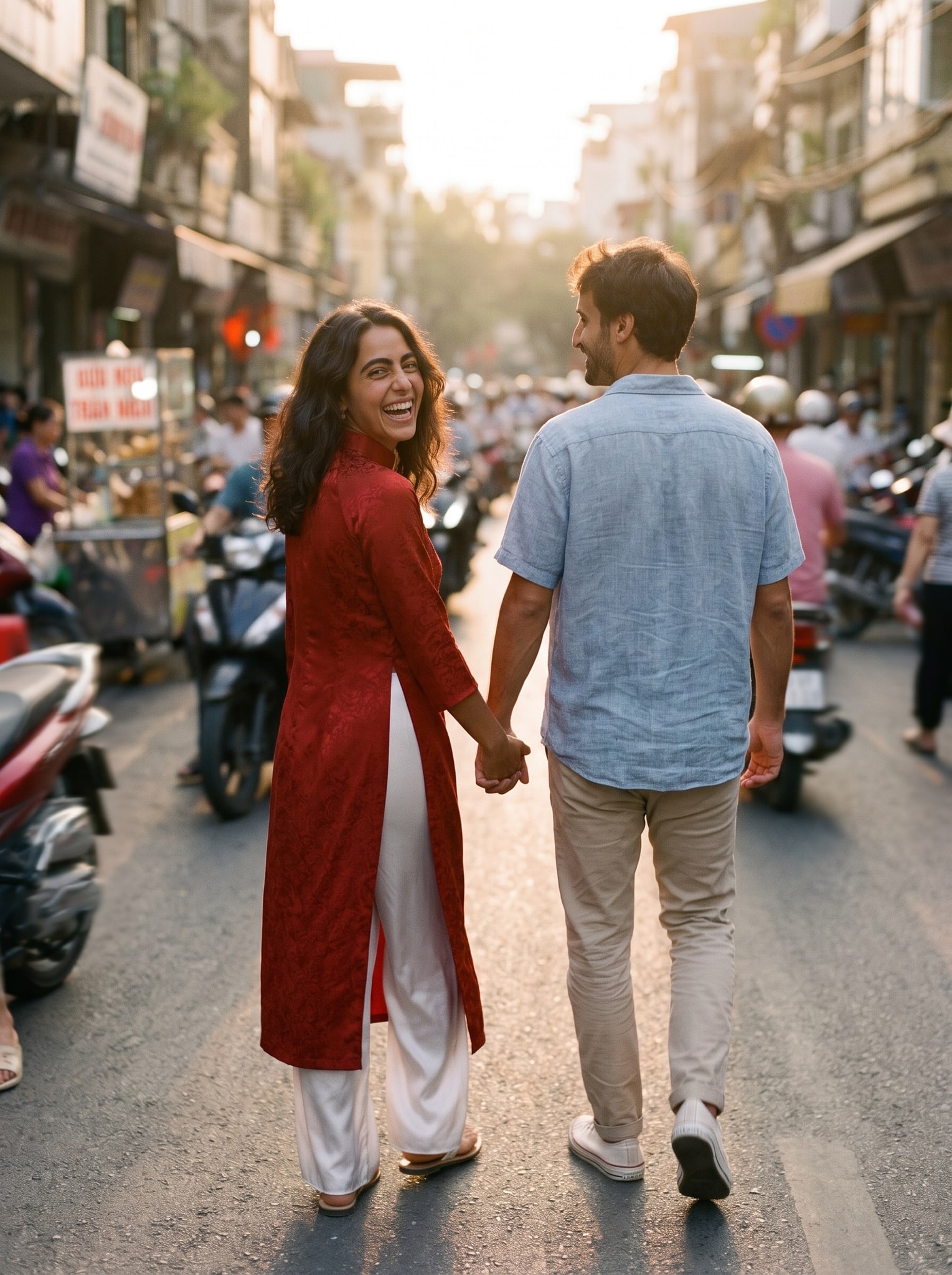
Here's what we hear: couples expect their photographer to know how to pose them romantically, but many photographers just say, "Kiss here" or "Walk toward the light." Real skill is in subtle direction: we might say, "Walk three steps apart so your silhouettes don't merge, then turn to each other as if you've just heard good news—capture that micro-pause before you touch." We also know how to use Mu Cang Chai's geometry: terraces create leading lines, valleys frame faces, and homestay walls offer bold colors. Ask: How do you use the landscape in framing? What's your posing philosophy—traditional romantic, editorial, candid-style? Do you offer outfit and styling advice? Have you worked with traditional áo dài or Western formal wear? Our team learns quickly that Mu Cang Chai with an áo dài is absolutely stunning—the fabric flows down the terraces, the embroidery pops against golden rice, and it feels rooted in place. If you're wearing Western formal wear, you need a photographer who knows how to pose long dresses on uneven ground and how to shoot in a way that doesn't look like you're balanced on a tightrope. We offer ao dai photoshoot direction and styling tips as part of the pre-shoot consultation. Ask if your photographer will do the same. Finally, ask for honest feedback on your outfit choices. If you're planning to wear all white in a rice field where the sky is bright and you'll be backlit, a good photographer will warn you or suggest an alternative. That honesty is worth more than polite silence.
Chat with us on WhatsApp | See packages and prices on vietnamphotoshoot.com
What to check before you book: a simple checklist
Before you commit, print or write these down and ask your photographer:
- Availability: Are they available on your exact date? Do they have a backup photographer if they fall ill? (We always do; you never shoot with just one person.)
- References: Can they show you a complete gallery from a Mu Cang Chai shoot, not just a highlight reel? Will they give you contact info for a couple who'll vouch for them?
- Contract: Is everything in writing—dates, times, deliverables, cancellation policy, and payment terms? Verbal agreements are useless.
- Communication style: Do they respond to WhatsApp within a day? Will they send you weekly updates as the shoot date nears? We do, because silence breeds anxiety.
- Alignment on vision: After your first conversation, do you feel heard and excited, or pushed toward their default style? A good photographer adapts to your priorities, not the reverse.
- Insurance and permits: Will they handle any local permits or do you need to? (Mu Cang Chai is still relatively informal, but it's worth asking.)
- Contingency: What happens if they cancel? If the light fails? If you hate the images? Every answer matters.
Our pre-wedding photoshoot bookings often include this consultation call—we spend 30 minutes asking and answering questions until you're confident. If a photographer rushes that process, that's a warning sign.
Going beyond Mu Cang Chai: Expand your shoot into a story
Many couples book Mu Cang Chai for one day and miss the larger narrative. You could shoot in Mu Cang Chai one morning, then pivot to Hoi An or Ninh Binh for a second session that contrasts the landscape. Or combine it with couple photoshoot sessions in Hanoi or Saigon for a multi-location pre-wedding story. Ask your photographer if they offer multi-day packages or if they can connect you with trusted teams in other cities. We often coordinate shoots across Vietnam—a couple might do rice terraces in Mu Cang Chai, then work with our Hanoi studio for urban contrast, or with our Saigon team for a coastal finish. That's a conversation to start early, because logistics and travel add complexity but also depth to your story. If you're staying in northern Vietnam, ask about pairing Mu Cang Chai with nearby locations like Sa Pa or the Red River valley. These all demand different skill sets; a photographer strong in rice terraces may not excel in mountains. Be explicit about what you want and trust the photographer to say, "That's not my strength, but I know someone who can help."
FAQ
Is six to eight hours really necessary for a Mu Cang Chai shoot?
Yes. Travel (one hour), setup and hair/makeup (one hour), on-site shooting with outfit changes across multiple locations (four hours), plus weather and logistical buffer. Booking less usually means one location and one outfit—ask your photographer how many outfits and spots fit your timeframe.
What's the best season to shoot in Mu Cang Chai?
September through November offers golden rice and morning mist. December to February is clearer and cooler but rain is possible. March to August is green and quieter but riskier for afternoon storms. Ask your photographer what they'd recommend based on your vision and what weather contingencies they have.
Should I hire a photographer who lives locally or bring someone from Hanoi or Saigon?
A local may know terrain shortcuts but might lack formal posing skill. A Hanoi or Saigon pro travels well but may not know the landscape. Best is a photographer with both experience in Mu Cang Chai and a strong portfolio of couple work. Ask for their Mu Cang Chai gallery specifically—that's your proof.
Can we do a Mu Cang Chai shoot on the same day as a morning pre-wedding session in Hanoi?
It's possible but extremely tight. You'd need to leave Hanoi by 04:00, shoot Mu Cang Chai from 06:30–10:30, then drive back. We've done it, but it feels rushed. A better option is one day for each location, or ask if your photographer can split a two-day package between both.
What if the photographer's portfolio doesn't include Mu Cang Chai images—should I still book them?
Ask them why. If they've shot rice terraces elsewhere (Sa Pa, Thai Nguyen) or have strong landscape and couple work, they might transfer those skills. But if they have no landscape portfolio at all, that's a risk. Request a location scout before you commit, or ask if they'll do a test shoot for a reduced fee.
What happens if we book a photographer and don't like the delivered images?
It depends on the contract. Most photographers don't offer refunds for "not liking" the style, but good ones offer reshoot credits or additional editing passes. Ask your photographer's policy upfront—specifically what qualifies for a reshoot (bad light, technical error, miscommunication) versus what doesn't (personal preference for a different aesthetic).
Pre-Wedding & Elopement
Inclusions, prices and booking are on our booking site.
FAQ
Is six to eight hours really necessary for a Mu Cang Chai shoot?
Yes. Travel (one hour), setup and hair/makeup (one hour), on-site shooting with outfit changes across multiple locations (four hours), plus weather and logistical buffer. Booking less usually means one location and one outfit—ask your photographer how many outfits and spots fit your timeframe.
What's the best season to shoot in Mu Cang Chai?
September through November offers golden rice and morning mist. December to February is clearer and cooler but rain is possible. March to August is green and quieter but riskier for afternoon storms. Ask your photographer what they'd recommend based on your vision and what weather contingencies they have.
Should I hire a photographer who lives locally or bring someone from Hanoi or Saigon?
A local may know terrain shortcuts but might lack formal posing skill. A Hanoi or Saigon pro travels well but may not know the landscape. Best is a photographer with both experience in Mu Cang Chai and a strong portfolio of couple work. Ask for their Mu Cang Chai gallery specifically—that's your proof.
Can we do a Mu Cang Chai shoot on the same day as a morning pre-wedding session in Hanoi?
It's possible but extremely tight. You'd need to leave Hanoi by 04:00, shoot Mu Cang Chai from 06:30–10:30, then drive back. We've done it, but it feels rushed. A better option is one day for each location, or ask if your photographer can split a two-day package between both.
What if the photographer's portfolio doesn't include Mu Cang Chai images—should I still book them?
Ask them why. If they've shot rice terraces elsewhere (Sa Pa, Thai Nguyen) or have strong landscape and couple work, they might transfer those skills. But if they have no landscape portfolio at all, that's a risk. Request a location scout before you commit, or ask if they'll do a test shoot for a reduced fee.
What happens if we book a photographer and don't like the delivered images?
It depends on the contract. Most photographers don't offer refunds for "not liking" the style, but good ones offer reshoot credits or additional editing passes. Ask your photographer's policy upfront—specifically what qualifies for a reshoot (bad light, technical error, miscommunication) versus what doesn't (personal preference for a different aesthetic).
More from the team
Pre-wedding photoshoot in Phu Quoc June: weather, light, crowds
June is Phu Quoc's monsoon season. Our studio has shot dozens of couples there in early summer—here's what weather and crowds really mean for your pre-wedding day.
Pre-wedding photoshoot in Phu Quoc July: weather, light, crowds
July is Phu Quoc's wet season, but it opens creative possibilities: moody skies, empty beaches after storms, and dramatic backlighting. We'll walk you through what happens on the ground.
Pre-wedding photoshoot in Phu Quoc November: weather, light, crowds
November is peak season for pre-wedding shoots in Phu Quoc: weather is stable, light is soft, but crowds peak mid-month. We share what our team sees on the ground.