 Cáo Studio
Home › Blog › Ao Dai Photoshoot
Red vs white wedding ao dai: meaning and photos
By the Cáo Studio team · Hanoi & Saigon · 2026-11-02
Red ao dai symbolizes luck, prosperity and tradition in Vietnamese weddings—worn by brides and grooms for centuries. White ao dai signals elegance, purity and modernity, increasingly chosen for pre-wedding shoots and second outfit changes. At Cáo Studio, we've styled both across hundreds of shoots in Hanoi, Saigon, Hoi An and Ninh Binh. Red photographs with warmth and boldness; white glows in soft light but demands careful styling to avoid washed-out skin tones. Your choice depends on season, venue, personal comfort and the mood you want captured. Most couples pick one primary color and may add a contrasting option for variety. Booking an ao dai photoshoot means deciding this early so your stylist sources the right fabric weight, fit and embroidery—red silk behaves differently than white linen in humid heat. Chat with us on WhatsApp | See packages and prices on vietnamphotoshoot.com
What does red ao dai mean at weddings?
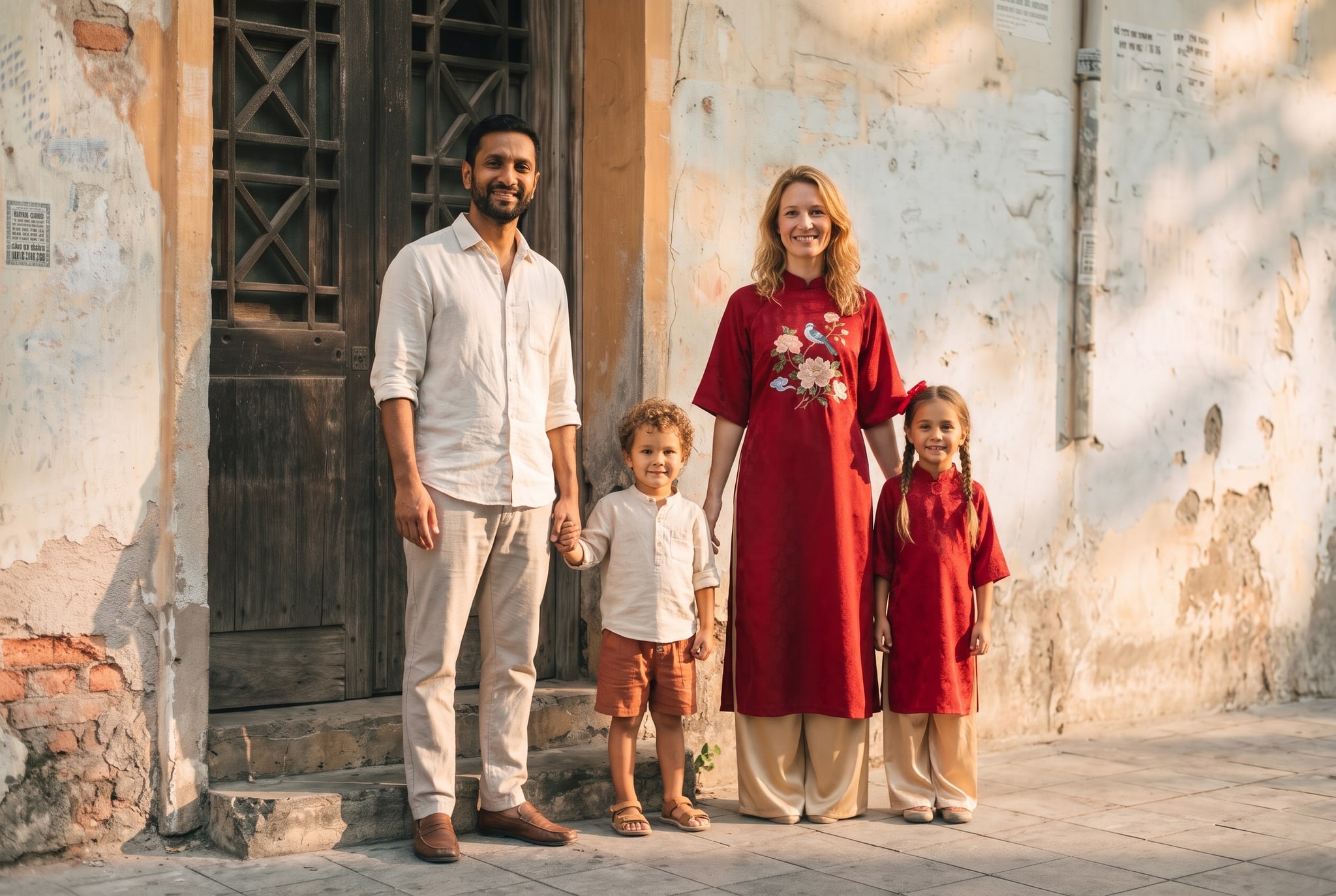
Red ao dai represents luck, joy and prosperity in Vietnamese tradition. The color connects to family lineage, auspicious dates and formal ceremony. We see red chosen almost always for morning tea ceremonies, family portraits and official couple shots—it commands the frame and photographs as a strong statement of respect to both families. The fabric weight matters: silk red ao dai moves differently than cotton or linen blends. On shoot days, red clothing requires less white-balancing in post-production; skin tones sit naturally warm against the color. The trade-off is heat—red silk absorbs more sun, making outdoor summer shoots in Saigon challenging for comfort. Our stylists always ask brides: are you wearing this for the ceremony first, then changing for photos, or photos alone? The answer shapes fabric choice and whether we build in a cooling break mid-session.
When is white ao dai the right choice?
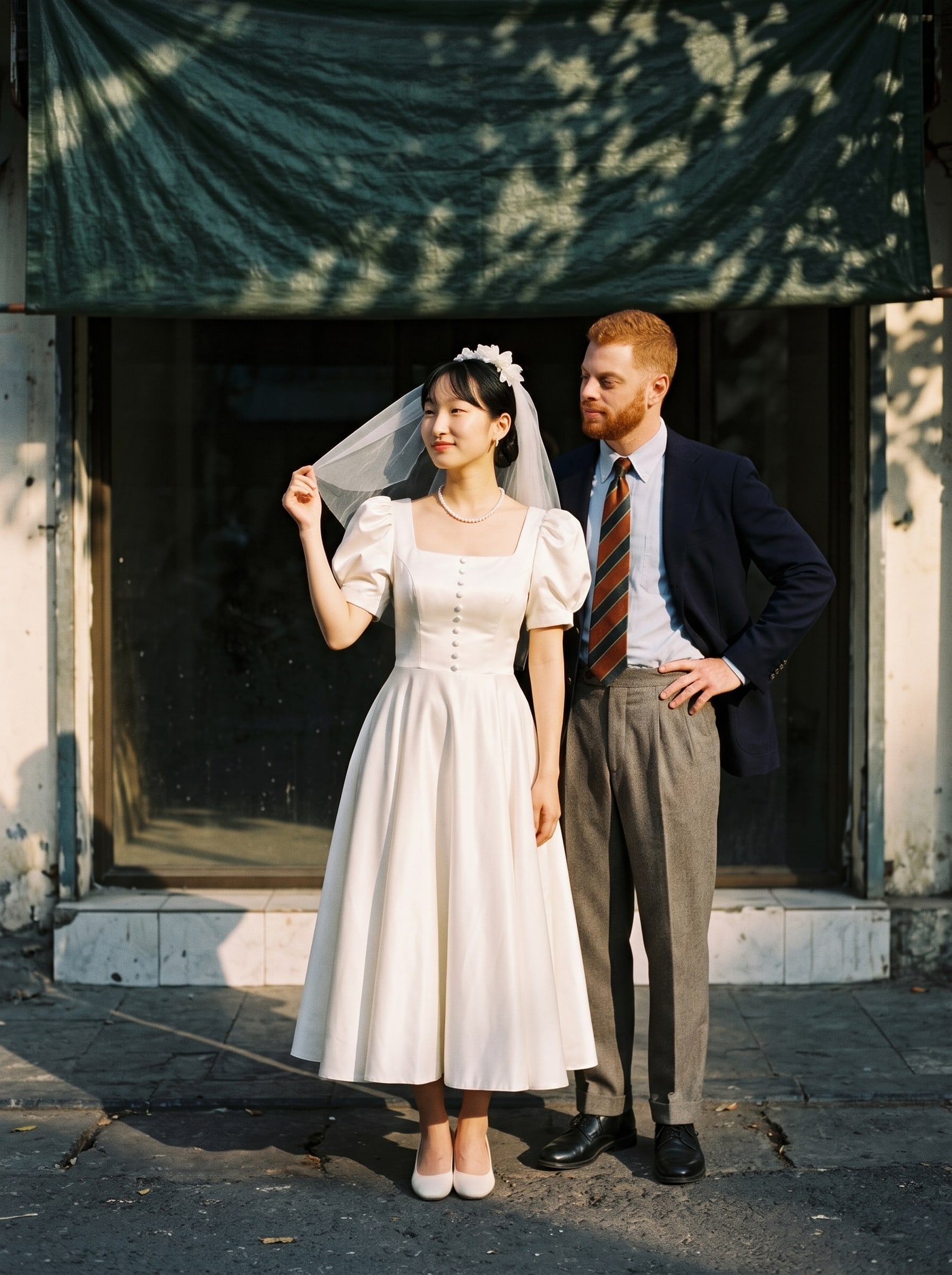
White ao dai suits pre-wedding shoots, elopements, destination sessions and couples seeking a softer aesthetic. It photographs luminously in golden-hour light and suits smaller, intimate gatherings. We've noticed white works beautifully in Hoi An's lantern-lit streets and around Ninh Binh's limestone cliffs because the color reflects natural light without competing with scenery. White fabric also feels cooler in body heat—critical for afternoon shoots. The risk: white demands perfect skin preparation and careful makeup to avoid a washed-out face. Our makeup artists always deepen eyebrows, add blush and warm lip tone when white is the choice. White also shows any wrinkles in the fabric, so pressing and styling take longer. Brides choosing white should expect their stylist to arrive 15–20 minutes earlier than for red. If you're booking a pre-wedding photoshoot, white pairs well with muted jewelry and soft florals that wouldn't stand out against red.
How do skin tone and season affect the choice?
Skin tone doesn't dictate ao dai color—styling does. Deeper skin tones glow in both red and white with the right makeup; fair skin suits both equally. What matters more is season and light quality. Summer shoots in Saigon's heat favor white for comfort and because overcast humidity diffuses light softly, suiting white's reflectivity. Dry-season shoots (October–March) in Hanoi benefit from red's warmth, which photographs richer when light angles are lower. We've run shoots in all seasons across both cities, and the pattern holds: choose red for winter or dramatic outdoor ceremony energy; choose white for soft-light moments and intimate vibes. If you're uncertain, plan a couple photoshoot that includes both colors—two outfits let you decide which photographs better after the session. Our Hanoi studio often suggests this for couples torn between tradition (red) and personal taste (white).
What's the difference in fabric and tailoring?
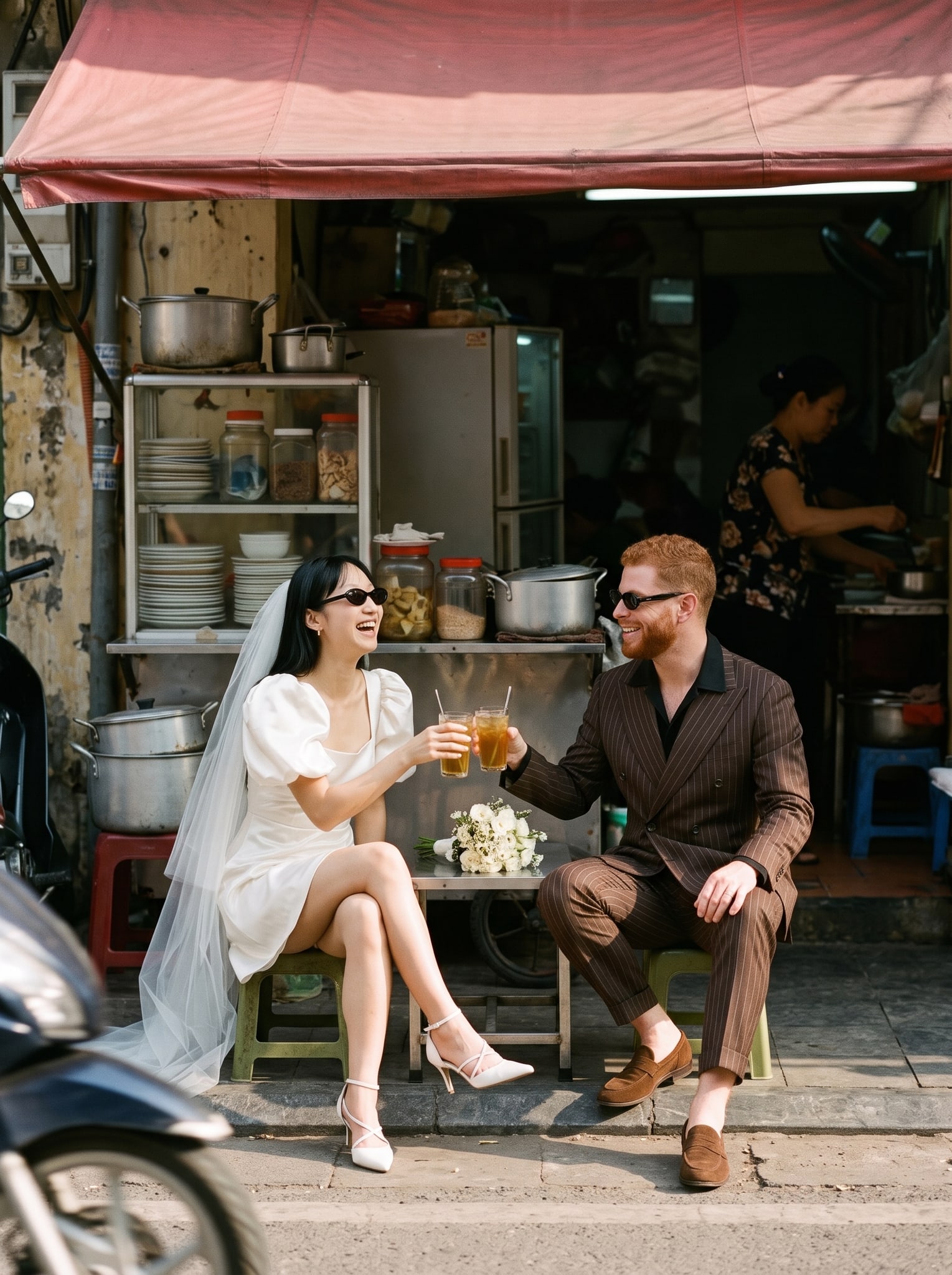
Red ao dai typically uses heavier silk or silk-blend fabrics that hold embroidery and beading without sagging. White ao dai, especially for modern shoots, often uses lighter cotton or linen blends to stay crisp and cool. Tailoring differs: red versions often feature gold or copper embroidery at the collar, cuffs and hem; white versions may have minimal embroidery or monochromatic thread work to stay elegant without visual weight. We source ao dai through trusted tailors in Hanoi and Saigon, and fit sessions happen before shoot dates. Red embroidery can weigh 200–300 grams extra on shoulders—important if your shoot involves movement, dancing or long standing. White ao dai in lighter fabric weighs 100–150 grams less, making it easier for multi-hour sessions. If you're booking makeup and hair at your hotel the morning of your shoot, mention your ao dai color and weight so the artist plans styling that won't smudge or shift under the fabric's neckline.
Red vs. white: practical comparison for your shoot
| Factor | Red ao dai | White ao dai | What to check |
|---|---|---|---|
| Photography mood | Bold, traditional, warm | Soft, modern, ethereal | Your venue lighting |
| Fabric comfort | Heavier, formal feel | Lighter, cooler option | Season and shoot length |
| Makeup adjustment | Natural skin tones look good | Requires deeper makeup | Your makeup artist's experience |
| Embroidery visibility | Gold/copper stands out | Minimal or monochromatic | Personal style preference |
| Venue match | Temples, gardens, ceremonies | Urban, beach, intimate spots | Your location choice |
| Photo retouching | Minimal color correction | Higher skin-tone adjustment | Budget for editing |
Our team builds the shoot timeline around whichever color you choose. Red shoots often run 3–4 hours with natural breaks; white shoots with careful makeup sometimes need touch-ups at the 90-minute mark. Both require professional steaming before arrival—wrinkles are harder to remove in post-production than to prevent on the day.
See packages and prices on vietnamphotoshoot.com
What to check before ordering your ao dai
Timeline: Order or rent your ao dai 4–6 weeks before the shoot. Custom tailoring takes time; rentals in Hanoi and Saigon have peak seasons (October–January for winter shoots, June–August for destination sessions). Confirm the rental or tailor's cancellation policy early.
Fit session: Never skip a fitting. Ao dai that's too tight in the chest or too loose at the shoulders photographs poorly and becomes uncomfortable after one hour. We've had shoots delayed 30 minutes because a bride's ao dai needed emergency adjustments at our Saigon studio.
Fabric weight: Ask the tailor or rental shop what the fabric blend is—100% silk, silk-cotton blend, or linen. Heavier fabrics suit ceremonies; lighter ones suit long outdoor shoots.
Color fastness: Ask if the dye will run if it rains or if you're shot near water. White ao dai in particular can pick up color from wet hands or damp shoulders.
Embroidery and beading: Confirm that any embroidery or beads are securely attached. Movement during a shoot can loosen them. Ask the tailor to reinforce seams on red ao dai if it carries heavy beading.
Humidity prep: If you're shooting in summer (May–September) in any city, ask your stylist how they'll manage humidity. Both red and white fabrics can absorb moisture and wrinkle. We always bring a hand steamer on location shoots.
Makeup and hair plan: Decide with your stylist whether you'll wear a traditional updoo or loose hair. This affects how the ao dai's neckline and collar frame your face. White ao dai often looks better with hair pulled back to show the neckline; red works with both styles.
Chat with us on WhatsApp | See packages and prices on vietnamphotoshoot.com
Most couples ask us this question during their initial WhatsApp conversation. We send examples of past shoots—red ao dai in a temple in Hanoi, white ao dai at sunrise in Ninh Binh—so they can imagine their own moment. The choice between red and white often becomes clear once they see the venues and light quality where we'll shoot. If you're still deciding, a family photoshoot that includes multiple family members can work with either color; the group dynamic matters more than the single color choice. For solo travelers or individuals marking a milestone, a vacation photoshoot suits both red and white equally—the mood is personal and intimate either way.
The real decision happens on the morning of your shoot. You arrive at our Hanoi studio or Saigon space, your ao dai is steamed and ready, and the light outside tells you whether you made the right choice. In our experience, couples rarely regret the color they pick—they regret not ordering their preferred option in time. Start early, confirm your choice by email 2 weeks before, and trust your stylist's advice on makeup and hair. Both red and white create photographs worth keeping forever.
FAQ
Does red ao dai photograph better than white?
Neither is objectively better—it depends on lighting and season. Red photographs warmly in natural sunlight and requires less skin-tone correction. White glows in golden or overcast light but needs stronger makeup. Test both if you're unsure by booking a shoot that includes both colors.
Can I wear red ao dai for a pre-wedding shoot or only for ceremonies?
Red works beautifully for pre-wedding shoots, especially in traditional venues or gardens. We've styled red for elopements, couple sessions and proposal shoots with no issue. White is more commonly chosen for modern pre-wedding aesthetics, but red is equally valid.
How long does an ao dai shoot take, and does the color affect timing?
Most shoots run 2–4 hours depending on location count and outfit changes. Red ao dai typically takes 45 minutes to style; white takes 50–60 minutes due to makeup depth. Fabric weight and embroidery complexity also add time.
What if my rented or tailored ao dai doesn't fit right on shoot day?
Contact your rental shop or tailor at least one week before for adjustments. On shoot day, our stylists carry safety pins, fashion tape and basic repair tools. We've fixed loose beading, adjusted hem height and reshaped collars within 10–15 minutes.
Can I book an ao dai photoshoot if I don't own or have an ao dai yet?
Yes. Tell us during booking and we'll recommend trusted tailors and rental shops in Hanoi or Saigon. Many couples rent for one-time shoots; others commission a custom piece. We work with both timelines and can delay your shoot if you need tailoring time.
Ao Dai Photoshoot
Inclusions, prices and booking are on our booking site.
FAQ
Does red ao dai photograph better than white?
Neither is objectively better—it depends on lighting and season. Red photographs warmly in natural sunlight and requires less skin-tone correction. White glows in golden or overcast light but needs stronger makeup. Test both if you're unsure by booking a shoot that includes both colors.
Can I wear red ao dai for a pre-wedding shoot or only for ceremonies?
Red works beautifully for pre-wedding shoots, especially in traditional venues or gardens. We've styled red for elopements, couple sessions and [proposal shoots](/go/proposal-and-anniversary) with no issue. White is more commonly chosen for modern pre-wedding aesthetics, but red is equally valid.
How long does an ao dai shoot take, and does the color affect timing?
Most shoots run 2–4 hours depending on location count and outfit changes. Red ao dai typically takes 45 minutes to style; white takes 50–60 minutes due to makeup depth. Fabric weight and embroidery complexity also add time.
What if my rented or tailored ao dai doesn't fit right on shoot day?
Contact your rental shop or tailor at least one week before for adjustments. On shoot day, our stylists carry safety pins, fashion tape and basic repair tools. We've fixed loose beading, adjusted hem height and reshaped collars within 10–15 minutes.
Can I book an ao dai photoshoot if I don't own or have an ao dai yet?
Yes. Tell us during booking and we'll recommend trusted tailors and rental shops in Hanoi or Saigon. Many couples rent for one-time shoots; others commission a custom piece. We work with both timelines and can delay your shoot if you need tailoring time.
More from the team
Ao Dai Photos at Hoi An Lantern Street at Night
Hoi An Lantern Street (Nguyen Hoan) glows at dusk with silk lanterns and reflected light. Our team shoots ao dai here after dark, navigates tight vendor spaces, and handles the low-light challenge with experience from 100+ night sessions.
Ao dai for wedding photos in Quy Nhon: renting, fitting and styling
Quy Nhon's coastal backdrops pair beautifully with traditional ao dai. We walk through rental choices, fitting logistics and how our team coordinates styling on shoot day.
Vietnam Pre-Wedding Photoshoot: What We Book at Cáo Studio
Pre-wedding shoots in Vietnam mean morning light in Hoi An's Old Town, cyclos in Saigon, or terraced fields near Ninh Binh. We walk you through what a session actually costs, how we schedule it, and what goes wrong on the day.