 Cáo Studio
Home › Blog › Pre-Wedding & Elopement
Sapa Pre-Wedding Photoshoot Guide: What Our Team Does On-Site
By the Cáo Studio team · Hanoi & Saigon · 2026-11-04
A Sapa pre-wedding shoot means 2–4 hours in rice paddies, forest paths, or the town core (around Sa Pa town center or Stone Church), typically 5,500+ feet elevation where weather shifts in minutes. Cáo Studio books shoots June–September when cloud cover is photogenic; couples arrive Sapa the day before to acclimatize. We hire a local guide, scout light at 5:30 a.m., and stop by 10 a.m. when clouds burn off. Ao dài (Vietnam's traditional tunic dress) works best because it photographs boldly against muted terrain; Western wear looks flat. We budget for unpredictable mist, rain gear for the styling team, and faster resets between looks. Most couples pair Sapa with a pre-wedding and elopement package that includes outfit changes and half-day or full-day rates. Before booking, confirm your fitness level, shoe grip, and whether mist is a feature or a problem for you. Chat with us on WhatsApp
How do we time the day so light stays perfect?
We arrive Sapa the evening before and meet the couple at their hotel by 5:45 a.m. Sapa's light is softest from 6:00–7:00 a.m., then hardens as clouds thin. We use the first 90 minutes for key portraits—close-ups, hand details, the bride's face—where soft directional light hides nothing. By 7:30 a.m., we're on the terraces or forest paths for wide landscape shots; the couple walks, we shoot motion and candids. At 9:00 a.m., cloud cover usually thickens again, which is ideal for a costume or ao dài change without harsh shadows. By 10:30 a.m., the sun is too bright and the mist burns off; we wrap or shift to shaded spots near Stone Church or Ta Phin village. This rhythm is non-negotiable: rush the early light, and you lose the magic that makes Sapa different from flatlands.
What wardrobe mix actually works in mountain terrain?
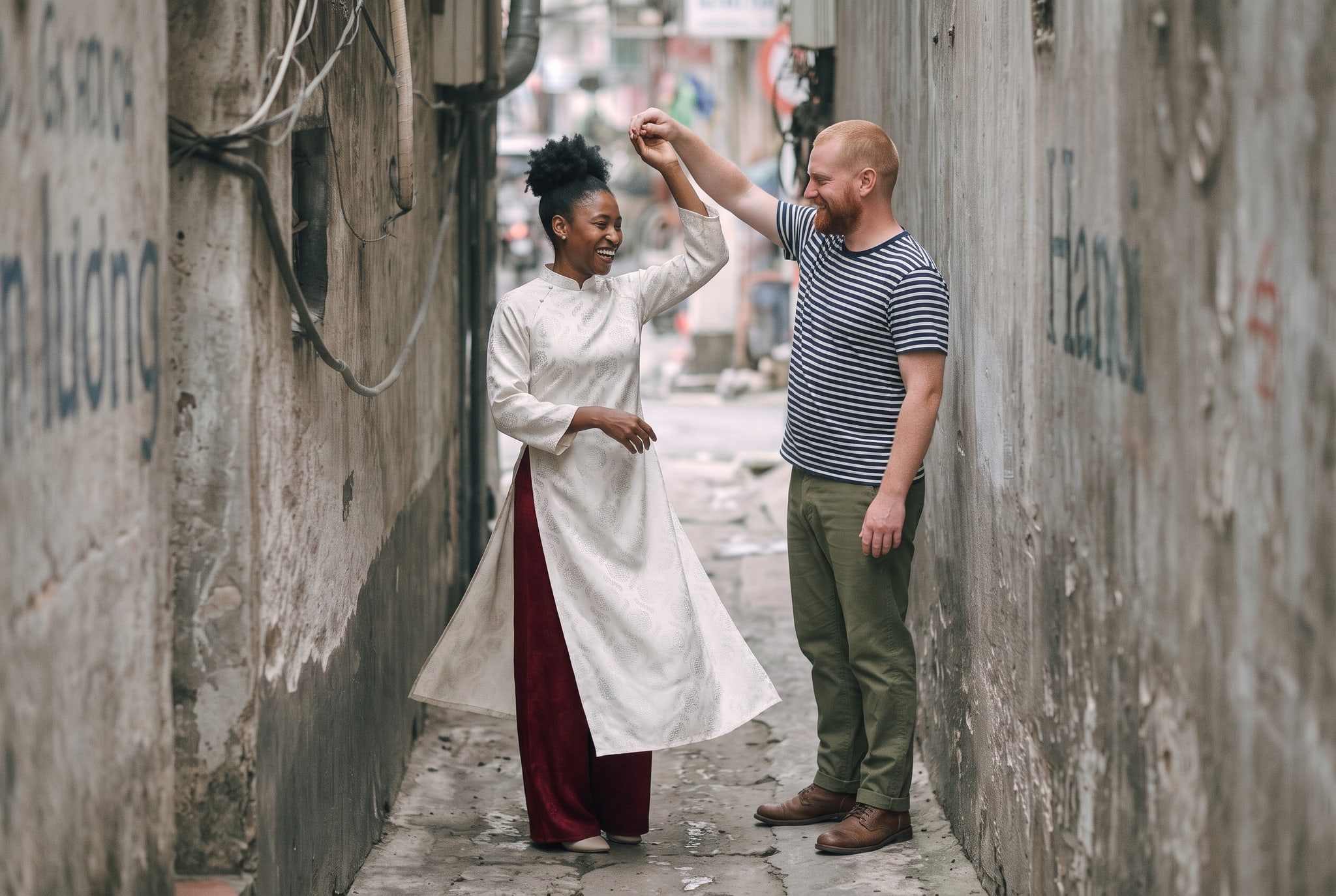
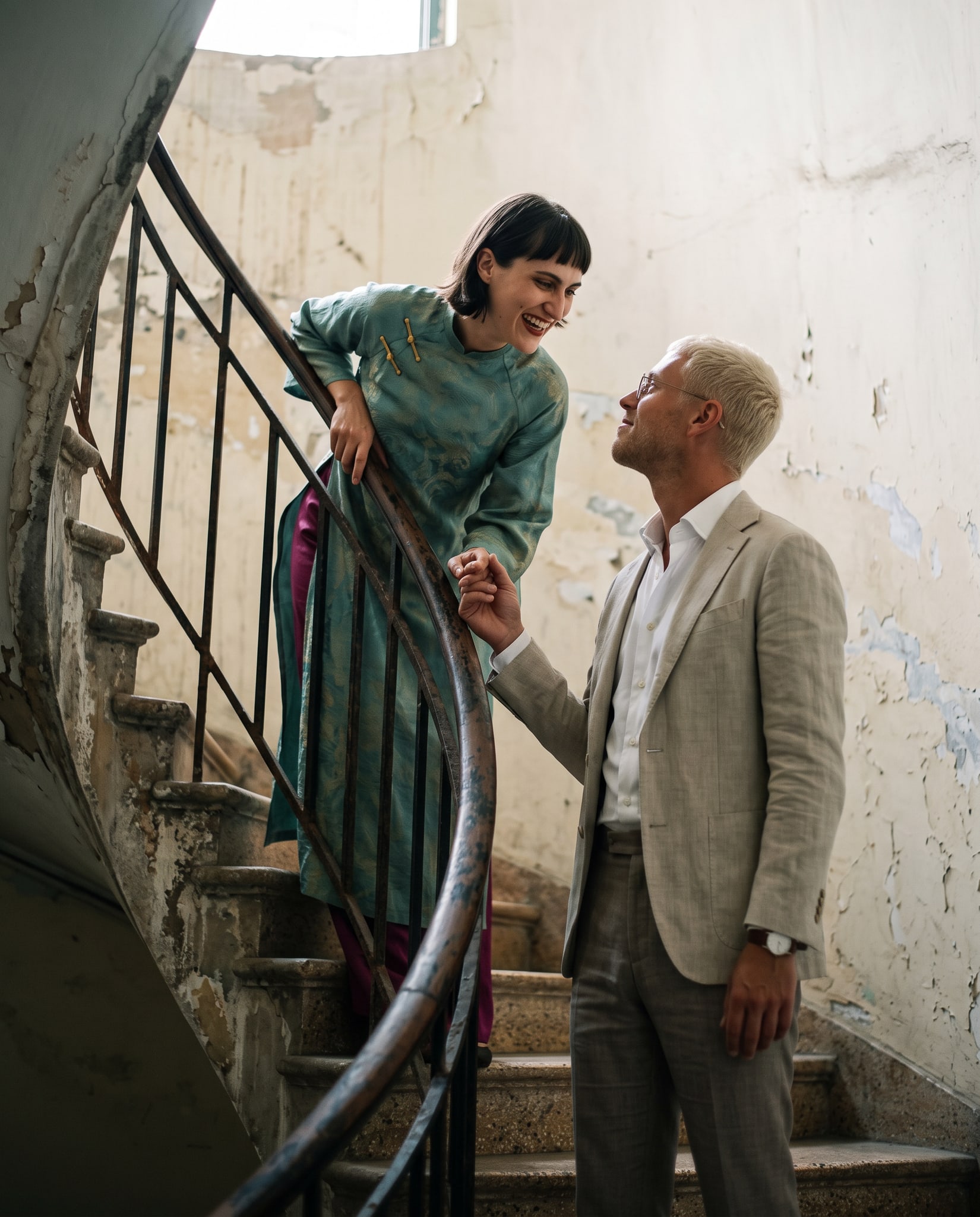
We guide couples toward three looks: ao dài (absolutely), tailored Western wear (pants + fitted shirt for guys, dress for her), and one adventurous piece (embroidered local scarf, ethnic jewelry). Ao dài dominates because the fabric moves, the silhouette reads from 50 meters away, and it respects the landscape's cultural weight. Heavy fabrics hold color in mist; pale pastels fade into fog. Guys in dark chinos or suit trousers + linen shirt outperform light colors. Shoes are critical: sneakers grip wet stone better than heels, but for close-ups, we swap heels in for 10 minutes, then swap back. We always pack a backup outfit—once a heavy mist ruined a pale silk dress, so the bride changed into a borrowed ao dài and we got the best shots of the day. Layers matter too: temperatures drop 15°F between 6 a.m. and 9 a.m., so the couple wears cardigans we remove frame-by-frame.
| Look Type | Who It's For | Best Time of Day | Why It Works |
|---|---|---|---|
| Ao dài (traditional) | Couples honoring heritage or wanting bold color | 6–9 a.m., mist present | Fabric moves, reads from distance, stands out |
| Tailored Western wear | Modern aesthetic, less formal mood | 7–9 a.m., mixed light | Clean lines, accessible, complements landscape |
| Local-inspired accent | Adventure seekers, cultural enthusiasts | 8–10 a.m., softer clouds | Authentic to place, conversation-starting detail |
How do we handle rain, mist, and unpredictable weather?
Sapa's weather is not a bug—it's the feature. We monitor forecasts three days out and alert the couple immediately. If heavy rain is forecast, we suggest Ta Phin or Stone Church (roofed options) or reschedule. Light drizzle is gold: it deepens colors and adds mood. We pack waterproof camera covers, lens cloths, and a lightweight pop-up to shield hair/makeup for 10 minutes between shots. The styling team (hair, makeup) arrives with water-resistant products—matte powder, long-wear makeup, braids that hold in humidity. On one shoot, 20-minute rain arrived at 7:45 a.m.; we sheltered by a stone cottage, shot moody backlit frames, and the couple got 40% of their best images from that window. We tell couples upfront: "If you hate mist, Sapa is not the call; if you love mood and the unknown, we thrive here." Honesty prevents regret.
See packages and prices on vietnamphotoshoot.com
What are the physical and logistical limits we work inside?
Sapa is 1,650 meters up. Couples not accustomed to altitude can feel lightheaded by 7 a.m. We recommend arriving two days early, staying hydrated, and avoiding heavy dinners. Terrain is steep: rice terraces involve 10–15-minute walks downhill carrying a dress train; we assign a local guide to steady the couple and spot hazards. Stone pathways are uneven and slippery year-round; we never rush movement shots. We also manage a small crew: photographer, makeup artist, stylist, and guide (four people total). If a couple wants multiple outfit changes or two-location shoots in one morning, we cap it at three looks because reset time, travel, and altitude fatigue add up. Transport from the town center to a terrace shoot is 15–20 minutes by van; we factor that into timings. One shoot fell behind because we underestimated the walk to a remote terrace; now we scout every location the day before and build 10-minute buffers into the schedule.
Which Sapa locations photograph best and when?
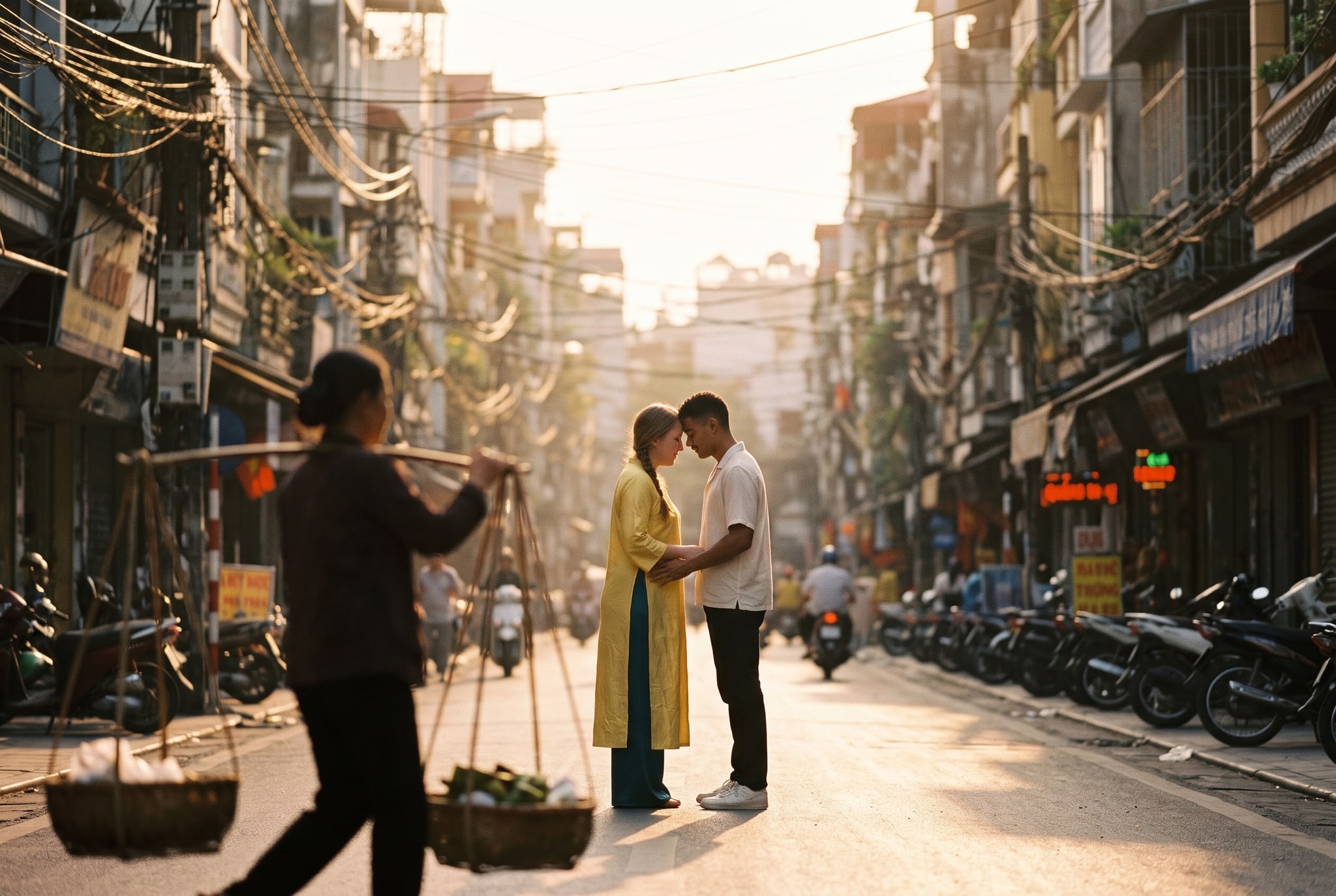
The rice terraces (especially near Ta Van or La Pan Tan) are the cliché for a reason: the geometry and scale are dramatic. Early light rakes across the contours and turns water golden. Stone Church (Sapa's 1930s stone structure) works year-round because it frames the couple without competing; we shoot there mid-morning. Ta Phin village is quieter and more raw—authentic wood houses, fewer tourists—but requires a 45-minute van ride; we use it for couples who want rural, off-the-grid mood and can start early. The town center (Sapa town square, local market fringe) is overused and crowded by 8 a.m.; we avoid it unless the couple specifically asks. Ham Rong (Dragon's Jaw mountain) has viewpoints but involves a cable car, 30-minute hike, and altitude stress; we recommend it only for fit couples and only as a sunset add-on (though Sapa's sunset is often clouded). We pitch three location combos on WhatsApp before booking: the "classic" (terraces + Stone Church), the "adventure" (Ta Phin + forest path), or the "hybrid" (town + one terrace).
What to check before you book a Sapa pre-wedding shoot
- Fitness & altitude: Can you walk 20+ minutes on uneven ground at 1,650 m elevation without distress?
- Weather tolerance: Do you want mist and mood, or do you need clear skies and hard light?
- Timeline: Are you available June–September, and can you arrive the day prior to acclimatize?
- Outfit readiness: Do you have or want to rent an ao dài? (We can advise rental shops in Sapa town.)
- Crew size: Do you need makeup/hair on-site, or will you prep at your hotel? (This affects cost and schedule.)
- Location flexibility: If your top-choice terrace is inaccessible that morning, are you open to a swap?
Ask us for a quote on WhatsApp and mention your dates, outfit preference, and must-have locations. We'll tell you what's realistic and why.
Pages from our team you may need
- ao dai photoshoot package
- couple photoshoot package
- makeup and hair at your hotel
- proposal and anniversary package
FAQ
Do we need an ao dài for a Sapa shoot, or can we wear Western wedding clothes?
Western wear works, but ao dài photographs incomparably better in mountain terrain and mist. If you're not certain, rent both; we'll shoot outfit transitions at sunrise when light is most forgiving.
How early do we actually wake up, and is it worth it?
You wake at 5:30–5:45 a.m. to reach the terraces by 6:00 a.m. Yes, it is worth it. That hour (6:00–7:00 a.m.) is when Sapa's light is softest and crowds are nonexistent. After 8 a.m., you're competing with daytrippers and harsh shadows.
What if it rains heavily on shoot day?
We assess 48 hours prior and offer to reschedule or pivot to covered locations (Stone Church, village structures). Light rain stays; heavy rain moves the shoot. Your deposit transfers to the new date.
Can we do Sapa in November or December for clear skies?
Possible, but riskier. October–November is transition season with unpredictable fog. December–February is clearer but colder (lows around 40°F) and involves less dramatic mist. Best window is June–September for the mood and the lush terraces.
How many outfit changes can we fit into one morning?
Two outfit changes plus styling resets typically stay within 4 hours. A third look often requires rushing or extending into the harsh-light window (after 10:00 a.m.). We recommend choosing quality over quantity and building a special concept shoot day if you want more.
Do we need to hire a guide, or can we just drive ourselves?
A local guide is non-negotiable. They know private terrace access, avoid tourist traps, communicate with villagers, and steady you on steep paths. Cost is modest and included in package quotes.
Pre-Wedding & Elopement
Inclusions, prices and booking are on our booking site.
FAQ
Do we need an ao dài for a Sapa shoot, or can we wear Western wedding clothes?
Western wear works, but ao dài photographs incomparably better in mountain terrain and mist. If you're not certain, rent both; we'll shoot outfit transitions at sunrise when light is most forgiving.
How early do we actually wake up, and is it worth it?
You wake at 5:30–5:45 a.m. to reach the terraces by 6:00 a.m. Yes, it is worth it. That hour (6:00–7:00 a.m.) is when Sapa's light is softest and crowds are nonexistent. After 8 a.m., you're competing with daytrippers and harsh shadows.
What if it rains heavily on shoot day?
We assess 48 hours prior and offer to reschedule or pivot to covered locations (Stone Church, village structures). Light rain stays; heavy rain moves the shoot. Your deposit transfers to the new date.
Can we do Sapa in November or December for clear skies?
Possible, but riskier. October–November is transition season with unpredictable fog. December–February is clearer but colder (lows around 40°F) and involves less dramatic mist. Best window is June–September for the mood and the lush terraces.
How many outfit changes can we fit into one morning?
Two outfit changes plus styling resets typically stay within 4 hours. A third look often requires rushing or extending into the harsh-light window (after 10:00 a.m.). We recommend choosing quality over quantity and building a [special concept shoot](/go/special-concept) day if you want more.
Do we need to hire a guide, or can we just drive ourselves?
A local guide is non-negotiable. They know private terrace access, avoid tourist traps, communicate with villagers, and steady you on steep paths. Cost is modest and included in package quotes.
More from the team
Elopement photos at Ha Long Bay cruise: what we book on shoot day
Ha Long Bay elopements demand fast decisions: boat schedules, tides, light windows shift by the hour. We share how our team coordinates with cruise operators, what goes wrong, and the real workflow from WhatsApp to final images.
Planning a Ha Long Bay pre-wedding shoot remotely from overseas
Booking a Ha Long Bay pre-wedding shoot from abroad means planning five weeks ahead, syncing across time zones, and trusting your team on the water. Here's how we run it.
One-day pre-wedding photoshoot itinerary in Ha Long Bay
A one-day Ha Long Bay pre-wedding shoot combines limestone karsts, emerald water and tight timing. We share how our team runs it hour by hour.