 Cáo Studio
Home › Blog › Pre-Wedding & Elopement
Shoes for pre-wedding photoshoots on old streets and beaches
By the Cáo Studio team · Hanoi & Saigon · 2026-11-01
Shoes for pre-wedding shoots on old streets and beaches must handle three demands: uneven surfaces (cobblestones in Hanoi's French Quarter, Hoi An's Ancient Town), soft sand (Phu Quoc, Nha Trang), and water. Flat or low-heeled shoes grip better than high heels on wet tiles; water shoes or sandals protect ao dai hems and your feet from sharp shells and hot sand. Most Cáo Studio couples bring two pairs—dressy flats for street scenes, water shoes for beach walks. Budget 2–4 hours per location; bring extra socks, a small towel, and waterproof bags. We tell guests on WhatsApp to break in their shoes 1–2 weeks before the shoot; blisters end a session fast. Chat with us on WhatsApp
Shoes for pre-wedding photoshoots on old streets and beaches must handle three demands: uneven surfaces (cobblestones in Hanoi's French Quarter, Hoi An's Ancient Town), soft sand (Phu Quoc, Nha Trang), and water. Flat or low-heeled shoes grip better than high heels on wet tiles; water shoes or sandals protect ao dai hems and your feet from sharp shells and hot sand. Most Cáo Studio couples bring two pairs—dressy flats for street scenes, water shoes for beach walks. Budget 2–4 hours per location; bring extra socks, a small towel, and waterproof bags. We tell guests on WhatsApp to break in their shoes 1–2 weeks before the shoot; blisters end a session fast.
Why high heels fail on old Vietnamese streets
High heels sink into gaps between cobblestones, twist ankles, and leave you tensed and slow. On wet tiles (common in Hoi An during morning shoots), heels slide and catch. We've stopped shoots to wait while a bride extracted a heel from a cracked stone. Thin heels snap on edges. Thick block heels work slightly better but still limit walking speed and natural poses. Low heels (1–2 cm) or flats let you move freely, keep weight centred, and look graceful in movement. The camera sees your relaxed stride; it shows in the photos. For ao dai shoots, dressy flats—ballet flats, embroidered slippers, or simple sandals—let you walk cobblestones without fear.
What works on Hanoi's French Quarter and Hoi An tile paths
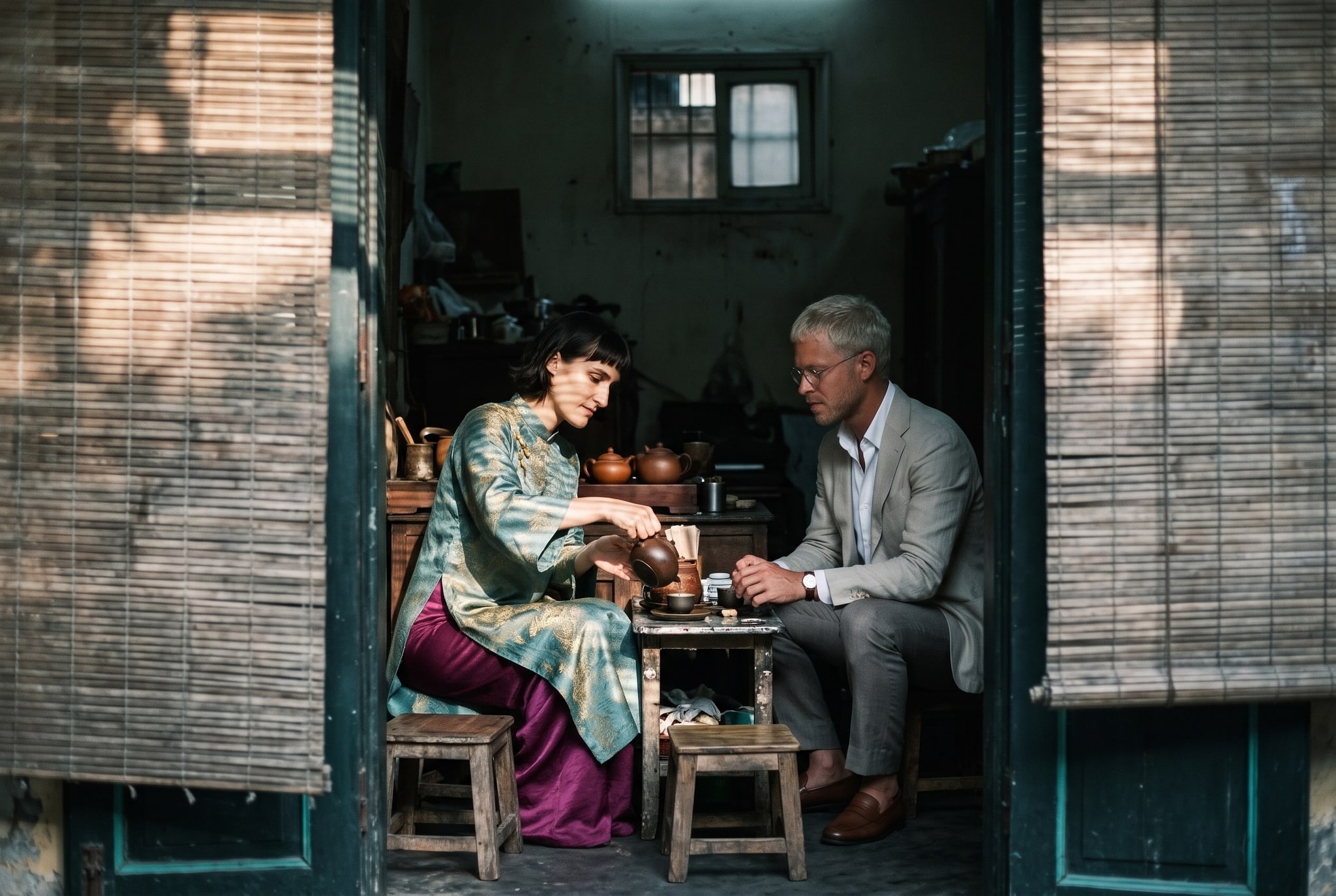
We shoot regularly in Hoi An's Ancient Town and Hanoi's Old Quarter. The streets are narrow, wet in the morning, and paved with old uneven tiles and stones. Ballet flats with a thin sole grip better than thick rubber; embroidered Vietnamese slippers (often a gift piece) look natural with ao dai and handle slopes. Leather-soled shoes slip on wet stone—avoid them. Rubber-soled flat shoes (trainers, canvas shoes, minimalist flats) give grip and can be cleaned easily. Sandals work if the sole is textured and the strap is snug; loose sandals lead to stumbles. We've seen guests in leather flip-flops twist ankles; open-toe shoes expose feet to mud splashes. Close-toe, rubber-soled flats in earth tones (black, brown, cream) frame ao dai well and stay practical. Budget 2 hours for a street shoot; the first 30 minutes are often spent on footing, not poses.
Beach and sand: water shoes or going barefoot
Sand is forgiving but hides hazards—sharp shells, broken coral, hot ground at midday. Water shoes (neoprene slip-ons with rubber soles) protect feet and stay light on camera. Many couples remove water shoes for final photos, so the shoes don't appear. Barefoot shots work if the sand is clean and cool; sunset beach sessions (around 16:00–17:30) are cooler. Sandals with ankle straps work if you're comfortable in them; casual canvas shoes dry quickly but leave wet marks on ao dai hems. We tell guests: if the ao dai is silk or heavy cotton, wet hems are hard to fix in post and show as dark stains. Water shoes keep hems dry; if you go barefoot, have your stylist tuck and pin the hem before water shots. Pack a quick-dry towel and waterproof bag in the shoot vehicle.
The shoe-change strategy: what our studio uses on set
We bring 3–4 pairs on every beach or street shoot. Our stylists know that footwear changes mood and pace. Early street scenes (golden hour, 06:30–07:30 in Hanoi) often use dressy flats because light is soft and poses are slower. Mid-shoot (08:00–10:00) moves to active walking—we suggest water shoes or slip-ons so the couple feels confident jumping over puddles or walking uneven steps. Final shots are calm; sometimes we go barefoot on sand or grass. We coordinate shoes with the outfit and location on the day before via WhatsApp. If a bride says "I want to wear heels," we ask what the first location looks like and show photos of similar shoots on that street. Most couples then pick flats after seeing how cobblestones look in our reference images. This honest conversation saves 30 minutes of re-dos on the day.
| Shoe type | Street cobblestones | Sand/beach | Water safety | Ao dai photo look | Comfort for 2 hours |
|---|---|---|---|---|---|
| Ballet flats | Excellent | Fair | Poor | Excellent | Good |
| Water shoes | Fair | Excellent | Excellent | Fair | Excellent |
| Dressy sandals | Good | Good | Fair | Good | Fair |
| Leather slip-ons | Poor | Fair | Poor | Excellent | Good |
| Hiking trainers | Excellent | Fair | Good | Fair | Good |
| Barefoot | Fair | Excellent | Fair | Excellent | Excellent |
See packages and prices on vietnamphotoshoot.com
What happens when guests pick the wrong shoes (and how we recover)
We've had brides arrive in 8 cm heels on a Hoi An shoot. By shot 3, she was limping; by shot 5, we paused and drove to a nearby shop (Tan Ky House area) and bought flat sandals in 15 minutes. Cost us time but saved the session. Another couple wore pristine white trainers to a beach sunset session—sand filled them, socks got wet, and the bride's feet went numb in the cold water. We finished the shoot but she wasn't smiling in the last 20 frames. Our lesson: we now text couples 2 days before with a short checklist. "Bring a second pair of shoes in a waterproof bag. Pack extra socks and a small towel. If unsure, message us a photo of your shoes." This simple prompt cuts problems by half. On the day, our photographer notices foot strain in your posture and suggests a shoe change before you feel pain. We carry basic flip-flops and slip-ons in common sizes in the studio van, just in case.
Breaking in shoes before your shoot
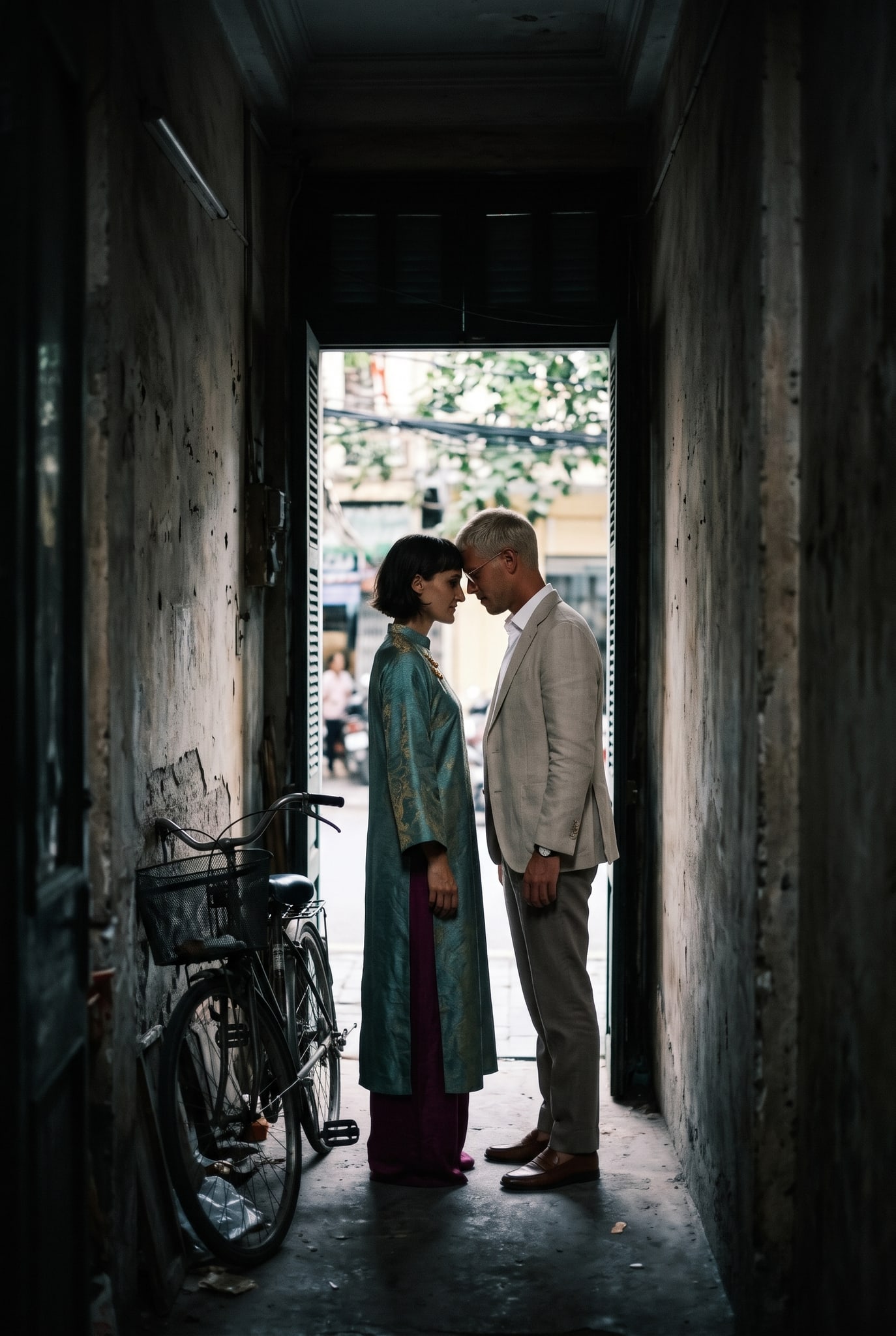
Blisters, rubbed heels, and pinched toes destroy the last hour of a session. We ask couples to wear their chosen shoes for at least 2 hours a day for 1–2 weeks before the shoot. Walk on different surfaces: tile, grass, stairs, uneven ground. If a shoe still pinches after 1 week, pick a different pair. On the shoot day, wear the exact socks you'll wear in the photos (or go sockless if that's your plan). Bring a blister kit: plasters, blister pads, and pain relief. One guest brought gel insoles and swapped them between shoes at lunch; her comfort improved visibly in the afternoon frames. We've also seen guests wear "shooter shoes" during the shoot and change into heels only for final posed photos—this is smart planning. If you're doing an ao dai photoshoot with heavy embroidered costume pieces, the extra weight shifts your balance; flat shoes become essential, not optional.
The most overlooked detail: the inside of your shoe. Wet sand, dirt, and moisture from morning dew accumulate fast. By midday, shoes feel heavier and your feet ache. We carry a soft brush and hand towel in the shoot vehicle. Between locations, we clean shoes and let them air. If you're packing your own shoes for a full-day session, bring two pairs and rotate them hourly. Your feet will thank you, and your smile in the photos will look genuine.
Sourcing shoes in Vietnam if you fly in without the right pair
Not every traveller can pack two pairs of shoes. Hanoi's Old Quarter has dozens of shoe shops around Hang Gai street; Saigon has massive shoe districts in District 1 and Ben Thanh market. Hoi An's Ancient Town has tourist-friendly shoe shops on Nguyen Thai Hoc street. Most stock ballet flats, sandals, and canvas shoes in international sizes. Price per pair typically ranges from 200,000 to 800,000 VNĐ for decent quality (local brands or familiar international names). We tell guests: arrive 2–3 days before your shoot and test shoes in the actual location. Walk Hoi An's streets or a Hanoi park. Feel how the shoe handles moisture and uneven ground. Then decide. If you buy on the day before, you run the blister risk. Many guests buy a pair, use it for the shoot, then leave it at the hotel or gift it. Shoe shops near tourist zones accept this; they resell used-once shoes cheaply.
See packages and prices on vietnamphotoshoot.com
Coordinating shoes with your stylist and photographer
When you book a couple photoshoot or pre-wedding session with Cáo Studio, our stylists ask about shoe choices 1 week before. We discuss outfit colour, location, and season. A winter shoot in Hanoi (December–February) benefits from closed-toe shoes for warmth; a summer beach session (May–September) calls for water shoes or sandals. Our photographer reviews the shoot plan—if location 1 is cobblestones and location 2 is sand, we suggest packing both shoe types in the vehicle. We coordinate timing so you have 5–10 minutes between locations to change shoes and settle in. On the day, your photographer will suggest poses that work with your shoes. In flats, you can kneel, walk naturally, and move freely. Heels limit you to standing and slow walking. This matters for our shot list. We plan more active poses when couples wear shoes they can move in. The result: more variety and energy in your final gallery.
We also work with your makeup and hair team to time touch-ups around shoe changes. If you're wearing flats for 90 minutes and then changing to barefoot for beach shots, the hair and makeup shift slightly—wind, salt spray, sand spray. Our stylist anticipates this and refreshes your look before the final barefoot frames. This coordination is invisible to you but visible in the photos.
What to check before you book and arrive
Before booking:
- Confirm the shoot locations (street, beach, park, water).
- Check weather forecasts for rain and ground conditions.
- Message our team on WhatsApp with a photo of your planned shoes.
- Ask if the location has stairs, wet surfaces, or sand.
1–2 weeks before:
- Wear your chosen shoes for 2+ hours a day on varied surfaces.
- Test them on cobblestones, wet tiles, or sand (if available locally).
- Stop using them if blisters appear; pick a backup pair.
3 days before:
- Confirm shoe choices and pack a waterproof bag with a second pair.
- Pack socks, a small towel, and a blister kit.
- Check weather and sand/tide conditions for beach shoots.
On the day:
- Arrive 15 minutes early so stylists can check footwear comfort.
- Bring the waterproof bag into the vehicle.
- Tell your photographer if any shoe feels off; we can swap or adjust.
FAQ
Can I wear high heels on old streets in Hoi An and Hanoi?
High heels (over 3 cm) catch in cobblestone gaps, limit movement, and slow down poses. We've seen heels snap on uneven edges. Low heels (1–2 cm) or flats grip better, frame ao dai well, and let you walk naturally. Most couples we shoot with choose flats after seeing our reference photos.
Should I go barefoot on the beach?
Barefoot works if the sand is clean, cool, and shell-free. Sunset shoots (16:00–17:30) are cooler. Sharp shells, hot midday sand, and wet hems of heavy ao dai fabrics make water shoes safer. If you go barefoot, our stylist pins and tucks the hem before water scenes to prevent dark stains in post.
What if I don't know what shoes to bring?
Message us on WhatsApp 1 week before with a photo of your options. We'll tell you what works for your specific locations. If you're flying in without shoes, plan to buy locally 2–3 days early and test them on the actual street or beach before the shoot.
How do I avoid blisters on a 4-hour shoot?
Wear your shoes daily for 1–2 weeks before the shoot. Bring a blister kit and extra socks. Rotate between two pairs of shoes if possible. Our team carries a soft brush and towel to clean shoes between locations, which eases foot strain.
Do I need different shoes for the groom and bride?
Not always. Both partners benefit from flat, grippy shoes on cobblestones and water shoes on sand. If the bride wears an ao dai and the groom wears traditional áo ghi or modern dress, coordinating neutral-tone flats (black, brown, cream) looks cohesive in photos and keeps both partners comfortable.
What's the best shoe to wear during an ao dai photoshoot?
Ballet flats, embroidered Vietnamese slippers, or simple sandals complement ao dai best. Avoid thick hiking trainers or heavy boots; they clash with the delicate fabric. Dressy flats in earth tones frame ao dai and let you move naturally on uneven ground.
Should I pack shoes in checked luggage or carry-on?
Either works. If you're flying to Vietnam for a shoot, pack one pair of shoes in your carry-on (your backup) and one in checked luggage. This way, if luggage is delayed, you have footwear for the session. Many guests buy a third pair locally before the shoot to reduce luggage weight.
Pre-Wedding & Elopement
Inclusions, prices and booking are on our booking site.
FAQ
Can I wear high heels on old streets in Hoi An and Hanoi?
High heels (over 3 cm) catch in cobblestone gaps, limit movement, and slow down poses. We've seen heels snap on uneven edges. Low heels (1–2 cm) or flats grip better, frame ao dai well, and let you walk naturally. Most couples we shoot with choose flats after seeing our reference photos.
Should I go barefoot on the beach?
Barefoot works if the sand is clean, cool, and shell-free. Sunset shoots (16:00–17:30) are cooler. Sharp shells, hot midday sand, and wet hems of heavy ao dai fabrics make water shoes safer. If you go barefoot, our stylist pins and tucks the hem before water scenes to prevent dark stains in post.
What if I don't know what shoes to bring?
Message us on WhatsApp 1 week before with a photo of your options. We'll tell you what works for your specific locations. If you're flying in without shoes, plan to buy locally 2–3 days early and test them on the actual street or beach before the shoot.
How do I avoid blisters on a 4-hour shoot?
Wear your shoes daily for 1–2 weeks before the shoot. Bring a blister kit and extra socks. Rotate between two pairs of shoes if possible. Our team carries a soft brush and towel to clean shoes between locations, which eases foot strain.
Do I need different shoes for the groom and bride?
Not always. Both partners benefit from flat, grippy shoes on cobblestones and water shoes on sand. If the bride wears an ao dai and the groom wears traditional áo ghi or modern dress, coordinating neutral-tone flats (black, brown, cream) looks cohesive in photos and keeps both partners comfortable.
What's the best shoe to wear during an ao dai photoshoot?
Ballet flats, embroidered Vietnamese slippers, or simple sandals complement ao dai best. Avoid thick hiking trainers or heavy boots; they clash with the delicate fabric. Dressy flats in earth tones frame ao dai and let you move naturally on uneven ground.
Should I pack shoes in checked luggage or carry-on?
Either works. If you're flying to Vietnam for a shoot, pack one pair of shoes in your carry-on (your backup) and one in checked luggage. This way, if luggage is delayed, you have footwear for the session. Many guests buy a third pair locally before the shoot to reduce luggage weight.
More from the team
Boho pre-wedding photoshoot in Vietnam: Hanoi, Saigon, Hoi An
Boho pre-wedding shoots mix romantic, free-spirited aesthetics with Vietnam's landscapes and heritage sites. We run full-day sessions in three cities, handling styling, makeup, location scouts and edits.
Avoid crowds at Hoang Su Phi rice terraces: timing for wedding shoots
Hoang Su Phi's terraced landscape draws couples and tour buses in equal measure. We show how to shoot there alone, when to arrive, and what to arrange with us before you go.
Photography rules at Con Dao beaches: permits, drones and what to check
Con Dao's beaches demand prep before you shoot—permits, drone zones and tide timing all affect your day. We share what the Cáo Studio team verifies on every booking.