 Cáo Studio
Home › Blog › Pre-Wedding & Elopement
Tam Coc Wedding Photos: Best Time of Day and Light
By the Cáo Studio team · Hanoi & Saigon · 2026-11-02
Tam Coc wedding light peaks at sunrise (5:30–7:00 a.m.) and golden hour (4:30–6:30 p.m.), when soft, directional sun flatters skin and dramatizes the karst landscape without harsh shadows. We shoot year-round but plan sessions around monsoon patterns: May–September brings moody skies and reflective water; October–April offers clear, cooler conditions. Midday (11 a.m.–2 p.m.) flattens faces and creates blown-out skies—we avoid it unless couples want a specific high-contrast look. A typical Cáo Studio pre-wedding photoshoot spans 4–6 hours and includes two light windows (e.g., early morning in the village, sunset on the water). Budget travel time: 90 minutes from Hanoi, 3+ hours from Saigon. Book 4–8 weeks ahead; we scout weather forecasts and adjust dates if heavy rain threatens the valley. Chat with us on WhatsApp | See packages and prices on vietnamphotoshoot.com
Why does Tam Coc light feel so different at each hour?
Tam Coc's narrow valley and vertical cliffs act as a natural reflector and diffuser. At sunrise, light rakes across water and stone at a shallow angle, sculpting texture without washing out skin tones. By 9 a.m., the sun climbs and shadows shrink—good for wide-angle landscapes but less flattering for couple close-ups. At midday, sun bleaches the karst white and casts dark shadows under eyes. Golden hour reverses the sunrise geometry: backlit mist and water glow amber, and the sky turns pink and purple behind the cliffs. We've learned to position couples facing north in the morning (sun behind their left shoulder) and south in the evening (sun behind their right) to control contrast and keep eyes sharp.
Key insight: Tam Coc's limestone reflectivity means even overcast days (common June–August) yield soft, even light—fewer blown-out backgrounds and easier exposure for our photographers.
What's the best season for Tam Coc wedding photos?
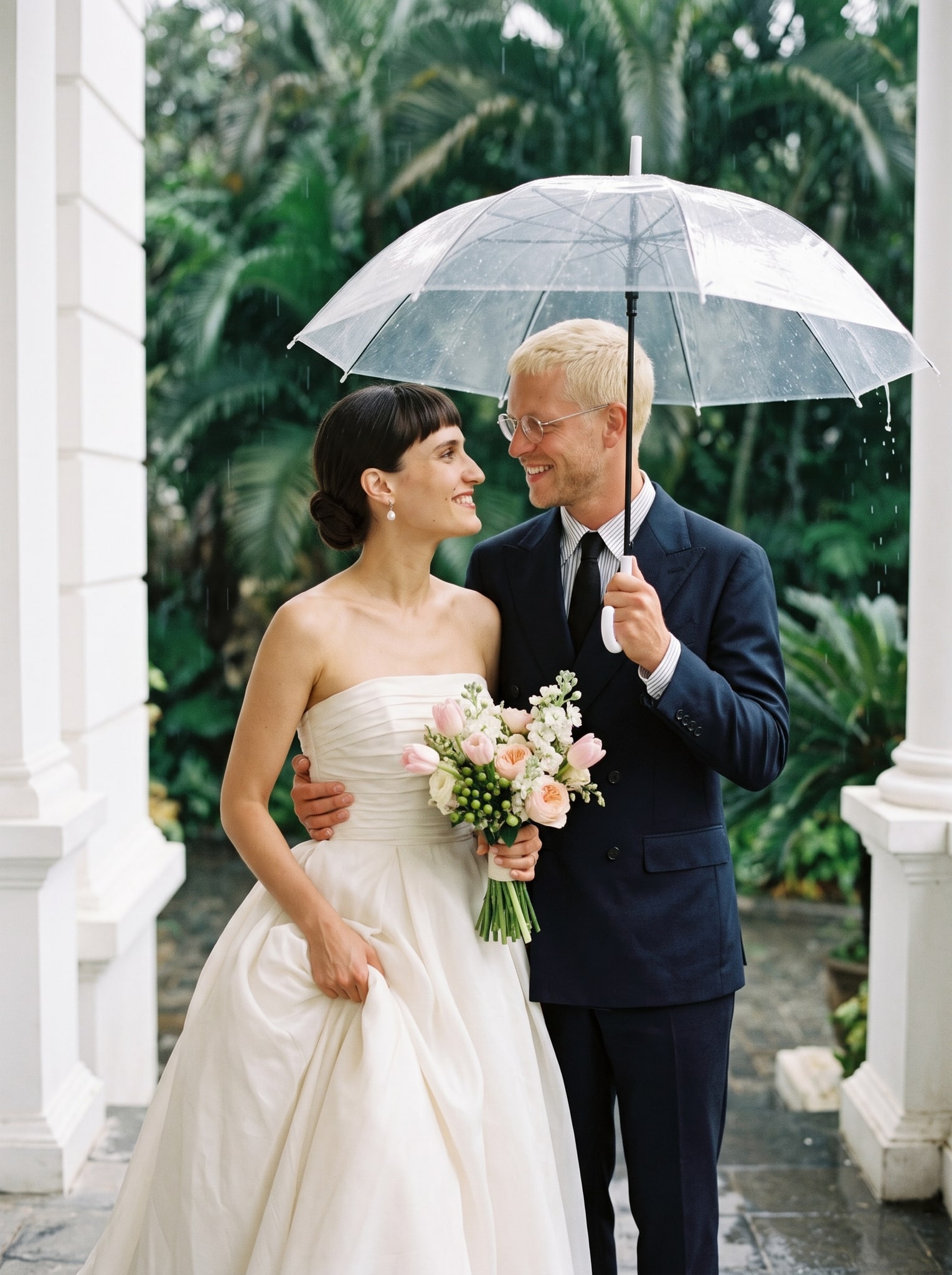
October through March delivers cool temperatures, stable light, and clear skies—our team's preferred window. November and December see the most couples; our calendar fills 6–8 weeks early. April heats up (30°C+) and afternoon haze thickens, but sunrise shots remain crisp. May marks the monsoon start: heavy rain can flood the valley, but when clouds break, the wet limestone and still water reflect sky and cliff in ways we can't replicate in dry season. Couples who want moody, intimate images (fewer tourists, mist-wrapped karst, rain-dark water) often choose July–August; expect afternoon thunderstorms that halt shoots and require a backup date. Our team always scouts 48 hours before a session: if Ngo Dong River rises or rain persists, we reschedule at no extra cost and offer an alternative time or location (e.g., Hoa Lu temples, Hang Mua base).
Bottom line: Book October–March for guaranteed clear light; book May–September if dramatic monsoon mood matches your vision and you accept weather rescheduling.
How do we structure a full-day Tam Coc shoot to catch the best light?
A typical itinerary looks like this. We meet clients at their hotel in Ninh Binh or Hanoi by 4:30 a.m. (if traveling from Hanoi, we depart at 3:00 a.m.) and arrive at Tam Coc around 5:45 a.m., before golden light breaks. First hour: portraits in the village (quiet streets, soft shadows on old brick, morning mist on water). Second hour: boat shoot on Ngo Dong River as light angles steeper—bride and groom on a traditional wooden boat, limestone backdrop. By 8:30 a.m., sun climbs; we pause for a light breakfast at our local café. Mid-morning (9:00–11:30 a.m.): we shoot wide scenes—couple walking rice paddies, exploring Hang Mua base, or visiting Hoa Lu temples. Midday is buffer time: couples rest, we adjust for heat and humidity. Afternoon (2:00–4:00 p.m.): we scout the next golden-hour location and do touch-ups (makeup, hair, wardrobe changes if a couple brought two áo dài or a second dress). Final hour (4:30–6:30 p.m.): we position the couple on a riverside platform or rice-paddy edge, backlit by the setting sun, with the karst silhouetted behind them. Light holds for 45 minutes; we shoot in short bursts to manage contrast.
We've learned to start earlier than most: Tam Coc sees buses arrive around 8:00 a.m., so a 5:45 a.m. start means we own the light and water. Lunch is non-negotiable; a hungry couple moves slower and tenses up in the afternoon light.
What light conditions should couples avoid or embrace intentionally?
| Condition | Time | What Happens | When to Choose It | When to Avoid It |
|---|---|---|---|---|
| Hard overhead sun | 11 a.m.–2 p.m. | Shadows under eyes, blown-out sky, harsh contrast. | Rarely; only for silhouette or graphic B&W work. | Most couple portraits and landscape shots. |
| Golden hour (sunrise) | 5:30–7:00 a.m. | Soft, warm, side-lit; flatters skin; dramatic cliff shadows. | Nearly always; our default for bride-groom close-ups. | None; it's the standard for a reason. |
| Golden hour (sunset) | 4:30–6:30 p.m. | Warm, backlit; sky turns pink; water glows; strong silhouettes. | Backlighting, romantic mood, couple-in-landscape wide shots. | If couple wants sharp facial detail in low light. |
| Overcast/monsoon | Any, June–August | Flat, shadowless, cool-toned; risk of dull sky. | Moody, intimate, cinematic B&W; fewer squints. | Couples wanting bright, cheerful, colorful images. |
| Blue hour (twilight) | 6:30–7:30 p.m. (winter); 7:00–8:00 p.m. (summer) | Deep blue sky, warm lights kick in; surreal, cool-toned. | Sophisticated, editorial couples; night romance. | Requires fast lenses and noise tolerance at high ISO. |
Our decision rule: If the couple's vision is dreamy and romantic, we lean into golden hour and backlit setups. If they want clear, crisp, colorful detail, we maximize mid-morning light before the sun gets overhead.
Chat with us on WhatsApp | See packages and prices on vietnamphotoshoot.com
What lighting gear and tactics does our team bring to Tam Coc?
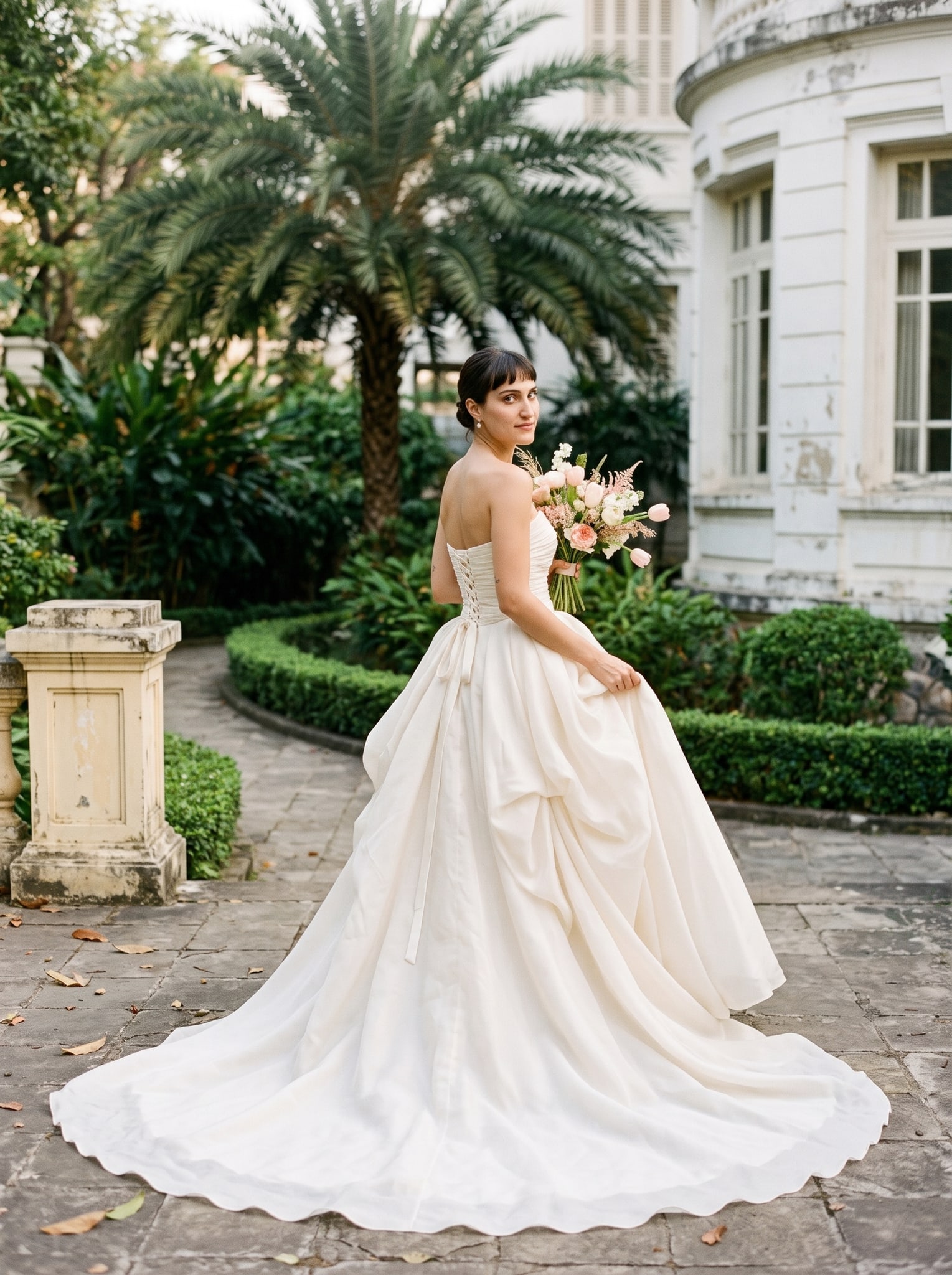
We travel with minimal gear to stay mobile in the heat and hills. One reflector (5-in-1, gold/silver side) bounces golden-hour light back into bride's face, lifting shadows without adding flash. One 5K dimmable LED panel (battery-powered, pocket-sized) balances underexposed shadows when we shoot in the boat on backlit water—rare, but essential on overcast days. No off-camera flash: Tam Coc's water and limestone already reflect enough light, and flash reads fake against natural dawn or dusk. Our photographers shoot in aperture-priority mode (f/2.0–f/4.0 for subject isolation, f/5.6–f/8 for landscape depth) and dial exposure compensation up +0.7 to +1.3 stops in backlit scenarios to hold detail in the couple's faces. We bracket exposures (three frames per pose) in golden hour to capture sky gradation and recover shadow detail in post-processing. Dress and makeup matter too: matte foundation holds better in humidity and golden light than dewy finishes, which read washed-out in harsh backlight.
One detail many couples miss: white and pale-yellow áo dài blow out in golden hour, especially at sunset. We test dress colors in the initial consultation and often suggest deeper jewel tones, pastels with warm undertones, or cream with layered textures that hold light.
What weather and light surprises does our team prepare for?
In 15+ years shooting Tam Coc, we've learned that forecasts are hints, not facts. Monsoon rain can appear suddenly between 2:00–4:00 p.m. in July, clearing by 5:30 p.m. We schedule backup indoor shots (Hang Mua cave interiors, old brick buildings in the village, a local home's courtyard) so we're never idle. Tourists and their guides create moving obstacles: boats cluster at scenic river bends around 8:00 a.m., so we shoot the Ngo Dong boat scene before 7:00 a.m. or after 5:00 p.m. Haze from crop burns (March–April) sometimes flattens the early-morning light; we relocate to Hoa Lu temples or Mua Cave areas to gain elevation and clarity. Unexpected bright overcast (thick clouds, no sun for 2+ hours) kills golden hour drama—we shift to editorial B&W portraits, wide-angle landscape work, and detail shots (rings, flowers, hands) that thrive in flat, even light.
We've also discovered that couples often underestimate humidity's effect on makeup: waterproof mascara, setting spray, and oil-control powder become non-negotiable by hour five, especially in May–August when dew forms on skin within 20 minutes of sunrise.
What to check before you book your Tam Coc shoot:
- Dates: Confirm monsoon season risk (May–September) and accept our rescheduling policy if rain forces a halt.
- Dress choices: Share áo dài and wedding-dress colors with us in the consultation so we can assess how they'll read in your target light window.
- Fitness: Tam Coc includes walking rice paddies, climbing Hang Mua base (500+ steps), and standing in boats; couples need moderate fitness and proper shoes.
- Start time: Confirm whether you prefer early sunrise (4:30 a.m. pickup) or later morning-golden-hour combo (6:30 a.m. pickup). Earlier means better light, less heat, fewer tourists.
- Budget travel: If you're coming from Hanoi or Saigon, factor in 90–180 minutes of pickup time, hotel rest, and post-shoot transport.
See packages and prices on vietnamphotoshoot.com
Our couple photoshoot packages cover all-day Tam Coc sessions. For location and studio base, check Cáo Studio Hanoi if you're traveling from the north. If you want makeup and hair styling on-site, add our makeup and hair at your hotel service—our artists arrive early and work with the light preview we do at 4:00 a.m. to color-match your look to the valley's tone. For destination couples mixing Tam Coc with other Vietnam locations, we also offer special concept shoots that blend karst landscapes with city landmarks.
FAQ
What is the single best hour to shoot Tam Coc wedding photos?
5:30–6:30 a.m. sunrise delivers soft, flattering, side-lit light that sculpts the karst and skin tones evenly. Most Cáo Studio couples book two sessions to capture both sunrise and golden-hour drama.
Can we shoot Tam Coc in rainy season and still get beautiful photos?
Yes. June–August monsoon creates moody, reflective images with wet limestone and gray-blue skies. Expect afternoon thunderstorms; we reschedule at no cost and offer an alternative date. Sunrise often clears before rain hits.
Do we need to wake up at 4:30 a.m. for golden hour, or can we shoot later?
Golden hour lasts only 45–60 minutes. Sunrise starts at 5:30 a.m. (winter) to 5:15 a.m. (summer). Sunset golden hour runs 4:30–6:30 p.m. (winter) to 5:00–7:00 p.m. (summer). A full-day session captures both; half-day is one window only.
Why do midday photos look so harsh and flat?
Overhead sun at 11 a.m.–2 p.m. casts dark eye shadows and bleaches the limestone white, killing depth and color saturation. Tam Coc's narrow valley amplifies the contrast. Midday is rest and transition time in our shoots.
Does weather forecast affect booking, or do we just show up?
We monitor forecasts 48 hours before your shoot. Heavy sustained rain or flooding can force a reschedule. We offer an alternative date at no extra charge and communicate via WhatsApp the night before. Clear, stable weather (Oct–Mar) carries zero reschedule risk.
What should my partner wear to look best in golden-hour backlight?
Avoid white or pale yellow; they blow out in backlight. Jewel tones (emerald, sapphire, burgundy), deep pastels, or textured cream hold light beautifully. Matte foundation and waterproof makeup resist humidity and golden-hour glow better than dewy finishes.
Pre-Wedding & Elopement
Inclusions, prices and booking are on our booking site.
FAQ
What is the single best hour to shoot Tam Coc wedding photos?
5:30–6:30 a.m. sunrise delivers soft, flattering, side-lit light that sculpts the karst and skin tones evenly. Most Cáo Studio couples book two sessions to capture both sunrise and golden-hour drama.
Can we shoot Tam Coc in rainy season and still get beautiful photos?
Yes. June–August monsoon creates moody, reflective images with wet limestone and gray-blue skies. Expect afternoon thunderstorms; we reschedule at no cost and offer an alternative date. Sunrise often clears before rain hits.
Do we need to wake up at 4:30 a.m. for golden hour, or can we shoot later?
Golden hour lasts only 45–60 minutes. Sunrise starts at 5:30 a.m. (winter) to 5:15 a.m. (summer). Sunset golden hour runs 4:30–6:30 p.m. (winter) to 5:00–7:00 p.m. (summer). A full-day session captures both; half-day is one window only.
Why do midday photos look so harsh and flat?
Overhead sun at 11 a.m.–2 p.m. casts dark eye shadows and bleaches the limestone white, killing depth and color saturation. Tam Coc's narrow valley amplifies the contrast. Midday is rest and transition time in our shoots.
Does weather forecast affect booking, or do we just show up?
We monitor forecasts 48 hours before your shoot. Heavy sustained rain or flooding can force a reschedule. We offer an alternative date at no extra charge and communicate via WhatsApp the night before. Clear, stable weather (Oct–Mar) carries zero reschedule risk.
What should my partner wear to look best in golden-hour backlight?
Avoid white or pale yellow; they blow out in backlight. Jewel tones (emerald, sapphire, burgundy), deep pastels, or textured cream hold light beautifully. Matte foundation and waterproof makeup resist humidity and golden-hour glow better than dewy finishes.
More from the team
Boho pre-wedding photoshoot in Vietnam: Hanoi, Saigon, Hoi An
Boho pre-wedding shoots mix romantic, free-spirited aesthetics with Vietnam's landscapes and heritage sites. We run full-day sessions in three cities, handling styling, makeup, location scouts and edits.
Avoid crowds at Hoang Su Phi rice terraces: timing for wedding shoots
Hoang Su Phi's terraced landscape draws couples and tour buses in equal measure. We show how to shoot there alone, when to arrive, and what to arrange with us before you go.
Photography rules at Con Dao beaches: permits, drones and what to check
Con Dao's beaches demand prep before you shoot—permits, drone zones and tide timing all affect your day. We share what the Cáo Studio team verifies on every booking.