 Cáo Studio
Home › Blog › Pre-Wedding & Elopement
Temple Etiquette for Wedding Photos in Vietnam
By the Cáo Studio team · Hanoi & Saigon · 2026-11-02
Vietnamese temple photography isn't just about framing—it's about reading the space, asking monks or caretakers for permission, and timing shoots between prayer cycles. Most temples allow photos during morning hours (6–10 a.m.) or late afternoon (3–5 p.m.), never during ceremonies. You'll need to dress modestly (shoulders and knees covered for both partners), remove shoes in prayer halls, and avoid pointing cameras at altars during active worship. Cáo Studio scouts each venue in advance, confirms access with temple staff via phone or in person, and briefs couples on WhatsApp the day before so there are no surprises on set. Hiring a local team like ours cuts negotiation time and ensures we know which corners of the temple photograph best without disrupting monks or visitors. Chat with us on WhatsApp
Most temples in Hanoi, Saigon, Hoi An, and Ninh Binh sit at the heart of neighborhoods and invite genuine reverence—not just a backdrop. Over dozens of pre-wedding shoots, we've learned that success means arriving informed, asking first, and being ready to pivot if a ceremony starts or a monk politely declines. Here's what we tell couples before we meet them.
Why do temples request specific shooting hours?
Temples operate on prayer schedules, not photography schedules. Most Vietnamese temples hold morning ceremonies (around 6–8 a.m.) and evening prayers (4–6 p.m.). If you shoot during these windows, you'll either block worshipers or interrupt your own session. We always call ahead (usually through the caretaker or abbess) to confirm the temple's open hours for visitors and photographers. Many temples reserve 10 a.m.–2 p.m. for tourists and shoots. Locking in a morning slot (before 9 a.m.) or late afternoon slot (after 5 p.m.) means fewer crowds and more light, though you'll need to be flexible on the exact day if a major festival falls nearby.
What counts as disrespectful dress in a sacred space?
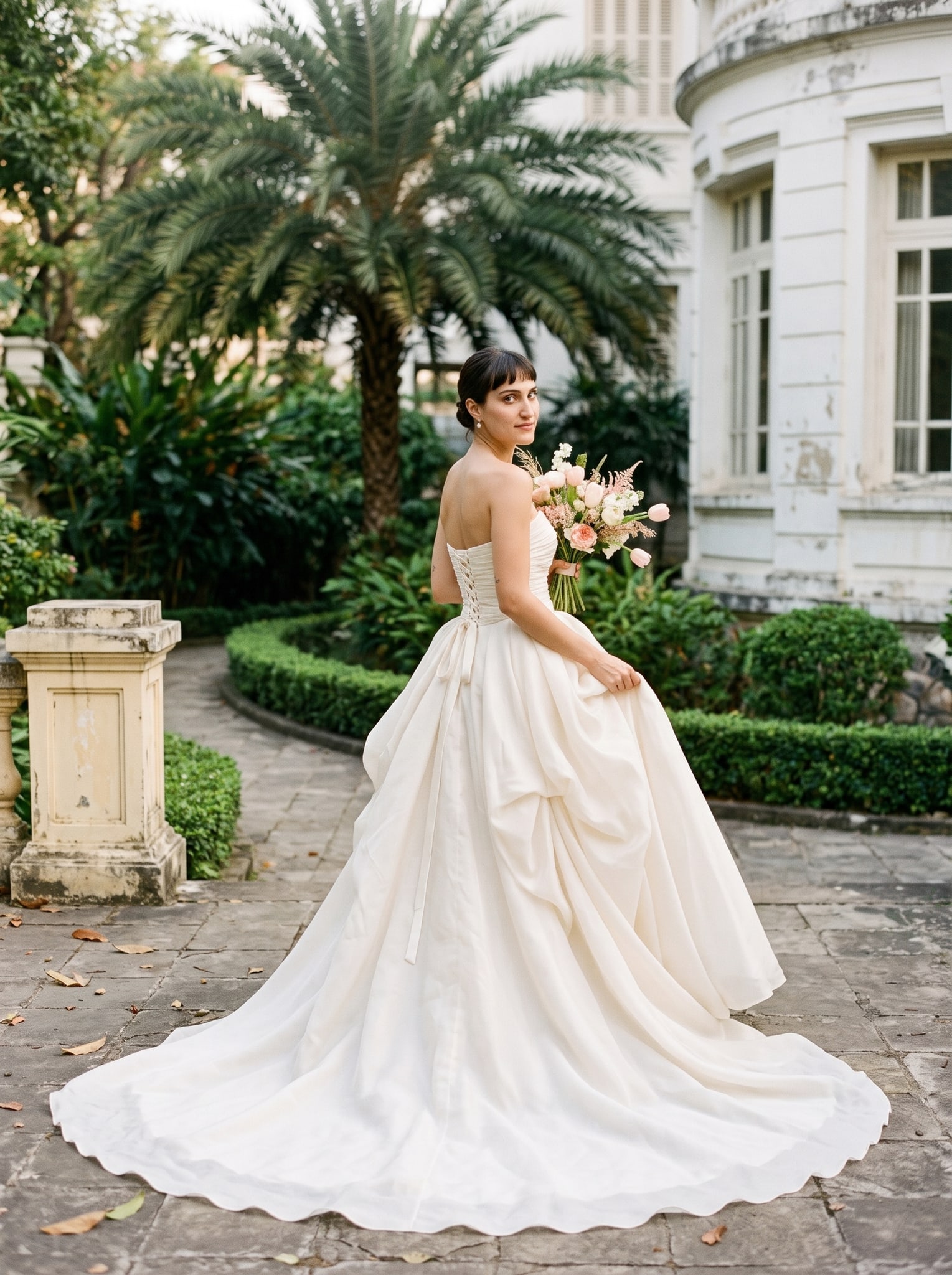
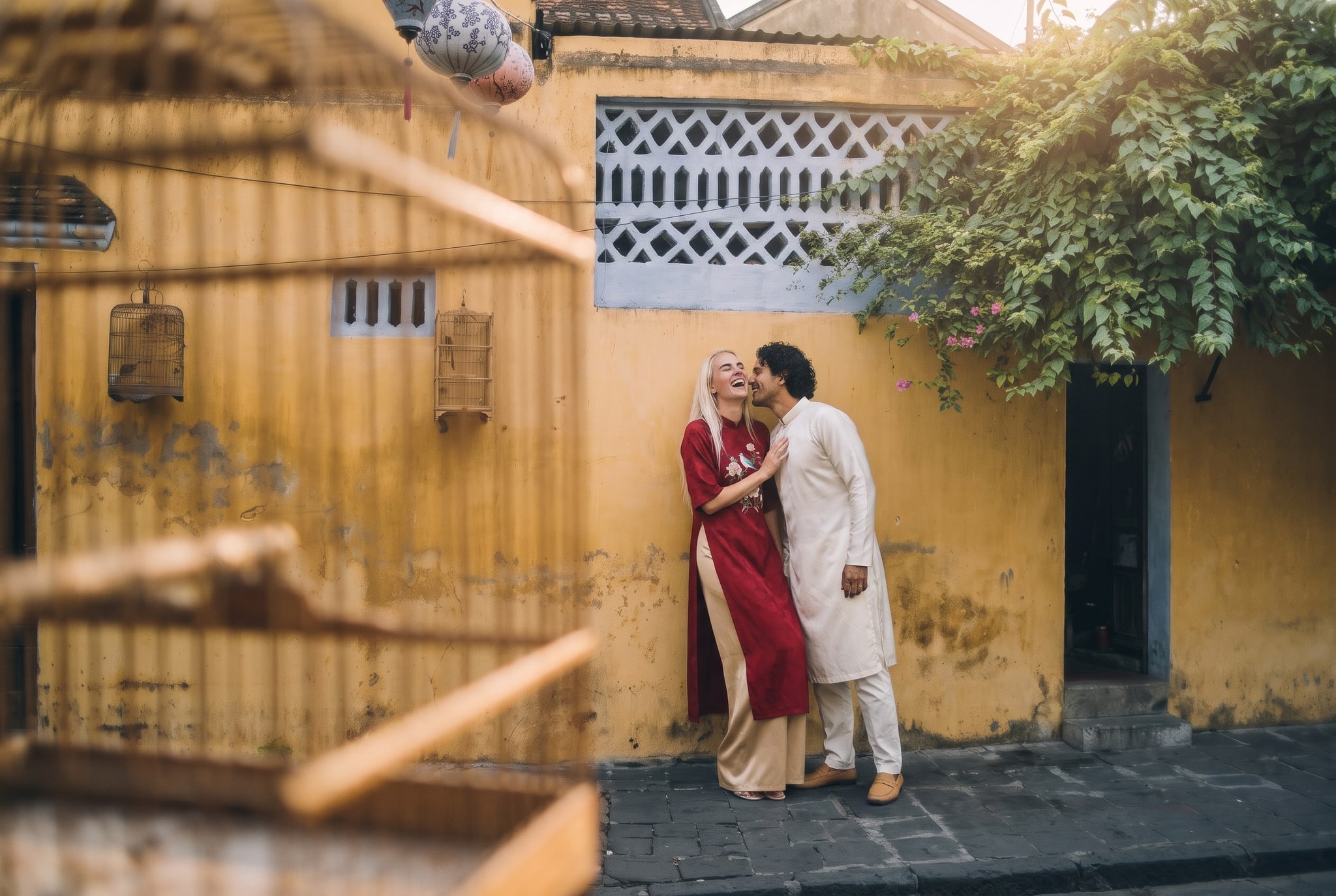
Bare shoulders, short pants, or ripped fabric read as disrespectful to monks and senior worshipers, even if you're there to celebrate love. We ask couples to cover from collarbone to knee—and yes, your áo dài or áo dài-inspired dress already does this. If you're wearing Western suits, bring a lightweight shawl or wrap to drape over sleeveless tops. We've had brides in sleeveless ao dài who we advised to wear a silk stole during prayer-hall shots, then removed it in courtyards for more intimate framing. Footwear matters too: you'll step out of shoes before entering any prayer hall, so slip-ons or easily removable heels save time and avoid the awkward fumble.
How do we get permission without wasting half the morning?
We handle this. When a couple books a pre-wedding photoshoot, we ask which temple they want. Within 48 hours, our studio team phones or visits in person to confirm access, ask about any upcoming ceremonies or renovations, and clarify which areas allow cameras. We then send couples a summary on WhatsApp: exact arrival time, where to park, which door to use, and what to expect inside. This takes pressure off them on the day and means our photographer isn't scrambling to find the caretaker or negotiate while your partner's standing in the heat in full makeup and áo dài.
What happens if a ceremony starts mid-shoot?
We pause, move to another courtyard, or reschedule part of the session without complaint. Once, at a pagoda in Ninh Binh, a funeral service began just as we finished bridal portraits—we pivoted to the exterior gardens and the couple didn't even notice the delay in their final gallery. Our makeup artist and stylist stay with you, so if we shift locations, you're ready instantly. We've also learned which temples have backup courtyards or side chambers that are less likely to conflict with worship. That knowledge comes from shooting the same venues repeatedly and building relationships with caretakers over years.
Which Vietnam temples photograph best for weddings—and why?
| Temple / Site | Location | Best Light Window | Courtyard Drama | Ceremony Risk | Why We Book It |
|---|---|---|---|---|---|
| Văn Miếu | Hanoi | 7–9 a.m. | High—red walls, stone paths | Low | Iconic, permits daytime, few tourists early |
| Thầy Pagoda | Thạch Xương | 5:30–7 p.m. | High—lake reflection | Medium | Reflective water, golden hour, stunning |
| Phố Hàng Đồng Temple | Hoi An | 6–8 a.m. | Medium—narrow, moody | Low | Intimate, aged wood, authentic light |
| Mỹ Khánh A Temple | Mekong, HCMC | 4–6 p.m. | High—riverside, ornate | Low | Open grounds, colorful details, fewer crowds |
| Chùa Khai Phong | Ninh Binh | 6–8 a.m., 3–5 p.m. | High—carved beams, silk drapes | Medium | Intricate interiors, flexible caretakers |
We scout these in person because light, access, and caretaker attitude vary week to week. A temple that welcomes couples in January might host a retreat in March.
How do we style and pose couples so the setting feels sacred, not staged?
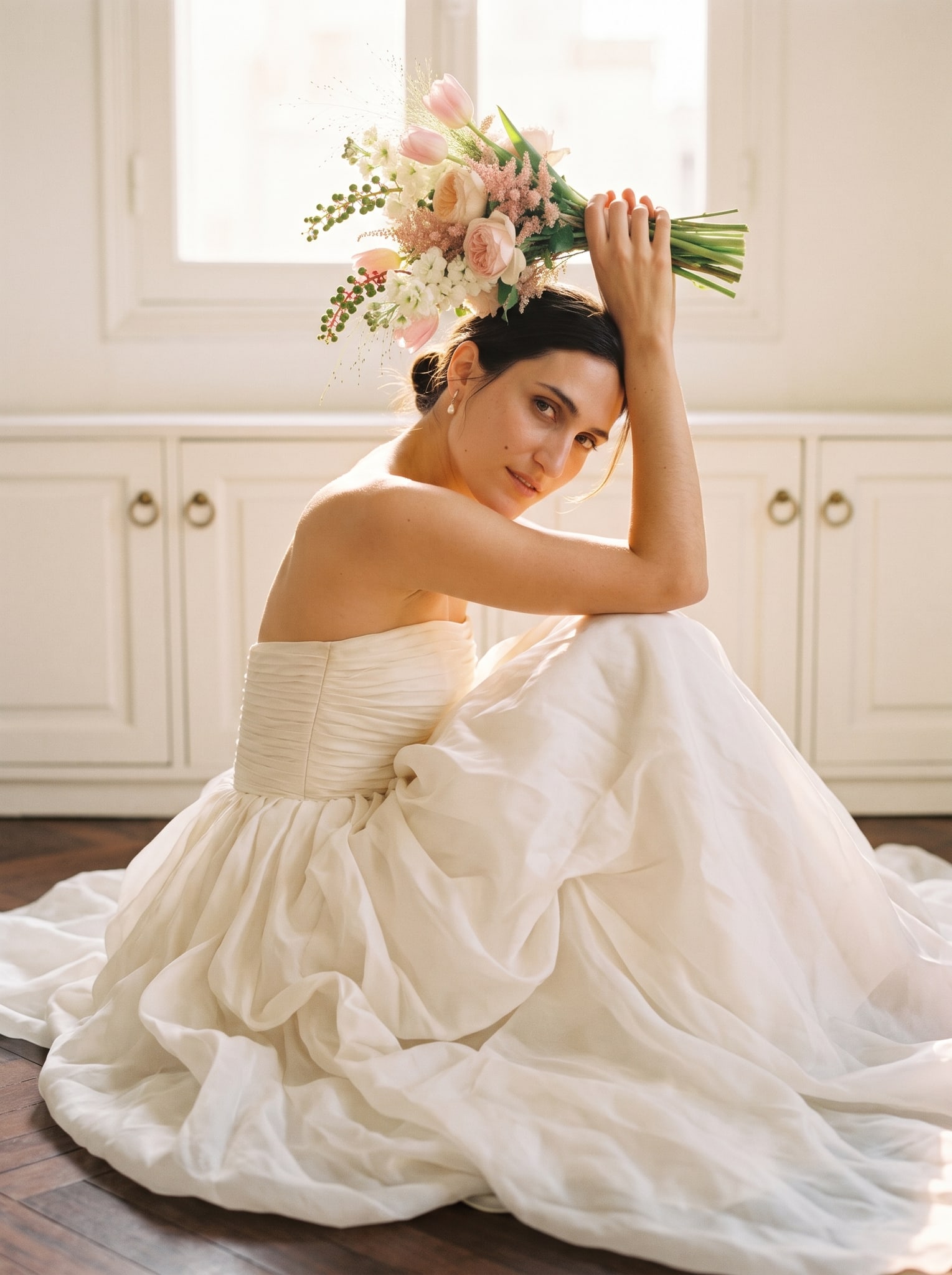
Candid moments—a hand held at an altar, a shared glance under a silk lantern, genuine laughter in a quiet courtyard—matter more than stiff formality. Our stylist and makeup artist see their role as anchoring you in the space, not fighting it. If you're wearing an áo dài, we ensure the fabric flows naturally on stairs or when you kneel. We avoid poses that feel performative or disrespectful: no mock-praying for the camera, no sitting on sacred thresholds, no pointing or leaning on altars. Instead, we frame you in conversation with the architecture—walking through stone gates, framed by carved pillars, reflected in courtyards. This takes longer than a checklist shoot but yields images that feel like you were there, not like you hired an actor to pretend.
See packages and prices on vietnamphotoshoot.com
What do we pack and what do we tell you to expect?
Our team brings wireless mics (so we hear your vows even if a breeze picks up), backup lighting (never flash in prayer halls—we use reflectors and fast lenses), and a rain kit because temples often sit on grounds with unexpected water features. You should bring touch-up makeup, a water bottle, and a phone fully charged. Temples can be cool and damp even on hot days, so a light layer helps. We tell couples: expect to walk 10–15 minutes on uneven stone, remove and put on shoes 4–5 times, and meet at least one monk or caretaker who may ask what you're doing (we explain, they almost always smile and offer tea). It's not sterile; it's real.
What actually goes wrong—and how we fix it.
Rain and slippery stone. We've shot in light drizzle; temples look moody and romantic if you embrace it. Heavy rain shuts us down for safety—we reschedule to the next clear morning without penalty.
Unexpected crowds. Weekend mornings attract school groups and tourists. We scope the venue on the same day and time of week beforehand, then adjust arrival or use quieter areas.
Makeup melting in humidity. Our makeup artists use setting spray rated for tropical weather and bring blotting paper. We also schedule temple shoots for early morning when humidity is lower.
Caretaker says no cameras in one room. We nod, move to an adjacent space, and thank them. Respect opens doors; pushback closes them.
Silk áo dài catches on temple steps. Our stylist walks your dress and checks fabric before every pose. One time we had a hem pin under your arm so the sleeve didn't drag—small, invisible, saved the shot.
What to check before you book a temple shoot.
- Is the temple open year-round to visitors? Some close for renovation or special events. Ask us to confirm; we'll call ahead.
- Does the temple charge a photography fee? Most don't, but a few donate-based temples expect a small contribution (our current quote–200,000). We budget this into planning.
- Can you bring additional family or friends? Large groups disrupt worship. We usually allow 1–2 close family members if they dress modestly and stay quiet.
- Are drone shots allowed? Almost never. Vietnamese temples are air-traffic sensitive and most prohibit drones outright.
- Can we hire a car to wait outside, or do we need to arrange our own? Ask when you book. Our Hanoi and Saigon teams often coordinate transport as part of the package.
These aren't generic "nice-to-knows"—they're things we've learned by shooting the same temples dozens of times and talking to caretakers face-to-face.
For a couple photoshoot rooted in a temple or sacred site, start by reaching out on WhatsApp with your date and location. We'll scout it, confirm access, and build a timeline that respects the space and your vision. If you're planning a full pre-wedding journey across multiple locations—temple, countryside, urban Hanoi or Ho Chi Minh City—our pre-wedding package bundles scouting, styling, hair and makeup, and a day of shooting. Ready to move forward?
See packages and prices on vietnamphotoshoot.com
Pages from our team you may need
FAQ
Can we get married *inside* a temple and have Cáo Studio photograph it?
Not without a prior relationship with the temple and the abbot's blessing. Civil marriage in Vietnam happens at district offices; temple ceremonies are blessings, not legal unions. We photograph pre-wedding shoots at temples and post-ceremony blessing sessions if approved in advance.
Do we tip the monks or caretakers after shooting?
No tip is expected, but many couples leave a small donation in the donation box at the temple entrance. We mention this on WhatsApp beforehand so you're prepared.
What if it's the Lunar New Year or a major festival—can we still shoot temples?
Temples are packed during Tết. We advise booking temple shoots 2–3 weeks before or after major holidays. If a couple insists, we negotiate early-morning access (5–6 a.m.) with temple staff—it's possible but tight.
Do we need a special visa or permit to photograph in Vietnamese temples?
No. You need a valid passport and tourist visa (or visa exemption depending on your nationality). Temples don't require photo permits for personal, non-commercial use. For commercial/publication work, we handle any local coordination.
Can couples of different religions or non-religious couples shoot in a temple?
Yes. A temple is a cultural and architectural space open to respectful visitors of any faith. We frame the shoot around the beauty of the space and your love, not religious ritual. Many couples from mixed-faith backgrounds find temples meaningful for symbolism alone.
What's the difference between booking a temple shoot through you versus showing up on our own?
We scout the venue, confirm timing with staff, handle wardrobe and makeup contingencies, know which areas photograph best, and pivot if ceremonies start. You show up, find the caretaker, negotiate access, handle timing, and hope your phone battery lasts. Our couples spend 4 hours getting gallery-ready images; DIY couples often spend 4 hours figuring out logistics and get 20 usable shots. We've done it hundreds of times; the difference is real.
Pre-Wedding & Elopement
Inclusions, prices and booking are on our booking site.
FAQ
Can we get married *inside* a temple and have Cáo Studio photograph it?
Not without a prior relationship with the temple and the abbot's blessing. Civil marriage in Vietnam happens at district offices; temple ceremonies are blessings, not legal unions. We photograph pre-wedding shoots *at* temples and post-ceremony blessing sessions if approved in advance.
Do we tip the monks or caretakers after shooting?
No tip is expected, but many couples leave a small donation (₫100,000–300,000) in the donation box at the temple entrance. We mention this on WhatsApp beforehand so you're prepared.
What if it's the Lunar New Year or a major festival—can we still shoot temples?
Temples are packed during Tết. We advise booking temple shoots 2–3 weeks *before* or *after* major holidays. If a couple insists, we negotiate early-morning access (5–6 a.m.) with temple staff—it's possible but tight.
Do we need a special visa or permit to photograph in Vietnamese temples?
No. You need a valid passport and tourist visa (or visa exemption depending on your nationality). Temples don't require photo permits for personal, non-commercial use. For commercial/publication work, we handle any local coordination.
Can couples of different religions or non-religious couples shoot in a temple?
Yes. A temple is a cultural and architectural space open to respectful visitors of any faith. We frame the shoot around the beauty of the space and your love, not religious ritual. Many couples from mixed-faith backgrounds find temples meaningful for symbolism alone.
What's the difference between booking a temple shoot through you versus showing up on our own?
We scout the venue, confirm timing with staff, handle wardrobe and makeup contingencies, know which areas photograph best, and pivot if ceremonies start. You show up, find the caretaker, negotiate access, handle timing, and hope your phone battery lasts. Our couples spend 4 hours getting gallery-ready images; DIY couples often spend 4 hours figuring out logistics and get 20 usable shots. We've done it hundreds of times; the difference is real.
More from the team
Boho pre-wedding photoshoot in Vietnam: Hanoi, Saigon, Hoi An
Boho pre-wedding shoots mix romantic, free-spirited aesthetics with Vietnam's landscapes and heritage sites. We run full-day sessions in three cities, handling styling, makeup, location scouts and edits.
Avoid crowds at Hoang Su Phi rice terraces: timing for wedding shoots
Hoang Su Phi's terraced landscape draws couples and tour buses in equal measure. We show how to shoot there alone, when to arrive, and what to arrange with us before you go.
Photography rules at Con Dao beaches: permits, drones and what to check
Con Dao's beaches demand prep before you shoot—permits, drone zones and tide timing all affect your day. We share what the Cáo Studio team verifies on every booking.