 Cáo Studio
Home › Blog › Vacation & Solo Photoshoot
Thanh Ha Pottery Village Photoshoot: What We Plan Hour by Hour
By the Cáo Studio team · Hanoi & Saigon · 2026-11-02
Thanh Ha pottery village, 25 km south of central Hanoi in Hát Môn district, is a centuries-old ceramic production hub where hundreds of potters work in open-front workshops. A Cáo Studio photoshoot there runs 3–4 hours, typically 14:00–18:00 to catch golden light on clay and brick walls. You'll wear either casual clothes or an áo dài; we arrange access to workshops, position you at wheels and kilns, direct potter interactions, and capture hands-on moments. Cost varies by group size, location, and styling—ask us for a quote on WhatsApp. Avoid shooting midday (harsh shadows, heat), scheduling fewer than two weeks ahead (workshop coordination), or expecting full control over potter schedules during peak production.
Why do potters stop work when you arrive?
Most workshops in Thanh Ha are active production spaces, not tourist stages. When we scout a location 10–14 days before the shoot, we negotiate a 90-minute window with the master potter—they pause large orders, but don't stop entirely. Smaller pieces keep moving around you. On shoot day, we arrive 15 minutes early to remind them, set up lighting if needed, and confirm the potter is ready to demonstrate or pose. If they're mid-kiln emergency (common in humid seasons), we pivot to a neighboring workshop we've identified as backup. The golden rule: respect their rhythm, don't interrupt commissions, and frame your story around existing work.
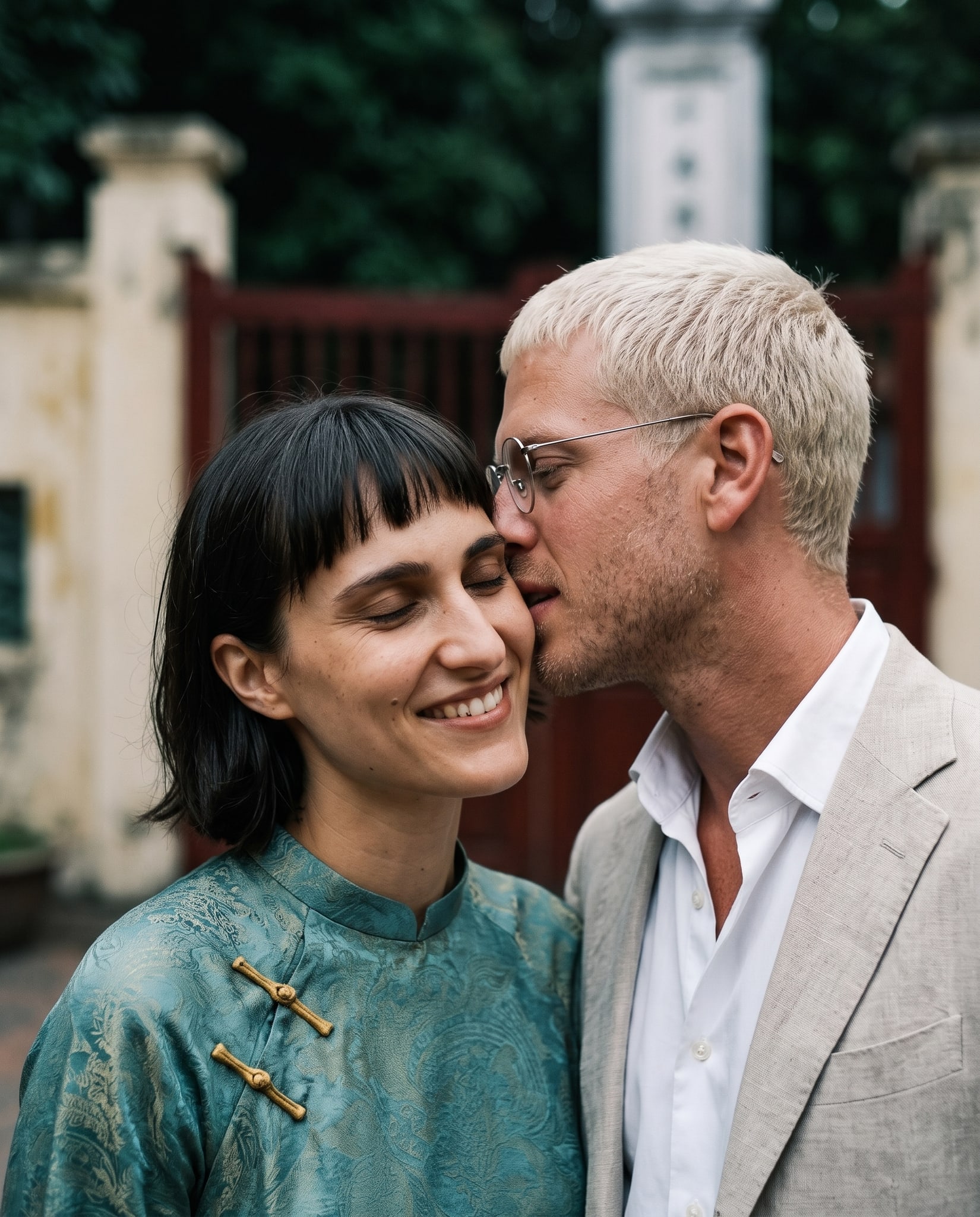
What light do you actually get in Thanh Ha?
Golden hour in Thanth Ha (17:00–18:30) hits the clay-brick walls on the east-facing workshop fronts, casting long shadows across wheel work and stacked vessels. We shoot south-facing workshops from 14:30 onward to avoid blown-out overhead sun. Overcast days (common June–August) kill drama but even out skin tones and reduce squinting during close-ups of hands. We've learned to arrive by 14:00 so we're not rushing; if light fades by 17:45, we shift to a covered workshop interior and adjust ISO. Backlit pottery against bright doorways creates rim-light separation. We rarely add flash—the ambient warmth is the whole point.
How do we position you without looking like a tourist?
Our stylists guide guests through three positioning zones: (1) sitting at a potter's wheel while they work around you, hands visible on clay; (2) standing in profile as they shape, your shadow fallen toward the camera; (3) holding a finished piece or raw clay, posed against weathered brick. We avoid the "hands on hips in front of a kiln" trap. We whisper directions—"lean left, chin down slightly, let your hands rest on the clay"—so you're not obviously posing. If you're wearing an áo dài, the fabric catches light beautifully against terracotta tones; we'll have you stand in the workshop entrance so the drape reads in the frame. Couples shoot best while both are engaged with a shared clay task—rolling coils, centering clay together—rather than standing apart.
Should you book a makeup and hair session before Thanh Ha?
Yes, but light touch. Thanh Ha shoots are about texture and craft, not glamour. Heavy makeup can look jarring in close-ups of hands at the wheel or clay dust settling on your face. We recommend booking makeup and hair at your hotel the morning of your shoot—a natural base, warm earth-tone eyeshadow if you like, and a loose updo or braid that won't fall into wet clay. Lipstick fades by hour two; don't bother. If you're doing an áo dài photoshoot and Thanh Ha on the same day, we do hair once (usually in an updo) and touch up makeup between locations. Sunscreen (mineral, not oily) protects your face without adding shine that confuses the camera in bright pottery light.

What happens when it rains or the pottery kiln breaks down?
Rain shuts down outdoor pottery work and makes the workshops slippery—clay and wet brick are a fall risk. If rain is forecast, we reschedule to a clear date or move the shoot to an indoor workshop with a skylight, which we scout beforehand. Kiln emergencies happen: a master potter might need to pull pieces mid-afternoon if temperature drops. We've built in a list of backup potters and workshops in Thanh Ha so we don't cancel. Honest talk: if you book one week before the shoot and a major festival or production surge hits, we might suggest a different location (Bat Trang pottery, also near Hanoi, is our second choice) or shift the date two weeks forward. Transparency beats last-minute scrambling.
| Scenario | Best for | What to expect | Why it matters |
|---|---|---|---|
| Solo or couple, 3-hour session | Personal art interest or anniversary | Golden light, hands-on clay moment, 80–120 edited images | You own the story; intimate pacing |
| Small group (3–4), shared potter | Friends, family visiting Hanoi | Shared laughter, varied angles, reduced cost split | Crowd energy reads naturally; less awkward posing |
| Áo dài shoot day add-on | Cultural immersion, pre-wedding prep | Workshop first (relaxed, textured), then costume change nearby | Light contrast; two distinct looks in one trip |
What do you need to bring and avoid?
Bring loose, comfortable clothes in earth or neutral tones (blues, greens, creams, blacks photograph well against terracotta). Avoid white (reflects heat, reads blown-out) and logo-heavy apparel. Wear closed-toe shoes with grip (clay floors are slippery); we've seen guests nearly twist ankles stepping off wheels. Bring a small towel for your hands—clay dust is fine in photos but feels gritty on skin. Leave jewelry that clanks or catches on fabric at your hotel. Sunscreen and a hat for the walk between workshops. A water bottle (we'll carry extras). If you're claustrophobic or have wrist/back issues, tell us before the shoot; some potters' wheels require specific postures that can aggravate old injuries.
See packages and prices on vietnamphotoshoot.com
How do we handle the logistics—parking, permissions, scheduling?
We arrive 20 minutes before you to park near the workshop and confirm the potter's readiness. We carry a small kit: reflectors, a diffuser, backup batteries, and a printed map marking three alternative workshops if plan A falls through. Permissions: the potters know we're coming, and we've never had a master refuse a photoshoot (we pay a small access fee that we factor into the quote). Transportation: most guests arrive by hired car or motorbike taxi from Hanoi; we can recommend a driver or coordinate with your hotel. If you're renting a motorbike yourself, the village roads are narrow and dusty—easy to miss the right workshop. We usually meet you at a central landmark (the Thanh Ha Pottery Market entrance) and walk you to the site. On busy days, we assign one stylist to coordinate with the potter, one photographer on primary angles, and one to manage group flow and hands (especially important if you're touching clay—we don't want mid-shot flinching).
What to check before you book
Dates & seasons: Avoid Tet (late January–early February); workshops close. Summer (June–August) humidity is high but light is consistent; winter (November–February) is crisp and golden. Two-week lead time is non-negotiable for workshop coordination.
Clothing: Decide on áo dài or casual now; áo dài requires fittings (arrange at our Hanoi studio or tell us your measurements). Casual is simpler but less iconic.
Group size: Solos and couples move fastest; groups of 4+ slow pacing. Let us know headcount so we pick the right potter and schedule accordingly.
Edit expectations: We deliver 60–100 fully edited images per 3-hour shoot (more for larger groups). RAW files are not included; ask on WhatsApp if you need them.
Accessibility: If you have mobility issues, tell us upfront. Some workshops have steps or uneven clay-dust floors; we'll scout a flat, accessible space.
FAQ
Is Thanh Ha pottery village a real working place or a tourist site?
Both. Hundreds of potters make terracotta tiles, jars, and decorative pieces for Vietnamese markets and exports. It's not a museum. Tourists visit, but production comes first. We schedule shoots around actual work, which is why coordination matters.
Can we bring our own clay to shape, or do we just watch?
Most shoots involve you at the wheel under the potter's guidance—hands on the clay, learning the feel. Watching-only is less engaging. Ask your photographer on WhatsApp if hands-on is important to you; we'll confirm the specific potter allows it.
How far is Thanth Ha from Hanoi city center, and do we need a car?
25 km south, about 45–60 minutes by car depending on traffic. Most guests hire a driver or motorbike taxi from their hotel. We can recommend a driver. Public buses exist but are slow for a tight schedule.
What if we want to combine Thanh Ha with another location in one day?
Bat Trang pottery (20 km northeast) or a field/village backdrop nearby work well. A full day (6–8 hours) with two locations is ambitious; ask us for pacing and pricing ideas.
Do we need to speak Vietnamese to communicate with the potters?
No. We're on-site as translators and directors. Potters respond to gestures, gentle guidance, and respect for their work. We handle all negotiation beforehand.
What happens if the weather forecast changes the day before?
We contact you immediately and offer a reschedule, a move to an indoor workshop, or a refund—depending on our cancellation terms. Ask about the policy when you book.
Vacation & Solo Photoshoot
Inclusions, prices and booking are on our booking site.
FAQ
Is Thanh Ha pottery village a real working place or a tourist site?
Both. Hundreds of potters make terracotta tiles, jars, and decorative pieces for Vietnamese markets and exports. It's not a museum. Tourists visit, but production comes first. We schedule shoots around actual work, which is why coordination matters.
Can we bring our own clay to shape, or do we just watch?
Most shoots involve you at the wheel under the potter's guidance—hands on the clay, learning the feel. Watching-only is less engaging. Ask your photographer on WhatsApp if hands-on is important to you; we'll confirm the specific potter allows it.
How far is Thanth Ha from Hanoi city center, and do we need a car?
25 km south, about 45–60 minutes by car depending on traffic. Most guests hire a driver or motorbike taxi from their hotel. We can recommend a driver. Public buses exist but are slow for a tight schedule.
What if we want to combine Thanh Ha with another location in one day?
Bat Trang pottery (20 km northeast) or a field/village backdrop nearby work well. A full day (6–8 hours) with two locations is ambitious; ask us for pacing and pricing ideas.
Do we need to speak Vietnamese to communicate with the potters?
No. We're on-site as translators and directors. Potters respond to gestures, gentle guidance, and respect for their work. We handle all negotiation beforehand.
What happens if the weather forecast changes the day before?
We contact you immediately and offer a reschedule, a move to an indoor workshop, or a refund—depending on our cancellation terms. Ask about the policy when you book.
More from the team
Honeymoon Photoshoot in Hoi An: What Our Team Sees on Set
Hoi An draws newlyweds for its lantern-lit old town and riverbank light. We've shot hundreds of couples there—here's what actually happens during your session, hour by hour, and how to choose between what we offer.
Nhat Tan Peach Blossom Gardens Photoshoot: What We Book
Nhat Tan peach blossoms peak for just three weeks each January–February. We run morning sessions there to beat tourist crowds and capture soft light—here's how our studio plans them and what actually happens on the ground.
Truc Bach Lake Photoshoot: What to Book at Cáo Studio
Truc Bach Lake is one of Hanoi's most photographed water landmarks. We run sessions there 3–4 times weekly, and share how to get the best light, what to wear, and what actually happens during a shoot.