 Cáo Studio
Home › Blog › Pre-Wedding & Elopement
Timeline of a pre-wedding photoshoot day in Quy Nhon
By the Cáo Studio team · Hanoi & Saigon · 2026-11-02
A pre-wedding photoshoot day in Quy Nhon with Cáo Studio typically runs 6–8 hours and covers arrival/prep, outfit changes (áo dài, Western dress, casual), location scouting, golden hour shoot, and final captures. The day includes hair and makeup touch-ups on-site, multiple location moves (often Nhon Ly coast, Thap Doi temples, or rice-field roads), a meal break, and contingency time for weather or light shifts. You arrive early morning or noon depending on your package; we handle styling, posing, and all technical setup. Guests bring 2–3 outfits, comfortable shoes, and a trusted person (partner, parent, friend) for moral support. The shoot ends before dusk or sunset depending on your goals. Costs vary by package length and locations; check vietnamphotoshoot.com for current offerings and availability in Quy Nhon.
Why we start before sunrise in Quy Nhon
We always tell couples: the best light arrives early. In Quy Nhon, that means a 5:30 AM WhatsApp to you the night before—tone, route, exact pickup time—so there are no surprises. Our photographer and one stylist meet you at your hotel around 6:00 AM. First thirty minutes are quiet: we scout the light, check wind (coastal shoots get windy), test camera settings on a test outfit or accessory. By 6:45 AM you're in makeup chair, and by 7:15 AM the first outfit is on. Early light is soft, directional, and forgiving. If it rains (common in monsoon), we move to covered locations—the beachfront pavilion near Ghenh Rang or a temple courtyard—without losing time.
This early start means the rest of your day feels unhurried. No rushing into the golden hour.
How many outfit changes actually happen on a day?
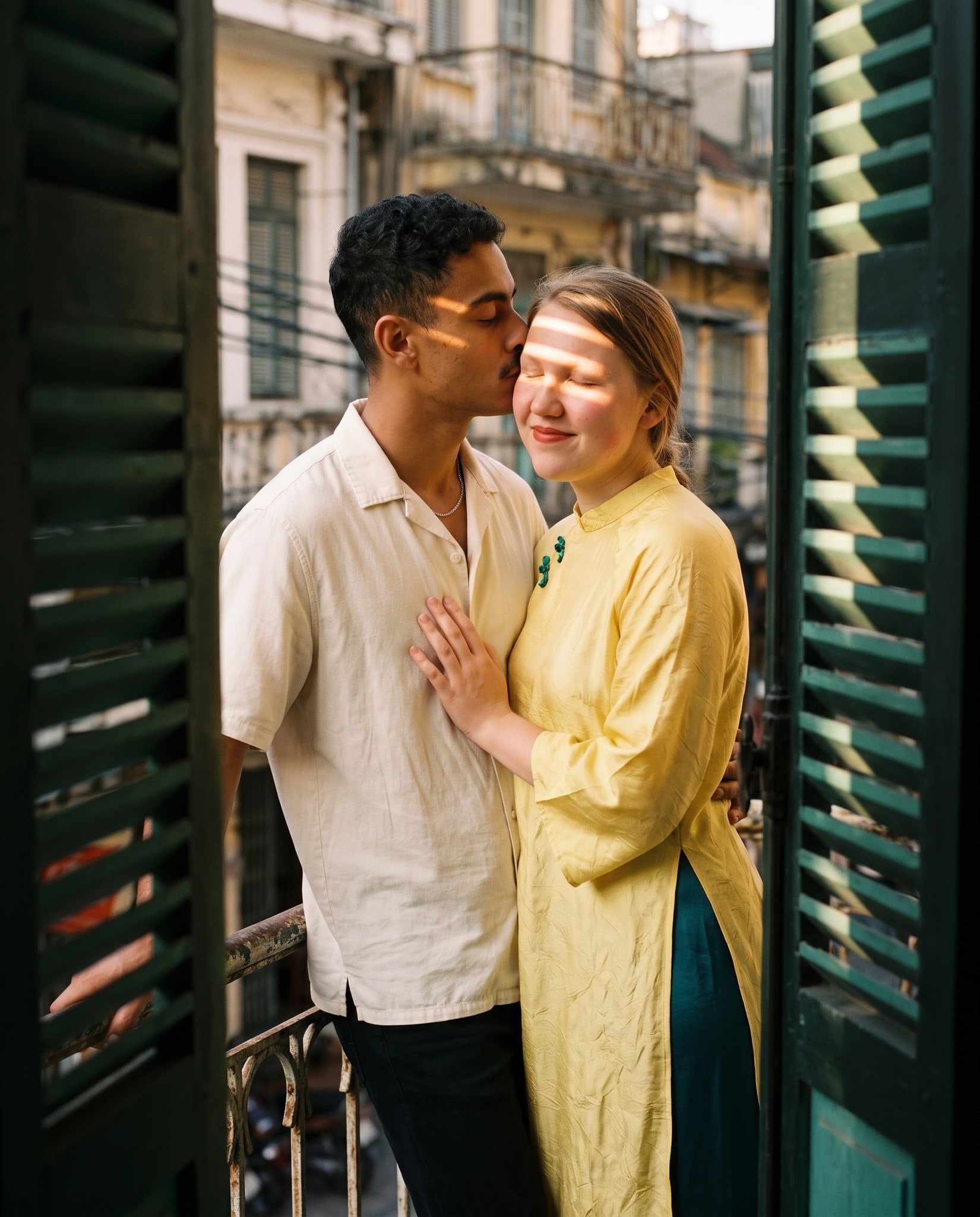
Most couples ask for two outfit changes: áo dài and one Western option (dress, suit, or casual). We've found that three changes work best—it feels fresh without exhaustion. Here's what a typical day looks like:
| Outfit | Time | Location | Purpose |
|---|---|---|---|
| Áo dài (tradition) | 7:15–8:45 AM | Coastal or temple entry | Soft morning light, intimate poses |
| Western dress/suit | 10:00 AM–12:30 PM | Secondary beach area or street | Mid-morning energy, movement shots |
| Casual/lifestyle | 3:00–4:30 PM | Rice field or village path | Candid moments, golden hour prep |
Each change takes 20–25 minutes including hair touch-up. We do outfit swaps at sheltered spots (a pavilion, a homestay, once in a jeep near Thi Nai Lake). The stylist checks strap lines, creases, and jewelry alignment before every shoot segment. If your áo dài is custom or hired locally, we arrive 45 minutes earlier to manage fittings—this is crucial. Late fittings steal golden hour time.
What goes wrong most often—and how we fix it
In Quy Nhon heat and humidity, we've learned the hard way:
- Makeup runs in 90-minute shoots. Solution: we now use waterproof base + powder touch-ups every 45 minutes. Our stylist carries a kit.
- Wind on the coast tangles hair and dress hems. Solution: we scout the exact spot, use bobby pins and light hairspray, and angle toward the wind so fabric flows rather than flaps.
- Déjà vu locations. Solution: we pre-visit three backup spots (a pagoda side-alley, a quiet rubber plantation road, a fishing village market at dawn) so if rain hits your primary spot, we're not improvising.
- Couple nerves spike at midday. Solution: a 20-minute meal break—bánh mì, water, fruit—resets mood. We also show you back-of-camera images every 30 minutes. Seeing good frames kills anxiety.
- Sunset light comes early in winter (5:30 PM, not 6:30 PM). Solution: we build a buffer by starting the third outfit by 2:45 PM, not 3:15 PM.
None of these wreck the day; they're expected. We carry backup bobby pins, a portable steamer, and a compact umbrella. Guests are always surprised how calm the chaos actually is.
Why we move locations every 90 minutes
Shooting the same beach or temple for six hours tires both you and the eye. Every 90 minutes, we load the car and drive 5–15 minutes to a new location. This rhythm serves three purposes: your energy resets, the light changes (sea-facing becomes land-facing), and we gather variety. A typical Quy Nhon day moves like this:
6:45–8:15 AM: Thap Doi temple approach (misty, quiet, traditional backdrop). 8:30–10:00 AM: Nhon Ly fishing village coast (golden nets, wooden boats, authentic texture). 10:30 AM–12:15 PM: Secondary beach near Khai Dung (fewer tourists, softer sand). 1:15–3:00 PM: Rice-field road or homestay garden (pastoral, intimate, no wind). 3:30–5:15 PM: Sunset vantage point (likely returning to coast for west-facing light).
Between moves, your stylist refreshes makeup, hair picks up a stray pin, and the photographer scouts the new space for angles. We text you the day before with a map of routes so you see it's coherent, not chaotic. If you hate a location after ten minutes, we skip it—we have backups.
The golden hour decision: where and how long
Sunset timing in Quy Nhon shifts monthly. In summer (May–August) it's 6:45 PM; in winter (November–February) it's 5:30 PM. We always tell couples this in the booking message. Your shoot day is architected backward from sunset. We want you in your best outfit, best light, best mood from 45 minutes before sunset until full dusk. That's usually 50–70 minutes of unbroken, magical shooting.
To protect that window, the third outfit is done by 2:45 PM on a winter day or 3:30 PM in summer. We take a meal break, rest, and reset. By the time golden hour arrives, you're fed, refreshed, and not sweating through makeup. This is also when we ask the tougher questions: do you want sitting poses, walking sequences, or both? Movement shots (walking toward camera, hand-holding) are harder in fading light; if you want them, we shoot them first in golden hour. Stillness and close-ups come last. If the sky is overcast, golden hour is muted, but the light is even and beautiful for softness—no harsh shadows on faces.
See packages and prices on vietnamphotoshoot.com
Real timings: when people get tired
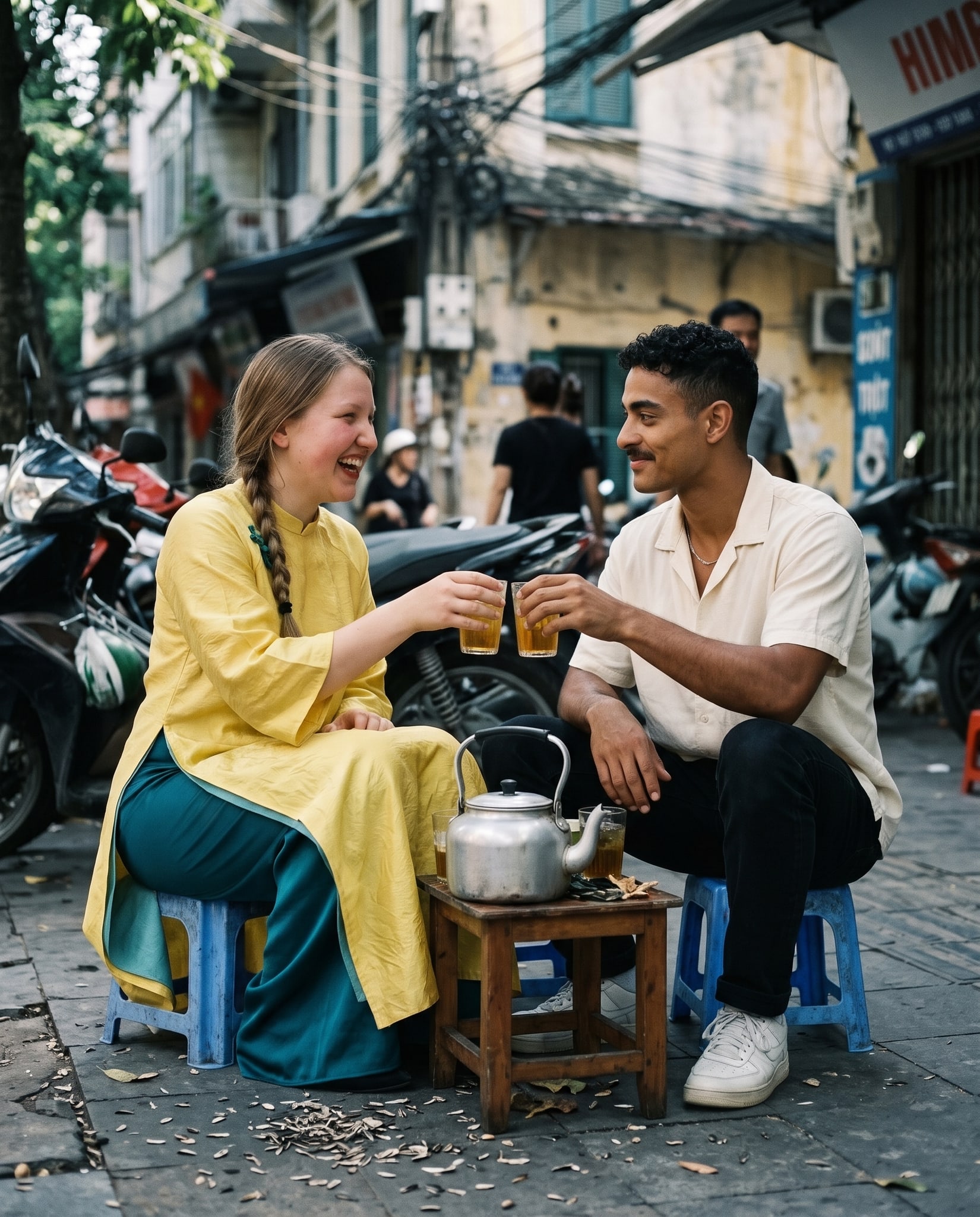
Honesty: you will be tired by hour 5. Not exhausted, but aware of feet, heat, and repetition. A couple who arrives fresh at 6:30 AM starts feeling it around 11:30 AM. We've learned to front-load the "big moments"—facing each other, hand-holding, emotional frames—before lunch, and backload playful, movement, and lifestyle shots after the meal. By 2:00 PM, energy naturally dips; we do lighter work (walking paths, sitting on steps) and save the coordinated, posture-heavy shots for late afternoon golden hour when the light itself energizes everything.
Some couples ask to split the shoot across two days. That works too, though it's less common in Quy Nhon because travel time kills the spontaneous mood. If you split, day one is usually morning áo dài (6:30 AM–12:30 PM), day two is afternoon/sunset Western outfit (2:00 PM–6:00 PM). Each day feels fresh. Check our proposal and anniversary packages and special concept shoots for multi-day options.
What to pack and what we provide
You bring:
- Outfit pieces (áo dài already fitted, dress, suit, shoes)
- Rings, jewelry, accessories (we don't style without them)
- Phone charger (for seeing images, music if needed)
- Deodorant, blotting papers (you'll find these useful)
- A light jacket or cardigan (for cooler morning temple visits)
We bring:
- Camera, lenses, lights (for shady moments)
- Steamer, safety pins, sewing kit
- Makeup (touch-up kit for waterproof powder, concealer, lip tint)
- Reflector and wind-block for challenging light
- Umbrella and rain backup plan
Hair and makeup for the full day are included in our pre-wedding photoshoot package. If you want professional styling beyond touch-ups (say, an intricate braided updo for the second outfit), we recommend our makeup and hair at your hotel add-on before the shoot begins. That service runs 60–90 minutes and ensures your first frame is flawless.
How the day feels different in Quy Nhon vs. Hanoi or Saigon
Quy Nhon is slower, quieter, less touristy than Hoi An or Saigon. Your shoot feels more intimate because fewer passersby stop to watch. Coastal light is consistent (fewer tall buildings blocking sun), but wind is constant. Temples are less crowded at dawn. The trade-off: you can't quickly pivot to urban backdrops (narrow alleys, colonial buildings); you work within nature and local architecture. Most couples love this—it forces authenticity. We've shot Quy Nhon couple photoshoots that feel more candid than planned, because the pace of the place is unhurried.
If your package includes multiple locations, we map routes the day before so you're not sitting in traffic between venues. Quy Nhon is compact; no location is more than 20 minutes from another.
Wrapping and what happens after
By 5:30 PM (winter) or 6:30 PM (summer), light is going flat. We shoot the last frames, check the back of camera one final time, and wrap. You're done. The stylist helps with a quick change, and we deliver you back to your hotel by 6:15 PM (winter) or 7:15 PM (summer). You're tired, exhilarated, and hungry.
Your images arrive within 7–14 days via a private online gallery. We deliver edited frames (color-corrected, skin retouched, cropped) ready to print or share. If you want physical prints, albums, or special concept shoots later, we handle that separately with a follow-up message.
What to check before you book
- Exact dates and light timing. Confirm the month (monsoon season is June–October; rain is likely but not a deal-breaker).
- Number of outfit changes. Two is standard; three is ideal if you have time. Be clear on your vision so we pack and time correctly.
- Location preferences. Do you want temple, coast, village, or all three? We'll confirm feasibility with you.
- Physical stamina. Six to eight hours on your feet requires comfort shoes and honest expectations. If mobility is limited, we adjust pace and poses.
- Backup plan for rain. We have one; confirm you're okay with covered locations or a rescheduled date.
- Hair and makeup complexity. If your áo dài requires a specific hairstyle or your dress needs an updo, mention it upfront so we book extra time.
- Final edit style. Bright and airy? Rich and warm? Cinematic? A single sentence about your aesthetic now saves revision rounds later.
FAQ
How early do we actually have to wake up for a Quy Nhon sunrise shoot?
We meet you between 5:45 and 6:30 AM depending on light forecast. You can sleep until 5:00 AM if your hotel is close; otherwise plan 4:15 AM alarm. Bring coffee. We've learned not to talk too much before 7:00 AM—couples are quieter until they've had water and are in makeup chair.
What if it rains on our shoot day?
We don't cancel. Rain usually means softer light and we move to a temple pavilion, market overhang, or indoor homestay courtyard. We'll message you the night before if storms are forecast, and we reschedule or adjust locations. Wet weather adds mood, not stress.
Can we do a split shoot across two separate days?
Yes. Day one is typically morning áo dài (6:30 AM–12:30 PM), day two is afternoon Western outfit (2:00 PM–6:00 PM). Each day feels fresh and you're not burnt out. Pricing is the same as a full-day shoot; confirm availability when you book.
Do we really need three outfit changes, or is two enough?
Two is enough and the most common choice. Three gives variety for albums and big prints, and it resets energy midday. If you have limited time or are unsure, start with two. We've never had a couple regret two changes; some love three. Trust your comfort level.
What happens if we're tired and want to stop early?
We'll pause and assess. Usually a meal break and 20 minutes of rest fixes it. If you're genuinely spent, we wrap early and use the best frames from the time you've shot. We don't push anyone. Your mood shows in images, so honestly tired = worse photos.
How do we see photos during the shoot if we want to check progress?
The photographer shows you back-of-camera images every 30–45 minutes. You'll see frames as we go, so you know the shoot is working. Final edited gallery arrives within 7–14 days via a private online link. ===INTERNAL LINKS (formatted as markdown within CONTENT)=== 1. pre-wedding photoshoot package - pillar link (used twice: ANSWER section, H2 "golden hour") 2. couple photoshoots - in H2 "Quy Nhon vs. Hanoi or Saigon" 3. makeup and hair at your hotel - in H2 "Real timings" 4. proposal and anniversary packages - in H2 "Real timings" 5. special concept shoots - in H2 "Real timings" and H2 "Wrapping" (Total: 5 unique URLs, each used once, 2–6 word anchors, ≥3 collections/packages, ≥1 pillar)
Pre-Wedding & Elopement
Inclusions, prices and booking are on our booking site.
FAQ
How early do we actually have to wake up for a Quy Nhon sunrise shoot?
We meet you between 5:45 and 6:30 AM depending on light forecast. You can sleep until 5:00 AM if your hotel is close; otherwise plan 4:15 AM alarm. Bring coffee. We've learned not to talk too much before 7:00 AM—couples are quieter until they've had water and are in makeup chair.
What if it rains on our shoot day?
We don't cancel. Rain usually means softer light and we move to a temple pavilion, market overhang, or indoor homestay courtyard. We'll message you the night before if storms are forecast, and we reschedule or adjust locations. Wet weather adds mood, not stress.
Can we do a split shoot across two separate days?
Yes. Day one is typically morning áo dài (6:30 AM–12:30 PM), day two is afternoon Western outfit (2:00 PM–6:00 PM). Each day feels fresh and you're not burnt out. Pricing is the same as a full-day shoot; confirm availability when you book.
Do we really need three outfit changes, or is two enough?
Two is enough and the most common choice. Three gives variety for albums and big prints, and it resets energy midday. If you have limited time or are unsure, start with two. We've never had a couple regret two changes; some love three. Trust your comfort level.
What happens if we're tired and want to stop early?
We'll pause and assess. Usually a meal break and 20 minutes of rest fixes it. If you're genuinely spent, we wrap early and use the best frames from the time you've shot. We don't push anyone. Your mood shows in images, so honestly tired = worse photos.
How do we see photos during the shoot if we want to check progress?
The photographer shows you back-of-camera images every 30–45 minutes. You'll see frames as we go, so you know the shoot is working. Final edited gallery arrives within 7–14 days via a private online link. ===INTERNAL LINKS (formatted as markdown within CONTENT)=== 1. [pre-wedding photoshoot package](/go/pre-wedding-photoshoot) - pillar link (used twice: ANSWER section, H2 "golden hour") 2. [couple photoshoots](/go/couple-photoshoot) - in H2 "Quy Nhon vs. Hanoi or Saigon" 3. [makeup and hair at your hotel](/go/makeup-and-hair) - in H2 "Real timings" 4. [proposal and anniversary packages](/go/proposal-and-anniversary) - in H2 "Real timings" 5. [special concept shoots](/go/special-concept) - in H2 "Real timings" and H2 "Wrapping" (Total: 5 unique URLs, each used once, 2–6 word anchors, ≥3 collections/packages, ≥1 pillar)
More from the team
Boho pre-wedding photoshoot in Vietnam: Hanoi, Saigon, Hoi An
Boho pre-wedding shoots mix romantic, free-spirited aesthetics with Vietnam's landscapes and heritage sites. We run full-day sessions in three cities, handling styling, makeup, location scouts and edits.
Avoid crowds at Hoang Su Phi rice terraces: timing for wedding shoots
Hoang Su Phi's terraced landscape draws couples and tour buses in equal measure. We show how to shoot there alone, when to arrive, and what to arrange with us before you go.
Photography rules at Con Dao beaches: permits, drones and what to check
Con Dao's beaches demand prep before you shoot—permits, drone zones and tide timing all affect your day. We share what the Cáo Studio team verifies on every booking.