 Cáo Studio
Home › Blog › Ao Dai Photoshoot
Traditional Vietnamese wedding elements for Ha Giang photos
By the Cáo Studio team · Hanoi & Saigon · 2026-11-02
Traditional Vietnamese wedding elements—silk ao dai, embroidered belts, beaded jewellery, family heirlooms, phoenix crowns and hand-woven accessories—transform Ha Giang's landscape into a heritage backdrop. These pieces work best when coordinated with the shoot's location, season and light direction; we plan each detail 1–2 weeks ahead during WhatsApp consultations. At Cáo Studio, we've shot over 200 ao dai sessions across Hanoi, Saigon, Hoi An and Ha Giang, matching fabrics to weather, arranging loans of family pieces, and adjusting styling when wind or humidity shift the mood. Most guests spend 4–6 hours on location; budget for 2–3 outfit changes and plan morning light for best colour saturation on silk. You decide whether to rent, borrow or bring heirlooms; we advise on care, layering, and how each choice affects pose and movement during the shoot. Chat with us on WhatsApp | See packages and prices on vietnamphotoshoot.com
Why does Ha Giang suit traditional ao dai better than studio or city backdrops?
Ha Giang's undisturbed villages, rice terraces and limestone peaks create natural framing that studio lights cannot replicate. When you wear a formal ao dai against mountain mist or village architecture, the garment reads as both personal and timeless—not staged. We've noticed that guests feel more connected to the fabric and history when surrounded by rural Vietnamese landscape; the shoot becomes documentation of heritage, not just a style session. The isolation also means fewer tourists in frame, fewer distractions, and longer golden-hour windows because cloud cover shifts slowly across the plateau. Plan 5–7 hours on location; we scout routes the week before and brief you on paths, temple access and local customs.
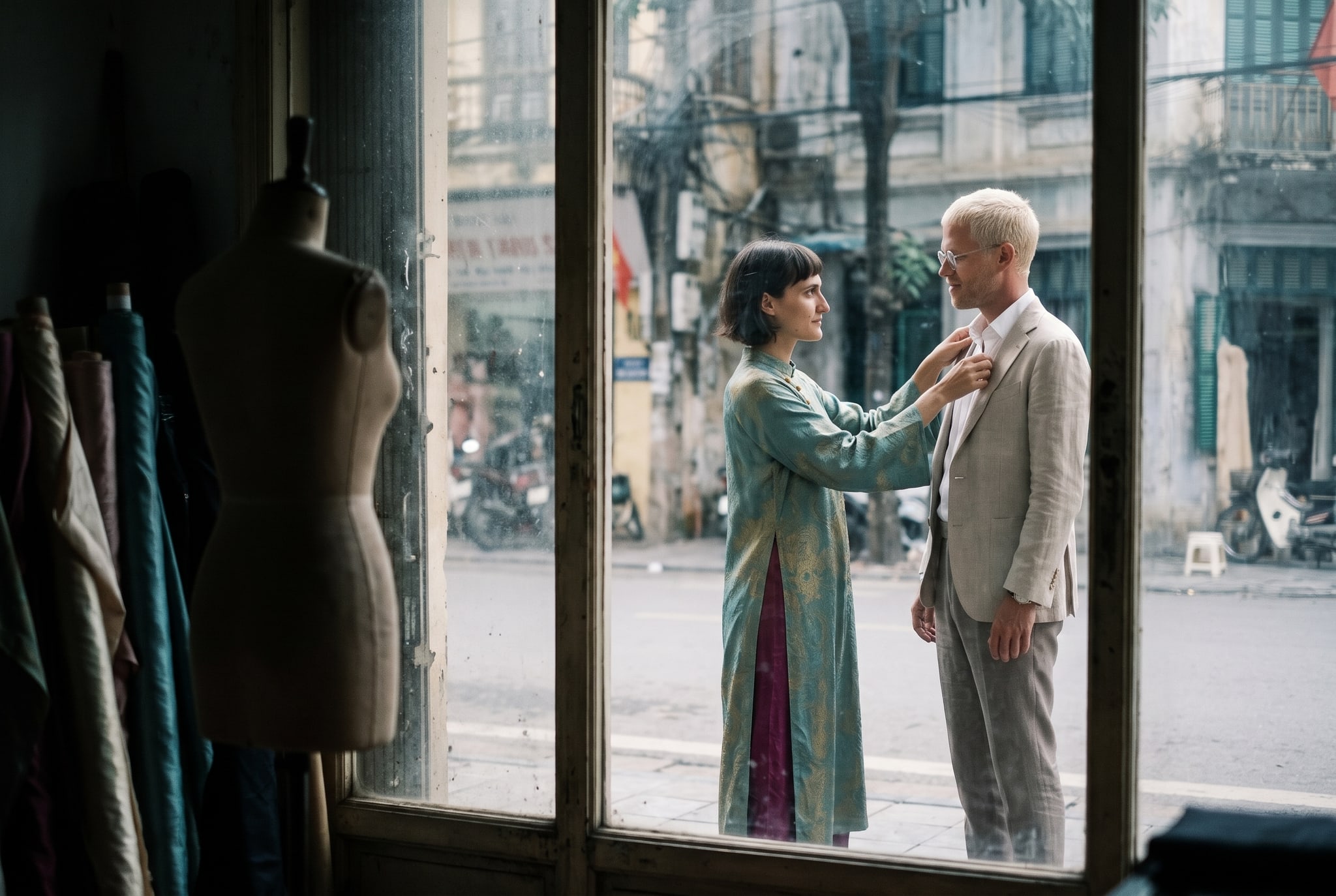
Which traditional pieces work in practice, and which are hard to move in?
| Piece | Best for | Why it matters | Practical notes |
|---|---|---|---|
| Silk ao dai (tú thân style) | Main outfit; all location types | Drapes beautifully; catches light. Most versatile. | Can snag on rough terrain; carry a steamer or iron for touch-ups between changes. |
| Embroidered belt (lụa đắp) | Layering over áo dài | Adds colour, defines waist, honours craft tradition. | Heavy beading can shift if you walk uphill fast; sit down to adjust mid-shoot. |
| Beaded necklace (hạt chuỗi) | Close-up detail; ceremony feel | Reflects light; draws eye to face in group shots. | Can catch on fabric; fasten securely and tuck ends into ao dai before climbing. |
| Patterned scarf (khăn lụa) | Transitional piece between outfits | Hides sweat, adds movement, works as prop. | Wind can tangle it; keep a second one with your stylist. |
| Flower crown / silk flowers | Hair for early-morning/sunset light | Romantic; frames face. Cheaper and lighter than metal crowns. | Petals fade in strong sun; use artificial flowers for Ha Giang's harsh midday light. |
| Vintage bracelets / family rings | Accent for hand details | Tells a story; camera picks up metal. | Check beforehand if heirloom is loose or needs cleaning. |
We recommend starting with a trusted silk ao dai and one statement belt; add flowers and borrowed jewellery as the day unfolds. If you bring a family piece, we photograph it separately so you have a record—that protects the heirloom story in your album.
Chat with us on WhatsApp | See packages and prices on vietnamphotoshoot.com
How do we help you source or rent traditional pieces before your shoot?
We ask about your priorities in the first WhatsApp message: "Do you own an ao dai, or shall we recommend rental?" Couples often borrow from family or rent from tailors in Hanoi's Hang Gai Street or Saigon's District 1; we have trusted contacts and can introduce you. For guests flying in, we arrange local rental deliveries so pieces arrive at your hotel 48 hours before the shoot—time for a fitting and final steam. If you bring a family heirloom, we photograph it in natural light beforehand so you see how the original colour and texture translate on camera. Many guests hire our makeup and hair at your hotel service on the morning of the shoot; your stylist can then check that the ao dai layers, belts and jewellery sit right and don't shift during movement. This coordination prevents last-minute panic and ensures every detail is intentional.
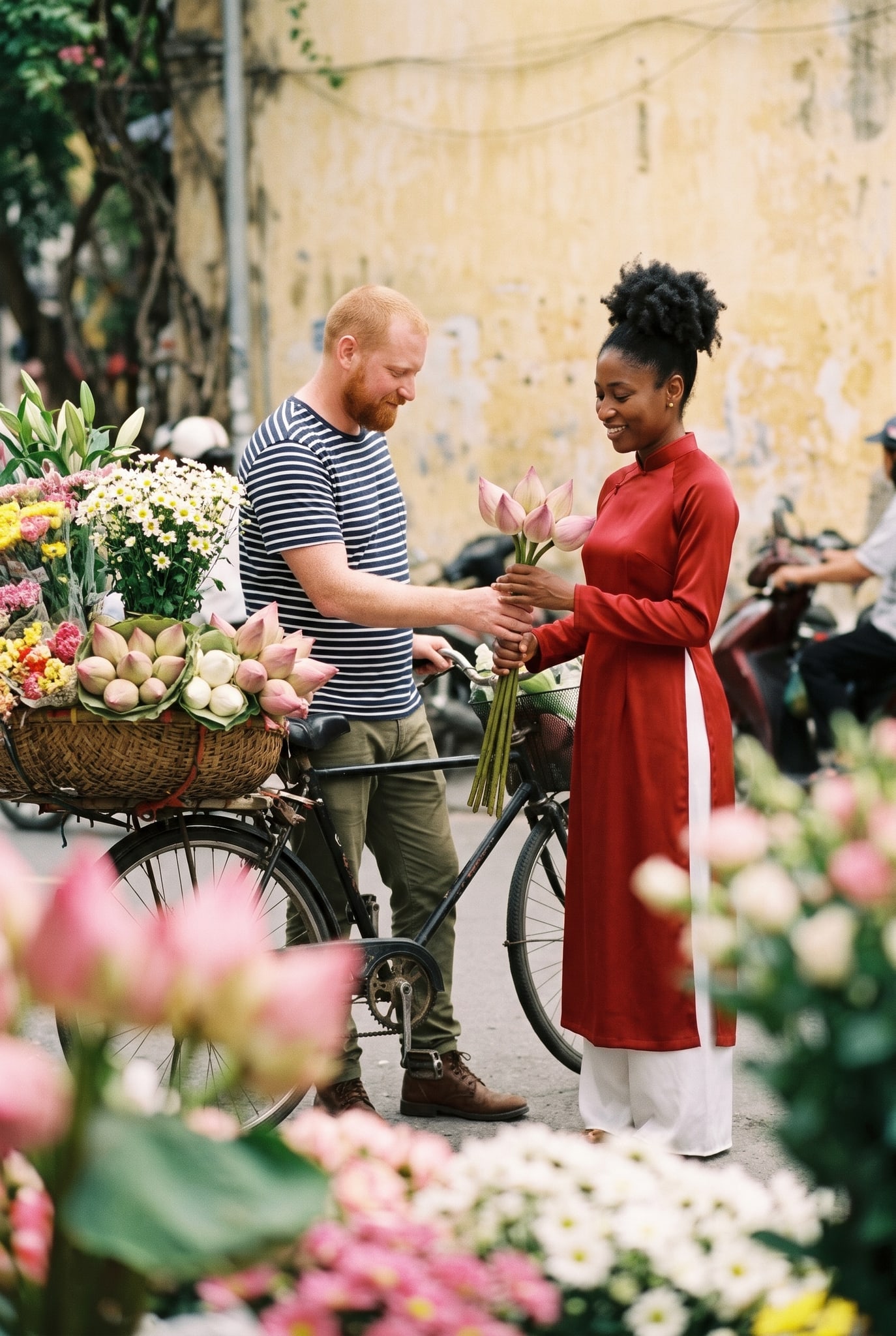
What happens when weather or terrain forces us to change the plan on the day?
Ha Giang's weather is unpredictable: morning mist clears by 11 a.m., afternoon rain can start without warning, and steep paths test both fabric and footwear. We've learned to bring backup pieces—a lighter shawl if the sun is hotter than forecast, a waterproof wrap if clouds move in. If mud is heavy after rain, we shift the route to a village courtyard or temple terrace where the ao dai won't drag. We also pack a small sewing kit, stain remover and extra pins; more than once, a wind gust has caught a loose hem or beading. The moment we notice a problem—a belt slipping, a button strained, a stain on silk—we pause, fix it, and repose. Guests appreciate the honesty: "The light's better here, and the ao dai will move more freely on this path." We photograph your outfit against different backdrops (mountain view, village doorway, rice field) and let you choose the mix in post. The goal is 80 usable frames per hour, not speed.
What should you check before ordering or booking a traditional wedding shoot in Ha Giang?
Heirloom and rental timeline: If you're bringing a family ao dai or borrowing one, confirm it's clean and fitted 10 days before the shoot. Allow 5–7 days for tailoring adjustments; Ha Giang shoots often require a shorter hem or tighter sleeves for movement.
Footwear: Formal silk shoes slip on wet stone. Bring a backup pair (canvas flats or rubber sandals) for walking between locations; we swap them back for the main shots so your feet feel grounded.
Colour and light: Bright reds and golds photograph best in soft morning or late afternoon light; pale pink or cream silk needs overcast conditions to avoid blown-out whites. Tell us your ao dai colour when you book so we schedule the best light window.
Jewellery weight: Heavy beading or metal crowns can cause neck strain during a 6-hour shoot. Limit to one statement piece per outfit; let accessories enhance, not burden, your movement.
Movement and terrain: Walk in your ao dai on stairs and sloped ground before the shoot day. Ha Giang paths are uneven; if you've never worn a full-length garment on such ground, practice rising and sitting so you feel confident in front of the camera.
Backup outfit: Most guests bring a second ao dai or traditional piece (a simpler silk ao dai, or a patterned áo tứ thân layered over trousers). A change refreshes the energy and gives your album variety without re-styling hair and makeup.
We discuss all these points during the pre-shoot call. Many guests first time at Cáo Studio are amazed how much detail matters—and how much better the photos are when pieces fit, colours match the light, and movement feels natural. That's the difference between a pretty picture and a story you want to frame and keep.
Chat with us on WhatsApp | See packages and prices on vietnamphotoshoot.com
Which Cáo Studio package fits a traditional wedding elements shoot in Ha Giang?
If you're shooting solo or with family, our ao dai photoshoot package is designed for exactly this—Vietnamese heritage garments, multiple locations, and up to 6 hours on-site. If you're a couple celebrating an anniversary or proposal, the proposal and anniversary package allows for two outfits and intimate framing. Groups (parents, siblings, extended family) fit our family photoshoot package, which we've run in Ha Giang's villages with everyone in coordinated ao dai. For pre-wedding sessions that include both traditional and modern elements, the pre-wedding and elopement package gives flexibility. All bookings include an initial consultation, location scouting, and a digital gallery; you decide whether to add a makeup artist or work with your own styling. Chat with us on WhatsApp early—Ha Giang spots book fastest during April, May, September and October, when light and weather align.
FAQ
Can we bring a family wedding ao dai from the 1990s or earlier to Ha Giang, or is it too fragile to wear?
If the garment is structurally sound (no tears, seams intact), wearing it once for a photo session is safe; Ha Giang's short duration and mild handling mean minimal risk. Pre-wash it gently 2 weeks before, let it air-dry fully, and bring a steamer. If the fabric is yellowed or weakened, we recommend photographing it carefully (close-ups of embroidery, beading detail) as a flat lay or on a dress form instead, then wearing a reproduction or modern ao dai made of the same silk for the on-location shoot. Either way, you honour the heirloom and get wearable photos.
How do we protect an expensive ao dai from rain or mud during a Ha Giang mountain shoot?
We carry a lightweight waterproof shawl or rain cape that fits over the ao dai without creasing it. If heavy rain starts, we pause in a sheltered spot (village covered porch, temple overhang) and either wait 20 minutes for a break or shift to a new location with better weather. For mud, we choose paths carefully and bring microfibre cloths to wipe hems if needed. Most guests are surprised how little risk there is when we scout ahead and stay flexible—we've never had to cancel a shoot due to weather alone.
Do we need matching or coordinating ao dai if we're a couple, or can each person wear a completely different style?
Both work beautifully. Many couples wear ao dai in the same colour palette (two shades of blue, or cream with gold embroidery) for visual harmony; others choose contrasting styles (one person in a formal tú thân, the other in a simpler design) to reflect individual taste. We've seen both in Ha Giang, and the camera picks up the emotion—if the outfits feel authentic to each person, the photos feel authentic. Discuss it together; we'll advise on what balances visually in group shots.
What if we don't own an ao dai and can't find a rental we like in time—is there another traditional option?
Yes. An áo tứ thân (four-panel top) layered over silk trousers or a long skirt is equally valid, deeply traditional, and often more comfortable for movement on rough terrain. You can also wear a beautiful silk áo tấc (a shorter, more casual tunic) with accessories. We've done stunning shoots in Hoi An and Saigon with these alternatives. The key is choosing silk or high-quality cotton, muted or jewel-tone colours, and one strong accessory (belt, scarf, jewellery). Tell us your preference early; we'll connect you with tailors or rental shops that suit your budget and timeline.
How many outfit changes should we plan for a Ha Giang shoot to make the best use of time and light?
Two to three is ideal. One main ao dai in your favourite colour for early morning light, a second lighter or contrasting outfit for midday or afternoon, and optionally a simple closing piece (a silk áo tấc or accessory-heavy outfit) for golden hour. We schedule outfit changes during natural breaks—when we move locations, or when light shifts. Each change takes 15–20 minutes with a stylist, so in a 6-hour day, you get 4–5 strong hours of shooting across all outfits. Fewer changes mean deeper exploration of one location; more changes mean higher variety in your album. We advise based on your priorities during the pre-shoot call. ---
Ao Dai Photoshoot
Inclusions, prices and booking are on our booking site.
FAQ
Can we bring a family wedding ao dai from the 1990s or earlier to Ha Giang, or is it too fragile to wear?
If the garment is structurally sound (no tears, seams intact), wearing it once for a photo session is safe; Ha Giang's short duration and mild handling mean minimal risk. Pre-wash it gently 2 weeks before, let it air-dry fully, and bring a steamer. If the fabric is yellowed or weakened, we recommend photographing it carefully (close-ups of embroidery, beading detail) as a flat lay or on a dress form instead, then wearing a reproduction or modern ao dai made of the same silk for the on-location shoot. Either way, you honour the heirloom and get wearable photos.
How do we protect an expensive ao dai from rain or mud during a Ha Giang mountain shoot?
We carry a lightweight waterproof shawl or rain cape that fits over the ao dai without creasing it. If heavy rain starts, we pause in a sheltered spot (village covered porch, temple overhang) and either wait 20 minutes for a break or shift to a new location with better weather. For mud, we choose paths carefully and bring microfibre cloths to wipe hems if needed. Most guests are surprised how little risk there is when we scout ahead and stay flexible—we've never had to cancel a shoot due to weather alone.
Do we need matching or coordinating ao dai if we're a couple, or can each person wear a completely different style?
Both work beautifully. Many couples wear ao dai in the same colour palette (two shades of blue, or cream with gold embroidery) for visual harmony; others choose contrasting styles (one person in a formal tú thân, the other in a simpler design) to reflect individual taste. We've seen both in Ha Giang, and the camera picks up the emotion—if the outfits feel authentic to each person, the photos feel authentic. Discuss it together; we'll advise on what balances visually in group shots.
What if we don't own an ao dai and can't find a rental we like in time—is there another traditional option?
Yes. An áo tứ thân (four-panel top) layered over silk trousers or a long skirt is equally valid, deeply traditional, and often more comfortable for movement on rough terrain. You can also wear a beautiful silk áo tấc (a shorter, more casual tunic) with accessories. We've done stunning shoots in Hoi An and Saigon with these alternatives. The key is choosing silk or high-quality cotton, muted or jewel-tone colours, and one strong accessory (belt, scarf, jewellery). Tell us your preference early; we'll connect you with tailors or rental shops that suit your budget and timeline.
How many outfit changes should we plan for a Ha Giang shoot to make the best use of time and light?
Two to three is ideal. One main ao dai in your favourite colour for early morning light, a second lighter or contrasting outfit for midday or afternoon, and optionally a simple closing piece (a silk áo tấc or accessory-heavy outfit) for golden hour. We schedule outfit changes during natural breaks—when we move locations, or when light shifts. Each change takes 15–20 minutes with a stylist, so in a 6-hour day, you get 4–5 strong hours of shooting across all outfits. Fewer changes mean deeper exploration of one location; more changes mean higher variety in your album. We advise based on your priorities during the pre-shoot call. ---
More from the team
Ao Dai Photos at Hoi An Lantern Street at Night
Hoi An Lantern Street (Nguyen Hoan) glows at dusk with silk lanterns and reflected light. Our team shoots ao dai here after dark, navigates tight vendor spaces, and handles the low-light challenge with experience from 100+ night sessions.
Ao dai for wedding photos in Quy Nhon: renting, fitting and styling
Quy Nhon's coastal backdrops pair beautifully with traditional ao dai. We walk through rental choices, fitting logistics and how our team coordinates styling on shoot day.
Vietnam Pre-Wedding Photoshoot: What We Book at Cáo Studio
Pre-wedding shoots in Vietnam mean morning light in Hoi An's Old Town, cyclos in Saigon, or terraced fields near Ninh Binh. We walk you through what a session actually costs, how we schedule it, and what goes wrong on the day.