 Cáo Studio
Home › Blog › Ao Dai Photoshoot
Traditional Vietnamese wedding elements for Hanoi photos
By the Cáo Studio team · Hanoi & Saigon · 2026-11-02
Traditional Vietnamese wedding elements—silk ao dai, beaded headpieces (khăn vải), embroidered blankets, lacquered boxes, and temple backdrops—anchor Hanoi photoshoots with cultural depth and visual rhythm. At Cáo Studio, we style 40–50 sessions yearly in Old Quarter temples, French colonial villas, and Hoan Kiem Lake gardens. Most guests book ao dai photoshoots to weave 1–3 wedding heritage pieces into 2–3 hour sessions. Cost varies by prop rental versus purchase; we guide you on what rents locally, what you bring, and what we source. The key: match elements to your venue light (morning shoots favor delicate headpieces; sunset favors bold lacquered props), confirm transportation before the shoot day, and book props 3–5 days ahead if importing. Chat with us on WhatsApp | See packages and prices on vietnamphotoshoot.com
What ao dai cuts and fabrics work best for Hanoi light?
The ao dai—a fitted silk tunic over wide trousers—dominates our Hanoi shoots. We see guests arrive with one piece; we style three silhouettes across the session. Lightweight silk (not polyester) moves in Old Quarter breeze and catches morning light without glare. Classic cream, deep plum, and burnt orange hold color in shadow near Hoan Kiem's water. We've noticed pastel pink flattens in harsh noon sun but glows at 5 p.m. The fit matters: tight waists and long sleeves photograph sharper than loose cuts. Confirm your ao dai fits 30 minutes before shooting; we've rushed alterations twice and learned to ask tailors to visit the studio or send a fitter.
Which wedding headpieces photograph clearly without overwhelming your face?
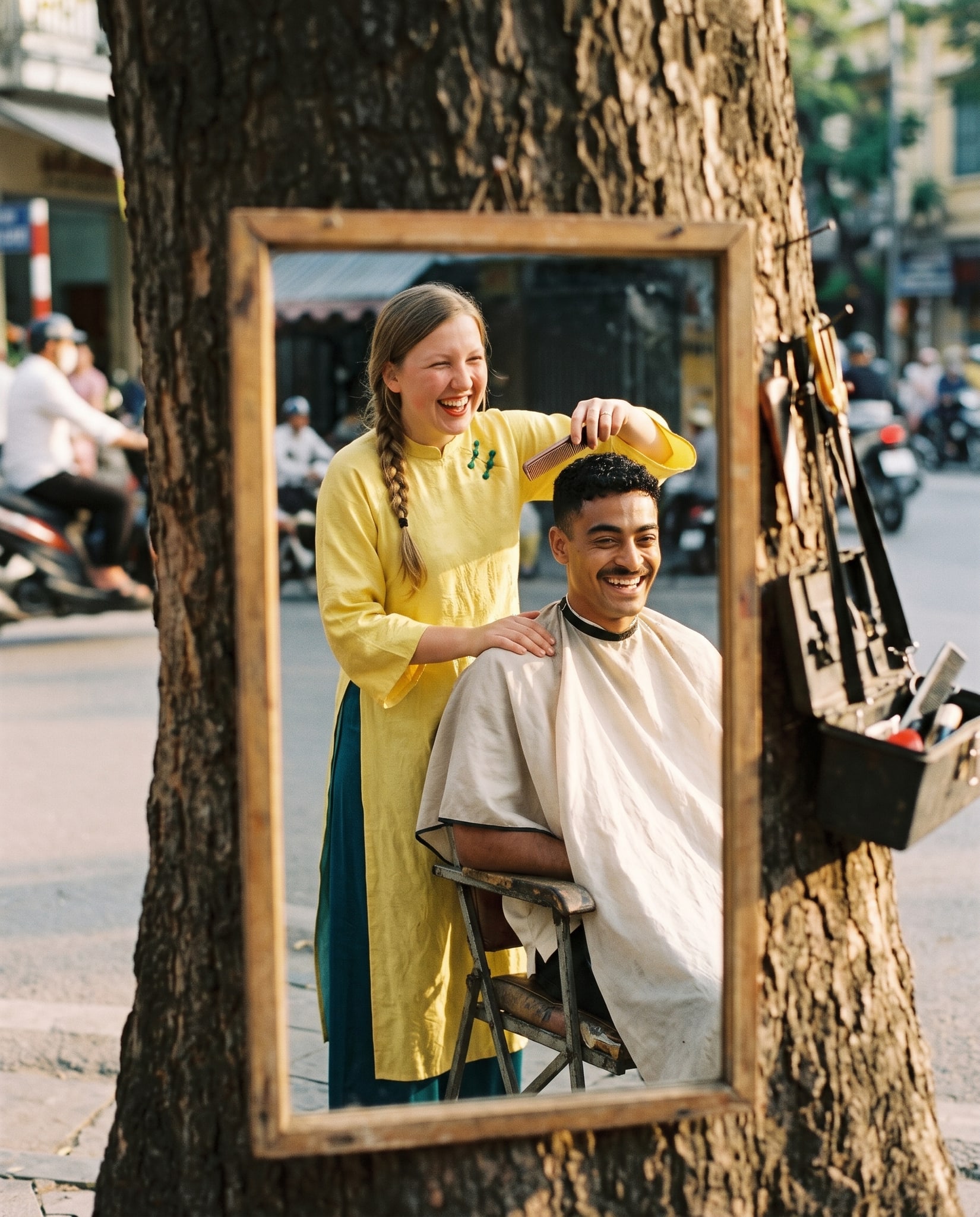
Beaded khăn vải (a draped silk headpiece) and gold filigree crowns are traditional choices. We test both on our guests' skin tones first—darker frames need warmer golds; fair skin reads jewel tones better. Headpieces taller than 4 inches can shift during movement; we anchor them with bobby pins and a light hairspray. Heavy beads create neck strain in 30+ minute poses; we rotate between hat and loose hair every 15 minutes. Temple backdrops (Hang Trong, Quan Su) require removing headpieces indoors, so plan a 5-minute break to rebind. A practical frame: start with a lightweight beaded band, add a full crown only if you're stationary (seated for family group shots).
How do embroidered blankets and textiles layer into three-outfit flows?
We drape embroidered blankets—deep red silk with gold thread, typically 1.5 m × 2 m—as both floor accent and shoulder wrap. On a white temple terrace, a red embroidered throw photographs as clean contrast. We've learned the hard way: synthetic embroidery threads show seams and fading in close-ups; ask your family or tailor if the piece is 100% silk with hand-stitched details. Textiles absorb humidity; we bring a lint roller and tissue to the shoot. Layering blankets with ao dai works best in shots 2–3, when your initial posture settles and styling fatigue sets in. Keep blankets folded in a garment bag until you step into frame; creases fade in 3–5 minutes of posing.
Chat with us on WhatsApp | See packages and prices on vietnamphotoshoot.com
Which lacquered boxes, trays, and props travel safely for a photoshoot?
Lacquered eggshell boxes and mother-of-pearl inlaid trays are iconic Vietnamese wedding gifts. They're fragile: we've had guests arrive with cracked lids. Our rule: wrap items separately in bubble wrap, place in a padded cosmetics case, and ask your hotel to store them until 30 minutes before pickup. For your session, we use props as hand-held accents in close portraits or foreground detail shots—not as seating or weight-bearing elements. Gold-painted wooden boxes photograph better than black in outdoor shade; the sheen catches edge light. If you're buying a set to display after the shoot, choose a lacquered keepsake collection made for both photography and home placement. We recommend testing the prop in your hotel room under window light first; if it feels fragile, leave it stored and focus on clothing and poses.
Where do Hanoi temples and gardens work best with traditional props?
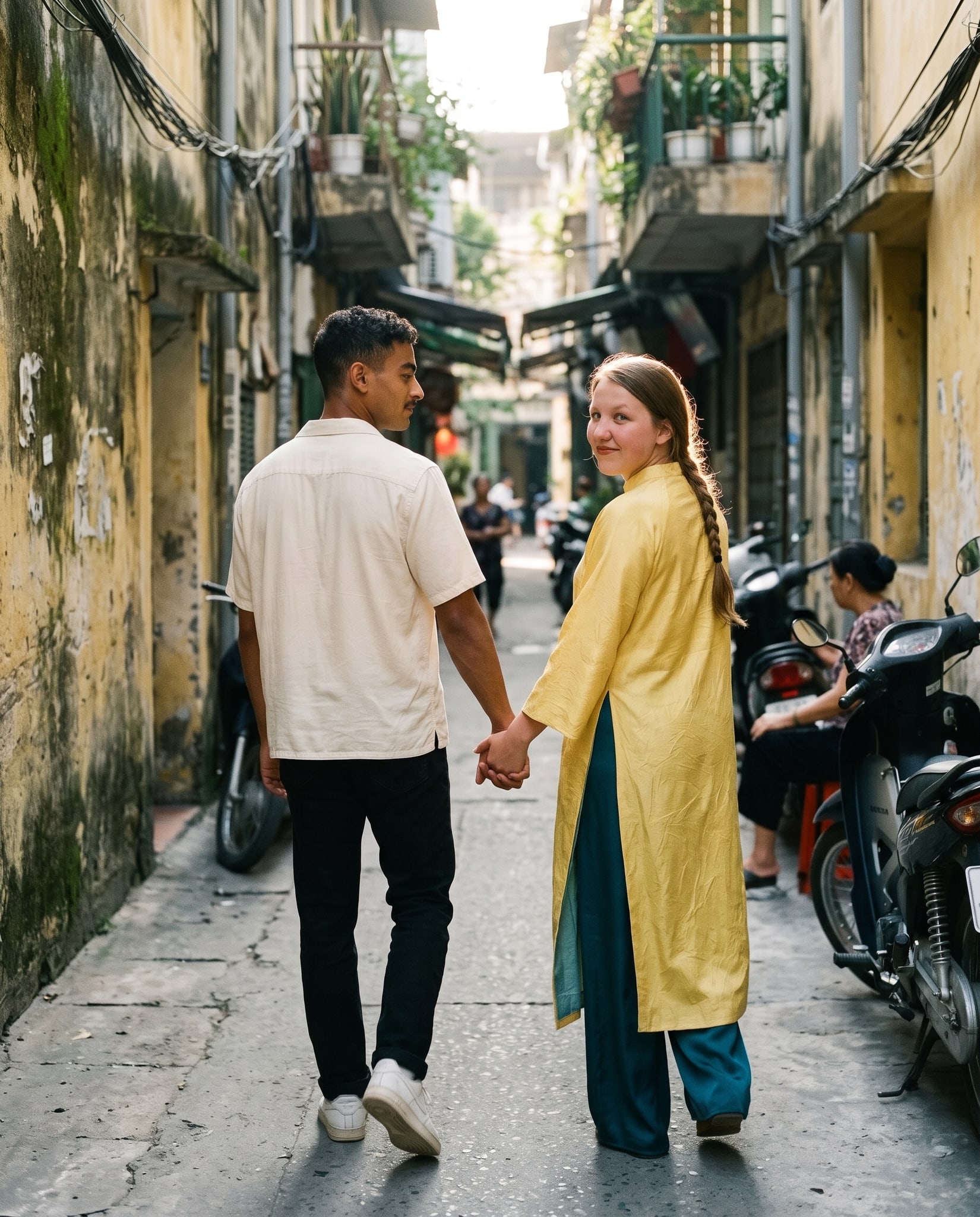
Quan Su Temple (Ba Trieu Street) offers stone courtyards where red embroidered blankets pop against granite. Hang Trong Temple (Hang Trong Street) has indoor altars—headpieces stay on, blankets drape over shoulders. Hoan Kiem Lake's eastern shore has low light in late afternoon; lacquered props catch warm tones better here than pale silk. The Old Quarter's narrow lanes with overhead wires need careful framing—we position props close to you, not in background. For outdoor sessions, we scout the venue two hours before your arrival time, check shadows, and decide: are headpieces staying on (sun exposure), or do we cap the first 20 minutes with accessories and switch to bare-head shots in softer light? French colonial villas like Thong Nhat Hall have interior rooms where props anchor intimate group portraits. We've learned that busy temple courtyards require a brief scout for foot traffic; we ask staff when peak visitor times occur and either book early morning or late afternoon slots.
What to check before you order, rent, or bring wedding elements
- Fit and comfort: Try the ao dai indoors 24 hours before; alterations take 2–3 days in Hanoi.
- Transport safety: Pack headpieces and lacquered items in hard cases; ask your hotel concierge for bubble wrap.
- Color preview: Show your stylist a phone photo of fabrics under natural light; studio samples can differ.
- Backup outfit: Bring a second ao dai or shirt in case stains or wrinkles happen during the session.
- Headpiece anchors: Confirm bobby pins, hairspray type (gel hold works better than spray), and how long you can wear weight.
- Prop insurance: If items are family heirlooms, mention this to us in your pre-shoot chat; we adjust handling and add extra protective cases.
- Rental vs. purchase: Renting a local ao dai costs less and avoids luggage; buying lets you keep the photo memory as a physical object.
Choosing traditional elements transforms a standard ao dai session into a Hanoi wedding story. We've seen guests arrive uncertain—one ao dai, no props—and leave with 200+ images that tell a complete cultural narrative. The difference: clarity on what moves (fabrics), what stays still (heavy props), and where light favors each piece.
If you're booking a couple photoshoot or a pre-wedding session, traditional Vietnamese elements anchor the narrative in a way modern styling alone cannot. We help you shape that story hour by hour, and we fix what breaks (we've taped headpieces, steamed fabrics, and repositioned props mid-shoot).
Start by picking one ao dai that fits and feels natural to move in. Add one headpiece if family tradition calls for it. Then reach out to us on WhatsApp—we'll tell you which Hanoi temple or garden suits your pieces, how to pack them safely, and whether renting a second outfit on arrival is worth your time.
Chat with us on WhatsApp | See packages and prices on vietnamphotoshoot.com
Comparison: Wedding Element Options for Hanoi Shoots
| Element | Best for | Bring or rent? | Key consideration |
|---|---|---|---|
| Silk ao dai (classic cream) | All skin tones, all venues | Bring (or buy locally 3 days prior) | Must fit comfortably; arm movement matters |
| Beaded khăn vải headpiece | Temple backdrops, morning light | Rent from Hanoi tailor or bring | Anchor with pins; test weight tolerance |
| Embroidered red blanket (1.5×2 m) | Group poses, floor accents | Bring or borrow from family | Wrap separately; lint roll before shoot |
| Lacquered eggshell box | Close-up detail shots, gifts | Bring (wrap in bubble wrap) | Fragile; don't lean on or grip tightly |
| Gold filigree crown | Evening shoots, seated portraits | Rent from local vendor | Heavier than beads; limit wear to 20 min segments |
FAQ
Can we rent a traditional ao dai in Hanoi, or should we bring our own?
Renting takes 1–2 days and costs less; tailors near Hanoi Old Quarter offer rentals. Bringing your own lets you keep the garment after the shoot. Either works—we recommend renting if you're traveling light and don't plan to keep the piece. Book rental 3–5 days before your session.
Do headpieces stay on indoors at temples, or do we remove them before entering?
Many Hanoi temples allow headpieces indoors if they're part of traditional dress. We confirm with staff during our pre-shoot scout. You'll remove them briefly in prayer areas; we have secure bags for storage. Plan outfit changes around this timing.
How do we pack embroidered blankets and lacquered boxes safely for travel to Hanoi?
Use a large cosmetics case or small suitcase, wrap each item in bubble wrap separately, and ask your hotel to store them until 30 minutes before the shoot. Avoid checked luggage if possible; carry these items on the plane to reduce damage risk.
What if a headpiece or prop breaks during the photoshoot?
Tell us immediately. We carry basic repair supplies (tape, clips, pins). If damage is severe, we pause the session and reposition you with an alternative prop or outfit. For rented items, contact the rental vendor within 24 hours to document the issue.
Are traditional wedding elements included in the ao dai photoshoot package, or do we pay extra?
We include styling guidance and prop handling in all ao dai sessions. Rentals and purchases happen outside our fee—you arrange those separately. We work with local vendors and can recommend reliable shops if you need help sourcing pieces.
How many outfit changes should we plan for a 2-hour Hanoi photoshoot?
Most guests do 2–3 outfit changes in 2 hours: one ao dai with headpiece, one with blanket wrap, one in alternate color or relaxed pose. More changes create fatigue and reduce time for genuine posing. We recommend two solid looks rather than four rushed ones.
Can we mix traditional Vietnamese elements with modern clothing in the same session?
Yes. We've done sessions mixing ao dai (hour 1) with jeans and blazer (hour 2). Hanoi venues like the French Quarter and lakeside parks suit both. Plan element-heavy shoots in the first hour when you're energized; simplify the second hour.
Ao Dai Photoshoot
Inclusions, prices and booking are on our booking site.
FAQ
Can we rent a traditional ao dai in Hanoi, or should we bring our own?
Renting takes 1–2 days and costs less; tailors near Hanoi Old Quarter offer rentals. Bringing your own lets you keep the garment after the shoot. Either works—we recommend renting if you're traveling light and don't plan to keep the piece. Book rental 3–5 days before your session.
Do headpieces stay on indoors at temples, or do we remove them before entering?
Many Hanoi temples allow headpieces indoors if they're part of traditional dress. We confirm with staff during our pre-shoot scout. You'll remove them briefly in prayer areas; we have secure bags for storage. Plan outfit changes around this timing.
How do we pack embroidered blankets and lacquered boxes safely for travel to Hanoi?
Use a large cosmetics case or small suitcase, wrap each item in bubble wrap separately, and ask your hotel to store them until 30 minutes before the shoot. Avoid checked luggage if possible; carry these items on the plane to reduce damage risk.
What if a headpiece or prop breaks during the photoshoot?
Tell us immediately. We carry basic repair supplies (tape, clips, pins). If damage is severe, we pause the session and reposition you with an alternative prop or outfit. For rented items, contact the rental vendor within 24 hours to document the issue.
Are traditional wedding elements included in the ao dai photoshoot package, or do we pay extra?
We include styling guidance and prop handling in all [ao dai sessions](/go/ao-dai-photoshoot). Rentals and purchases happen outside our fee—you arrange those separately. We work with local vendors and can recommend reliable shops if you need help sourcing pieces.
How many outfit changes should we plan for a 2-hour Hanoi photoshoot?
Most guests do 2–3 outfit changes in 2 hours: one ao dai with headpiece, one with blanket wrap, one in alternate color or relaxed pose. More changes create fatigue and reduce time for genuine posing. We recommend two solid looks rather than four rushed ones.
Can we mix traditional Vietnamese elements with modern clothing in the same session?
Yes. We've done sessions mixing ao dai (hour 1) with jeans and blazer (hour 2). Hanoi venues like the French Quarter and lakeside parks suit both. Plan element-heavy shoots in the first hour when you're energized; simplify the second hour.
More from the team
Ao Dai Photos at Hoi An Lantern Street at Night
Hoi An Lantern Street (Nguyen Hoan) glows at dusk with silk lanterns and reflected light. Our team shoots ao dai here after dark, navigates tight vendor spaces, and handles the low-light challenge with experience from 100+ night sessions.
Ao dai for wedding photos in Quy Nhon: renting, fitting and styling
Quy Nhon's coastal backdrops pair beautifully with traditional ao dai. We walk through rental choices, fitting logistics and how our team coordinates styling on shoot day.
Vietnam Pre-Wedding Photoshoot: What We Book at Cáo Studio
Pre-wedding shoots in Vietnam mean morning light in Hoi An's Old Town, cyclos in Saigon, or terraced fields near Ninh Binh. We walk you through what a session actually costs, how we schedule it, and what goes wrong on the day.