 Cáo Studio
Home › Blog › Ao Dai Photoshoot
Traditional Vietnamese wedding elements for Ho Chi Minh City photos
By the Cáo Studio team · Hanoi & Saigon · 2026-11-02
Traditional Vietnamese wedding elements for Ho Chi Minh City photos means building your shoot around áo dài (the fitted silk tunic), complementary fabrics like silk trousers or skirts, jewelry (often gold or pearl), and sometimes ceremony props like candles or tea sets. A typical session runs 2–3 hours and includes styling consultation, hair and makeup in our Ho Chi Minh City studio or your hotel, then 60–90 minutes on location at sites like the Saigon River, Bitexco, or quiet pagodas. The look depends on whether you want a modern couple shoot with contemporary styling or a full traditional narrative (from tea ceremony through first dance). Cáo Studio handles wardrobe coordination, pose direction for movement in silk, and timing to catch natural light on fabric texture—áo dài photographs best in golden hour when the tunic catches warm light. Budget time for layering under the outer robe and practice walking in the tight skirt beforehand. Chat with us on WhatsApp
What does "traditional Vietnamese wedding" actually look like in photos?
Most Western couples arrive thinking "traditional Vietnamese" is one fixed style. In reality, it's a spectrum. North-style áo dài (worn in Hanoi) tends toward deeper jewel tones and heavier silk with ornate beading on the side seams. South-style áo dài (what we shoot in Ho Chi Minh City) favors lighter silks, pastels, and subtle embroidery. Pre-wedding couples choosing tradition usually fall into two camps: those doing a full ceremony narrative (tea pouring, gift exchange, veil and crown moments) and those wanting a single styled session that feels ceremonial without actual rituals. The difference shapes everything—location choice, outfit layers, prop list, shooting pace. We've noticed couples who've attended a traditional wedding before often choose fewer elements and focus on the couple dynamic, whereas first-timers want the full visual storytelling. On shoot day in District 1 or District 7, we read the energy—if the silk feels heavy in 30°C heat or the ceremonial props look staged, we pivot to movement-based shots (walking through a temple garden, holding hands in silk) where the tradition comes through gesture, not props.
Which áo dài color shows up best on camera in southern Vietnam light?
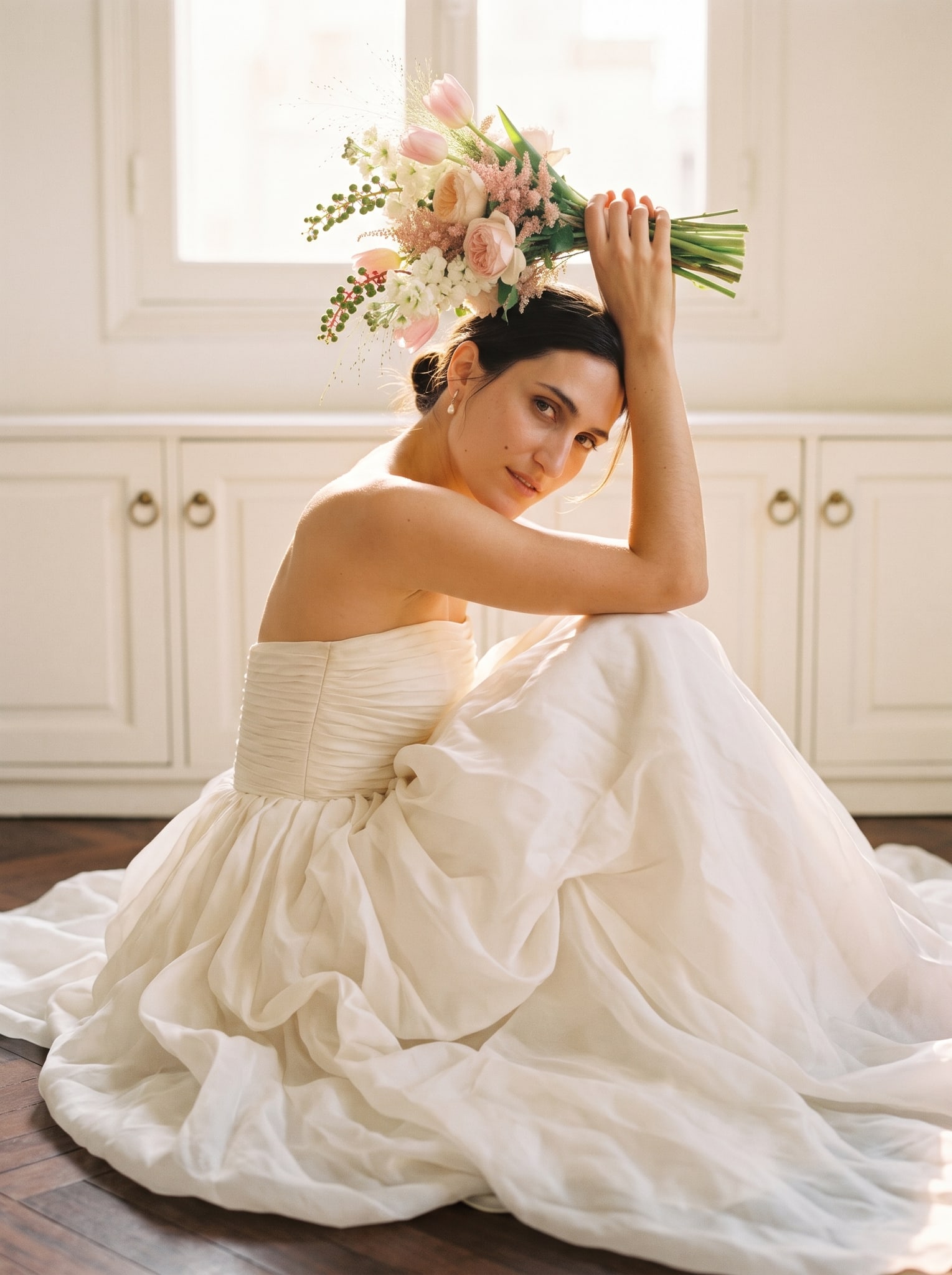
This is the question that determines the entire session mood. Jewel tones—deep emerald, sapphire, ruby—photograph with richness but can flatten in direct noon sun and need overcast conditions or golden hour. Pastels (cream, pale pink, soft blue) hold detail across all light conditions and suit daytime shoots; they also read "bride" clearly without trying. White or ivory áo dài is formal and timeless but demands perfect makeup and skin prep since every detail shows. Red is traditional Tet áo dài and deeply symbolic but reads dark and heavy unless worn in very light silk. Our stylists recommend testing your chosen color in the actual location at your preferred shooting time—walk the Saigon River embankment or temple grounds in your áo dài 20 minutes before the session proper. If the color drains your skin tone or blends with the background, we recolor-correct in post or suggest a complementary silk undershirt. Emerald and sapphire áo dài worn over white or cream silk underneath creates depth and movement that flatters most complexions and translates to video beautifully.
How do you pick between silk, cotton blend, and linen for a two-hour Ho Chi Minh City shoot?
Pure silk (100% mulberry or tussah) is the premium choice: it drapes dramatically, catches light on the weave, and moves like water in photos. Downsides are cost, wrinkle-prone between shots, and risk of staining in heat-induced perspiration. Cotton-silk blends (60% silk, 40% cotton) are the practical middle ground we usually recommend for daytime shoots. They hold color brightness, resist creasing, dry faster if weather turns humid, and cost less. Linen áo dài is rare for formal wear and reads casual—we suggest it only for modern concept shoots, not traditional narratives. For a 2–3 hour Ho Chi Minh City session starting at 5 p.m., we pair a pure silk outer áo dài with cotton-blend undergarments so you stay cool but the outer tunic photographs pristinely. If your package includes makeup and hair at your hotel, we steam or press the áo dài there right before leaving, which delays wrinkles by an hour. Humidity is the silent killer—Ho Chi Minh City July through September routinely hits 90% humidity, so we shoot in air-conditioned temple interiors or very early morning (6:30–7:30 a.m.) if tradition is your priority.
What accessories actually photograph well versus what looks cluttered?
This is where restraint wins. A traditional Vietnamese bride wears three things: a beaded hair crown (crown of flowers in some regions, ornate gold in others), statement jewelry (often a gold or pearl necklace and matching earrings), and sometimes a shawl or silk stole draped across the back for the tea ceremony moment. Layering more—ankle bracelets, finger rings on every hand, multiple necklaces—photographs as visual noise and distracts from the áo dài and couple connection. Our stylists ask: does each piece add meaning or just weight? A delicate jade pendant tells a story (family heirloom, symbolism). A gold bangle set that costs more than the áo dài doesn't. For the Ho Chi Minh City shoot, we usually propose: one standout necklace, matching earrings, the hair crown, and a pair of understated shoes (embroidered silk slippers or low heels that won't slip on temple floors). If you're incorporating a traditional couple photoshoot where the groom also wears formal áo dài or a silk tunic, matching metal tones (both gold or both silver) across both outfits creates visual cohesion in photos. Avoid mixing antique gold with bright gold or pearls with gold—the camera catches the clash.
| Accessory type | Best for | What to check before buying | Why it works |
|---|---|---|---|
| Beaded hair crown (gold or gold-embroidered) | Traditional full ceremony | Weight (over 200g tires the neck); pin placement so it won't slip | Frames face, catches light, reads "bride" instantly |
| Statement jade or pearl necklace | Both traditional and modern shots | Length (sits at collarbone, not on ribs); weight balance | Draws eye to face, adds texture without clutter |
| Silk shawl or stole (matching or contrasting) | Tea ceremony or walking moments | Drape length (fingertip to floor when worn across back); slippery silk on silk | Adds movement and formality, photographs in motion beautifully |
| Embroidered silk slippers | Seated shots, temple interiors | Sole grip (avoid slipping on polished floors); color match to áo dài | Completes the outfit, visible in seated poses |
| Delicate ankle bracelet | Close-up details, standing moments | Minimal (one or two small pieces); doesn't clink or distract | Adds sophistication, subtle in photos unless you're walking bare-legged |
How do you pose and move in a tight-fitting áo dài without it looking stiff?
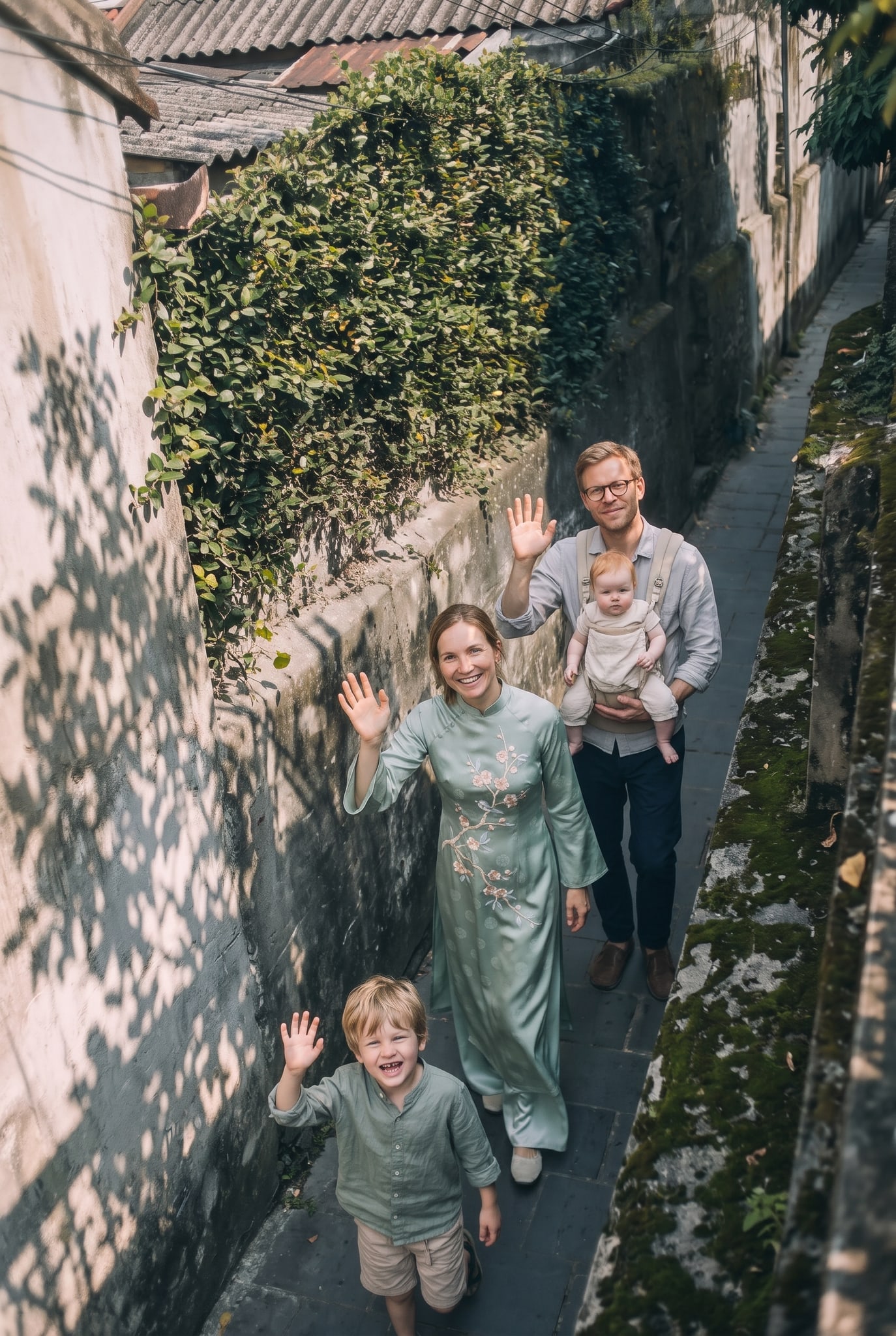
This is the technical invisible work that separates professional shoots from stiff formal photos. An áo dài fitted at the chest, waist, and hip leaves little room for dynamic posing—the moment you bend or twist, the fabric creases or gapes. Our photographers shoot movement, not stillness. We ask couples to walk toward the camera, turn slowly, hold hands while walking away, sit on temple steps with a slight forward lean (not rigid upright), and embrace from the side rather than face-on. Movement does two things: it settles the fabric naturally and removes the "posed" look. A 30-second walk across a temple courtyard photographs better than a 2-minute static embrace. For sitting poses (tea ceremony recreation or couple on temple steps), we advise crossing legs at the ankle (not the knee, which bunches the skirt), leaning toward your partner slightly, and keeping shoulders soft. If the áo dài is very tight, avoid full frontal sitting—angle your body 45 degrees to the camera. We also build in 5–10 minute breaks between outfit changes so the fabric settles and you breathe—tight áo dài and humid Ho Chi Minh City heat compound stress on your posture, and that reads in your face. Requesting a pre-wedding photoshoot gives you the time and experience to relax into the garment and the camera.
See packages and prices on vietnamphotoshoot.com
What locations in Ho Chi Minh City actually suit traditional Vietnamese wedding photos?
Generic beautiful spots (parks, riverside walks) often feel generic in wedding photos. Traditional elements need architectural or spiritual context—think temple courtyards, heritage pagodas, or historical buildings that echo the formality of the outfit. In Ho Chi Minh City, we rotate between five core locations: Jade Emperor Pagoda (intimate, centuries-old, green courtyard), A Tuong Pagoda (symmetrical, calm), the War Remnants Museum exterior (modern brutalist backdrop for bold contrast), Bitexco Financial Tower base (clean lines, less crowded mornings), and the Saigon River embankment near Ben Nghe Ward (wide open, catches light, urban without clutter). Each has trade-offs. Pagodas require permission and are busiest 9–11 a.m.; the museum has foot traffic but allows artistic freedom; the river is open but unshaded. We select based on your áo dài color, vibe (intimate vs. editorial), and whether you want cultural immersion or modern contrast. A pale silk áo dài with emerald detailing glows against the green courtyard of a pagoda and photographs warm. The same áo dài against Bitexco's white concrete risks looking washed out unless shot in golden hour or with tighter crop on your faces. For Saigon studio shoots, we often propose a hybrid: 40 minutes in a pagoda or temple (intimate, traditional context) and 30 minutes at a secondary location (architectural or abstract) to give you range. Morning shoots (6:30–8:30 a.m.) suit traditional elements because the light is soft and crowds are absent; you're not competing with tourists for temple steps.
What actually happens during a two-hour traditional Vietnamese wedding shoot?
Here's the real timeline from our Ho Chi Minh City shoots. You arrive at the studio (Tao Đàn area or your hotel if you book makeup and hair service) 45 minutes before the session start time. Makeup and hair takes 60–75 minutes (more if you're wearing a crown or complex braiding). While you're in the chair, our stylist steams the áo dài, coordinates undergarments, and pulls accessories into a labeled kit. You change into the full outfit (15 minutes, including getting used to the tight fit). Our photographer briefs you on the location (light direction, crowds, pacing) for 5 minutes. You travel to the location (10–20 minutes depending on traffic—note: Ho Chi Minh City traffic during 7–9 a.m. or 4–6 p.m. can add 15 minutes). First 20 minutes on location: we shoot candid walking, natural light exploration, and warm-up poses while you settle. Next 40 minutes: posed couples moments (sitting, embracing, facing each other), detail shots (jewelry, hands, fabric texture), and location changes within the same area. We then pause for hydration and outfit adjustment (10 minutes). Final 30 minutes: movement-based sequences (walking away from camera, turning, wind-assisted fabric shots if outdoor). We wrap, and you change back or head to a second location if booked. Total on-location time is 75–90 minutes; total session time from arrival to departure is 3–3.5 hours. What goes wrong: you underestimate áo dài tightness and need a break mid-shoot (happens in 20% of sessions—humidity and the fitted bodice cause fatigue); makeup runs or hat marks appear (we carry touch-up kits); crowds gather at temples (temples are busier after 9 a.m., so we book early); and wind (coastal breezes or monsoon weather July–September can flip the áo dài in unflattering ways—we pivot to sheltered locations). We manage these by scouting the night before, building flexibility into the timeline, and having backup poses for every weather scenario.
What should you check before booking a traditional Vietnamese wedding photoshoot?
Before you commit, ask yourself: (1) Do I own the áo dài, or do I need to rent it? (Most couples rent; rental costs are separate from the shoot package and vary by quality—we can recommend Ho Chi Minh City rental vendors but don't handle rentals ourselves.) (2) Is the áo dài tailored to my exact measurements? Ill-fitting áo dài reads visibly in photos and limits movement—rent from a tailor-on-site vendor if possible, not generic costume shops. (3) Have I chosen my location, or do I want the photographer to propose it? Tell us your vibe (intimate, editorial, modern, traditional, cultural) and we'll narrow the options. (4) Do I want a styled session (hair, makeup, accessories coordinated by us) or just photography? Our packages bundle styling; if you're bringing your own makeup artist, confirm coordination 48 hours before. (5) What's your timeline? If you're getting married in two weeks, a traditional shoot needs outfit sourcing time—book the shoot 3+ weeks out so we're not coordinating costumes last-minute. (6) Do you want video, or just photos? Lots of couples want a 5-minute reel of movement (walking in silk, twirling, embracing)—this is a different pacing and shot list than static couples poses. Clarify upfront.
FAQ
Can I wear a traditional Vietnamese wedding áo dài if I'm not Vietnamese?
Yes. Áo dài is Vietnam's national garment, and wearing it respectfully in a photoshoot is welcomed. We ask couples to approach it as cultural appreciation, not costume—choose colors and styling mindfully, work with a stylist familiar with proper fit, and avoid mixing it with non-Vietnamese formal wear (like Western bridal trains or Western jewelry conventions). Cáo Studio works with international couples on this regularly.
What's the difference between a north Vietnam and south Vietnam traditional wedding shoot style?
Northern áo dài (Hanoi style) typically features heavier silk, deeper jewel tones, ornate beading on side seams, and formal hair crowns. Southern áo dài (Ho Chi Minh City style) uses lighter, more breathable silks, pastels and softer colors, minimal embroidery, and simpler hair accessories. For Ho Chi Minh City shoots, we lean south-style naturally, but if you prefer northern formality, we can source fabrics and styling to match.
Can I do a traditional Vietnamese wedding shoot if I'm not actually getting married?
Absolutely. Many couples book a traditional-style session as an anniversary celebration, a cultural experience, or simply because they love the aesthetic. There's no requirement that it's tied to an actual wedding. We frame it as a styled concept shoot rather than a wedding shoot, and the approach is identical—full styling, location selection, movement-based photography.
How much time do I need for a full traditional Vietnamese wedding narrative (tea ceremony, veil, multiple outfit changes)?
A full narrative—tea ceremony recreation, gift exchange, two áo dài changes, groom outfit—requires 4–5 hours minimum, usually split across two half-days or one full day. This is different from our standard 2–3 hour couple shoot. Discuss timeline and scope with us 2+ weeks before the shoot date.
Do I need to rent a traditional Vietnamese wedding áo dài, or can I wear a modern áo dài dress?
Both work photographically, but they're different aesthetically. A traditional tailored áo dài (fitted tunic over trousers, separate side panels, formal silks) photographs as ceremonial. Modern áo dài dresses (one-piece, relaxed fit, casual fabrics) photograph as contemporary. Clarify which vibe you want before renting—many Ho Chi Minh City rental shops offer both, and prices differ. We recommend walking into a rental shop with your photographer to see how the fit photographs from a distance.
What's included in a traditional Vietnamese wedding photoshoot package at Cáo Studio, and what costs extra?
Our áo dài photoshoot package includes photographer, location scouting, 60–90 minute on-location session, and digital files. It does not include makeup, hair, áo dài rental, or accessories. We offer add-on makeup and hair service at your hotel or studio if you'd like coordinated styling. Áo dài rental is your responsibility; we recommend vendors but don't arrange it. Chat with our team on WhatsApp to confirm what's bundled in your specific package. ===INTERNAL LINKS=== - áo dài photoshoot package - makeup and hair at your hotel - couple photoshoot - pre-wedding photoshoot - Saigon studio shoots
Ao Dai Photoshoot
Inclusions, prices and booking are on our booking site.
FAQ
Can I wear a traditional Vietnamese wedding áo dài if I'm not Vietnamese?
Yes. Áo dài is Vietnam's national garment, and wearing it respectfully in a photoshoot is welcomed. We ask couples to approach it as cultural appreciation, not costume—choose colors and styling mindfully, work with a stylist familiar with proper fit, and avoid mixing it with non-Vietnamese formal wear (like Western bridal trains or Western jewelry conventions). Cáo Studio works with international couples on this regularly.
What's the difference between a north Vietnam and south Vietnam traditional wedding shoot style?
Northern áo dài (Hanoi style) typically features heavier silk, deeper jewel tones, ornate beading on side seams, and formal hair crowns. Southern áo dài (Ho Chi Minh City style) uses lighter, more breathable silks, pastels and softer colors, minimal embroidery, and simpler hair accessories. For Ho Chi Minh City shoots, we lean south-style naturally, but if you prefer northern formality, we can source fabrics and styling to match.
Can I do a traditional Vietnamese wedding shoot if I'm not actually getting married?
Absolutely. Many couples book a traditional-style session as an anniversary celebration, a cultural experience, or simply because they love the aesthetic. There's no requirement that it's tied to an actual wedding. We frame it as a styled concept shoot rather than a wedding shoot, and the approach is identical—full styling, location selection, movement-based photography.
How much time do I need for a full traditional Vietnamese wedding narrative (tea ceremony, veil, multiple outfit changes)?
A full narrative—tea ceremony recreation, gift exchange, two áo dài changes, groom outfit—requires 4–5 hours minimum, usually split across two half-days or one full day. This is different from our standard 2–3 hour couple shoot. Discuss timeline and scope with us 2+ weeks before the shoot date.
Do I need to rent a traditional Vietnamese wedding áo dài, or can I wear a modern áo dài dress?
Both work photographically, but they're different aesthetically. A traditional tailored áo dài (fitted tunic over trousers, separate side panels, formal silks) photographs as ceremonial. Modern áo dài dresses (one-piece, relaxed fit, casual fabrics) photograph as contemporary. Clarify which vibe you want before renting—many Ho Chi Minh City rental shops offer both, and prices differ. We recommend walking into a rental shop with your photographer to see how the fit photographs from a distance.
What's included in a traditional Vietnamese wedding photoshoot package at Cáo Studio, and what costs extra?
Our [áo dài photoshoot package](/go/ao-dai-photoshoot) includes photographer, location scouting, 60–90 minute on-location session, and digital files. It does not include makeup, hair, áo dài rental, or accessories. We offer [add-on makeup and hair service](/go/makeup-and-hair) at your hotel or studio if you'd like coordinated styling. Áo dài rental is your responsibility; we recommend vendors but don't arrange it. Chat with our team on WhatsApp to confirm what's bundled in your specific package. ===INTERNAL LINKS=== - [áo dài photoshoot package](/go/ao-dai-photoshoot) - [makeup and hair at your hotel](/go/makeup-and-hair) - [couple photoshoot](/go/couple-photoshoot) - [pre-wedding photoshoot](/go/pre-wedding-photoshoot) - [Saigon studio shoots](/go/saigon)
More from the team
Ao Dai Photos at Hoi An Lantern Street at Night
Hoi An Lantern Street (Nguyen Hoan) glows at dusk with silk lanterns and reflected light. Our team shoots ao dai here after dark, navigates tight vendor spaces, and handles the low-light challenge with experience from 100+ night sessions.
Ao dai for wedding photos in Quy Nhon: renting, fitting and styling
Quy Nhon's coastal backdrops pair beautifully with traditional ao dai. We walk through rental choices, fitting logistics and how our team coordinates styling on shoot day.
Vietnam Pre-Wedding Photoshoot: What We Book at Cáo Studio
Pre-wedding shoots in Vietnam mean morning light in Hoi An's Old Town, cyclos in Saigon, or terraced fields near Ninh Binh. We walk you through what a session actually costs, how we schedule it, and what goes wrong on the day.