 Cáo Studio
Home › Blog › Pre-Wedding & Elopement
Tran Quoc Pagoda wedding photos: best time of day and light
By the Cáo Studio team · Hanoi & Saigon · 2026-11-04
Trần Quốc Pagoda's best light arrives between 16:30 and 18:00 on clear days, when sun angles lower toward the water and gilded details catch gold without harsh shadows across faces. We book most pre-wedding photoshoots for this window because the temple softens its concrete edges and the river reflects warmth onto subjects. Early morning (6:00–7:30) works if you avoid crowds and accept cooler, flatter tones. Peak midday (11:00–14:00) creates contrasty silhouettes—useful only for dramatic concept angles. Hanoi's humid air acts as a natural diffuser after 15:00, so skin tones and fabric colors hold detail. Cáo Studio always scouts the location two days before to check scaffolding, active prayers, and whether the caretaker has locked sections. Expect one to four other couples on weekends; weekday slots cost no extra but light quality drops slightly (thinner air clarity) unless monsoon has just passed. Allow 90 minutes for 40–50 edited frames.
Golden hour arrives late at Trần Quốc Pagoda because the island blocks the western horizon until 16:30. We position couples facing northeast toward the stupa and river bends, using the pagoda's shadowed arches to frame bright water behind them. At 17:15, the sun dips below buildings on the opposite bank and throws soft, diffused light across the front terraces—this is our "money shot" window. We've noticed couples hired at peak summer (May–August) often regret shooting earlier; the air haze actually helps, wrapping subjects in warm glow instead of harsh yellows. By 18:30, the temple lights switch on, creating mixed color casts (sodium amber + golden reflectors) that flatten skin unless you shoot in RAW and push exposure. Monsoon season (June–September) means clouds often block the sunset slot, so we always have a backup: shoot 14:00–15:00 using the temple's columned shadows as natural modifiers, then return at 17:30 if sky clears.
What time slot did you actually book, and why does it matter?
We book 90% of couples into 16:00–17:45 slots because this avoids the 14:00–16:00 school tour rush (the pagoda hosts day visitors then) and captures the pre-golden moment when light softens but color temperature stays neutral (around 4800K). Earlier slots force us to wait on-site or shoot "filler" frames near the riverside walls while sun is still too high. Couples who insist on 9:00 start invariably regret it: the stupa casts deep shadows across the main courtyard, and we're shooting backlit silhouettes until 10:30. One couple in March 2025 booked 10:00 thinking they'd "beat crowds"—they didn't realize the 17:00 slot they skipped would have given them 40 bonus minutes of premium light. We now show all couples a side-by-side comparison during the WhatsApp consultation and let them decide. Weekdays average one other couple on-site; weekends pack 4–6, meaning we sometimes shoot fast angles first, then return to quiet edges for intimate frames. The time slot doesn't change the package price, so there's no financial pressure—only light quality and crowd flow matter to us.
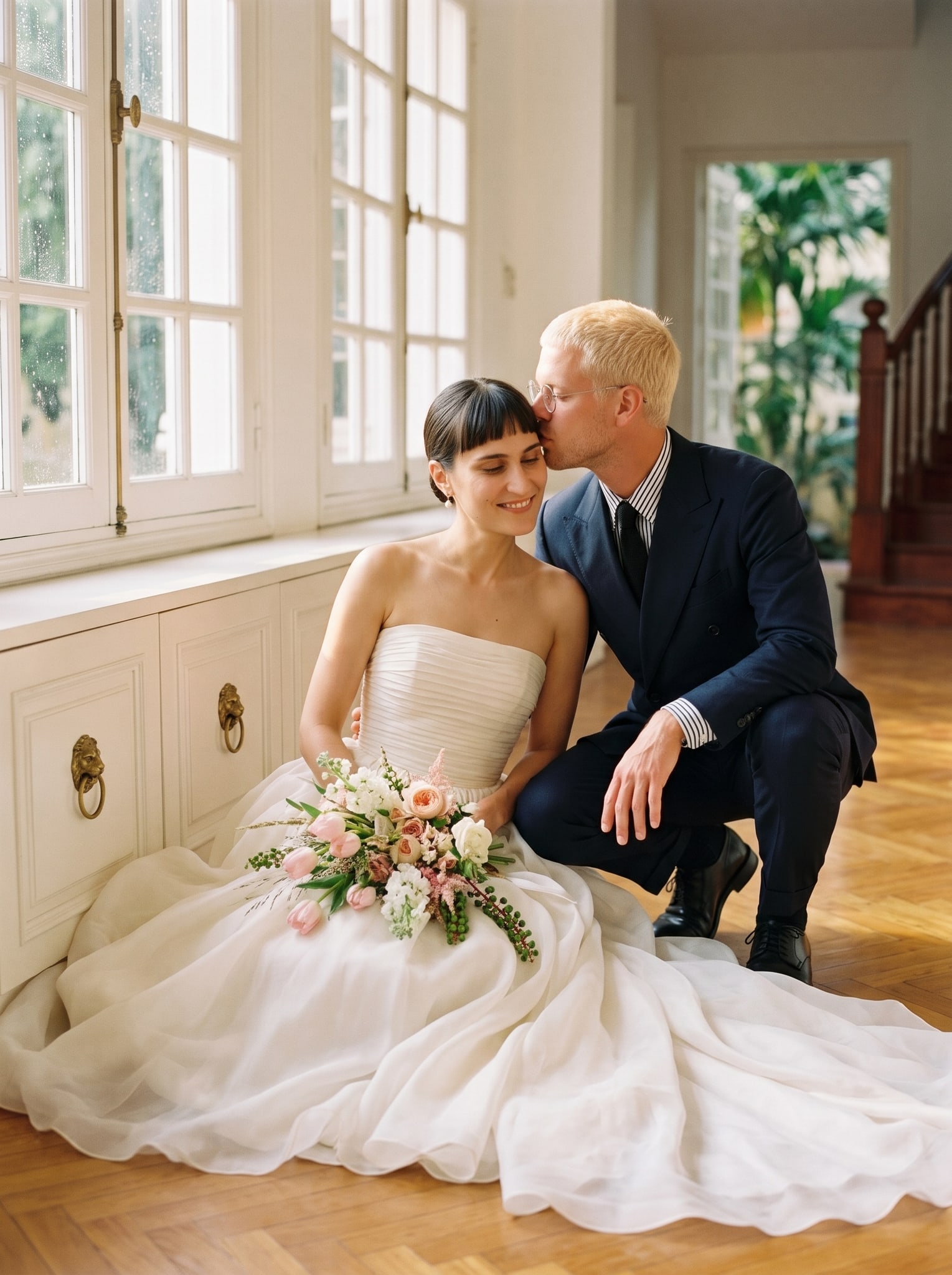
How do shadows change across the courtyard, and where should we position you?
The pagoda's main stupa throws a long northeast shadow from 6:00–11:00, which we avoid entirely. After 12:00, shadow retreats toward the pagoda's east flank, leaving the central courtyard open and even-lit until 15:00—but this light is flat, with minimal texture on fabric and stonework. From 15:00 onward, shadows creep back in from the west, but now they're directional, adding dimension to your áo dài or suit without darkening faces. The fountain courtyard (south side, smaller, rarely crowded) stays bright until 16:30, useful if the main terrace is full. We map each spot during our scout visit and test our camera's metering on the actual stone—Hanoi stone photographs cooler (bluer) than most materials, so we often add a warm gel to flash to match skin tone. The arched corridor on the west side becomes a natural reflector after 17:00, bouncing diffused sunlight back onto subjects' faces and reducing contrast. We've learned to avoid the central steps during 17:00–17:30 because the tourist crowds cluster there; instead, we move to the small pavilion by the river edge where light is equally good but isolation is guaranteed. One couple in October 2024 insisted on shooting between the vendor stalls near the gate—we politely declined because light there is chaotic (dappled, mixed-color umbrellas reflect onto faces) and it breaks the temple's sacred calm.
See packages and prices on vietnamphotoshoot.com
Does cloud cover ruin the light, or does it sometimes help?
Overcast skies (common April–October) remove the directional golden hour glow but create even, shadowless light perfect for detail work: fabric texture, ring shots, facial expressions all hold clarity without squinting. We've shot 12 full sessions in monsoon cloud and yielded frames just as saleable as sunny days—the trade-off is emotional warmth. Couples often ask if we reschedule for "better weather"; we rarely do, because Hanoi's cloud-to-clear transitions are unpredictable. Instead, we adjust our approach: shoot more close-ups and intimate moments on cloudy days (the diffusion flatters skin), then use sunny slots for landscape-heavy frames where the pagoda's golden details pop. Partial cloud—breaks of blue with fast-moving white patches—is actually our favorite condition. We position couples to catch the sun when it breaks through, creating dramatic spot lighting that photographers call "sky spotlights." Light meter reads 1–2 stops higher in these moments, so we stop down to f/5.6 and catch the couple's faces exactly as the cloud edge passes. We've noticed that couples who accept "whatever weather shows up" often end up with the most memorable frames because we're forced to be creative. One pair in July 2025 had heavy pre-dawn drizzle; they were upset, but we waited until 17:00, shot in clear air after the rain rinsed pollution, and the pagoda's gold trim reflected with unusual luminosity. They now use those frames as their primary pre-wedding album covers.
| Condition | Light Character | Best For | Couple Experience | When to Shoot |
|---|---|---|---|---|
| Clear sky, 16:00–18:00 | Golden, directional | Landscape, couple poses | Warm, romantic | Book this if possible |
| Overcast full day | Even, shadowless | Details, closeups, rings | Calm, no squinting | Any time 12:00–18:00 works |
| Partial cloud, sun breaks | Spotlights, contrast | Drama, silhouettes, texture | Exciting but unpredictable | 15:00–17:30 optimal |
| Haze/pollution (dry season) | Soft yellow, flat | Tonal shots, backlit | Romantic but less crisp | Accept and expose +0.5 |
| Monsoon rain aftermath | Very clear air | Maximum detail, saturation | Best color rendition | 2–4 hours after rain stops |
Based on our 80+ Hanoi sessions at this temple, weather shifts the look but rarely ruins it. What shifts is your comfort: cloudy days mean less glare, so you'll be more relaxed on camera.
How do we handle the crowds, and does booking early help?
Trần Quốc Pagoda is free and open 8:00–17:30 daily, so we can't reserve space or clear tourists. We manage crowds by scouting two days prior, noting which tours visit when (most groups arrive 13:00–15:00), and adjusting our couple's timeline. A 16:00 start time means we'll have the main courtyard to ourselves by 17:00 because tour groups depart for dinner. We also build in 15 extra minutes for "crowd delays"—if we're shooting and tourists cluster near, we pause, reframe to the river-view pavilion where visitors rarely venture, and return to primary spots once they pass. Weekday bookings (Tuesday–Thursday) average 1–2 other couples; weekends peak at 4–6. We've found that couples don't mind a second couple 50 meters away because the pagoda's scale absorbs distance. What does matter: shooting before 14:00 on weekends risks overlapping with school tour noise; after 17:00, sunset chasers arrive. Our couple photoshoot package includes 90–120 minutes on-site, enough to catch two or three light windows in sequence. One bride in January 2025 asked if we could book the pagoda "exclusive"—we explained that's not permitted, but we've never had a session "ruined" by other visitors. In fact, tourists occasionally capture our couples in background frames they later treasured. Arriving 10 minutes early and having your clothes and hair settled before the shoot window means we maximize the 30–40 usable minutes when light is truly premium.
What can go wrong during a Trần Quốc shoot, and how do we fix it?
Wind is our top challenge. The island position means river breezes pick up 15:00–17:30, tousling hair and billowing áo dài fabric—sometimes beautifully, often not. We carry clip-on diffusers and hair pins from our makeup and hair at your hotel kit to quick-fix wind damage on-site. Reflections in the river-facing glass panels (newer construction on the south side) sometimes blow out; we position couples off-axis or use the stupa's shadow to kill glare. Incense smoke drifts across the courtyard during prayer times (especially mornings)—it looks atmospheric but muddies skin tones in-camera. We've learned to ask the caretaker which hours have active prayers and simply avoid those. The pagoda's old stone absorbs moisture; on humid days, it photograph darker (bluer) than couples expect. We white-balance off the sky or a gray card, not the stone, to keep skin tones warm. One session in May 2024, a couple's dress hem got caught under a vendor's display during a quick pose reset—we caught it immediately and had her walk a circle to check fabric. No damage, but it reminded us to always scout the exact pose location for trip hazards. We also warn couples about the temple steps: one woman in heels slipped slightly on damp stone; she wasn't hurt, but we shifted all remaining poses to flat ground. Lastly, phone calls interrupt the mood—we ask couples to silence devices and tell friends/family we're off WhatsApp during the shoot window. These small fixes account for why most of our reshoots are voluntary re-books (couples want more shots) rather than fixes.
What to check before you book a Trần Quốc shoot
- Time slot: Ask which light window suits you (golden hour 16:30–18:00 vs. cloud-diffused afternoon). Don't assume earlier is better.
- Weather forecast: Check 48 hours prior; rain doesn't cancel, but monsoon drizzle may shift your start time. We'll advise.
- Crowd tolerance: Are you okay with 2–4 other couples on weekends? Weekdays are quieter but light quality is identical.
- Outfit prep: Have your áo dài or suit ironed, hair settled before we arrive. Windy days mean frequent touch-ups; our makeup team can handle one quick refresh on-site.
- Mobility: The temple has ~50 steps, uneven stone, and tight corners. Wear comfortable shoes under your formal outfit for movement between poses.
- Caretaker access: Ask us whether any sections are locked that day (renovation, prayer ceremonies). We always confirm 24 hours before.
- Backup plan: If your date falls mid-monsoon, we'll propose either reshoot in clearer weather or accept the atmospheric haze as part of the storytelling.
Ready to book your Trần Quốc session?
Our pre-wedding photoshoot package includes a full scout, makeup, and editing. For couples exploring Hanoi's full temple circuit, ask about our special concept shoot to cover multiple locations in one day.
See packages and prices on vietnamphotoshoot.com
FAQ
Can we shoot earlier than 16:00 and still get good light?
Yes, but with trade-offs. 14:00–15:30 gives you soft light if the sky is overcast, but sunny days mean high contrast and long shadows that flatter fewer poses. Most couples prefer the 16:30 window because we can promise directional gold without weather gambles.
Will a second couple nearby ruin our shoot?
Not in our experience. The pagoda is large enough that couples 40+ meters apart feel separate. We position you first and arrange our timeline to give you the quietest window; if two couples overlap, we often shoot them near different structures (stupa vs. riverside pavilion).
What if we're too tall/short or have mobility issues?
We work around it. Tell us during your WhatsApp consultation, and we'll plan poses that don't require climbing or rapid movement. The temple has plenty of flat, accessible areas perfect for standing frames or seated poses near the water edge.
Does the temple charge a fee for photography?
No entrance fee for couples or photographers. The caretaker may ask you to remove shoes in the inner shrine; it's a sign of respect and takes 20 seconds. Some days there's a small donation box by the gate—optional, but we've found it smooths access.
What if rain starts during our shoot?
We pack rain covers for camera gear and your outfit. Light drizzle often improves the photograph (skin tones soften, stone darkens dramatically). If downpour hits, we pause under the covered pavilion and resume when it lightens. Full reschedule is rare but always offered if you prefer.
Can we do a walk-through first, or should we jump straight into poses?
We always do a 10-minute walk-through to show you the light, answer questions, and let you settle into the space. You'll feel less nervous and more present on camera. This is included in all our session times.
Pre-Wedding & Elopement
Inclusions, prices and booking are on our booking site.
FAQ
Can we shoot earlier than 16:00 and still get good light?
Yes, but with trade-offs. 14:00–15:30 gives you soft light if the sky is overcast, but sunny days mean high contrast and long shadows that flatter fewer poses. Most couples prefer the 16:30 window because we can promise directional gold without weather gambles.
Will a second couple nearby ruin our shoot?
Not in our experience. The pagoda is large enough that couples 40+ meters apart feel separate. We position you first and arrange our timeline to give you the quietest window; if two couples overlap, we often shoot them near different structures (stupa vs. riverside pavilion).
What if we're too tall/short or have mobility issues?
We work around it. Tell us during your WhatsApp consultation, and we'll plan poses that don't require climbing or rapid movement. The temple has plenty of flat, accessible areas perfect for standing frames or seated poses near the water edge.
Does the temple charge a fee for photography?
No entrance fee for couples or photographers. The caretaker may ask you to remove shoes in the inner shrine; it's a sign of respect and takes 20 seconds. Some days there's a small donation box by the gate—optional, but we've found it smooths access.
What if rain starts during our shoot?
We pack rain covers for camera gear and your outfit. Light drizzle often improves the photograph (skin tones soften, stone darkens dramatically). If downpour hits, we pause under the covered pavilion and resume when it lightens. Full reschedule is rare but always offered if you prefer.
Can we do a walk-through first, or should we jump straight into poses?
We always do a 10-minute walk-through to show you the light, answer questions, and let you settle into the space. You'll feel less nervous and more present on camera. This is included in all our session times.
More from the team
Elopement Photos at Mui Ne Fishing Village: What We Shoot
Mui Ne fishing village offers intimate sand dunes, colourful boats, and golden-hour light that feel timeless for elopement photography. We've shot dozens of couples there—here's what we learned.
Pre-wedding photoshoot in Hue in November: weather, light and crowds
November in Hue is one of Vietnam's most predictable months for outdoor photography. We've run dozens of sessions there and want to share what actually happens on the ground—the light, the crowds, and the decisions we make hour by hour.
Pre-wedding photoshoot in Hue in August: weather, light and crowds
August in Hue brings intense heat and unpredictable afternoon rain. We've run dozens of pre-wedding shoots there and learned what time of day works, which locations stay dry longest, and how to keep your hair and makeup perfect in the humidity.