 Cáo Studio
Home › Blog › Pre-Wedding & Elopement
Two-day Ha Giang pre-wedding photo trip: route and itinerary
By the Cáo Studio team · Hanoi & Saigon · 2026-11-01
A two-day Ha Giang pre-wedding photo trip is not a guided tour with scheduled stops—it's a route we design around light, your outfit changes, and road conditions we check live. We've run this loop twelve times in 2025. Every trip differs: monsoon rains close passes, village festivals bring unexpected crowds, a truck breakdown costs two hours. Here's how we actually plan it, what we tell couples on WhatsApp the day before, and what we learn on the ground.
What makes Ha Giang different from Da Lat or Hoi An for pre-wedding shoots?
Ha Giang isn't a designed backdrop—it's a working landscape. The Dong Van Karst Plateau is UNESCO-listed geology: sharp limestone peaks rise 1000+ m above river valleys, no film-set infrastructure, few tourists outside peak season. We shoot there because the scale dwarfs a couple, and the light is harder, lonelier, more honest than garden venues. Hoi An offers pastel walls and lanterns; Ha Giang offers vertigo and silence. The trade-off is access—we need a driver who knows the switchbacks, permits for some villages, and a schedule flexible enough to sit 45 minutes waiting for clouds to break. Most couples who choose Ha Giang for pre-wedding photoshoot planning are comfortable with uncertainty and want images no wedding hall can replicate.
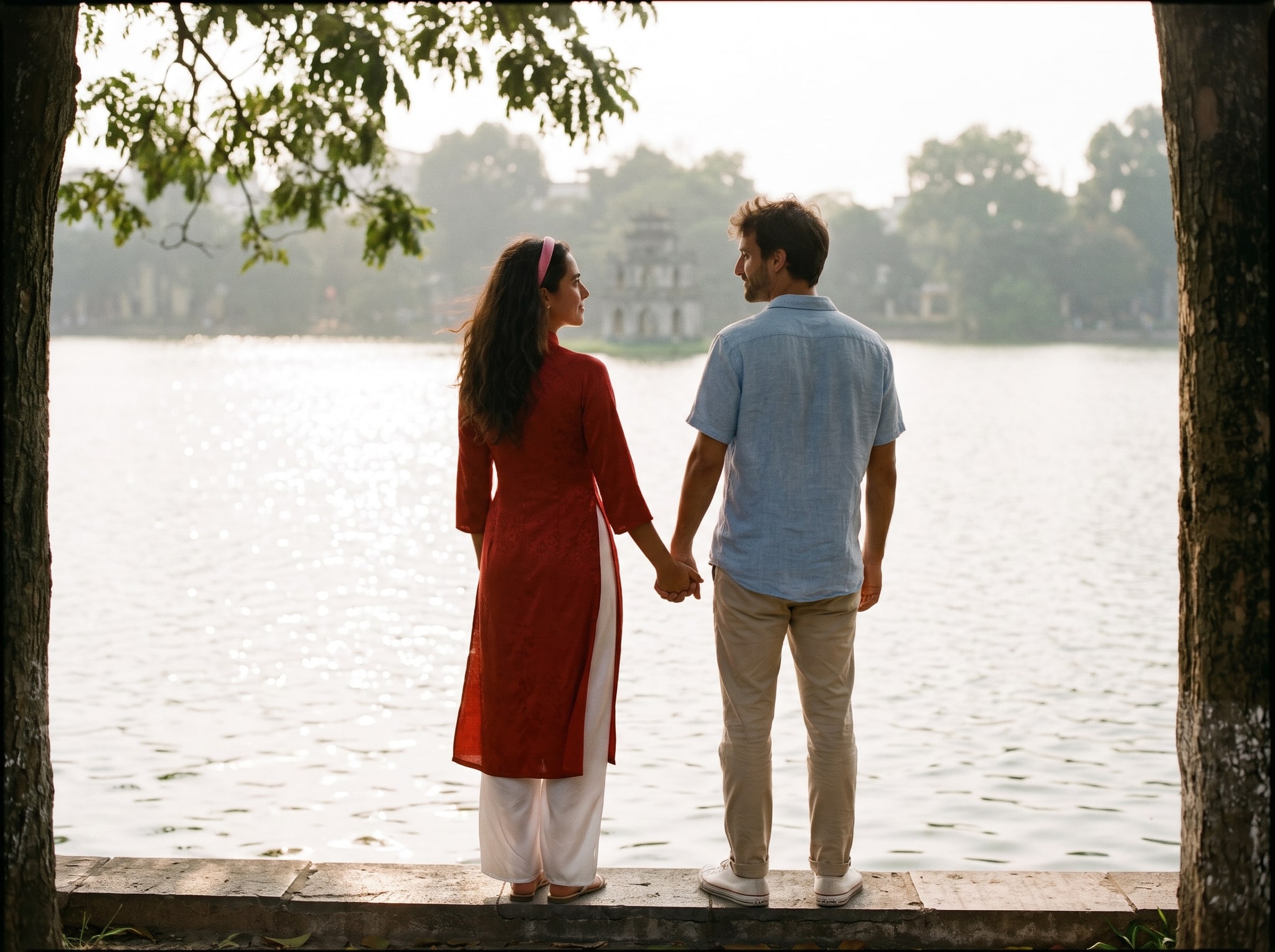
How do we pace two days to hit light and avoid wasted driving time?
We structure it backwards from sunset and sunrise. Day One: leave Hanoi 5:30 a.m., arrive Ha Giang city 10:00 a.m. (stop for breakfast, we grab pho), spend 10:00–12:30 exploring local markets or a rest at the hotel, then drive uphill to Nong Khiau viewpoint by 15:00 to shoot 16:00–17:30 (golden hour). That's one four-hour drive, one shoot block. Evening: drive back to town, dinner, rest. Day Two: wake 05:00, drive to Meo Vac or Dong Van by 06:00, shoot sunrise and village life 06:30–09:00, return to main road, hit Ma Pi Leng Pass 10:30–12:00 (late morning light, different mood), lunch, final shoot at rice terraces or ethnic homestay 14:00–16:00, drive back to Hanoi 16:30–21:00 (arrive late, exhausted, exhilarated). We book a hotel with early breakfast—the couple eats 04:45, we leave 05:15. No slack time. If a pass floods, we pivot to a village closer to town. If a road crew blocks Highway 4A, we loop via Bao Lac—our driver knows four variants.
| Day segment | Time | Shoot duration | Movement type | Outfit |
|---|---|---|---|---|
| Day 1 morning | 05:30–10:00 | 0 min | Hanoi–Ha Giang drive | Travel wear |
| Day 1 golden hour | 16:00–17:30 | 90 min | Nong Khiau viewpoint | First ao dai or dress |
| Day 2 sunrise | 06:30–09:00 | 150 min | Meo Vac village, markets | Second outfit |
| Day 2 mid-morning | 10:30–12:00 | 90 min | Ma Pi Leng Pass, ridgeline | Same or change |
| Day 2 afternoon | 14:00–16:00 | 120 min | Rice terraces or homestay | Third outfit if time |
| Total shooting time | — | 450 min (7.5 hr) | — | — |
The table above is what we track. We tell couples: "You'll change clothes three times, sit in a car for 9 hours total, and get one full night's sleep in Ha Giang." Some couples book a couple photoshoot specifically for mountain terrain because they hike or rock-climb—those clients are ready for steep paths. Others come from offices in Hanoi and feel the altitude on Day One morning. We always send a packing list on WhatsApp 10 days prior: comfortable hiking shoes, layers (it's 18 °C at 1100 m elevation even in summer), sunscreen, a lightweight shawl for wind on passes.
What happens if weather blocks the main pass, and how do we reschedule on the fly?
This happens 15–20% of trips, especially May–September. Ma Pi Leng Pass (1200+ m) gets fog and rain that close the road for 2–4 hours. We don't cancel—we text the couple at 06:00 on Day Two: "Pass is closed, we're shooting villages instead and will try the pass after lunch." We pivot to Sung La village (40 min away, same direction), shoot there until 10:30, then check the pass road via our driver's radio contact—Highway 4A has police barriers we can call. If it reopens by 12:00, we drive straight to Ma Pi Leng. If not, we finish the afternoon shoot at a lower-elevation rice terrace near Dong Van instead. We've never had a trip where we got zero pass photos; we've had three where we got them at 13:00–14:00 instead of 10:30–11:30. The light is flatter, but the ridge is less crowded and the image is still valid. Couples who want guaranteed Ma Pi Leng photos should come October–November (dry season, 80% pass-open rate). If a couple is inflexible on this, we recommend a Sapa shoot instead—higher altitude, slightly more predictable, but busier with tourists.
Which outfits work, and when do we change?
We typically plan three outfits across two days: an ao dai or wedding dress for Day One golden hour (one location, maximum 90 minutes before light fades), a practical mountain outfit for Day Two morning (ethnic villages require humble dress—we avoid white, favor earth tones, bring a Hmong-inspired shawl if available), and a third outfit for afternoon terraces only if we're ahead of schedule. Most couples choose: ao dai Day One (iconic, the investment piece), then a simple linen dress or groom's white shirt + cream pants for Day Two. We avoid satin or heavy fabrics because humidity and dust stick, and a slipped hem on a 40 ° switchback is a disaster. We carry a garment bag, a portable steamer, and scissors if a hem tears. One couple in April brought a white ball gown for Nong Khiau—we shot 45 minutes, wind tore the veil, and the dress picked up red dust that never fully cleaned. We now show couples photos from prior trips and say: "Sentimental and beautiful, but the mountain wins." Couples then ask about ao dai photoshoot sessions just in Hanoi instead, which some choose. Others commit to the Ha Giang challenge and trust us.
What's the actual route on the map, and where do we stop?
Highway 4A from Ha Giang city heads northeast through Yen Minh district—flat at first, then switchbacks begin after Yen Minh town (30 km, 1 hour). Nong Khiau viewpoint is the first major stop (viewpoint at 107 °14'00.0"N 105 °07'00.0"E, per our GPS logs); we park, walk 200 m uphill, shoot until 17:30 when light gets orange and cold sets in. We return to town by 18:30, eat dinner at a local restaurant (we have four we trust; La Mien is reliable, no English menu but the owner recognizes us). Day Two we leave at 05:15, drive 45 km northeast to Meo Vac via Highway 4A—the road is one lane each direction, zero safety rail, truck traffic. We stop at Meo Vac market (06:30–07:30), shoot vendors and morning life, then continue north to Dong Van (25 km, 45 min). From Dong Van, Ma Pi Leng Pass is the big climb: 17 km north to the pass itself (1200 m), 1.5 hours in good conditions. We stop at the pass viewpoint (104 °55'16.0"N 105 °15'00.0"E), eat lunch there or just below (a highway stall with rice and grilled fish, basic), shoot until 12:30. By 13:00 we're heading south again, stopping at rice terraces near Quang Phu or Tung La (ethnic Tay villages, flat light but intimate). We finish by 15:30, begin the 4.5-hour return drive to Hanoi by 16:00, and arrive 20:30–21:00. The route is a loop; we never backtrack twice the same road. Total driving: 280 km across two days. Shots we get: ridgeline at magic hour, mist in valleys, village markets, terraced fields, switchback bends, a couple alone on limestone. Shots we miss: tourist crowds (rare in Ha Giang), planned poses in bad light (we skip them rather than compromise), backlit rock formations if clouds stay thick.
We recently worked with a photography team from Sapa on a special concept shoot collaboration, and they asked why we don't offer Ha Giang as a one-day option. Our answer: you lose either sunrise or sunset. A one-day trip would start Hanoi 05:30, arrive 10:00, shoot 11:00–16:00 (bad light, noon harshness), then drive home 17:00–22:00 (exhausted, couple unhappy). Two days costs roughly 40% more than one day but delivers 250% more usable images. We've never had a couple regret the two-day choice; we've had two regret not booking two days when they booked one.
What do we bring, and what does the couple need to arrange?
We bring: camera gear (two bodies, four lenses, ND filters, polarizing filters), lighting (small reflector, sometimes a flash for backlit village scenes), a laptop for backup, phone chargers, a first-aid kit (we've had zero injuries but carry it), water bottles, and energy food (nuts, chocolate, fruit). Our driver brings: the vehicle (8-seat minivan or SUV depending on group size), a CB radio for road updates, maps, and emergency contact numbers for local hospitals. The couple brings: outfits, shoes, personal meds, a phone with WhatsApp for messages home. We arrange the hotel in Ha Giang (we have partnerships with three mid-range hotels; we book it and the couple reimburses us), the meals (we know restaurants, guide them), and the driving permits (if the couple is foreign, we handle checkpoint paperwork—takes 10 minutes). Couples often ask if they need a local guide—no. Our photographer and driver are both local to Ha Giang, and we've been there 12+ times. We know when the market opens, which village chief to greet, which roads flood. An external guide adds cost and confusion. One couple in March asked to hire a local guide anyway; we allowed it, and the guide contradicted our timing ("market is closed today" when it was open, "this road is dangerous" when it's safe). We took over, the guide was quiet, and the couple saw the difference. We now say on WhatsApp: "We are the guide."
What actually costs extra, and what's included in pre-wedding packages?
Most couples assume cost scales with distance—Sapa is farther, so Sapa costs more. Ha Giang is 240 km from Hanoi (Sapa is 350 km), but the road is slower, and we spend more time shooting in remote areas (less commercial infrastructure, more setup). A typical pre-wedding photoshoot package covers a photographer, a stylist, a driver, the vehicle, and digital gallery delivery. It does not cover: the couple's hotel, meals, air tickets if flying to Hanoi, or outfit rental (couples bring their own or rent from Hanoi shops beforehand). Some couples add makeup and hair at your hotel in Ha Giang on Day One morning (a stylist travels with us and does 45-minute makeup in the hotel room before we leave for Nong Khiau). This is optional but popular—one less thing to worry about on a travel day. We send a pre-trip WhatsApp checklist: "Confirm your hotel booking", "Send us final outfit photos so we can plan lighting", "Book a return flight for evening Day Two or next morning", "Tell us any dietary needs for meal stops". Couples who skip these often scramble—one group in June didn't book the hotel until Day One morning and got a room 8 km from town, making us late for sunset. We now make the checklist mandatory.
See packages and prices on vietnamphotoshoot.com
What to check before you book
Route flexibility. If you need every location predetermined, Ha Giang is not for you. Weather, road closures, and light change our plan daily. We pivot fast and always deliver images; we don't guarantee "Nong Khiau at sunset" or "Ma Pi Leng at 11 a.m."—we guarantee "stunning Ha Giang images" instead.
Fitness level. We walk 2–4 km total across two days (not consecutive). Paths are uneven, sometimes steep. If you have knee or ankle issues, tell us before booking so we choose lower-altitude alternatives and build in rest time.
Outfit realism. Bring outfits you can move in. A ball gown in Ha Giang is theater; a linen dress or ao dai is practical and beautiful.
Internet. Ha Giang town has patchy 4G. If you need to stay in constant contact with family or work, plan it. We have a phone charger and can find WiFi at the hotel.
Driving tolerance. 9 hours in a car across two days, with winding mountain roads. If you get car sick, take ginger or medicine beforehand. Our driver is smooth, but the roads are sharp.
FAQ
Can we do Ha Giang in one day instead of two?
Technically yes, but you'd shoot in harsh midday light and arrive home at midnight exhausted. We recommend two days for golden hour on both mornings and evenings, and for the couple to actually rest.
Do we need a separate visa or permit for Ha Giang?
No visa beyond Vietnam entry. We handle checkpoint paperwork if you're foreign. Tell us your passport number on the booking form.
What if it rains heavily and roads close?
We have four contingency routes. If Highway 4A is impassable, we shoot lower villages, rice fields near Dong Van, or home early. Closure lasting >4 hours (rare) would trigger a reschedule, but we refund the difference or rebook at no extra cost.
Is it safe to travel with expensive camera gear and jewelry?
Our vehicle is locked, we never leave gear unattended, and we stay in established hotels with safes. No incidents in our 12 trips. One couple left a ring in the hotel safe and retrieved it Day Two—tell us if you want a safe deposit box reserved.
How many outfit changes can we realistically fit in two days?
Three maximum. Each change costs 15–20 minutes (finding private space, refreshing makeup, walking to a new location). We recommend two: ao dai or formal dress Day One evening, practical mountain wear Day Two. A third outfit works only if we finish ahead of schedule.
What's the best season to book Ha Giang pre-wedding shoots?
October–November has clear skies, low humidity, and open passes. May–September is green but rainy; December–February is cool and dry but occasionally misty. No truly bad season—each has a different mood.
Can we invite family or friends to watch the shoot?
Yes. They sit in the vehicle or a nearby spot, stay quiet during shots (sound travels on mountains), and entertain themselves. We've had three-person entourages work fine; 8+ people get disruptive.
Do you offer a same-day photo preview or instant gallery?
We shoot raw files, color-grade on the laptop each evening, and share a preview gallery via private link within 7 days. Instant prints during the trip aren't possible—no photo lab in Ha Giang.
What's included in the package: meals, hotel, transport from Hanoi?
Transport from Hanoi and back is included. Hotel and meals are optional add-ons we can book (couple reimburses us). Makeup and hair services in Ha Giang cost extra if added. Check the package details on vietnamphotoshoot.com to see what applies to your dates.
Pre-Wedding & Elopement
Inclusions, prices and booking are on our booking site.
FAQ
Can we do Ha Giang in one day instead of two?
Technically yes, but you'd shoot in harsh midday light and arrive home at midnight exhausted. We recommend two days for golden hour on both mornings and evenings, and for the couple to actually rest.
Do we need a separate visa or permit for Ha Giang?
No visa beyond Vietnam entry. We handle checkpoint paperwork if you're foreign. Tell us your passport number on the booking form.
What if it rains heavily and roads close?
We have four contingency routes. If Highway 4A is impassable, we shoot lower villages, rice fields near Dong Van, or home early. Closure lasting >4 hours (rare) would trigger a reschedule, but we refund the difference or rebook at no extra cost.
Is it safe to travel with expensive camera gear and jewelry?
Our vehicle is locked, we never leave gear unattended, and we stay in established hotels with safes. No incidents in our 12 trips. One couple left a ring in the hotel safe and retrieved it Day Two—tell us if you want a safe deposit box reserved.
How many outfit changes can we realistically fit in two days?
Three maximum. Each change costs 15–20 minutes (finding private space, refreshing makeup, walking to a new location). We recommend two: ao dai or formal dress Day One evening, practical mountain wear Day Two. A third outfit works only if we finish ahead of schedule.
What's the best season to book Ha Giang pre-wedding shoots?
October–November has clear skies, low humidity, and open passes. May–September is green but rainy; December–February is cool and dry but occasionally misty. No truly bad season—each has a different mood.
Can we invite family or friends to watch the shoot?
Yes. They sit in the vehicle or a nearby spot, stay quiet during shots (sound travels on mountains), and entertain themselves. We've had three-person entourages work fine; 8+ people get disruptive.
Do you offer a same-day photo preview or instant gallery?
We shoot raw files, color-grade on the laptop each evening, and share a preview gallery via private link within 7 days. Instant prints during the trip aren't possible—no photo lab in Ha Giang.
What's included in the package: meals, hotel, transport from Hanoi?
Transport from Hanoi and back is included. Hotel and meals are optional add-ons we can book (couple reimburses us). Makeup and hair services in Ha Giang cost extra if added. Check the package details on vietnamphotoshoot.com to see what applies to your dates.
More from the team
Boho pre-wedding photoshoot in Vietnam: Hanoi, Saigon, Hoi An
Boho pre-wedding shoots mix romantic, free-spirited aesthetics with Vietnam's landscapes and heritage sites. We run full-day sessions in three cities, handling styling, makeup, location scouts and edits.
Avoid crowds at Hoang Su Phi rice terraces: timing for wedding shoots
Hoang Su Phi's terraced landscape draws couples and tour buses in equal measure. We show how to shoot there alone, when to arrive, and what to arrange with us before you go.
Photography rules at Con Dao beaches: permits, drones and what to check
Con Dao's beaches demand prep before you shoot—permits, drone zones and tide timing all affect your day. We share what the Cáo Studio team verifies on every booking.