 Cáo Studio
Home › Blog › Pre-Wedding & Elopement
Vietnam pre-wedding photoshoot for German couples: planning guide
By the Cáo Studio team · Hanoi & Saigon · 2026-11-02
A Vietnam pre-wedding photoshoot for German couples typically spans one to three days, mixing studio portraits, ao dai costume sessions, and location work in temples, rice fields, or urban backdrops—think Hanoi's Old Quarter or Saigon's riverside. Cáo Studio runs these sessions with an English-speaking coordinator who handles timing, logistics, and contingencies on the day. German couples often book eight to twelve hours of shooting across multiple dates to capture variety without rushing. Budget planning, visa clarity, and weather adaptation (monsoon seasons vary by region) are the three biggest decisions before arrival. Many choose Hoi An or Ninh Binh for natural light and fewer crowds; Hanoi and Saigon offer faster turnarounds and urban contrast. The team handles styling, hair, makeup coordination, and post-shoot retouching as part of the package structure.
What actually happens on a pre-wedding shoot day?
Our shoots don't follow a printed script—we watch light, guest energy, and weather constantly. On a typical morning in Hanoi, the photographer arrives at your hotel by 06:00 to catch sunrise at a temple or park. Your hair and makeup artist meets you at 05:30 if you're doing it on-site; otherwise, you come to our Hanoi studio. We spend the first hour on grooming, outfit changes, and a brief walk-through of poses and camera angles. From 07:00 to 09:00, we shoot outdoors while light is soft and streets are quiet. By 09:30, humidity rises and crowds arrive, so we move indoors or to a shaded location. Lunch break at 12:00. Afternoon session 14:00–17:00 focuses on ao dai or second outfit. We've learned that German couples appreciate structure and clear timing—we send a WhatsApp schedule the night before, with backup locations if rain hits. Last year, a couple's ceremony outfit didn't fit after alterations; we had a tailor contact in District 3 (Saigon) and rescheduled that shot for day two. Communication gaps kill schedules more than weather does.
How do we choose locations that suit your vision?
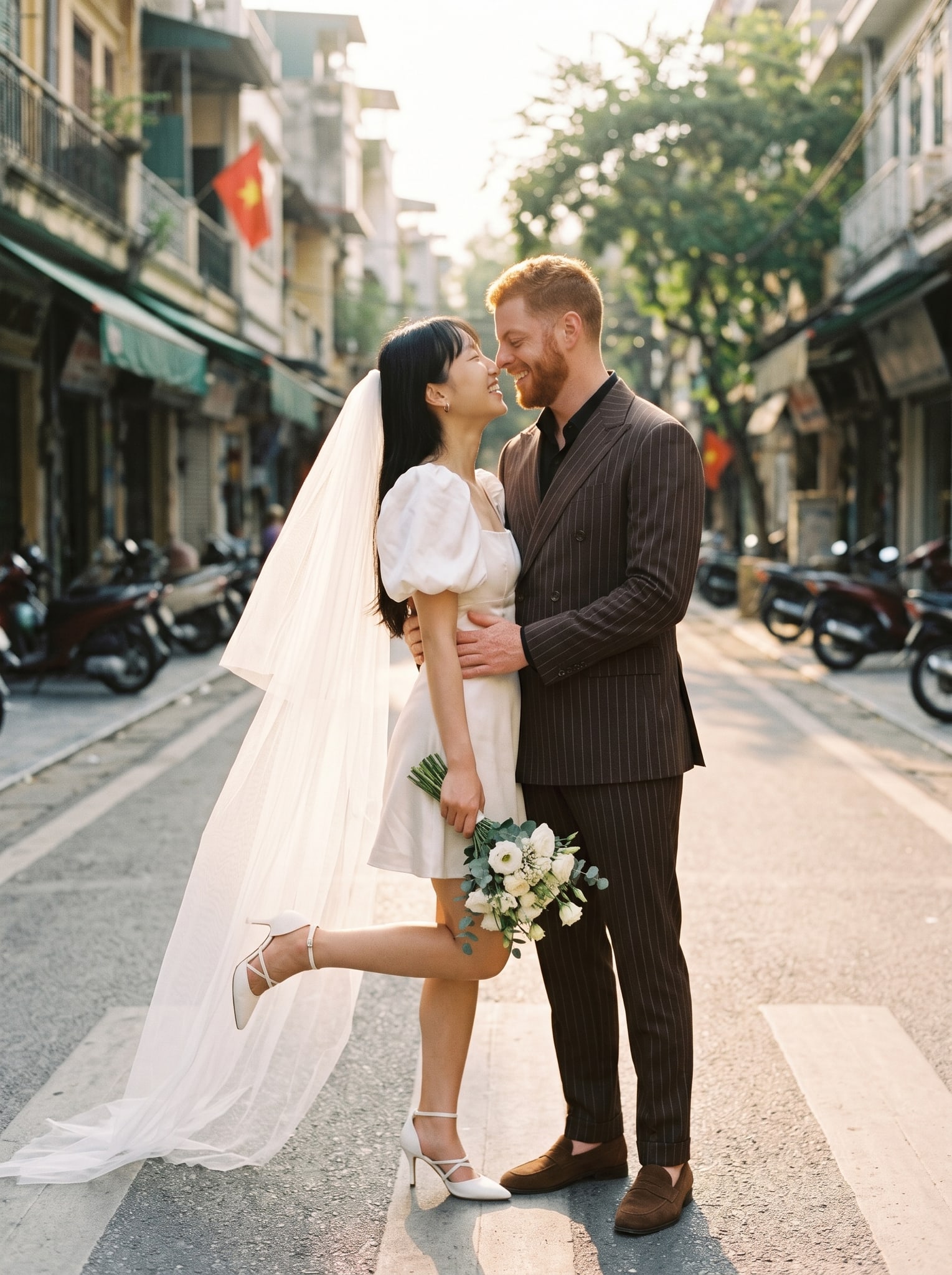
Couples send us mood boards or descriptions weeks ahead. German preferences tend toward clean compositions, minimal clutter, and meaningful backdrops—not just pretty. We've found Hoi An's Ancient Town works perfectly for traditional ao dai, because the architecture is consistent and the town closes to cars early. Temple shoots in Ninh Binh (Bai Dinh, Mua Cave) give dramatic contrast. In Saigon, we rotate between Bitexco Financial Tower grounds, Jade Emperor Pagoda, and riverside paths in District 1. Hanoi couples favor Hoan Kiem Lake at dawn, the Red River dike, or Hang Luoc ancient street. We always scout locations in person first—Google images lie. A German bride wanted "minimalist modern + nature," so we booked the sculpture park at Quoc Tu Pagoda (Saigon), which most tourists miss. The catch: permits. Official shoots at temples require approval 5–7 days ahead. If we miss that window, we pivot to lesser-known spots with equal light and fewer restrictions. We tell clients upfront: book early, and have three location options, not one.
What gear and backup plan keeps us moving when equipment fails?
We carry two full camera kits, four lenses, three backup batteries, two tripods, and two lighting setups on every shoot. Memory cards rotate—one in use, one backup, one locked away. In 2024, a couple's morning shoot in Hanoi had unexpected rain; we'd packed reflectors and a compact pop-up tent, shot under its edge, and the resulting moody temple images outsold the sunny backup photos. German couples often ask "what if the camera breaks?" Honestly, it hasn't in the field, but we have a contact photographer 15 minutes away in both Hanoi and Saigon. If a phone fails (for timing/coordination), we use paper backup schedules and meet at the hotel at agreed times. Makeup artist carries a second full kit in a separate bag. Hair tools (straightener, curler) have dual voltage because Vietnamese power is 220V. One major lesson: we learned to charge all devices overnight at the studio, not the hotel, because some older hotels have weak sockets. A German groom's ring light for detail shots once overloaded a hotel circuit; now we test power with the hotel before arrival.
Timeline: when should German couples arrive and book?
German couples planning a Vietnam wedding photo trip often arrive 5–7 days before their ceremony, giving us two to three shooting days and buffer for jet lag. Book the shoot 8–12 weeks ahead—earlier if it's December to February (peak season, studios fill up). Visa runs take 10–15 days if you apply by post from Germany; e-visas process in 3 days but require a clear digital passport photo. The most common mistake: booking flights before confirming photo dates with us. We've had couples miss morning shoots because they landed the night before and were too tired. Our timeline advice: land, rest day, shoot day one, explore Hanoi/Saigon day two, shoot day two, travel to secondary location (Hoi An, Ninh Binh) day three, final concept shoot day four, fly out day five. Monsoon seasons (May–September, and October–November in some regions) bring afternoon storms; we shift shoots to mornings and move indoors faster. A German couple last year arrived mid-August in Saigon; afternoon heat was 35°C and humidity 80%. We started at 05:30, finished outdoor work by 09:00, did ao dai and studio in cool afternoon hours. Timing adapts to reality, not the other way around.
See packages and prices on vietnamphotoshoot.com
Choosing between ao dai, Western dress, or both—and how outfit changes affect the schedule
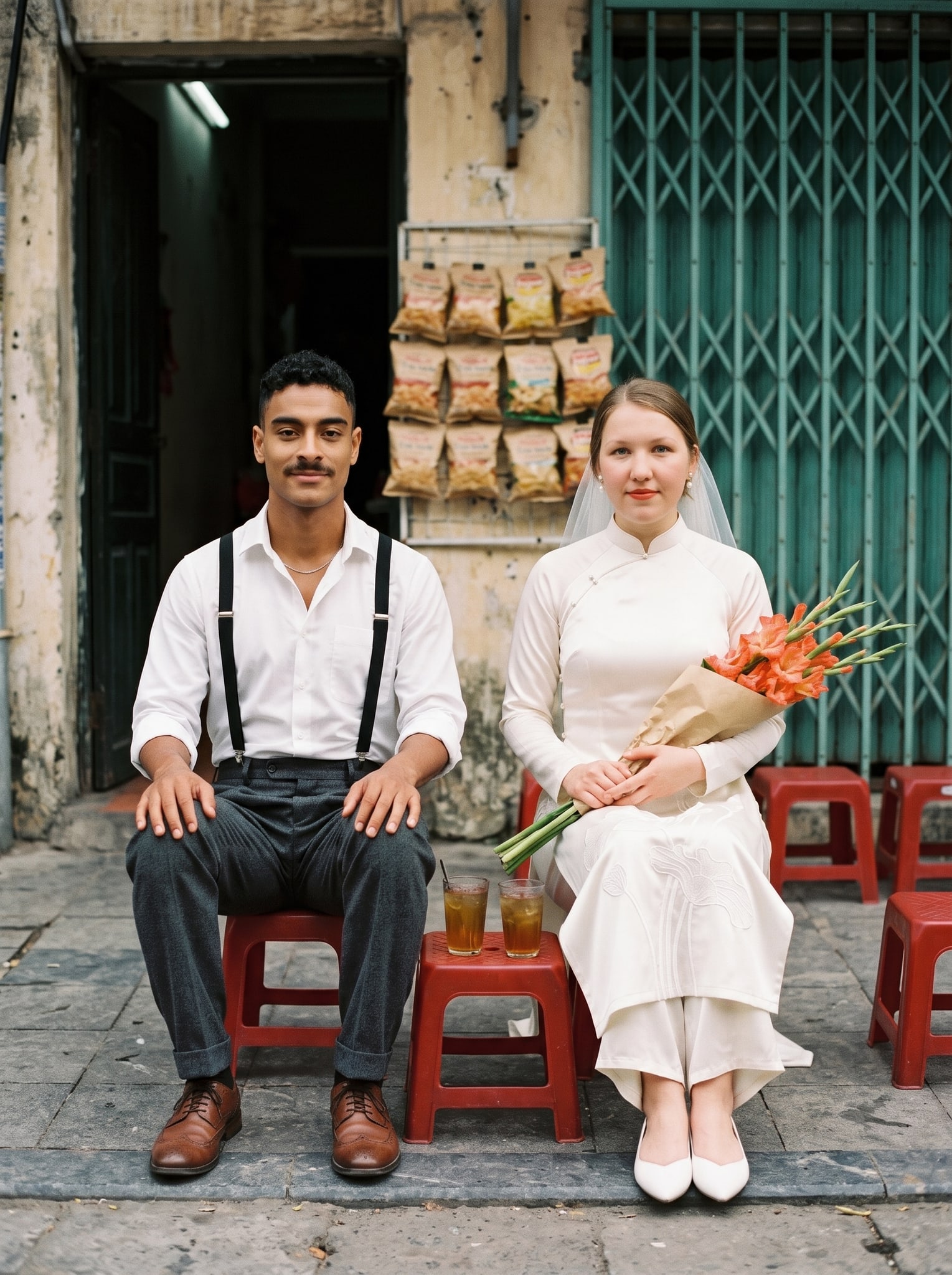
Most German couples come for cultural immersion, so they pick at least one ao dai session alongside their wedding outfit. An ao dai rental costs low and fits fast; bespoke ao dai (custom tailored) takes 5–7 days and needs two fittings. We work with tailors in Hanoi and Saigon; if a couple arrives two weeks before their shoot, custom is realistic. Western dress shoots happen in studio or on location—dresses travel better than ao dai, but wrinkles and alterations matter. Here's the real schedule impact: each outfit change takes 20–30 minutes (change, touch-up makeup, reset hair, position). Three outfit changes = 90 minutes lost to shooting. We ask couples upfront: how many looks do you want? A two-day package lets us do four outfits across two days comfortably. A one-day shoot forces us to choose two. German couples often overthink outfit decisions; we show examples from prior shoots to help narrow it down. A bride wanted to wear both her ceremony dress and a second reception dress; we shot ceremony dress at the temple in morning light, then pivoted to the reception dress in a studio setting in afternoon, separating the emotional weight of each look. That worked beautifully and saved stress.
What to check before booking with any studio
| Angle | What to verify | Why it matters |
|---|---|---|
| Communication language | Studio has English-speaking coordinator on shoot day | Miscues about timing, poses, or outfit changes snowball fast in a foreign language |
| Location permits | Studio confirms temple/public site permissions in writing, not verbally | You arrive to shoot and security stops you—happens to 1 in 10 couples who didn't verify |
| Equipment backup | Studio carries second camera and full backup lighting kit | One broken lens ruins the day if there's no backup on-site |
| Makeup/hair on-site or studio | Clarify where you'll get ready and how transport works | Hotel makeup takes 1.5–2 hours; studio grooming is faster but you arrive earlier |
| Outfit handling | Ask if studio provides tailors, pressers, or storage for your dress | Wrinkled dresses mid-shoot waste time; custom ao dai needs fitting appointments |
| Editing timeline | Confirm when you'll receive edited photos (weeks, not months) | German couples often need images for wedding websites/invitations quickly |
| Weather contingency | Studio offers location swaps or reschedules, not refunds, if monsoon hits | Rain is common; know what "Plan B" looks like before you book |
How we tailor shoots for German aesthetics and expectations
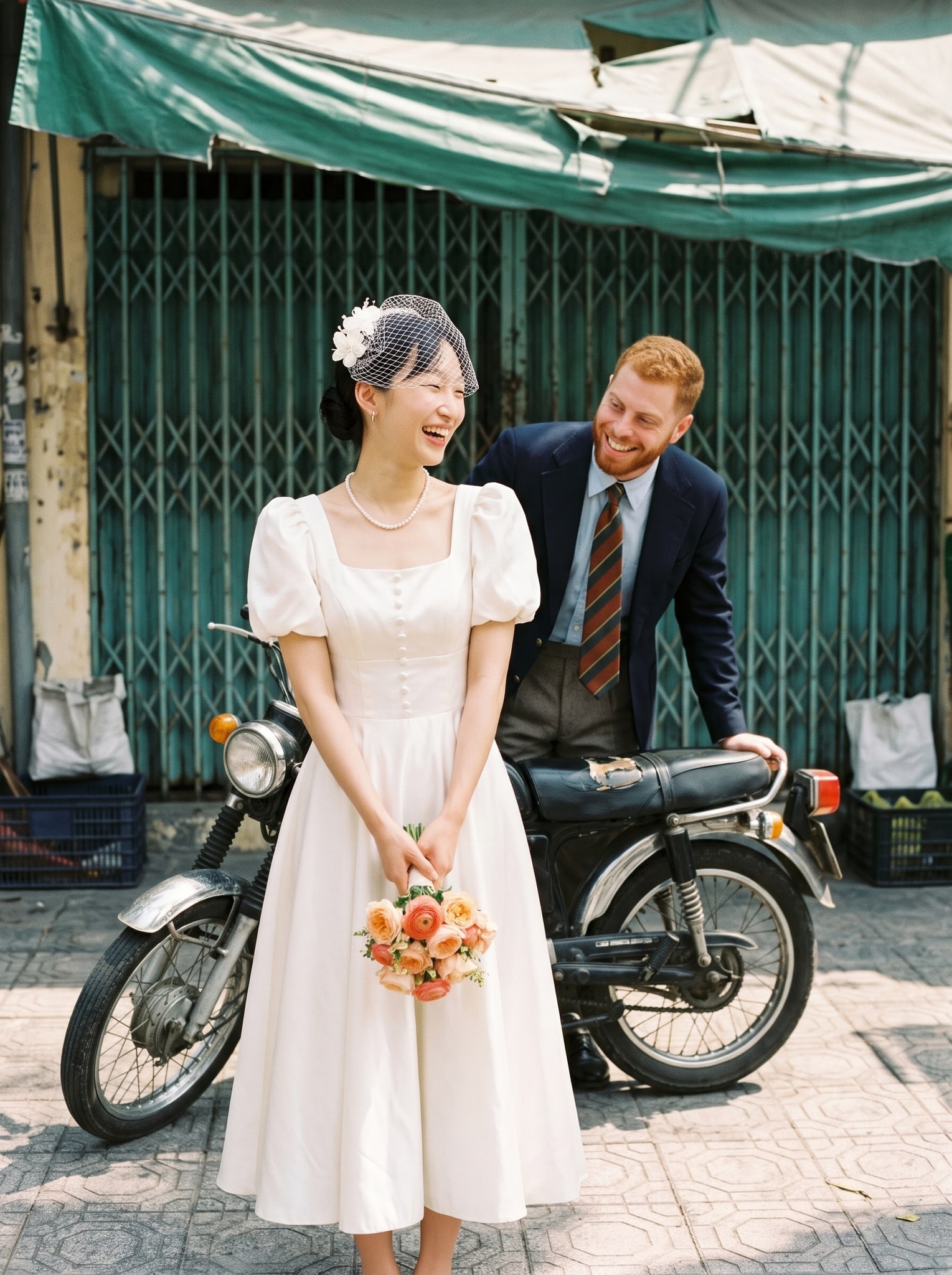
German couples typically favor clean lines, authentic moments over posed smiles, and locations with cultural weight. We've adapted our approach: less "say cheese," more "look at each other while walking." No overdone makeup—natural, minimal filter work in editing. When a German bride says "make it look like us," she means honest, not filtered. Our ao dai photoshoot package includes styling consultation where we show Hanoi and Saigon ao dai collections; most German couples pick classic silk over heavily embroidered designs. For couple sessions, we focus on interaction—walking, laughing, touching—rather than stiff portrait poses. Post-processing for German clients skews toward warm, natural skin tones and sharp detail; we avoid over-saturation. A German groom once said, "I want it to feel like a documentary, not a photoshoot." That changed how we framed the day: we shot a lot of candid moments during outfit changes, tea breaks, and walking between locations. Those shots became his favorites. We've also learned German couples want a detailed shot list and pose reference images in advance, so there's no surprise on the day. Provide that, and trust increases tenfold.
Getting the best value without cutting corners
Pre-wedding packages in Vietnam range from one-day sessions to multi-day destination shoots. German couples budget carefully, so transparency matters. Our pricing varies by duration, locations, and outfit count, but every package includes: photographer(s), editing, one outfit styling consultation, and digital files. Add-ons: second photographer (recommended for two-location shoots), hair and makeup services, ao dai rental/custom fitting, or a printed album. Multi-day bookings in Hanoi and Saigon cost less per hour than single-day Hoi An shoots (no travel time). Our experience: couples who book 8–10 hours across two days spend efficiently and get better variety than those rushing through in four hours. A German couple from Berlin booked our proposal and anniversary package because it included hotel hair/makeup and two outfit changes; they stretched one day into full wedding prep coverage. Another pair used our special concept shoot for a second-day editorial-style session at a hidden waterfall in Ninh Binh, adding only a few hours but capturing entirely different energy. Don't skimp on coordinator presence; a language/logistics person on set prevents costly delays and keeps morale up in heat and humidity.
Why timing during monsoon seasons changes everything
Pre-monsoon (May, early June in Saigon; September–October in Hanoi) means afternoon thunderstorms, often at 15:00–17:00. We shift shoots earlier: start 05:30 instead of 07:00, finish outdoor work by 11:00, indoor/studio 13:00–17:00. A German couple booked a Saigon shoot in early June without asking about weather; they expected to shoot a riverside location at 16:00. We warned them and rescheduled to 07:00. They were annoyed at the early start but grateful when a storm hit at 16:00 exactly. Post-monsoon (November in Hanoi) offers the best light and coolest temps—European couples often choose November. Dry season (December–February, and March–April in Hoi An) is peak; studios book 6–8 weeks ahead. If you have flexibility, aim for late January or early April. We tell German couples upfront: book for the season that matches your comfort, then plan the outfit/location around light, not the calendar. A Munich bride wanted cherry blossoms; we explained that Vietnam's blooms don't align with European springs, and suggested instead the golden light of November, which she'd never considered. She booked November and got warm, honeyed tones in every image.
Final checklist before you confirm a studio booking
- [ ] Studio has confirmed all location permits (temples, parks, private sites) in writing.
- [ ] Photographer(s) speak or have a translator for your language; ask for their contact, not just the company WhatsApp.
- [ ] Backup kit (camera, lighting, memory) is named and described—not assumed.
- [ ] Hair and makeup are included or clearly priced; confirm if it's on-site or at the studio.
- [ ] Outfit changes: count them, note time per change (20–30 min), and ensure the schedule includes that overhead.
- [ ] Weather plan is documented—which locations are backups, and is a reschedule free or paid?
- [ ] Editing timeline and file format (RAW, high-res JPEG, print-ready) are in writing.
- [ ] Payment method (Visa, Mastercard, bank transfer) works for your location; ask about deposit and balance timing.
- [ ] You've seen a previous shoot gallery from the studio (not just "best of" but a full session).
- [ ] Emergency contact (photographer's direct number) is on your phone before you land.
Cáo Studio has run pre-wedding shoots for German, Swiss, and Austrian couples since early 2020. We've learned what goes wrong, how to adapt fast, and what German couples value most: clarity, time management, and authentic visual storytelling. Reach out on WhatsApp with your dates, locations, and vision. We'll sketch a realistic timeline and tell you upfront what fits and what doesn't.
Chat with us on WhatsApp | See packages and prices on vietnamphotoshoot.com
FAQ
Do we need a visa to shoot in Vietnam, and how long does it take?
German citizens can get a Vietnamese e-visa in 3 days online, or apply by post (10–15 days). For a wedding trip, book your shoot before applying for the visa so you can include arrival/shoot dates in your itinerary. Most couples arrive 5–7 days before their shoot to adjust to time zone and heat.
What's the best time of year for a pre-wedding shoot in Vietnam?
November to early February offers cool temps, clear skies, and peak light. Avoid May–September (monsoon). Peak season means book 8–12 weeks ahead. Late January and early April are sweet spots: fewer tourists, good light, studios still have availability.
Can we do a multi-location shoot (Hanoi + Hoi An or Saigon + Ninh Binh)?
Yes. Plan 5–7 days total and book two separate shooting days. Travel between cities takes 1–3 hours by car (booked by our team). Multi-day packages spread the work and cost; a German couple shot Saigon temples day one, then Ninh Binh rice fields day three, with a travel/rest day between.
How much does ao dai rental or custom tailoring cost?
We don't state prices here, but our booking site lists outfit options. Rental is fast (1–2 days); custom tailoring needs 5–7 days and two fittings. If you arrive two weeks early, custom is realistic and many German couples prefer it for fit and personal design input.
What if it rains during our outdoor shoot?
We have backup indoor locations (studios, covered temples, galleries) and will pivot on the day. Some couples love moody rain shots. Confirm your weather plan with the studio before booking; know whether a reschedule is free if monsoon forces a full cancellation.
Do you work with international makeup and hair artists, or locals only?
We work primarily with skilled Vietnamese stylists, many with international training. If you require a specific artist from your home country, we can facilitate their travel, though you'd arrange that separately. Most German couples are happy with our local team once they see their work.
Pre-Wedding & Elopement
Inclusions, prices and booking are on our booking site.
FAQ
Do we need a visa to shoot in Vietnam, and how long does it take?
German citizens can get a Vietnamese e-visa in 3 days online, or apply by post (10–15 days). For a wedding trip, book your shoot before applying for the visa so you can include arrival/shoot dates in your itinerary. Most couples arrive 5–7 days before their shoot to adjust to time zone and heat.
What's the best time of year for a pre-wedding shoot in Vietnam?
November to early February offers cool temps, clear skies, and peak light. Avoid May–September (monsoon). Peak season means book 8–12 weeks ahead. Late January and early April are sweet spots: fewer tourists, good light, studios still have availability.
Can we do a multi-location shoot (Hanoi + Hoi An or Saigon + Ninh Binh)?
Yes. Plan 5–7 days total and book two separate shooting days. Travel between cities takes 1–3 hours by car (booked by our team). Multi-day packages spread the work and cost; a German couple shot Saigon temples day one, then Ninh Binh rice fields day three, with a travel/rest day between.
How much does ao dai rental or custom tailoring cost?
We don't state prices here, but our booking site lists outfit options. Rental is fast (1–2 days); custom tailoring needs 5–7 days and two fittings. If you arrive two weeks early, custom is realistic and many German couples prefer it for fit and personal design input.
What if it rains during our outdoor shoot?
We have backup indoor locations (studios, covered temples, galleries) and will pivot on the day. Some couples love moody rain shots. Confirm your weather plan with the studio before booking; know whether a reschedule is free if monsoon forces a full cancellation.
Do you work with international makeup and hair artists, or locals only?
We work primarily with skilled Vietnamese stylists, many with international training. If you require a specific artist from your home country, we can facilitate their travel, though you'd arrange that separately. Most German couples are happy with our local team once they see their work.
More from the team
Boho pre-wedding photoshoot in Vietnam: Hanoi, Saigon, Hoi An
Boho pre-wedding shoots mix romantic, free-spirited aesthetics with Vietnam's landscapes and heritage sites. We run full-day sessions in three cities, handling styling, makeup, location scouts and edits.
Avoid crowds at Hoang Su Phi rice terraces: timing for wedding shoots
Hoang Su Phi's terraced landscape draws couples and tour buses in equal measure. We show how to shoot there alone, when to arrive, and what to arrange with us before you go.
Photography rules at Con Dao beaches: permits, drones and what to check
Con Dao's beaches demand prep before you shoot—permits, drone zones and tide timing all affect your day. We share what the Cáo Studio team verifies on every booking.