 Cáo Studio
Home › Blog › Pre-Wedding & Elopement
Vietnam pre-wedding photoshoot itinerary: north to south
By the Cáo Studio team · Hanoi & Saigon · 2026-11-02
A Vietnam pre-wedding itinerary typically runs 5–10 days across multiple cities, starting in Hanoi (lakes, French Quarter, Old Town), moving through Hoi An (lantern town, rice fields, beach), Ninh Binh (karst landscapes, temples), and ending in Saigon (rooftops, modernist gardens, riverside). Cáo Studio shoots in all four regions, managing transitions via flights or overnight trains so couples don't exhaust themselves before the final location. Budget 1–2 shoot days per city; the north-to-south flow follows Vietnam's geography and climate patterns. Avoid April–August humidity in the north; October–March is ideal. Costs vary by city and package length—check our pre-wedding packages for details by location. Common mistake: overloading days with driving, locations, and outfit changes without rest. We structure sessions by energy level (Hanoi's serene temples early, Saigon's dynamic rooftops later) and always scout beforehand to avoid crowds and permit issues.
Why does the north-to-south route work for pre-wedding shoots?
North to south follows how couples naturally travel Vietnam and avoids doubling back. Hanoi sits coolest and calmest in the north; Saigon's energy peaks later in the day (and calendar). We've learned that couples who shoot Hanoi first—its lakes, tree-lined streets, quiet temples around Hoàn Kiếm—are fresh and patient for detail shots. By the time they reach Saigon's rooftop energy and neon-lit streets, they're confident on camera and want movement, reflections, and pace. Reversing the route means arriving in Hanoi tired and in Saigon too early for golden hour. The geography also breaks naturally: Hanoi to Hoi An is one flight or 14-hour train; Hoi An to Ninh Binh is a 3-hour drive; Ninh Binh to Saigon is a 4-hour flight or overnight train. We end in Saigon because it's the easiest exit point for international flights and the city's urban backdrop photographs best when couples are relaxed, not jet-lagged.
What does a realistic daily schedule look like at each stop?
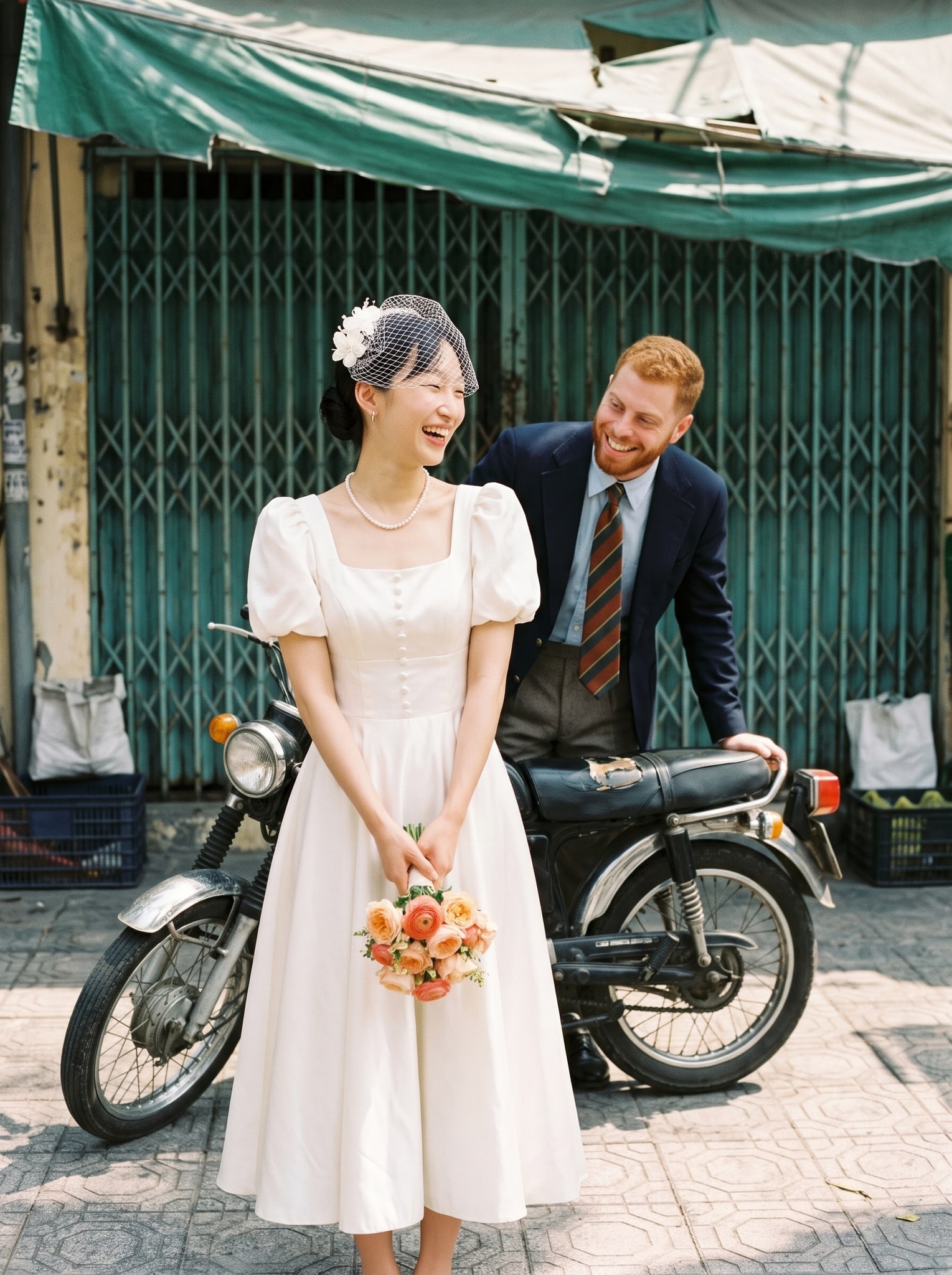
Our Hanoi shoots begin at 6:00 a.m. (before crowds) at Hoàn Kiếm Lake or Thái Hộ Temple, 2–3 hours of soft light and no tourists. By 9:00 a.m., we debrief over coffee, review images, and plan the afternoon. Couples rest 12:00–15:00 (essential; Hanoi heat peaks). We resume at 16:00 for 2–3 hours in the Old Quarter (Hàng Bạc Street, lantern vendor shots) or French Quarter (colonial shutters, yellow buildings). By 18:30, we're done; couples eat and sleep. Hoi An flips this: we arrive late afternoon, shoot lantern town at 17:00–19:00 (that golden, crowded window), break for dinner, then shoot again at 21:00–23:00 when streets empty and lanterns glow alone. We never shoot rice fields at midday. Ninh Binh temples (Mua, Hang Múa) demand 5:00 a.m. starts to beat tour groups; 3 hours, then rest. Saigon's rooftop bars and modernist architecture (like Tao Đàn Park or Bitexco area) shoot best 16:00–19:00, then again at night when neon reflects in puddles. We stop clients from doing four locations in one day—it ruins light, increases fatigue, and kills the images.
How do we manage travel and outfit changes without breaking the itinerary?
We book flights or trains between cities on shoot-free days or the morning after a half-day shoot. Couples typically carry 3–5 outfits: two traditional áo dài (one per region), one Western formal, one casual/street wear, one beachwear (Hoi An beach backup). We ship bulky items (extra shoes, alterations) directly to hotels in advance, or couples leave outfits behind and collect after shots. Our stylists meet couples at the hotel 90 minutes before each session—they do hair and makeup on-site (learn more about our hotel service) while we confirm light windows, traffic, and any weather shifts via WhatsApp. We've cut multiple shoots from itineraries when couples arrived with unsuitable shoes (heels on cobblestone; slippers instead of real footwear) or didn't allow time for steam-cleaning áo dài between cities. Our rule: confirm outfit and travel details 48 hours before each shoot, not the morning of. One couple flew Hanoi to Hoi An with excess luggage fees; we now suggest they mail one suitcase back home mid-trip or use hotel laundry.
Which locations photograph best, and when should you shoot them?
| Location | Best Light Window | Crowd Level | Why It Works | Outfit Match |
|---|---|---|---|---|
| Hoàn Kiếm Lake, Hanoi | 05:30–07:30 a.m. | Joggers only | Soft water reflection, tree canopy, no tourists | Casual or first áo dài |
| Hàng Bạc Old Quarter | 17:00–18:30 p.m. | High (locals, vendors) | Warm lantern glow on shutters, street energy | Casual or street-style |
| Mua Hang Temple, Ninh Binh | 05:00–07:00 a.m. | Empty stairs | Golden stairs, karst backdrop, no crowds | Casual or áo dài variant |
| Hoi An Lantern Town | 21:00–23:00 p.m. | Quiet (post-dinner) | Lanterns reflect in water, no day-trippers | Formal or second áo dài |
| Bitexco Financial Tower area, Saigon | 17:00–19:00 p.m. | Mixed (office workers leaving) | Glass reflections, modern geometry, golden hour | Formal or Western wear |
| Tao Đàn Park, Saigon | 06:00–07:30 a.m. | Tai chi practitioners | Misty lake, old-growth trees, serene | Casual or áo dài |
We avoid shooting iconic paid spots (like Hang Múa's cave top) during tour hours (09:00–14:00). The trade-off: early starts mean less sleep, but couples see Vietnam they'd never otherwise experience—empty temples, real streets, authentic light. We've shot locations at off-peak hours that cost nothing and look better than daytime shots.
See packages and prices on vietnamphotoshoot.com
What are the most common mistakes, and how do you avoid them?
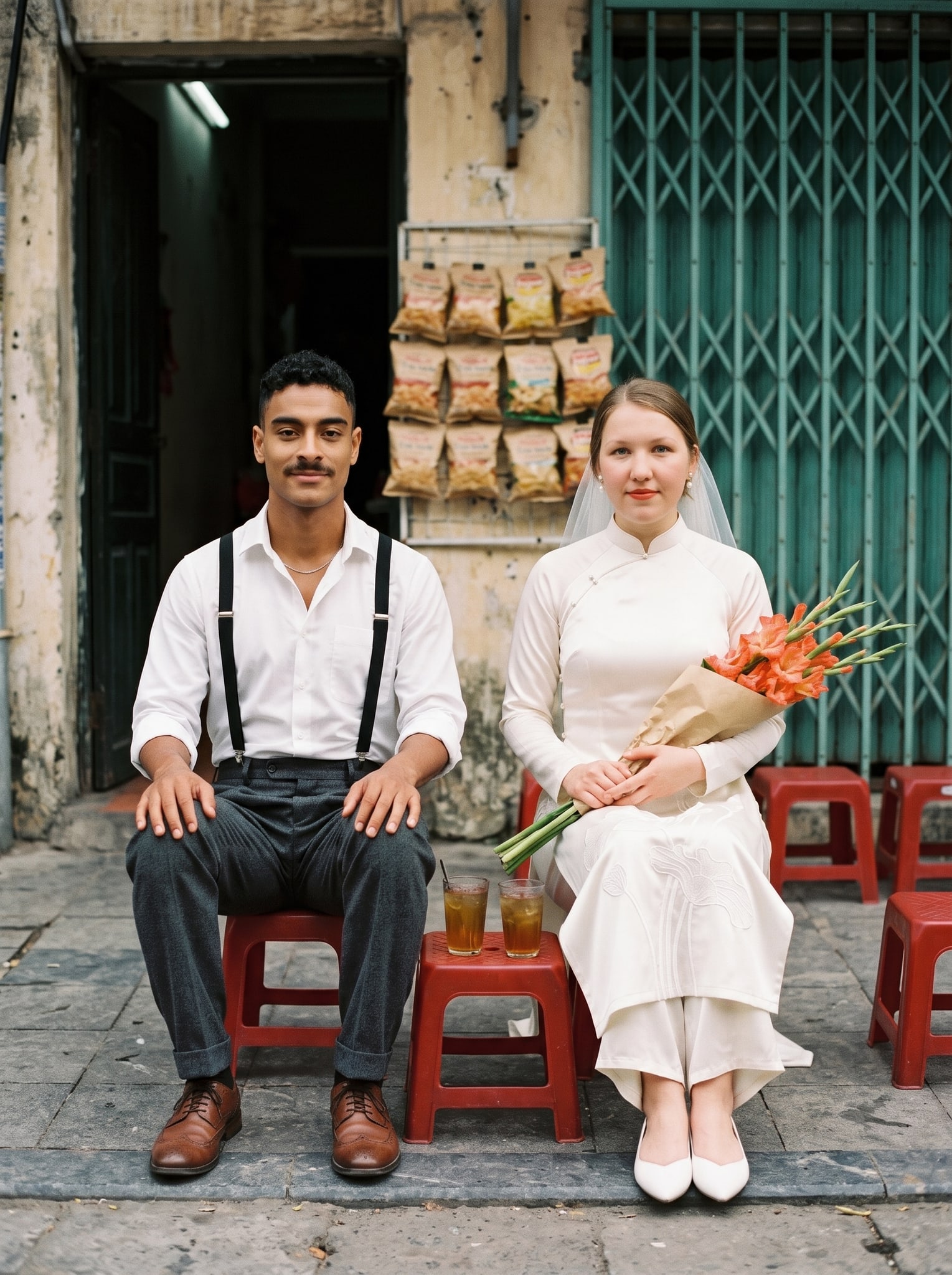
We've watched couples overbook days, skip rest, and arrive at Saigon exhausted—no sparkle on camera by day four. Our fix: stick to 1–1.5 shoot days per city, with full rest or sightseeing-only days in between. Second mistake: changing outfits four times in one day. The rushed energy shows; we limit to two outfit sets per shoot session. Third: not scouting in advance. We arrive 2–3 days before couples to confirm permit requirements (temples, private gardens), meter street vendors for noise conflicts (Hàng Bạc's 17:00 produce chaos makes audio unusable), and test backgrounds for light reflection at the exact time we'll shoot. A couple once requested Hoi An beach at noon; we rescheduled to 16:00 because midday sun flattens sand texture and causes squinting. Fourth: couples who don't allow travel days. Flying Hanoi–Hoi An (1.5-hour flight), then shooting the same day, means arrival 14:00, makeup 15:00, shooting 17:00 with zero margin. We now include a full travel day in every itinerary. Fifth: underestimating Saigon's traffic. We now tell couples: if your 17:00 shoot is in District 3 (Bitexco area) and you're staying in District 1, leave the hotel by 16:15, not 16:45. Hanoi Old Quarter is walkable; Saigon is not.
How do you choose between couple shoots and concept work across cities?
We structure itineraries as a mix: traditional couple portraits in Hanoi (timeless, calm), lifestyle and street interaction in Hoi An (the lanterns demand narrative), concept/editorial in Ninh Binh (the landscape is dramatic, so we add theme—vintage travel, folk narrative, ethereal), and urban energy in Saigon (couple in their element, moving through neon and glass). This variation prevents boredom on both sides. A couple doing five consecutive portrait sessions looks flat by day three; mixing portrait, lifestyle, and conceptual work keeps creativity high. We also offer pre-wedding with elopement overlay in Ninh Binh for couples who want a small legal moment shot in front of karst—ceremony-free, but with all the emotion. If couples add proposal reenactment in their origin city (many do in Hanoi before traveling south), the itinerary opens with a narrative anchor, so every city after feels like a chapter.
What to check before you book
- Travel dates: Confirm October–March for best light and comfort; avoid April–August monsoon and humidity in the north.
- Flight/train logistics: Book internal flights or trains 48 hours before each city transition; don't expect same-day flexibility.
- Outfit count and fit: Have áo dài tailored locally (Hoi An has 50+ tailors; we recommend two specific ateliers) or bring from home fitted properly. Confirm with stylists 7 days out.
- Permit requirements: Temples in Ninh Binh (Mua, Hang Múa) require permits; we handle this, but you'll wait 20 minutes. Avoid Tet (late January–early February) when sites close.
- Hotel locations: Stay near Old Quarter (Hanoi), central Hoi An, or District 1 (Saigon). Remote hotels add 1 hour of transit and kill flexible shooting times.
- Backup weather plan: Rain shuts down some rooftop shoots in Saigon; we have covered alternatives (galleries, colonial buildings, indoor hotel shoots with window light).

FAQ
How many days minimum do I need for a full north-to-south Vietnam pre-wedding itinerary?
Five days is minimal (Hanoi 1.5 days, Hoi An 1 day, Ninh Binh 0.5 day, Saigon 1.5 days, plus one travel day). Seven to ten days is better—it allows rest, unhurried shooting, and flexibility for weather or light changes. We've shot couples in 4 days once; they were exhausted and regretted rushing Ninh Binh.
Can I combine Hoi An and Ninh Binh in one trip segment to save time?
Yes, if you're willing to drive 3 hours between them. Some couples do Hoi An 2 days, Ninh Binh 1 day back-to-back. The downside: the 3-hour drive happens mid-trip when energy drops. We prefer keeping them separate with a train ride or rest day in between, but it's your choice.
What's the best season for a north-to-south pre-wedding shoot?
October–November and February–March. October is ideal: cool in Hanoi, perfect light, no holidays. December–January is also excellent but involves holiday closures (temples, some streets). Avoid April–August in the north (40°C heat, humidity, afternoon thunderstorms). Saigon is warm year-round but most comfortable October–March.
Do I need to hire a local guide, or does your team handle navigation?
Our photographers and stylists navigate; you don't need a separate guide. We know street-level access, permit holders, and how to move crews quietly. However, if you want cultural or historical context while shooting, many couples hire a guide for non-shoot hours (sightseeing days) and our team coordinates timing.
How much should I budget for outfits across a four-city itinerary?
Traditional áo dài tailoring in Hoi An costs significantly less than importing; Western formal wear or casual outfits you likely own already. We recommend one or two áo dài custom-made in Hoi An during your visit (you get it in 4–5 days), plus outfits from home. Exact costs depend on designer choice and fabric; ask our team on WhatsApp for current tailors and typical investment ranges.
What happens if weather cancels a shoot day?
We reschedule that day's session to the next available slot, or shift to an indoor backup (colonial building interiors, hotel spaces with window light, galleries in Hanoi or Saigon). Harsh rain almost never cancels completely—it just changes where we shoot. In 12 years, we've had two full cancellations (typhoons). Insurance and rescheduling are included in our package terms.
Pre-Wedding & Elopement
Inclusions, prices and booking are on our booking site.
FAQ
How many days minimum do I need for a full north-to-south Vietnam pre-wedding itinerary?
Five days is minimal (Hanoi 1.5 days, Hoi An 1 day, Ninh Binh 0.5 day, Saigon 1.5 days, plus one travel day). Seven to ten days is better—it allows rest, unhurried shooting, and flexibility for weather or light changes. We've shot couples in 4 days once; they were exhausted and regretted rushing Ninh Binh.
Can I combine Hoi An and Ninh Binh in one trip segment to save time?
Yes, if you're willing to drive 3 hours between them. Some couples do Hoi An 2 days, Ninh Binh 1 day back-to-back. The downside: the 3-hour drive happens mid-trip when energy drops. We prefer keeping them separate with a train ride or rest day in between, but it's your choice.
What's the best season for a north-to-south pre-wedding shoot?
October–November and February–March. October is ideal: cool in Hanoi, perfect light, no holidays. December–January is also excellent but involves holiday closures (temples, some streets). Avoid April–August in the north (40°C heat, humidity, afternoon thunderstorms). Saigon is warm year-round but most comfortable October–March.
Do I need to hire a local guide, or does your team handle navigation?
Our photographers and stylists navigate; you don't need a separate guide. We know street-level access, permit holders, and how to move crews quietly. However, if you want cultural or historical context while shooting, many couples hire a guide for non-shoot hours (sightseeing days) and our team coordinates timing.
How much should I budget for outfits across a four-city itinerary?
Traditional áo dài tailoring in Hoi An costs significantly less than importing; Western formal wear or casual outfits you likely own already. We recommend one or two áo dài custom-made in Hoi An during your visit (you get it in 4–5 days), plus outfits from home. Exact costs depend on designer choice and fabric; ask our team on WhatsApp for current tailors and typical investment ranges.
What happens if weather cancels a shoot day?
We reschedule that day's session to the next available slot, or shift to an indoor backup (colonial building interiors, hotel spaces with window light, galleries in Hanoi or Saigon). Harsh rain almost never cancels completely—it just changes where we shoot. In 12 years, we've had two full cancellations (typhoons). Insurance and rescheduling are included in our package terms.
More from the team
Boho pre-wedding photoshoot in Vietnam: Hanoi, Saigon, Hoi An
Boho pre-wedding shoots mix romantic, free-spirited aesthetics with Vietnam's landscapes and heritage sites. We run full-day sessions in three cities, handling styling, makeup, location scouts and edits.
Avoid crowds at Hoang Su Phi rice terraces: timing for wedding shoots
Hoang Su Phi's terraced landscape draws couples and tour buses in equal measure. We show how to shoot there alone, when to arrive, and what to arrange with us before you go.
Photography rules at Con Dao beaches: permits, drones and what to check
Con Dao's beaches demand prep before you shoot—permits, drone zones and tide timing all affect your day. We share what the Cáo Studio team verifies on every booking.