 Cáo Studio
Home › Blog › Pre-Wedding & Elopement
Vietnamese-American couples shooting pre-wedding at home in Vietnam: what families ask for
By the Cáo Studio team · Hanoi & Saigon · 2026-11-02
Vietnamese-American couples planning pre-wedding shoots in Vietnam often want to honour both sides of their heritage while creating images that feel authentic to their story. Most sessions run 4–6 hours across meaningful locations—family homes, temples, street markets, gardens—and include both áo dài moments and casual Western-style couples photography. Families typically ask: Can our parents be in some shots? Will the photographer understand what we're trying to say without a long explanation? What time of day feels most "us"? Cáo Studio works with these couples to map out the day hour-by-hour before arrival, prep family members on what to wear and where to stand, and shoot in a style that mixes documentary moments (parents laughing, siblings candid) with styled portrait work. The key is planning 2–3 weeks ahead, confirming location access, and being honest about the couple's comfort level with family involvement—some want parents present throughout, others only for opening and closing shots. --- Chat with us on WhatsApp
What does "pre-wedding at home" mean for Vietnamese-American families?
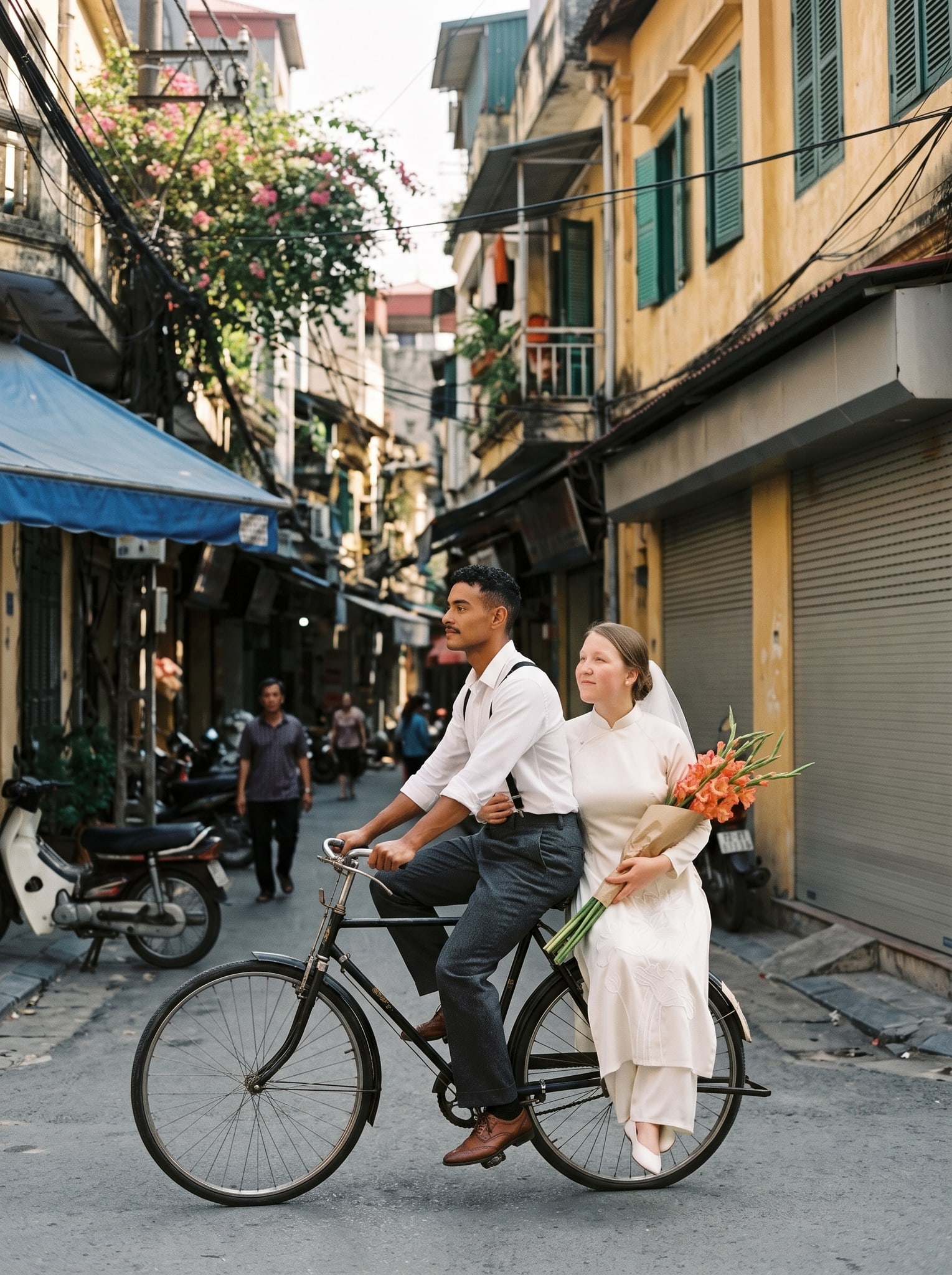
For Vietnamese-American couples, a home shoot typically means wedding photography that happens before the actual wedding day, filmed in Vietnam where extended family still lives. The "at home" part matters: we're not shooting in a hired villa or hotel ballroom, but in the family house, the neighbourhood where the couple's parents grew up, or locations tied to their grandparents' stories. These sessions run longer than a standard couple shoot (4–6 hours instead of 2–3) because the goal isn't just polished portraits—it's capturing the texture of belonging: the light through a family kitchen window, the courtyard where aunts gather, the street corner where the couple's parents first met. American-born or raised couples often feel pressure to "do it right" for elders, so they want a photographer who understands both the aesthetic their Instagram friends expect and the quiet, dignified moments their grandmother will treasure.
Why do Vietnamese-American families ask about including parents in the shoot?
Parents want visual proof that their child's partner is serious, respectful, and willing to show up in Vietnam. Including them in at least a few frames—even just a 10-minute family portrait session at the start or end—signals respect and gives elders concrete images to share with relatives still in the village. We've seen couples arrive nervous about this; by the time we're shooting, parents relax because the photographer isn't treating them as obstacles but as part of the story. The logistics are simple: brief the family the night before on what to wear (we suggest tones that don't clash, not formal suits unless that's the family style), arrive 20 minutes early so parents can settle, and shoot family moments in the first hour when everyone's energy is fresh. Conclusion: including family works best when it's planned, not improvised.
See packages and prices on vietnamphotoshoot.com
How do we plan a pre-wedding shoot across time zones and family schedules?
Start the conversation 3–4 weeks before your Vietnam arrival. We ask couples: Which city (Hanoi, Saigon, Hoi An, Ninh Binh)? How many days in-country? Who's involved (couple, parents, siblings)? Are you renting a home or shooting in your family house? Once we know, we send a WhatsApp template with dates, times, location details, and a shot list—not rigid, but clear enough that everyone can visualize it. Many couples forward this to their parents; it removes the guesswork and lets elders prepare without feeling last-minute. For families across different continents, we often do a brief Zoom call (15 minutes) to walk through the day's flow and answer questions in real-time. The mistake we see: couples finalizing dates without confirming their parents' availability or the family home's access (locked gates, renovation timing, relatives visiting). Plan backwards from your flights, not forwards.
What are the biggest differences between US-style and Vietnam-home pre-wedding shoots?
| Aspect | US wedding photo style | Vietnam home-based style | What matters most |
|---|---|---|---|
| Duration | 2–3 hours, one location | 4–6 hours, 2–4 locations | Depth and family integration |
| Aesthetic | Polished, posed, colour-graded | Mix of posed and documentary, natural light | Authenticity + heirloom quality |
| Family involvement | Often none; couple-only focus | Parents, siblings, extended family in some frames | Honoring both cultures |
| Location type | Rented estates, styled backdrops | Family home, streets, temple, market, garden | Meaning over perfection |
| Post-production | Heavy editing, consistent look | Lighter touch, preserving light and texture | Timelessness over trend |
| Timeline | Same-day or 2-week turnaround | Often 3–4 weeks to allow family viewing | Extended storytelling |
The biggest practical difference: in Vietnam, the light and timing matter more than props. We shoot in early morning (6–7 a.m., golden light on family balconies) or late afternoon (4–6 p.m., street markets with warm shadows). We avoid the midday glare that's brutal in Southeast Asia. We also spend more time on relationships—waiting for a genuine laugh between the couple and a parent, letting a younger sibling wander into the frame naturally—rather than rushing through a checklist.
Which Vietnamese locations are most meaningful for Vietnamese-American couples?
Hanoi: Family homes in the Old Quarter (Hoan Kiem), gardens at Thay Pagoda (Tay Ho district), West Lake shoreline for sunset, or the couple's grandparents' village 1–2 hours out. We've shot couples in their parents' childhood neighbourhood, which adds emotional weight that a hired backdrop can never match.
Saigon: Family villas in District 1 or 2, Bitexco area, Saigon Central Post Office (Reunification Palace vicinity), or local markets at Ben Thanh. Many Vietnamese-American couples have roots in Saigon's merchant families; shooting near their family's old shop or neighbourhood creates a direct link to identity.
Hoi An: The ancient town itself (early morning before crowds), family noodle shops, riverfront, or the tailor district. For couples with roots here, we often shoot in the family home first, then move to the town's lit lantern streets at dusk.
Ninh Binh: Trang An landscape (dramatic karst), family homes in Tam Coc, or rural temples. This works best for couples who want dramatic scenery but also want to acknowledge their rural heritage.
The rule: ask the couple where their family history lives, not where Instagram looks best. Meaning drives the image.
What should a Vietnamese-American couple prepare before we arrive in Vietnam?
Location scouting (do this 1 week before):
- Visit your family home in daylight; check light direction (morning sun on the front? afternoon on the garden?).
- Walk the neighbourhood; identify 1–2 bonus spots (street corner, corner market, temple steps).
- Confirm access: Is the gate unlocked? Will a relative be home? Do we need a key?
- Note obstacles: renovation, parked bikes, vendor carts that move by afternoon.
Family prep (1 week ahead, send via WhatsApp):
- Share the shot list and proposed timeline with parents.
- Suggest clothing (no logos, colours that suit their skin tone, comfortable shoes for walking).
- Ask: Do parents want a full-family portrait? Just a moment with the couple? Out of frame entirely?
- Confirm the day of the shoot: Are aunts visiting? Will the house be clean and quiet?
Couple prep (3 days before):
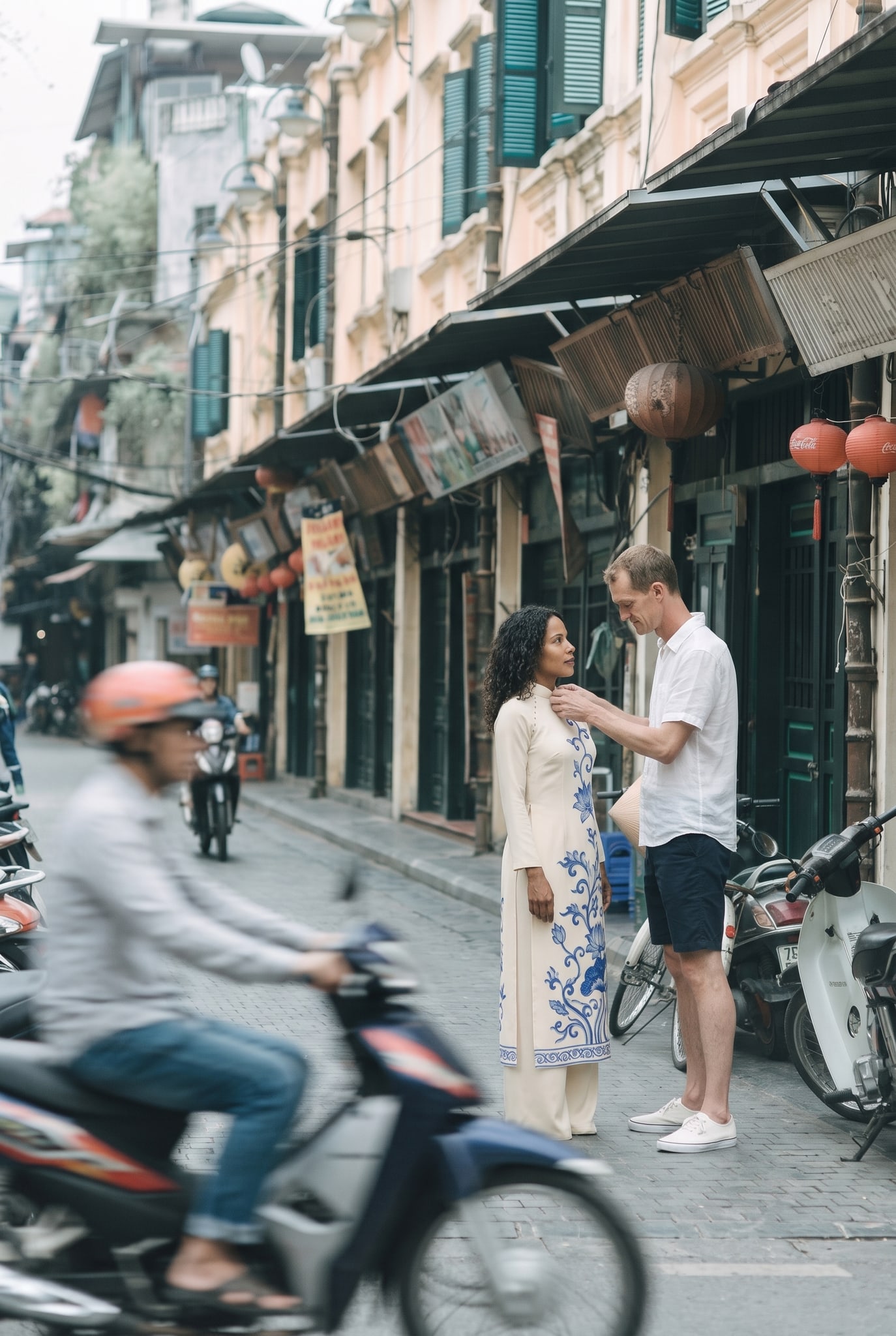
- Decide on two outfit changes: one traditional (áo dài or formal wear), one casual (what you'd wear on a normal day together).
- Plan hair and makeup: Will you do it at the family home or a salon? (We offer makeup and hair at your hotel if that's easier.)
- Discuss vibe: Are you telling a story (how you met, your journey)? Or just capturing how you are together?
- Share music or references that inspire you (no need to recreate them, but it helps us understand your aesthetic).
Logistics:
- Confirm flight and arrival time; we schedule the shoot for day 2–3 (jet lag matters less, energy is higher).
- Arrange transport; we meet you at the family home or hotel.
- Have a backup day in mind in case of rain or family emergency.
What goes wrong, and how do we fix it?
Overcrowded shoots: Extended family shows up uninvited because word spread through the village. Fix: Send a written message (in Vietnamese if needed) the day before: "Photography session 9 a.m. to 1 p.m. Please help us by keeping the space calm and focused. We'll do a family photo at 11 a.m.; please join then." Most people respect clear boundaries.
Poor light from the wrong time slot: Family insists on shooting at noon because that's when everyone's available. Midday sun creates hard shadows on faces, especially in Vietnam's heat. Fix: Offer two time slots (6–9 a.m. or 4–7 p.m.) and explain the light quality difference using phone photos from previous shoots. Show, don't tell.
Outfits that clash: Parents wear bright neon, couple wear muted tones. The frame feels disjointed. Fix: Three days before, we video-call to see clothing choices and suggest subtle adjustments (swap the neon shirt for the cream one, or ask: "Will Mum wear the ao dai or a dress?"). A 30-second wardrobe chat prevents regret later.
Emotional overwhelm: Couple gets teary when grandmother joins a shot; we pause and let the moment breathe rather than rushing. This is a feature, not a bug. Real moment: We shot a couple in their parents' Hanoi home; the mother suddenly asked to hold her son's hand in a frame. The image became their favourite because it was unscripted.
Language barriers with family members: Older relatives don't understand posing directions in English. Fix: Bring a translator (often a younger sibling or cousin) or use simple body language (point, gesture, smile and move close). A 90-year-old grandmother doesn't need words; she reads energy.
Choosing the right pre-wedding package for your Vietnam shoot
For Vietnamese-American couples planning a home-based session, we typically recommend booking a couple photoshoot extended to 5–6 hours, or a custom package that combines couple work with a family photoshoot segment. If you want to include áo dài moments (many couples do for cultural depth), we can add an áo dài photoshoot as a 1-hour insert within the longer session. For makeup and hair coordination—especially if your mum or sister wants grooming help—we offer makeup and hair services at your hotel on the morning of the shoot.
If you're in Hanoi, our Cáo Studio Hanoi team knows the Old Quarter, West Lake, and Thay Pagoda intimately. For Saigon-based sessions, the Cáo Studio Saigon team has shot in every district and neighbourhood. Both teams understand the Vietnam-American narrative because we've worked with dozens of these couples.
See packages and prices on vietnamphotoshoot.com
What to check before you book
- Photographer's experience with family dynamics: Ask to see 2–3 albums where parents or grandparents appear in frames. Do they look comfortable or stiff?
- Location knowledge: Can they navigate your neighbourhood or family home without GPS? Do they know the best light direction at 6 a.m. in Hanoi?
- Cultural sensitivity: Will they understand why a grandmother's blessing matters, or why your parents want formal portraits alongside candid work?
- Turnaround time: When will you see edited images? (We typically deliver 3–4 weeks post-shoot, allowing time for family feedback.)
- Communication style: Can they WhatsApp clearly with questions across time zones? Do they confirm logistics 48 hours before the shoot?
- Backup plan: What happens if it rains? What if a key family member falls ill?
FAQ
Do we need to hire a videographer in addition to the photographer?
No, but many couples book both. A videographer captures dialogue, movement, and emotional moments that stills can't—especially valuable when grandparents are speaking in Vietnamese and you want to preserve their voices. Many teams offer photo-video bundles at a better rate than booking separately.
What if our family home isn't "photogenic"—no garden, cramped space?
We love cramped homes because they're honest. Tight hallways, humble kitchens, and worn tile tell the real story of where you come from. We light them well and shoot close-up, documentary-style. Some of our strongest images are in modest Hanoi or Saigon homes precisely because the photographer isn't fighting against a backdrop—they're celebrating the space itself.
How do we handle the áo dài if we've never worn one before?
Rent or buy one 2–3 weeks before your trip; wear it at home to break it in. An áo dài should feel natural, not costume-like. We've shot Vietnamese-American couples who've never worn traditional dress before; the key is choosing a tailored fit and practicing sitting and walking. A good tailor in Hanoi or Saigon can fit you in 3–5 days.
Can we include our proposal story or how we met in the shoot?
Absolutely. Tell us the story, and we'll find ways to show it—recreating the street where you met, visiting the café where he proposed, or simply capturing the energy between you when you retell it. The best pre-wedding shoots are narrative-driven, not just portrait collections.
What's the best time of year to shoot in Vietnam for light and weather?
November to February (cool and dry) gives consistent light and low humidity. April to October (hot and humid) means we shoot very early or late, and rain is possible. December to January are peak, so book 6–8 weeks ahead. September to October can be unpredictable but still workable with early-morning shoots.
Pre-Wedding & Elopement
Inclusions, prices and booking are on our booking site.
FAQ
Do we need to hire a videographer in addition to the photographer?
No, but many couples book both. A videographer captures dialogue, movement, and emotional moments that stills can't—especially valuable when grandparents are speaking in Vietnamese and you want to preserve their voices. Many teams offer photo-video bundles at a better rate than booking separately.
What if our family home isn't "photogenic"—no garden, cramped space?
We love cramped homes because they're honest. Tight hallways, humble kitchens, and worn tile tell the real story of where you come from. We light them well and shoot close-up, documentary-style. Some of our strongest images are in modest Hanoi or Saigon homes precisely because the photographer isn't fighting against a backdrop—they're celebrating the space itself.
How do we handle the áo dài if we've never worn one before?
Rent or buy one 2–3 weeks before your trip; wear it at home to break it in. An áo dài should feel natural, not costume-like. We've shot Vietnamese-American couples who've never worn traditional dress before; the key is choosing a tailored fit and practicing sitting and walking. A good tailor in Hanoi or Saigon can fit you in 3–5 days.
Can we include our proposal story or how we met in the shoot?
Absolutely. Tell us the story, and we'll find ways to show it—recreating the street where you met, visiting the café where he proposed, or simply capturing the energy between you when you retell it. The best pre-wedding shoots are narrative-driven, not just portrait collections.
What's the best time of year to shoot in Vietnam for light and weather?
November to February (cool and dry) gives consistent light and low humidity. April to October (hot and humid) means we shoot very early or late, and rain is possible. December to January are peak, so book 6–8 weeks ahead. September to October can be unpredictable but still workable with early-morning shoots.
More from the team
Boho pre-wedding photoshoot in Vietnam: Hanoi, Saigon, Hoi An
Boho pre-wedding shoots mix romantic, free-spirited aesthetics with Vietnam's landscapes and heritage sites. We run full-day sessions in three cities, handling styling, makeup, location scouts and edits.
Avoid crowds at Hoang Su Phi rice terraces: timing for wedding shoots
Hoang Su Phi's terraced landscape draws couples and tour buses in equal measure. We show how to shoot there alone, when to arrive, and what to arrange with us before you go.
Photography rules at Con Dao beaches: permits, drones and what to check
Con Dao's beaches demand prep before you shoot—permits, drone zones and tide timing all affect your day. We share what the Cáo Studio team verifies on every booking.