 Cáo Studio
Home › Blog › Ao Dai Photoshoot
Vietnamese Ao Dai Wedding Dress Explained for Foreign Brides
By the Cáo Studio team · Hanoi & Saigon · 2026-11-02
An ao dai cưới is Vietnam's traditional wedding dress: a floor-length silk tunic (áo) with a high collar and side slits, worn over matching wide-leg trousers (dài). The groom wears a formal ao dai in complementary silk, often darker. Foreign brides typically order custom-made versions 6–12 weeks before their ceremony; tailors in Hanoi, Ho Chi Minh City, and Hoi An charge based on silk grade, embroidery, and construction detail. Cáo Studio advises brides to fit their ao dai 2–3 weeks before the shoot so we can plan lighting and posture—heavy layers and narrow sleeves change how you move. The dress suits intimate ceremonies, pre-wedding sessions, and engagement parties; it photographs exceptionally well in natural light and cultural venues. Chat with us on WhatsApp
What exactly is an ao dai cưới, and how does it differ from regular ao dai?
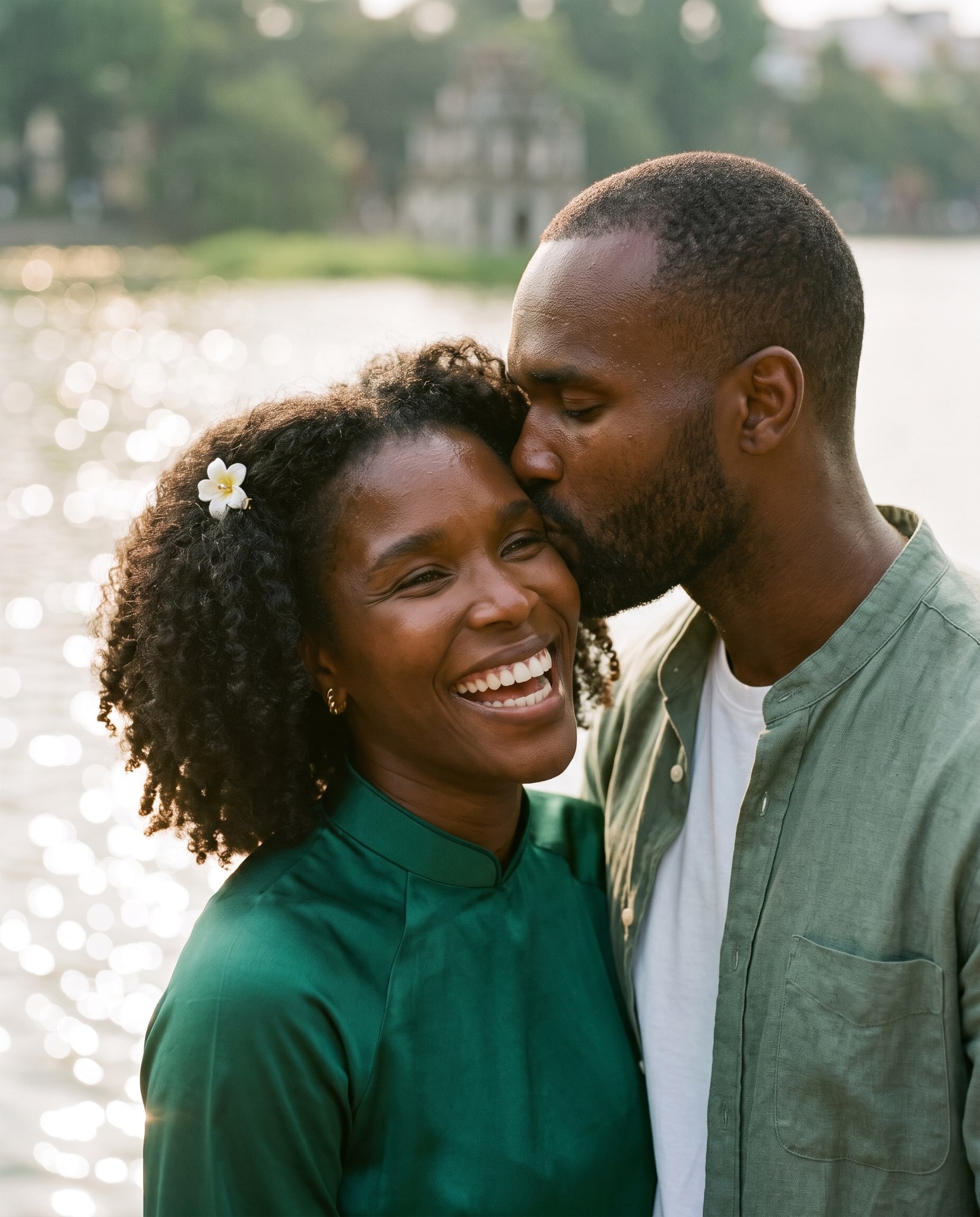
An ao dai cưới (literally "going-out dress") is structured entirely for formal celebration: higher silk quality, often hand-embroidered panels, metallic threads, and a higher neckline than everyday ao dai. The wedding version sits flush at the shoulders and chest, splits above the hip, and the trousers are tailored to a precise fit so movement feels controlled rather than fluid. We've dressed dozens of foreign brides, and the first surprise is weight—bridal silk with embroidery adds 1–2 kg compared to a casual version. The difference matters: your photographer must anticipate slower turning, higher posture, and longer breath holds for candid shots.
How long does custom ao dai tailoring take, and when should a foreign bride start?
Most tailors in Hanoi and Ho Chi Minh City need 8–12 weeks for a fully custom bridal ao dai, longer if embroidery is intricate. If you're flying in for a ceremony or pre-wedding shoot, we recommend contacting a tailor 4 months ahead. We've seen brides arrive with ao dai ordered just 3 weeks before arrival—fabric delays, re-fittings, and rush fees cascade quickly. Our team has referrals to reputable tailors in District 1 (Saigon) and Old Quarter (Hanoi) who speak English and understand foreign measurements (different waist-to-hip proportions than Vietnamese sizes). Always request a fitting 2–3 weeks before your shoot date so our stylists can assess how the fabric drapes under lights and adjust poses accordingly.
See packages and prices on vietnamphotoshoot.com
What fabric and color should a foreign bride choose for an ao dai wedding?
| Fabric | Weight | Embroidery potential | Best for | Durability |
|---|---|---|---|---|
| Silk charmeuse | Light–medium | Hand embroidery, beading | Outdoor ceremony, movement-heavy shots | Excellent (washes well) |
| Silk twill | Medium–heavy | Metallic thread, complex patterns | Indoor ceremony, formal portraiture | Excellent (holds shape) |
| Silk jacquard | Heavy | Integrated pattern, less additional work | Formal evening, heirloom feel | Excellent (stiffness aids posture) |
| Cotton-silk blend | Light | Limited (reads flat in photos) | Budget option, hot weather | Good (wrinkles easily) |
Color tradition for foreign brides is flexible: white, pale pink, and ivory photograph cleanly; deep red or burgundy honors custom but demands careful lighting. We've noticed nude or champagne tones flatter most skin tones under Vietnam's sunlight. Metallic accents (gold or silver embroidery) amplify in photos—test samples under indoor and outdoor light before committing. Avoid pure white if your ceremony venue has very bright windows; the dress blows out and hair becomes hard to light.
How should a foreign bride style her ao dai for a wedding photoshoot?
Hair and makeup for ao dai require restraint. The dress's high neckline and fitted shoulders mean every strand shows; we recommend a low bun, sleek low ponytail, or half-up style that doesn't compete with the tunic's lines. Makeup should be traditional (defined brows, warm eyeshadow, matte lips) because the formal fabric draws attention upward. Jewelry is minimal: drop earrings work; chunky necklaces fight the neckline. We often see foreign brides pair their ao dai with western bridal heels, which works, but traditional flat beaded slippers photograph more authentically and let you stand longer without foot pain during a 2–3 hour session.
Our stylists will coordinate this during a pre-shoot consultation, either in person at our Hanoi studio or Saigon studio or via WhatsApp. If you're flying in just for the shoot, we offer makeup and hair services at your hotel to eliminate stress on the morning of your photos.
What are common mistakes foreign brides make with ao dai, and how do we avoid them in a shoot?
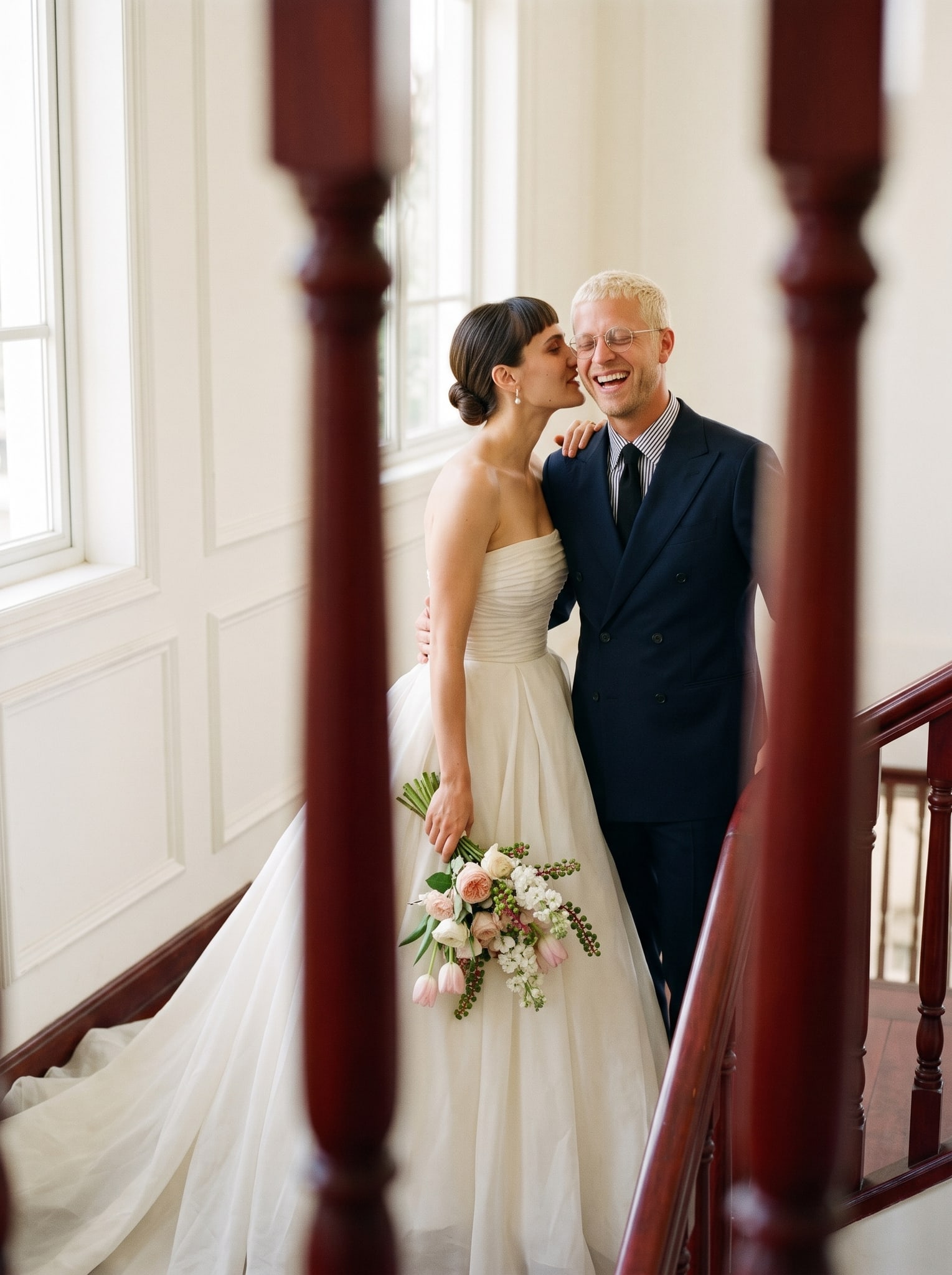
We've learned the hardest mistakes from watching brides move: hunching into the collar (narrows shoulders and shortens the neck), walking too fast (silk catches on the trousers' inner seam), and over-accessorizing (competes with embroidery). The trousers are high-waisted and fitted, so sitting requires a different angle than Western dresses—you perch rather than settle. During your shoot, our photographer will show you the angle that works, often a slight forward lean from the hips.
Second: timing your ao dai. If you've ordered it 6 weeks before arrival, allow 2 weeks for any last-minute adjustments after it lands. We've had brides arrive with dresses that pulled at the shoulders or dragged at the hem because fittings happened on worn samples, not the final garment. Always request a final fitting 7–10 days before your shoot.
Third: underestimating the heat. Silk traps warmth, especially with long sleeves and a tunic layer. Schedule outdoor shots in early morning (6–8 AM) or late afternoon (4–6 PM) to keep you comfortable and prevent sweat marks under the arms. Indoor venues or covered outdoor spaces work well year-round.
Where should a foreign bride shoot her ao dai, and how does location affect styling?
Ao dai photographs best against understated backgrounds: old French colonial buildings (Hoi An's riverside), temple courtyards (Quan Sứ Temple in Hanoi), hotel gardens, or lakeside settings. The dress's embroidery and silhouette become the focal point; busy backgrounds dilute impact. We often recommend a two-location shoot: one formal (garden, architecture) and one intimate (hotel room, studio) so you have both grandeur and close-up portraiture.
Cultural venues add authenticity—a ceremony at a pagoda or heritage site pairs naturally with ao dai—but check light quality. Temple courtyards have dappled shade that looks romantic but requires careful white-balance in post-production. Hotels with clean architectural lines and consistent light are safer bets for bridal portraiture. If you're visiting Ninh Binh, the limestone karsts and village temples offer spectacular outdoor backdrops, though you'll need an early start and a guide familiar with the locations.
Our team has shot ao dai weddings across Hanoi, Saigon, Hoi An, and Ninh Binh. For a pre-wedding photoshoot or couple session, we'll scout locations based on your ao dai's color and embroidery to ensure light and background work together. If you're celebrating an engagement or anniversary in ao dai, a proposal or anniversary package includes location guidance and styling input.
What should a foreign bride check before finalizing her ao dai order?
Measurements and fit:
- Request a garment measurement chart (not just your body measurements) so you can compare finished ao dai to known-good fits.
- Ensure the tailor tests the neckline, sleeve length, and trouser inseam on a muslin mock-up first.
Fabric samples:
- Ask for a large swatch (not a postcard-size snippet) to see how embroidery reads in indoor and natural light.
- Test dye stability if the ao dai is dyed after embroidery (reds can bleed).
Photography considerations:
- Choose embroidery that photographs without washing out—metallic gold threads read better than pale silver under mixed light.
- Avoid excessive beading on the front bodice if you plan close-up portraits; it can reflect light unevenly.
Timeline and delivery:
- Confirm the final delivery date in writing, with a clause for minor adjustments within 2 weeks of arrival.
- If shipping internationally, budget 1–2 weeks for customs and 5–10 days for courier delivery.
Backup plan:
- We know several tailors who can rush minor alterations if your ao dai arrives with fit issues. Keep their contact details.
FAQ
Can a foreign bride wear a white ao dai, or is that disrespectful?
White is increasingly accepted for foreign brides in modern Vietnam; it photographs beautifully and suits Western aesthetic expectations. Traditional families may prefer red or pink, so check with your partner's family first. Either color works for pre-wedding and engagement shoots.
How much does a custom ao dai cost, and can I buy one ready-made instead?
We don't sell ao dai directly—we style and photograph you in one. Custom tailoring ranges widely based on fabric and embroidery; ask your tailor for a quote. Ready-made ao dai from Vietnamese vendors exist but rarely fit foreign body proportions well without major alterations.
What if my ao dai arrives damaged or doesn't fit during my shoot?
Contact us immediately via WhatsApp. We have relationships with emergency alteration services in Hanoi and Saigon. Minor hem fixes or seam adjustments can happen within 24–48 hours if needed before your session.
Should my groom wear a matching ao dai?
Yes, if both of you are comfortable. Matching silk, complementary colors (he might wear dark navy or burgundy while you wear pale pink) photographs as a cohesive couple portrait. We'll coordinate styling during your couple photoshoot consultation.
Do I need an ao dai if I'm just doing a pre-wedding session, or is it optional?
It's entirely optional. Many foreign brides wear Western bridal gowns, casual outfits, or multiple changes during a pre-wedding shoot. An ao dai is a beautiful addition if you want to honor Vietnamese culture or your partner's heritage, but not required.
Can I rent an ao dai instead of buying one?
Rental services exist in Hanoi and Ho Chi Minh City, though options for foreign sizes are limited. Rental is cheaper short-term but fit is unpredictable. We recommend purchase or custom tailoring for a shoot where fit and confidence matter most.
Ao Dai Photoshoot
Inclusions, prices and booking are on our booking site.
FAQ
Can a foreign bride wear a white ao dai, or is that disrespectful?
White is increasingly accepted for foreign brides in modern Vietnam; it photographs beautifully and suits Western aesthetic expectations. Traditional families may prefer red or pink, so check with your partner's family first. Either color works for pre-wedding and engagement shoots.
How much does a custom ao dai cost, and can I buy one ready-made instead?
We don't sell ao dai directly—we style and photograph you in one. Custom tailoring ranges widely based on fabric and embroidery; ask your tailor for a quote. Ready-made ao dai from Vietnamese vendors exist but rarely fit foreign body proportions well without major alterations.
What if my ao dai arrives damaged or doesn't fit during my shoot?
Contact us immediately via WhatsApp. We have relationships with emergency alteration services in Hanoi and Saigon. Minor hem fixes or seam adjustments can happen within 24–48 hours if needed before your session.
Should my groom wear a matching ao dai?
Yes, if both of you are comfortable. Matching silk, complementary colors (he might wear dark navy or burgundy while you wear pale pink) photographs as a cohesive couple portrait. We'll coordinate styling during your [couple photoshoot consultation](/go/couple-photoshoot).
Do I need an ao dai if I'm just doing a pre-wedding session, or is it optional?
It's entirely optional. Many foreign brides wear Western bridal gowns, casual outfits, or multiple changes during a [pre-wedding shoot](/go/pre-wedding-photoshoot). An ao dai is a beautiful addition if you want to honor Vietnamese culture or your partner's heritage, but not required.
Can I rent an ao dai instead of buying one?
Rental services exist in Hanoi and Ho Chi Minh City, though options for foreign sizes are limited. Rental is cheaper short-term but fit is unpredictable. We recommend purchase or custom tailoring for a shoot where fit and confidence matter most.
More from the team
Ao Dai Photos at Hoi An Lantern Street at Night
Hoi An Lantern Street (Nguyen Hoan) glows at dusk with silk lanterns and reflected light. Our team shoots ao dai here after dark, navigates tight vendor spaces, and handles the low-light challenge with experience from 100+ night sessions.
Ao dai for wedding photos in Quy Nhon: renting, fitting and styling
Quy Nhon's coastal backdrops pair beautifully with traditional ao dai. We walk through rental choices, fitting logistics and how our team coordinates styling on shoot day.
Vietnam Pre-Wedding Photoshoot: What We Book at Cáo Studio
Pre-wedding shoots in Vietnam mean morning light in Hoi An's Old Town, cyclos in Saigon, or terraced fields near Ninh Binh. We walk you through what a session actually costs, how we schedule it, and what goes wrong on the day.