 Cáo Studio
Home › Blog › Ao Dai Photoshoot
Vietnamese Ethnic Costume Photoshoot Etiquette: Cáo Studio Guide
By the Cáo Studio team · Hanoi & Saigon · 2026-11-02
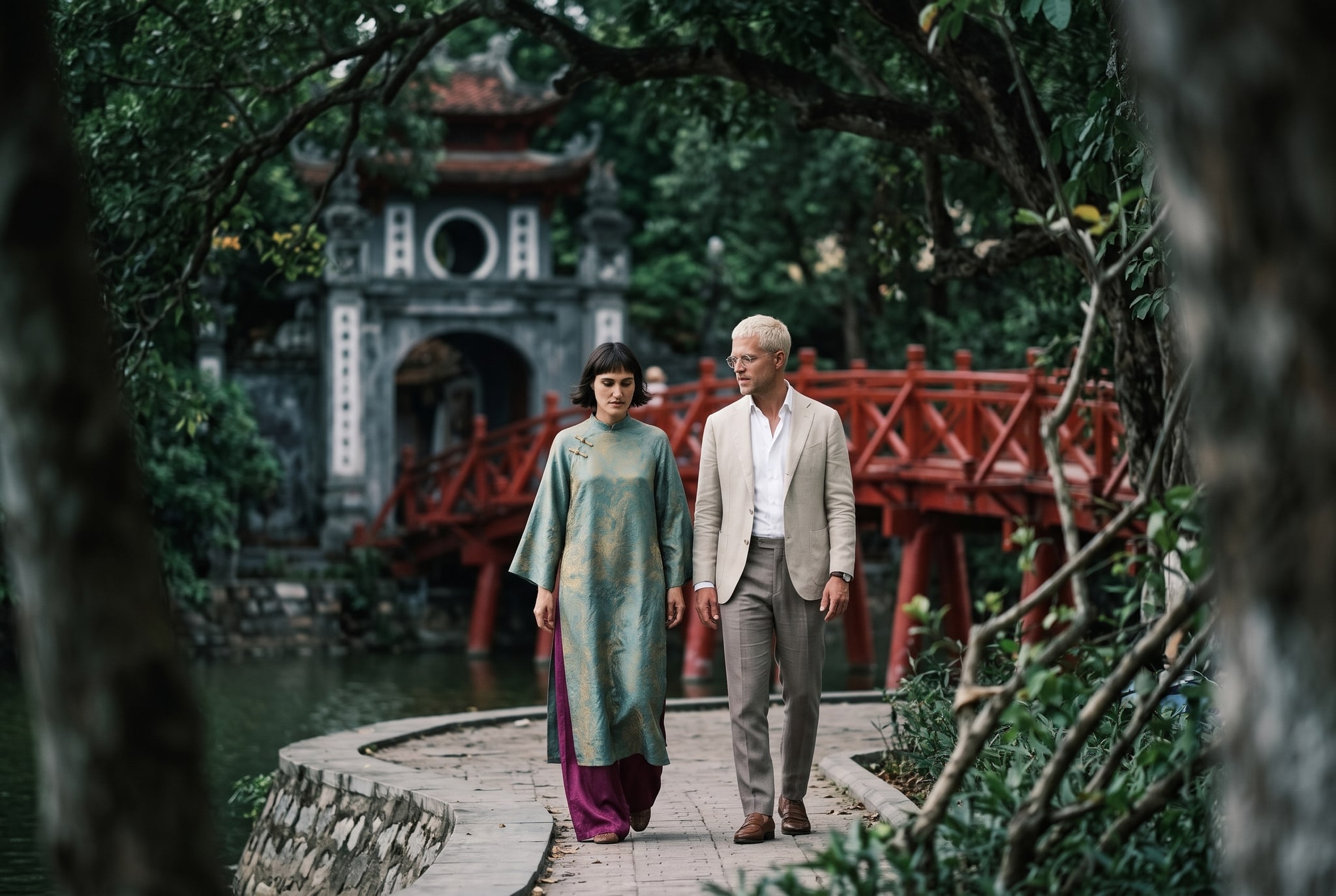
Vietnamese ethnic costume photoshoots, particularly ao dai sessions, blend cultural respect with professional styling. Etiquette covers how you move in the garment, how we drape and layer it, the time we spend on fit (often 15–20 minutes per outfit), and how our stylists correct posture to prevent wrinkles and sagging. At Cáo Studio in Hanoi and Saigon, we begin every ao dai photoshoot package with a fitting consultation: we ask about your comfort level, whether the áo is family heirloom or rental, and whether you prefer traditional or modern styling. Most sessions last 2–3 hours, include 2–4 outfit changes, and cost varies by location and group size. Common mistakes: rushing the fitting, sitting immediately after dressing, touching the embroidery, and underestimating how heat and humidity affect the silk. We prevent these by educating guests before we shoot, positioning you standing or kneeling rather than seated, and keeping the studio cool. Chat with us on WhatsApp | See packages and prices on vietnamphotoshoot.com
How do we fit an ao dai before the first frame?
Fitting is non-negotiable; we allocate 15–20 minutes per guest. Our stylists in both studios start by asking three things: your height, whether you prefer the áo snug or flowing, and if you have any mobility concerns. We then check the neckline—it should sit just touching your collarbone, not gap or pinch. The armhole must allow shoulder rotation without strain. We adjust the side slits by folding and pinning the inner seams, never cutting. The trousers (nhuộm) must break slightly at the ankle without pooling. We've learned that guests who arrive in tight jeans or heavy layers take longer to transition; we now mention loose clothing in our pre-shoot WhatsApp reminder. The rule: if you can't sit and stand three times without tugging, the fit is wrong.
Why does posture matter more in ethnic wear than casual shoots?
Posture changes how the áo drapes, how it catches light, and how visible the embroidery is. We notice immediately when a guest slouches: the shoulder seams roll forward, the front panel bunches, and the embroidered chest motifs disappear into shadow. In our Hanoi studio, we use a simple posture check during the pre-shot briefing—shoulders back, chin level, weight evenly distributed—and we walk through it. For standing shots, we cue "imagine a string pulling the crown of your head up; let your shoulders drop." For kneeling (a traditional seated option that respects the garment), we guide the guest to kneel on a cushioned bench with shins parallel, torso upright. We avoid cross-legged sitting entirely because the fabric folds unpredictably and guests inevitably lean forward, creasing the áo front. Our photographers pause before each shot to check the back view on the camera screen—wrinkles are easier to catch and smooth than to fix in editing.
What should guests avoid touching during a photoshoot?
The embroidery, beading, and panels. We've seen guests unconsciously adjust their own ao dai mid-shoot, often pulling the front closed or smoothing the side seams, which loosens our pins and moves the garment. After a hand-off shoot in Saigon last year, a guest repeatedly pressed her palm against the chest motif (antique beading on a family heirloom) while waiting between setups; the pressure loosened three beads. Now we brief guests: "Our stylists adjust the áo between every pose. Your job is to focus on expression and posture; we handle the garment." We also ask guests not to use body lotion or sunscreen on their hands right before shooting—residue transfers to silk. For guests in antique or rented áo dai, we use a white cotton glove on the photographer's left hand (the one that steadies the fabric for movement shots) and brief the guest to keep their hands visible or on a neutral surface like a knee or their lap.
| What to Check Before Your Ethnic Costume Session | Why It Matters | What We Handle |
|---|---|---|
| Garment ownership (heirloom, rental, purchased) | Affects insurance, handling, and styling freedom | Our stylists know heritage pieces require extra gentleness and pinning, not tucking |
| Your mobility and comfort level | Determines which poses work safely for you | We offer standing, kneeling, reclining options and skip positions that stress the fabric or your body |
| Fit preferences (snug, flowing, traditional, modern) | Changes how the áo looks and how you feel | We adjust layers, pin side seams, choose under-layers, and demonstrate movement in the fitted garment |
| Humidity and temperature on shoot day | Silk wrinkles and shifts in heat; makeup runs | We move shoots earlier or to air-conditioned venues if forecast is hot; guests wait in cool spaces between changes |
| Hair and makeup compatibility with the neckline | Loose hair can slip off-shoulder áo; heavy makeup can transfer to fabric | We coordinate with our hotel makeup and hair team; secure hair high or in a bun if neckline is low |
How do we handle humidity and heat on location shoots?
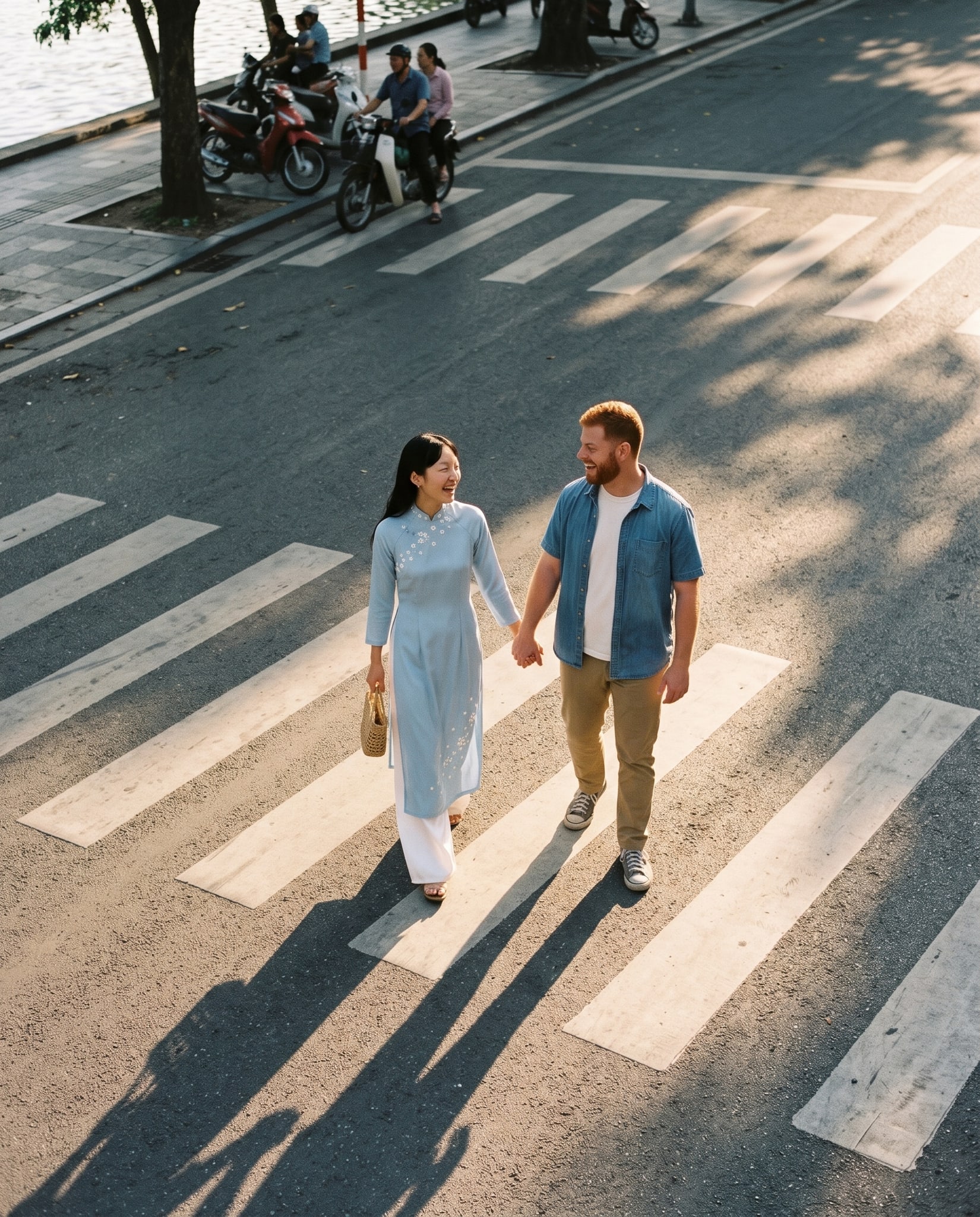
Vietnam's climate is our constant challenge. In Saigon during April–September, humidity averages 75–85%, which causes silk áo dai to absorb moisture, wrinkle faster, and cling to the body rather than drape. Our team carries a portable steamer (500W, fits in a van) and uses it between outfit changes—a 90-second pass over the panels refreshes the fabric without soaking it. We've learned to schedule Hanoi shoots before 9 a.m. or after 5 p.m. to avoid midday heat. On location (Hanoi's Old Quarter temples, Saigon's Bitexco corridor, Hoi An's ancient town), we station a team member with a fabric care kit: distilled water spray, lint roller, small hand iron, and cotton pressing cloths. We position guests in shade between shots and provide a light cotton robe to wear while waiting. The decision we made two years ago: we now offer indoor studio sessions for summer shoots at no extra cost, with draped backdrops and professional lighting that replicate outdoor conditions. Guests appreciate the control; the áo drapes identically every time.
What's the difference between fast-fashion costume shoots and respectful ethnic wear sessions?
Speed versus intention. A fast-fashion shoot might change outfits every 15 minutes and prioritize quantity of photos over fit and cultural knowledge. Our respectful ethnic wear session at Cáo Studio invests 20+ minutes per outfit: fitting, styling, posture briefing, and shooting only after the guest is genuinely comfortable. We ask questions about the áo's history (Is it your grandmother's? Did you inherit it? Is it newly tailored?), and we adjust handling based on the answer. A family heirloom receives padded hangers, cotton gloves, and zero casual contact. A newly purchased áo gets confident styling and movement cues because it's meant to be worn. We also educate guests: many don't know that ao dai embroidery is hand-stitched by artisans, sometimes taking weeks, and that the silk is delicate—knowing this shifts how they hold themselves in the garment. Our stylists narrate this during the fitting: "This beading on the chest? Each piece was placed by hand. That's why we're pinning gently, never pulling." Guests who understand the story move differently; they're less rushed, more respectful, and the photographs reflect that intention.
See packages and prices on vietnamphotoshoot.com
What else should couples or families know about group ethnic wear shoots?
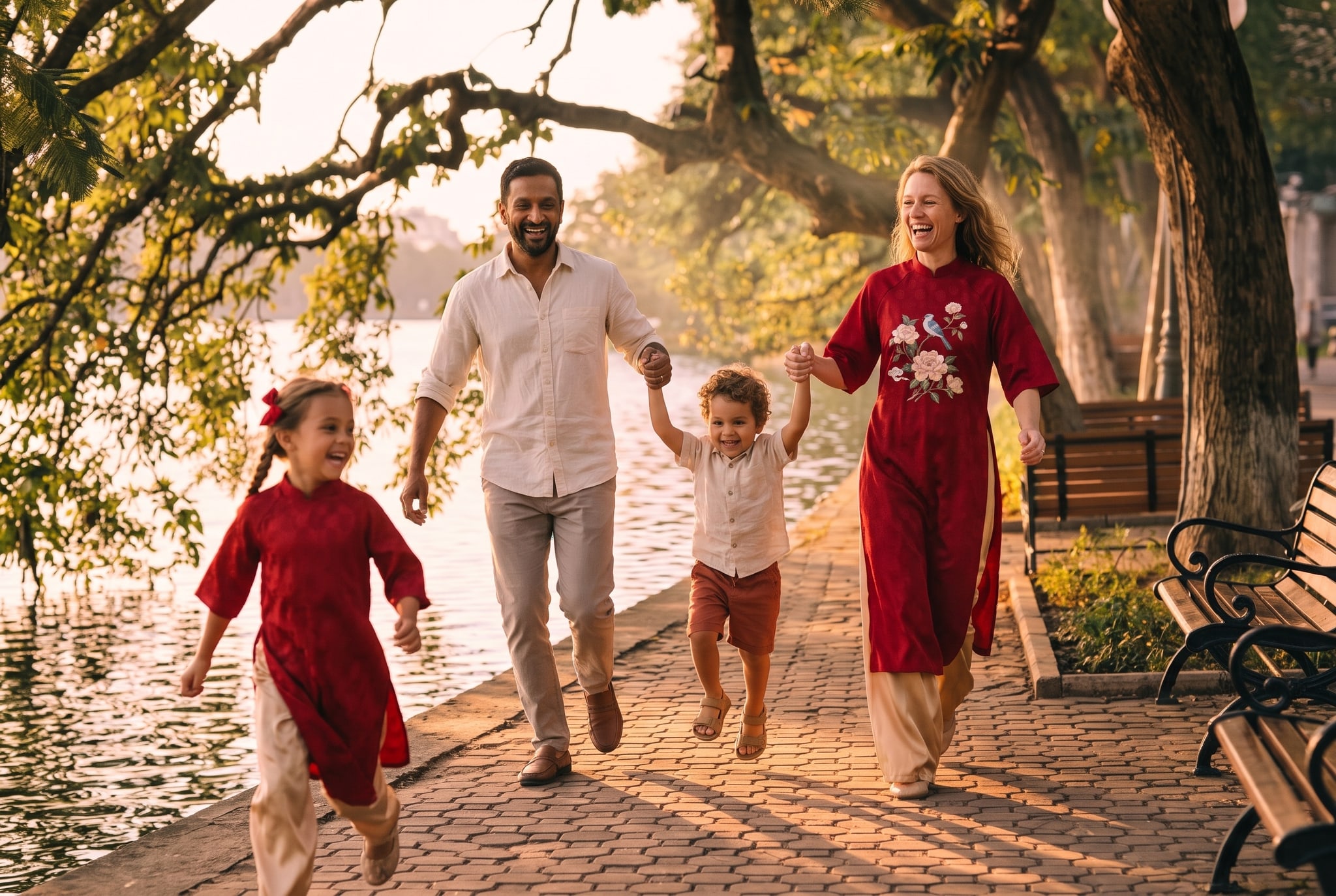
Group sessions require staggered timing. When a couple books our couple photoshoot package, we fit the bride first (15–20 min), then the groom (10–15 min, usually simpler), then shoot them individually before moving to couple poses. This approach prevents the first person from getting cold or restless while waiting. For family photoshoot sessions, we bring multiple stylists if there are young children; one focuses on the child's comfort while another manages the parents' áo. We've found that family shoots in air-conditioned studios (Hanoi and Saigon locations) work better than outdoor family sessions because siblings tire in heat, and we can safely layer children's áo without overheating them. Parents often ask: "Can my 5-year-old wear an áo for two hours?" We advise 45 minutes maximum, then offer a costume change or a break in cooler space.
For guests booking makeup and hair at your hotel before an ethnic wear session, our makeup artist applies a long-wear base because silk áo absorbs moisture and sweat transfers easily. We skip heavy blush (it can transfer to the neckline) and use waterproof mascara. Hair is always pinned high or secured; loose hair on an off-shoulder or low-neck áo slides and requires constant adjustment, breaking your focus. We coordinate the hair and makeup team with the outfit choice—if you're wearing a modern, low-neckline áo, we style hair completely off the face and neck. If traditional high-neck, we have more freedom with loose waves or a softer updo.
What to Check Before You Book
- Garment ready? If rental, confirm delivery and fitting date at least one week ahead. If heirloom, inspect for loose seams or beading and mention it to us.
- Comfort level with the neckline? Describe it (high, low, off-shoulder) so our stylists pre-plan hair and makeup.
- Mobility concerns? Tell us if you have shoulder, hip, or knee issues; we'll adjust poses and offer cushioned support.
- Heat and humidity tolerance? If you overheat easily, choose a studio or early-morning outdoor session.
- First time in an áo? Book an extra 15 minutes for fitting and a standing-only shoot (easier than seated or complex poses).
- Rented garment insurance? Confirm with the rental shop; we handle the fabric with care, but it's good to know your responsibility.
FAQ
Can I wear an ao dai if I've never worn Vietnamese traditional clothing before?
Yes. Our stylists fit and brief you completely. We start with posture (shoulders back, imagine a string at the crown of your head), then show you how to walk and sit in the garment. Most guests feel confident after the 15-minute fitting.
What if the ao dai is a family heirloom and very fragile?
Tell us before the shoot. We use cotton gloves, avoid any unnecessary handling, and use only gentle pinning—no tugging, folding, or tucking. We've photographed hundred-year-old áo; fragility doesn't stop us, it just changes how we work.
How long does an ethnic costume photoshoot actually take?
Typically 2.5 to 3 hours: 20 minutes fitting and briefing, 20–30 minutes shooting the first outfit, 15 minutes changing and re-fitting, 25–30 minutes on the second outfit, and breaks between. Couple and family shoots run longer because we fit and brief each person separately.
Should I bring my own ao dai or use a studio rental?
Both work. Studio rentals (if you book a session with us) are pre-fitted, professionally maintained, and insured. Your own áo is more personal but requires advance communication about fit and condition. Either way, coordinate with us by WhatsApp at least one week ahead.
What happens if I sweat or the silk wrinkles during the shoot?
We have a portable steamer and cotton pressing cloths on location. Between outfit changes, we give the áo a 90-second refresh, and we position you in shade or in an air-conditioned space to cool down. Summer shoots in Saigon often happen in-studio for this reason.
Can I do a pre-wedding ethnic wear shoot or an elopement with an ao dai?
Absolutely. Many couples choose a pre-wedding or elopement session with both áo dai and modern dress. We coordinate outfit changes, hair, and makeup with our hotel team. Elopement shoots are intimate and allow more time per outfit. --- ← Back to Cáo Studio Blog | Book on vietnamphotoshoot.com | Follow us on Instagram | Message us: WhatsApp
Ao Dai Photoshoot
Inclusions, prices and booking are on our booking site.
FAQ
Can I wear an ao dai if I've never worn Vietnamese traditional clothing before?
Yes. Our stylists fit and brief you completely. We start with posture (shoulders back, imagine a string at the crown of your head), then show you how to walk and sit in the garment. Most guests feel confident after the 15-minute fitting.
What if the ao dai is a family heirloom and very fragile?
Tell us before the shoot. We use cotton gloves, avoid any unnecessary handling, and use only gentle pinning—no tugging, folding, or tucking. We've photographed hundred-year-old áo; fragility doesn't stop us, it just changes how we work.
How long does an ethnic costume photoshoot actually take?
Typically 2.5 to 3 hours: 20 minutes fitting and briefing, 20–30 minutes shooting the first outfit, 15 minutes changing and re-fitting, 25–30 minutes on the second outfit, and breaks between. Couple and family shoots run longer because we fit and brief each person separately.
Should I bring my own ao dai or use a studio rental?
Both work. Studio rentals (if you book a session with us) are pre-fitted, professionally maintained, and insured. Your own áo is more personal but requires advance communication about fit and condition. Either way, coordinate with us by WhatsApp at least one week ahead.
What happens if I sweat or the silk wrinkles during the shoot?
We have a portable steamer and cotton pressing cloths on location. Between outfit changes, we give the áo a 90-second refresh, and we position you in shade or in an air-conditioned space to cool down. Summer shoots in Saigon often happen in-studio for this reason.
Can I do a pre-wedding ethnic wear shoot or an elopement with an ao dai?
Absolutely. Many couples choose a [pre-wedding or elopement session](/go/pre-wedding-photoshoot) with both áo dai and modern dress. We coordinate outfit changes, hair, and makeup with our hotel team. Elopement shoots are intimate and allow more time per outfit. --- [← Back to Cáo Studio Blog](/blog) | Book on [vietnamphotoshoot.com](/go/) | Follow us on [Instagram](https://instagram.com/caostudio.net) | Message us: [📸 WhatsApp](https://wa.me/84338762340)
More from the team
Ao Dai Photos at Hoi An Lantern Street at Night
Hoi An Lantern Street (Nguyen Hoan) glows at dusk with silk lanterns and reflected light. Our team shoots ao dai here after dark, navigates tight vendor spaces, and handles the low-light challenge with experience from 100+ night sessions.
Ao dai for wedding photos in Quy Nhon: renting, fitting and styling
Quy Nhon's coastal backdrops pair beautifully with traditional ao dai. We walk through rental choices, fitting logistics and how our team coordinates styling on shoot day.
Vietnam Pre-Wedding Photoshoot: What We Book at Cáo Studio
Pre-wedding shoots in Vietnam mean morning light in Hoi An's Old Town, cyclos in Saigon, or terraced fields near Ninh Binh. We walk you through what a session actually costs, how we schedule it, and what goes wrong on the day.