 Cáo Studio
Home › Blog › Pre-Wedding & Elopement
Wedding Dress Styles That Photograph Well in Vietnam's Heat
By the Cáo Studio team · Hanoi & Saigon · 2026-11-04
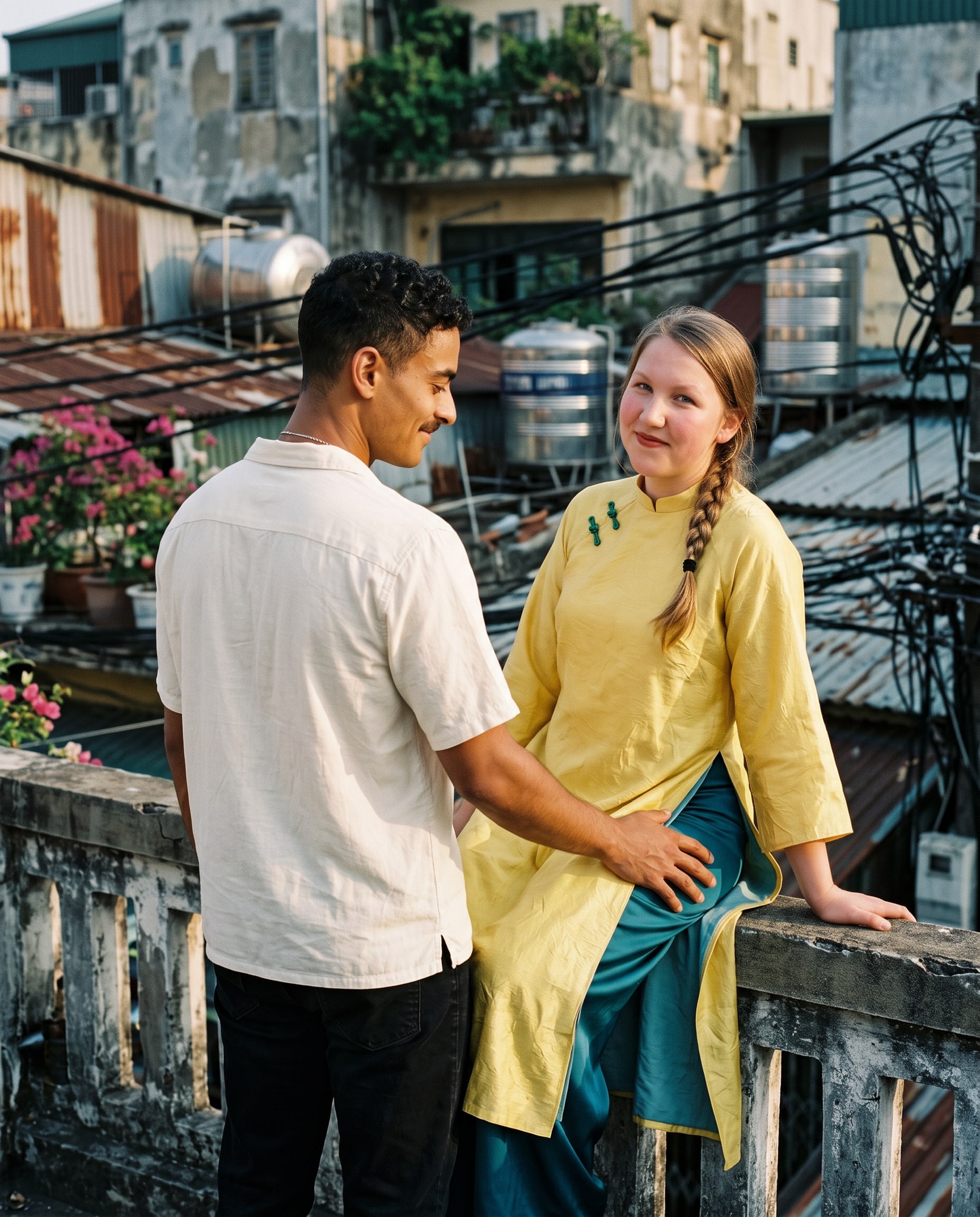
Vietnam's heat and 80–90% humidity make heavy, layered or synthetic fabrics look wilted in photos within an hour—we've watched sweat marks bloom across silk charmeuse under studio lights and seen tulle lose its shape by the second outfit change. The dresses that photograph best are lightweight, breathable and cut to skim rather than cling: soft silks, cotton blends, linen, and open-back or sleeveless designs that let skin breathe. Cáo Studio has shot hundreds of pre-wedding sessions across Hanoi, Saigon, Hoi An and Ninh Binh, and we consistently see A-line and column silhouettes with minimal understructure perform better than ballgowns or heavily boned corsets. Choose fabric with natural drape, keep embellishment to the bodice (not the skirt where sweat pools), and test any dress in a warm room before committing. Ask us for styling advice when you book your pre-wedding shoot—we'll tell you exactly what works for your location and time of day. Chat with us on WhatsApp
Why heavy fabrics fail in tropical shoots
Heavy satin, taffeta, and polyester-blend fabrics hold heat and moisture against skin—after thirty minutes in Hanoi's humidity, we see visible sweat rings expand across the back and underarms. Structured fabrics like dupioni silk or stiff taffeta also photograph stiffly; they don't move naturally when you walk, sit or turn, and they crease where bodies bend. Boning and tight bodices restrict breath, which shows as tension in your face and posture on camera. In our experience, brides in heavyweight dresses take longer to relax between shots, and their expressions stay guarded. The dress pulls energy from the frame. Lightweight, fluid fabrics—soft silk charmeuse, crepe, cotton-linen blends—drape with your body instead of fighting it, photograph with depth and movement, and keep you comfortable enough to smile genuinely. We've noticed the difference in contact sheets: the second half of a shoot with a heavy dress shows visible fatigue, while lightweight fabrics carry energy all the way through.
Recommendation: if the dress has interior corsetry or stays, confirm it's removable or ask the tailor to loosen it before your shoot date.
What silhouettes move best in front of the camera?
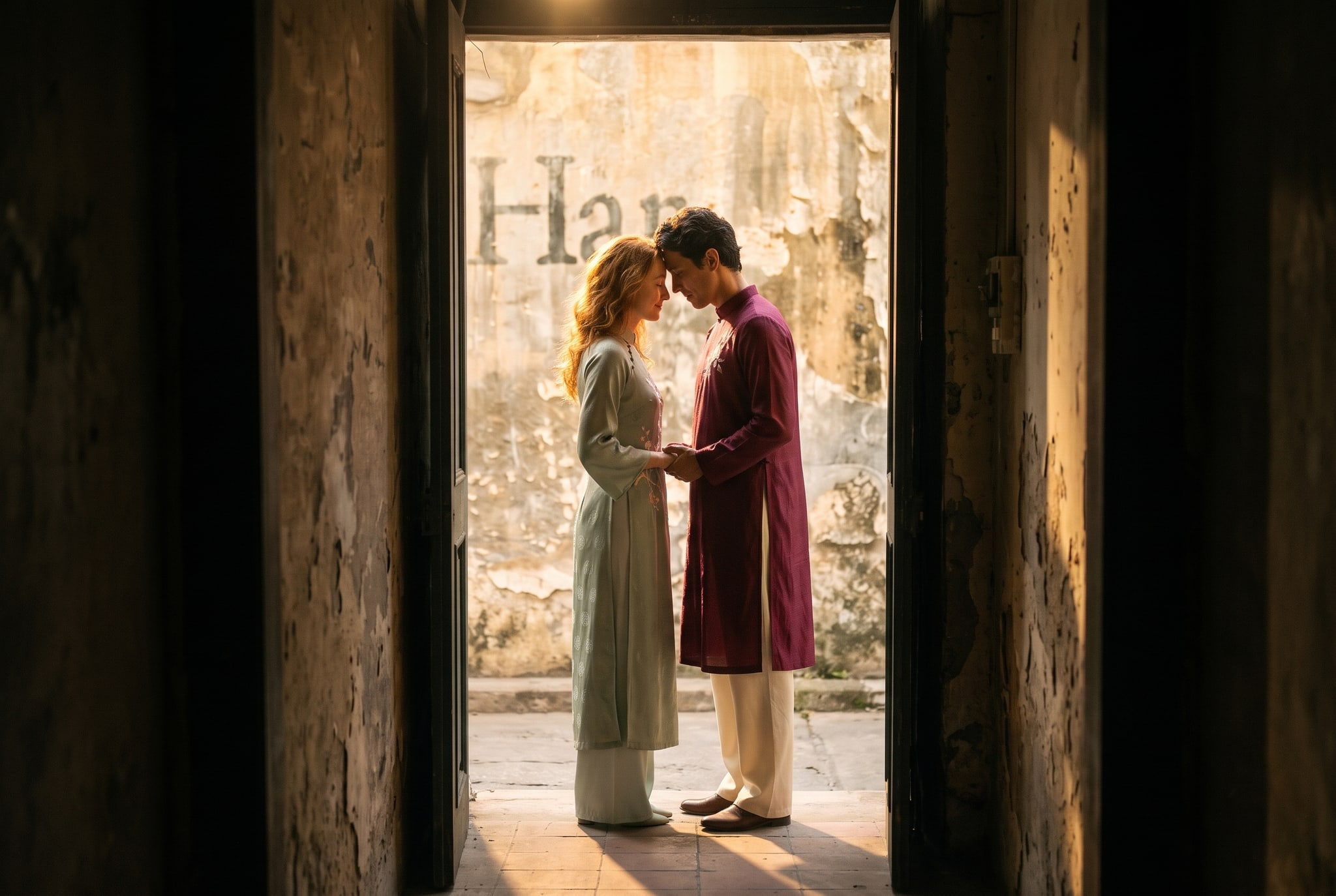
A-line and column silhouettes with minimal gathering at the waist photograph clearly and move smoothly when you walk, sit or turn—the lines stay defined and the skirt flows without bunching. Full ballgowns and mermaid shapes with heavy underlayers (tulle, crinoline, horsehair) photograph as mass, not line, and they restrict your ability to sit naturally on stairs or in the water during location shots. We shoot a lot in Hoi An—riverside and temple backgrounds—and brides in fitted mermaid dresses struggle to pose comfortably; those in flowing A-lines and column gowns have more range and look more at ease. Sleeveless and open-back cuts photograph better than long sleeves in heat: they show the bride's neckline and collarbone (flattering), they vent heat so you don't sweat visibly on fabric, and they simplify the frame (fewer folds and wrinkles on cloth). High necklines and long sleeves in breathable linen work if the fabric weight is light, but thick long sleeves trap heat and often show sweat marks by mid-session.
Recommendation: test sitting, bending and walking in any dress before the shoot—if you can't move freely, neither will your photos.
Embellishment placement: where beads and detail read on film
Embroidery, beading and lace read most clearly on camera when concentrated on the bodice, shoulder or neckline—these areas catch light and draw the eye without adding visual weight or heat-trapping layers. We've shot brides in heavily beaded skirts, and by frame 200, the beadwork has dulled with dust and sweat, the patterns blur when fabric moves, and the overall effect photographs darker and heavier than it looked in the fitting room. Beading on the lower skirt also pulls weight down where the eye naturally settles—it's optically unflattering and makes the dress feel bottom-heavy in film. Lace overlays work beautifully on the bodice, décolletage and sleeves, but skip full-skirt lace unless it's open or sheer (so air moves through). We recommend keeping the skirt simple—plain silk, crepe or tulle—so that when you move, the focus stays on your face and the surrounding landscape, not on pattern drift and wrinkles in the embellishment.
| Detail Type | Best Placement | Why It Works | Avoid |
|---|---|---|---|
| Beading, sequins | Bodice, neckline, shoulders | Catches light, frames face, stays sharp on camera | Full skirt (reads as weight, dulls with sweat) |
| Lace appliqué | Bodice, sleeves, décolletage | Delicate lines photograph clearly, shows movement | Dense full-length (traps heat, blurs in motion) |
| Embroidery | Shoulder seams, waistline detail | Adds interest without bulk, easy to light | Scattered across skirt (visual confusion, weighs frame) |
| Beaded hem | Neckline, cuff detail only | Draws eye upward, frames body well | Hem weight (pulls skirt, shows strain) |
See packages and prices on vietnamphotoshoot.com
Fabric moisture and visibility: what sweat, humidity and light reveal
Sweat marks appear fastest on raw silk, matte satin, and any fabric with a slight nap—moisture changes the surface texture and light reflection, making wet patches visible in high-definition. Glossy fabrics (charmeuse, crepe-back satin) hide sweat longer because the sheen is uniform and moisture darkens rather than creates visible stains. Structured synthetics (polyester, acetate blends) show sweat as water rings; breathable natural fabrics (silk, linen, cotton) absorb moisture more evenly and dry faster, so they're less likely to photograph with stains. We always ask brides about their sweat response before we shoot—if you know you'll perspire, choose a dress with a matte, absorbent finish and avoid pale colors that photograph water marks sharply. Humidity in Vietnam peaks mid-day (11 a.m.–4 p.m.), so dawn and late-afternoon shoots give you more hours before sweat becomes visible. Bring a seamstress or stylist to your shoot (we offer makeup and hair at your hotel and can recommend a tailor); they can blot and touch up between locations.
Recommendation: schedule your shoot during golden hour (6–8 a.m. or 5–7 p.m.) to minimize heat exposure and sweat visibility.
Choosing between store-bought and custom: what works best for heat
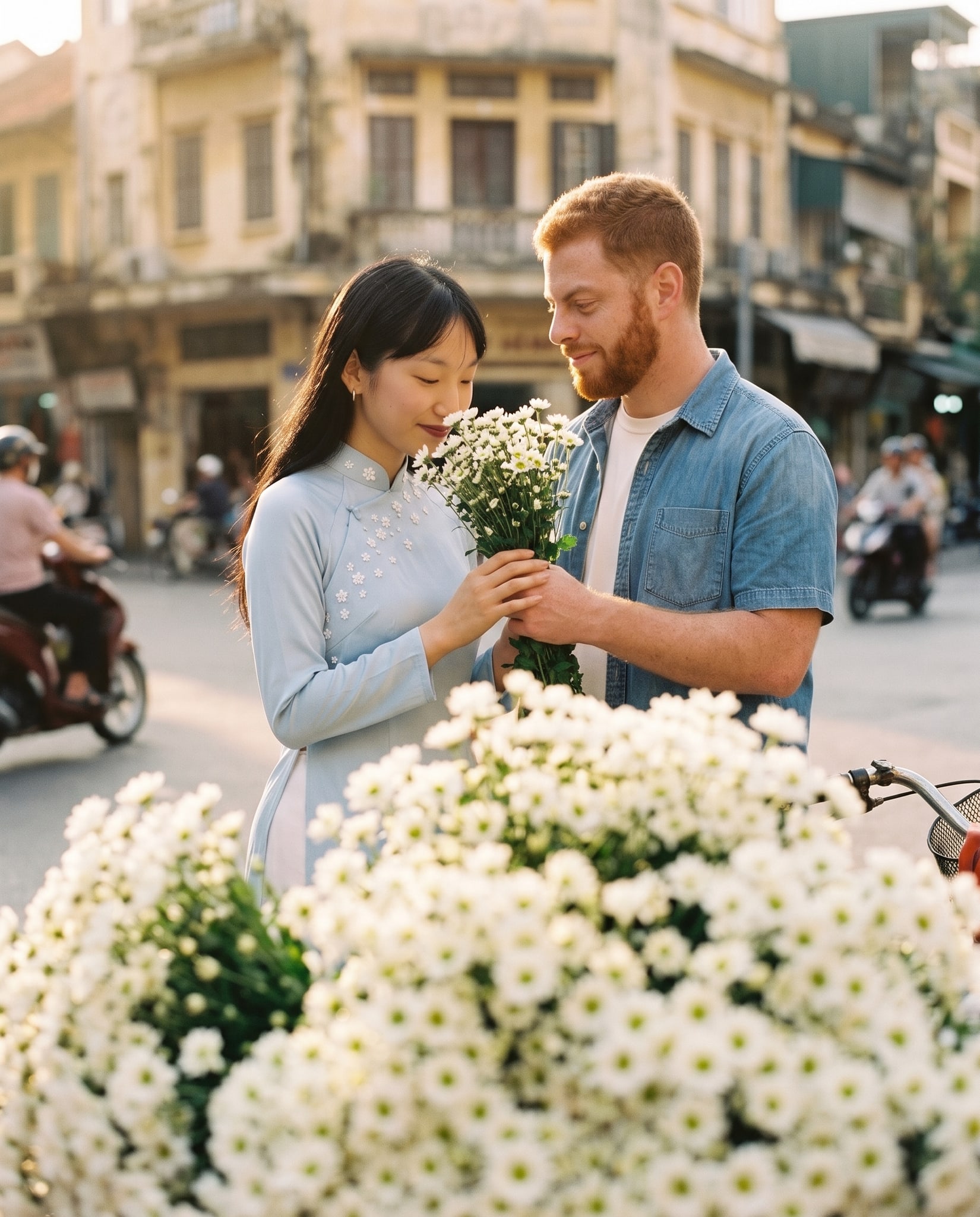
Store-bought dresses are often cut for temperate climates and include interior structure (corset stays, thick underlinings, polyester interlining) that adds heat and restricts movement—we see a lot of brides import dresses and then spend money altering them to fit Vietnam's conditions. Custom dresses give you full control over fabric weight, lining materials, and interior support; you can specify breathable linen or cotton underlining instead of polyester, remove unnecessary boning, and choose weights that work for your body and the climate. If you're buying off-the-rack, prioritize lightweight fabric first (ask the shop for weight in grams per yard if possible), then plan alterations: have the tailor remove or loosen interior stays, replace thick synthetic lining with cotton, and test the dress in a warm environment before your shoot date. Custom dresses cost more upfront but photograph better and fit your body's actual response to heat. Store-bought dresses are faster and often cheaper, but you'll spend money and time altering them unless you luck into a fabric and cut designed for warm climates.
Comparison:
- Custom dress: full control, breathable materials, optimal fit; timeline 3–6 months, higher initial cost.
- Store-bought dress: faster, lower base cost, variable quality for heat; expect to alter.
Both work. Choose custom if you have time and booking your pre-wedding session months ahead; choose store-bought if you're shooting within weeks and willing to alter.
What to check before you order or buy
- Fabric content: ask for fiber percentages—prioritize 60%+ natural fibers (silk, linen, cotton). Avoid 100% polyester.
- Weight: request weight in grams per linear yard if buying fabric. Under 150 g/y is lightweight for evening wear; over 200 g/y will feel heavy in heat.
- Interior construction: confirm lining material (cotton or silk, not polyester). Ask if boning is removable or can be loosened.
- Neckline and sleeve: sleeveless or very light sleeves are safer; if long sleeves, they must be open-weave linen, chiffon or silk crepe.
- Color: whites and very pale hues show sweat marks. If pale, choose a matte finish and plan frequent touch-ups between locations.
- Test fit in warm conditions: put on the dress in a heated room or outside in afternoon sun for 20 minutes. If you're uncomfortable, your face will show it.
- Alterations timeline: if buying store-bought, order early enough to complete alterations 2–3 weeks before your shoot.
Why location and time matter as much as the dress itself
A lightweight silk dress in the shade by the Red River in Hanoi (early morning, 26°C) photographs differently than the same dress in direct sun at Hoi An's Japanese Bridge at noon (35°C+, no shade). We schedule our pre-wedding shoots to account for heat: we start early, move to shaded locations during midday, and use backlighting and reflectors to avoid harsh shadows on sweat. If your dress is lightweight and breathable, you'll stay comfortable through a 4–5 hour session with location changes. If it's heavy, you'll need frequent breaks and outfit changes, which eats into shooting time. We've learned to ask clients about their dress before we finalize the shot plan—if it's a heavier ballgown, we shorten the location list and build in longer breaks. If it's a lightweight silk slip or column gown, we can extend the session or add extra locations. Tell us what you're wearing when you chat with us on WhatsApp; we'll design a schedule that keeps you comfortable and your dress camera-ready.
Pages from our team you may need
FAQ
Will a heavy ballgown look bad in a Saigon pre-wedding shoot?
Not bad, but you'll be uncomfortable and it'll show—stiffness in posture, tension in your face, visible sweat by hour two. Lightweight A-line or column silhouettes photograph with more ease and movement. If you love ballgowns, wear it for ceremony photos and change into a lightweight dress for location shots; many brides do this.
What fabric stays wrinkle-free longest in Vietnam's humidity?
Silk charmeuse, crepe and fine cotton blends resist wrinkles better than raw silk, linen or heavily structured fabrics. Synthetics wrinkle less but trap heat. Bring a small steamer or iron to your hotel; we recommend touching up between locations during hot months.
Can I wear a long-sleeved dress if it's linen or silk?
Yes, if the fabric is lightweight and open-weave—linen sleeves in a loose cut work well. Avoid tight long sleeves or heavy silk; they restrict airflow and will photograph as sweat-heavy. Test the dress in a warm room for 30 minutes first.
Should I choose a pale or darker dress color to hide sweat?
Darker colors hide sweat marks, but pale colors (ivory, white, blush) photograph more romantically in Vietnam's soft golden light. If you choose pale, plan for frequent touch-ups and a matte finish (not glossy, which photographs stains more sharply). Discuss color choice with your photographer when you book.
How early should I order a custom dress before my shoot date?
4–6 months is ideal—this gives time for design, fabric sourcing, multiple fittings, and final alterations. If you're shooting within 2–3 months, choose store-bought and allow 3 weeks for alterations. We can advise on tailors in Hanoi and Saigon when you book your session.
Can I wear a dress with a heavy underlay (tulle, crinoline) in Vietnam?
You can, but it'll restrict movement and trap heat—sweat will show faster and you'll feel stiff in photos. If you want volume, ask your tailor about lightweight tulle underlayers or consider an A-line cut that gives volume without heavy structure. Test it in warm conditions before the shoot.
Pre-Wedding & Elopement
Inclusions, prices and booking are on our booking site.
FAQ
Will a heavy ballgown look bad in a Saigon pre-wedding shoot?
Not bad, but you'll be uncomfortable and it'll show—stiffness in posture, tension in your face, visible sweat by hour two. Lightweight A-line or column silhouettes photograph with more ease and movement. If you love ballgowns, wear it for ceremony photos and change into a lightweight dress for location shots; many brides do this.
What fabric stays wrinkle-free longest in Vietnam's humidity?
Silk charmeuse, crepe and fine cotton blends resist wrinkles better than raw silk, linen or heavily structured fabrics. Synthetics wrinkle less but trap heat. Bring a small steamer or iron to your hotel; we recommend touching up between locations during hot months.
Can I wear a long-sleeved dress if it's linen or silk?
Yes, if the fabric is lightweight and open-weave—linen sleeves in a loose cut work well. Avoid tight long sleeves or heavy silk; they restrict airflow and will photograph as sweat-heavy. Test the dress in a warm room for 30 minutes first.
Should I choose a pale or darker dress color to hide sweat?
Darker colors hide sweat marks, but pale colors (ivory, white, blush) photograph more romantically in Vietnam's soft golden light. If you choose pale, plan for frequent touch-ups and a matte finish (not glossy, which photographs stains more sharply). Discuss color choice with your photographer when you book.
How early should I order a custom dress before my shoot date?
4–6 months is ideal—this gives time for design, fabric sourcing, multiple fittings, and final alterations. If you're shooting within 2–3 months, choose store-bought and allow 3 weeks for alterations. We can advise on tailors in Hanoi and Saigon when you [book your session](/go/pre-wedding-photoshoot).
Can I wear a dress with a heavy underlay (tulle, crinoline) in Vietnam?
You can, but it'll restrict movement and trap heat—sweat will show faster and you'll feel stiff in photos. If you want volume, ask your tailor about lightweight tulle underlayers or consider an A-line cut that gives volume without heavy structure. Test it in warm conditions before the shoot.
More from the team
Elopement photos at Ha Long Bay cruise: what we book on shoot day
Ha Long Bay elopements demand fast decisions: boat schedules, tides, light windows shift by the hour. We share how our team coordinates with cruise operators, what goes wrong, and the real workflow from WhatsApp to final images.
Planning a Ha Long Bay pre-wedding shoot remotely from overseas
Booking a Ha Long Bay pre-wedding shoot from abroad means planning five weeks ahead, syncing across time zones, and trusting your team on the water. Here's how we run it.
One-day pre-wedding photoshoot itinerary in Ha Long Bay
A one-day Ha Long Bay pre-wedding shoot combines limestone karsts, emerald water and tight timing. We share how our team runs it hour by hour.