 Cáo Studio
Home › Blog › Pre-Wedding & Elopement
Wedding Photo Album Sizes and Layouts Explained
By the Cáo Studio team · Hanoi & Saigon · 2026-11-01
Wedding photo albums come in three main size families: compact (5×7 to 6×9 inches), standard (8×10 to 10×10 inches), and large (12×12 or wider). Layout choice divides between spread-focused designs—two full photos per opening—and grid layouts with four to nine smaller images per page. Album binding matters: lay-flat (stitched or spiral) lets the book open 180 degrees and stays put on a coffee table; traditional case binding is rigid and formal. At Cáo Studio, we print direct from our editing files and bind in-house or through trusted partners. Couples choosing albums ask: How many pages do I need? (depends on your shoot length and style preference—ask us for specifics). What finish feels right? (matte ages better than gloss; embossing adds texture). Will the colors match my space? (we proof before printing). Price varies by size and binding; ask us for a quote on WhatsApp. The biggest mistake: ordering without seeing a sample spread in person. Chat with us on WhatsApp
What album size works for a pre-wedding shoot?
Standard 10×10 inch albums hold 40–80 images across 20–40 spreads and suit most couples because they're large enough to show detail in outfits and expressions without feeling unwieldy. Compact 6×9 albums (20–30 spreads) work for couples who want a portable keepsake or a second copy for parents. Large 12×12 albums suit full-day or two-location shoots where you want impact; they demand a coffee table and cost more per page. We've noticed couples who shot in Hoi An's yellow-wall streets or Ninh Binh's limestone backdrops often choose 10×10 or larger because the landscape deserves space. Ask yourself: where will this album live? Bedside table? Coffee table? Bookshelf? Size follows use.
See packages and prices on vietnamphotoshoot.com
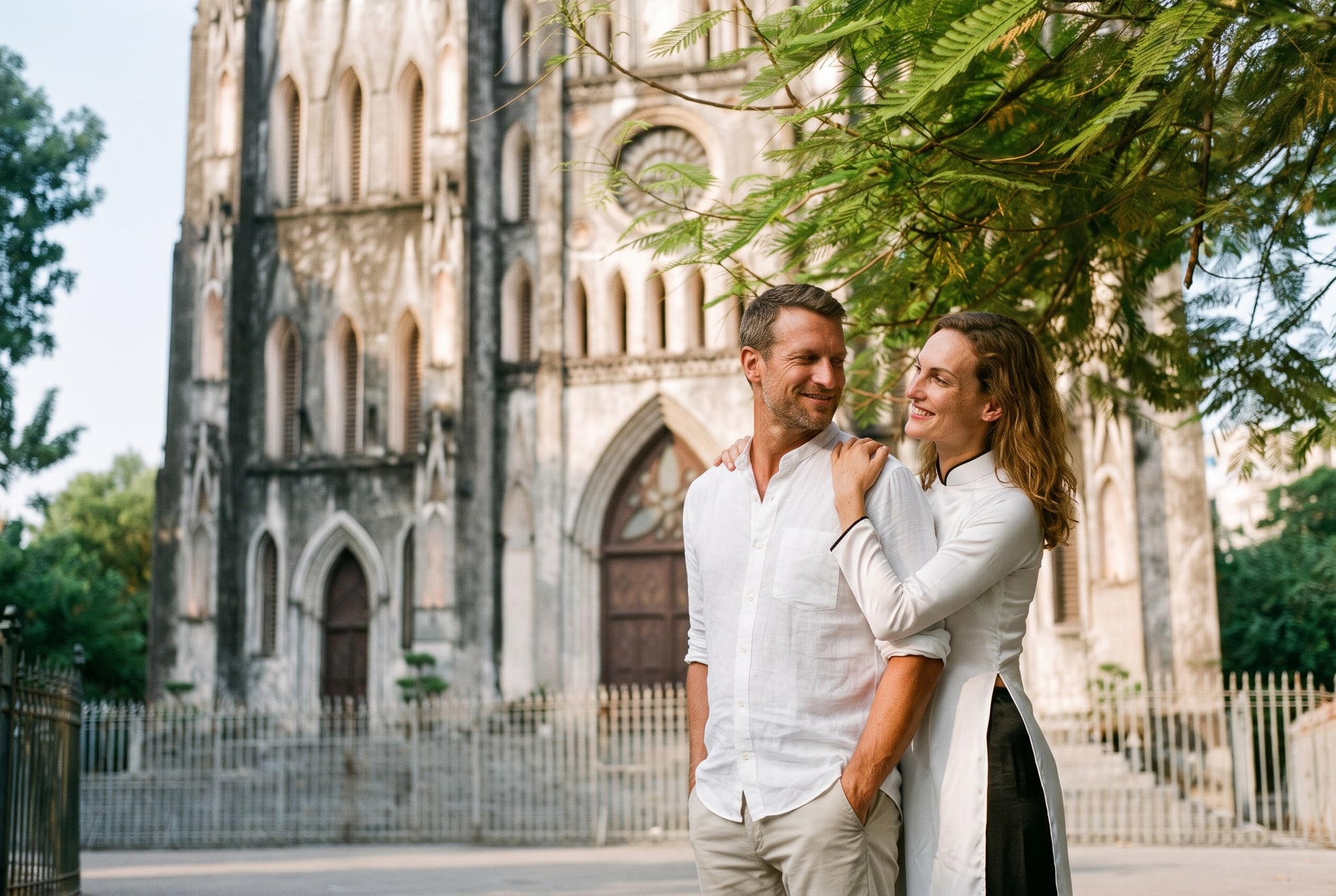
Should you pick spread or grid layouts?
Spread layouts (one to two full-width photos per opening) tell a visual story page by page and suit editorial-style shoots. Grid layouts (4, 6, or 9 images per page) pack more moments into fewer pages and work well for detail-rich days—getting ready, rings, flowers, venue setup. We've printed both for couples and notice spread layouts feel more emotional on a first viewing; grids let you scan faster. If your pre-wedding photoshoot included multiple outfit changes or location hops, grids often feel crowded. If it was one location with mood and intimacy, spreads shine. Decide: Do you want to linger on each image, or move through the story quickly? The answer shapes your layout.
Does binding style really change how the album feels?
Lay-flat binding (stitched or spiral-bound signatures) opens to 180 degrees and lies flat, so you can place it on a surface or lap without holding it. Case binding (traditional hardcover) is rigid, formal, and archival—pages face slightly inward because the spine has thickness. Lay-flat suits everyday couples who want to flip through their album with friends or prop it open on a shelf. Case binding suits couples who want a keepsake that feels permanent and precious, though it requires hand-holding to view. We print lay-flat albums for most of our couple photoshoots in Saigon and Hanoi because clients tell us they pull them out often. If you're ordering a second album for display in your parents' home, case binding photographs better and resists dust.
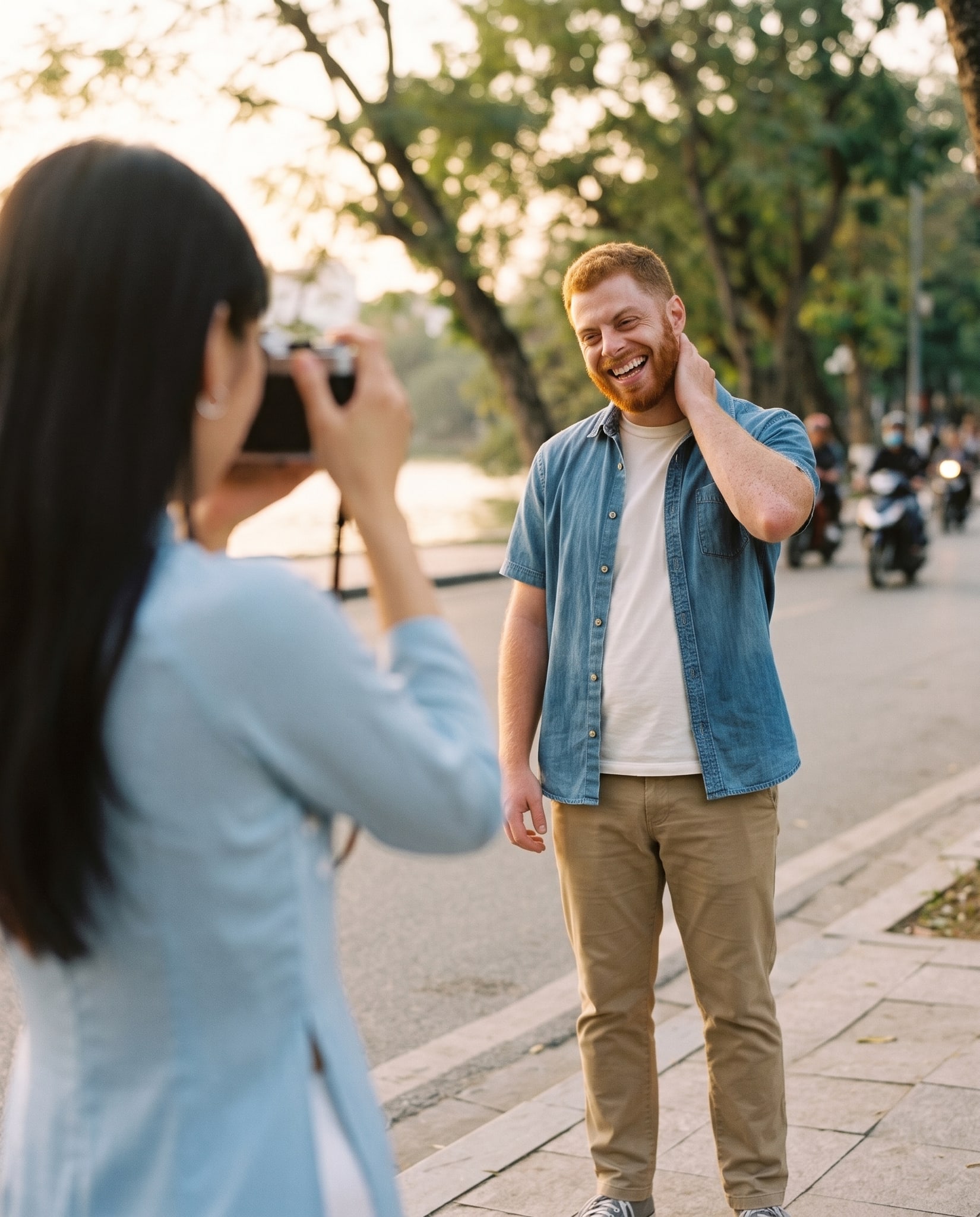
What finishes protect your images long-term?
Matte finishes hide fingerprints and reflections, age gracefully, and feel warm to the touch—the choice for albums you'll handle often. Gloss finishes are vibrant and dramatic but show smudges and can yellow over decades. Soft-touch (uncoated matte) splits the difference: it feels luxe and resists marks, but costs more. We recommend matte or soft-touch for albums intended as heirlooms; gloss for display albums in frames or studios. If your shoot was in soft, overcast light (like a Hanoi winter session), matte suits the mood. Tropical, golden-hour light in Saigon summer? Gloss can be stunning—but then keep it covered. Test both finishes with a proof before committing to 40 pages.
How many pages and spreads do you actually need?
A 90-minute pre-wedding photoshoot yields 150–250 edited images. A 10×10 album with two-photo spreads holds about 80 images across 40 spreads (20 pages if spreads are back-to-back). A full day with location changes and multiple outfit moves produces 300–450 edited frames—demanding 50–60 spreads, or a second album. We've noticed couples who shot in Hoi An with our ao dai photoshoot package often add a companion album because the traditional dress and architecture warrant extra pages. Compact albums suit singles images (engagement rings, detail shots, one hero portrait); standard albums suit stories. Before ordering, sit with your editor and mark which 80–120 images you must see printed; the rest become digital keepers.
Comparison: Album types at a glance
| Album Type | Best For | Binding | Size Range | Why Choose It |
|---|---|---|---|---|
| Standard Story Album | Narrative from start to finish | Lay-flat stitched | 8×10 or 10×10 | Balanced cost, readability, emotional arc |
| Large Display Album | Feature shoots, two-location days | Case or lay-flat | 12×12 or wider | Maximum impact, coffee-table presence, landscape detail |
| Compact Parent Copy | Gifting, secondary keepsake | Lay-flat or case | 5×7 or 6×9 | Portable, gifting-friendly, lower per-page cost |
| Grid-Heavy Album | Detail-rich, multi-outfit days | Lay-flat | 10×10 or 12×12 | Speed, variety on each page, energy |
What to check before you order an album
Send a proof. Ask your studio or printer for a single printed spread before committing to 20+ pages. Check color, contrast, and whether skin tones read true in your home lighting.
Confirm page count matches your budget. More spreads = higher cost. Decide your total spend, then work backward to spreads. Ask us for a quote on WhatsApp.
Specify finish and binding in writing. "Lay-flat matte 10×10" is clear; "album, standard" is not. Mismatches happen when order sheets lack detail.
Request a swatch of cover material. Linen, cloth, and leather finishes look different in person. If the album will live on a shelf near other decor, hold the sample against your space.
Check turnaround time. Printing, binding, and shipping take 2–4 weeks depending on size and location (Hanoi, Saigon, Hoi An). Order early if you need the album by a specific date.
Review the color profile. Ask whether the printer used the same monitor calibration as your photographer. We've caught color drift by comparing proofs before full production.
We've printed albums for couples who shot couple photoshoots in Saigon's colonial villas, proposal moments at Tao Đàn Park in Hanoi, and multi-day special concept shoots in limestone caves. Each client teaches us something about what works. Standard 10×10 lay-flat matte is our default recommendation—it's forgiving, versatile, and looks the same in 20 years. But your shoot is unique, so your album should be too.
Ready to see your images in print? Reach out and walk through samples with us. We'll help you match size, layout, and binding to your space, style, and story.
FAQ
Should a pre-wedding album be all spreads or a mix of spreads and grids?
Mix works best. Use spreads for hero moments—getting ready, first look, embraces—and grids for details (flowers, rings, venue) and transitions. This creates rhythm and prevents boredom across 20+ pages.
What's the real difference between lay-flat and case binding?
Lay-flat opens 180 degrees, lies flat on a surface, and suits everyday viewing. Case binding is rigid, formal, and requires hand-holding—better for display or heirloom storage. Lay-flat is more practical; case is more precious.
Can you reprint pages from an older album if some fade?
Yes, but only if your original files and color profile are archived. Always keep digital backups of your edited images and print settings. We store client files for three years.
Does matte finish scratch easily compared to gloss?
Matte resists fingerprints and scratches less visibly. Gloss shows every mark but reflects light beautifully. For everyday albums, matte wins; for display or gift albums, gloss can work if kept covered.
How do I know if my album will look good in my home before I order?
Request a printed proof of your favorite spread and hold it against your walls, lighting, and furniture. We can print single-spread samples before you commit to the full album. This step saves mistakes and budget.
What happens if the printed colors don't match my edited files?
Color drift occurs if monitor settings, printer calibration, or lighting differ. We proof-check before full production and compare samples side-by-side with your edited files on a calibrated screen. Ask your studio for this step in writing.
Pre-Wedding & Elopement
Inclusions, prices and booking are on our booking site.
FAQ
Should a pre-wedding album be all spreads or a mix of spreads and grids?
Mix works best. Use spreads for hero moments—getting ready, first look, embraces—and grids for details (flowers, rings, venue) and transitions. This creates rhythm and prevents boredom across 20+ pages.
What's the real difference between lay-flat and case binding?
Lay-flat opens 180 degrees, lies flat on a surface, and suits everyday viewing. Case binding is rigid, formal, and requires hand-holding—better for display or heirloom storage. Lay-flat is more practical; case is more precious.
Can you reprint pages from an older album if some fade?
Yes, but only if your original files and color profile are archived. Always keep digital backups of your edited images and print settings. We store client files for three years.
Does matte finish scratch easily compared to gloss?
Matte resists fingerprints and scratches less visibly. Gloss shows every mark but reflects light beautifully. For everyday albums, matte wins; for display or gift albums, gloss can work if kept covered.
How do I know if my album will look good in my home before I order?
Request a printed proof of your favorite spread and hold it against your walls, lighting, and furniture. We can print single-spread samples before you commit to the full album. This step saves mistakes and budget.
What happens if the printed colors don't match my edited files?
Color drift occurs if monitor settings, printer calibration, or lighting differ. We proof-check before full production and compare samples side-by-side with your edited files on a calibrated screen. Ask your studio for this step in writing.
More from the team
Boho pre-wedding photoshoot in Vietnam: Hanoi, Saigon, Hoi An
Boho pre-wedding shoots mix romantic, free-spirited aesthetics with Vietnam's landscapes and heritage sites. We run full-day sessions in three cities, handling styling, makeup, location scouts and edits.
Avoid crowds at Hoang Su Phi rice terraces: timing for wedding shoots
Hoang Su Phi's terraced landscape draws couples and tour buses in equal measure. We show how to shoot there alone, when to arrive, and what to arrange with us before you go.
Photography rules at Con Dao beaches: permits, drones and what to check
Con Dao's beaches demand prep before you shoot—permits, drone zones and tide timing all affect your day. We share what the Cáo Studio team verifies on every booking.