 Cáo Studio
Home › Blog › Pre-Wedding & Elopement
Wedding photos at Vietnamese markets: etiquette and tips
By the Cáo Studio team · Hanoi & Saigon · 2026-11-02
Vietnamese markets—from Đông Xuân in Hanoi to Bến Thành in Saigon—are chaotic, intimate spaces where vendors, tourists and locals move constantly. Shooting here requires permission from stall owners, respect for prayer times (early morning is sacred), awareness of foot traffic, and a plan to move quickly so you don't block sales. Cáo Studio always scouts the location first, briefs couples on etiquette beforehand via WhatsApp, and times sessions around quieter hours (usually 9–11 a.m. or late afternoon). Budget 30–45 minutes for market shots—vendors tire of cameras. You're not paying a fee in most cases, but offering small gifts (fruit, coffee, pastries from a shop nearby) builds goodwill and often unlocks better access. The payoff: images no studio backdrop can match—real light, real people, genuine Vietnamese daily life framing your love story.
Why do locals say "no photos" at markets?
Markets are workplaces, not tourist attractions. Vendors depend on foot traffic and impulse sales; a couple posing at a stall blocks buyers for 10–15 minutes. Many feel their image is being sold or mocked if photos happen without consent. In Hà Nội's Chợ Mơ or Saigon's Tây Đô market, we've seen stallholders genuinely annoyed when tourists shoot without asking—and that tension reads in your photos. The solution: greet vendors in Vietnamese or broken English, explain you're doing a photoshoot, ask permission, and move on after 3–4 frames. Most say yes once they see you're sincere, not snapping candids.
What's the best time of day to shoot at a Vietnamese market?
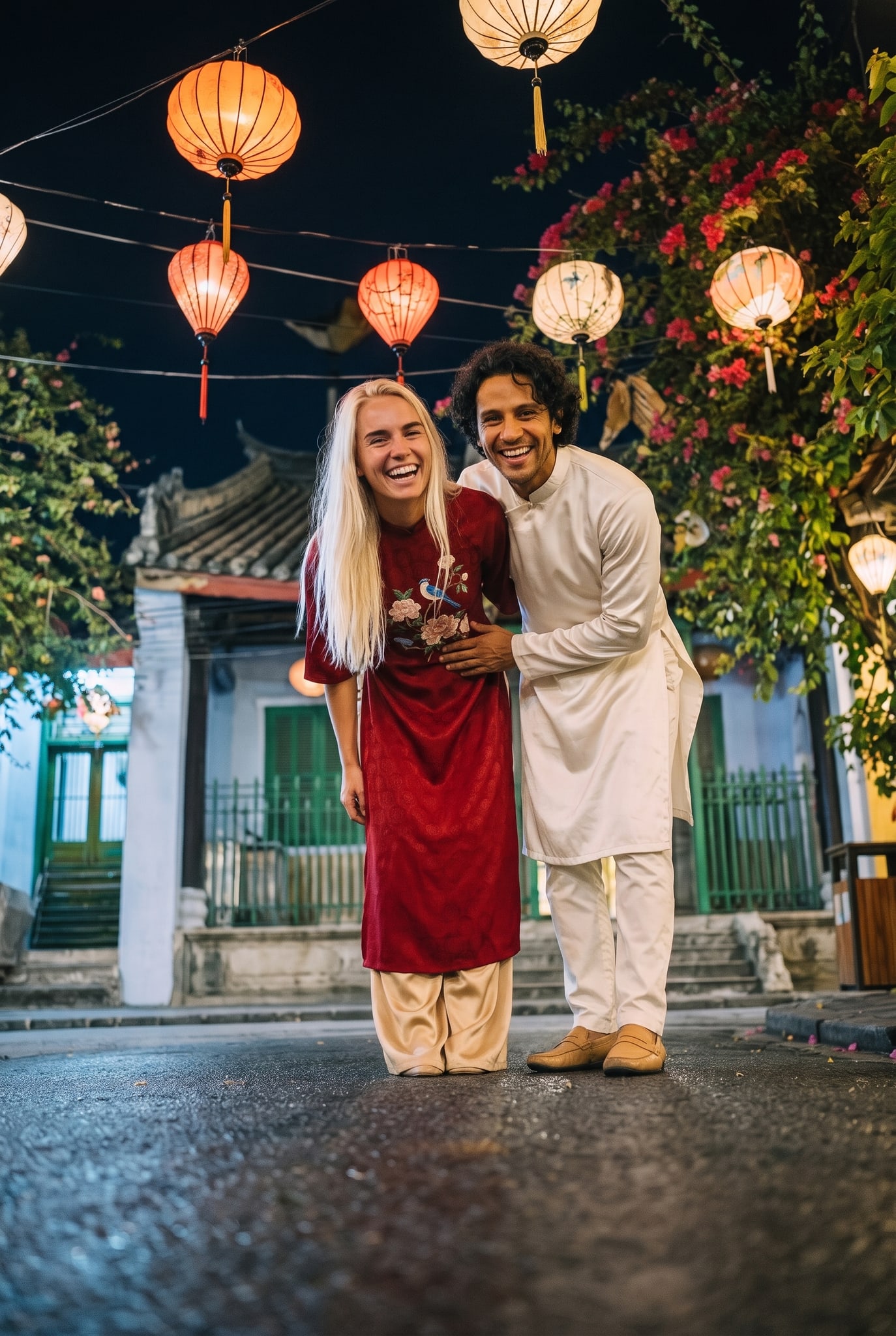
We choose 8:30–10:30 a.m. or 5–6:30 p.m. for market sessions. Early morning light is softer; crowds are manageable (vendors are still setting up). Mid-day (11 a.m.–4 p.m.) is chaos: peak customer flow, harsh shadows, and everyone's tired. Evening works if you want drama—coloured lanterns at Hội An's night market, warm neon in Saigon alleys—but phone torches and low light demand high ISO. We brief couples the night before: wear colours that pop against produce (jewel tones, pastels), avoid logos, bring a change of shoes (markets are wet). Our photographers carry a small gift bag with instant coffee sachets or fruit to offer stall owners who give us extra time.
Do you need to pay vendors for a photo permit?
No fixed fee exists. Most street-market vendors don't expect payment—they see it as free advertising. But we always gift-give. A 10-minute shoot becomes a 20-minute relationship when you offer coffee or fresh fruit from a neighbouring stall. At Chợ Bến Thành in Saigon, one flower vendor let us shoot for 30 minutes because our couple bought roses from her at the end. In Hà Nội's Old Quarter markets, older vendors appreciate respect more than money: speak to them directly, not through your partner, and ask permission in Vietnamese. Some tourists bundle this as "you owe the market operator," but that's not how it works. Local authorities (yes, they patrol) rarely stop you unless you're blocking traffic or being disruptive. We've never paid a bribe; professional behaviour is our permit.
What should you wear and bring to a market shoot?
Couple should wear bright, clean clothes that stand out against stalls. Pastel áo dài works beautifully against fruit piles; navy and white pops in spice-vendor light. Avoid white shoes (mud and wet floors) and clingy fabrics (humidity is 75%+ inside markets). Bring: a small bag of gifts, wet wipes, portable phone charger, and a touch-up kit (lipstick, powder—vendors' lights are honest). We pack a reflector and one off-camera flash (used sparingly; flash startles people). The couple needs a handler (a friend, or Cáo's assistant) to manage their train, watch their shoes, and politely indicate "we're moving on" when a shot wraps. Markets are slippery; one of our couples slipped on a wet vegetable-stall floor in 2024. Now we scout floors first and warn clients to walk slowly.
How do you avoid looking like tourists exploiting a workspace?
| Approach | What it signals | What happens |
|---|---|---|
| Shoot without asking | Disrespect | Vendors chase you, police attention, blurred anxiety in photos |
| Ask in Vietnamese, gift vendors | Respect, cultural awareness | Vendors smile, wave, volunteer better poses, return warmly |
| Shoot fast (3–4 frames per stall) | You value their time | They relax, conversation flows, you get genuine moments |
| Pose rigidly, fake smiles | Inauthentic | Photos look staged; markets lose their soul |
| Linger, block traffic, use flash | Entitlement | You're asked to leave; locals resent tourists after you |
Our team treats every shoot like a journalism assignment, not a conquest. We scout, we ask, we listen to "no," we move. That mindset changes everything. A vendor who feels heard sells you his story in his eyes. Your photos stop being about you and become about the place.
What locations in Hanoi, Saigon and Hoi An work best?
Hà Nội: Chợ Mơ (5 Hàng Mành, Hoàn Kiếm) has flower vendors and silk scarves; Chợ Đông Xuân (Đồng Xuân Ward, Hoàn Kiếm) is the city's biggest, chaotic and sensory. Early morning (7–9 a.m.) light filters through the iron roof beautifully. We avoid peak hours; it's impossible to move.
Saigon: Bến Thành Market (Nguyễn Huệ, District 1) is iconic, crowded, and smells of spice and fruit. Tây Đô Market (Nguyễn Thiệp, District 1) is grittier, less polished, better light. Hoa Hồng (Thạch Thị Thanh, District 10) is quieter and smells like heaven.
Hội An: Hội An Central Market (Trần Phú Ward) is packed with vendors selling silk, fish, produce. The overhead light is mixed but moody. We shoot here in the morning, then move to the nearby riverside for softer, golden-hour frames.
Real observation: markets look best when they're slightly busy—not empty (sadness), not slammed (anxiety). We aim for 9–10 a.m. or 5–6 p.m. for that sweet spot. Autumn (November–February) is ideal: cooler, less sweat, softer light.
See packages and prices on vietnamphotoshoot.com
What does a typical market shoot session look like, hour by hour?
Hour 1 (prep, 30 mins before arrival): Couple meets us at a café near the market. We brief them: no complaints if a vendor says no, no touching merchandise, no loud voices, shoes are non-negotiable. We show reference images on our phones. One of our stylists does a quick makeup touch-up (humidity will blur it by 9:15 a.m., so we focus on brows and lip stain). We walk to the market entrance.
Minutes 1–20 (scouting and first shots): Our photographer and stylist enter ahead, find 2–3 vendors willing to have the couple nearby. We exchange small greetings. Then the couple enters. First few frames are always disorienting—people stare, it's loud, it's hot. We take 10–15 frames, move to the next spot.
Minutes 20–35 (golden window): The couple is warm now, vendors have softened. We shoot 20–25 frames across 3–4 stalls. Light is ideal. A vendor's child wanders into frame; we don't delete it—those shots often win awards internally because they're honest.
Minutes 35–45 (gift-giving, wind-down): We gift a bag of coffee or fruit we bought beforehand. Vendors usually wave, smile for a final candid frame. Couple is tired, sweating. We wrap. Total: 45 minutes, 80–120 frames, 8–12 keepers.
After: We move to a studio or quieter outdoor location for another 1–2 hours. Market sessions are appetisers; they need a main course.
How do you handle vendors who refuse or want money?
We respect "no" immediately. Some stalls deal in jewellery, medicine, or private goods—owners prefer no cameras. We simply find another vendor 5 metres away. Money requests are rare; in two years, we've heard it once (a souvenir-shop owner in the Hội An night market). We politely declined and moved. He wasn't offended.
If a vendor wants money, it's usually because they've been burned by tour groups before. A quick explanation in Vietnamese ("Chúng tôi là một studio ảnh, không bán ảnh online") often resolves it. We're not selling photos; we're creating memories for a couple. That distinction matters.
What we've learned: vendors remember respect, not money. Return to Chợ Đông Xuân a second time, and the flower seller recognises you. That's worth more than a payment.
Which Cáo Studio package includes market shoots?
Market sessions fit naturally into our pre-wedding photoshoot package, where couples get both styled studio and location work. We also offer them as add-ons to couple photoshoot packages for clients based in Vietnam. If you're in Hà Nội, our Hanoi studio team knows every market and timing trick. Saigon couples work with our Saigon team. We also weave market shots into concept shoots (e.g., "A Day in Saigon" themes) and occasional vacation photoshoots for travelers.
Every session includes scouting, vendor liaison, and a safety brief. You're not paying vendors; you're paying us to know the etiquette, timing, and how to frame the chaos. That expertise is what separates a great market shoot from a overwhelming, guilty one.
What to check before you book a market shoot
- Location scouting: Confirm your photographer has shot this specific market before. Unfamiliar markets are risky.
- Timing: Ask for the quietest hour. Your photographer should know market schedules, not guess.
- Outfit advice: Confirm colours with your stylist 48 hours before. Markets demand bold, clean clothes.
- Weather backup: Markets are slippery when wet. Confirm a Plan B location if it rains.
- Gift bag: Confirm the studio provides gifts for vendors (not you). It should be included.
- Frame count: Clarify how many shots you'll get (we deliver 20–40 keepers per market location, not 300 RAWs).
- Language: If you don't speak Vietnamese, ensure the photographer handles vendor communication, not you.
- Fatigue: Market shoots are intense. Schedule a quieter location second to avoid burnout.
FAQ
Can we shoot at a market on any day of the week?
Yes, but Mondays and Tuesdays are quieter; weekends are packed. Avoid vendor prayer times (early mornings at some temple-adjacent markets). Ask us to scout your chosen market first—some close early on certain days.
Do locals in markets ever ask us to delete photos?
Rarely, if you ask permission first. Once or twice a year, someone will say "no camera." We delete nothing; we just move. Respect that boundary and you'll have no conflict.
What if we accidentally block a sale or upset a vendor?
It happens. Apologise genuinely, move immediately, and don't return to that stall. Other vendors nearby are happy to help. One upset person shouldn't colour your whole session.
How do we know which market has the best light for our aesthetic?
Tell us. We scout 4–5 options, show you reference images, and you choose. Iron-roof markets (Đông Xuân) give moody, dramatic light; open-air markets (Tây Đô) are brighter and more colorful.
Is market shooting more expensive than studio sessions?
No; it's included in most pre-wedding and couple packages. There's no added vendor-fee because we don't pay vendors. Our time and scouting are the cost.
What if the market is too chaotic and we change our minds on the day?
We always have a backup location. If you're uncomfortable, we pivot to a quieter alley, riverside, or studio. No penalty; your comfort is non-negotiable.
Can we shoot at night markets like Hội An's?
Yes. Night markets are stunning but lit by lanterns and neon—our team uses higher ISO and primes (f/1.8–f/2.8) to keep sharpness. Recommend daylight + early evening combo to cover both aesthetics.
Pre-Wedding & Elopement
Inclusions, prices and booking are on our booking site.
FAQ
Can we shoot at a market on any day of the week?
Yes, but Mondays and Tuesdays are quieter; weekends are packed. Avoid vendor prayer times (early mornings at some temple-adjacent markets). Ask us to scout your chosen market first—some close early on certain days.
Do locals in markets ever ask us to delete photos?
Rarely, if you ask permission first. Once or twice a year, someone will say "no camera." We delete nothing; we just move. Respect that boundary and you'll have no conflict.
What if we accidentally block a sale or upset a vendor?
It happens. Apologise genuinely, move immediately, and don't return to that stall. Other vendors nearby are happy to help. One upset person shouldn't colour your whole session.
How do we know which market has the best light for our aesthetic?
Tell us. We scout 4–5 options, show you reference images, and you choose. Iron-roof markets (Đông Xuân) give moody, dramatic light; open-air markets (Tây Đô) are brighter and more colorful.
Is market shooting more expensive than studio sessions?
No; it's included in most pre-wedding and couple packages. There's no added vendor-fee because we don't pay vendors. Our time and scouting are the cost.
What if the market is too chaotic and we change our minds on the day?
We always have a backup location. If you're uncomfortable, we pivot to a quieter alley, riverside, or studio. No penalty; your comfort is non-negotiable.
Can we shoot at night markets like Hội An's?
Yes. Night markets are stunning but lit by lanterns and neon—our team uses higher ISO and primes (f/1.8–f/2.8) to keep sharpness. Recommend daylight + early evening combo to cover both aesthetics.
More from the team
Boho pre-wedding photoshoot in Vietnam: Hanoi, Saigon, Hoi An
Boho pre-wedding shoots mix romantic, free-spirited aesthetics with Vietnam's landscapes and heritage sites. We run full-day sessions in three cities, handling styling, makeup, location scouts and edits.
Avoid crowds at Hoang Su Phi rice terraces: timing for wedding shoots
Hoang Su Phi's terraced landscape draws couples and tour buses in equal measure. We show how to shoot there alone, when to arrive, and what to arrange with us before you go.
Photography rules at Con Dao beaches: permits, drones and what to check
Con Dao's beaches demand prep before you shoot—permits, drone zones and tide timing all affect your day. We share what the Cáo Studio team verifies on every booking.