 Cáo Studio
Home › Blog › Pre-Wedding & Elopement
Wedding photos in Vietnam with mixed Vietnamese and foreign family
By the Cáo Studio team · Hanoi & Saigon · 2026-11-02
A mixed Vietnamese and foreign family wedding in Vietnam means your photographer must navigate language barriers, cultural traditions (áo dài etiquette, ceremony rituals), and logistics across multiple locations—often Hanoi or Saigon, sometimes rural communes or resorts. Most sessions run 8–12 hours across pre-ceremony prep, family portraits, ceremony, and reception. Cáo Studio handles this by deploying bilingual team members (Vietnamese–English usually), scouting family group dynamics beforehand via WhatsApp, and building buffer time for translation of positioning requests. Expect to brief your photographer on which relatives need formal poses, which traditions matter most for framing, and whether the groom's family or bride's family will dominate the day's rhythm. The cost and duration depend on whether you book a pre-wedding and elopement session before the main day, a full-day wedding package, or both. What fails most often: assuming the photographer understands Vietnamese family hierarchy, or underestimating how long formal multi-generational portraits take when you're translating instructions three times over. Chat with us on WhatsApp | See packages and prices on vietnamphotoshoot.com
How do we brief you before a mixed-family wedding?
We ask hard questions in our first WhatsApp conversation: Who leads the family—bride's mother or groom's father? Will the ceremony be at a pagoda, a hotel, a rural shrine? Are aunts and uncles bringing children? Do you want áo dài photos, Western dress photos, or both? Which moments matter most—tea ceremony, vows, first dance? We create a shot list in broken English and Vietnamese, often asking you to voice-message details so we hear tone and priority, not just text. This usually takes 2–3 exchanges and one video call. We've learned the hard way that "family photos" means something very different to a Hanoi grandmother than to your cousin visiting from Melbourne. If we don't ask upfront, we waste an hour on set trying to gather the right people, in the right order, in the right mood.
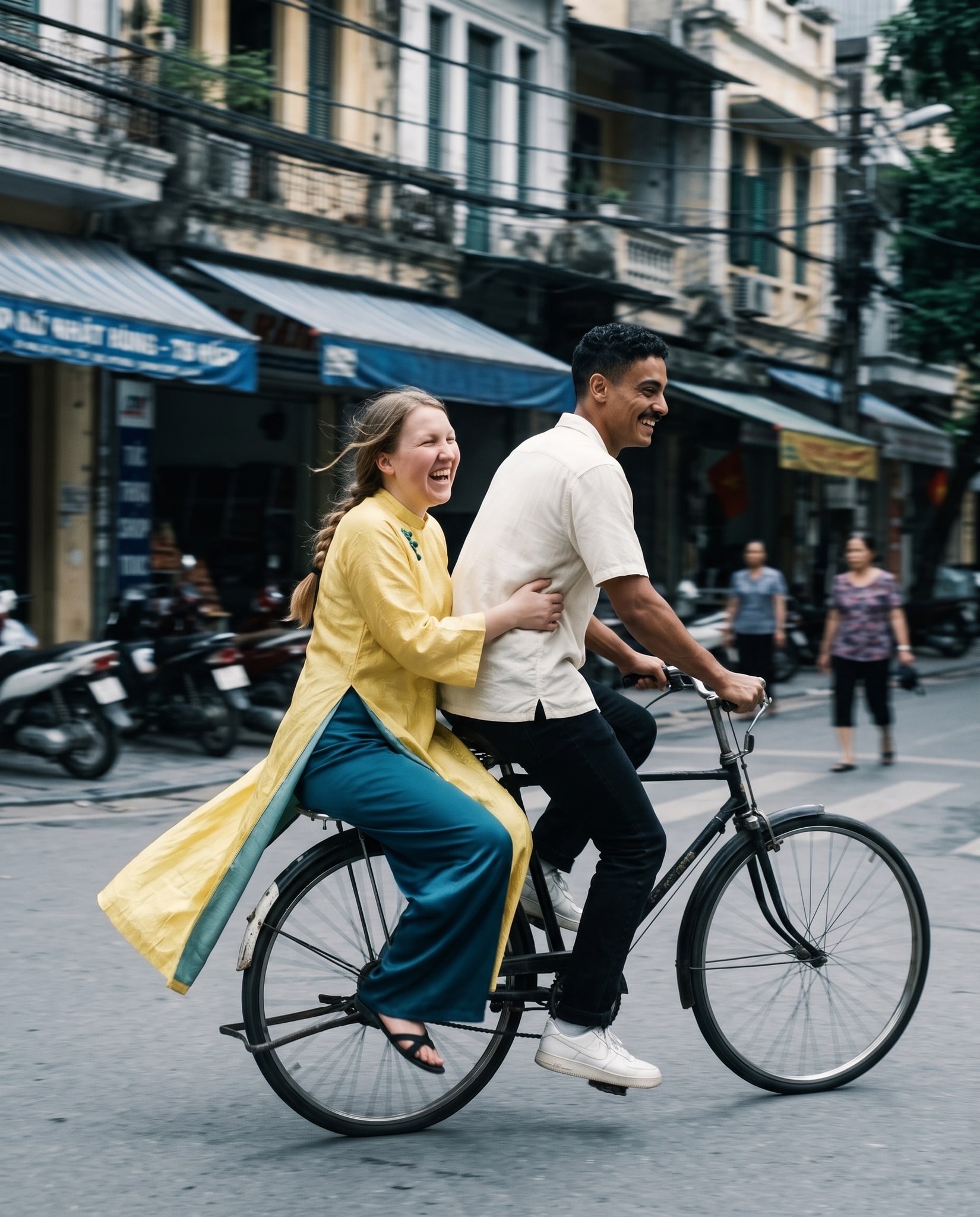
Why does translation matter more than you think?
On set, we've discovered that Vietnamese relatives often defer to the photographer's authority—they stand where you point without question. Foreign guests, especially Western family, ask why and want to understand the pose. This creates a rhythm problem: you're explaining the same pose twice, in two registers, and the energy flattens. Our bilingual stylists and photographers handle this by grouping instructions ("Aunts and uncles, stand here for a formal shot") in one language, then repeating the why in the other. We also position our translator—usually our makeup artist or an assistant—between distant family members, not between the photographer and the main group. This prevents the classic mistake where the photographer shouts instructions at the translator, who whispers them to grandma, and grandma smiles at the translator instead of the camera. We've retaken the same "three generations" portrait five times because of this setup error.
What goes wrong with venue and timing across Hanoi and Saigon?
Mixed-family weddings often split across two ceremonies: a traditional Vietnamese ritual (morning, at a family home or temple) and a Western or fusion reception (afternoon, at a resort or restaurant). If your family is split between Hanoi and Saigon, or if grandparents are in the countryside, you're adding travel time we must account for. We've shown up to a "10 a.m. start" in a Hanoi old-quarter family home only to find the bride's uncle arriving from Ninh Binh at 10:45, the tea ceremony delayed, and the light for golden-hour portraits now impossible. Our fix: we ask exactly who will be present at each location, when they're arriving, and whether the family has a backup plan if traffic stalls. We also shoot the formal group portraits first thing, even if light isn't ideal, because we can't guarantee that family constellation again. If you're planning a pre-wedding shoot as well—especially in áo dài—we schedule it on a separate day, usually a week before, so we can control light, location, and everyone's energy level.
| Moment | Vietnamese family priority | Foreign family priority | Our approach |
|---|---|---|---|
| Bride getting ready | Mother and aunts present; ritual details (mirror check, veil/crown placement) | Solo or close friends; candid mood | Shoot both: formal poses for mothers, candid for sisters |
| Tea ceremony | Seating order, hand position, tea-serving angle matter | Why it's happening; emotional reaction of groom | Brief foreign guests beforehand; frame ceremony and their faces |
| Group portraits | Generational order (elders back, children front); parents in center | Smaller groups; surnames mixed; everyone visible equally | Shoot 3–4 configurations; ask the oldest woman to direct placement |
| Reception | First toast (usually groom's father); key speeches in Vietnamese | Toasts in English; cake cutting; dancing | Position yourself for both languages; shoot reactions as much as speeches |
How do we handle the energy and pacing of a full day?
We've learned that mixed-family weddings exhaust everyone faster than single-culture events. Relatives are translating in their heads, watching unfamiliar rituals, managing jet lag (international guests), or worrying about hierarchy (Vietnamese elders). By hour 4, smiles flatten and patience runs thin. Our move: we build in a 30-minute break after the ceremony, usually during cocktails, where we reset with coffee or water, review the shot list with the couple, and let the family decompress. We also shoot the most important formal portraits (three generations, both sides of the family) early, around 11 a.m. or 2 p.m., depending on the day's ritual schedule, not late when light and mood both suffer. If the couple books a pre-wedding photoshoot separately, we shift some "couple focus" portraits to that session, leaving the wedding day more open for family and ceremony. This spreads the work—and the couple's stress—across two days.
What should you confirm a week before?
One week out, we send a detailed WhatsApp checklist: Exact addresses for each location. Names of the people we should know (mother, father, grandmother, best friend). Any outfit changes we need to know about. We also ask: Will you do a first look (couple seeing each other before ceremony)? In mixed-family weddings, first-look photos are often surprising to Vietnamese parents, who might not expect it; we brief them so they don't interrupt. We confirm how long the tea ceremony runs and whether we're photographing it in full or just the finale. We ask whether you want a videographer too (we don't film, but we coordinate timing so both cameras aren't jostling for the same angle). And we confirm the final headcount for formal photos: this many aunts, this many cousins from abroad, grandparents attending or not? This list prevents the hour-long scramble on the morning of trying to round up sixteen people who were supposedly in the photo but are now eating breakfast in separate rooms.
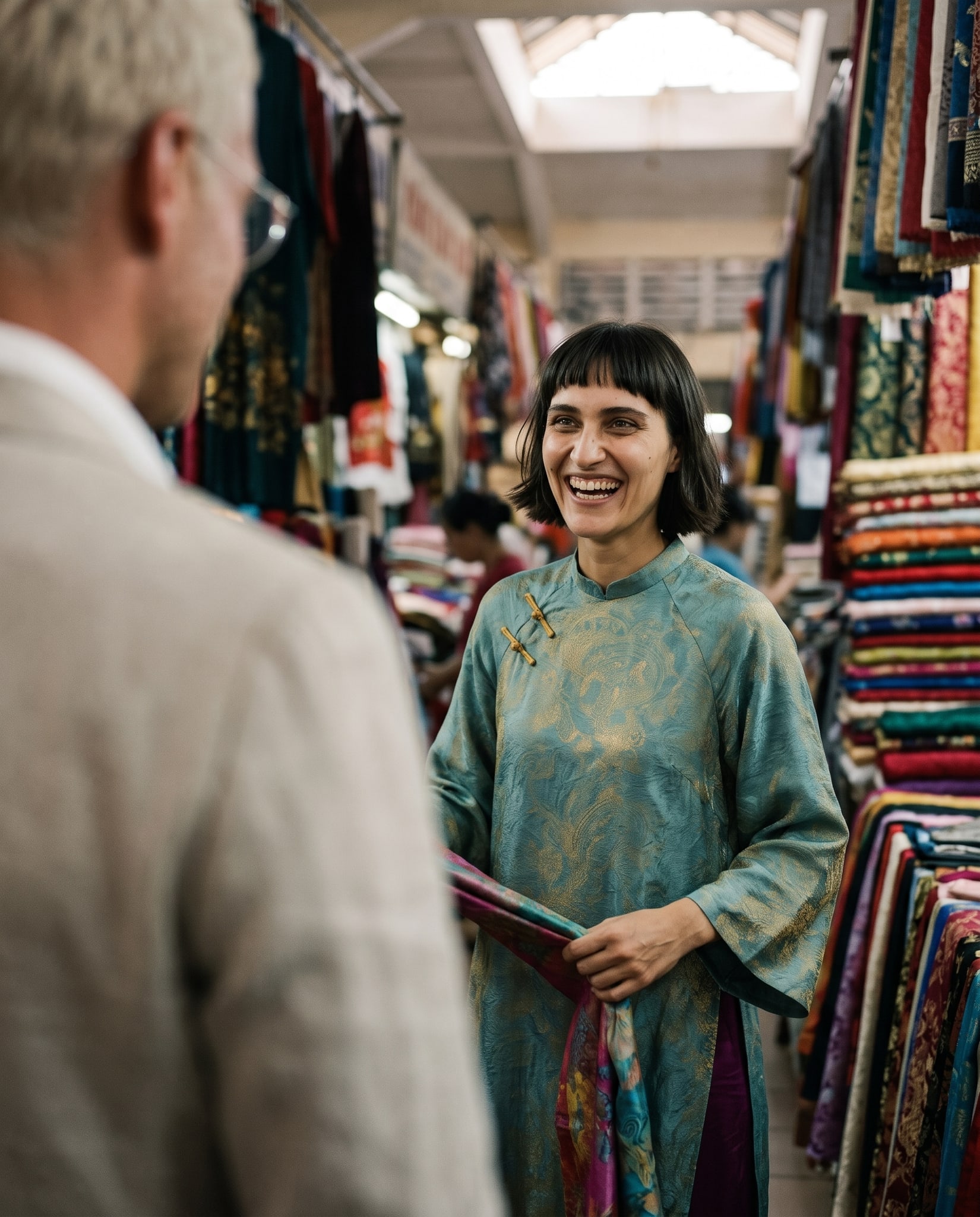
A decision framework: when to add a separate áo dài session
If your mixed-family wedding spans two days (rehearsal dinner + wedding), or if you want portraits that honor Vietnamese tradition without squeezing them into wedding-day chaos, a dedicated áo dài photoshoot on a different day is worth planning. Here's how we think about it: Does the bride want áo dài photos that feel unhurried? Will aging grandparents attend the wedding (and get tired) or skip it? Can you book a beautiful Hanoi location or Saigon garden a week before? If yes to two of these, a separate session works. If the bride and groom are time-poor or traveling tight, fold áo dài into the main wedding day and accept that those photos will be faster, less polished, and mixed with ceremony chaos. Either choice is valid; our job is to help you choose honestly, not upsell.
What to check before you book
- Language skill of the photographer or assigned team member. Ask specifically: Does someone speak English? Does someone know Vietnamese cultural cues? ("Standing with hands in front means respect; standing with arms crossed means we're uncomfortable.")
- Experience with multi-day or split-location weddings. Ask: How many mixed-family weddings have you shot? What went wrong?
- Travel and logistics. If your ceremony is outside Hanoi or Saigon (e.g., in Hoi An, Ninh Binh, or a coastal resort), confirm whether Cáo Studio travels, what the team looks like, and how early they arrive for scouting.
- Formal portrait time. Ask for a hard estimate: How many minutes will you need for a 20-person family photo? (Answer: usually 15–20 minutes of setup and repositioning.) Build this into your day's schedule.
- Backup plan for missed moments. Mixed-family weddings often miss shots because grandpa was at the wrong location or the bride's cousin forgot to attend. Ask: If we miss a key moment, will you reshoot it at the reception or pre-wedding session?
Why we book our team a day early when possible
For a Hanoi wedding that involves venue scouting (light direction, interior columns that block sight lines, narrow staircases where no family group-of-eight can stand), we ask if you can cover an extra afternoon for us to walk the space with our lead photographer and a stylist. This costs less than reshoot work later and means we're not discovering at 9 a.m. on the wedding day that the ceremony room is too dark for natural light or the family home's staircase is too tight for the three-generation photo. We've skipped this step before and regretted it—we've improvised some beautiful shots, but the couple always wished we'd had more time.
How we package this into your session
Most mixed-family weddings work best as a full-day pre-wedding and elopement package or a custom extended option (we discuss this on WhatsApp, not on the website). If you want separate couple portraits in áo dài beforehand, add a dedicated áo dài shoot. If you're bringing your whole extended family for a reunion that includes portraits, our family photoshoot package covers 4–6 hours. Each can pair with hotel makeup and hair services if you're coordinating beauty across multiple people.
See packages and prices on vietnamphotoshoot.com
FAQ
Do we need a translator on top of hiring you?
No. Our team includes bilingual members (usually Vietnamese–English). For languages beyond English (French, Mandarin, Korean), we discuss this in advance—we can arrange an interpreter, but it's a separate cost and needs planning.
Should we write a detailed shot list or let you improvise?
Both. A loose list (10–15 key moments: tea ceremony, first dance, both families together) helps. A 50-item shot list creates pressure and removes spontaneity. We prefer a list with photos you've screenshotted as examples, plus one conversation about what matters most to you.
What if some relatives refuse to be in formal photos?
This happens often, especially with older Vietnamese men who feel shy or camera-conscious. We ask the couple to gently explain that one family portrait is happening no matter what, and we'll make it quick. We also shoot it first, before anyone gets tired or tipsy, so there's less negotiation.
Can you photograph a ceremony that's not in English or Vietnamese?
Yes. We can't speak other languages, but we can shoot ritual and emotion without understanding words. We ask you to brief us: where should we position for the vows, when does the big moment happen, should we be close or far? A 10-minute pre-ceremony walk-through helps hugely.
What if the wedding splits between Hanoi and Saigon?
This is tricky. If you want the same photographer at both locations, we'd need travel and accommodation covered, plus a full day for each city. If you want full coverage, we may recommend booking separate teams in Hanoi and Saigon and sharing one consistent style guide. Discuss this early on WhatsApp so we can budget time and team.
Pre-Wedding & Elopement
Inclusions, prices and booking are on our booking site.
FAQ
Do we need a translator on top of hiring you?
No. Our team includes bilingual members (usually Vietnamese–English). For languages beyond English (French, Mandarin, Korean), we discuss this in advance—we can arrange an interpreter, but it's a separate cost and needs planning.
Should we write a detailed shot list or let you improvise?
Both. A *loose* list (10–15 key moments: tea ceremony, first dance, both families together) helps. A 50-item shot list creates pressure and removes spontaneity. We prefer a list with photos you've screenshotted as examples, plus one conversation about what matters most to *you*.
What if some relatives refuse to be in formal photos?
This happens often, especially with older Vietnamese men who feel shy or camera-conscious. We ask the couple to gently explain that one family portrait is happening no matter what, and we'll make it quick. We also shoot it first, before anyone gets tired or tipsy, so there's less negotiation.
Can you photograph a ceremony that's not in English or Vietnamese?
Yes. We can't *speak* other languages, but we can shoot ritual and emotion without understanding words. We ask you to brief us: where should we position for the vows, when does the big moment happen, should we be close or far? A 10-minute pre-ceremony walk-through helps hugely.
What if the wedding splits between Hanoi and Saigon?
This is tricky. If you want the same photographer at both locations, we'd need travel and accommodation covered, plus a full day for each city. If you want full coverage, we may recommend booking separate teams in Hanoi and Saigon and sharing one consistent style guide. Discuss this early on WhatsApp so we can budget time and team.
More from the team
Boho pre-wedding photoshoot in Vietnam: Hanoi, Saigon, Hoi An
Boho pre-wedding shoots mix romantic, free-spirited aesthetics with Vietnam's landscapes and heritage sites. We run full-day sessions in three cities, handling styling, makeup, location scouts and edits.
Avoid crowds at Hoang Su Phi rice terraces: timing for wedding shoots
Hoang Su Phi's terraced landscape draws couples and tour buses in equal measure. We show how to shoot there alone, when to arrive, and what to arrange with us before you go.
Photography rules at Con Dao beaches: permits, drones and what to check
Con Dao's beaches demand prep before you shoot—permits, drone zones and tide timing all affect your day. We share what the Cáo Studio team verifies on every booking.