 Cáo Studio
Home › Blog › Pre-Wedding & Elopement
Western Wedding Gown or Áo Dài for Vietnam Photos?
By the Cáo Studio team · Hanoi & Saigon · 2026-11-02
Both work in Vietnam—the choice is emotional, not technical. A Western gown photographs stunning in air-conditioned urban studios, cool morning temples, and formal garden settings in Hanoi or Saigon; it demands careful logistics (wrinkle control, muddy hems, heat exhaustion) and typically needs 3–4 hours on camera. An áo dài suits longer sessions, outdoor movement, and intimate moments; it breathes, moves naturally, and costs far less to source locally. At Cáo Studio, we shoot both in the same session or recommend one based on your timeline, budget, and how the location reads—Western gowns in structured venues, áo dài in dynamic landscapes and cultural spaces. Most couples do both; some choose one. Neither is "better"; what matters is which feels like you and survives the Vietnam heat without regret.
Should you wear a Western dress in Vietnam's heat and humidity?
Western gowns work—if you prepare. We've shot brides in full tulle, silk, and layered skirts in July in Ho Chi Minh City. The difference between a miserable three hours and a successful eight-hour shoot is one decision: air-conditioned indoor breaks. Our team books studios or hotel rooms as cooling stations along the route; you change into the dress 20–30 minutes before each outdoor segment, not hours before. Bring a cotton robe, moisture-wicking undergarments, and a small handheld fan. Heavy fabrics (silk charmeuse, structured taffeta) handle humidity better than light voile or tulle, which absorb moisture and cling. Underskirts and structured petticoats help the dress hold its shape despite sweat and moisture. On location, we position you in shade or morning light; we avoid midday sun on skin and fabric. The dress photograph best under soft, diffused light anyway. One honest note: hems drag mud and dust in Ninh Binh, Hoi An gardens, and old Hanoi temple steps—plan for hem weight and bring a fabric-friendly spot cleaner if you're shooting on earth or wet stone.
See packages and prices on vietnamphotoshoot.com
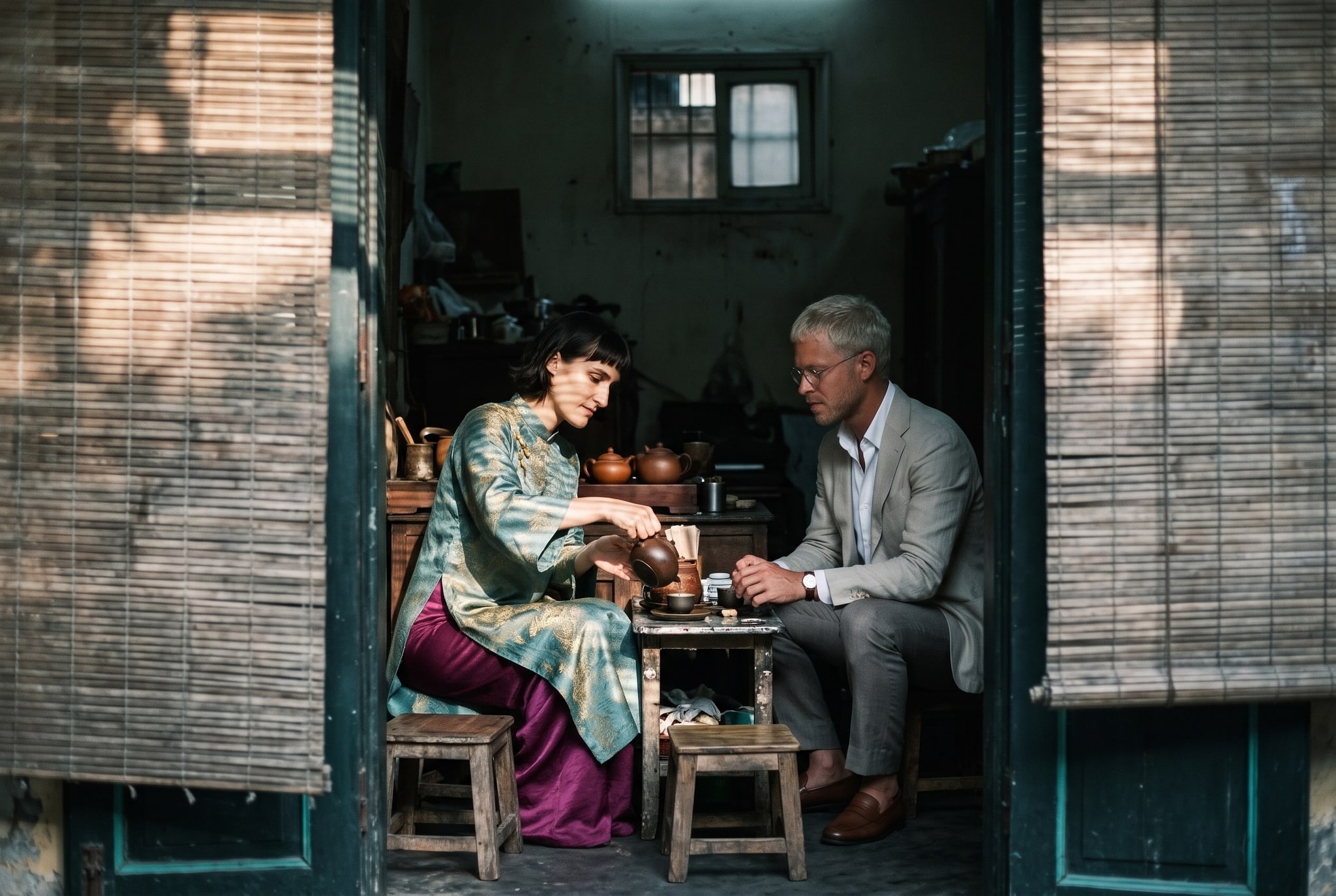
Why do so many couples choose áo dài for Vietnam shoots instead?
The áo dài breathes, moves without restriction, and tells a coherent visual story—you're wearing the country's formal dress in its landscape. We see couples relax visibly once they're in áo dài; the garment's proportions (long tunic, high collar, silk layers) flatter most body types and move naturally in wind, on stone steps, and during walking shots. The fabric itself (typically silk or silk-cotton blend) is lightweight and dries fast if wet from monsoon spray or canal mist. Cost is drastically lower: renting or buying a custom áo dài in Hanoi or Saigon runs a fraction of importing or transporting a Western gown. Travel logistics vanish—no wrinkle concern during 12-hour flights, no heat-damage risk, no laundry panic the day before. Culturally, it reads beautifully in Hoi An's lantern-lit Old Town, at rural temples in Ninh Binh, and in formal Saigon gardens; foreign couples in áo dài draw admiration, not confusion. The downside: if you have your heart set on a specific Western designer dress, áo dài doesn't fulfill that. For couples without that attachment, áo dài is the rational choice and the one we recommend most.
Can you wear both dresses in one shoot without wasting time?
Yes—most couples do. We schedule a dress change at the session's midpoint, which costs almost nothing in time but doubles your keepsakes. Here's how we structure it: morning location (three hours, first dress), break at our studio or hotel for makeup refresh and fabric care (30 minutes), then afternoon location (two hours, second dress), wrapping by 5 p.m. The second dress photographs better when you're already comfortable in front of the camera; energy and pose improve visibly. Logistically, we brief you by WhatsApp the day before: bring both dresses in separate garment bags, wear the heavier one (usually Western gown) in the cooler morning window, and change into the lighter áo dài for afternoon warmth and movement. Our makeup artist touches up face and hair during the dress change—no time lost. Some couples wear Western gown in urban Hanoi settings and áo dài in rural temples or gardens; others reverse it. The choice depends on which backdrop suits each dress and how much you move (static portraits favor the gown; walking and dynamic poses favor áo dài). If you're booking a pre-wedding package, we can outline the two-dress flow on your initial call.
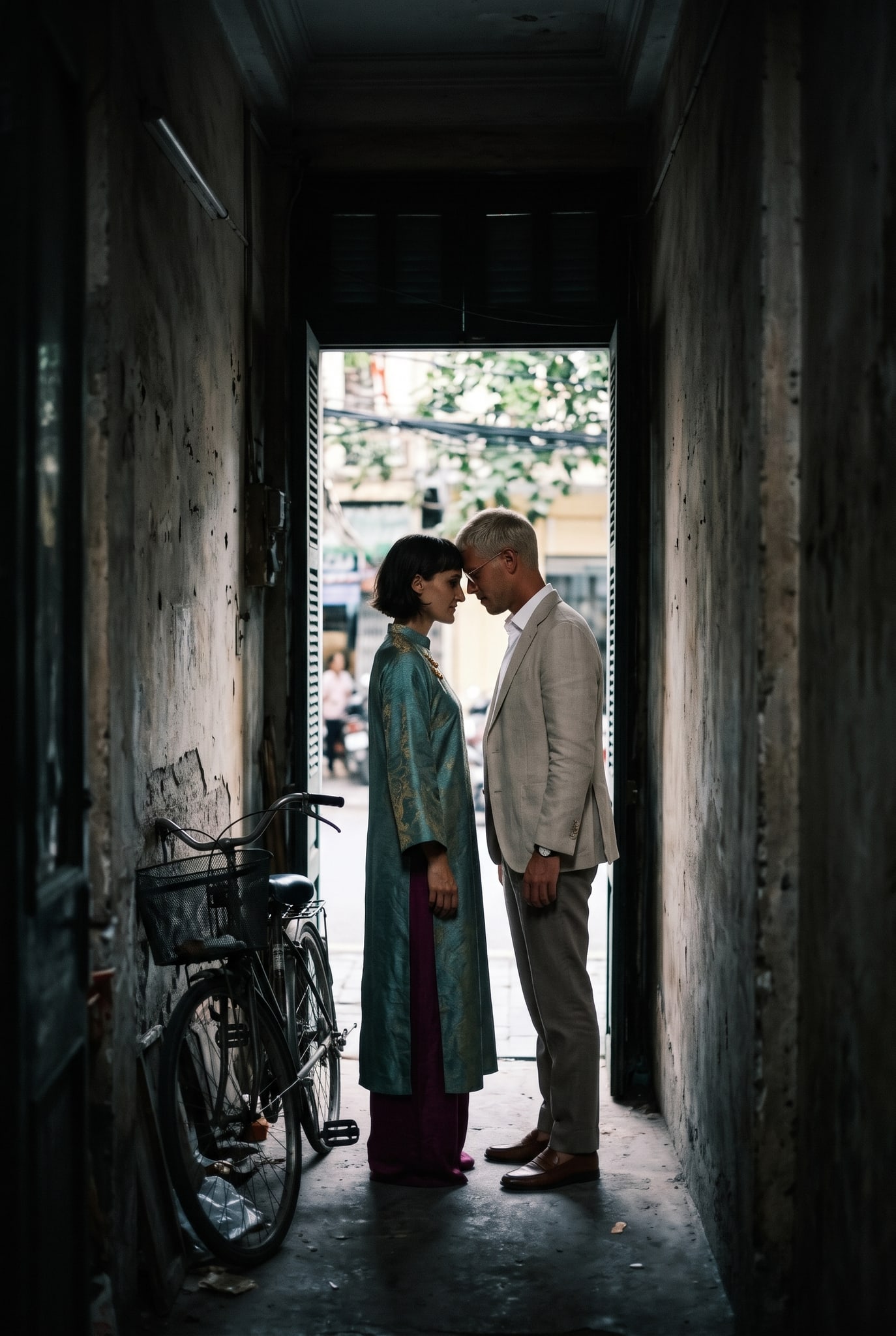
What does the photo style differ between a gown and an áo dài shoot?
The dress itself shapes the visual grammar. Western gowns demand careful posing—arm placement, train arrangement, veil direction; they look best in calm, composed frames with emphasis on architecture and light. We shoot these with studio discipline: sharp focus on detail (lace, beading, fabric), cool color grading, and formal framing. Áo dài shifts the energy toward movement and environment; the long sleeves and flowing skirt photograph in motion, creating lines and grace without conscious posing. We shoot áo dài with warmer tones, looser framing, and more environmental context—you're part of a place, not isolated on white. Gown photographs feel timeless; áo dài feels present and alive. On camera, this means Western dresses suit black-and-white and cool-toned edits; áo dài sings in color, especially jewel tones and gold-hour warmth. If you love soft, dreamy imagery, Western gown is predictable. If you want storytelling and mood, áo dài gives us more range. Neither is objectively "prettier"—they tell different narratives. Your edit style (moody, romantic, bright, editorial) should guide the dress choice as much as the setting.
How do location and weather determine dress choice in Vietnam?
| Location | Best Dress | Season | Why | What to Watch |
|---|---|---|---|---|
| Hanoi temples, pagodas | Áo dài | Oct–Nov, Feb–Mar | Respects cultural space; breathes in cool mornings | Steps are slippery when wet; hem muddy on stone |
| Saigon formal gardens, hotels | Western gown or both | Nov–Jan | AC indoors; shade and structure outdoors | Humidity peaks Mar–May; dress wrinkles during travel |
| Hoi An lantern town, riverside | Áo dài | Oct–Feb | Iconic match; fabric drapes beautifully on narrow streets | Fabric catches on old walls; plan careful walking paths |
| Ninh Binh rice fields, caves | Áo dài | Oct–Nov (dry) | Movement essential; Western skirts snag on terrain | Heavy rain (Sep–Oct) muddles hem; check forecast |
| Beach or open water (Nha Trang) | Both or áo dài | Jan–Mar | Western gown salt-stains easily; áo dài dries fast | Sand adheres to tulle; salt air corrodes jewelry |
| Studio or hotel ballroom | Western gown | Any month | Controlled light, temperature, background; no terrain risk | Wrinkle from packing; plan 2-hour iron-and-hang buffer |
What should you check before you commit to either dress?
Timeline & travel: If you're flying with the dress, Western gowns wrinkle severely. Áo dài rolls flat and doesn't crease. Decide now whether you're shipping ahead, buying local, or renting in Vietnam.
Body comfort: Try both types in heat if possible. Some bodies overheat in Western gowns; others find áo dài's high collar restrictive. Comfort on camera shows.
Makeup & hair style: Western gowns pair with updos and veils; áo dài works beautifully with hair down or in a loose knot. If you have a non-negotiable hair vision, let the dress follow. Our makeup and hair service works with either.
Budget for alterations: Western gowns often need hemming, corset fitting, and steam-cleaning in Vietnam (three to five days, plan ahead). Áo dài custom-tailored to your exact measurements costs less and happens faster—48 hours in Hanoi.
Edit style & color: Do you envision cool, moody images (white dress, black-and-white edit)? Or warm, saturated, environmental storytelling (áo dài, golden-hour color grading)? The dress locks your edit direction.
Test the location: If you've chosen a specific garden, temple, or street in Hoi An, ask the location scout or our team how the dress will read there. Some backdrops feel overloaded by Western fullness; others feel stark without it.
Backup dress: On rare weather days (flash rain, unexpected heat spike), a lightweight áo dài in your bag is insurance. We've had brides abandon plan-A gowns at 3 p.m. and pivot to áo dài for the final hour. The shoot still succeeds.
Visit our Hanoi studio or Saigon location in person before committing if you're in Vietnam. See both dress types hanging; feel the weight. Our team will walk you through the pros and cons without pressure. If you're booking a pre-wedding package from abroad, WhatsApp us your location shortlist and dress shortlist; we'll recommend one or suggest both.
See packages and prices on vietnamphotoshoot.com
For more insight, read how we manage couple photoshoots in Vietnam and style decisions on the shoot day.
FAQ
Can I rent a Western wedding dress in Hanoi or Saigon?
Yes. Rental shops in District 1 (Saigon) and Ba Đình (Hanoi) carry mid-to-high-end gowns, typically 48-hour rental. Cost is lower than import; selection is limited. Inspect seams and underarm for staining before you agree. Dry-cleaning happens on your tab if damage occurs. Áo dài rental is easier, cheaper, and damage-proof.
How early should I arrive for makeup if I'm wearing a Western gown?
Arrive 90 minutes early. Hair and makeup take 45 minutes; dress entry, train arrangement, and veil takes 30; final touch and breathing space, 15. Áo dài shoots need 60 minutes total (fewer fastenings, simpler entry). We'll text you exact arrival time.
What if I sweat through my Western dress during the shoot?
We pause, you move to AC (studio or car), and our dresser wicks sweat with microfiber towels and spot-steams the visible layers. You'll never see it in the photo. Underarm staining is rare if you wear moisture-wicking undergarments and avoid dark-lined dresses. Bring a change of undergarments in case.
Is it disrespectful to wear áo dài as a foreigner for photos?
No. Renting or wearing áo dài for a pre-wedding shoot is celebrated in Vietnam. You're honoring the country and its aesthetics. Wear it with confidence. Avoid cartoon or novelty áo dài; go custom or rent from reputable tailor shops in Hanoi or Hoi An.
Can I do áo dài photos at a formal temple or pagoda?
Yes, absolutely—it's the expected dress at sacred sites. Western gowns at temples read as incongruous and may not be permitted inside certain prayer halls. If your heart is set on a Western gown at a specific temple, we'll scout access and ask permission in advance. Usually the answer is no; we'll find an adjacent outdoor garden instead.
How do I transport a Western dress on a 12-hour flight without wrinkles?
Garment bag in carry-on is safest (airline size limits apply; confirm with your carrier). Once at your hotel, hang it immediately in a steamed bathroom for 20 minutes, then leave it on a hanger away from direct sun. We recommend buying a portable garment steamer ($20–40 at local shops in Saigon or Hanoi) and steaming 30 minutes before the shoot. Or ship the dress to your hotel four days early via courier.
Pre-Wedding & Elopement
Inclusions, prices and booking are on our booking site.
FAQ
Can I rent a Western wedding dress in Hanoi or Saigon?
Yes. Rental shops in District 1 (Saigon) and Ba Đình (Hanoi) carry mid-to-high-end gowns, typically 48-hour rental. Cost is lower than import; selection is limited. Inspect seams and underarm for staining before you agree. Dry-cleaning happens on your tab if damage occurs. Áo dài rental is easier, cheaper, and damage-proof.
How early should I arrive for makeup if I'm wearing a Western gown?
Arrive 90 minutes early. Hair and makeup take 45 minutes; dress entry, train arrangement, and veil takes 30; final touch and breathing space, 15. Áo dài shoots need 60 minutes total (fewer fastenings, simpler entry). We'll text you exact arrival time.
What if I sweat through my Western dress during the shoot?
We pause, you move to AC (studio or car), and our dresser wicks sweat with microfiber towels and spot-steams the visible layers. You'll never see it in the photo. Underarm staining is rare if you wear moisture-wicking undergarments and avoid dark-lined dresses. Bring a change of undergarments in case.
Is it disrespectful to wear áo dài as a foreigner for photos?
No. Renting or wearing áo dài for a pre-wedding shoot is celebrated in Vietnam. You're honoring the country and its aesthetics. Wear it with confidence. Avoid cartoon or novelty áo dài; go custom or rent from reputable tailor shops in Hanoi or Hoi An.
Can I do áo dài photos at a formal temple or pagoda?
Yes, absolutely—it's the expected dress at sacred sites. Western gowns at temples read as incongruous and may not be permitted inside certain prayer halls. If your heart is set on a Western gown at a specific temple, we'll scout access and ask permission in advance. Usually the answer is no; we'll find an adjacent outdoor garden instead.
How do I transport a Western dress on a 12-hour flight without wrinkles?
Garment bag in carry-on is safest (airline size limits apply; confirm with your carrier). Once at your hotel, hang it immediately in a steamed bathroom for 20 minutes, then leave it on a hanger away from direct sun. We recommend buying a portable garment steamer ($20–40 at local shops in Saigon or Hanoi) and steaming 30 minutes before the shoot. Or ship the dress to your hotel four days early via courier.
More from the team
Boho pre-wedding photoshoot in Vietnam: Hanoi, Saigon, Hoi An
Boho pre-wedding shoots mix romantic, free-spirited aesthetics with Vietnam's landscapes and heritage sites. We run full-day sessions in three cities, handling styling, makeup, location scouts and edits.
Avoid crowds at Hoang Su Phi rice terraces: timing for wedding shoots
Hoang Su Phi's terraced landscape draws couples and tour buses in equal measure. We show how to shoot there alone, when to arrive, and what to arrange with us before you go.
Photography rules at Con Dao beaches: permits, drones and what to check
Con Dao's beaches demand prep before you shoot—permits, drone zones and tide timing all affect your day. We share what the Cáo Studio team verifies on every booking.