 Cáo Studio
Home › Blog › Family Photoshoot
What families wear for matching ao dai photos
By the Cáo Studio team · Hanoi & Saigon · 2026-11-02
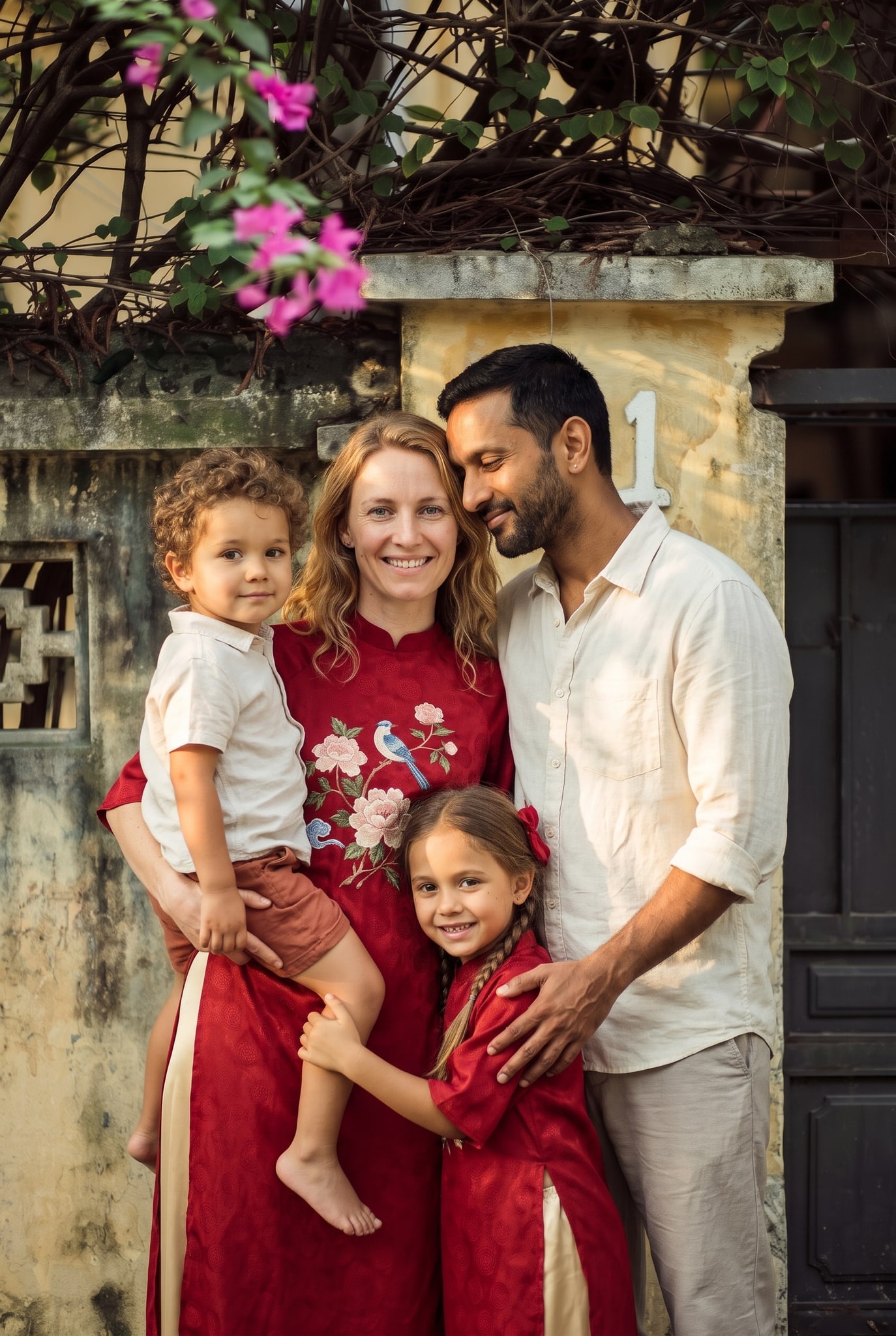
Matching or coordinated ao dai transforms family photoshoots into cohesive, culturally resonant images. At Cáo Studio, we see families choose from three approaches: identical cuts in different colors (strongest visual impact), tonal variations on the same silhouette, or complementary patterns that link generations. Most bookings include styling consultation via WhatsApp, where our stylists advise on fabric weight (silk feels luxurious but wrinkles; cotton-blend holds structure), sleeve length, and color psychology—jewel tones photograph deeper than pastels in Hanoi's afternoon light. Kids' versions sit higher at the waist and shorter in leg; men wear matching vests or simplified tunic cuts. Rental or custom-made pieces arrive 5–10 days before your session; we fit-check on shoot day morning. Mismatches happen when families underestimate children's growth or ignore weather (winter ao dai in Ninh Binh needs different fabric than summer Saigon). Budget for alterations: hems, seams, and side-seams adjust in 2–3 days if booked early. Chat with us on WhatsApp | See packages and prices on vietnamphotoshoot.com
When families ask us "what should we all wear?" during the WhatsApp consultation, we walk through the same decision framework every time. Matching ao dai creates instant visual harmony in family photos. At Cáo Studio, we see families choose from three approaches: identical cuts in different colors (strongest visual impact), tonal variations on the same silhouette, or complementary patterns that link generations. Most bookings include styling consultation via WhatsApp, where our stylists advise on fabric weight (silk feels luxurious but wrinkles; cotton-blend holds structure), sleeve length, and color psychology—jewel tones photograph deeper than pastels in Hanoi's afternoon light. Kids' versions sit higher at the waist and shorter in leg; men wear matching vests or simplified tunic cuts. Rental or custom-made pieces arrive 5–10 days before your session; we fit-check on shoot day morning. Mismatches happen when families underestimate children's growth or ignore weather (winter ao dai in Ninh Binh needs different fabric than summer Saigon). Budget for alterations: hems, seams, and side-seams adjust in 2–3 days if booked early.
Should matching ao dai be identical or coordinated?
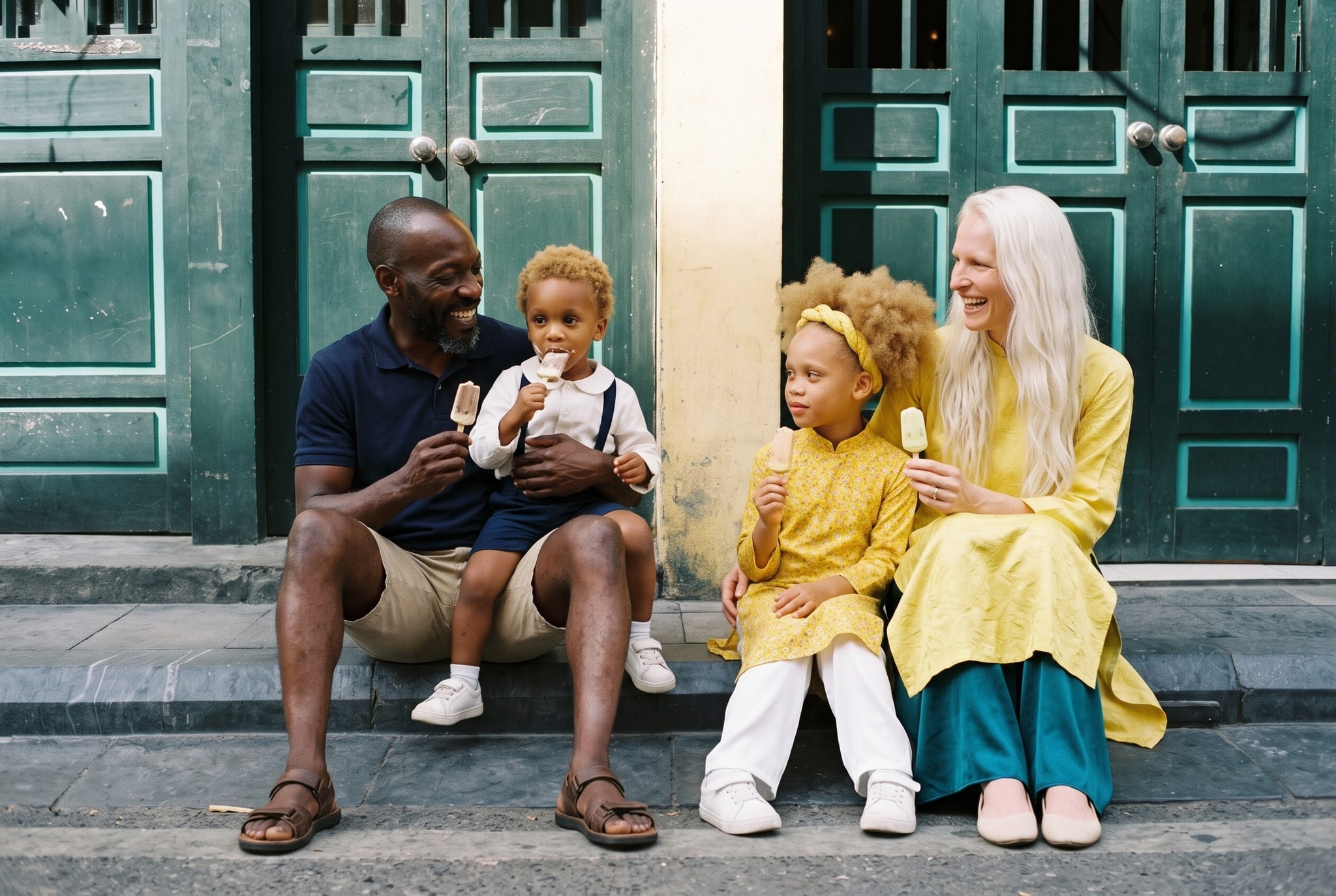
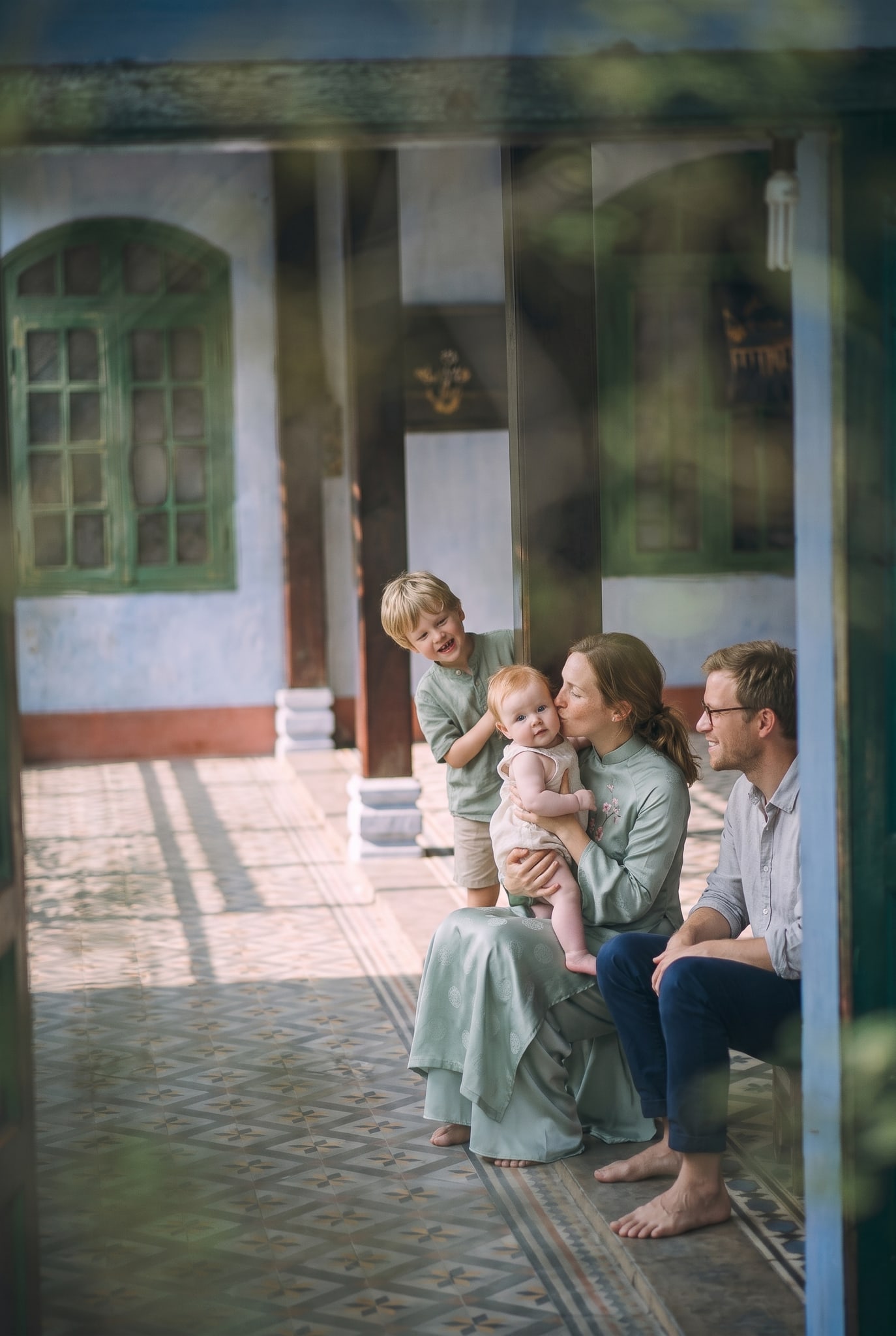
Identical cuts in the same color read as "formal unit" in photos and work best for three generations or more. Coordinated colors—mother in emerald, father in navy, children in cream—feel more personal and photograph more interestingly because the eye moves between tones. Our stylists recommend coordination over sameness for families with teenagers, who often resist "too matchy" aesthetics. Coordination also lets you work within each person's comfort zone: a shy teenager in a calming sage, confident grandmother in crimson. Tonal palettes (all jewel, all pastel) bridge both worlds and suit mixed-gender groups where men's ao dai already differs structurally from women's. Choose sameness if unity matters most; choose coordination if personality and comfort matter equally.
What fabric and weight work best for your location?
Silk ao dai photograph beautifully—colors glow, drape flatters—but wrinkle within an hour of wear, especially in humid Saigon summers. Cotton-blend (65% cotton, 35% polyester blends common from specialist makers) holds shape through a two-hour shoot and resists humidity creasing. Linen breathes in heat but creases more easily than either. We've noticed families in Hoi An's humid climate gravitate toward cotton-blend; winter shoots in Hanoi around the Old Quarter often choose silk because air is drier and cooler. Fabric weight also matters: lightweight silk suits thin builds and indoor studio work; medium-weight cotton-blend suits all body types and outdoor locations where wind and movement happen. Check fiber content and weight in grams per square meter before ordering, not just by touch online.
How do children's and men's ao dai differ from women's?
Children's ao dai sit 2–3 inches higher at the natural waist, with shorter overall length (typically to the knee, not ankle) so legs move freely during play or posing. Sleeves taper narrower for smaller frames. Men's ao dai omit the side slits entirely and add a front-buttoning vest layer (called áo ghi) that men wear open or closed over a straight tunic. The tunic itself has no curves; tailoring is straight and loose through the chest and waist. Fathers and grandfathers often feel unsure about men's ao dai fit because tailors measure differently: chest circumference matters more than waist, and arm length runs shorter than in Western tailoring. For families booking family photoshoot packages, we send measurement guides specific to each gender so rental or custom makers cut correctly first time. Grandmothers' ao dai sometimes feature heavier silk and more ornate patterns; younger mothers choose simpler weaves. Pattern contrast—grandfather in solid navy, grandmother in cream with gold embroidery—often works better visually than forcing all patterns or all solids.
Which color combos photograph strongest in Hanoi, Saigon, and Hoi An light?
In Hanoi's cool, softer light (especially winter), jewel tones (emerald, sapphire, plum) and warm neutrals (cream, taupe) hold depth without looking washed. Summer Hanoi and Saigon's bright, humid light rewards saturated colors (red, strong pink, orange) that stay vibrant even in harsh midday shadows. Hoi An's golden afternoon light (especially near the Ancient Town) flatters warm pastels (blush, apricot, pale yellow) and jewel tones equally because the light itself is warm. Ninh Binh's landscape—limestone and water—demands colors with contrast; soft creams or pale blues blend into stone, while terracotta, rust, and forest green pop against natural backgrounds. We advise families to check their shoot time and location on a map-preview call before finalizing color. A family that chose all pastels for a golden-hour Hoi An session was thrilled; the same palette would disappear in Saigon's noon brightness. Avoid colors that match your background: cream ao dai in a white-walled Saigon studio, or green ao dai in a garden that's also green.
What to check before ordering or renting?
| Consideration | Rental | Custom-made | Who it suits | Key check |
|---|---|---|---|---|
| Turnaround | 3–7 days | 10–21 days | Bookings planned 2+ weeks ahead | Confirm delivery date in writing |
| Fit flexibility | Limited (sized S/M/L) | Exact measurements | Mixed ages/body types | Provide actual measurements, not guesses |
| Cost predictability | Fixed per item | Varies by tailor | Budget-conscious families | Request itemized quote before deposit |
| Alteration time | 1–2 days possible | Included in price | Families with urgent needs | Confirm alteration deadline with maker |
| Seasonal fabric | Limited choice | Full choice | Winter vs. summer shoots | Specify location and month |
| Pattern/color lock | Pre-made only | Custom dyes available | Families wanting exact shade match | Order swatches 1 week ahead |
Measurement accuracy is non-negotiable. We've had families arrive with rental pieces that gaped at the shoulders or pulled at the waist because they ordered "M" based on Western sizing. Ao dai uses Vietnamese size charts—a Vietnamese XL often equals Western M. Get fitted in person at a rental shop if possible, or send bust, waist, hip, shoulder, and inseam measurements taken against a tape measure, not eyeballed. Children grow 1–2 inches between booking and shoot; if your child is at the edge of a size, order the larger piece and budget two days for hem alteration. Fabric should feel natural to touch (not plastic or stiff on a first feel); ask suppliers to send a small swatch before committing. Color photos in online listings often misrepresent true shade—ask for a video of the piece in daylight before ordering. Confirm delivery address, phone number, and delivery window in writing so packages don't get lost in Hanoi's or Saigon's postal systems.
See packages and prices on vietnamphotoshoot.com | Chat with us on WhatsApp
What happens during our fit-check on shoot day?
We arrive two hours before the session start (standard for family photoshoot packages) and walk through fit with you: seams sit on shoulder bone, armholes don't pull, fabric lies flat at the side slits, and kids can sit and move without complaints. We pin any last-minute gaps and have a seamstress on standby in our Hanoi and Saigon studios. Hair and makeup follow fit, so ao dai adjustments happen before you're fully styled. We've learned that children often change their minds about comfort once they're fully dressed—a sleeve suddenly feels tight, a collar scratches. Bringing a small sewing kit and safety pins is routine for us. Families often ask if they can wear undergarments under the ao dai; yes, but tight shapewear or heavy bras read as lumps under silk. We suggest lightweight, smooth undergarments or nothing under a patterned fabric. Shoes matter less than you'd think—they're rarely visible—but worn leather or cracked heels photograph badly if shots include your feet. Slip-on shoes (flats or low heels) let you move between locations without fussing. For shoots at Cáo Studio Hanoi or Cáo Studio Saigon, we provide a private fit area; families change there, and kids can run around a waiting room while adults prep.
How do we coordinate timing for multi-generational families?
Schedules break when grandparents tire or toddlers need snacks. We've learned to block family shoots into three 30-minute segments with 10-minute breaks. First segment: all together (strongest energy). Second segment: parents and kids, then just kids, then just parents (variation in composition). Third segment: grandmother alone, grandfather alone, couple shots if parents' marriage is being celebrated. This rhythm accommodates natural fatigue and lets us shoot without rushing. Toddlers sit for 20 minutes max before fussing; we schedule them first, when light and energy are fresh. Teenagers and young adults tolerate longer sessions (45–60 minutes total) and work well mid-session. Booking a makeup and hair service at your hotel beforehand (rather than at our studio) saves 45 minutes and lets families wake up, eat, and arrive calm. We send a detailed timeline via WhatsApp three days before the shoot—what time to arrive, when hair/makeup happens, when you'll change, how long the shoot runs, and where we'll move for different locations. Families who follow the timeline enjoy the session; families who arrive an hour late or skip breakfast often struggle. Be honest during booking about your group's pace and patience.
Chat with us on WhatsApp | See packages and prices on vietnamphotoshoot.com
For families planning ao dai photoshoots or special concept shoots that blend ao dai with other elements, color and coordination choices cascade into pose direction and location scouting. A jewel-toned family photographs differently against a white-walled studio versus a Ninh Binh landscape. Budget coordination time into your session if mixing ao dai with other outfits (changing between locations adds 15–20 minutes per outfit). And remember: ao dai isn't just photo costume; it's cultural garment. Families who respect that—who research fit, honor the silhouette, and choose thoughtfully—feel it in their images. That intention shows.
FAQ
Can we wear ao dai we already own, or do we need to rent or buy new pieces?
Yes, wear owned pieces if fit is flawless and fabric is clean. We've shot families in heirloom ao dai passed through generations—the meaning photographs beautifully. Check the piece three weeks before your date; have it dry-cleaned if needed (gets back in 5–7 days locally). If seams have loosened or hems have frayed, budget alteration time. Owned pieces sometimes carry wrinkles from storage; iron on low heat (silk) or medium (cotton-blend) one day before, then hang in a cool room overnight.
How do we handle mismatched family members who refuse ao dai or feel uncomfortable?
We've seen fathers, teenage sons, and even reluctant toddlers warm to ao dai once they're dressed and styled. Offer choice: wear the ao dai as your main look, or wear it for the first 30 minutes and change into comfort clothes for the second half. The photos with ao dai usually feel more intentional, so most families end up wearing it the whole session. If someone truly refuses, we work with complementary Vietnamese-inspired colors (linen blouses, neutral pants, silk scarves) that photograph cohesively without forcing the full garment. Comfort matters; uncomfortable subjects read stiff in photos.
What's the best strategy for color-matching across vendors if we're buying or renting from different places?
Get physical swatches or actual rental samples in your hands before committing. Order together from one maker if possible—they use consistent dye lots. If splitting orders, ask each vendor for their exact Pantone or color-name reference and match those names before paying deposits. Video-call the vendors with samples side-by-side in daylight so you see real color, not screen-filtered versions. For children's and men's pieces especially, ask the male-garment maker (áo ghi and tunic tailor) what color match they recommend for female ao dai from your chosen female-garment maker. They work together often and know each other's palettes.
Do ao dai need to be tailored to fit perfectly, or can we wear standard sizes?
Standard sizes work if your body type aligns with the sizing chart. Vietnamese sizes run small in bust and long in overall length compared to Western averages. Most families from outside Vietnam need at least inseam and waist adjustments. Professional tailors alter in 2–3 days if you book early. We've seen families ignore fit advice, then show up on shoot day with sagging waistbands or bunched hems—photos suffer. Invest the time and cost in tailoring; it's one of the three biggest regrets families mention after reviewing proofs.
What happens if we arrive at the shoot and the ao dai doesn't fit or feels damaged?
We have standby solutions in our Hanoi and Saigon studios: a rental backup in common sizes and a seamstress for urgent repairs (loose seams, popped stitches, pulled threads). We've replaced an entire top for a family whose rental arrived with a stain they didn't catch until arrival. What we can't do on the day: re-hem, adjust inseams, or refit shoulder seams. That's why fit-checks happen two hours early. If a piece is unwearable, we either substitute from our backup stock or pivot to complementary Vietnamese-inspired outfits. No family leaves without photos, but advance planning prevents scrambling.
Family Photoshoot
Inclusions, prices and booking are on our booking site.
FAQ
Can we wear ao dai we already own, or do we need to rent or buy new pieces?
Yes, wear owned pieces if fit is flawless and fabric is clean. We've shot families in heirloom ao dai passed through generations—the meaning photographs beautifully. Check the piece three weeks before your date; have it dry-cleaned if needed (gets back in 5–7 days locally). If seams have loosened or hems have frayed, budget alteration time. Owned pieces sometimes carry wrinkles from storage; iron on low heat (silk) or medium (cotton-blend) one day before, then hang in a cool room overnight.
How do we handle mismatched family members who refuse ao dai or feel uncomfortable?
We've seen fathers, teenage sons, and even reluctant toddlers warm to ao dai once they're dressed and styled. Offer choice: wear the ao dai as your main look, or wear it for the first 30 minutes and change into comfort clothes for the second half. The photos with ao dai usually feel more intentional, so most families end up wearing it the whole session. If someone truly refuses, we work with complementary Vietnamese-inspired colors (linen blouses, neutral pants, silk scarves) that photograph cohesively without forcing the full garment. Comfort matters; uncomfortable subjects read stiff in photos.
What's the best strategy for color-matching across vendors if we're buying or renting from different places?
Get physical swatches or actual rental samples in your hands before committing. Order together from one maker if possible—they use consistent dye lots. If splitting orders, ask each vendor for their exact Pantone or color-name reference and match those names before paying deposits. Video-call the vendors with samples side-by-side in daylight so you see real color, not screen-filtered versions. For children's and men's pieces especially, ask the male-garment maker (áo ghi and tunic tailor) what color match they recommend for female ao dai from your chosen female-garment maker. They work together often and know each other's palettes.
Do ao dai need to be tailored to fit perfectly, or can we wear standard sizes?
Standard sizes work if your body type aligns with the sizing chart. Vietnamese sizes run small in bust and long in overall length compared to Western averages. Most families from outside Vietnam need at least inseam and waist adjustments. Professional tailors alter in 2–3 days if you book early. We've seen families ignore fit advice, then show up on shoot day with sagging waistbands or bunched hems—photos suffer. Invest the time and cost in tailoring; it's one of the three biggest regrets families mention after reviewing proofs.
What happens if we arrive at the shoot and the ao dai doesn't fit or feels damaged?
We have standby solutions in our Hanoi and Saigon studios: a rental backup in common sizes and a seamstress for urgent repairs (loose seams, popped stitches, pulled threads). We've replaced an entire top for a family whose rental arrived with a stain they didn't catch until arrival. What we can't do on the day: re-hem, adjust inseams, or refit shoulder seams. That's why fit-checks happen two hours early. If a piece is unwearable, we either substitute from our backup stock or pivot to complementary Vietnamese-inspired outfits. No family leaves without photos, but advance planning prevents scrambling.
More from the team
Newborn and baby photos while traveling in Vietnam: studio comfort
Traveling with a newborn or baby means rethinking portrait sessions. We've learned exactly how to time shoots, manage room temperature, and keep small children calm during photography.
Family Wedding Photos in Phu Quoc with Kids and Parents
Phu Quoc's beaches and gardens make stunning backdrops for multigenerational family photos, but coordinating kids, parents and ceremony schedules takes real planning. We share what actually happens during a full-day family wedding shoot.
Family Wedding Photos in Sapa with Kids and Parents
Photographing multigenerational families in Sapa's terrain demands patience, logistics, and real-time problem-solving. Cáo Studio shares how we run these shoots from arrival to final frames.