 Cáo Studio
Home › Blog › Pre-Wedding & Elopement
What Grooms Should Wear in Vietnam's Heat
By the Cáo Studio team · Hanoi & Saigon · 2026-11-02
Grooms in Vietnam should prioritize lightweight natural fabrics (linen, cotton blends), loose tailoring that breathes without pooling, and neutral tones that hold detail in humid-haze light. Avoid heavy wools, synthetic blends, and dark colours under direct sun—they absorb heat and blow out in photos. For pre-wedding shoots in Hanoi, Saigon, Hoi An or Ninh Binh, a fitted cotton shirt, tailored trousers in cream or soft grey, and minimal layering work best; we often see grooms swap jackets halfway through the session. Cáo Studio shoots 4–5 hours in two blocks (morning cool, evening golden), so plan a lightweight change if you're doing multiple concepts.
Why heavy suiting fails in Southeast Asian humidity
Every groom arrives in wool or thick polyester expecting to look sharp. By frame 40 of 200, we notice sweat patches blooming across the chest, collar curling away from the neck, and fabric clinging in ways that won't read well on screen. Humidity above 80% (common in Saigon May–September) doesn't just feel bad—it changes how fabric drapes and reflects light. We've watched traditional heavy tailoring go limp within 90 minutes, forcing emergency touch-ups. Lightweight natural fibres stay structured, dry faster, and photograph with texture rather than shine.
What fabric choice actually makes a difference?
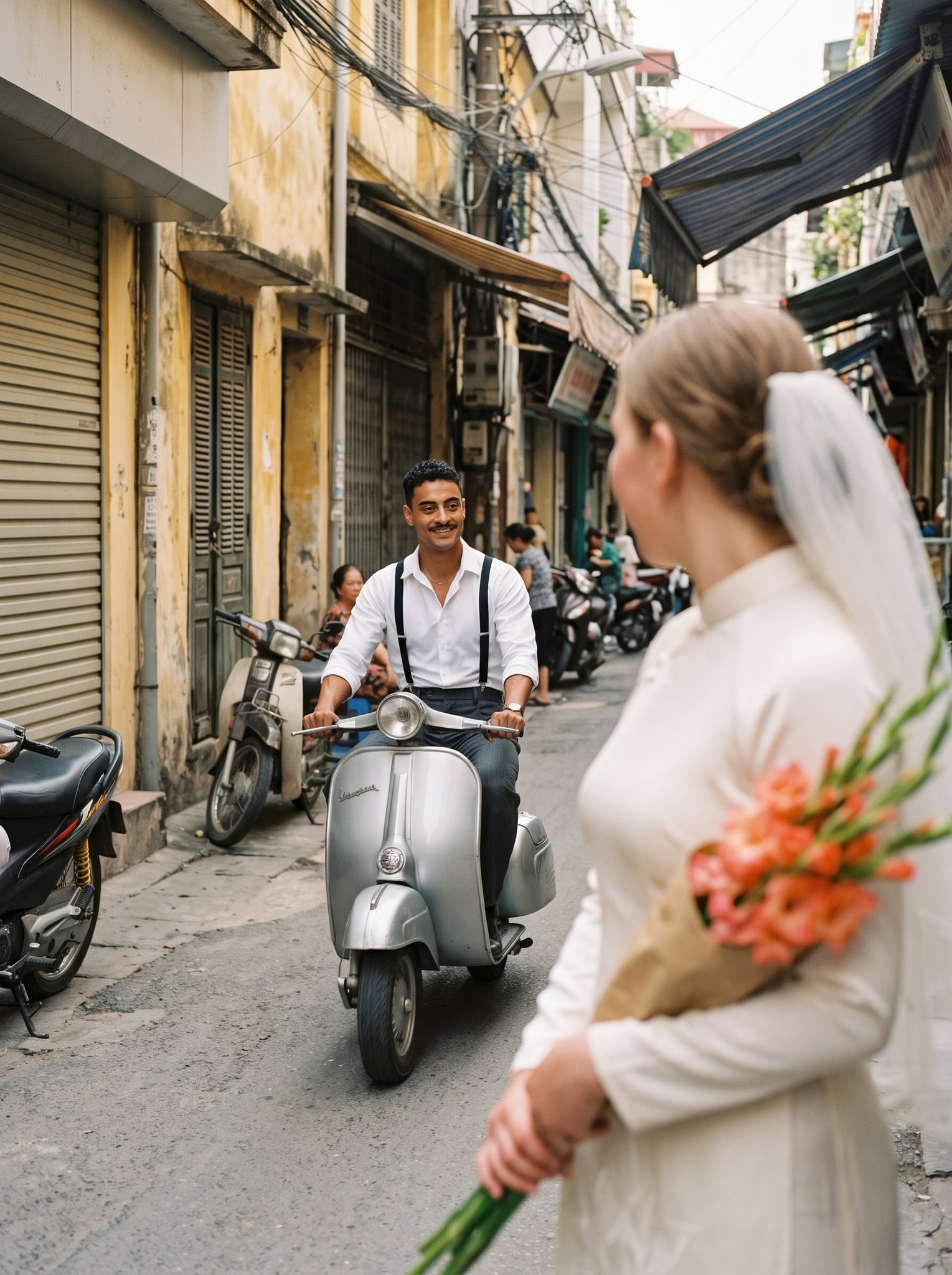
Linen breathes but wrinkles aggressively; cotton holds shape longer; linen-cotton blends (60/40 or 70/30) split the difference. Cotton absorbs sweat without showing wet patches as obviously. We steer grooms toward 100% cotton dress shirts (not "performance" synthetics that trap moisture) and trousers in cotton twill or lightweight linen for shoots lasting 3+ hours. A silk blend (10–15%) adds sheen for photos without overheating. Check the label in your tailoring shop: if it doesn't say the fibre content, ask. We've seen grooms regret buying unmarked "formal shirts" that turned clammy after 30 minutes in afternoon heat.
Fit: why loose ≠ sloppy, and tailored ≠ tight
A common mistake: grooms choose either baggy comfort or razor-tight tailoring, missing the sweet spot. In heat, a fitted (not tight) shirt with room at the chest and arms photographs cleanly while allowing airflow. We tell clients: you should fit one finger between the collar and your neck, and your arm should move without pulling the seam. Tailored trousers should break lightly on your shoe—not pooling, not crop-length—with a waist that needs a belt (it'll slip slightly as you cool down and dehydrate over 4 hours). Oversized looks slouchy on camera; undersized restricts movement and shows every bead of sweat.
Colour strategy for tropical light and humidity haze
Vietnam's light in rainy season (May–October) carries a greenish or brownish cast from humidity. Blacks and navies deepen into near-black, losing detail. Bright whites blow out. Greys, taupes, soft cream, and pale blue sit safely in the middle, reading as rich on screen while reflecting heat. We photograph dozens of pre-wedding couples each month and notice warm neutrals (taupe, khaki, cream) age better in post-processing because they hold shadow and highlight range. Dark browns work if paired with a lighter shirt; pure black only if you're doing an evening shoot under studio light. Avoid anything reflective (polyester sheen) or heavily patterned—plaids and stripes flicker on camera in motion.
Hour-by-hour reality: what we see in a typical shoot
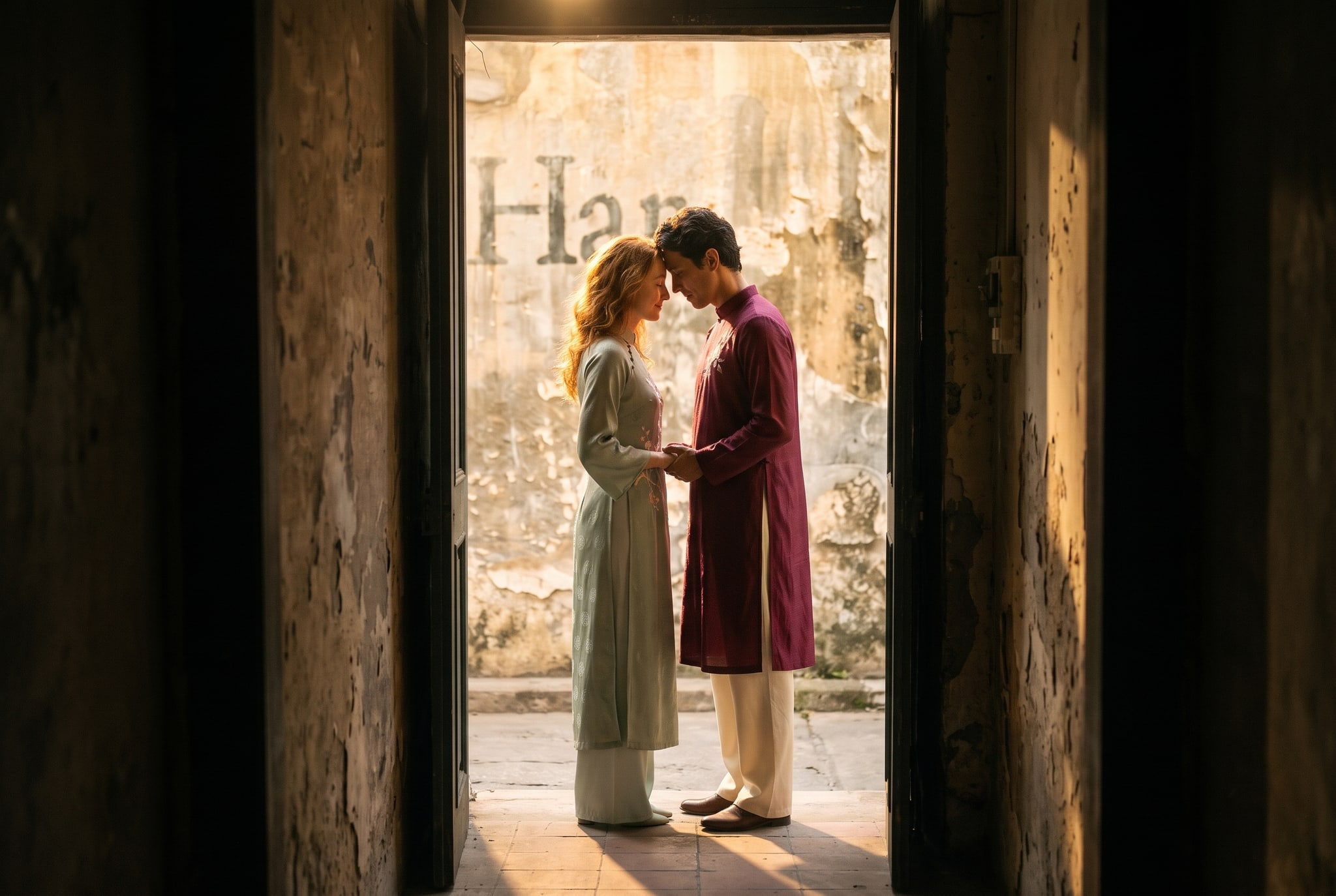
A session runs roughly: 06:00–08:30 cool-light phase (low humidity, soft shadows), then a midday break in air-con, then 16:30–19:00 golden hour. We've noticed grooms who dress for the first block often regret their choice by hour four. A linen shirt looks pristine at 7 a.m., crumpled by 9 a.m., then crisp again after an indoor break. We now tell clients: bring a second shirt (same colour, fresh) if you want to change at midday or swap into a concept outfit. Cream trousers stay cool longer than darker ones, but show dirt more easily around Hoi An's muddy temple grounds. We keep a lint roller and pressing steamer on-set, but prevention beats cure—choose darker neutrals if you're shooting near water or greenery.
| Fabric Choice | Best For | Pros | Cons | Humidity Limit |
|---|---|---|---|---|
| 100% cotton | 3–4 hour shoots | Breathes, no cling, dries reasonably | Wrinkles, needs pressing | ≤85% |
| Cotton–linen blend (70/30) | Mixed concepts | Structured, breathes, photographs well | Wrinkles more than cotton | ≤85% |
| Pure linen | Evening/golden only | Ultimate breathability, sharp look | Heavily wrinkled by hour 2 | ≤80% |
| Silk blend (10–15%) | Photo sheen, shorter shoots | Adds lustrous finish on screen | Fragile, heat-sensitive | ≤80% |
| Wool or thick synthetics | Never in tropical Vietnam | Professional appearance in cool climates | Overheats, shows sweat, looks limp | ≤60% |
Layering: when a jacket is worth the discomfort
For formal pre-wedding shots, some grooms want a blazer or lightweight jacket. We recommend structured linen or cotton jackets, unbuttoned on camera, removed entirely after 20–30 minutes. A silk or cotton tie works only if the collar is wide (classic point collars strangle in heat). We've shot grooms who insisted on full tailoring despite 35°C heat; they lasted 45 minutes before asking to strip to shirt sleeves. Our pre-wedding photoshoot package includes outfit consultation, so use it—bring sample fabrics to your shoot prep call on WhatsApp, and we'll advise based on your shoot date and locations.
See packages and prices on vietnamphotoshoot.com
What to check before you buy or tailor
Fibre content: Read the label. Ask your tailor to source cotton or linen-blend fabric, not synthetic blends.
Fit: Try on and move—raise your arms, bend, sit. Seams should not pull; collar should not choke.
Colour swatch in daylight: What looks good under shop lighting may look dull or blown out in Vietnamese tropical light.
Wrinkle factor: If you're not comfortable ironing or steaming between outfit changes, skip pure linen.
Backup piece: Bring a fresh shirt of the same colour, especially for shoots longer than 3 hours.
We've learned these details from running 200+ couple and solo sessions across Hanoi, Saigon, Hoi An, and Ninh Binh. Every shoot teaches us something about heat, fabric, and light. Chat with us early if you're unsure—we'll steer you toward fabrics that work.
Pages from our team you may need
FAQ
Should I wear white or cream as a groom in humid Vietnam?
Cream is safer. Pure white can blow out in midday light and shows sweat more visibly. Cream photographs as elegant while hiding moisture better.
Can I wear a short-sleeve shirt instead of long sleeves?
Yes, if it's tailored and formal-appropriate for your concept. We see short-sleeve cotton shirts work well in evening shoots; just avoid cheap polyester versions that cling when wet.
How often do grooms change outfits during a shoot?
Most do one outfit change, sometimes two. A typical session includes a formal look and a casual or romantic concept. We build time for changes into every pre-wedding package.
What if my tailored clothes wrinkle badly in the heat?
Bring them in a garment bag, not folded. We have a steamer on set. For linen, expect wrinkling and plan it into your aesthetic—it reads as relaxed and romantic on camera.
Is it okay to wear a vest or waistcoat under my shirt?
Only for very short photo sessions (under 90 minutes) or evening shoots. Vests trap heat and sweat significantly. Skip them unless your formal concept absolutely requires one.
Can we shoot indoors only to avoid the heat?
Yes. Studio shoots and hotel makeup and hair sessions work beautifully in air-conditioned spaces. Outdoor locations offer natural light that no studio matches, but require heat-smart dressing. --- Chat with us on WhatsApp to discuss your shoot date, locations, and outfit choices. We'll give you a personal brief based on weather forecast and lighting.
Pre-Wedding & Elopement
Inclusions, prices and booking are on our booking site.
FAQ
Should I wear white or cream as a groom in humid Vietnam?
Cream is safer. Pure white can blow out in midday light and shows sweat more visibly. Cream photographs as elegant while hiding moisture better.
Can I wear a short-sleeve shirt instead of long sleeves?
Yes, if it's tailored and formal-appropriate for your concept. We see short-sleeve cotton shirts work well in evening shoots; just avoid cheap polyester versions that cling when wet.
How often do grooms change outfits during a shoot?
Most do one outfit change, sometimes two. A typical session includes a formal look and a casual or romantic concept. We build time for changes into every [pre-wedding package](/go/pre-wedding-photoshoot).
What if my tailored clothes wrinkle badly in the heat?
Bring them in a garment bag, not folded. We have a steamer on set. For linen, expect wrinkling and plan it into your aesthetic—it reads as relaxed and romantic on camera.
Is it okay to wear a vest or waistcoat under my shirt?
Only for very short photo sessions (under 90 minutes) or evening shoots. Vests trap heat and sweat significantly. Skip them unless your formal concept absolutely requires one.
Can we shoot indoors only to avoid the heat?
Yes. Studio shoots and [hotel makeup and hair](/go/makeup-and-hair) sessions work beautifully in air-conditioned spaces. Outdoor locations offer natural light that no studio matches, but require heat-smart dressing. --- [📸 Chat with us on WhatsApp](https://wa.me/84338762340) to discuss your shoot date, locations, and outfit choices. We'll give you a personal brief based on weather forecast and lighting.
More from the team
Boho pre-wedding photoshoot in Vietnam: Hanoi, Saigon, Hoi An
Boho pre-wedding shoots mix romantic, free-spirited aesthetics with Vietnam's landscapes and heritage sites. We run full-day sessions in three cities, handling styling, makeup, location scouts and edits.
Avoid crowds at Hoang Su Phi rice terraces: timing for wedding shoots
Hoang Su Phi's terraced landscape draws couples and tour buses in equal measure. We show how to shoot there alone, when to arrive, and what to arrange with us before you go.
Photography rules at Con Dao beaches: permits, drones and what to check
Con Dao's beaches demand prep before you shoot—permits, drone zones and tide timing all affect your day. We share what the Cáo Studio team verifies on every booking.