 Cáo Studio
Home › Blog › Pre-Wedding & Elopement
What grooms wear for pre-wedding photos in Vietnam
By the Cáo Studio team · Hanoi & Saigon · 2026-11-01
Grooms in Vietnam pre-wedding shoots typically wear tailored suits (linen or cotton-blend for heat), Vietnamese áo dài in silk or brocade, or smart casual—shorts with linen shirts in tropical locations. Choose based on season (May–September = lighter fabrics), venue (urban Saigon vs. rural Ninh Bình), and couple preference. Most grooms bring 2–3 outfit changes to maximize variety across a 4–6 hour session. Avoid heavy wool, tight fits that restrict movement, and colors that clash with the bride's palette. Cáo Studio's stylists help clients decide during WhatsApp consultation and flag common mistakes—poorly fitted sleeves, shoes that hurt on cobblestones, fabrics that wrinkle in humidity. Ask for a quote and styling advice before your shoot. Chat with us on WhatsApp | See packages and prices on vietnamphotoshoot.com
Why grooms in Vietnam pre-wedding shoots need different fabrics than home
Grooms often arrive with suits bought for Northern Hemisphere winters. Vietnam's humidity (70–90% June–August) and heat (28–35°C) shorten garment life and show sweat marks in photos. Cotton-linen blends and lightweight wool breathe; pure synthetics trap moisture and look damp on camera. We've watched grooms change into linen shirts mid-session after realizing their dress shirt was soaked by hour two. Smart move: pack a moisture-wicking undershirt and bring extra fabric spray for wrinkles between outfit changes. Silk áo dài handles humidity better than cotton, though it requires careful pressing.
How to choose between a suit, áo dài, or casual wear for your location
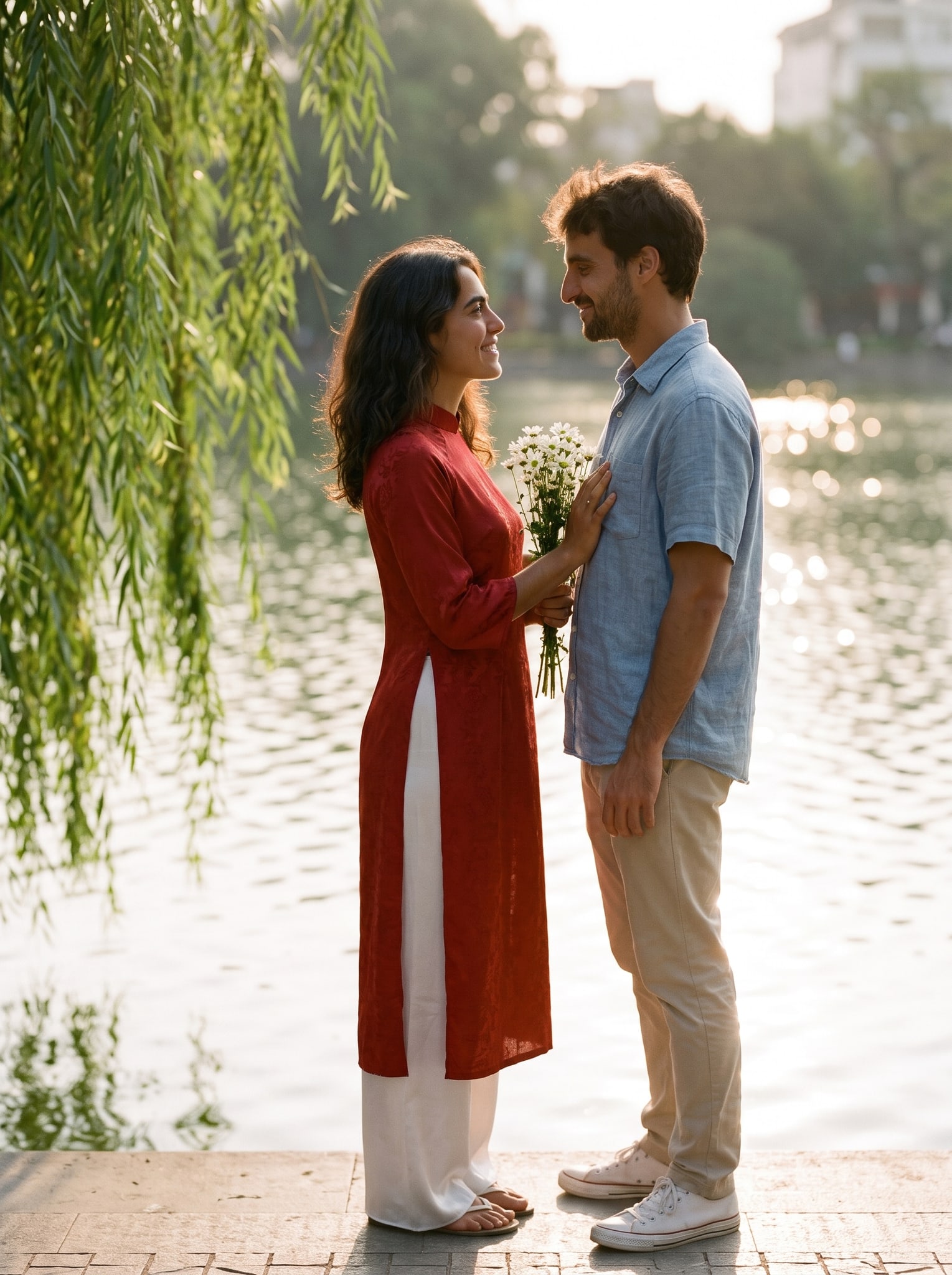
Saigon and Hanoi urban shoots (riverside, colonial villas, street fashion) suit tailored blazers and dress trousers best; the city backdrop rewards formal polish. Hoi An ancient town and countryside scenes (rice paddies, rural temples) look natural in smart casual—linen trousers, no blazer, or a lightweight tunic. Ninh Bình limestone cliffs and boat shots read well in casual wear; formal dress feels out of place and risks damage on uneven paths. Áo dài works in any location but reads as cultural/formal; reserve it for ceremony mock-ups or heritage sites. Ask your photographer's opinion during planning—we guide couples through location aesthetic so outfits match the story you want to tell.
| Outfit type | Best for | Fabric & fit | What to check before ordering |
|---|---|---|---|
| Tailored suit | Urban Saigon/Hanoi shoots, formal villas | Cotton-linen blend, 1–2cm sleeve past wrist, no tight chest | Seams don't pull when arm raised; breathable lining |
| Áo dài | Cultural narrative, temple backdrops, formal tones | Silk brocade or cotton, custom chest/sleeve length | Dye doesn't bleed; embroidery sits flat; fits over light shirt underneath |
| Smart casual (linen trousers + shirt) | Countryside, rural temples, Ninh Bình, beach vibes | 50/50 cotton-linen, breathable weave, trim fit not baggy | Doesn't wrinkle excessively; color complements bride's palette |
| Shorts + linen shirt | Tropical/beach sessions, casual concept shoots | Knee-length shorts, oversized linen blend | Shorts don't ride up when sitting; shirt hem hits hip |
What we tell grooms on WhatsApp about outfit changes and timing
A 4–6 hour pre-wedding session usually includes 2–3 location changes and 2–3 outfit swaps. We message clients the night before: bring everything in a carry bag, not a suitcase (easier to move between spots). Hour 1: arrival in outfit A, makeup/hair touch-ups, scout the first location. Hour 2–3: shoot outfit A, change in car/nearby restroom. Hour 4–5: outfit B at location 2, quick press if needed. Hour 6: outfit C at bonus location or same spot with different lighting. Grooms panic about wrinkles—we carry a hand steamer and fabric spray. One groom brought a suit still in dry-cleaning plastic; we had to sit it in the car for 20 minutes to let it breathe. Another showed up with a shirt two sizes too large and no backup; we worked around it but lost a full hour to styling fixes. Pack a spare button, safety pins, and a small iron or steamer if your hotel has one.
How color coordination between groom and bride affects the final look
The bride's áo dài or wedding dress color sets the tone. If she wears ivory or white, grooms in navy, charcoal, or soft grey look balanced; warm beige suits clash. If the bride chooses jewel tones (emerald, sapphire), grooms should stay neutral or use a complementary mid-tone. Pastels (blush, sage) pair with soft grey or cream linen. We ask for a color swatch or photo during consultation so our stylists flag conflicts early. One couple didn't mention the bride's rose-gold sequined áo dài; the groom's burgundy suit created a visual clash in every frame. We reshoot isn't included, so mismatched color planning wastes the couple's session time. Ask your photographer—our styling guides cover this, and we confirm color harmony on WhatsApp before the day.
What to check before you order or pack groom wear for Vietnam
Fit: Arms raise without pulling. Chest breathes when buttoned. Trouser break hits top of shoe (not dragging or floating). Fabric: Touch and smell—does linen feel crisp, not papery? Is silk warm and supple? Cotton-blend trousers shouldn't be stiff. Construction: Seams are straight and strong. Buttons are sewn securely (test by tugging). Zippers run smoothly. Color fastness: Wash a small swatch or ask the seller if dyes bleed under sweat and humidity (especially important for dark áo dài). Care: Can you hand-wash or steamer-press in your hotel? Pack wrinkle release spray if dry-cleaning access is limited. Backup: Bring one extra shirt or lightweight layer in case the primary outfit needs 2+ hours of drying between shots. Grooms who arrive with a single outfit and no contingency waste precious time problem-solving on the day.
See packages and prices on vietnamphotoshoot.com
Why season affects groom outfit choice in Vietnam
May–September (hot & wet): Suit feels miserable; opt for linen trousers, short-sleeved áo dài, or casual shirts. Humidity means all fabrics need anti-wrinkle treatment. October–April (mild & dry): Suits and formal áo dài shine. Less sweat, fewer wrinkles, fabrics hold shape longer. Grooms can layer without overheating. December–January grooms in Hanoi can wear wool-cotton blend; July grooms in Saigon must avoid anything heavier than linen. Check the forecast 2 weeks before and adjust fabric weight. We've had July couples in formal suits who regretted it by hour three; one had to remove his jacket for the second location, breaking his planned aesthetic. Plan ahead: ask us about season-appropriate styling during your WhatsApp consultation.
Shoe choices that work for Vietnam pre-wedding locations
Formal loafers or oxford shoes are standard, but Vietnam's shoots aren't always pavement. Hoi An's cobblestones, temple steps in Ninh Bình, and uneven boat docks punish stiff new shoes. Grooms arrive in polished dress shoes that haven't been walked in; by location 3, their feet ache and posture suffers. Solution: wear shoes in beforehand, pack an insole if you have narrow feet, and bring slip-on loafers as a backup. One groom wore Italian leather oxfords that left blisters; we had to shoot tighter frames to hide his limping. Another chose practical loafers and looked relaxed in every frame. For casual shoots, clean sneakers or woven slip-ons read well and let couples move naturally.
How to decide whether to buy or rent groom wear in Vietnam
Rent locally: Hanoi and Saigon have tailoring shops that rent áo dài, suits, and formal wear. Fast, affordable, no luggage weight. Downside: sizing is hit-or-miss, colors limited, last-minute availability isn't guaranteed. Buy before you travel: Order tailored áo dài or a suit 6–8 weeks ahead; allows for fittings and adjustments. You own it forever, guaranteed fit, travel with confidence. Cost is higher upfront. Buy fast fashion in Vietnam: H&M, Uniqlo, and local shops in Tao Đàn (Saigon) and Hoan Kiếm (Hanoi) stock linen and lightweight wear; same-day purchase, modest cost, acceptable quality for one shoot. Not durable long-term. We advise couples to rent áo dài if it's a one-time garment; buy a suit if you wear it at home too. Ask us for tailor recommendations in your city during planning.
Real timeline: what goes wrong and how we solve it on the day
7:00 AM: Groom arrives with suit in a shopping bag (still creased). We steam it in 15 minutes; lost 0 time, crisis averted. 8:30 AM: Makeup done, photographer notices shirt collar sits too high on neck; we adjust with a safety pin and shirt tuck. 10:00 AM: First location in sun; groom sweats visibly on white shirt. We apply fabric spray, shoot in shade, then change into linen shirt (pre-packed in car). 12:00 PM: Lunch break; groom changes into áo dài for afternoon. We press sleeves quickly with a hotel iron. 2:30 PM: Áo dài looks sharp; unexpected rain means changing to final outfit (casual trousers + polo). 4:00 PM: Groom realizes his only formal shoes are wet. We find a nearby convenience store, buy slip-on loafers, they work in final frames. Each decision saves or costs 10–30 minutes. Plan for surprises by packing more than you think you need.
Pairing groom wear with the couple photoshoot package or special concept shoots
A standard pre-wedding photoshoot includes 3–4 outfit changes across 4–6 hours. Couples who add a concept shoot (vintage, modern art, fashion editorial) often request outfits that match a theme—think 1960s tailored suits or streetwear aesthetics. Plan extra outfit variety and check the concept's color palette with your photographer early. Makeup and hair services at your hotel ensure grooms start fresh, not rushed; professionals handle beard grooming, eyebrow shape, and skin prep so you photograph sharply.
FAQ
Can I wear a short-sleeved shirt instead of full sleeves in hot weather?
Yes. Short sleeves work for casual shoots and tropical vibes. Avoid sleeveless tanks (reads too casual unless it's a beach concept). Ensure collar sits flat and fabric doesn't bunch at the armpit when arms are raised.
Should the groom's outfit match the bride's colors exactly?
No, but complement, not clash. If the bride wears emerald, the groom can wear charcoal or navy. Neutral groom colors (grey, navy, cream, tan) pair safely with any bride color. Ask your photographer during planning if unsure.
What if my suit tears or a button breaks on the day?
Pack a needle and thread, safety pins, and a small sewing kit. Most hotels have basic repair kits. Tell your photographer immediately; we adjust angles or shooting order to work around damage while you fix it.
Is it worth buying a new suit just for the pre-wedding shoot?
Only if you'll wear it again at home or in your life. A single-use suit is expensive and adds luggage. Rent or buy affordable linen trousers and a nice shirt instead—versatile, packable, reusable.
How much extra time should I allow for outfit changes between locations?
10–15 minutes per change in a car or nearby restroom. In remote locations (Ninh Bình temples, rural Hoi An), budget 20 minutes. Bring a portable steamer or wrinkle spray to cut down pressing time.
Can I wear the same outfit for both the pre-wedding shoot and my wedding day ceremony?
Risky. Pre-wedding shoots can be muddy, sweaty, or encounter unexpected weather. Wear something you don't mind getting dirty; save your ceremony suit for the actual event.
Pre-Wedding & Elopement
Inclusions, prices and booking are on our booking site.
FAQ
Can I wear a short-sleeved shirt instead of full sleeves in hot weather?
Yes. Short sleeves work for casual shoots and tropical vibes. Avoid sleeveless tanks (reads too casual unless it's a beach concept). Ensure collar sits flat and fabric doesn't bunch at the armpit when arms are raised.
Should the groom's outfit match the bride's colors exactly?
No, but complement, not clash. If the bride wears emerald, the groom can wear charcoal or navy. Neutral groom colors (grey, navy, cream, tan) pair safely with any bride color. Ask your photographer during planning if unsure.
What if my suit tears or a button breaks on the day?
Pack a needle and thread, safety pins, and a small sewing kit. Most hotels have basic repair kits. Tell your photographer immediately; we adjust angles or shooting order to work around damage while you fix it.
Is it worth buying a new suit just for the pre-wedding shoot?
Only if you'll wear it again at home or in your life. A single-use suit is expensive and adds luggage. Rent or buy affordable linen trousers and a nice shirt instead—versatile, packable, reusable.
How much extra time should I allow for outfit changes between locations?
10–15 minutes per change in a car or nearby restroom. In remote locations (Ninh Bình temples, rural Hoi An), budget 20 minutes. Bring a portable steamer or wrinkle spray to cut down pressing time.
Can I wear the same outfit for both the pre-wedding shoot and my wedding day ceremony?
Risky. Pre-wedding shoots can be muddy, sweaty, or encounter unexpected weather. Wear something you don't mind getting dirty; save your ceremony suit for the actual event.
More from the team
Boho pre-wedding photoshoot in Vietnam: Hanoi, Saigon, Hoi An
Boho pre-wedding shoots mix romantic, free-spirited aesthetics with Vietnam's landscapes and heritage sites. We run full-day sessions in three cities, handling styling, makeup, location scouts and edits.
Avoid crowds at Hoang Su Phi rice terraces: timing for wedding shoots
Hoang Su Phi's terraced landscape draws couples and tour buses in equal measure. We show how to shoot there alone, when to arrive, and what to arrange with us before you go.
Photography rules at Con Dao beaches: permits, drones and what to check
Con Dao's beaches demand prep before you shoot—permits, drone zones and tide timing all affect your day. We share what the Cáo Studio team verifies on every booking.