 Cáo Studio
Home › Blog › Ao Dai Photoshoot
What Is a Khan Dong and How to Wear It
By the Cáo Studio team · Hanoi & Saigon · 2026-11-02
A khan dong is a lightweight, button-front tunic worn over trousers or wide-leg pants—inspired by traditional Vietnamese court dress but made for contemporary wear. It features a modest neckline, long sleeves, and typically falls to mid-thigh or knee. The fabric is usually cotton, linen, or silk blends that drape softly without clinging. Unlike the áo dài's fitted silhouette, a khan dong has a relaxed, straight cut that flatters most body types and photographs beautifully in studio light. We recommend khan dongs for guests who want cultural authenticity without the formality of full áo dài wear, especially for pre-wedding, concept, and family sessions. Styling takes 5–10 minutes; layering under or over simple basics creates clean, editorial looks. Cáo Studio stocks options in solid jewel tones, pastels, and neutral palettes—ask during booking which suits your skin tone and shoot concept best. Chat with us on WhatsApp
How does a khan dong differ from an áo dài?
The áo dài is a high-necked, fitted tunic with a long slit skirt and undergarments; it's formal, structured, and demands specific footwear and hair styling. A khan dong is unisex, looser, and works with casual trousers or linen pants—no underskirt required. The áo dài photographs as a complete statement; a khan dong reads as a versatile layering piece. For guests wanting to move freely during a photoshoot without constant wardrobe adjustments, we always suggest khan dongs. The áo dài suits formal pre-wedding or proposal sessions; khan dongs work beautifully in candid, lifestyle, and concept shots where your personality shows more than the garment itself.
What fabrics and colors photograph best on camera?
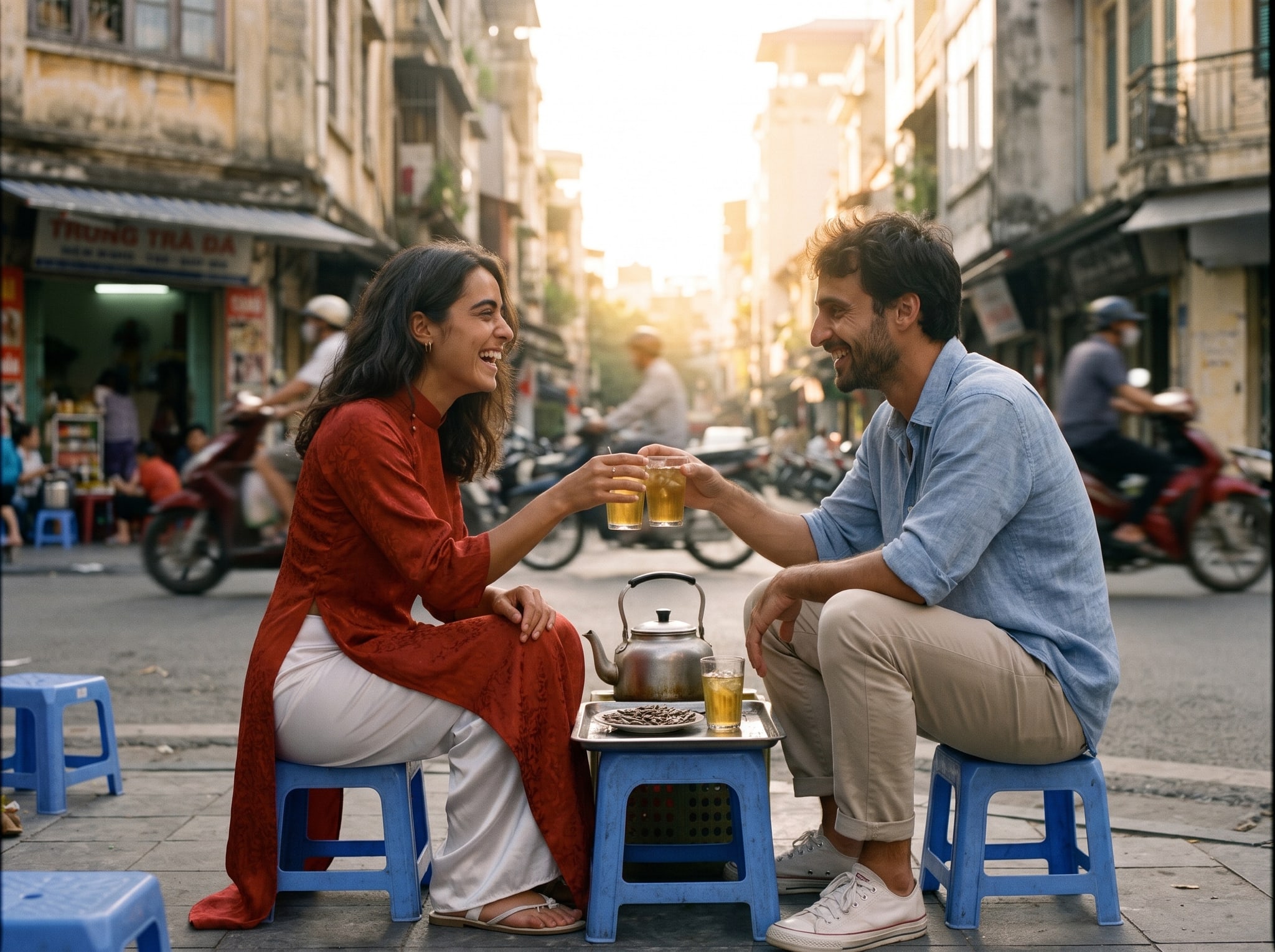
We've noticed that medium-weight cotton and cotton-linen blends hold their shape during a 2–3 hour shoot without wrinkling severely—silk can slip and shift under studio lights. Jewel tones (emerald, sapphire, burgundy) create depth and contrast against Hanoi's architecture or Saigon's colonial backdrops. Pastels (soft pink, cream, lavender) work best outdoors in morning or golden-hour light; under harsh midday sun, they can wash out in photographs. Neutral creams and warm beiges are forgiving for all skin tones and backgrounds. We always ask guests to bring a steamer or accept one of our on-set press services—a wrinkled khan dong reads poorly in close-up frames, especially around the shoulders and sleeves.
See packages and prices on vietnamphotoshoot.com
Which body types and heights work best in khan dong photos?
Khan dongs suit all body types because they don't cling—our team has styled guests from petite to plus-size in single sessions without alterations. For guests under 5'2", we recommend knee-length khan dongs to avoid looking swallowed by fabric; taller guests (5'8"+) can wear longer cuts that graze mid-calf or floor without looking cropped. Guests with broader shoulders photograph better in unstructured fabrics that drape softly rather than crisp cottons that emphasize width. During consultations on WhatsApp, we ask for your height, shoulder width, and how you typically dress—this helps us suggest a cut and fit that feels natural and moves well on camera. We've also found that layering a fitted long-sleeve shirt under an open khan dong creates visual structure without sacrificing comfort.
How do you style a khan dong for different shoot types?
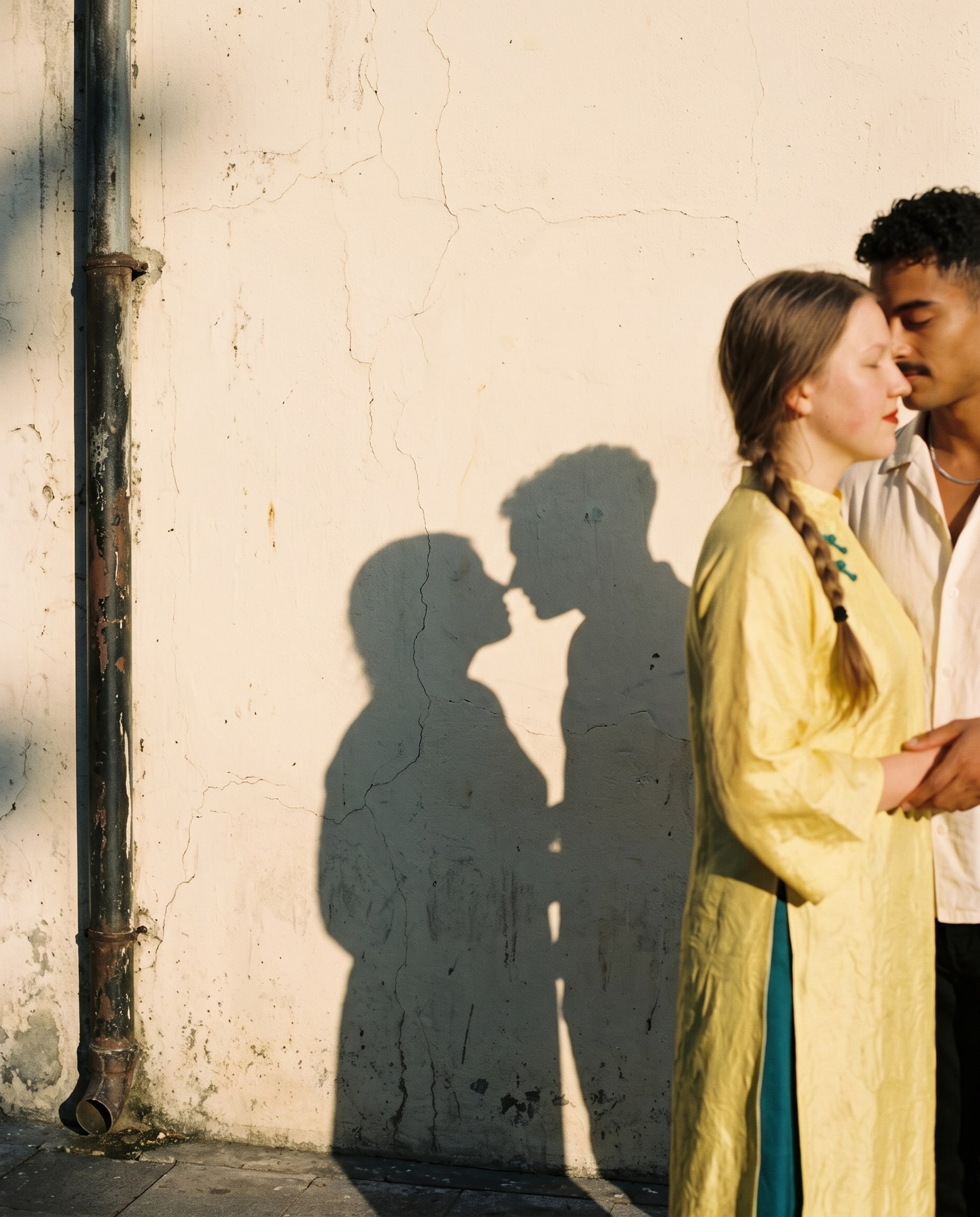
For ao dai photoshoots, we pair khan dongs with simple silk trousers and minimal jewelry to let the garment breathe. In couple sessions, we dress one partner in a khan dong and the other in complementary neutral separates—this creates harmony without matching. For pre-wedding and elopement shoots, we layer a khan dong over a delicate slip or camisole and add a small silk scarf or chain for depth. In family photoshoots, we often style the matriarch in a khan dong with her children in simple ao dai or modern dress—the khan dong grounds the composition visually. For special concept shoots, we've styled khan dongs with vintage sunglasses, modern sneakers, and urban backdrops to create a bridge between tradition and contemporary fashion. The key is balance: the khan dong is the anchor, so everything else should recede.
| Shoot Type | Khan Dong Style | Pairing | Best For |
|---|---|---|---|
| Ao dai photoshoot | Jewel tone, knee-length | Silk trousers, minimal jewelry | Cultural authenticity |
| Couple session | Neutral or pastel | Partner in complementary separates | Harmony without matching |
| Pre-wedding | Structured fabric, jewel tone | Slip, small accessories | Romantic, editorial look |
| Family group | Cream or warm beige | Simple children's áo dai | Intergenerational unity |
| Concept/urban | Pastel or neutral | Modern sneakers, layered pieces | Fashion-forward, lifestyle feel |
What should you check before ordering or borrowing a khan dong?
Fit checklist:
- Shoulder seams sit at your natural shoulder point, not drooping or pulling.
- Sleeve length ends at wrist bone when arms hang naturally; too short reads sloppy on camera.
- Chest area allows a flat hand to slip underneath without bunching or gaping.
- Hem length is intentional (knee, mid-calf, floor)—no accidental shortness from shrinkage or rushing.
Fabric checklist:
- Inspect seams under studio lights; loose threads catch and distract in close-ups.
- Check color consistency (some vintage khan dongs fade unevenly); photograph a swatch in daylight and studio light.
- Feel the weight—if it's too light, it'll flutter and blur in movement; too heavy, and it'll photograph stiffly.
Before your session:
- Wash and dry the khan dong 24 hours prior; don't arrive wrinkled.
- Try it on with the exact undergarments and footwear you'll wear; this prevents wardrobe surprises mid-shoot.
- Bring a backup option if you're unsure; we've had guests swap outfits mid-session and captured their best frames in the second choice.
Many of our guests borrow khan dongs locally in Hanoi near the Old Quarter or Saigon's District 1, then bring them to the studio. We can also recommend trusted tailors if you want a custom fit. If ordering online, allow 10–14 days for arrival and fit checks before your session date.
FAQ
Can I wear a khan dong if I've never worn traditional Vietnamese dress before?
Absolutely. Khan dongs are designed for modern, casual wear—no undergarments, complex layers, or hair pins needed. We style international guests in them regularly. Wear it like a linen shirt; the only difference is cultural significance and how it photographs under studio lights.
What's the difference between a khan dong and a simple tunic or shirt?
A khan dong is cut and proportioned specifically for Vietnamese aesthetics—higher neckline, longer sleeves, and a structured hang that flatters the torso. A regular tunic or button-up shirt won't read the same in photographs or feel as connected to the culture you're celebrating in your shoot.
How long does it take to put on and adjust a khan dong before shooting?
3–5 minutes for the garment itself, plus 5 minutes for steaming or pressing if needed. Our team does final adjustments (sleeve position, hem straightness, collar alignment) while you're in hair and makeup, so you're camera-ready by the time the photographer is set.
Can I wear a khan dong in different seasons or weather?
Yes. Lightweight cotton and linen khan dongs work well in hot, humid weather (summer in Saigon or Hanoi). Silk blends add structure for cooler months or air-conditioned indoor studios. We advise against synthetic fabrics—they trap sweat and photograph with shine under lights.
Should I buy a khan dong or rent/borrow one for my photoshoot?
If this is your only photoshoot in Vietnam, renting is economical and less storage burden. If you plan multiple sessions or want to take it home as a keepsake, buying a quality piece makes sense. We can advise based on your shoot plan when you WhatsApp us.
Ao Dai Photoshoot
Inclusions, prices and booking are on our booking site.
FAQ
Can I wear a khan dong if I've never worn traditional Vietnamese dress before?
Absolutely. Khan dongs are designed for modern, casual wear—no undergarments, complex layers, or hair pins needed. We style international guests in them regularly. Wear it like a linen shirt; the only difference is cultural significance and how it photographs under studio lights.
What's the difference between a khan dong and a simple tunic or shirt?
A khan dong is cut and proportioned specifically for Vietnamese aesthetics—higher neckline, longer sleeves, and a structured hang that flatters the torso. A regular tunic or button-up shirt won't read the same in photographs or feel as connected to the culture you're celebrating in your shoot.
How long does it take to put on and adjust a khan dong before shooting?
3–5 minutes for the garment itself, plus 5 minutes for steaming or pressing if needed. Our team does final adjustments (sleeve position, hem straightness, collar alignment) while you're in hair and makeup, so you're camera-ready by the time the photographer is set.
Can I wear a khan dong in different seasons or weather?
Yes. Lightweight cotton and linen khan dongs work well in hot, humid weather (summer in Saigon or Hanoi). Silk blends add structure for cooler months or air-conditioned indoor studios. We advise against synthetic fabrics—they trap sweat and photograph with shine under lights.
Should I buy a khan dong or rent/borrow one for my photoshoot?
If this is your only photoshoot in Vietnam, renting is economical and less storage burden. If you plan multiple sessions or want to take it home as a keepsake, buying a quality piece makes sense. We can advise based on your shoot plan when you WhatsApp us.
More from the team
Ao Dai Photos at Hoi An Lantern Street at Night
Hoi An Lantern Street (Nguyen Hoan) glows at dusk with silk lanterns and reflected light. Our team shoots ao dai here after dark, navigates tight vendor spaces, and handles the low-light challenge with experience from 100+ night sessions.
Ao dai for wedding photos in Quy Nhon: renting, fitting and styling
Quy Nhon's coastal backdrops pair beautifully with traditional ao dai. We walk through rental choices, fitting logistics and how our team coordinates styling on shoot day.
Vietnam Pre-Wedding Photoshoot: What We Book at Cáo Studio
Pre-wedding shoots in Vietnam mean morning light in Hoi An's Old Town, cyclos in Saigon, or terraced fields near Ninh Binh. We walk you through what a session actually costs, how we schedule it, and what goes wrong on the day.