 Cáo Studio
Home › Blog › Pre-Wedding & Elopement
What to Wear for a Pre-Wedding Photoshoot in Ha Giang
By the Cáo Studio team · Hanoi & Saigon · 2026-11-02
Ha Giang pre-wedding shoots require outfits that survive rough mountain terrain while staying camera-ready. We run dozens of sessions here each year, and our team has learned that soft, flowing fabrics and neutral tones work best against the grey stone and green valleys. Avoid heavily beaded or trailing áo dài unless you're shooting on flat ground near villages; choose breathable cotton or silk blends that won't catch on rocks or dirt roads. Most couples bring two to three outfit changes—a formal áo dài for village scenes, casual denim or linen for hiking shots, and one metallic or jewel-tone piece for sunset. Budget time for outfit changes on the road (we pack spare shoes and safety pins). See our pre-wedding packages for styling guidance tailored to Ha Giang's light and landscape. Chat with us on WhatsApp
What fabric actually survives a day on Ha Giang's roads?
Cotton-silk blends and linen breathe in the heat and dry quickly if you hit morning dew. Polyester wrinkles badly in our vehicle and shows every dust particle on camera. We've watched couples regret heavy velvet or satin that clings to skin in 28°C humidity and snags on limestone. Stick to natural fibres or performance blends designed for outdoor wear. Silk alone photographs beautifully but stains easily; we usually recommend a cotton-silk mix (at least 60% cotton) that gives you the sheen without the liability. Test your fabric choice beforehand—if it wrinkles when you ball it up, it'll crease badly during a four-hour shoot.
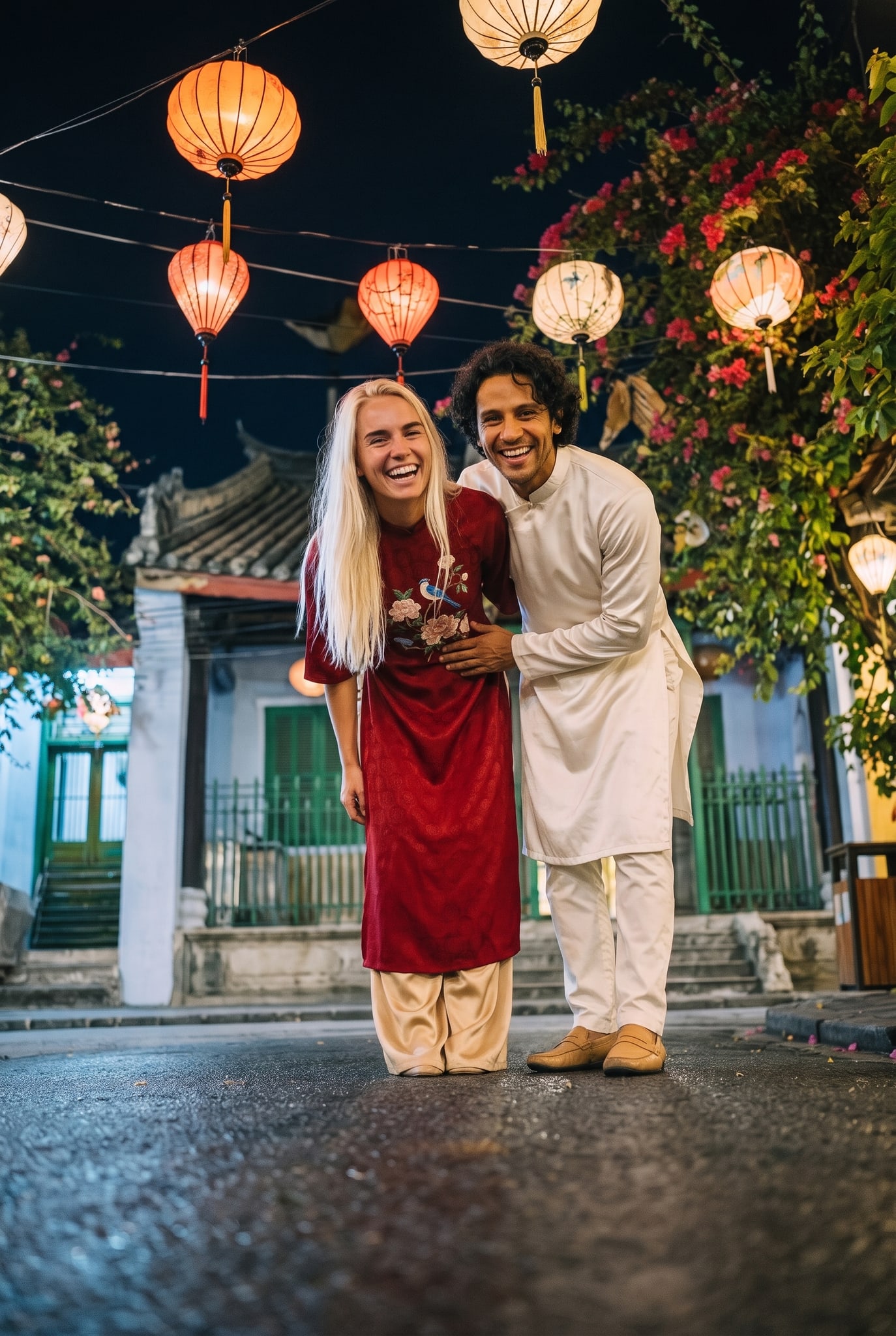
Should you wear áo dài, Western dress, or both?
This depends on your story and the locations we scout. An áo dài works perfectly for village scenes, temple steps, and rice paddies—the silhouette reads beautifully against natural backdrops, and it's what Ha Giang locals expect to see in formal photographs. Western formal wear (linen suits, structured dresses) suits urban edges like Hà Giang City's colonial buildings and market streets. Most couples we work with bring both: áo dài for sunrise at Đồng Văn Karst Plateau, a tailored Western outfit for midday in town, and casual layers for hike-in shots near waterfalls.
We've found that mixing—a simple dress with a traditional silk scarf, or tailored trousers with a hand-embroidered áo dài top—reads as modern and personal, not costume-like. If you choose áo dài, order or rent it at least two weeks before your shoot so we can style it properly. Avoid heavily embellished versions unless you're shooting in studio light; the detail gets lost in natural landscapes.
See packages and prices on vietnamphotoshoot.com
What footwear doesn't slip on limestone or get stuck in mud?
Hiking boots, flat sandals with grip, or minimalist trail shoes. Never wear heels on Ha Giang's roads—we've had to help couples down gravel paths in 10cm stilettos, and it delays the shoot and risks injury. We always pack a spare pair of soft shoes for outfit changes. If you love the look of heels in photos, wear them only for flat, paved village scenes (maybe 15 minutes total), then switch back. Leather-soled formal shoes slip on wet stone. Runners work but can look casual; if that's your vibe, choose all-white or simple leather designs that feel intentional, not like gym shoes.
We recommend testing your footwear on rough ground before the shoot day. Many couples buy a pair of trail sandals they've never worn, then spend the first hour breaking them in while their feet hurt—plan outfit details down to shoes, and practice in them.
How many outfit changes should you plan, and how long does each take?
Three outfit changes fit a standard pre-wedding package across a 5–6 hour day. First change (áo dài or formal wear): we arrive at your hotel early, do final hair and makeup touch-ups, then shoot 1.5–2 hours in one location. Second change (casual, outdoor-ready): 20–30 minutes in a van or rest stop to swap clothes, fix hair, reapply lip colour. Third change (optional, evening or styled casual): another 20 minutes before sunset.
We've learned to time outfit changes during natural breaks—while we scout the next location, or when light shifts. Rushed changes show in photos (wrinkled fabric, messy hair). Bring a lightweight steamer and extra bobby pins. If you're changing in a vehicle, wear slip-on layers that don't require a mirror. We pack a portable makeup kit and always have wet wipes and a hand mirror in the van. Two changes is realistic if you want unhurried, high-quality shoots; three is doable but means tighter scheduling.
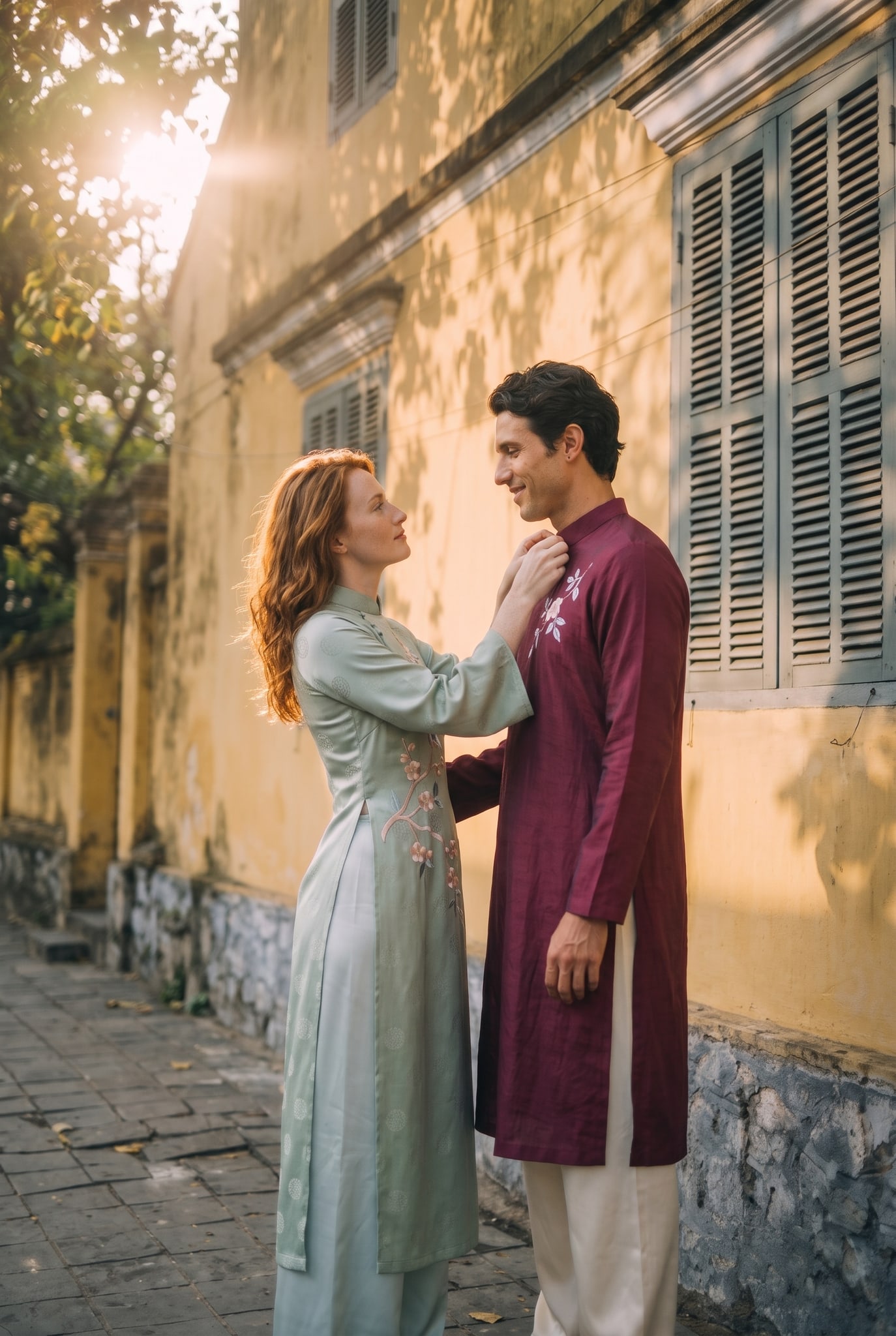
Which colours photograph best against Ha Giang's grey stone and green valleys?
Comparison table: what we see through the lens across different colour choices.
| Colour | Works best in | Why it reads on camera | What to avoid |
|---|---|---|---|
| Cream, ivory, soft white | Morning light, village scenes | Separates from green, doesn't fade | Bright white (blown-out highlights) |
| Navy, charcoal, deep grey | Golden hour, karst backdrops | Contrasts limestone, feels formal | Black (absorbs light, looks flat) |
| Jewel tones (emerald, sapphire, burgundy) | Sunset, overcast days | Rich and cinematic, doesn't wash out | Neon or electric versions |
| Blush, mauve, terracotta | Midday, near earth tones | Soft, romantic, complements skin | Pastel pink (disappears in shade) |
| Earth tones (tan, olive, rust) | Overcast, dappled light | Harmonizes with landscape, feels grounded | Khaki (too close to rock and dirt) |
Our stylists avoid matching your outfit to the background—it flattens the image. Instead, we choose complementary colours that "pop" without clashing. Soft white áo dài against grey karst, navy suit against golden rice paddies, deep jewel tone at dusk. Ask us about colour consultation when you book; we'll send you reference photos from similar shoots in the region.
What to check before you buy or rent an outfit
- Fit and movement: Try on everything and walk, sit, and reach upward. A tight áo dài waist or restrictive dress waistband will feel awful after hour three and show as tension in your face.
- Fabric care: Know how to hand-wash or dry-clean your pieces. If you're renting, confirm the rental house's damage policy—we've seen couples charged heavily for grass stains that wouldn't have happened with proper care instructions.
- Seams and stitching: Check for loose threads, unravelling seams, or holes. Poor seams catch on rocks and tear during active shooting, especially on mountain terrain.
- Sleeve and hem length: Verify that sleeves don't bunch when you raise your arms, and hems don't drag on the ground (they'll collect dirt and snag on roots). Have them tailored if needed.
- Undergarments and layering: Wear what you'll actually wear on shoot day. Invisible bra clips, shapewear, and proper base layers matter for comfort and silhouette. Avoid anything that creates visible panty lines or bunching under fabric.
- Backup outfits: Always have a second option. We've arrived at shoots to find a dress wrinkled, a rented piece damaged in transit, or a couple's preference changed overnight. A simple backup outfit saves the morning.
- Practise posing: Wear your outfit at home and photograph yourself in natural light. You'll spot unflattering angles, transparency issues, or fabric behaviour you didn't expect.
Ready to shoot in Ha Giang?
Book a pre-wedding session with us and we'll guide you through outfit choices specific to your locations and season. If you're also considering an áo dài photoshoot or want professional styling and makeup, our hotel makeup and hair service is available in Hà Giang City and larger towns. For couples who want concept or destination work, explore our special concept packages.
See packages and prices on vietnamphotoshoot.com
FAQ
Can I wear the same áo dài or dress for multiple outfit "changes"?
Yes, if you style it differently—different accessories, underpinnings, or layering pieces. We've paired one áo dài with three different belts, scarves, and shoes to create distinct looks. This works if your shoot is five hours or fewer. For longer days, a genuinely new outfit prevents visual repetition and gives you more variety in the final gallery.
What if my outfit gets torn or badly stained during the shoot?
We carry a basic sewing kit and stain remover. We've patched rips, cleaned mud, and pinned wrinkles on set. If damage is major, we pivot to a backup location or outfit. Always inform us beforehand if you're borrowing a rented piece so we can be extra careful and carry appropriate repair supplies.
Should I bring jewellery, or will it distract from the landscape?
Simple, delicate pieces (small earrings, thin bracelets, a pendant) enhance rather than distract. Avoid chunky rings, anklets, or statement necklaces unless they're part of your aesthetic. We ask you to avoid anything that glints unevenly in sunlight or clanks audibly—it complicates editing and sound if you're filming. Bring jewellery options and we'll style them on the morning of.
How do I know if an outfit works without seeing it on camera first?
Send us photos of your outfit choices via WhatsApp before the shoot date. Our stylists will give you honest feedback—which pieces work for Ha Giang's light, which colours suit you, whether proportions flatter your frame. This is free and takes 24 hours. We'll also recommend adjustments (hemming, belt choices, layering) so you feel confident on the day.
Can you recommend a tailor or rental shop in Hanoi or Ha Giang?
We work regularly with tailors in Hanoi (Hoan Kiem and Ba Dinh districts) and one trusted seamstress in Hà Giang City. These aren't chain shops, and they require 10–14 days for bespoke áo dài. We'll introduce you directly when you book. For quick rentals, larger hotels in Hà Giang City can point you toward local options, but quality varies widely. We recommend renting or purchasing in Hanoi and carrying pieces with you.
What's the best time of year to shoot in Ha Giang, and does season change what I should wear?
September–October (autumn) and March–April (spring) offer clear skies and cool temperatures. Winter (December–February) is cold and misty—wear layers and weatherproof fabrics. Summer (May–August) is humid and rainy; pack quick-dry fabrics and waterproof undergarments. We'll discuss seasonal outfit choices when you book and send you packing lists tailored to your shoot date.
Pre-Wedding & Elopement
Inclusions, prices and booking are on our booking site.
FAQ
Can I wear the same áo dài or dress for multiple outfit "changes"?
Yes, if you style it differently—different accessories, underpinnings, or layering pieces. We've paired one áo dài with three different belts, scarves, and shoes to create distinct looks. This works if your shoot is five hours or fewer. For longer days, a genuinely new outfit prevents visual repetition and gives you more variety in the final gallery.
What if my outfit gets torn or badly stained during the shoot?
We carry a basic sewing kit and stain remover. We've patched rips, cleaned mud, and pinned wrinkles on set. If damage is major, we pivot to a backup location or outfit. Always inform us beforehand if you're borrowing a rented piece so we can be extra careful and carry appropriate repair supplies.
Should I bring jewellery, or will it distract from the landscape?
Simple, delicate pieces (small earrings, thin bracelets, a pendant) enhance rather than distract. Avoid chunky rings, anklets, or statement necklaces unless they're part of your aesthetic. We ask you to avoid anything that glints unevenly in sunlight or clanks audibly—it complicates editing and sound if you're filming. Bring jewellery options and we'll style them on the morning of.
How do I know if an outfit works without seeing it on camera first?
Send us photos of your outfit choices via WhatsApp before the shoot date. Our stylists will give you honest feedback—which pieces work for Ha Giang's light, which colours suit you, whether proportions flatter your frame. This is free and takes 24 hours. We'll also recommend adjustments (hemming, belt choices, layering) so you feel confident on the day.
Can you recommend a tailor or rental shop in Hanoi or Ha Giang?
We work regularly with tailors in Hanoi (Hoan Kiem and Ba Dinh districts) and one trusted seamstress in Hà Giang City. These aren't chain shops, and they require 10–14 days for bespoke áo dài. We'll introduce you directly when you book. For quick rentals, larger hotels in Hà Giang City can point you toward local options, but quality varies widely. We recommend renting or purchasing in Hanoi and carrying pieces with you.
What's the best time of year to shoot in Ha Giang, and does season change what I should wear?
September–October (autumn) and March–April (spring) offer clear skies and cool temperatures. Winter (December–February) is cold and misty—wear layers and weatherproof fabrics. Summer (May–August) is humid and rainy; pack quick-dry fabrics and waterproof undergarments. We'll discuss seasonal outfit choices when you book and send you packing lists tailored to your shoot date.
More from the team
Boho pre-wedding photoshoot in Vietnam: Hanoi, Saigon, Hoi An
Boho pre-wedding shoots mix romantic, free-spirited aesthetics with Vietnam's landscapes and heritage sites. We run full-day sessions in three cities, handling styling, makeup, location scouts and edits.
Avoid crowds at Hoang Su Phi rice terraces: timing for wedding shoots
Hoang Su Phi's terraced landscape draws couples and tour buses in equal measure. We show how to shoot there alone, when to arrive, and what to arrange with us before you go.
Photography rules at Con Dao beaches: permits, drones and what to check
Con Dao's beaches demand prep before you shoot—permits, drone zones and tide timing all affect your day. We share what the Cáo Studio team verifies on every booking.