 Cáo Studio
Home › Blog › Pre-Wedding & Elopement
What to wear for a pre-wedding photoshoot in Ha Long Bay
By the Cáo Studio team · Hanoi & Saigon · 2026-11-02
Ha Long Bay pre-wedding shoots run 3–4 hours—usually a boat session (cruising past karsts, sunrise or golden-hour light) plus a beach or rock landing. Your outfit needs to survive wind, humidity and sea spray while looking intentional in photos. At Cáo Studio, we recommend one main look (áo dài, dress, suit) plus one casual change so you have variety in your edited gallery. Lightweight breathable fabrics (cotton, linen blends, silk) matter more than heavy materials; avoid pure white (too bright against limestone), overly loose sleeves (tangle in wind), and anything with loose sequins or beads (they catch light unpredictably on water). Most couples budget for styling consultation before the shoot—our stylists review your Pinterest pins, check the forecast, and confirm fabric weight by video call. Shoes stay aboard the boat or in a waterproof bag; you'll walk barefoot on most landing sites. --- Chat with us on WhatsApp | See packages and prices on vietnamphotoshoot.com
Why wind and salt spray change what actually works on the water
Ha Long Bay morphs every outfit. We've shot at Cat Ba Island, Titop Beach, and limestone caves where the wind funnels between rock walls and picks up sea salt. Loose fabrics billow the wrong way; heavier silks stay put. Cotton and linen wrinkle fast but photograph softer than synthetics. Salt spray dries grainy on silk if you don't rinse it same-day, so we always tell guests: bring a change-of-clothes bag back to your hotel. Our stylists note humidity breaks down synthetic dyes (reds and deep purples fade ugliest), so if your dress is deep burgundy polyester, skip it. Stick to natural fibers or high-quality poly blends labeled "breathable" on the tag. The boat deck stays wet in morning shoots; crew will hose down railings. Wear shoes you don't mind soaked until you reach a landing site—flip-flops, water sandals, old sneakers.
What color palette actually stands out against limestone and turquoise water
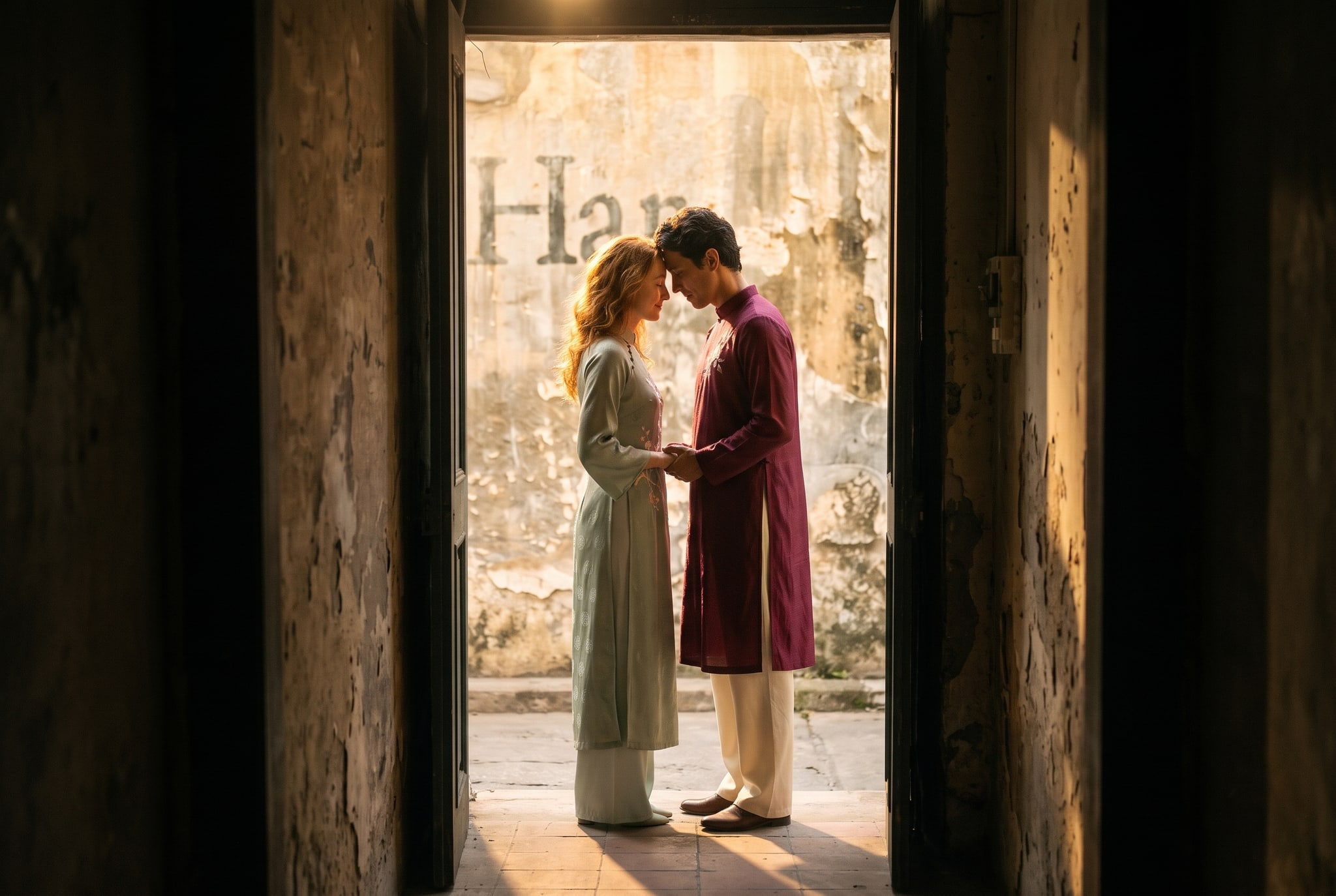
White washes out. Pale pastels disappear. We've retouched hundreds of photos where a soft pink dress merged into the sky. Go jewel tones—emerald, sapphire, deep coral—or warm neutrals (terracotta, sand, warm gray). Couple outfits in contrasting colors work: one partner in midnight blue, the other in blush or champagne. Avoid neon (migraine-inducing on screen); avoid black unless it's your signature and you're sure—black absorbs heat on the boat and photographs flat against dark water at certain angles. Gold and bronze metallics catch water light beautifully (we see them in 80% of successful shots). If you're wearing an áo dài, choose one in a solid jewel tone or subtle brocade; the embroidery catches detail light best when the base is saturated. Check your color palette against a photo of Ha Long Bay itself—side-by-side your outfit and the limestone—before you confirm. Our stylists do this via WhatsApp video; ask us to review your outfit choice if you're unsure.
| Outfit Type | Best For | Fabric to Look For | Color Win/Lose | What to Check First |
|---|---|---|---|---|
| Áo dài (bride/groom/both) | Tradition + movement | Silk or silk-blend; 100% cotton for weight | Jewel tones, burgundy, navy | Length hits ankles (not tangled in wind), sleeve openings (not snagging boat railings) |
| Tailored suit (groom/one partner) | Formal + structured | Linen blend or cotton-poly; avoid 100% polyester | Charcoal, navy, warm gray | Jacket pulls open in wind—pin inside seams, or go sleeveless waistcoat |
| Flowing dress (bride/one partner) | Romantic, movement | Chiffon, gauze, cotton voile | Emerald, coral, dusty blue | Hem weight (sew small beads or fishing line inside if it's sheer) to keep it down in gusts |
| Beach-casual (change outfit) | Variety + contrast | Linen shorts, cotton tee, unstructured shirt | Warm sand, cream, muted tones | Wrinkles don't matter (they add texture); seams stay dry until you wade |
How we style your second outfit so it doesn't clash with the first
Most couples pick one formal look (áo dài, gown, suit) and one casual layer for the boat-to-beach transition. We recommend: if your main outfit is formal and jewel-toned, your change should be a linen button-up or oversized cotton shirt in a warm neutral—unfastened over a simple tank or tee. This gives the photographer three "acts" (formal departure, transitional candid, relaxed landing). Don't pick two equally formal outfits; you'll look overdressed and stiff in half your gallery. One couple we shot in Halong wore a burgundy áo dài for hour one, then changed into cream linen pants and a loose white shirt for the landing—the shift felt natural, and their editor had strong visual variety to work with. Color-block mixing works if you're intentional: emerald dress + tan linen shirt, navy suit + white cotton overshirt. Ask our stylists to map this out before you book; they'll send you reference photos of outfits that paired well in past shoots.
Chat with us on WhatsApp | See packages and prices on vietnamphotoshoot.com
What shoes and accessories survive salt water without ruining the look
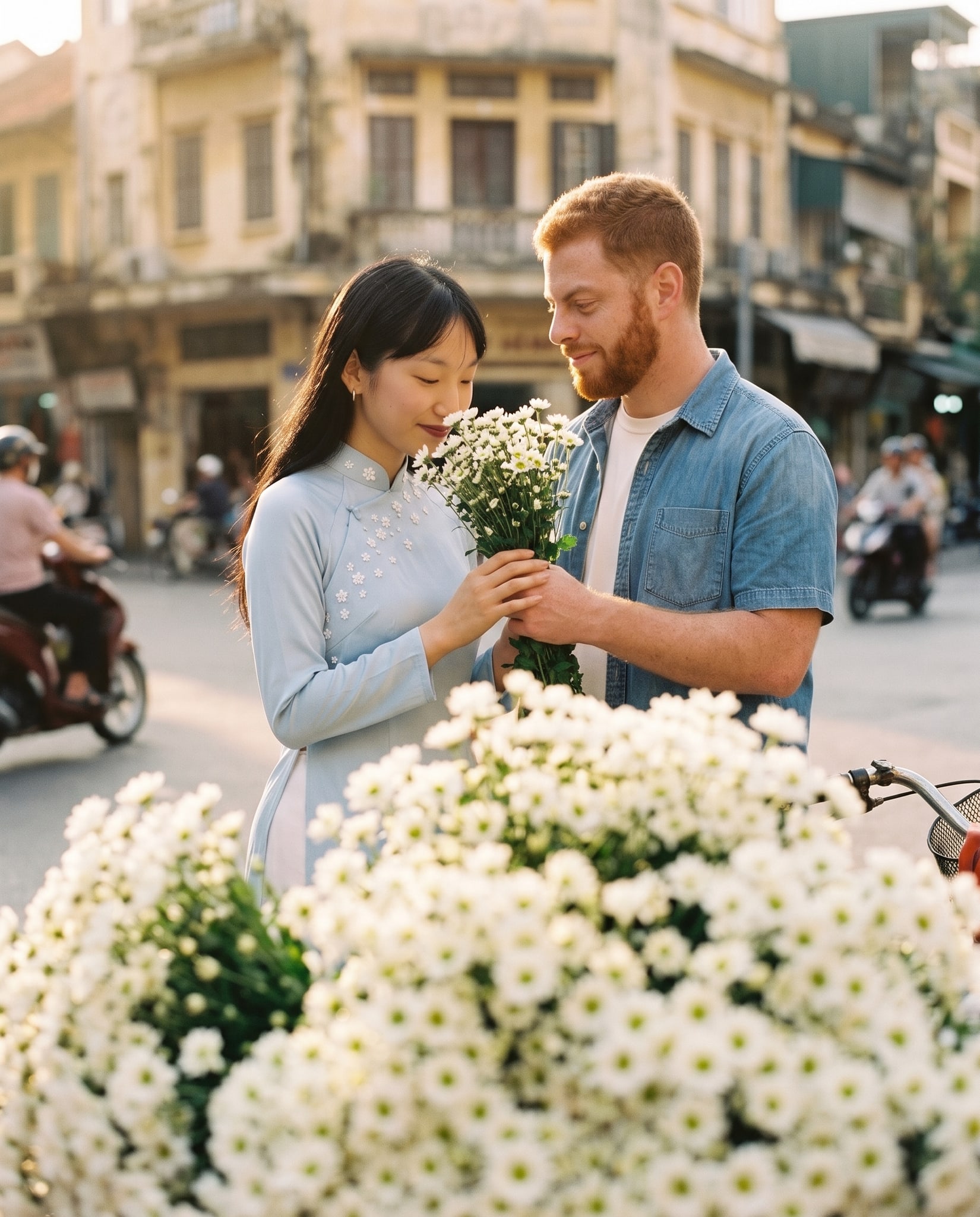
Leave your heels and delicate flats on the boat. Most landings on Ha Long Bay involve stepping from a tender onto rocks, sand, or a wooden platform—barefoot is normal and looks better in frame anyway. If you're uncomfortable barefoot, pack water sandals or old leather flip-flops that you don't mind throwing away after. One groom wore designer leather shoes, soaked them, and they cracked within a week; he regretted it. Jewelry: simple gold or silver chains, studs, and bangles survive salt. Avoid heavy chandelier earrings (they swing, catch weird angles, distract from your face). Skip rings with loose stones—they'll loosen in saltwater. If your áo dài has ornate bead work, that's your jewelry; don't add much else. Scarves and shawls work if they're silk or linen and you're willing to hold them loose (a pinned scarf flaps distractingly). For the change outfit, keep jewelry minimal—one statement ring or a single delicate chain. Hat or headwear? Avoid unless it's part of your vision; wind will dislodge it, and crew time is spent retrieving it instead of shooting.
Packing strategy: what to bring, what to leave, and what we handle on the day
Your styling starts the night before. Pack a waterproof tote or dry bag with: your main outfit and change outfit both folded loosely (wrinkles steam out with a kettle in your hotel room), underwear and a slip if needed, flip-flops or water sandals, a lightweight scarf or shawl you don't mind losing, a small mirror and lip balm, and a ziploc bag for a soaked phone. Leave jewelry at the hotel unless you're certain you want it in water. We provide a locked storage box aboard the boat; your bag stays there while you shoot. Sunscreen goes on 15 minutes before we board (water-resistant SPF 50+) because reapplying mid-shoot catches light and looks patchy in photos. Our team brings touch-up makeup, pins, and sewing kit in case a seam opens (it happens—usually a sleeve or hem in wind gusts). If your outfit tears, we stabilize it, and your editor removes the tear in post-processing. You don't pay extra for minor fixes like that. Bring a hair tie or clip if your hair is long and you might want it up; we'll have pins, but your preference matters more.
How we decide outfit timing by watching the light and water conditions
Morning shoots in Ha Long Bay (sunrise to 10 a.m.) mean cooler temps, calmer water, and golden light that flatters warm skin tones and jewel colors. You can wear a heavier áo dài or structured dress without overheating; color pops against the pale sky. Afternoon shoots (1–4 p.m.) bring harsh overhead light and reflection glare off water—darker, more saturated colors hold better, and looser, breathing fabrics prevent sweat marks showing in close-ups. Sunset shoots (4–6 p.m.) are the golden-light favorite, but water gets choppy, wind picks up, and temperature drops fast—bring a silk shawl or light layer you can put on between shots. Our photographers will tell you when conditions demand a wardrobe change; if the wind suddenly gusts and your dress is billowing completely out of frame, we pivot to a different location or pose instead of asking you to change. Outfit durability is secondary to safety and comfort. If you're cold, tell us. If your outfit is uncomfortable, tell us. A guest who feels good photographs well, even in less-perfect conditions.
Chat with us on WhatsApp | See packages and prices on vietnamphotoshoot.com
What to check before you order or pack your outfit
Fit & Movement: Try your main outfit and move your arms in large circles, bend forward, and jump slightly. Does the chest gap? Does the waist bunch? Does the hem wrap around your legs? If yes to any, have it tailored or pick a different cut. Wind will magnify fit issues.
Fabric Content: Check the tag. If it says "100% polyester" and you're not sure about breathability, ask the seller or our stylists (WhatsApp a photo of the tag). We can't tell you an exact fiber is "good" without seeing it, but we can tell you if it fits the Ha Long Bay brief.
Color in Daylight: Don't judge color under indoor shop lights. Take it outside at midday. Shoot a video of it in sunlight and send it to us; we'll tell you if it reads on camera the way you hope.
Seam Quality: Run your fingers along every seam, especially underarms and sleeves. Loose stitching + salt water + movement = stress. If you feel loose threads, have it reinforced or swap it.
Length & Hemming: If you're ordering online and the inseam or dress length is uncertain, measure yourself (waist to floor for a dress, shoulder to wrist for a sleeve) and compare to the seller's size chart. Bring a backup outfit if sizing feels risky.
Care Instructions: Read them. If it says "dry clean only," plan to dry clean it same-day after the shoot (salt residue sets in). If it's machine-washable, rinse it in cool water within hours to prevent salt staining.
A frame-by-frame look at how outfits behave during a real Ha Long Bay shoot
6 a.m.: Guests arrive at the dock in their change clothes (linen, cotton, casual). Main outfit is in a garment bag. Temperature: 18°C. Humidity: 85%. We board, and guests change into main outfits in the cabin. Áo dài fabrics are heavy enough to drape properly; a silk dress needs a slip underneath or it clings to the body in wind—this becomes obvious in photos.
6:45 a.m.: Golden light starts. Photographer positions guests on the upper deck. Wind is light (5 knots). Loose linen and chiffon float beautifully; cotton doesn't move as much but reads more structured. A groom in a linen suit finds the jacket billows awkwardly when he walks; we suggest he leave it unbuttoned and pin the inner seams back with safety pins—instant fix, takes two minutes.
8:30 a.m.: First location landing. Guests walk barefoot on wet rocks. No issues if shoes aren't waterlogged. One bride wore expensive heels for "getting off the boat" photos and regretted it; water ruined them, and she was barefoot anyway five minutes later.
9:15 a.m.: Wind picks up (10 knots). Sheer fabrics flap; áo dài hems lift. We shift to poses where the dress is held or anchored slightly. Synthetic fabrics with static cling look stuck to the body; natural fibers move with intention.
10 a.m.: Outfit change. Guests move to their second look (casual, neutral tones). This outfit needs to read as a natural shift—not a total costume change. If the bride swaps from burgundy áo dài to neon-pink casual wear, it feels jarring in the edited sequence. Warm sand, cream, or muted blue work as transitions.
11 a.m.: Shoot wraps. Guests change into dry clothes, rinse salt off skin, drink water. Salt-stiffened fabrics go into the dry bag.
Afternoon, at hotel: Guest soaks their outfit in cool water for 20 minutes, rinses gently, hangs to dry. Salt dissolves; fabric stays undamaged. If they don't rinse, salt crystals set in seams and cause itching.
Chat with us on WhatsApp | See packages and prices on vietnamphotoshoot.com
For your full pre-wedding session, explore our pre-wedding package options and our team's approach to couple photoshoots. If you're planning an áo dài-focused shoot, read more on styling for áo dài sessions. Check out other stories from our shoots to see how outfits performed in real conditions.
FAQ
Should I buy a new outfit or wear something I already own?
Wear something you already own if it fits perfectly and you're confident in the color on camera. New outfits often feel stiff and fit isn't confirmed until the day. If you buy new, order early enough to try it on, move in it, and have our stylists review it via WhatsApp. Used or borrowed áo dài work well if fabric is in good condition and seams are solid.
What if my outfit gets damaged during the shoot—who pays for it?
Minor damage (small seam splits, a loose sequin) we fix with our kit aboard or our editor removes in post-processing; no charge. If damage is severe (large rip, staining you can't rinse out), that's your responsibility to claim on travel insurance if you have it. We recommend travel insurance for all guests bringing valuable garments.
Can I wear my wedding dress on the boat in Ha Long Bay, or is it too risky?
Yes, couples do wear wedding dresses on Ha Long Bay shoots. Avoid ones with trailing skirts, heavy beading, or delicate lace that snags. A simple A-line or sheath dress in silk, satin, or cotton-blend works. Salt water stains white fabric; budget for professional cleaning same-day. If your dress is vintage or irreplaceable, consider renting a similar style for the boat instead.
How do I know if my outfit color will show up on camera?
Send us a video or photo of your outfit in natural daylight (not inside). Film it on your phone in the sun around midday and WhatsApp it to us with a photo of the limestone backdrop or Ha Long Bay water if you have one. Our stylists see hundreds of outfits and can tell you if it'll read well in frame. If we're unsure, we'll ask you to try it on in similar light and send another video.
Should I match my partner's outfit color, or should we wear contrasting colors?
Contrasting colors photograph stronger—one jewel tone, one warm neutral or a lighter shade of a different color family. Matching colors (both navy, both white) can read as one blob in wide shots and lose definition. Ask our stylists to suggest a pairing based on your skin tones; they'll send Pinterest references of complementary palettes that worked for past couples.
What if I'm uncomfortable going barefoot on rocks—can I wear special water shoes?
Yes. Water sandals, neoprene booties, or old leather flip-flops work. They'll be visible in lower-body shots, so pick something neutral (black, tan, gray). Avoid bright colors or logos that distract. Some couples bring minimalist water shoes (plain black canvas) for landing shots and go barefoot for the boat portion where they're framed from waist up.
Pre-Wedding & Elopement
Inclusions, prices and booking are on our booking site.
FAQ
Should I buy a new outfit or wear something I already own?
Wear something you already own if it fits perfectly and you're confident in the color on camera. New outfits often feel stiff and fit isn't confirmed until the day. If you buy new, order early enough to try it on, move in it, and have our stylists review it via WhatsApp. Used or borrowed áo dài work well if fabric is in good condition and seams are solid.
What if my outfit gets damaged during the shoot—who pays for it?
Minor damage (small seam splits, a loose sequin) we fix with our kit aboard or our editor removes in post-processing; no charge. If damage is severe (large rip, staining you can't rinse out), that's your responsibility to claim on travel insurance if you have it. We recommend travel insurance for all guests bringing valuable garments.
Can I wear my wedding dress on the boat in Ha Long Bay, or is it too risky?
Yes, couples do wear wedding dresses on Ha Long Bay shoots. Avoid ones with trailing skirts, heavy beading, or delicate lace that snags. A simple A-line or sheath dress in silk, satin, or cotton-blend works. Salt water stains white fabric; budget for professional cleaning same-day. If your dress is vintage or irreplaceable, consider renting a similar style for the boat instead.
How do I know if my outfit color will show up on camera?
Send us a video or photo of your outfit in natural daylight (not inside). Film it on your phone in the sun around midday and WhatsApp it to us with a photo of the limestone backdrop or Ha Long Bay water if you have one. Our stylists see hundreds of outfits and can tell you if it'll read well in frame. If we're unsure, we'll ask you to try it on in similar light and send another video.
Should I match my partner's outfit color, or should we wear contrasting colors?
Contrasting colors photograph stronger—one jewel tone, one warm neutral or a lighter shade of a different color family. Matching colors (both navy, both white) can read as one blob in wide shots and lose definition. Ask our stylists to suggest a pairing based on your skin tones; they'll send Pinterest references of complementary palettes that worked for past couples.
What if I'm uncomfortable going barefoot on rocks—can I wear special water shoes?
Yes. Water sandals, neoprene booties, or old leather flip-flops work. They'll be visible in lower-body shots, so pick something neutral (black, tan, gray). Avoid bright colors or logos that distract. Some couples bring minimalist water shoes (plain black canvas) for landing shots and go barefoot for the boat portion where they're framed from waist up.
More from the team
Boho pre-wedding photoshoot in Vietnam: Hanoi, Saigon, Hoi An
Boho pre-wedding shoots mix romantic, free-spirited aesthetics with Vietnam's landscapes and heritage sites. We run full-day sessions in three cities, handling styling, makeup, location scouts and edits.
Avoid crowds at Hoang Su Phi rice terraces: timing for wedding shoots
Hoang Su Phi's terraced landscape draws couples and tour buses in equal measure. We show how to shoot there alone, when to arrive, and what to arrange with us before you go.
Photography rules at Con Dao beaches: permits, drones and what to check
Con Dao's beaches demand prep before you shoot—permits, drone zones and tide timing all affect your day. We share what the Cáo Studio team verifies on every booking.