 Cáo Studio
Home › Blog › Pre-Wedding & Elopement
What to Wear for a Pre-Wedding Photoshoot in Hoi An
By the Cáo Studio team · Hanoi & Saigon · 2026-11-01
A pre-wedding photoshoot in Hoi An is a 2–4 hour session where you wear one to three outfit changes across the Ancient Town, riverside, and rice paddies, styled by our team to complement the town's signature warm, lantern-lit ambiance. Most couples choose a tailored Western formal outfit (suit, dress) for opening shots, then switch to an áo dài—Vietnam's traditional tunic—for cultural depth and visual contrast. Hoi An's light is softest in early morning (6–8 a.m.) or late afternoon (4–6 p.m.); fabric choice matters enormously because humidity, reflectivity, and drape all shift between seasons and times of day. Cáo Studio sources áo dài from trusted local tailors or works with what you bring; we advise against heavy synthetics, loud logos, and oversized cuts that swallow the camera frame. The session includes styling guidance on WhatsApp before the shoot, on-set outfit decisions, and hair and makeup coordination if booked separately. --- Chat with us on WhatsApp | See packages and prices on vietnamphotoshoot.com
Why outfit choice shapes your Hoi An story more than location alone
Location matters, but fabric and silhouette matter more. We've shot the same couple in two outfits at the same lantern bridge—silk áo dài floats in golden hour; polyester dress flattens against riverside humidity. Hoi An's warm, diffused light at sunrise and sunset is forgiving, but it reveals every wrinkle, every cheap seam, every fabric that clings wrong. The town's narrow cobbled streets, timber-front shop houses, and reflective water create a visual feast; your clothes either amplify that richness or compete with it. We tell guests: dress in what makes you feel confident, then trust the tailor and the light to do the rest.
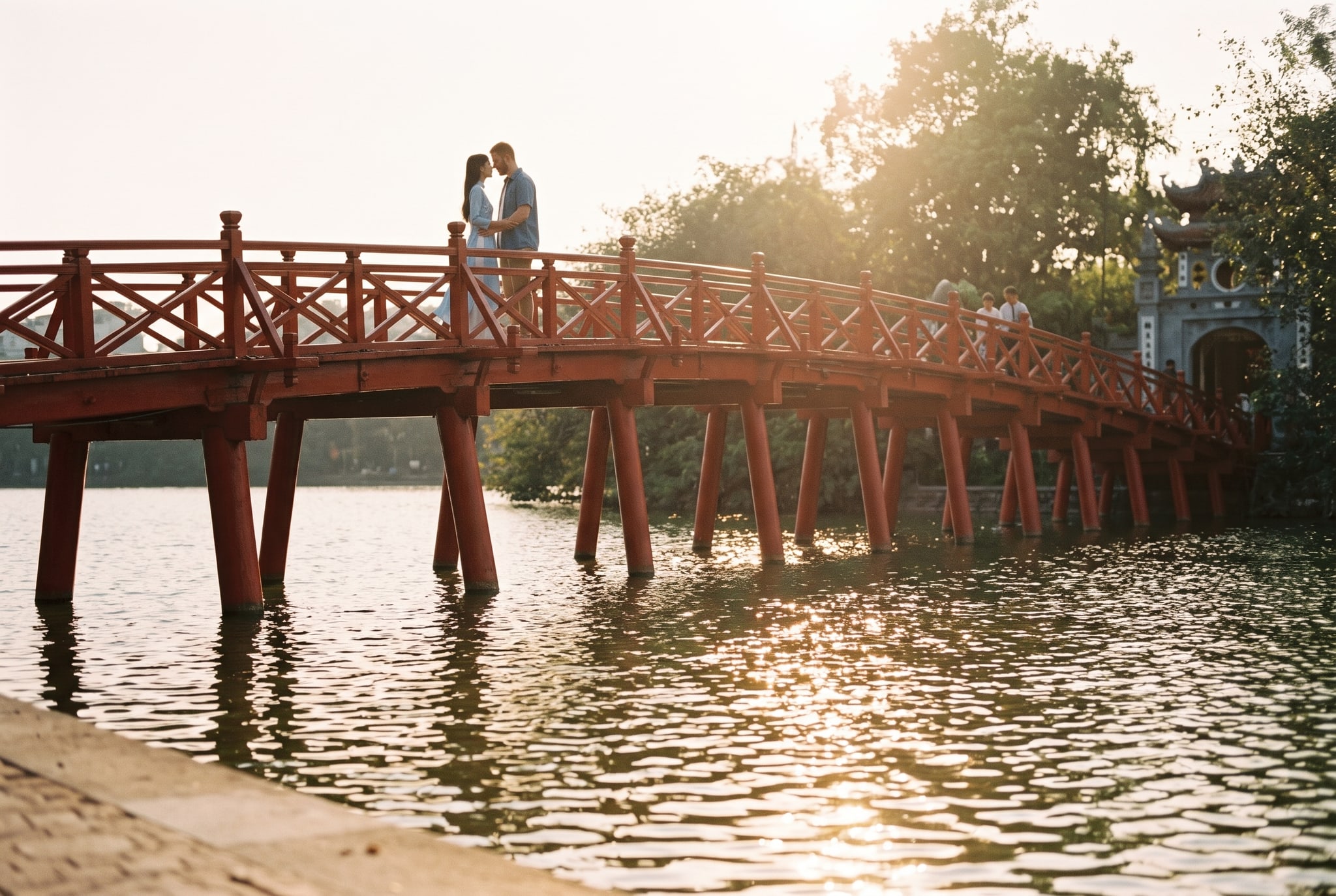
What fabric works in Hoi An's heat and humidity?
Hoi An averages 80–90% humidity March through October and 70–80% in cooler months (November–February). Breathable natural fibers—cotton, linen, silk, wool blends—drape cleanly and move with you; synthetic blends trap moisture and cling. Áo dài traditionally use silk, cotton-silk, or high-thread cotton; these fabrics photograph richly and feel cool on skin. For Western formal wear, linen trousers and cotton-blend shirts, or a silk or cotton-blend dress, hold shape and let air flow. Avoid polyester, cheap rayon, and plastic-feeling synthetics that photograph as flat and clammy. We've had guests arrive in party-store satin that looked plasticky by hour two; we redirected them toward the local tailor shop on Tran Phu Street for a same-day cotton áo dài rental, which saved the shoot.
Chat with us about outfit planning on WhatsApp | See our pre-wedding photoshoot packages
How to choose between Western formal and áo dài for each part of your shoot
| Outfit type | When to wear | Why it works | What to check |
|---|---|---|---|
| Tailored suit & dress | First 30–45 min, morning light, urban shots | Sharp lines read well in soft light; shows personality & style | Jacket fits shoulders; no excess fabric; trousers/dress hem is precise |
| Silk or cotton áo dài | Mid-to-late session, golden hour, riverside & temple shots | Floats beautifully; honors culture; warm light amplifies rich colors | Length hits ankle; sleeves sit at wrist; tunic doesn't bunch at waist |
| Casual cotton separates | Final 15 min, bridge or garden, softer mood | Relaxed energy; lets light play on texture; easy movement | Neutral color (cream, pale blue); fabric breathes; no logos or text |
We usually shoot the formal Western outfit first, when you're fresh and the light is flattest (less shadow under eyes, more even exposure). Then we move to áo dài as light grows warmer; silk and cotton pick up gold and amber beautifully in late afternoon. Save the casual change for final 15 minutes if energy dips or if you want a quieter, more intimate closing shot. This sequence also lets our team adjust makeup and hair once between looks—we're not running three separate touch-ups.
Which color palette reads strongest in Hoi An light?
Hoi An's ancient streets are gold, ochre, rust, and deep timber; lanterns cast amber. Clothes that echo these warm tones (cream, soft gold, rose, deep burgundy, forest green, navy) sit naturally in the frame. Bright white washes out skin in noon light but sings at sunrise; pure black can go muddy in shadows of shop-house arcades. Jewel tones—emerald, sapphire, plum—pop against ochre walls. Pastels (pale pink, lavender, powder blue) risk looking washed out in humidity unless paired with deep-toned shoes or jewelry. We advise: if you love a color, test it in Hoi An's light yourself before ordering, or ask us on WhatsApp to preview it against reference shots from similar light and time of year.
| Color choice | Best light | Risk | Our recommendation |
|---|---|---|---|
| Cream or soft ivory | Golden hour, sunrise | Washes out in harsh noon | First-outfit top choice; pairs with any áo dài |
| Navy or forest green | All day, especially sunset | Reads dark if no fill light | Safe, flattering, timeless |
| Dusty rose or mauve | Golden hour, late afternoon | Can look grey in flat light | Stunning with silk áo dài; avoid pre-10 a.m. |
| Pure white | Sunrise only, next to ochre walls | Reflects glare; flattens features mid-day | Limit to Western dress for opening shots |
| Jewel tones (emerald, sapphire) | Sunset, next to timber buildings | Too heavy if entire outfit | Perfect for áo dài accent color or trousers |
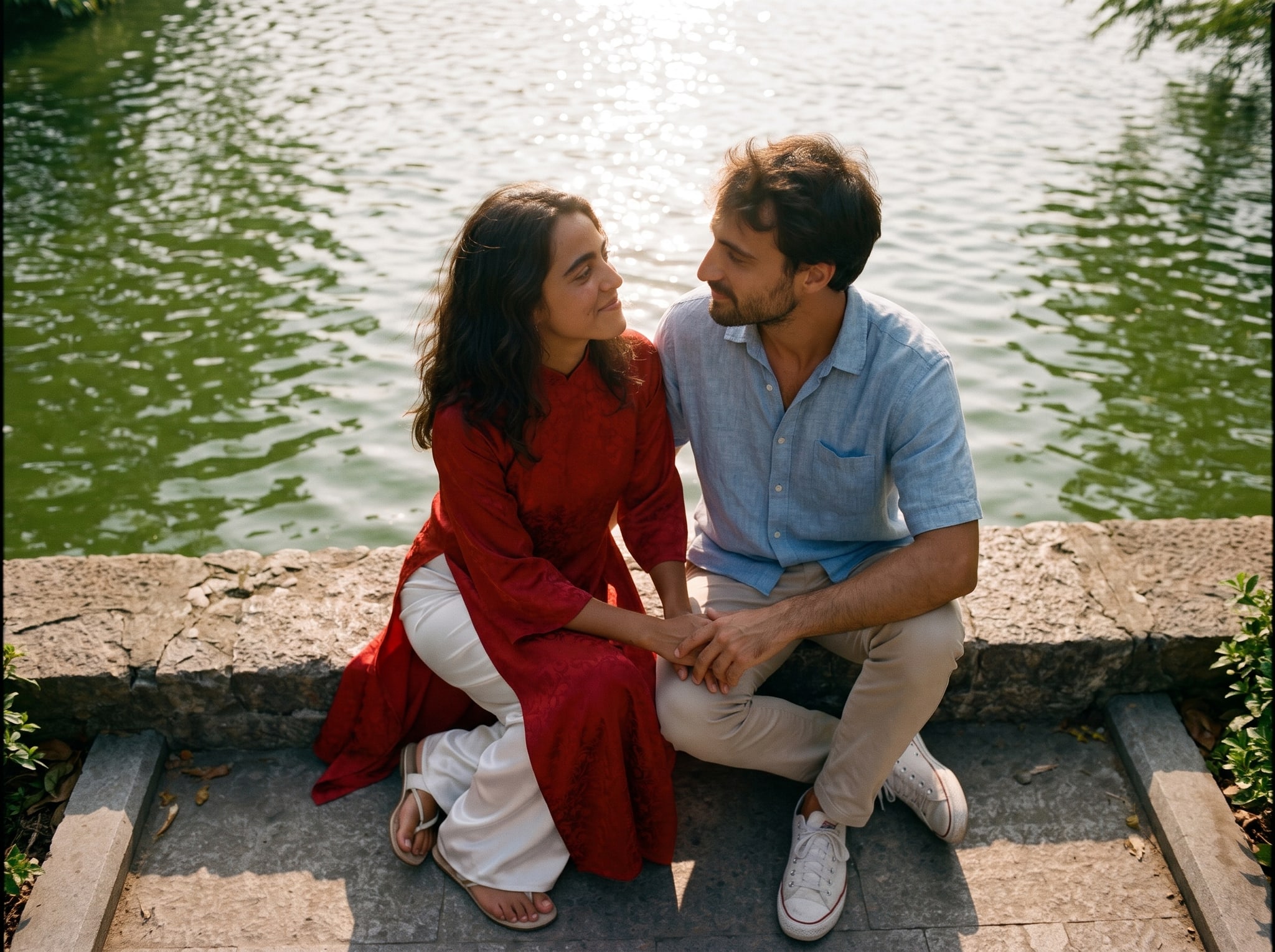
What size and fit to request from a Hoi An tailor for an áo dài
If you're ordering an áo dài locally, Hoi An's tailors on Tran Phu Street and around the market deliver in 2–5 days. Tell the tailor: fitted at shoulder and bust (no draping), waist seam sits at natural waist (not dropped), tunic length reaches ankle bone (not floor), slits rise to hip (enough to walk and sit comfortably), sleeves end at wrist bone. Provide chest, waist, hip, and inseam measurements in centimeters. Request natural fiber (silk, cotton, or a silk-cotton blend) in a color that complements your partner's outfit. We've seen guests order too-loose áo dài because they worried about heat; the tunic then photographs as a shapeless sack. Fitted áo dài actually breathes better because fabric sits away from skin. Ask the tailor to add interior pockets if it's a western-style áo dài with jacket—guests love this practical touch.
Order or check tailoring times with us on WhatsApp
What to check before you commit to any outfit
- Fabric care. If you're bringing clothes from home, wash and press them 2–3 days before the shoot so wrinkles settle. Humidity will creep wrinkles back in; we carry a portable steamer and iron on set, but fresh pressing beforehand saves 15 minutes of touch-up time.
- Undergarments. Wear the bra, shapewear, or undershirt you'll use on the shoot day during a fitting. Visible bra straps, panty lines, or too-loose undergarments under wet fabric ruin otherwise perfect shots. Light, breathable layers are your friend.
- Shoes. Hoi An's old streets are cobbled and slippery when wet. Wear comfortable, closed-toe shoes you can walk in for two hours. We've had guests arrive in brand-new heels that raised blisters by shot 20; they spent the last hour limping. Broken-in leather shoes, flat sandals, or ballet flats work. Shoes show in full-body shots, so pick something that ties your color palette together.
- Jewelry and accessories. Keep metal and reflective pieces minimal unless you love the glint. We avoid huge logos, flashing watches, and dangling earrings that catch light unpredictably. A simple necklace, subtle ring, or silk scarf often reads more elegantly than many pieces.
- Reserve outfit. If you're unsure about a fabric or color, bring a backup. Humidity can change how a color reads; a backup lets us pivot on the day without canceling.
- Fit test on camera. If you're ordering áo dài or a formal dress, ask the tailor or shop for a photo of a finished piece in similar light. Bring that photo to your pre-session WhatsApp call with us; we'll flag any fit concerns early.
How we adapt your outfit choices on the day
We arrive at your hotel 30 minutes before the shoot start to review what you've brought. We check fit, fabric hang, color in natural window light, and any last-minute wrinkles. If a color looks different than expected, we suggest a swap or adjust your position in the frame to catch better light. Humidity sometimes makes fabric cling; we carry styling tape, a steamer, and a wrinkle release spray. If an áo dài tunic twists at the waist, we pin it under the jacket (invisible on camera) or tie a small knot inside the seam. If trousers wrinkle in the car, we steam them on site. We've had guests worry their outfit was wrong until they saw the first test shot; light and posture transform fabric and color within seconds. Trust the process, and give our team time to find the best angle and light for what you've chosen.
More guidance for Hoi An photoshoots from Cáo Studio
We've shot pre-wedding photoshoots across Hoi An since 2019. If you want to add makeup and hair styling or explore concept shoots themed to Hoi An's history, we can coordinate those in the same session. Many couples combine a pre-wedding shoot with an ao dai photoshoot for deeper cultural immersion—two shoots, multiple outfit changes, double the memories. Read more stories from our team about what happens on the day and how we handle unexpected weather or timing shifts.
See packages and prices on vietnamphotoshoot.com | Chat with us on WhatsApp
FAQ
Should I bring clothes from home or order áo dài in Hoi An?
Both work. If you bring formal wear from home, arrive 2–3 days early to steam and fit-test it. If you order locally, start 5–7 days before your shoot and bring reference photos to the tailor. We can recommend trusted tailors and advise on fit via WhatsApp before you go.
What happens if my outfit doesn't fit or look good the morning of the shoot?
We have styling tape, a steamer, and a small wrinkle-release kit on set. We can also pivot to different light angles or poses to flatter the fabric. If an áo dài is truly too loose or tight, some Hoi An tailors do same-day emergency adjustments (confirm availability beforehand). We've never cancelled a shoot over fit; we always find a solution.
Can I wear shorts or casual clothes to a pre-wedding shoot?
Yes, if that's your style. We've done pre-wedding shoots in linen shorts and cotton shirts, and they photograph beautifully in golden hour. Casual wear reads more relaxed and intimate; formal wear reads timeless and classic. Choose what feels like you.
How much weight or bulk can fabric hide or show?
Fitted áo dài and tailored Western clothes flatter all body types because they follow your actual shape without excess fabric or too-tight binding. Flowing fabrics read elegant; oversized fabrics read shapeless. In natural light, wrinkles and cling-y fabric show more than in studio light. Choose fitted, breathable fabrics and let good posture do the rest.
Is white always the right choice for the bride in pre-wedding shots?
No. White works best at sunrise or in full shade (next to timber buildings). Cream, ivory, or pale pink often photograph more beautifully in Hoi An's warm light. If you love white, test it in golden hour light before committing, or save it for an indoor/studio setup where we control the light.
Pre-Wedding & Elopement
Inclusions, prices and booking are on our booking site.
FAQ
Should I bring clothes from home or order áo dài in Hoi An?
Both work. If you bring formal wear from home, arrive 2–3 days early to steam and fit-test it. If you order locally, start 5–7 days before your shoot and bring reference photos to the tailor. We can recommend trusted tailors and advise on fit via WhatsApp before you go.
What happens if my outfit doesn't fit or look good the morning of the shoot?
We have styling tape, a steamer, and a small wrinkle-release kit on set. We can also pivot to different light angles or poses to flatter the fabric. If an áo dài is truly too loose or tight, some Hoi An tailors do same-day emergency adjustments (confirm availability beforehand). We've never cancelled a shoot over fit; we always find a solution.
Can I wear shorts or casual clothes to a pre-wedding shoot?
Yes, if that's your style. We've done pre-wedding shoots in linen shorts and cotton shirts, and they photograph beautifully in golden hour. Casual wear reads more relaxed and intimate; formal wear reads timeless and classic. Choose what feels like you.
How much weight or bulk can fabric hide or show?
Fitted áo dài and tailored Western clothes flatter all body types because they follow your actual shape without excess fabric or too-tight binding. Flowing fabrics read elegant; oversized fabrics read shapeless. In natural light, wrinkles and cling-y fabric show more than in studio light. Choose fitted, breathable fabrics and let good posture do the rest.
Is white always the right choice for the bride in pre-wedding shots?
No. White works best at sunrise or in full shade (next to timber buildings). Cream, ivory, or pale pink often photograph more beautifully in Hoi An's warm light. If you love white, test it in golden hour light before committing, or save it for an indoor/studio setup where we control the light.
More from the team
Boho pre-wedding photoshoot in Vietnam: Hanoi, Saigon, Hoi An
Boho pre-wedding shoots mix romantic, free-spirited aesthetics with Vietnam's landscapes and heritage sites. We run full-day sessions in three cities, handling styling, makeup, location scouts and edits.
Avoid crowds at Hoang Su Phi rice terraces: timing for wedding shoots
Hoang Su Phi's terraced landscape draws couples and tour buses in equal measure. We show how to shoot there alone, when to arrive, and what to arrange with us before you go.
Photography rules at Con Dao beaches: permits, drones and what to check
Con Dao's beaches demand prep before you shoot—permits, drone zones and tide timing all affect your day. We share what the Cáo Studio team verifies on every booking.