 Cáo Studio
Home › Blog › Pre-Wedding & Elopement
What to Wear for a Pre-Wedding Photoshoot in Mui Ne
By the Cáo Studio team · Hanoi & Saigon · 2026-11-04
Pre-wedding shoots in Mui Ne run 6–8 hours across multiple locations: dunes at sunset, beaches at dawn, and pine-forest backdrops. Guests wear 2–3 outfits per session. The Vietnamese áo dài works beautifully in dunes but needs careful styling; casual linen or cotton layers suit beach and forest scenes. Sand sticks to everything; avoid dark fabrics that show dust, long sleeves that tangle in wind, and jewelry that catches on fabric. Most couples bring one áo dài (rent or own), one or two casual Western outfits, and a swimsuit-ready piece. Cáo Studio guides outfit choices during pre-shoot WhatsApp calls; we've seen guests arrive unprepared and spend the first hour frustrated. Plan layers, check weather 3 days before, and pack a change if humidity is high. Chat with us on WhatsApp | See packages and prices on vietnamphotoshoot.com
What makes Mui Ne different from Hanoi or Saigon shoots?
Mui Ne is 240 km from Ho Chi Minh City; the environment dominates outfit decisions in ways city shoots don't. We've done 140+ Mui Ne pre-wedding sessions since 2019, and the biggest mistake is dressing for Ho Chi Minh City humidity instead of coastal wind and sand. Dunes kick up red dust constantly—black jeans look gray by hour 3. Beaches have no shade; clothes fade under midday sun and wrinkle in salt spray. Pine forests are cool and damp, so layers work better than bare shoulders. Unlike Hanoi's old-town backdrops (walls, water, narrow streets), Mui Ne's landscape is the story—your clothes either flow with it or fight it. That means fabric weight, color, and drape matter more than in city sessions.
Which áo dài styles work best in wind and sand?
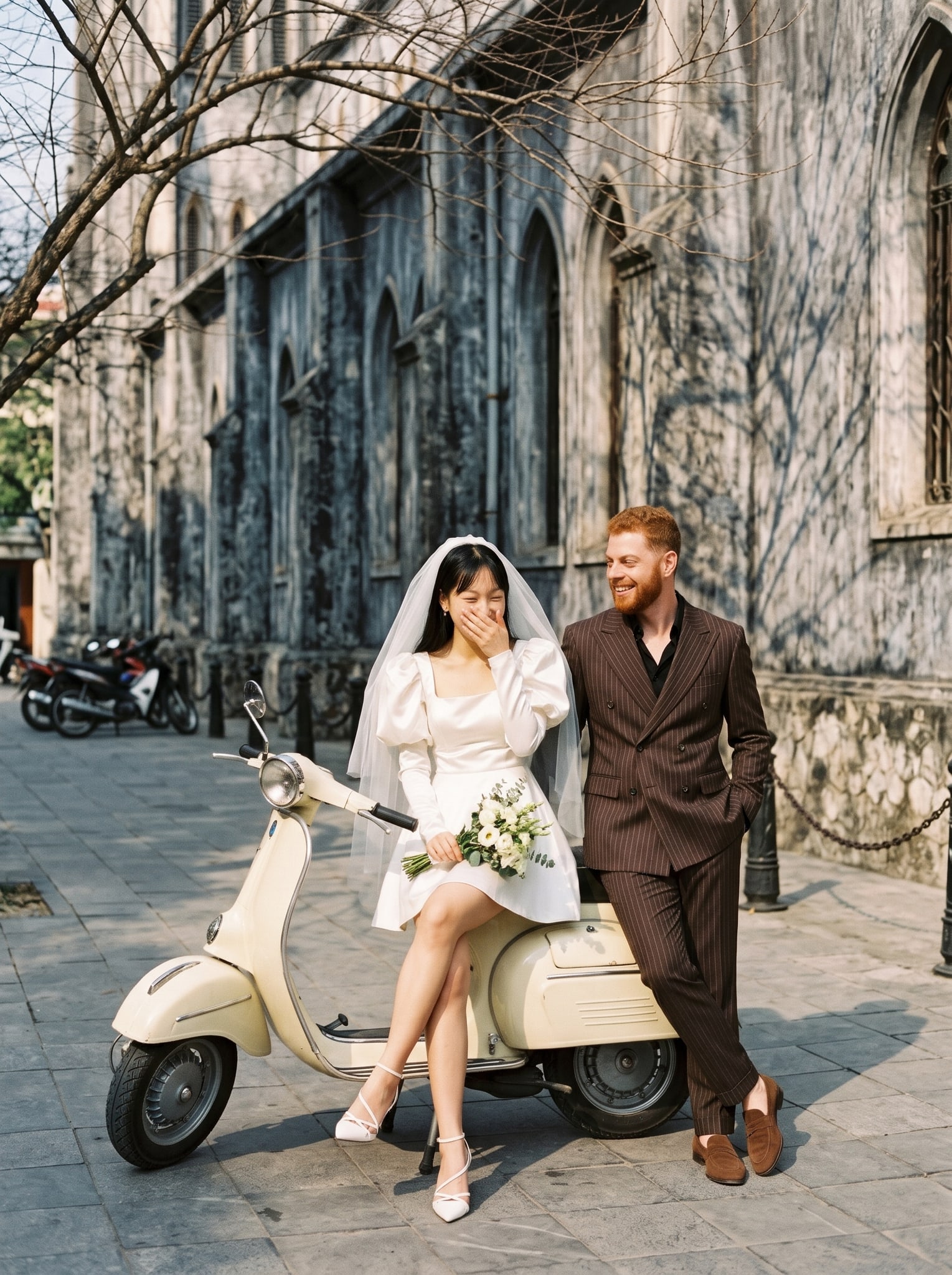
We recommend silk or silk-blend áo dài over cotton blends—silk catches light better in sunset dunes and doesn't absorb sand. Heavy silk (120gsm or thicker) holds shape when ocean breeze kicks up; lighter fabric looks wispy and loses structure mid-shoot. The tunic should sit just above the knees so sand doesn't lodge inside the hem. Long, flowing sleeves look romantic in still air but tangle around your arms and partner's shoulders once wind picks up. Avoid heavily beaded áo dài; beads slip off in sand and catch on bushes in pine forests. We've seen guests arrive in ornate wedding áo dài meant for ceremonies—beautiful, but wrong for 6 hours outdoors. Rent or own a shoot-ready áo dài: simpler embroidery, breathable lining, and a tailor who can adjust length for your height. Ask us for a quote on WhatsApp if you want styling advice before you buy or rent.
What casual outfits photograph well against dunes and beaches?
We've tested dozens of combinations on shoots. Neutral linen trousers + a fitted white or cream cotton shirt work in 95% of Mui Ne light conditions; linen creases visibly but that suits the landscape's texture. For beachwear, fitted denim shorts (no baggy cuts—they billow in wind and hide your shape) + a simple tank or t-shirt in cream, olive, or rust. Avoid bold patterns; they compete with the dunes and distract from your expressions. Midi skirts in soft fabrics (cotton, linen) look striking but catch wind and show your legs awkwardly. Cropped trousers + a loose button-up create an effortless look that works in pine forests and at the beach; the key is loose enough to move, fitted enough to flatter. One couple wore matching cream linen sets—the uniformity looked polished without trying. Another wore rust-toned casual wear and blended into the dune light beautifully. Bring at least two casual outfits; one for dune/beach and one for forest scenes where cooler tones feel natural.
| Outfit Type | Best Location | Fabric to Choose | What to Avoid |
|---|---|---|---|
| Áo dài (silk-blend) | Dunes, sunset scenes | Silk 110gsm+, simple lining | Heavy beads, cotton blends, long sleeves |
| Linen trousers + shirt | Beach, dune walks | Breathable linen, cream/white | Baggy cuts, dark colors that show sand |
| Casual denim shorts | Beach, pine forest | Fitted denim, minimal stretch | Oversized fits, distressed fabric |
| Midi skirt (cotton) | Forest, shaded spots | Soft cotton, ankle-length | Gauzy fabrics, bold prints, thin materials |
| Swimsuit-ready piece | Beach scenes, shallow water | Rash guard + shorts, or one-piece | Loose bikini tops, light colors that see-through wet |
How do you layer for Mui Ne's changing conditions?
Morning beach shoots (5–6 am) are cool and damp; afternoon dune shoots (2–4 pm) are blazing hot; sunset sessions swing between warm and windy. We tell guests: bring a lightweight cardigan or linen overshirt you can tie around your waist once the sun climbs. Cotton is breathable but wrinkles; linen wrinkles more but dries fast if you sweat or wade. Most couples wear their áo dài in the first 2 hours, then change into casual wear. By hour 5, everyone's tired and overheating—a third outfit (swimsuit-adjacent, looser fit) lets you finish strong instead of sagging. Our team carries a small bag with safety pins, tape, and fabric spray; we've pinned countless hems mid-shoot when sand shifted fabric or wind loosened stitching. One guest arrived in a wool blend sweater; by hour 3, she was overheating and couldn't enjoy the shoot. Bring layers but make them summer layers—cotton, linen, silk, breathable synthetics—and plan to shed them, not add them.
What should you check before arriving for your pre-wedding shoot?
Weather (3 days before): Check wind speed and humidity. Winds above 20 km/h will flatten loose fabrics; humidity over 85% means your outfit will cling and crease faster. We'll adjust your shot timeline if conditions are rough.
Fabric fit: Try on all outfits at least once before the shoot day. Wet fabric clings; if you've gained 2 kg since purchasing, you'll feel restricted and it shows in photos. Sand inside a hem is worse than a tight waist.
Footwear: Avoid anything with open heels—sand gets trapped. Bring two pairs: sandals for dune shots (we'll ask you to remove them for some frames) and trainers for forest paths where roots are hidden.
Hair and makeup: Book makeup and hair at your hotel or arrive pre-styled. Salty air, sand, and humidity will move your hair; pin-ups and low ponytails survive better than loose waves. Waterproof makeup is essential if you'll be near water.
Backup outfit: Pack a change if humidity is forecast above 80%. One couple's white linen outfit turned see-through in the damp; they changed, laughed, and the second session was their best.
Check these specifics with Cáo Studio 5 days before your shoot:
- Your photographer's WhatsApp number and shoot start time
- Location parking and meeting point
- Whether you're renting or bringing your own áo dài
- Any allergies or sensitivities to sand (rare, but one guest had contact dermatitis)
Why does sand ruin dark fabrics but not light ones?
Red Mui Ne sand shows instantly on black, navy, and charcoal—it's not dirt, it's mineral oxide, and it clings electrostatically. We've seen black jeans turn rust-colored by the third location. Cream, white, rust, olive, and soft grays show sand too, but it looks like texture rather than mess; in photos, it reads as natural grit rather than neglect. One guest wore a black suit for their first outfit—stunning in Hanoi shoots, but in Mui Ne, sand made him look dusty by hour 2. We recommend at least one light-toned casual outfit. If you love dark fabrics, save them for the shaded forest sections where sand exposure is minimal. Light fabrics also reflect heat better; you'll stay cooler and won't squint in bright sun (squinting shows in close-ups). Plan your outfit timeline with light tones in the bright sections and any dark pieces for shade.
What to check before you book
- Fabric weight: Will your áo dài or casual wear withstand 6+ hours of salt air and wind? Ask the tailor or seller.
- Fit on the day: Try on everything the morning before; humidity can change how fabric clings.
- Location familiarity: Ask Cáo Studio for photos from your exact shoot locations (dune type, beach section, forest path). Your outfit should complement, not clash.
- Backup plan: If your primary outfit gets damaged, damaged, or doesn't feel right, do you have a second choice ready?
- Footwear: Can you walk 2 km in your shoes without blisters? Sand beaches are brutal on unsupported soles.
Chat with us on WhatsApp | See packages and prices on vietnamphotoshoot.com
Ready to plan your Mui Ne pre-wedding shoot? We offer tailored couple photoshoot packages across Mui Ne, Ninh Binh, and Hoi An. Message us to discuss outfit choices, location preferences, and shoot timing—we'll guide you through every decision.
Pages from our team you may need
FAQ
Can I wear the same áo dài for morning and afternoon shoots?
Yes, if you bring it out only for specific locations. Sand accumulates inside fabric; after 2–3 hours, change into casual wear to avoid discomfort and staining. Most couples do one áo dài scene early and return to it for sunset if it's cleaned or brought in fresh.
How much does renting an áo dài cost, and where do you recommend?
We don't have a fixed rental partner, but Mui Ne and Ho Chi Minh City have rental shops; ask us for WhatsApp recommendations. Typical rentals range from one shop to another—ask us for a quote on WhatsApp. Buying a shoot-ready áo dài (simpler style, breathable lining) often costs less than a ceremony piece and lasts through multiple shoots.
What if it rains the night before? Will my outfits still work?
High humidity yes, puddles usually no. Fabric absorbs moisture and sticks to your body; if possible, hang clothes outside to air-dry the morning of your shoot. We'll adjust poses if clothes cling. If heavy rain floods shoot locations, we'll reschedule to a clearer day—most pre-wedding packages include a flexible date option.
Should I wear underwear that shows if my outfit gets wet?
Absolutely yes. Pack neutral-toned, form-fitting underwear. Some couples wade in shallow water; if your white linen gets soaked, visible underwear in a contrasting color ruins the frame. We'll warn you before any water scenes so you can decide comfort vs. camera risk.
Do I need different shoes for dune vs. beach vs. forest shots?
Yes, ideally. Bring sandals (remove for dune shots), trainers (forest), and consider going barefoot on beaches for some frames. Sand-covered feet look natural in photos; muddy trainers do not. Most couples pack three pairs minimum.
Pre-Wedding & Elopement
Inclusions, prices and booking are on our booking site.
FAQ
Can I wear the same áo dài for morning and afternoon shoots?
Yes, if you bring it out only for specific locations. Sand accumulates inside fabric; after 2–3 hours, change into casual wear to avoid discomfort and staining. Most couples do one áo dài scene early and return to it for sunset if it's cleaned or brought in fresh.
How much does renting an áo dài cost, and where do you recommend?
We don't have a fixed rental partner, but Mui Ne and Ho Chi Minh City have rental shops; ask us for WhatsApp recommendations. Typical rentals range from one shop to another—ask us for a quote on WhatsApp. Buying a shoot-ready áo dài (simpler style, breathable lining) often costs less than a ceremony piece and lasts through multiple shoots.
What if it rains the night before? Will my outfits still work?
High humidity yes, puddles usually no. Fabric absorbs moisture and sticks to your body; if possible, hang clothes outside to air-dry the morning of your shoot. We'll adjust poses if clothes cling. If heavy rain floods shoot locations, we'll reschedule to a clearer day—most pre-wedding packages include a flexible date option.
Should I wear underwear that shows if my outfit gets wet?
Absolutely yes. Pack neutral-toned, form-fitting underwear. Some couples wade in shallow water; if your white linen gets soaked, visible underwear in a contrasting color ruins the frame. We'll warn you before any water scenes so you can decide comfort vs. camera risk.
Do I need different shoes for dune vs. beach vs. forest shots?
Yes, ideally. Bring sandals (remove for dune shots), trainers (forest), and consider going barefoot on beaches for some frames. Sand-covered feet look natural in photos; muddy trainers do not. Most couples pack three pairs minimum.
More from the team
Pre-wedding photoshoot in Phu Quoc June: weather, light, crowds
June is Phu Quoc's monsoon season. Our studio has shot dozens of couples there in early summer—here's what weather and crowds really mean for your pre-wedding day.
Pre-wedding photoshoot in Phu Quoc July: weather, light, crowds
July is Phu Quoc's wet season, but it opens creative possibilities: moody skies, empty beaches after storms, and dramatic backlighting. We'll walk you through what happens on the ground.
Pre-wedding photoshoot in Phu Quoc November: weather, light, crowds
November is peak season for pre-wedding shoots in Phu Quoc: weather is stable, light is soft, but crowds peak mid-month. We share what our team sees on the ground.