 Cáo Studio
Home › Blog › Vacation & Solo Photoshoot
What to wear for a travel photoshoot in Vietnam: colors against walls
By the Cáo Studio team · Hanoi & Saigon · 2026-10-31
Vietnam's most photogenic locations—Hanoi's Old Quarter yellow villas, Hoi An's lantern-lit streets, Ninh Binh's terraced rice—have dominant warm and cool tones that demand careful color choice. Neutral palettes (cream, taupe, soft gray), jewel tones (emerald, sapphire, burgundy), and warm earth shades (rust, clay, caramel) photograph best; avoid neon, pure white, and hot pink, which blow out or clash. Cáo Studio guides guests through outfit selection during WhatsApp pre-shoot consultations and often suggests bringing 2–3 options to your session. Most shoots run 2–4 hours across multiple locations; we've learned that fabric choice matters as much as color—linen and cotton hold shape and don't reflect light like polyester. Budget 30 minutes at the start to finalize styling if you're unsure on-site. Chat with us on WhatsApp ---
Why yellow walls demand cool or muted tones?
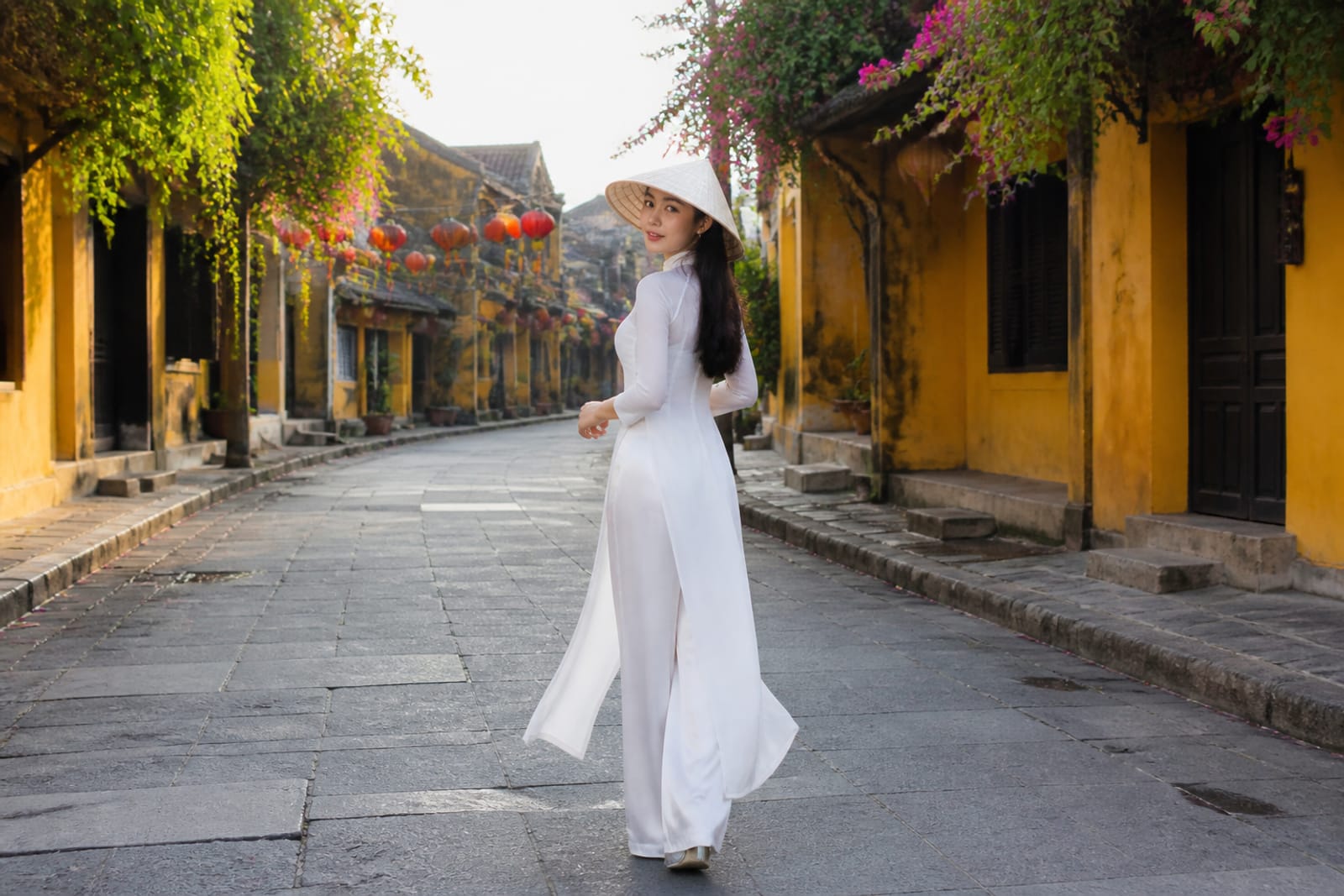
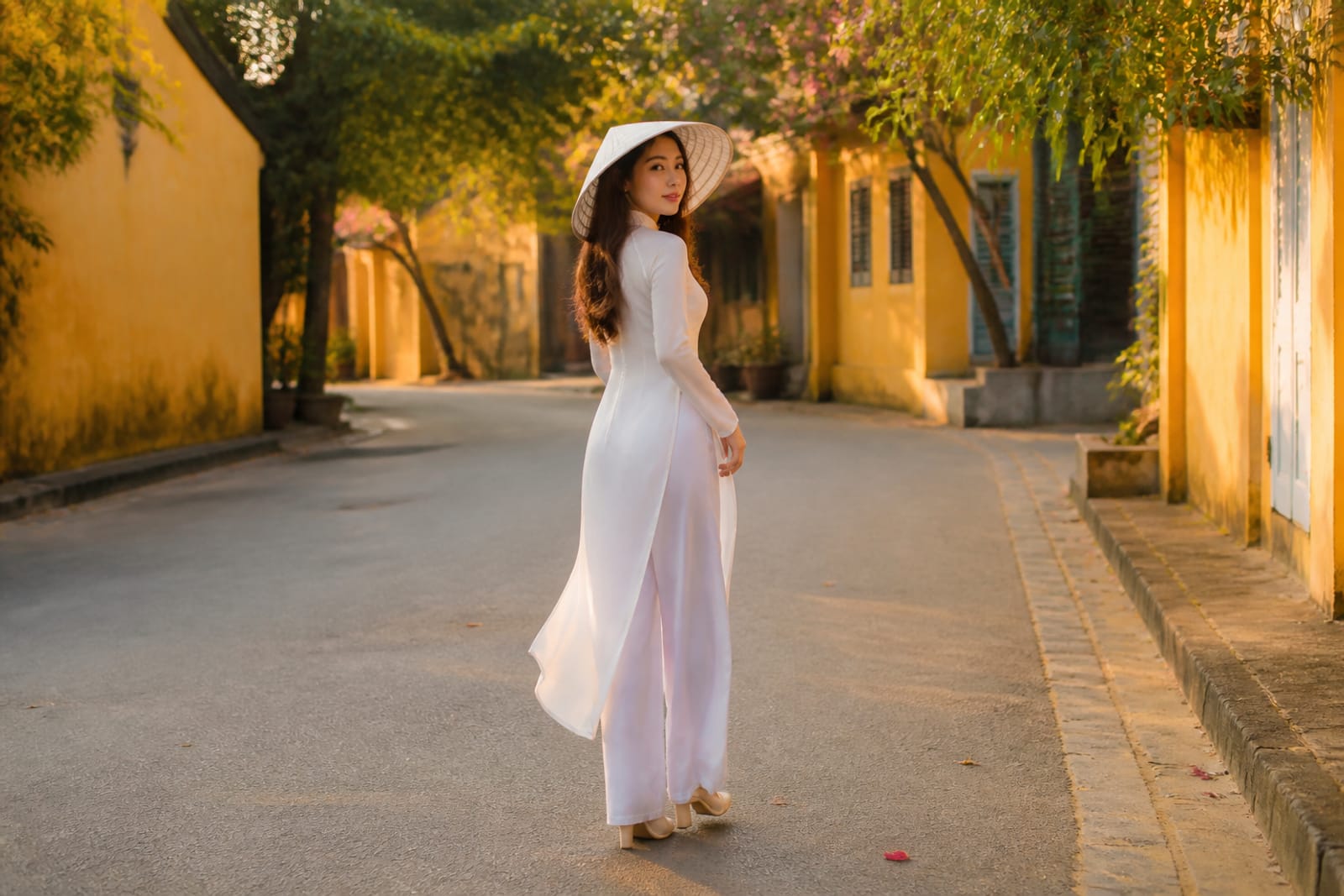
Hanoi's French colonial villas and Hoi An's merchant houses have weathered ochre and butter-yellow facades that are stunning—but they're warm and saturated. When you wear warm yellows, golds, or orange near them, you blend into the wall rather than pop as a subject. Our shoots at these locations work best when guests wear cool neutrals (gray, navy, slate), jewel tones (emerald, teal, plum), or muted warm shades (taupe, dusty rose, soft terracotta). The contrast creates visual separation; the backdrop stays beautiful without competing. Shooting at golden hour (5–6 p.m.) adds warmth to skin and fabric, so avoid adding more warmth through your outfit choice.
How do rice paddies change what colors photograph well?
Ninh Binh's rice terraces are vivid green from May to September and dry gold from October to April. Bright greens demand that you wear colors that recede or complement—not match. Reds, deep blues, creams, and grays sit beautifully against rice without creating visual chaos. We've noticed that overly bright or pastel colors wash out in the reflected light of water-filled paddies; jewel tones and earthy shades hold depth and richness in the final images. If you're shooting during dry season when fields are gold, wear deep jewel tones or navy for maximum contrast. Avoid lime green, neon pink, and white—they muddy or bleach in the landscape.
What's the best fabric for a multi-location photoshoot?
Cotton, linen, and silk blends hold color saturation and wrinkle naturally in flattering ways; polyester, lycra blends, and shiny synthetics reflect light unevenly and can look plastic in tropical sunlight. We always ask guests to avoid heavy, clingy fabrics for Hanoi summer shoots because humidity causes them to cling awkwardly and sweat shows. Linen creases, but that texture reads as intentional and romantic in photographs; smooth cotton drapes without clinging. Bring clothes that can breathe, especially if your shoot is 3+ hours or includes walking between locations in the heat. One client wore a polyester dress to a Ninh Binh session in July and it photographed as reflective and plasticky; she brought a cotton change-out for the final hour and the difference was visible. Fabric weight also matters—lighter fabrics move beautifully on video and in candid shots; heavy materials look static.
| Scenario | Best color choice | Fabric to pack | Why it works |
|---|---|---|---|
| Hanoi Old Quarter, 3 p.m. | Navy, slate, deep taupe | Cotton or linen | Cool tones separate you from yellow walls; breathes in heat |
| Ninh Binh rice (May–Sept, green paddies) | Burgundy, emerald, cream | Lightweight cotton or silk blend | Jewel tones contrast green; light fabric moves in wind |
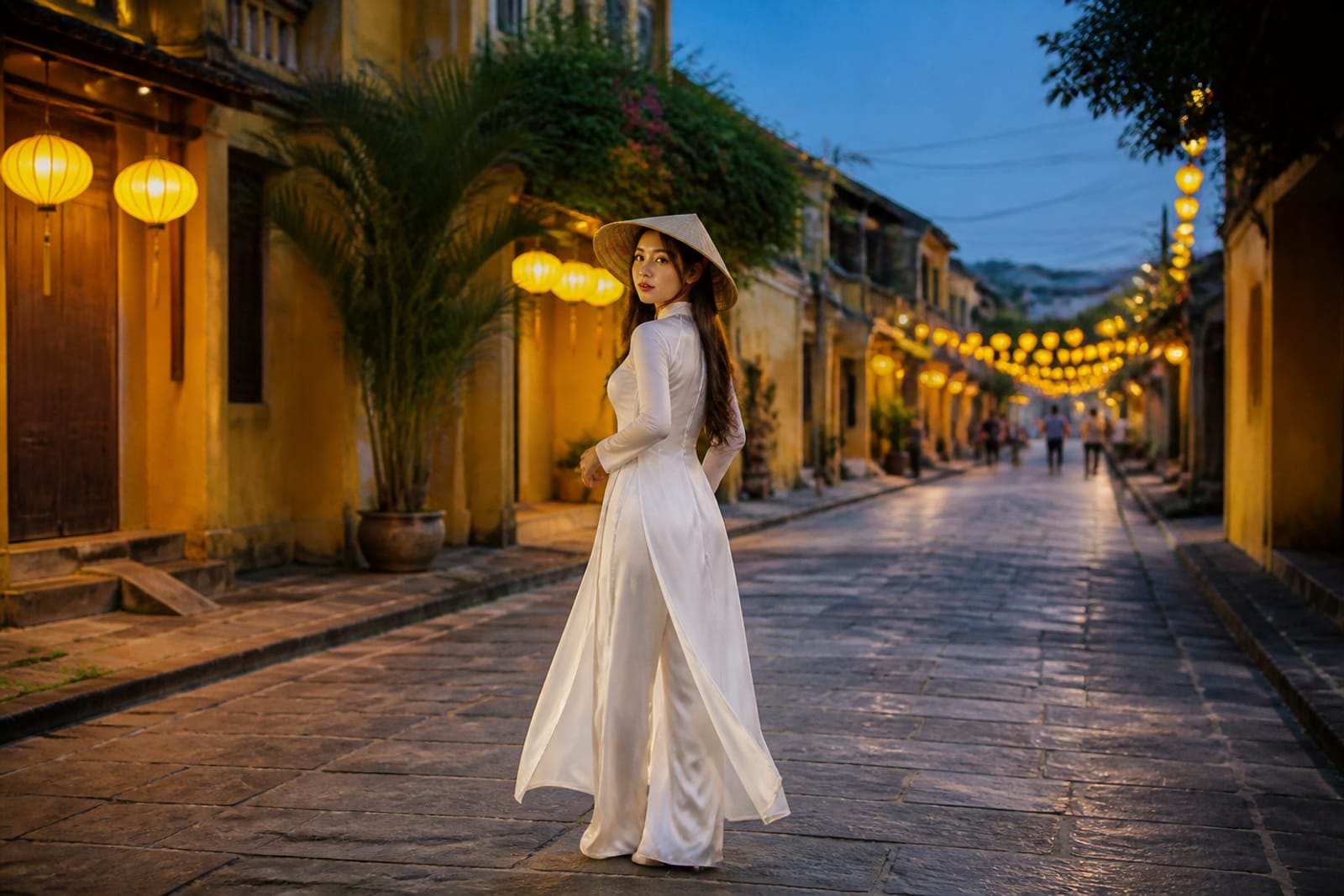
| Hoi An lantern streets, evening | Dusty rose, soft burgundy, charcoal | Silk blend or fine cotton | Warm but muted; silk catches lantern light softly |
| Pagoda or temple (shaded, cool light) | Deep blue, forest green, black | Any natural fiber | Cool tones suit dim, cool-light environments |
| Beach or open sun (Phu Quoc, Da Nang) | White, cream, pale yellow | Breathable cotton or linen | Reflects heat; light tones don't absorb solar heat |
Should you bring multiple outfit options or commit to one?
Bring at least two options unless you've shot in Vietnam before. Cáo Studio sessions are 2–4 hours, often across 2–3 locations with very different backdrops—a yellow-walled alley, green paddy, temple courtyard. One outfit can feel repetitive across that range. We've had guests arrive with one choice, dislike it halfway through (usually because humidity shifted the color tone or they felt uncomfortable), and not tell us until the photos were back. Now we schedule 20–30 minutes at the start to discuss what works, and guests often swap outfits mid-shoot. Bring pieces that layer or change easily—a silk blouse, a cotton overshirt, a linen wrap. This flexibility costs nothing and ensures you're confident in every frame. A solid-color base (shirt, dress) paired with a patterned or textured layer that you can remove also doubles your visual options.
See packages and prices on vietnamphotoshoot.com
How does time of day and season affect color choice?
Golden hour (5–6 p.m., year-round) warms any cool tone beautifully; morning light (7–9 a.m.) is cool and bright, favoring warm or jewel tones. If you're shooting midday in July in Hanoi, the light is harsh and overhead, flattening warm colors and making yellows blow out—wear cool, muted tones. Rainy season (May–September) creates overcast, soft light that's forgiving; any color works, but jewel tones and deep shades read richest. Dry season (October–April) has brilliant, clear light that saturates colors intensely—avoid pastels, go bold. We check the weather and lighting forecast when you book and give color recommendations by season and time. A client shooting in Ninh Binh in February at 2 p.m. (harsh, clear light) wore pale pink and it photographed thin; a guest in June (soft overcast) wore the same shade and it glowed. Book an afternoon or morning session if you have a color preference; midday is hardest on any outfit.
A color and location decision checklist.
Before packing for a Vietnam photoshoot with Cáo Studio, use this to confirm your outfit works:
- Location confirmed? Know whether you're shooting in Hanoi, Hoi An, Ninh Binh, or Saigon—each has dominant backdrop colors. (Hanoi = yellows; Hoi An = reds and golds; Ninh Binh = greens or golds; Saigon = grays and greens.)
- Time of day locked in? Morning, afternoon, or evening determines light warmth and intensity. Tell us so we can guide you.
- Fabric tested? Wear the outfit indoors under bright light; does it wrinkle badly, cling, or reflect light? Swap it now.
- Contrast clear? Hold your top or dress next to a photo of your shoot location (we send these in confirmation). Does your color visually separate from the backdrop, or blend in?
- Two options packed? Even a simple swap (blouse, wrap, or overshirt) doubles your flexibility on-site.
- Humidity factor? If shooting April–September, prioritize breathable, lightweight fabrics over structured or shiny ones.
- No pure white or neon? Save those for close-up studio portraits; they blow out or clash in outdoor landscape settings.
Bring a small cotton wrap or overshirt that's neutral (cream, taupe, charcoal) as a no-risk layer that works over almost any outfit.
---
What to check before you book.
- Get location photos from us first. Message on WhatsApp to ask for reference shots of your exact locations (alley, temple, field) so you can see backdrop colors before committing to an outfit.
- Confirm time of day and season with us—we'll tell you exactly which colors photograph best for that light and landscape.
- Mention any color concerns now. If you have a favorite color and you're not sure if it works, ask—we've seen thousands of outfits in these locations and can usually predict how it'll look.
- Break in your clothes and shoes before the shoot. New fabric stiffness and unworn shoes show tension in your posture; wear everything at least twice before arriving.
- Bring a change of layers, not a full second outfit, unless you have strong styling preferences. A wrap, cardigan, or overshirt is easier to manage on-site.
---
For vacation and solo photoshoots, outfit confidence matters as much as light and location. We guide you through every detail. If you're shooting a couple session or a pre-wedding session, coordinating two outfits gets more complex—mention that when you book so we can offer styling input. First-time Vietnam visitors often benefit from a makeup and hair session at your hotel the morning of the shoot; our team can confirm your outfit choice in person and adjust makeup tones to match.
See packages and prices on vietnamphotoshoot.com
---
FAQ
Should I wear the same outfit the entire shoot, or change clothes halfway?
Change at least once if your shoot is 3+ hours or spans multiple very different locations (temple, rice, urban alley). One outfit per 90–120 minutes of shooting keeps images visually distinct. Brief changes—a wrap removal, a shirt swap—take 5–10 minutes and add variety without losing momentum.
What if I hate how my outfit looks in the first hour and want to change?
Tell us immediately. We stop, you change, and we reshoot that location. We've done this dozens of times; it's far better than finishing a 4-hour shoot unhappy. Bring backup options precisely for this reason.
Does wearing black work in Vietnam's tropical landscape?
Yes, black is our most-requested color for contrast and is flattering on almost all skin tones. Pair it with a lighter accent (cream wrap, light pants) to avoid looking too formal. Black photographs beautifully against yellow, green, and neutral backdrops; avoid wearing it in full sun midday unless you're comfortable with heat absorption.
Can I wear patterned or printed clothes, or should I stick to solids?
Prints work if the base colors are muted and the pattern isn't too busy. A subtle batik, geometric, or floral pattern in jewel tones reads beautifully; large, bright, or high-contrast prints compete with the landscape. Test your pattern in your location's light before committing—bold patterns often look chaotic when scaled across full-body shots in outdoor settings.
What if the weather changes the day of the shoot—does my outfit choice still work?
Overcast and rainy light forgives almost any color and makes jewel tones glow. Clear, bright light hardens colors and requires more contrast. If conditions shift, message us immediately; we can often adjust the shoot time, location, or recommend a quick clothing swap. Most of our guests keep one warm-tone and one cool-tone option for this reason.
Is there a "safe" color that works in almost any Vietnam photoshoot location?
Cream, taupe, and dusty neutrals work almost everywhere because they don't compete with backdrops and flatter most skin tones in any light. Pair them with a jewel-tone accent (scarf, overshirt, pants) for visual interest. We recommend this combo to guests who feel uncertain about color choice.
Vacation & Solo Photoshoot
Inclusions, prices and booking are on our booking site.
FAQ
Should I wear the same outfit the entire shoot, or change clothes halfway?
Change at least once if your shoot is 3+ hours or spans multiple very different locations (temple, rice, urban alley). One outfit per 90–120 minutes of shooting keeps images visually distinct. Brief changes—a wrap removal, a shirt swap—take 5–10 minutes and add variety without losing momentum.
What if I hate how my outfit looks in the first hour and want to change?
Tell us immediately. We stop, you change, and we reshoot that location. We've done this dozens of times; it's far better than finishing a 4-hour shoot unhappy. Bring backup options precisely for this reason.
Does wearing black work in Vietnam's tropical landscape?
Yes, black is our most-requested color for contrast and is flattering on almost all skin tones. Pair it with a lighter accent (cream wrap, light pants) to avoid looking too formal. Black photographs beautifully against yellow, green, and neutral backdrops; avoid wearing it in full sun midday unless you're comfortable with heat absorption.
Can I wear patterned or printed clothes, or should I stick to solids?
Prints work if the base colors are muted and the pattern isn't too busy. A subtle batik, geometric, or floral pattern in jewel tones reads beautifully; large, bright, or high-contrast prints compete with the landscape. Test your pattern in your location's light before committing—bold patterns often look chaotic when scaled across full-body shots in outdoor settings.
What if the weather changes the day of the shoot—does my outfit choice still work?
Overcast and rainy light forgives almost any color and makes jewel tones glow. Clear, bright light hardens colors and requires more contrast. If conditions shift, message us immediately; we can often adjust the shoot time, location, or recommend a quick clothing swap. Most of our guests keep one warm-tone and one cool-tone option for this reason.
Is there a "safe" color that works in almost any Vietnam photoshoot location?
Cream, taupe, and dusty neutrals work almost everywhere because they don't compete with backdrops and flatter most skin tones in any light. Pair them with a jewel-tone accent (scarf, overshirt, pants) for visual interest. We recommend this combo to guests who feel uncertain about color choice.
More from the team
Photoshoot with tight layover: 3 hours in Hanoi or Saigon possible?
A 3-hour layover leaves barely enough time for a photoshoot. Cáo Studio Hanoi and Saigon have run express sessions for connecting passengers—here's what actually fits, what goes wrong, and how to book one.
Saigon District 1 photoshoot: Notre Dame, post office, route and timin
District 1's photogenic colonial core—Notre Dame Cathedral, Central Post Office, Nguyen Hue pedestrian street—sits within walking distance, but light, crowds and timing matter. We show how to shoot all three in one session and what catches most guests off guard.
Hanoi Old Quarter photoshoot: best 7am streets and why light fades by
The Hanoi Old Quarter's narrow lanes fill with street vendors, tourists and motorbikes by mid-morning. We shoot there at dawn—here's exactly why 7am works and what changes by 9.