 Cáo Studio
Home › Blog › Pre-Wedding & Elopement
What to wear for couple photos at Ba Na Hills French Village
By the Cáo Studio team · Hanoi & Saigon · 2026-11-04
Ba Na Hills sits 1,500 meters above Da Nang, with cobblestone streets, vintage shutters, and a working cable car. Couple shoots run 3–4 hours. The site demands layered clothing: mornings stay cold, mist rolls in, and afternoon sun cuts through. Avoid long skirts on stairs—they tangle. Neutral tones (cream, grey, black, sage) frame the architecture without competing. Shoes must grip wet stone; sneakers work better than heels on gradients. We book couple photoshoot sessions that build in time for clothing changes. Most pairs bring two outfits: formal for the cable car and village square, casual for the garden and stone pathways. Cáo Studio coordinates timing with weather; if fog thickens, we shift to close-up shots near the château. Ask us for a quote on WhatsApp—we'll advise on what to pack based on the season. Chat with us on WhatsApp
What do layers actually mean on a 1,500m mountain?
Temperature at Ba Na Hills drops 3–5°C per 1,000 meters of elevation. At dawn, couples experience 15–18°C; by noon, 20–22°C. We advise a fitted base layer (thermal shirt or long-sleeve tee), a mid-layer (lightweight sweater or cardigan that photographs clean), and a jacket you can remove. The cardigan stays in frame; the jacket peels off for shots without bulk. Mist often obscures the valley until 10 a.m., so early shots feel intimate and moody—perfect for quieter outfits. By midday, light hardens and colors need to pop slightly more. Bring a thin scarf or shawl; it adds movement to frames and warms you during wind gusts on the cable car platform.
See packages and prices on vietnamphotoshoot.com
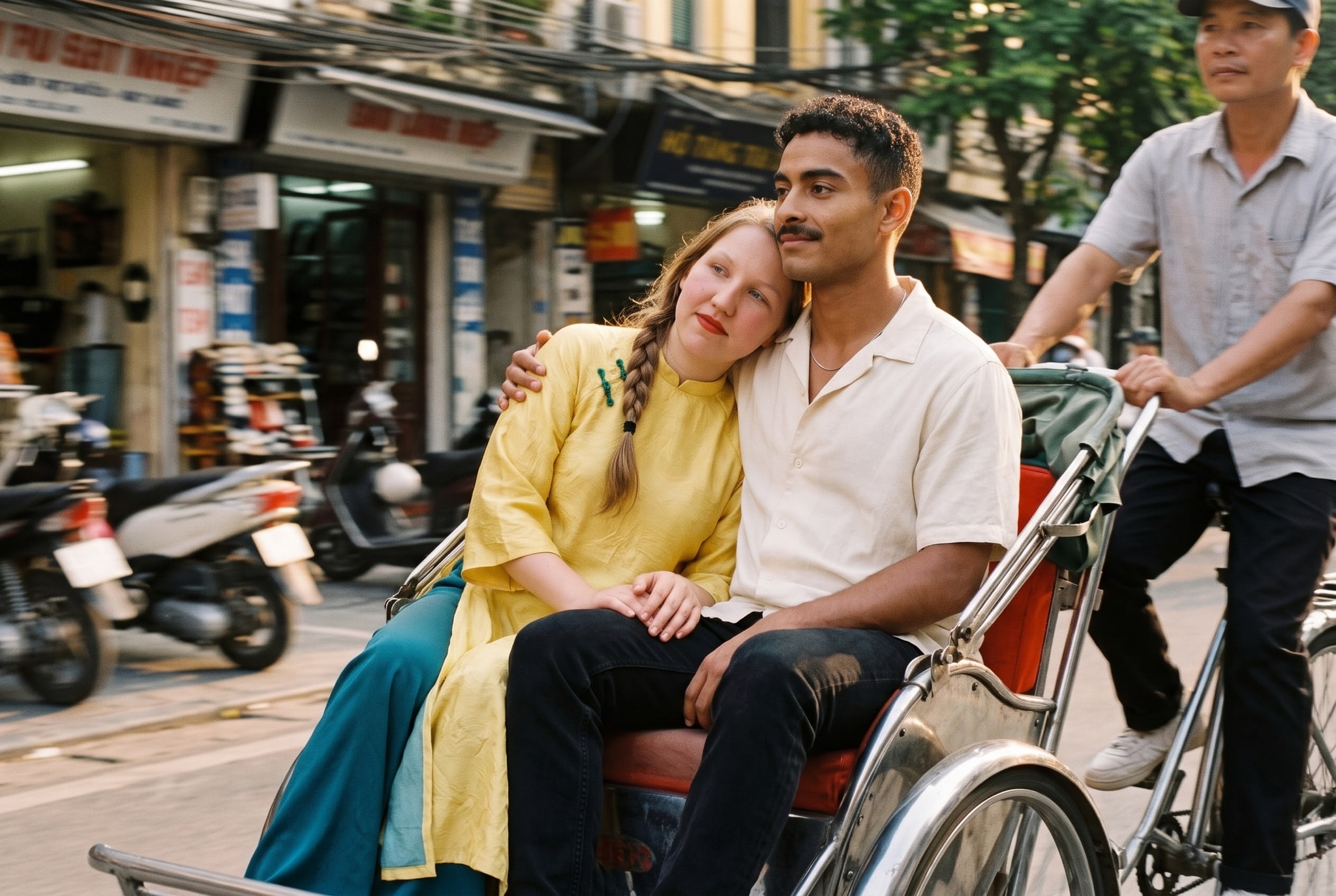
Why do neutral colors work better than bright prints here?
The French Village architecture dominates every frame: pink stone, mustard shutters, cream walls, dark roof tiles. When couples wear navy, white, grey, or earth tones, the building becomes the subject; the couple feels integrated into the scene. Bright colors or bold patterns (neon, large florals, stripes) create visual noise and split attention. We've shot the same couple twice—once in coordinated black-and-cream, once in red-and-turquoise—and the muted version feels timeless. Jewel tones (emerald, burgundy, deep blue) also photograph beautifully if both partners choose from the same palette. Avoid white entirely if fog is forecast; you'll blend into mist and lose definition. Pastels (blush, sage, lavender) work well on clear days but can flatten in overcast light, which is common. Coordinate with your partner: both in warm neutrals, or both in cool tones. Mismatched temperature palettes (one in cream, one in navy) create visual tension that reads as unplanned.
How do you choose footwear that won't fail on wet stone?
Ba Na Hills stone pathways are smooth and slick after rain or mist. Sneakers with rubber grip (canvas, suede, or leather with textured soles) handle this well. Hiking shoes feel clunky in photos. Ballet flats slip. High heels—even thick ones—are unsafe on gradients; one slip and a shoot stops for first aid. Couples often ask about dressy options: minimalist leather shoes with grip (like sleek loafers or pointed-toe flats with thick soles) work if you test them on a practice walk. We've watched brides lose shoes in cobblestone gaps; it breaks the mood and delays the shoot. Boots (ankle-height, lace-up, with grip soles) photograph well and protect feet. Bring a second pair in your car—if shoes become muddy or uncomfortable, you swap. The cable car platform is exposed; wind can be fierce. Avoid strappy sandals; they slip off during wind gusts. Go barefoot only if you're comfortable; cold stone and rough texture limit movement.
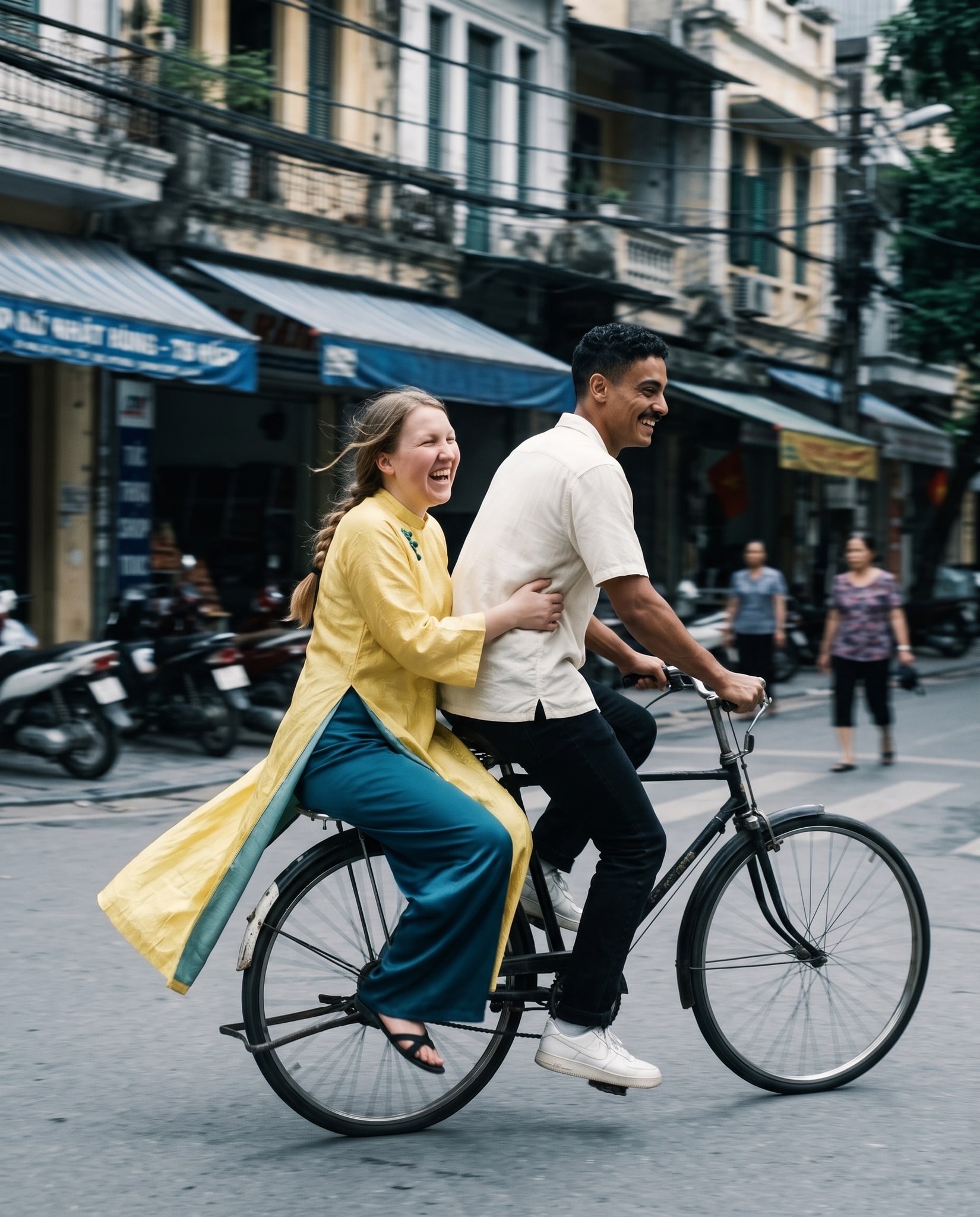
What should each outfit change accomplish in one session?
A couple shoot at Ba Na Hills spans 3–4 hours and usually includes two outfit changes. Plan the first look to work in early light and cooler air: a formal or slightly dressy option (tailored blazer, structured dress, coordinated tops). This works near the château and stone bridge. By midday, light shifts to the garden terraces and tree-lined paths—perfect for a relaxed second look (casual knits, denim, linen). The transition also lets you adapt if weather changes. If fog clears unexpectedly, we move to open vistas; if clouds thicken, we pivot to framed, intimate shots. Costume changes also reset energy. We notice couples relax more in their second outfit; they've seen how they look in frames and move more naturally. Bring both outfits assembled and ready—we lose 10–15 minutes to fumbling in car parks. A change-of-clothes bag with shoes, accessories, and a compact mirror speeds up transitions. Avoid outfits that require hooks, zippers, or buttons you can't manage alone; the bathroom is far from scenic spots.
| Outfit type | Why wear it | Best time of day | Footwear match | Photography mood |
|---|---|---|---|---|
| Formal or structured (blazer, dress, coordinated tops) | Creates polished frame near château and stone structures | Early morning, before 10 a.m. | Sleek grip sneakers or leather loafers | Timeless, editorial |
| Casual or relaxed (knits, denim, linen) | Feels natural on gardens and tree-lined paths, lets you move freely | After 11 a.m. when light is stronger | Canvas sneakers or ankle boots | Candid, connected |
| Layered neutral (cardigan, base layer, removable jacket) | Adapts to temperature swings; jacket removes for variation | Entire session, especially early hours | Hiking-weight sneaker or suede boot | Versatile, multiple framings |
| Accessory change (scarf, belt, hat) | Refreshes the look without full costume swap, adds movement | Between main outfits or during transitions | Same shoe as outfit base | Detail-rich, styled |
See packages and prices on vietnamphotoshoot.com
What do you need to check before ordering an outfit online?
If you're buying new clothes for your Ba Na Hills shoot, measure your true size at home before ordering. Fit matters more than brand size; a loose, wrinkled garment reads sloppy in close-ups. Check the fabric weight: lightweight materials (linen, cotton blends under 150 gsm) look graceful but wrinkle badly on long shoots. Mid-weight cotton or silk blends hold shape better. Photos are often high-resolution; loose threads, stains, or pilling show up. Inspect new clothes before your session—wash them once, air-dry, and press if needed. Avoid buying anything on the day of the shoot; untested fit causes panic. If you're unsure, layer a known-good base layer under a new piece so that even if the new item doesn't fit perfectly, the foundation is solid. Neutral colors are safer online buys than bold hues, which can shift under different lighting. Order with 2–3 weeks lead time; rushing means no refund window if the fit is wrong. Bring a backup outfit in your car that you've worn before and know works; it's insurance if your chosen look feels uncomfortable on set.
We work with couples year-round at Ba Na Hills and adapt to seasonal weather. Winter (December–February) requires thicker layers; summer (May–August) means earlier starts to beat afternoon heat. Let us know your shoot date when you book, and we'll send a weather-based packing list. Every couple we've photographed there learned one lesson: comfort drives natural poses. If you're cold or your shoes hurt, your shoulders tense and smiles flatten. That's why we ask about your outfit plan before you arrive. We've seen pairs look stunning in photos they felt stressed wearing. Reverse that: choose outfits that feel like you, fit well, and move with you. The best couple shots happen when you forget you're being photographed—and that only happens when your clothes don't distract you.
Start planning your Ba Na Hills couple session now. Check our couple photoshoot package and WhatsApp us with your outfit ideas and travel dates.
Pages from our team you may need
FAQ
What's the weather like at Ba Na Hills in each season, and how should I dress?
Winter (Dec–Feb): 12–18°C, misty mornings, chilly afternoons—bring thick cardigans and jackets. Spring (Mar–May): 18–25°C, variable fog—layer with a removable mid-layer. Summer (Jun–Aug): 20–26°C, afternoon heat—wear breathable fabrics but avoid thin, see-through materials. Fall (Sep–Nov): 15–22°C, clear mornings, sudden showers—pack a light rain layer or shawl.
Can I wear a full-length dress or skirt at Ba Na Hills?
Yes, if the hem clears your ankles by at least 10 cm and the fabric isn't too heavy. Long skirts tangle on stone stairs and catch wind on the cable car. Midi length (mid-calf) works better than floor-length. Avoid silk or slippery fabrics; opt for structured cotton or blends that don't cling to your legs.
Should we both wear the same color, or can we coordinate differently?
Coordinate by palette, not identical matching. Both wear warm neutrals (cream, brown, rust) or both wear cool tones (grey, navy, sage). Mismatched palettes (one warm, one cool) read as unplanned. Avoid one person in bright color and one in neutral; it imbalances the frame.
What if it rains or there's heavy fog on shoot day?
Rain and fog are common at Ba Na Hills. Mist actually creates moody, intimate shots. Wear water-resistant fabrics (not cotton) if rain is forecast. Avoid suede shoes. We adapt the shot list—indoor château photos, framed village scenes—and the day usually turns out beautifully. No refund, but we work with what weather gives us.
Can I bring more than two outfit changes?
Yes, but more changes eat into shooting time. Each change takes 10–15 minutes. We recommend two full outfit changes plus one accessory swap (belt, scarf, hat) for a 3–4 hour session. More than that feels rushed and tires you out. Choose changes that each photograph differently, not similar iterations.
Pre-Wedding & Elopement
Inclusions, prices and booking are on our booking site.
FAQ
What's the weather like at Ba Na Hills in each season, and how should I dress?
Winter (Dec–Feb): 12–18°C, misty mornings, chilly afternoons—bring thick cardigans and jackets. Spring (Mar–May): 18–25°C, variable fog—layer with a removable mid-layer. Summer (Jun–Aug): 20–26°C, afternoon heat—wear breathable fabrics but avoid thin, see-through materials. Fall (Sep–Nov): 15–22°C, clear mornings, sudden showers—pack a light rain layer or shawl.
Can I wear a full-length dress or skirt at Ba Na Hills?
Yes, if the hem clears your ankles by at least 10 cm and the fabric isn't too heavy. Long skirts tangle on stone stairs and catch wind on the cable car. Midi length (mid-calf) works better than floor-length. Avoid silk or slippery fabrics; opt for structured cotton or blends that don't cling to your legs.
Should we both wear the same color, or can we coordinate differently?
Coordinate by palette, not identical matching. Both wear warm neutrals (cream, brown, rust) or both wear cool tones (grey, navy, sage). Mismatched palettes (one warm, one cool) read as unplanned. Avoid one person in bright color and one in neutral; it imbalances the frame.
What if it rains or there's heavy fog on shoot day?
Rain and fog are common at Ba Na Hills. Mist actually creates moody, intimate shots. Wear water-resistant fabrics (not cotton) if rain is forecast. Avoid suede shoes. We adapt the shot list—indoor château photos, framed village scenes—and the day usually turns out beautifully. No refund, but we work with what weather gives us.
Can I bring more than two outfit changes?
Yes, but more changes eat into shooting time. Each change takes 10–15 minutes. We recommend two full outfit changes plus one accessory swap (belt, scarf, hat) for a 3–4 hour session. More than that feels rushed and tires you out. Choose changes that each photograph differently, not similar iterations.
More from the team
Photography rules at Ta Phin village: permits, drones and what to check
Ta Phin village in Sapa draws photographers for its Hmong culture and layered mountain light. We've shot dozens of sessions there—here's what actually works and what stops shoots cold.
Pre-Wedding Photo Ideas and Poses at O Quy Ho Pass
O Quy Ho Pass sits on the Hanoi–Sapa border at 1,200 metres. Our couples shoot there for its curves, mist and isolation—but the weather and logistics demand a different approach than valley shoots.
Is O Quy Ho Pass Good for Pre-Wedding Photos? Pros, Cons, Alternatives
O Quy Ho pass in Sapa draws couples seeking high-altitude drama, but tight timelines, unpredictable fog, and logistics make it risky for pre-wedding shoots. We've scouted it; here's what actually works. #