 Cáo Studio
Home › Blog › Pre-Wedding & Elopement
What to wear for couple photos at Bai Dinh Pagoda
By the Cáo Studio team · Hanoi & Saigon · 2026-11-04
Bai Dinh Pagoda near Ninh Binh is one of Vietnam's largest religious sites—golden, ornate, and flooded with natural light that either flatters or overwhelms pale fabrics. For couple photoshoots here, most guests choose either an áo dài (traditional Vietnamese tunic, cool and sculptural in images) or Western formal wear (suits, dresses) in deep jewel tones or neutral colours. Avoid pure white, cream or pastels; they blow out under the pagoda's reflective gold surfaces and marble. The shoot typically runs 2–4 hours, covering outdoor terraces, interior halls, and gardens. Comfort matters—you'll climb stairs and stand in direct sun. Ask us on WhatsApp what your specific outfit looks like on camera before you pack; we'll give honest feedback based on the season and light forecast. Chat with us on WhatsApp
Will an áo dài photograph better than Western formal wear?
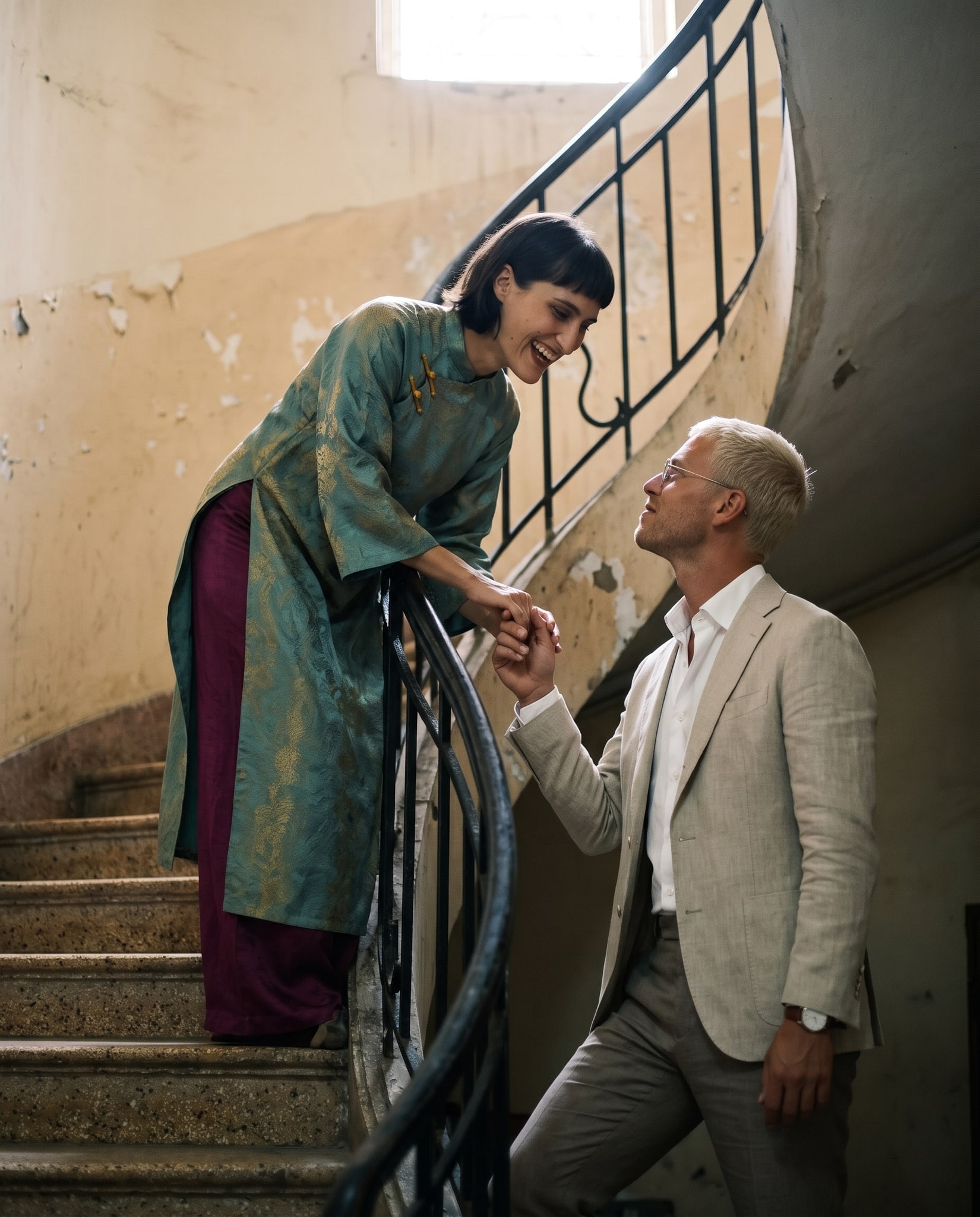
Both work, but differently. An áo dài's flowing silk panels catch light beautifully and move naturally on stairs—our photographers love the layering and contrast. Western formal wear (tailored suit, sheath dress) reads sharper in close frames and suits couples who want modern, editorial looks. Áo dài wins for movement shots and cultural narrative; formal wear wins for detail and geometry. Many couples book áo dài photoshoot sessions specifically because the garment is the story. If you own neither, consider renting locally in Ninh Binh or Hanoi; rental áo dài costs less than shipping formal wear from abroad and fits the light better. Pick based on what you want to feel wearing, not what you think should work—confidence photographs first.
What colours actually work under Bai Dinh's reflected light?
The pagoda's gold and marble interiors reflect light upward, making pale tones look washed out and bright colours pop. We've shot hundreds of couples here: jewel tones (sapphire, emerald, burgundy, navy) photograph richly without looking sombre. Earth tones (deep rust, sage, charcoal) blend with stone and feel grounded. Blacks and dark greys work if the couple wants contrast. Avoid pastels, whites, creams, and neons—they either disappear or look garish. If one partner wears a strong colour, the other should wear neutral (white-shirt-with-navy-trousers, for example) so you're not competing for attention. Metallics and sequins can flare under direct sun reflecting off marble—save those for evening or indoor events. Ask us what shade photograph best by texting a photo of the outfit to WhatsApp; we'll test it mentally against the pagoda's light conditions for your shoot date.
See packages and prices on vietnamphotoshoot.com
How do fabric weight and texture affect the final image?
Heavy, structured fabrics photograph with crisp folds and detail; lightweight or clingy fabrics lose dimension. Silk (in áo dài or formal wear) reads beautifully because it has movement and catches light subtly. Cotton suits and dresses work well outdoors but can look flat under harsh midday sun. Linen is cooler for Ninh Binh's heat but wrinkles show in close frames—bring a steamer to your hotel or wear wrinkled linen intentionally for a relaxed aesthetic. Stretch fabrics (modern dress pants, leggings) often photograph thinner than you expect and can look cheap. Layering (áo dài with a silk undershirt, suit jacket over a patterned shirt) adds visual interest and allows you to adjust for heat—you can remove layers between locations. Matte finishes photograph warmer and more elegant than shiny fabrics, except for silk, which is naturally matte-luminous. Our stylists test fabrics during makeup and hair at your hotel sessions; if something reads wrong on a test shot, we adjust before the main shoot.
Should we match outfits or contrast them?
| Approach | Who it's for | Effect on camera | When to choose |
|---|---|---|---|
| Matching colours (both navy, both burgundy) | Couples wanting unified, formal look | Reads as intentional and elegant; strong visual harmony | Traditional shoots, formal events, editorial concept |
| Complementary colours (blue + warm tone) | Couples who like subtle coordination | Balances frame; one partner doesn't fade | Most candid and natural-looking couple shoots |
| Contrast (one dark, one light) | Couples wanting graphic, modern feel | High visual separation; detail shows in both figures | Contemporary concept shoots, urban settings |
| One patterned, one solid | Couples who want personality and movement | Pattern adds energy; solid ground the frame | Storytelling and lifestyle shoots |
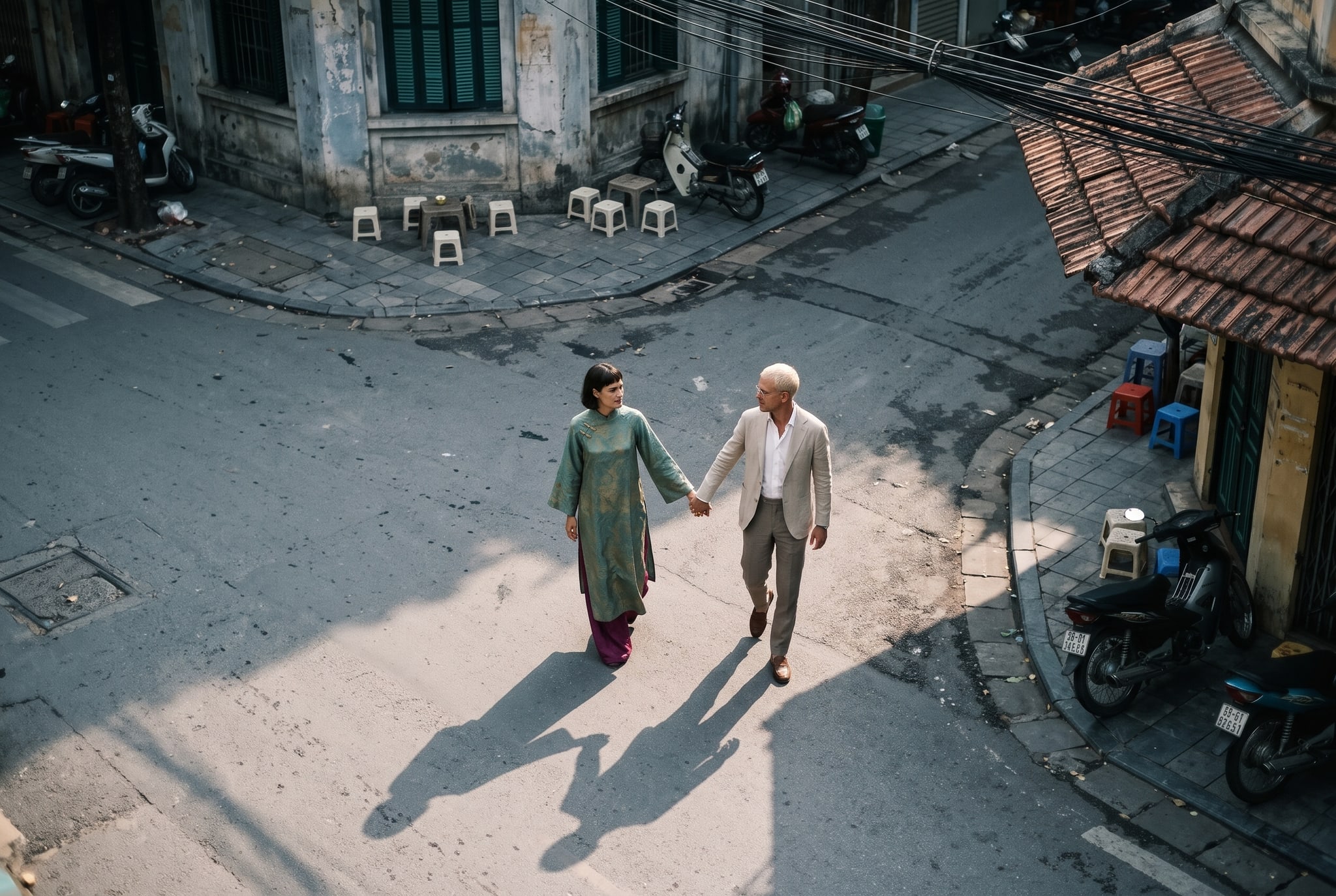
We see most success with complementary or soft-matching colour schemes because they photograph naturally—you look like a couple without looking staged. Avoid exact matching (identical outfits) unless that's your intentional concept; it reads as either themed or amateur. If one partner is wearing a patterned garment (áo dài with embroidery, suit with texture), the other should wear a clean solid so the detail reads first.
What specific details should I check before ordering or renting?
Before committing to an outfit for Bai Dinh, verify: (1) Does the neckline sit well in photos—not too low or bunched? (2) Are sleeves long enough to avoid looking unfinished, and do they move freely on stairs? (3) Does the colour look good on you in direct sunlight, not just indoor mirrors? (4) Is the fit snug enough that you won't adjust it constantly during the shoot? (5) Can you walk, sit, and climb in it without tearing or feeling restricted? (6) If renting, does the rental include tailoring, and when is the final fitting? (7) For áo dài specifically: is the undershirt (áo ơi) included, and is it the right weight for Ninh Binh's climate?
Test your outfit in sunlight before the shoot date. Stand outside at the time of day your shoot is scheduled (morning light differs from afternoon). Take a selfie and check: does the colour still read as you intended? Do shadows hide facial features? Is there glare off shiny fabric? Bring the photo to WhatsApp and ask our team for honest feedback—we've seen thousands of outfit combinations in this exact location and can spot what won't work 48 hours before you arrive.
For couples booking a pre-wedding photoshoot at Bai Dinh, clothing is the first decision because it shapes everything that follows—poses, movement, light-management, even how long you feel comfortable standing in the sun. Start with colour, add layers for heat, and test in real sunlight. If you're travelling from overseas and unsure about packing, we can recommend rental shops in Hanoi or Ninh Binh and review photos of the options over WhatsApp. The pagoda's beauty works with you, not against you—the right outfit simply gets out of the way and lets the location shine.
What should I bring on the shoot day itself?
Bring a light scarf or shawl (cotton or silk) in case you want to cover shoulders in temple areas—some visitors prefer it for cultural respect, and it photographs beautifully as a styling layer. Flat shoes or comfortable slip-ons for walking the terraces; avoid heels unless they're part of your intentional concept (they hurt, photograph poorly on stone, and are disrespectful in temple spaces). A small bag for phone, keys, water—something that won't clutter the frame or cause you to hold tension. Bring deodorant and face powder if you'll be outdoors for hours; we reapply after location moves. If you've rented an outfit, bring the rental receipt and confirm pick-up/drop-off times with the rental shop; our shoots sometimes run long if light is good. Arrive hydrated and fed—hunger photographs as tension in your shoulders and jaw.
FAQ
Can I wear jeans and a nice shirt to Bai Dinh couple photos?
Jeans can work if they're dark, well-fitted, and you pair them with an elegant top (silk blouse, fitted knit). They'll read casual-chic rather than formal. If you prefer elevated polish, a tailored pant or dress photographs with more presence at a temple location. Test jeans in sunlight—lighter washes often blow out.
What's the best time of day to shoot at Bai Dinh for outfit colours?
Early morning (before 9 a.m.) offers soft, even light that flatters all colours. Midday (10 a.m.–2 p.m.) brings harsh direct sun and strong reflections off gold surfaces—jewel-tone fabrics handle this better. Late afternoon (after 3 p.m.) gives warm, directional light that suits earth tones and muted colours. Choose based on when your outfit looks best in similar light.
Should I wear the same outfit for the whole shoot or bring a change?
Many couples change outfits once to refresh the series—formal wear for the first location, then áo dài or casual elegant for gardens and interiors. One outfit is fine if you're confident in it; two outfits double the options but add 30 minutes to shoot time. Ask us to advise based on your concept when you book.
Can I wear Western formal wear if my partner wears áo dài?
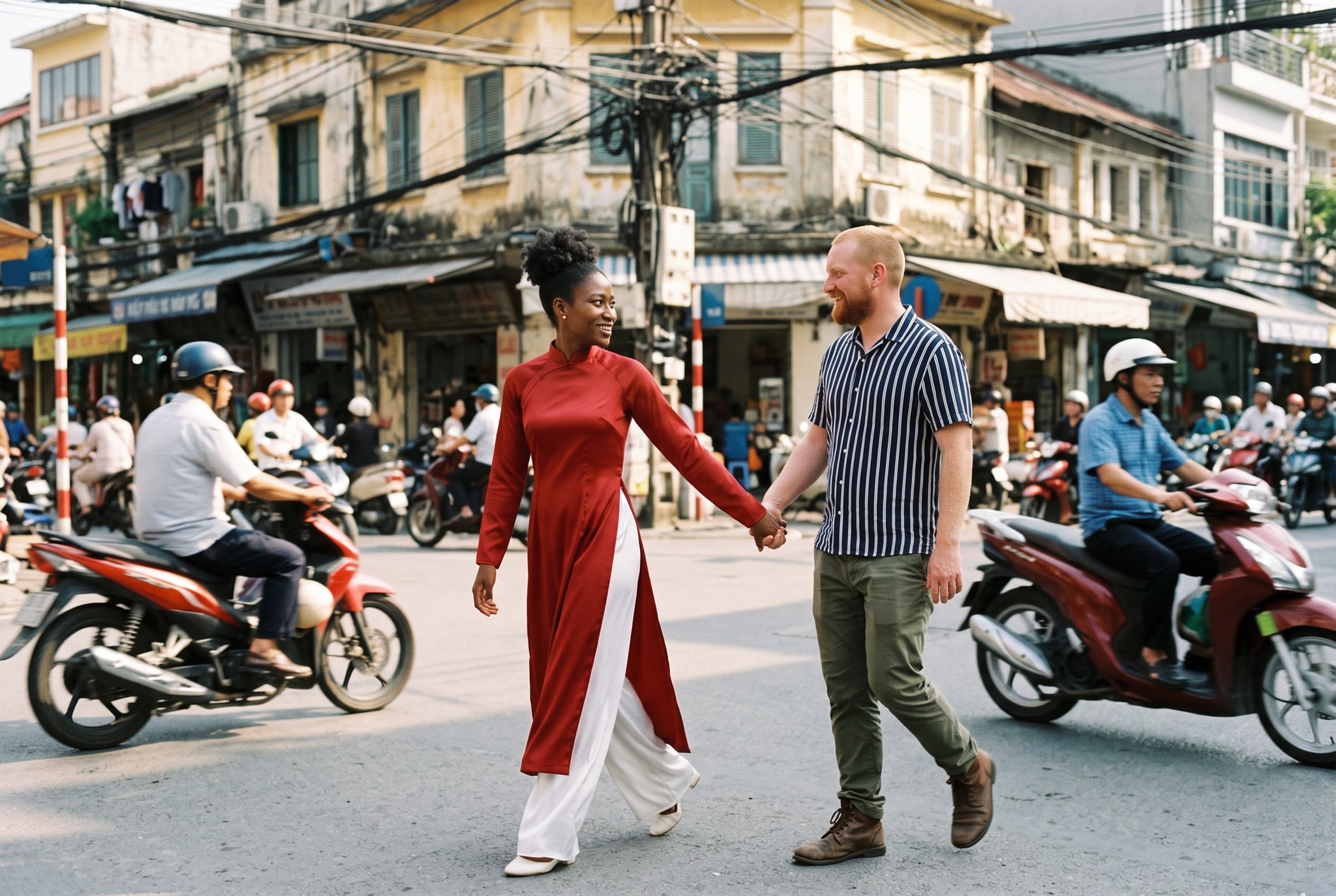
Yes—this is popular and photographs beautifully. The contrast works well: the áo dài's flowing panels balance the tailored lines of a suit or dress. Coordinate colours so they complement rather than compete (navy áo dài with grey suit, burgundy áo dài with black dress, for example).
What if I'm uncomfortable in the outfit I planned?
Tell us the moment you arrive—before the shoot starts. We can adjust how we pose you, which locations we use, or sometimes pause to let you change or get comfortable. Discomfort shows in images. Our shoots are collaborative; your confidence matters more than sticking to a pre-planned outfit.
Does Bai Dinh's temple setting require modest clothing?
No strict rule, but cultural respect suggests covering shoulders and knees. Áo dài and most formal wear do this naturally. If you choose sleeveless or short-length outfits, bring a scarf—it's practical, photographs well, and is appreciated by staff and visitors. Many couples use a scarf as a styling element anyway.
Pre-Wedding & Elopement
Inclusions, prices and booking are on our booking site.
FAQ
Can I wear jeans and a nice shirt to Bai Dinh couple photos?
Jeans can work if they're dark, well-fitted, and you pair them with an elegant top (silk blouse, fitted knit). They'll read casual-chic rather than formal. If you prefer elevated polish, a tailored pant or dress photographs with more presence at a temple location. Test jeans in sunlight—lighter washes often blow out.
What's the best time of day to shoot at Bai Dinh for outfit colours?
Early morning (before 9 a.m.) offers soft, even light that flatters all colours. Midday (10 a.m.–2 p.m.) brings harsh direct sun and strong reflections off gold surfaces—jewel-tone fabrics handle this better. Late afternoon (after 3 p.m.) gives warm, directional light that suits earth tones and muted colours. Choose based on when your outfit looks best in similar light.
Should I wear the same outfit for the whole shoot or bring a change?
Many couples change outfits once to refresh the series—formal wear for the first location, then áo dài or casual elegant for gardens and interiors. One outfit is fine if you're confident in it; two outfits double the options but add 30 minutes to shoot time. Ask us to advise based on your concept when you book.
Can I wear Western formal wear if my partner wears áo dài?
Yes—this is popular and photographs beautifully. The contrast works well: the áo dài's flowing panels balance the tailored lines of a suit or dress. Coordinate colours so they complement rather than compete (navy áo dài with grey suit, burgundy áo dài with black dress, for example).
What if I'm uncomfortable in the outfit I planned?
Tell us the moment you arrive—before the shoot starts. We can adjust how we pose you, which locations we use, or sometimes pause to let you change or get comfortable. Discomfort shows in images. Our shoots are collaborative; your confidence matters more than sticking to a pre-planned outfit.
Does Bai Dinh's temple setting require modest clothing?
No strict rule, but cultural respect suggests covering shoulders and knees. Áo dài and most formal wear do this naturally. If you choose sleeveless or short-length outfits, bring a scarf—it's practical, photographs well, and is appreciated by staff and visitors. Many couples use a scarf as a styling element anyway.
More from the team
Photography rules at Ta Phin village: permits, drones and what to check
Ta Phin village in Sapa draws photographers for its Hmong culture and layered mountain light. We've shot dozens of sessions there—here's what actually works and what stops shoots cold.
Pre-Wedding Photo Ideas and Poses at O Quy Ho Pass
O Quy Ho Pass sits on the Hanoi–Sapa border at 1,200 metres. Our couples shoot there for its curves, mist and isolation—but the weather and logistics demand a different approach than valley shoots.
Is O Quy Ho Pass Good for Pre-Wedding Photos? Pros, Cons, Alternatives
O Quy Ho pass in Sapa draws couples seeking high-altitude drama, but tight timelines, unpredictable fog, and logistics make it risky for pre-wedding shoots. We've scouted it; here's what actually works. #