 Cáo Studio
Home › Blog › Pre-Wedding & Elopement
What to wear for couple photos at Bat Trang ceramic village
By the Cáo Studio team · Hanoi & Saigon · 2026-11-02
Bat Trang ceramic village sits 20km north of Hanoi, packed with working pottery studios, red-brick kilns, and streets dusted with clay slip. A pre-wedding photoshoot session there typically runs 2–3 hours; couples shoot in narrow alleyways, inside studios with overhead light, and among ceramic displays. Wear breathable cotton or linen in solid colors (pastels, creams, soft earth tones, blacks) or muted patterns—avoid white (clay stains), heavy silk (wrinkles fast, clings to dust), and loose fabrics that catch pottery dust or kiln heat. Flat shoes or soft soles grip clay-slip paths safely. Layers help: a light cardigan or overshirt you can remove for detail shots. Ask Cáo Studio on WhatsApp about the specific studio and time of day; late afternoon light hits the kilns best but raises dust and temperature. Budget for outfit changes if you want variety across clay, studio, and street scenes. Chat with us on WhatsApp
Why white and shiny fabrics fail in Bat Trang's dust?
White cotton or silk picks up clay slip the moment you brush past a pottery wheel or lean near a kiln shelf. We've watched couples' cream linen trousers turn grey-brown within twenty minutes of walking the studio alley. Glossy polyester or satin reflects kiln heat and shows every dust particle in close-up frames—it photographs like a dust rag. Matte, natural fibers in soft colors (ivory, sage, terracotta, charcoal, soft blue) hide minor marking and absorb light naturally. Darker tones let you move freely without worrying about each smudge; we've found couples relax more in black or navy, which also cuts through haze from kiln smoke in sunset shots.
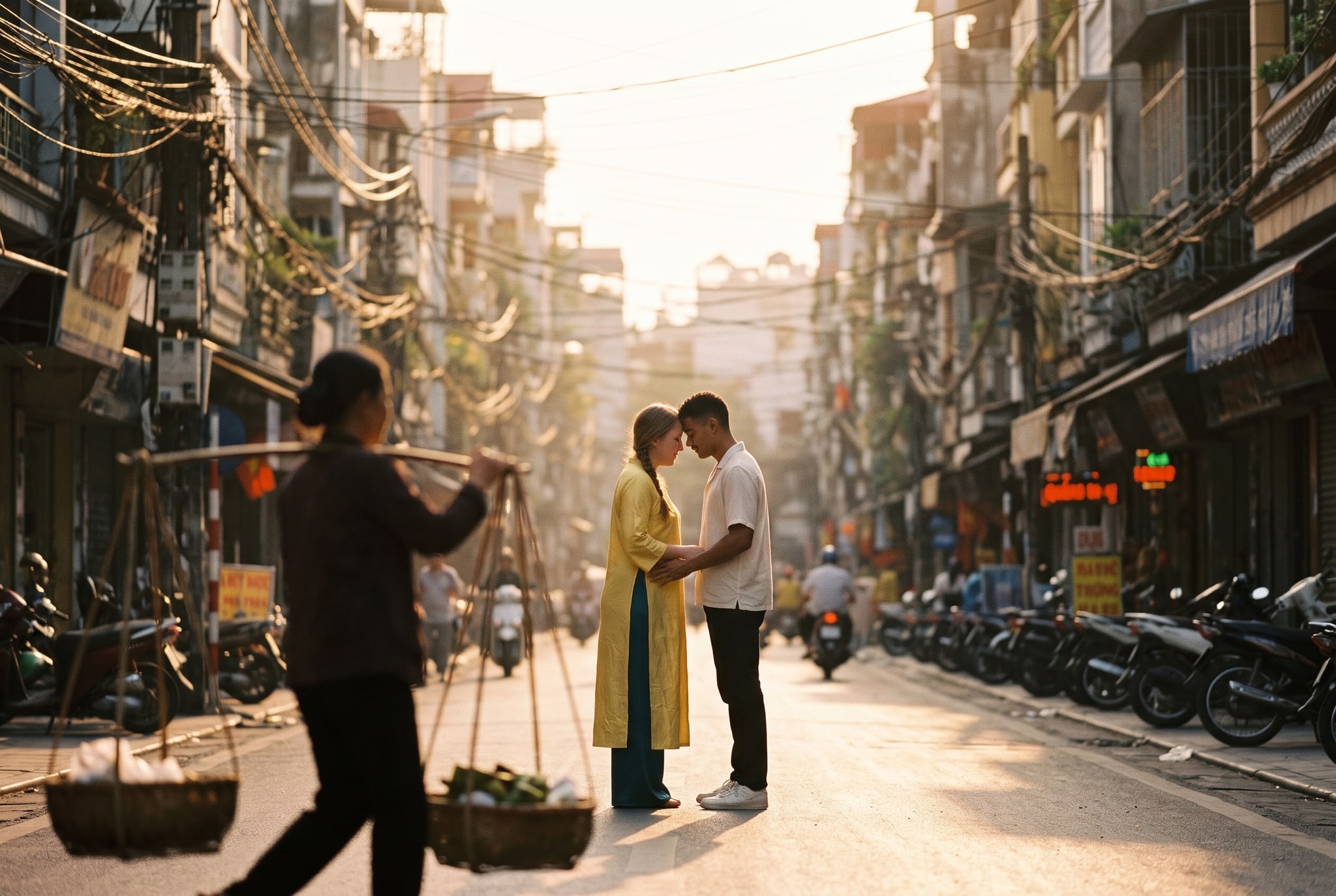
Which outfit colors actually stand out against red brick and clay?
Soft pastels—blush pink, pale yellow, mint—read beautifully against Bat Trang's russet brick and earthy pottery but can look washed out in direct noon sun. Deep jewel tones (emerald, sapphire, burgundy) punch hard in studio shade but risk looking dark in kiln-lit late-afternoon frames. Creams and warm beiges anchor couples visually without competing with the clay vessels around them. We tend to recommend one solid color per person, or a muted stripe, because the village itself is visually busy—competing patterns flatten the couple in the wider shot. Test your choice at home under afternoon light: if it reads as one color from 3 meters away, it'll work in Bat Trang's haze.
| Outfit type | Best for | Why it works | What to check |
|---|---|---|---|
| Matching solid colors (his/hers same shade) | Classic, romantic frames | Creates visual unity; easy on eye in crowded studio backgrounds | Fabric breathes; color doesn't fade under bright kiln light |
| Complementary pastels (e.g., blush + soft blue) | Modern, editorial look | Harmonizes without matching; stands out in dust haze | Both fabrics are matte; avoid sheen |
| Neutral tones (cream, taupe, charcoal) | Timeless, any season | Photographs consistently; doesn't date the album | Fabric weight matches (one heavy, one light = weird proportions) |
| Patterned insert (solid + one patterned piece) | Textured, detailed look | Adds visual interest; clay dust camouflages minor wear | Pattern is small-scale; main color is neutral |
How do you stay comfortable in kiln heat for 2–3 hours?
Bat Trang's kilns pump warmth into the streets, especially 3–5 p.m.—we schedule morning shoots (8–11 a.m.) when we can because couples move faster, smile more genuinely, and don't sweat through cotton by frame fifty. Wear layers: a loose overshirt, cardigan, or open jacket you can peel off for close-ups. Linen breathes better than cotton; avoid elastic waistbands and tight seams that dig when you're standing in kiln heat. Flat, breathable shoes (canvas sneakers, leather loafers, sandals with ankle support) keep feet from swelling—we've seen couples switch to flip-flops by hour two, which kills framing consistency. Bring a small towel and water; we always have both on set, but couples feel more confident with their own. If you're shooting in a working studio, ask the potter to open side doors or pause activity during your most important frames—smoke clears faster and light stays cleaner.
See packages and prices on vietnamphotoshoot.com
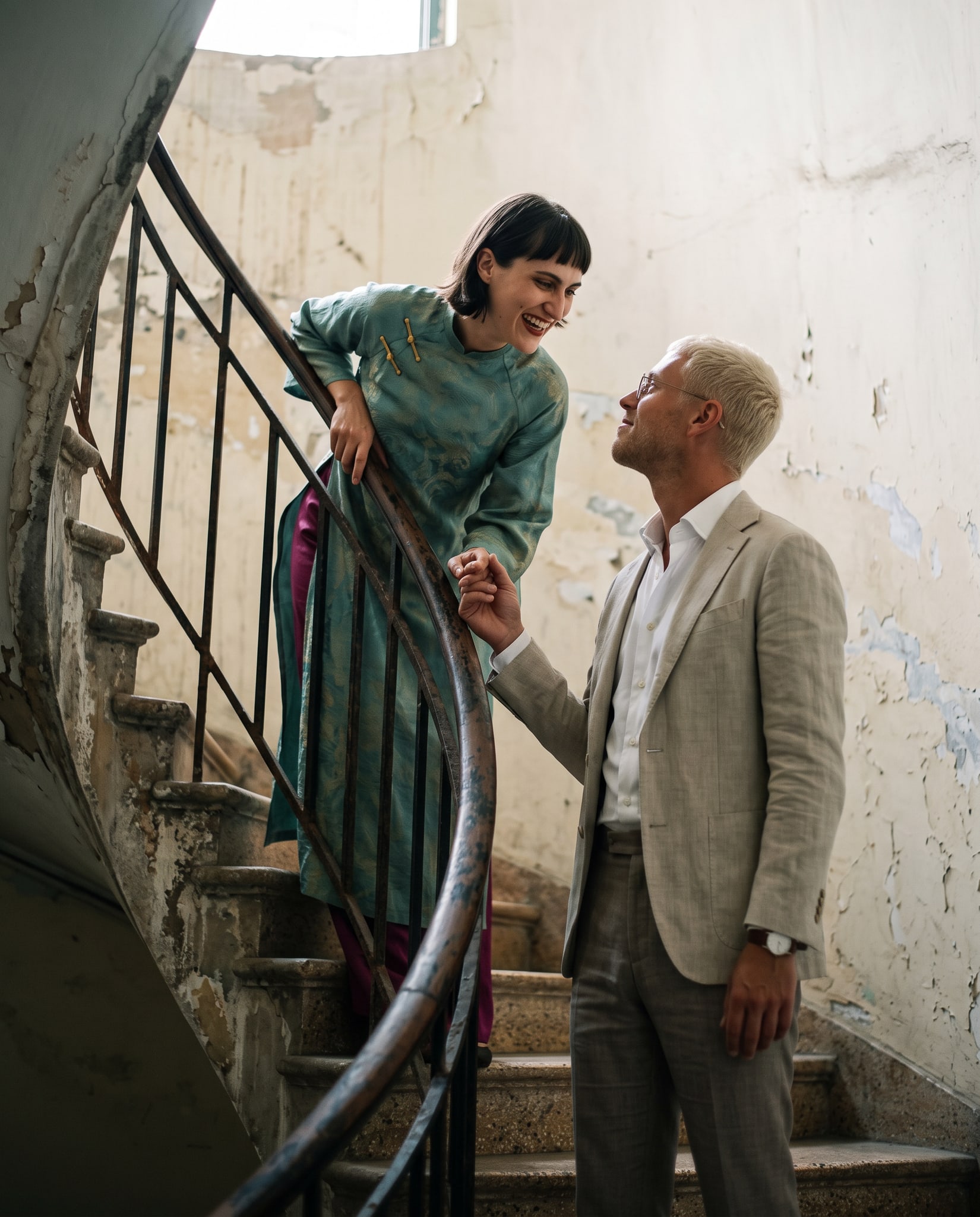
Should you wear a traditional áo dài instead of Western clothes?
Many couples ask this—we offer both paths. A áo dài photoshoot session focuses on the garment's grace against architecture; Bat Trang's kilns and pottery wheels are stunning backdrops for silk áo dài in jewel tones or classic white. Western casual wear (linen, cotton, simple silhouettes) tells a different story: intimate, modern, real-life. Áo dài requires more care—the gown wraps around a working studio, risks snagging on pottery tools, and photographs differently in kiln smoke (the fabric can look washed out). We've done both; if you love the áo dài narrative, book a dedicated session focused on the garment and the village's architecture. If you want couple chemistry in movement (reaching for clay, laughing in alleys, sitting by a kiln), Western casual works faster and costs less setup time. Talk to our Hanoi team about mixing both—two hours in áo dài, one hour in casual wear—if your budget and timeline allow.
What should you check on your outfit before arriving at Bat Trang?
We send every couple a WhatsApp check-in 24 hours before: photos of the exact outfits, worn shoes, layering pieces. Here's what we actually look for:
- Fit in movement: bend, squat, reach—nothing should pull, bunch, or gape. Kiln tours mean unexpected crouching; your outfit has to feel like second skin.
- Seams and hems: clay slip exploits loose threads. Check that hems are secure, seams flat, and no raw edges catch fabric.
- Fabric weight match: if one partner wears thin linen and the other wears heavy cotton, proportions look off when you're standing close. Aim for similar drape and texture.
- Undergarment visibility: kilns are hot and bodies sweat. Avoid light, thin fabrics over dark undergarments; the contrast reads in close frames. Test with a phone light in a dark room.
- Shoe grip: walk on a smooth tile floor in the shoes you plan to wear. Bat Trang's alleyways have clay slip and water pooling—slick soles = rushed frames and real injury risk.
- Color test in afternoon light: stand outside at 3–4 p.m. in your outfit and take a phone photo. If it looks flat, muddy, or washed out, swap it before the shoot date.
What to check before you book
Before you confirm a Bat Trang couple photoshoot package, ask yourself:
- Am I comfortable in heat and minor dust? (Kilns run hot; it's not a sterile setting.)
- Do my clothes fit and move freely? (Try them on; walk stairs.)
- Are my shoes broken in? (New shoes = blisters in hour two.)
- Does my partner's outfit complement mine visually? (Send photos to the team.)
- How much time do I actually have? (Morning sessions = best light but earlier wake-up.)
- Will I want a second outfit for variety? (Ask the team about timing and changing areas.)
If you're uncertain about styling or want professional advice before purchase, our Hanoi team offers makeup and hair at your hotel services and can do a styling consultation by video. Reach out on WhatsApp with photos of your options—we'll tell you what reads on camera and what to avoid in Bat Trang's specific light and dust.
FAQ
Will clay dust ruin my clothes permanently?
Clay slip washes out of most natural fibers with cold water and gentle soap. We've seen couples restore linen and cotton fully. Silk can stain if left wet; rinse immediately at home. Avoid fabric softener—it sets clay particles. Darker fabrics hide marks better and feel less stressful during the shoot.
Is morning or afternoon light better for Bat Trang couple photos?
Morning (8–11 a.m.) gives clean, even light and cooler temperatures—couples smile more and move faster. Late afternoon (3–5 p.m.) adds dramatic kiln-glow and warmer tones but raises dust and heat. We prefer morning for comfort; afternoon if you want moodier, more textured frames. Ask the team which suits your vision.
Can I wear a suit or formal Western wedding dress?
Suits work if they're lightweight cotton or linen; we've shot grooms in tailored linen shirts and trousers successfully. Traditional Western wedding dresses (heavy satin, long trains, stiff constructions) are risky—kilns are hot, alleys are tight, and clay sticks to delicate fabrics. If you want a formal look, choose structured linen or cotton instead.
What if I sweat a lot in heat—will it show on camera?
Yes. Moisture darkens most fabrics and reads in close frames. Wear matte, natural fibers that photograph dry even when damp. Avoid synthetic blends and pastels. Bring a small towel. We pause between shots for couples to cool down; taking it slow keeps you comfortable and frames fresher.
Should we match outfits or wear contrasting colors?
Matching (same color, different cuts) creates visual harmony and photographs timeless. Complementary colors (pastels that work together, or one neutral + one jewel tone) add energy and feel modern. Both work; test your choice against Bat Trang's russet brick in afternoon light before the day. Avoid clashing patterns—the village is visually busy enough.
Can I change outfits mid-shoot if I bring a second set?
Yes. Plan 10–15 minutes for a change; we usually do this when moving between studios or alley sections. Bring a small bag with the second outfit and touch-up makeup. Changing in a working studio is tight; our team can scout a quieter corner or nearby café in advance. --- See packages and prices on vietnamphotoshoot.com
Pre-Wedding & Elopement
Inclusions, prices and booking are on our booking site.
FAQ
Will clay dust ruin my clothes permanently?
Clay slip washes out of most natural fibers with cold water and gentle soap. We've seen couples restore linen and cotton fully. Silk can stain if left wet; rinse immediately at home. Avoid fabric softener—it sets clay particles. Darker fabrics hide marks better and feel less stressful during the shoot.
Is morning or afternoon light better for Bat Trang couple photos?
Morning (8–11 a.m.) gives clean, even light and cooler temperatures—couples smile more and move faster. Late afternoon (3–5 p.m.) adds dramatic kiln-glow and warmer tones but raises dust and heat. We prefer morning for comfort; afternoon if you want moodier, more textured frames. Ask the team which suits your vision.
Can I wear a suit or formal Western wedding dress?
Suits work if they're lightweight cotton or linen; we've shot grooms in tailored linen shirts and trousers successfully. Traditional Western wedding dresses (heavy satin, long trains, stiff constructions) are risky—kilns are hot, alleys are tight, and clay sticks to delicate fabrics. If you want a formal look, choose structured linen or cotton instead.
What if I sweat a lot in heat—will it show on camera?
Yes. Moisture darkens most fabrics and reads in close frames. Wear matte, natural fibers that photograph dry even when damp. Avoid synthetic blends and pastels. Bring a small towel. We pause between shots for couples to cool down; taking it slow keeps you comfortable and frames fresher.
Should we match outfits or wear contrasting colors?
Matching (same color, different cuts) creates visual harmony and photographs timeless. Complementary colors (pastels that work together, or one neutral + one jewel tone) add energy and feel modern. Both work; test your choice against Bat Trang's russet brick in afternoon light before the day. Avoid clashing patterns—the village is visually busy enough.
Can I change outfits mid-shoot if I bring a second set?
Yes. Plan 10–15 minutes for a change; we usually do this when moving between studios or alley sections. Bring a small bag with the second outfit and touch-up makeup. Changing in a working studio is tight; our team can scout a quieter corner or nearby café in advance. --- [✨ See packages and prices on vietnamphotoshoot.com](/go/)
More from the team
Boho pre-wedding photoshoot in Vietnam: Hanoi, Saigon, Hoi An
Boho pre-wedding shoots mix romantic, free-spirited aesthetics with Vietnam's landscapes and heritage sites. We run full-day sessions in three cities, handling styling, makeup, location scouts and edits.
Avoid crowds at Hoang Su Phi rice terraces: timing for wedding shoots
Hoang Su Phi's terraced landscape draws couples and tour buses in equal measure. We show how to shoot there alone, when to arrive, and what to arrange with us before you go.
Photography rules at Con Dao beaches: permits, drones and what to check
Con Dao's beaches demand prep before you shoot—permits, drone zones and tide timing all affect your day. We share what the Cáo Studio team verifies on every booking.