 Cáo Studio
Home › Blog › Pre-Wedding & Elopement
What to wear for couple photos at Cu Lao Cham Island
By the Cáo Studio team · Hanoi & Saigon · 2026-11-04
Cu Lao Cham sits 20 km northeast of Hoi An and rewards couples who plan their wardrobe the night before. The island's strong midday sun, salt spray, and unforgiving sand mean natural fabrics (linen, cotton blends, moisture-wicking rayon) outperform synthetics; darker or jewel-toned solid pieces photograph better than pastels or busy prints against the water. Most couples bring two outfits—one casual for morning light near Bai Chay beach, one dressier (or traditional ao dai) for golden hour at Ong Tao pagoda area. Cáo Studio recommends booking a couple photoshoot package that includes styling guidance via WhatsApp; we send fabric and color suggestions two weeks ahead, confirm your travel dates, and arrange a 1-hour session split between two locations on the island. Budget for quick-dry pieces and bring a thin shawl—the breeze cools fast at 4 p.m., and photos taken in wind require flat-lay clothes that move elegantly, not heavy knits. Chat with us on WhatsApp
Why fabric weight matters more than you think
The moment a couple steps off the ferry onto Cu Lao Cham, air temperature jumps 2–3°C and humidity shoots above 80% because you're surrounded by open sea. Synthetic blends trap moisture against skin and cling to every contour in ways that ruin framing. We've watched nylon shift dresses become transparent within an hour, and polyester blend trousers develop visible sweat patterns by frame 50. Linen wrinkles on the boat—true—but wrinkles read as texture and movement in photos, not flaws. Cotton jersey and rayon blend fabrics dry inside 15 minutes if they get misted by spray, whereas acrylic or thick knits hold water and sag. We tell couples: buy or borrow two pieces in pure linen or cotton-linen blends, pack a microfiber towel, and pack a wrinkle release spray that works without heat. The fabric weight also affects how wind moves your clothes—heavier fabrics billow poorly, lighter ones flutter in ways photographers expect to see at island shoots.
Which colors hold up against turquoise water and limestone
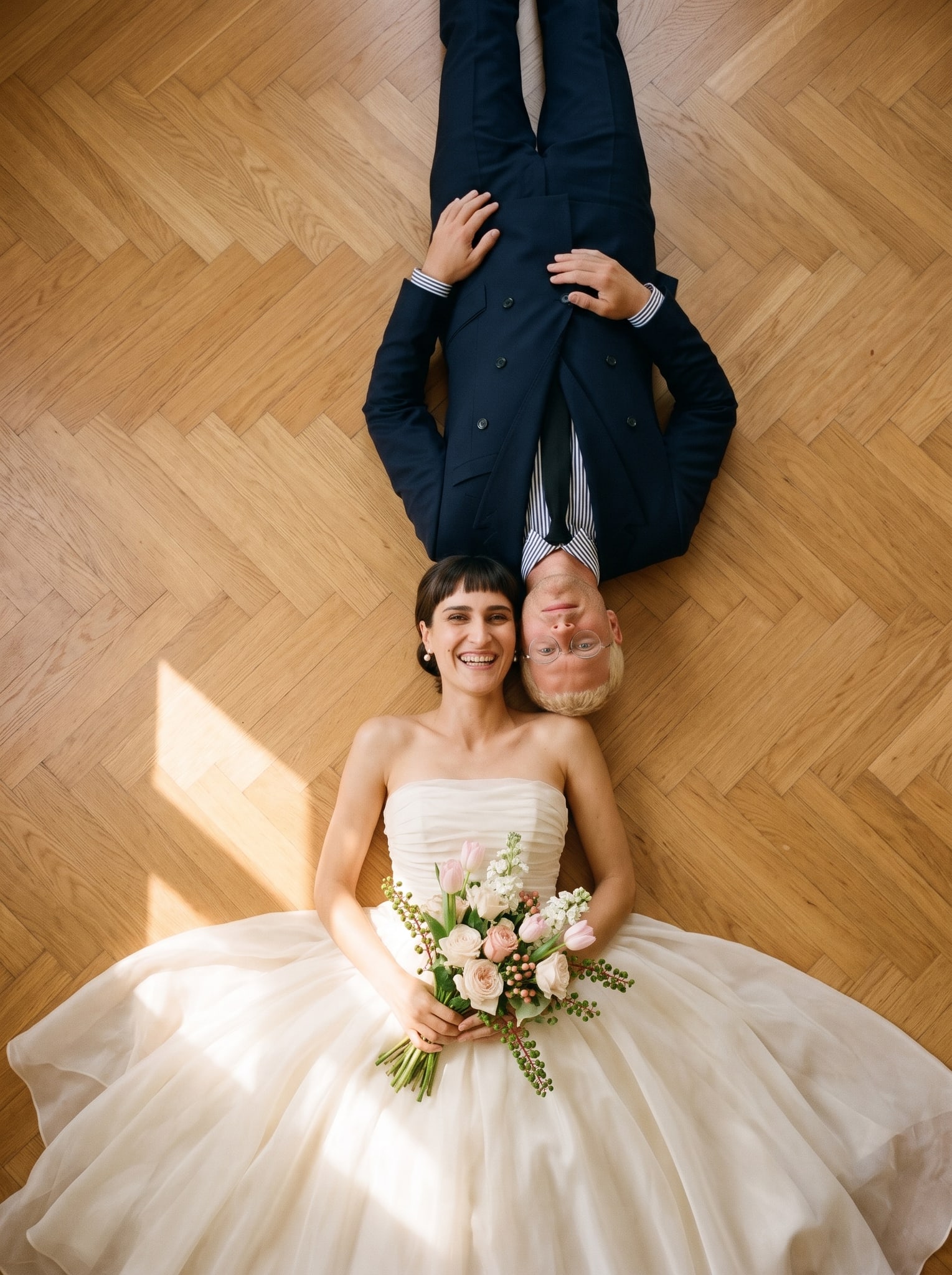
We've shot over 80 couple sessions at Cu Lao Cham since 2021, and pale pastels (baby pink, mint, cream) disappear into the sky or wash out against the water's blue. Deep jewel tones—emerald, sapphire, rust, mustard—anchor the frame and let the ocean sit behind you as a supporting element, not a competitor. Solid colors photograph stronger than patterns because the eye rests on your face and posture, not on a print trying to match the background. White works only if your partner wears a dark tone; two white outfits against turquoise sand look washed out by 11 a.m. Black is technically perfect for contrast, but the Hoi An sun reflects so hard off sand and water that a black piece can create a harsh silhouette by noon. We advise one jewel tone and one neutral (charcoal, warm beige, or deep navy), so each photo has tonal range. Reds and oranges photograph beautifully in golden hour (after 4 p.m.), but they oversaturate in direct sun unless your photographer drops exposure deliberately.
See packages and prices on vietnamphotoshoot.com
Morning casual versus golden-hour formal: which order wins
Most couples ask us: shoot the casual outfit first or the fancy one? We recommend casual first because energy is highest after the boat ride, salt spray hasn't matted hair, and the morning light near Bai Chay beach is softer and forgiving of tired faces. You change into your formal piece (or ao dai) around 3:30 p.m. at a rest stop or lodging on the island, which gives our makeup artist time to refresh your look and gives you time to settle into the fancier outfit's posture and feel. If you reverse the order—formal first—couples often feel overdressed and stiff in morning frames, and changing to casual mid-session feels like a step backward emotionally. We build this sequence into our pre-wedding photoshoot package as a standard flow. One couple from Saigon brought three outfits in 2024 and shot casual linen at 8 a.m., a mid-tone dress at 1 p.m., and traditional ao dai at 5 p.m.; the tonal progression in the gallery felt like a story arc, and she told us later that seeing the timeline made her feel like the island had transformed her wardrobe through the day.
| Outfit Type | Best Time to Shoot | Fabric to Choose | Color Range | Why It Works |
|---|---|---|---|---|
| Casual: linen shirt, shorts or lightweight pants | 7:30–10 a.m. | 100% linen or cotton-linen blend | Jewel tones or warm neutrals | Soft side-light flatters, casual feel matches morning energy |
| Dressy: midi dress or tailored separates | 12:30–3 p.m. | Rayon blend, cotton voile, or linen blend | Deep jewel, navy, rust | Defined shape photographs well; time before sun hardens |
| Golden-hour formal or ao dai | 4:30–6 p.m. | Linen, silk blend, or traditional cotton | Jewel tones, black, metallics, or traditional colors | Warm 3500K light flatters skin; fabric glows; silhouettes sharpen |
What we pack for you: backup layers and sun protection
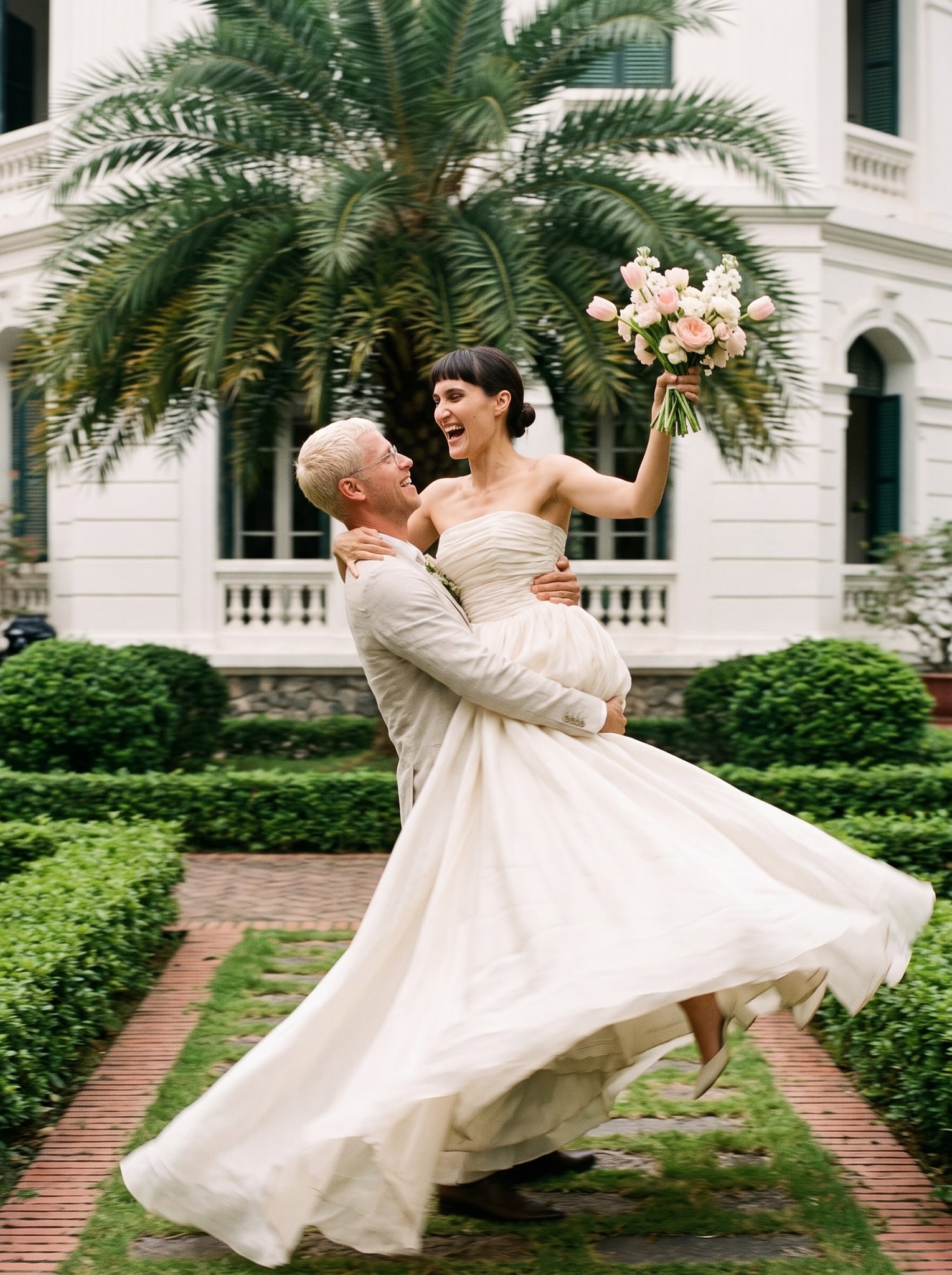
We arrive on the island an hour before your session with a kit that includes a thin cotton shawl (for wind-blocking or shoulder coverage), a woven hat that doesn't flatten hair, a microfiber quick-dry towel, wrinkle release spray, and a small umbrella for sun breaks between frames. You don't carry these during the shoot—we do—but knowing they're there changes how you move. The shawl is not costume; it's a tool. When the 4 p.m. breeze kicks in and your partner's linen shirt flutters too much, we drape the shawl across the back of a frame to anchor the composition and keep fabric movement graceful instead of chaotic. Sun protection means we station you in shadow during setup and transitions, so your skin stays even-toned and you're not squinting when the shutter opens. One couple last month didn't want any "extra" layers and insisted on shooting in direct sun for 90 minutes; by frame 140, they were visibly uncomfortable and their smiles had tightened. We always ask: bring a lightweight cardigan or overshirt anyway, even if you don't plan to wear it. The decision to use it happens on set, not in advance.
Shoe and accessory choices that don't sabotage your frames
Shoes disappear into sand, but they still matter. We see couples arrive in heavy hiking boots (unnecessary—the island paths are gentle) or new canvas sneakers (they photograph stiff and blue). Worn leather sandals, soft canvas slip-ons, or bare feet work best. Accessories should be minimal and personal: one piece of jewelry your partner recognizes, a watch you both wear often, or a scarf with sentimental color. Avoid dangling bracelets because they catch light randomly and distract from hand positioning. Large sunglasses are necessary for midday UV protection, but we ask you to remove them for the actual frames; eyes are where connection lives in couple photography. Hair ties and clips should match your hair color or be silk-wrapped so they don't create visible lines. If you're bringing a wedding ring or engagement ring, wear it on the day—it photographs as intentional intimacy, not as an add-on. One couple from Hanoi brought coordinating linen hats that matched their color palette; we shot a series with the hats and a series without, and the hat frames felt playful and distinct, which is the point of an island shoot—permission to feel lighter than a formal studio session.
What to check before you order anything new
Do not buy new clothes specifically for this shoot. Wear pieces you've worn five or more times so they fit your body language and move naturally. New fabric sits stiffly on skin and reads as costume instead of authentic. If you must buy something, wear it three times before the shoot and have it washed once so it softens and loses that "off the rack" shine. Check the return window—if your chosen piece doesn't feel right by day 10, you have time to swap it. Verify fabric care: linen wrinkles are okay, but if a piece requires dry cleaning, avoid salt-water shoots. Test any fabric in humidity; order a sample or try it on in a steamy bathroom for 10 minutes and see if it clings or relaxes. Bring two backup outfits if you're uncertain, and pack them in a ziplock bag in your carry-on—luggage delays have happened to couples arriving in Hoi An, and we've had to pivot a shoot to local market finds because a suitcase landed three days late. Read reviews from other Cu Lao Cham shoots if you're following social proof; check what colors and fabrics our past couples actually wore in the gallery, not what a brand promises.
See packages and prices on vietnamphotoshoot.com
Ready to book your Cu Lao Cham couple session? We guide you through every choice—fabric, color, timing, and backup pieces—via WhatsApp two weeks before your date. Our team at Cáo Studio Hanoi and Cáo Studio Saigon can also arrange makeup and hair at your hotel the morning of your shoot so you arrive island-ready. For couples planning a longer story, ask about combining Cu Lao Cham with a special concept shoot in Hoi An's Old Town or rice fields—many pairs shoot the island casual in the morning and return to town for a traditional or fashion concept in the evening.
FAQ
What happens if my outfit gets wet from salt spray or the boat?
We carry quick-dry towels and microfiber cloths; minor spray won't ruin the shoot. If you go in water deliberately (some couples do), plan a change into a backup outfit and give fabric 15 minutes to air-dry between sessions.
Can I wear my wedding dress or traditional áo dài to Cu Lao Cham?
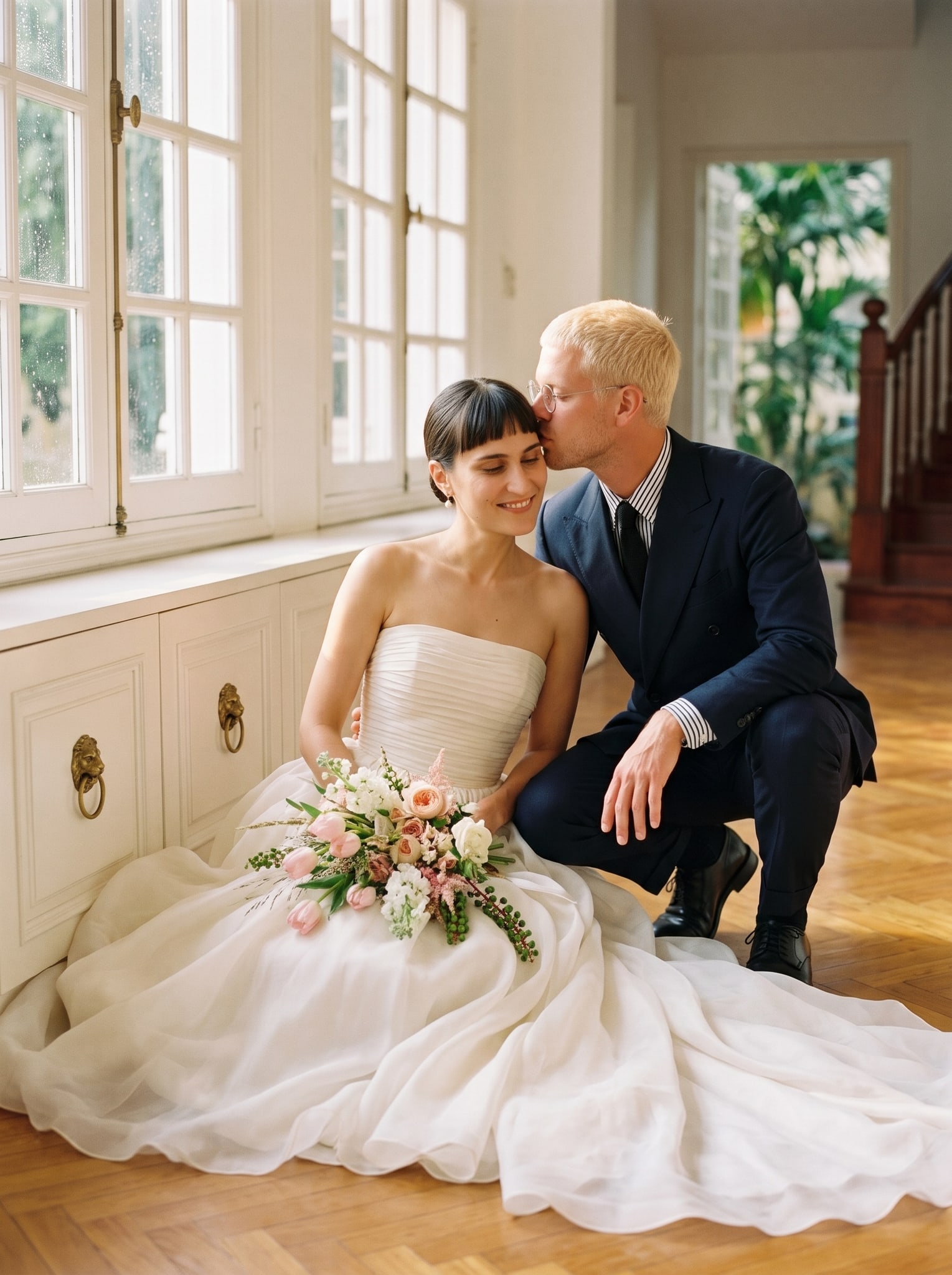
Yes, but only for the golden-hour slot (after 4 p.m.) and only if it's a sturdy fabric like linen or silk blend. Full formal gowns with trains are risky on sand and rocks; we recommend a simpler silhouette or a custom ao dai in breathable cotton.
How many outfit changes should I plan for a 3-hour shoot?
Two changes (casual, then formal or ao dai) is standard and gives each look 60–90 minutes of frames. Three changes is possible but means shorter time per outfit and more pressure to change quickly; most couples feel more relaxed with two.
Do I need to match my partner's color or can we wear completely different tones?
Different tones work beautifully if they're in the same family (both jewel tones, both earth tones) or complementary (navy + rust, emerald + cream). Avoid one bright saturated color next to one pale pastel; the frame will look unbalanced.
Should I bring a backup outfit in case I hate what I packed?
Yes. Pack three pieces you love and decide which two to wear on the morning of the shoot. Taking a 30-minute walk in your outfit at the hotel tells you if it's comfortable for posing, moving, and sitting on rocks.
What if the weather forecast shows sun one day and clouds the next—do I choose different outfits?
Bright colors (emerald, sapphire, rust) look even richer on cloudy days because there's less direct reflection. Pastels and light neutrals actually photograph better in cloud cover. So no—the same two outfits work in both conditions, but the mood changes.
Pre-Wedding & Elopement
Inclusions, prices and booking are on our booking site.
FAQ
What happens if my outfit gets wet from salt spray or the boat?
We carry quick-dry towels and microfiber cloths; minor spray won't ruin the shoot. If you go in water deliberately (some couples do), plan a change into a backup outfit and give fabric 15 minutes to air-dry between sessions.
Can I wear my wedding dress or traditional áo dài to Cu Lao Cham?
Yes, but only for the golden-hour slot (after 4 p.m.) and only if it's a sturdy fabric like linen or silk blend. Full formal gowns with trains are risky on sand and rocks; we recommend a simpler silhouette or a custom ao dai in breathable cotton.
How many outfit changes should I plan for a 3-hour shoot?
Two changes (casual, then formal or ao dai) is standard and gives each look 60–90 minutes of frames. Three changes is possible but means shorter time per outfit and more pressure to change quickly; most couples feel more relaxed with two.
Do I need to match my partner's color or can we wear completely different tones?
Different tones work beautifully if they're in the same family (both jewel tones, both earth tones) or complementary (navy + rust, emerald + cream). Avoid one bright saturated color next to one pale pastel; the frame will look unbalanced.
Should I bring a backup outfit in case I hate what I packed?
Yes. Pack three pieces you love and decide which two to wear on the morning of the shoot. Taking a 30-minute walk in your outfit at the hotel tells you if it's comfortable for posing, moving, and sitting on rocks.
What if the weather forecast shows sun one day and clouds the next—do I choose different outfits?
Bright colors (emerald, sapphire, rust) look even richer on cloudy days because there's less direct reflection. Pastels and light neutrals actually photograph better in cloud cover. So no—the same two outfits work in both conditions, but the mood changes.
More from the team
Elopement Photos at Mui Ne Fishing Village: What We Shoot
Mui Ne fishing village offers intimate sand dunes, colourful boats, and golden-hour light that feel timeless for elopement photography. We've shot dozens of couples there—here's what we learned.
Pre-wedding photoshoot in Hue in November: weather, light and crowds
November in Hue is one of Vietnam's most predictable months for outdoor photography. We've run dozens of sessions there and want to share what actually happens on the ground—the light, the crowds, and the decisions we make hour by hour.
Pre-wedding photoshoot in Hue in August: weather, light and crowds
August in Hue brings intense heat and unpredictable afternoon rain. We've run dozens of pre-wedding shoots there and learned what time of day works, which locations stay dry longest, and how to keep your hair and makeup perfect in the humidity.