 Cáo Studio
Home › Blog › Pre-Wedding & Elopement
What to Wear for Couple Photos at Cua Dai Beach
By the Cáo Studio team · Hanoi & Saigon · 2026-11-02
Cua Dai Beach near Hoi An requires outfits that breathe in humidity, photograph well in golden-hour light, and survive sand and saltwater without tearing or staining. We recommend lightweight fabrics (linen, cotton blends, silk), neutral or jewel tones that don't wash out, and shoes you're willing to remove—most couples ditch their footwear by the second location. A single outfit works if you're doing a two-hour session; pre-wedding couples often change mid-shoot to refresh the story. Avoid heavy fabrics, intricate beadwork that catches sand, or anything that requires constant adjustment. Cáo Studio sends a detailed WhatsApp brief two weeks before your shoot date listing specific placement zones (the lagoon edge, the palm grove, the shoreline rocks) and what our stylists have seen work best—this prevents mismatched energy between your outfit and the light. Chat with us on WhatsApp | See packages and prices on vietnamphotoshoot.com
Why Cua Dai's Light and Sand Change Everything
Beach light at Cua Dai is relentless. Golden hour (5–7 p.m. local time) turns the lagoon into burnished mirror, but midday sun bleaches most fabrics pale. We always schedule couple shoots for late afternoon when the palm trees throw long shadows and the water glows. Pale pastels wash out; jewel tones (emerald, deep coral, navy) hold their shape in the photograph. Sand clings to wet fabric and loose hems—loose linen that looks elegant in an air-conditioned room becomes a liability when you're walking through salt spray. We've had couples arrive in heavy silk evening wear expecting a romantic setup; the fabric wraps around their legs, the makeup begins to slip, and by frame 50 they're exhausted. Lightweight, natural fibers with a slight structure (linen-cotton blend, brushed cotton) let you move freely without looking slack.
What Fabrics Actually Survive the Session
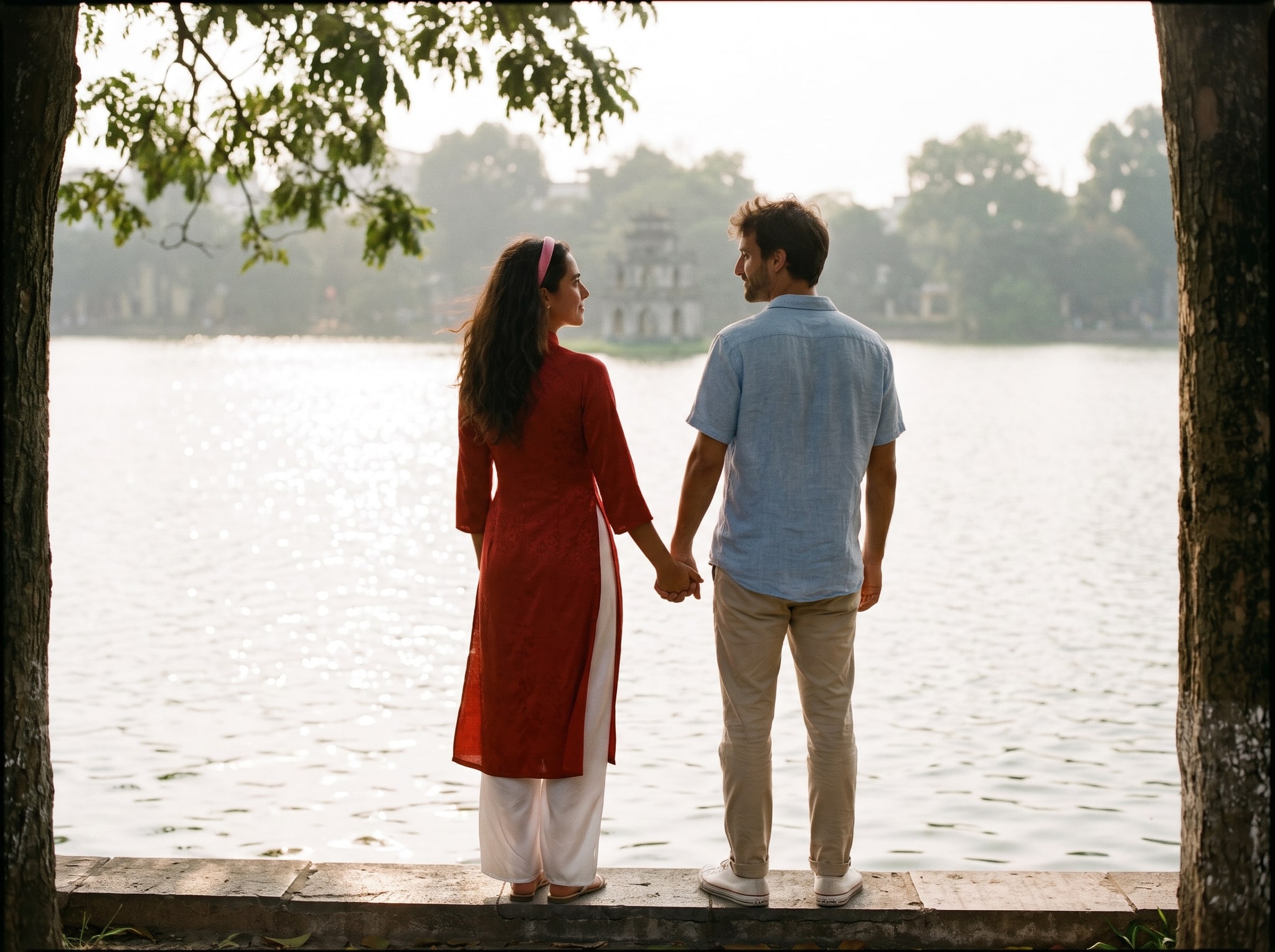
Our stylists check the weave of your outfit the day before shoot. Linen wrinkles heavily but photographs true—wrinkles add texture that reads as authenticity in couple images. Cotton breathes and dries quickly if you wade into the shallows; we've had couples who planned water shots and appreciated cotton's fast recovery. Silk is beautiful but slippery on wet sand and stains easily from saltwater. Polyester blends are cheaper and wrinkle-resistant, but they don't breathe and often look flat in natural light—we see them shimmer wrongly when the sun hits at an angle. Here's what we actually observe on shoot day:
| Fabric | Movement | Drying Time | Sand Cling | Light Readability | When to Use |
|---|---|---|---|---|---|
| Linen blend | Flows well | 10–15 min | Moderate | Warm, natural | Standard couple shoot |
| Cotton | Free, loose | 8–12 min | Light | True tone | Water scenes, humidity |
| Silk | Elegant, slips | 20+ min | High | Flat indoors, rich outdoors | Evening only, no water |
| Polyester blend | Stiff | 5–8 min | Minimal | Shiny, artificial | Not recommended |
The choice depends on your shoot plan. If you're wading into the lagoon, cotton wins. If you're staying dry on the rocks at sunset, linen or a silk-linen blend works. We always ask during the WhatsApp planning call: "Will you be in the water?"—the answer changes our outfit advice immediately.
Color Strategy: What Reads in Golden Hour
We work with a simple color rule: avoid colors that match the sand or the sky. Beige and pale blue disappear into the background; your faces become the only focal point, which feels disconnected. Jewel tones (forest green, burgundy, sapphire) create separation. Warm neutrals (caramel, taupe, warm gray) work if they're paired with jewelry or a contrasting partner outfit. Matching couple outfits in the same fabric and tone tends to blend—we prefer one partner in a warm tone, the other in cool, so they read as distinct figures in the frame.
White and cream are tempting for beach shots, but they flare in direct sun after 4 p.m., causing our camera to meter down and darken your faces. If you want white, schedule for 6:30 p.m. or later when the sun is low and golden. Patterns (florals, stripes, checks) break up the visual line of your body—useful if you want a playful energy, but harder to balance in a composed couple image. We've found that one solid outfit and one subtle pattern (fine stripes, scattered embroidery) creates visual rhythm without chaos.
See packages and prices on vietnamphotoshoot.com
Hair, Shoes, and Accessories on the Actual Beach
We always arrive 15 minutes early to assess wind direction and sand texture. Cua Dai has sparse grass cover near the tree line; the open beach is compacted wet sand. Loose, long hair catches wind and sand equally—we often recommend braids or half-up styles for beach sessions, not because they're trendy, but because they photograph sharply and don't require constant restyling between frames. Makeup holds better on braided styles too, since your stylist isn't fighting flyaways.
Shoes: remove them entirely or wear something you've accepted will get salt-stained. Strappy heels are impossible on wet sand; we've seen couples take exactly three steps and then kick them off. Flat sandals or going barefoot photographs better anyway—your posture relaxes, your movement becomes natural. If you insist on footwear, bring two pairs and switch at the midpoint so you have dry shoes for the final frames.
Jewelry matters more than fabric. A simple gold necklace reads beautifully against linen. Dangling earrings catch light and distract; studs or small hoops stay anchored. We recommend one meaningful piece per person—a watch, a bracelet with memory, a family ring—rather than layered jewelry that competes with the landscape. Leave bulky bags and phones behind; we'll hold them in our crew bag during the shoot, and they distract from the emotional energy of couple work.
Layering and Costume Changes Mid-Shoot
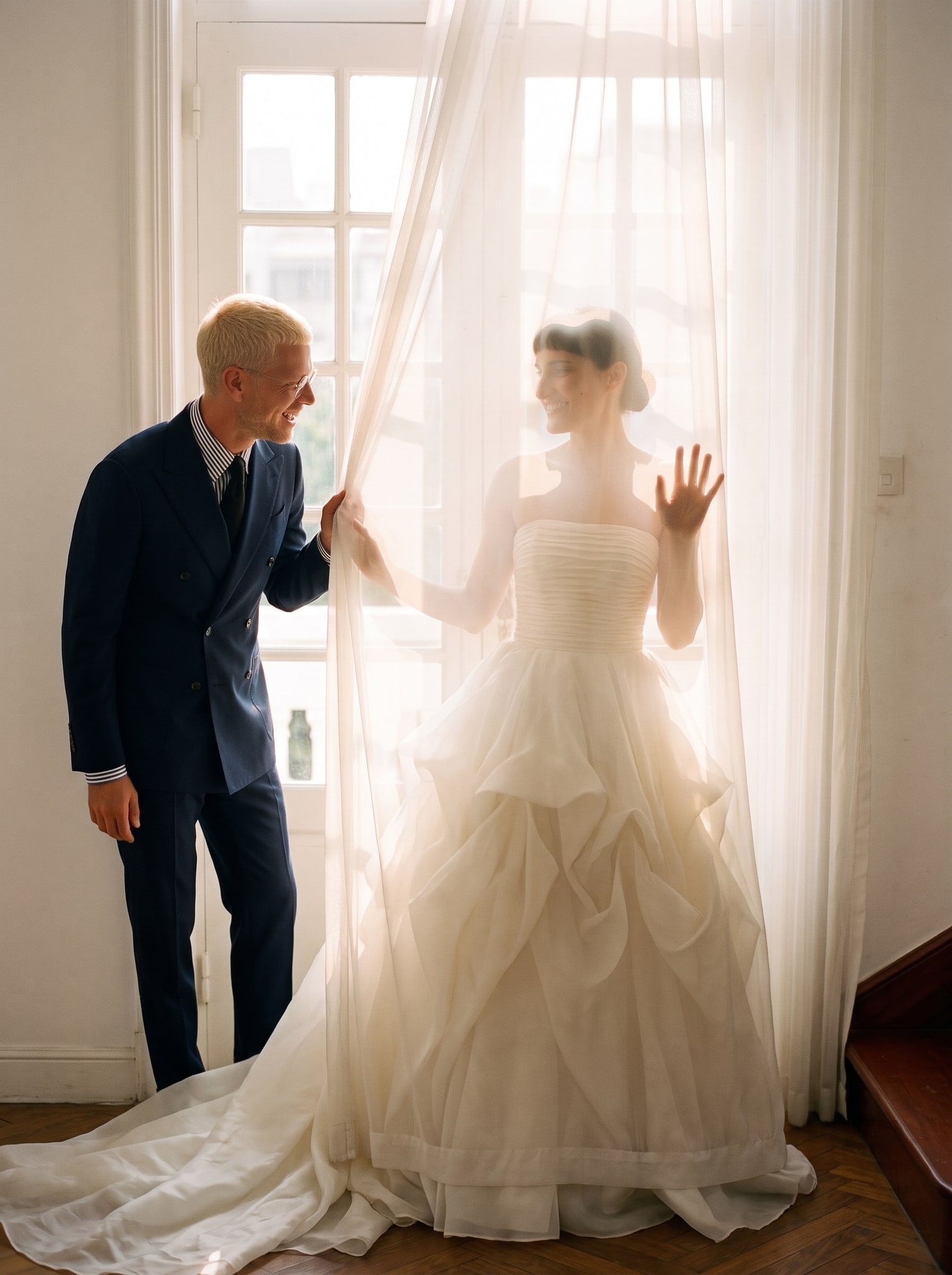
For pre-wedding sessions lasting three hours or more, we always suggest a second outfit. The first outfit (usually a dress or formal shirt-and-pants combo) sets a romantic tone. The second outfit can be casual—linen shorts and a simple tank, or lightweight trousers and a fitted shirt—and lets your story shift toward intimacy. The outfit change also gives us a break point to review images, let your stylist refresh makeup, and reset the energy of the shoot.
Layering is underrated at Cua Dai. The air temperature drops 3–4 degrees between 5 p.m. and 7 p.m., and wind picks up near the water. A lightweight linen overshirt or a thin cotton wrap gives you a third visual option without adding bulk. We've had sessions where a couple swapped a wrap between frames—it's a quick costume refresh that reads as intentional in the final gallery.
Always bring a second shirt or wrap even if you don't plan to change. We've had sunset sessions where clouds clear suddenly and the light turns intense and cold. A light layer lets you stay comfortable and focused on the camera rather than chilled muscles showing tension in your shoulders.
Checking Your Outfit Before You Order or Borrow
Before you commit to an outfit for Cua Dai, run through this checklist with us:
- Fit under movement: Walk, sit on sand, lean into your partner. Does the garment restrict your hips, shoulders, or chest? Tight clothes read as stiff in photographs.
- Wrinkle reality: Iron or press the outfit, let it sit for an hour, then photograph it in natural window light. How does it look? If wrinkles are visible, linen is okay; if the fabric looks damaged, reconsider.
- Sand interaction: Rub a small patch with damp sand. Does it stain, pill, or cling? Light surface cling is normal; heavy cling means we'll spend minutes brushing between frames.
- Sun test: Step outside at 5 p.m. in the outfit. How does the color read? Does it fade, or does it deepen? If it fades, it'll fade in your photos too.
- Water safety (if applicable): Submerge a corner in saltwater for 10 seconds, then check for color bleed or shrinkage. Natural fabrics are safer; some dyes run.
- Shoe ground truth: Walk 50 steps on concrete, then imagine 100 steps on wet sand. Are you confident your feet will stay comfortable?
If you're renting an áo dài or formal wear for a pre-wedding concept shoot, ask the rental shop these same questions—especially wrinkle profile and sand behavior. We've had couples arrive with rental outfits that looked pristine in the studio but photographed like stiff costumes on the beach.
Real Issues We've Solved On-Site
One couple arrived in matching white linen suits expecting an editorial look. By 5:45 p.m., they were flaring the camera sensor so badly we couldn't expose for their faces. Our stylist had them change into a softer cream and navy combination, and the entire shoot reset emotionally—they felt less "costume," more themselves. Fifteen minutes of WhatsApp planning two weeks earlier would have caught this.
Another session featured a bride in a heavy beaded áo dài for a pre-wedding and elopement package. The beadwork caught sand so aggressively that we spent 40 minutes of a two-hour shoot brushing and resetting. Now we ask about beading detail during planning and, if it's extensive, suggest shooting on the pagoda steps in Hoi An instead, where sand isn't an issue.
A third couple wore matching dark jeans expecting a casual vibe. Dark denim holds heat, doesn't breathe, and photographs as a black blob with no texture—they looked like torsos floating in the lagoon. We swapped them for lightweight linen trousers we keep in the studio kit, and the shift was immediate.
These aren't outfit failures; they're planning oversights. We solve them by checking in detail before the shoot date. Our WhatsApp brief asks three specific questions: What are you wearing? Will you be in the water? Do you have a second outfit? If the answers suggest friction, we intervene early.
Where to Source or Rent Outfits in Hoi An
If you're traveling without suitable beach-wear, Hoi An's Ancient Town has rental shops on Tran Phu Street and Nguyen Thai Hoc Street. Most stock áo dài, but some also rent modern casual linen. Quality varies widely. We recommend visiting in person (not online) to check fabric weight and fit. Ask the shop if they've rented to beach-shoot couples before and what they recommend. Don't rent something you can't try on first.
For purchase, lightweight linen brands sold in Saigon and Hanoi (check local boutiques in District 1, Saigon, and Old Quarter, Hanoi) offer better quality than mall chains. Plan to buy one week before your shoot so you have time to wear it, wash it, and assess fit and wrinkle behavior. Budget time for a tailor if hems or sleeves need adjustment.
If you're working with makeup and hair at your hotel, ask your stylist for outfit feedback during the pre-shoot consultation. Our stylists see dozens of outfits per month and can spot fit or fabric issues you might miss.
FAQ
Should we wear matching outfits or contrast?
Contrast reads stronger in photographs. One partner in warm tones, the other in cool, creates visual rhythm. Matching outfits in the same tone tend to blend into a single shape.
What if we can't remove our shoes during the shoot?
Flat sandals or minimalist shoes photograph better than heels. Tell us in the planning call and we'll work around footwear—some couples prefer staying shod for confidence. We adjust framing accordingly.
How early should we start a Cua Dai couple shoot?
Golden hour runs 5–7 p.m. We recommend arriving by 4:45 p.m. for outfit checks and location scouting. Later starts risk losing light before you finish your second outfit change.
Can we wear traditional áo dài for a modern couple shoot?
Yes, áo dài photographs beautifully at Cua Dai. Pair it with simple pants or trousers, not a full traditional ensemble, to keep movement free. Bring a second casual outfit if your shoot is over two hours.
What if sand stains our outfit during the shoot?
Light surface stains wash out in cool water immediately after the session. We carry a spray bottle to rinse hands and lower hems between outfit changes. Deep stains from wet sand may need professional cleaning—use cold water and avoid heat.
Can we shoot in swimwear or beach cover-ups?
Yes, if it's part of your story. Swimwear reads bold and modern; beach wraps add layering and movement. Plan a second outfit in formal wear to shift the narrative midway through your session. --- See packages and prices on vietnamphotoshoot.com | Chat with us on WhatsApp
Pre-Wedding & Elopement
Inclusions, prices and booking are on our booking site.
FAQ
Should we wear matching outfits or contrast?
Contrast reads stronger in photographs. One partner in warm tones, the other in cool, creates visual rhythm. Matching outfits in the same tone tend to blend into a single shape.
What if we can't remove our shoes during the shoot?
Flat sandals or minimalist shoes photograph better than heels. Tell us in the planning call and we'll work around footwear—some couples prefer staying shod for confidence. We adjust framing accordingly.
How early should we start a Cua Dai couple shoot?
Golden hour runs 5–7 p.m. We recommend arriving by 4:45 p.m. for outfit checks and location scouting. Later starts risk losing light before you finish your second outfit change.
Can we wear traditional áo dài for a modern couple shoot?
Yes, áo dài photographs beautifully at Cua Dai. Pair it with simple pants or trousers, not a full traditional ensemble, to keep movement free. Bring a second casual outfit if your shoot is over two hours.
What if sand stains our outfit during the shoot?
Light surface stains wash out in cool water immediately after the session. We carry a spray bottle to rinse hands and lower hems between outfit changes. Deep stains from wet sand may need professional cleaning—use cold water and avoid heat.
Can we shoot in swimwear or beach cover-ups?
Yes, if it's part of your story. Swimwear reads bold and modern; beach wraps add layering and movement. Plan a second outfit in formal wear to shift the narrative midway through your session. --- ✨ See packages and prices on vietnamphotoshoot.com | [📸 Chat with us on WhatsApp](https://wa.me/84338762340)
More from the team
Boho pre-wedding photoshoot in Vietnam: Hanoi, Saigon, Hoi An
Boho pre-wedding shoots mix romantic, free-spirited aesthetics with Vietnam's landscapes and heritage sites. We run full-day sessions in three cities, handling styling, makeup, location scouts and edits.
Avoid crowds at Hoang Su Phi rice terraces: timing for wedding shoots
Hoang Su Phi's terraced landscape draws couples and tour buses in equal measure. We show how to shoot there alone, when to arrive, and what to arrange with us before you go.
Photography rules at Con Dao beaches: permits, drones and what to check
Con Dao's beaches demand prep before you shoot—permits, drone zones and tide timing all affect your day. We share what the Cáo Studio team verifies on every booking.