 Cáo Studio
Home › Blog › Pre-Wedding & Elopement
What to Wear for Couple Photos at Dai Yem Waterfall
By the Cáo Studio team · Hanoi & Saigon · 2026-11-02
Dai Yem waterfall sits 90 minutes south of Ninh Binh city in a limestone valley with heavy spray and slippery rocks. For couple photos there, wear natural-fiber layers—linen, cotton, silk blend—that dry quickly and move well in mist. Avoid white or pale pastels that read gray in backlighting; jewel tones, warm earth tones, and deep navy photograph strongest. Plan for one outfit change if you're shooting 2–3 hours; the first outfit handles the water-near shots, the second sits on dry rocks further back. Our team at Cáo Studio always scouts the exact light and water level the morning of your shoot, then advises on the second outfit on WhatsApp before you arrive. Most couples bring a dry change of clothes in a waterproof bag and wear water shoes or sandals that grip—flip-flops slip and fall risk is real. Chat with us on WhatsApp
How does Dai Yem's water and light change your outfit strategy?
Dai Yem is coldest and least misty in November–December; spray is thickest June–September. In dry season, you can wear delicate fabrics closer to the water. In wet season, pack heavier cotton or linen blends that cling less when damp—silk adheres to skin and reads unflattering in humidity. Our stylists check the forecast the night before and text gear suggestions by 7 a.m. the morning of the shoot. Light comes from the side and above the falls, so darker colors on one person and lighter on the other create separation in the frame; matching tones flatten the couple into the misty background.
See packages and prices on vietnamphotoshoot.com
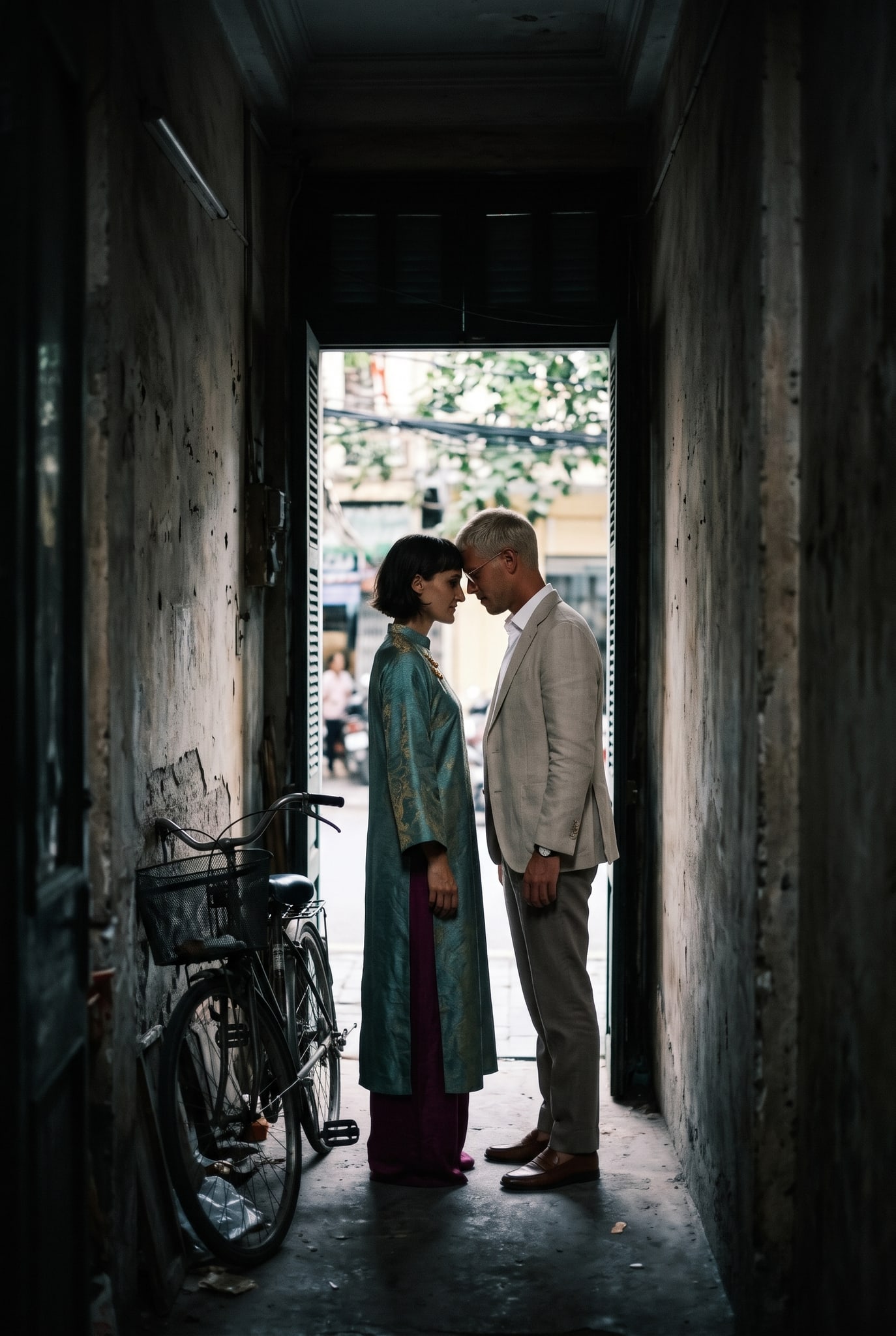
What fabrics actually survive the spray without looking destroyed?
Cotton twill, linen blends, and brushed silk handle water better than silk crepe or chiffon—they dry faster and wrinkle less visibly when wet. Synthetic blends (70% cotton, 30% poly) are our team's quiet recommendation: they resist mildew and don't cling. Avoid 100% silk—one guest wore a silk slip dress to the falls, it stuck to her body, and the images looked matted. Pure linen wrinkles heavily but photographs beautifully if you're okay with that texture. Bring a small microfiber towel in your bag; our photographer always carries one to blot faces and shoulders between shots, and guests often need to wring out the hem of a skirt or sleeve. Test any fabric at home in your shower if you're unsure—wet it, move in it, feel how it clings.
Should you wear matching outfits or contrasting colors?
Matching outfits (same color, same cut) flatten couple chemistry in photos; your eye can't tell where one person ends and the other begins, especially against the white spray. We recommend one person in a warm tone (rust, gold, warm brown, deep terracotta) and the other in a cool or neutral (navy, deep teal, charcoal). This creates visual rhythm and depth in the frame. If you both wear pastels, mist washes them out—they read as beige. If you both wear black, you merge into a silhouette. Our stylists print a simple color harmony chart on your booking confirmation; pairs like burgundy + cream, forest green + camel, or chocolate + ivory have tested well at Dai Yem over five shooting seasons. Avoid neon or electric brights—they vibrate against the natural falls and look artificial in soft, diffused light.
What shoes and accessories work on slippery rocks?
Water shoes with rubber soles or sport sandals grip wet limestone better than leather soles or smooth rubber. One couple wore leather loafers "because they looked nicer"; both slipped in the shallow water, and we spent 20 minutes finding a safer angle further back. Our team now texts a gear checklist 48 hours before every Ninh Binh shoot. Metal jewelry (rings, bracelets, watches) looks sharp in close-ups but catches the misty light and can distract. Delicate chains or small stones photograph better. Avoid large bags or backpacks—leave them with a stylist at a dry point and carry only keys and a phone in a waterproof pocket. Clip long hair or braid it; flyaways catch mist and blur in focus areas. Bring a hair tie, even if you plan to leave hair down—wind near the falls is unpredictable, and we often adjust on set based on the light direction.
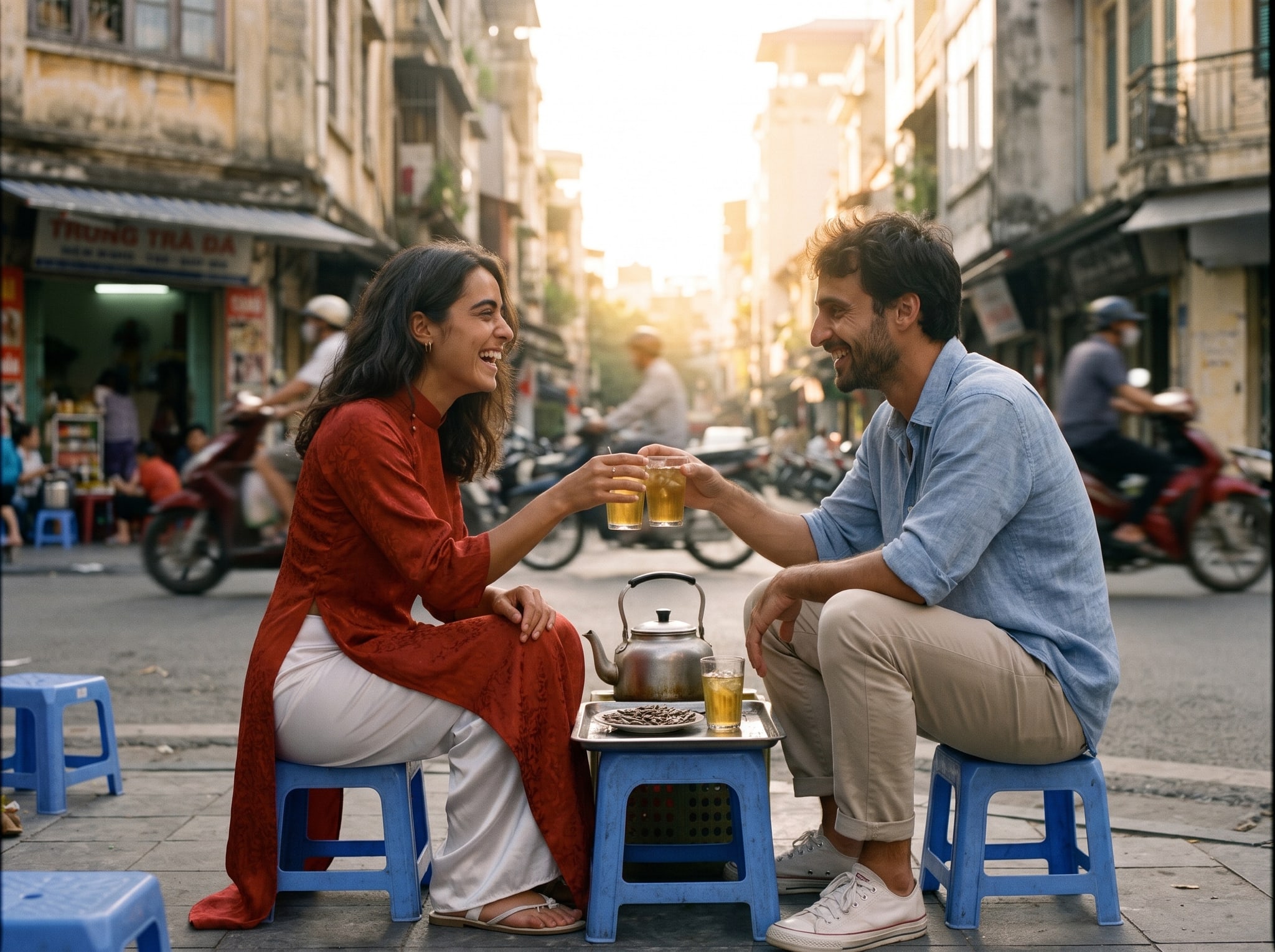
What's the real breakdown of outfit planning for a 2.5-hour shoot?
Outfit strategy for Dai Yem (typical 2.5-hour morning session):
| Phase | Outfit | Location | Why | Fabric & color notes |
|---|---|---|---|---|
| 6:45–7:45 a.m. | Outfit 1 (romantic/casual) | In and around shallow water | Soft light, couple intimacy, water interaction | Natural fiber; warm tone + cool tone; quick-dry |
| 7:50–8:50 a.m. | Outfit 1 or transition | Rock platforms 15–20m from falls | Medium water distance; detail & movement shots | Same as above; hair and makeup refresh |
| 9:00–10:15 a.m. | Outfit 2 (dressed-up or contrast) | Dry rocky overlook; forest edge | Light hardens, couple separation, fashion focus | Linen or cotton blend; jewel or neutral tone; layers optional |
Bring outfit 2 in a waterproof bag. Leave it with our team stylist while you shoot outfit 1. By 8:50 a.m., water will have soaked your first outfit's hem—time to change. We've never had a couple regret two outfits; most say it breaks up the monotony and gives them more options to choose from later. If you're doing a pre-wedding photoshoot package, the package includes a location scout, so we'll map outfit transitions and timing the day before.
What goes wrong and how do we fix it on the day?
Wet hair dye (usually darker roots, lighter ends) runs in spray. We've learned to keep a water-resistant hair mist and microfiber towel ready. One guest's foundation separated from moisture within 45 minutes; our makeup artist kept a powder compact and blotting papers to refresh every 20 minutes. Light makeup works better in mist—heavy foundation looks cakey when damp. If you're booking makeup and hair at your hotel the morning of your Dai Yem shoot, mention the waterfall location in your booking notes; our artists will use long-wear formulas, waterproof mascara, and mist-proof powder. Cold water from the falls sometimes causes muscle tension—we've had couples say their smiles felt stiff in the first 30 minutes. Our photographer shoots wide first, lets you warm up and settle into the location, then moves closer for emotion once you're comfortable. Shoes left on rocks sometimes go missing in the spray. Remove them only on a dry platform our team identifies beforehand. Never leave personal items unattended near the water's edge.
Should you wear an áo dài, traditional dress, or Western formal wear?
An áo dài works beautifully at Dai Yem if fitted well and made from quick-dry fabric (not pure silk). The high neckline and long sleeves protect skin from sun exposure at the falls. Water clings to the áo dài's lower panels, so the silhouette reads elongated and graceful, not bulky. Our team has shot 15+ áo dài sessions at Dai Yem; couples in jewel-tone áo dài (deep emerald, sapphire, burgundy) photograph strongest. If you're considering an áo dài photoshoot package, Dai Yem is a valid location—book it as a concept add-on, not the primary session, because the waterfall can overshadow the garment's detail. Western formal wear (dress suits, cocktail dresses) reads elegant but often looks dark or dull in the misty backlighting. Cotton-blend dress pants and a fitted shirt photograph better than polyester. Avoid tulle, satin, or beading at Dai Yem—they absorb water, weigh down, and photograph as wet, shapeless fabric rather than structured garment.
See packages and prices on vietnamphotoshoot.com
What to check before you order or pack your shoot outfit
- Fabric content: If buying new, check the tag for "quick-dry" or 60%+ natural fiber. Polyester blends dry fastest but feel cheap; cotton blends balance durability and comfort.
- Color saturation: Test your outfit against your phone's flashlight in a dark room. Pale or muted colors flatten; saturated jewel tones and warm earth tones hold depth.
- Fit when damp: Cotton shrinks slightly when wet. Buy one size up if you're between sizes, or try on in a damp bathroom before the shoot.
- Shoe grip: Check the sole—smooth rubber or leather won't grip. Buy or borrow water shoes with treaded soles at least 48 hours before.
- Hair and makeup plan: If you're doing your own, use waterproof mascara and long-wear primer. If you're booking our makeup and hair service, mention Dai Yem in your notes so we use mist-proof products.
- Backup outfit: Even if not shot, bring a dry t-shirt and pants to change into after the session. Wet clothes in a car for 90 minutes can cause mildew.
- Layering: Bring a lightweight cardigan or shirt you can remove. Morning mist feels cool; by 9:30 a.m., the sun warms fast.
FAQ
Can we wear white at Dai Yem waterfall?
White reads gray or pale yellow in heavy mist and backlighting. We recommend jewel tones or warm neutrals instead. If white is meaningful to you, pair it with a saturated color on your partner—burgundy + white works—and we'll position you away from direct spray to preserve detail.
How much will our outfits get wet?
Hems and lower legs will definitely get soaked if you step into the water or on wet rocks. Torso and arms stay drier if you stay 10+ meters from the falls. Plan to change into dry clothes or a second outfit after 45–60 minutes of water-proximity shooting.
Do we need to buy new clothes specifically for Dai Yem?
No. Most couples wear something they already own—a nice casual shirt, comfortable pants or a skirt in a saturated color. If you're unsure, text us a photo of your outfit options on WhatsApp, and our stylist will give you real feedback before the day of the shoot.
What if it rains the morning of our Dai Yem shoot?
Dai Yem is safe in light rain; the falls already create mist. Heavy rain makes rocks slippery and light unpredictable. We monitor the forecast and confirm the shoot 6 hours before via WhatsApp. If we reschedule, you pick a new date with no penalty.
Should we bring extra shoes or change clothes?
Yes. Bring a waterproof bag with a dry shirt and socks. Our team has a designated dry zone away from water where you can change between outfit shots. Many couples keep a backup pair of shoes in the bag and change out of water shoes before the 90-minute drive back to Hanoi.
Can we do our hair and makeup at our hotel and then go straight to Dai Yem?
Yes. If you book makeup and hair at your hotel with us, schedule it 1.5 hours before departure. We'll use waterproof, mist-resistant products. Allow 15–20 minutes for a drive to Dai Yem from central Ninh Binh city.
What's the best time of year to shoot at Dai Yem in terms of outfit choices?
November–January: light cotton or silk blends work; mist is light. May–September: heavier cotton blends and quick-dry synthetics are safer; spray is thick. October and April are transitional—medium-weight fabrics suit both. Our team scouts the location the morning of your shoot and advises on fabric weight based on actual mist levels.
Can we wear the same outfit for the entire 2.5-hour session?
Technically yes, but we don't recommend it. One outfit gets wet by minute 60; a second outfit refreshes the visual story and gives you more image variety. If budget is tight, we can work within one outfit and use location changes and angles to create outfit-change illusion.
Pre-Wedding & Elopement
Inclusions, prices and booking are on our booking site.
FAQ
Can we wear white at Dai Yem waterfall?
White reads gray or pale yellow in heavy mist and backlighting. We recommend jewel tones or warm neutrals instead. If white is meaningful to you, pair it with a saturated color on your partner—burgundy + white works—and we'll position you away from direct spray to preserve detail.
How much will our outfits get wet?
Hems and lower legs will definitely get soaked if you step into the water or on wet rocks. Torso and arms stay drier if you stay 10+ meters from the falls. Plan to change into dry clothes or a second outfit after 45–60 minutes of water-proximity shooting.
Do we need to buy new clothes specifically for Dai Yem?
No. Most couples wear something they already own—a nice casual shirt, comfortable pants or a skirt in a saturated color. If you're unsure, text us a photo of your outfit options on WhatsApp, and our stylist will give you real feedback before the day of the shoot.
What if it rains the morning of our Dai Yem shoot?
Dai Yem is safe in light rain; the falls already create mist. Heavy rain makes rocks slippery and light unpredictable. We monitor the forecast and confirm the shoot 6 hours before via WhatsApp. If we reschedule, you pick a new date with no penalty.
Should we bring extra shoes or change clothes?
Yes. Bring a waterproof bag with a dry shirt and socks. Our team has a designated dry zone away from water where you can change between outfit shots. Many couples keep a backup pair of shoes in the bag and change out of water shoes before the 90-minute drive back to Hanoi.
Can we do our hair and makeup at our hotel and then go straight to Dai Yem?
Yes. If you book [makeup and hair at your hotel](/go/makeup-and-hair) with us, schedule it 1.5 hours before departure. We'll use waterproof, mist-resistant products. Allow 15–20 minutes for a drive to Dai Yem from central Ninh Binh city.
What's the best time of year to shoot at Dai Yem in terms of outfit choices?
November–January: light cotton or silk blends work; mist is light. May–September: heavier cotton blends and quick-dry synthetics are safer; spray is thick. October and April are transitional—medium-weight fabrics suit both. Our team scouts the location the morning of your shoot and advises on fabric weight based on actual mist levels.
Can we wear the same outfit for the entire 2.5-hour session?
Technically yes, but we don't recommend it. One outfit gets wet by minute 60; a second outfit refreshes the visual story and gives you more image variety. If budget is tight, we can work within one outfit and use location changes and angles to create outfit-change illusion.
More from the team
Boho pre-wedding photoshoot in Vietnam: Hanoi, Saigon, Hoi An
Boho pre-wedding shoots mix romantic, free-spirited aesthetics with Vietnam's landscapes and heritage sites. We run full-day sessions in three cities, handling styling, makeup, location scouts and edits.
Avoid crowds at Hoang Su Phi rice terraces: timing for wedding shoots
Hoang Su Phi's terraced landscape draws couples and tour buses in equal measure. We show how to shoot there alone, when to arrive, and what to arrange with us before you go.
Photography rules at Con Dao beaches: permits, drones and what to check
Con Dao's beaches demand prep before you shoot—permits, drone zones and tide timing all affect your day. We share what the Cáo Studio team verifies on every booking.