 Cáo Studio
Home › Blog › Pre-Wedding & Elopement
What to Wear for Couple Photos at Dong Van Karst Plateau
By the Cáo Studio team · Hanoi & Saigon · 2026-11-04
Dong Van Karst Plateau's 1,000-meter altitude brings unpredictable wind, cool mornings (12–18°C), and harsh noon light that flattens pale fabrics—so we recommend breathable layers in jewel tones or earth neutrals that stand out against grey limestone without overheating. Thin merino wool base layers, structured cotton blends, and jackets you can remove work best; avoid pure silk (too reflective, tears easily on rough ground) and white cotton (burns out in RAW files). Most couple photoshoot sessions run 3–4 hours; bring two outfit changes so you have warmth during setup and comfort during movement. Cáo Studio shoots there 8–10 times yearly and we always tell guests on WhatsApp: test your footwear on gravel first—platform soles catch on limestone fractures, and muddy paths trap heels. Expect to pay extra for location permits and early-morning light booking, but the layered stone formations and mist valleys reward careful outfit timing. Chat with us on WhatsApp
How Do Mountain Temperatures Affect Fabric Choice?
Dong Van sits at 1,000+ meters elevation where temperatures swing 15–20°C between sunrise and midday. We've learned that single-layer outfits fail: a guest in a silk dress at 7 a.m. is shivering; by 10 a.m. the same fabric flares white in the photos. Base layers in merino wool or synthetic blends (polypropylene, polyester mixes) wick moisture without bulk, so couples stay comfortable during the 90-minute walk to Fairy Frog Peak. Cotton T-shirts under linen shirts let you peel off mid-shoot without stopping for a full wardrobe change. We always advise against pure down jackets because they compress poorly in backpacks and their sheen reads as blown highlights near limestone cliffs. The conclusion: layer three pieces you can remove independently, not one heavy coat.
Why Do Jewel Tones and Earth Neutrals Outperform Pastels?
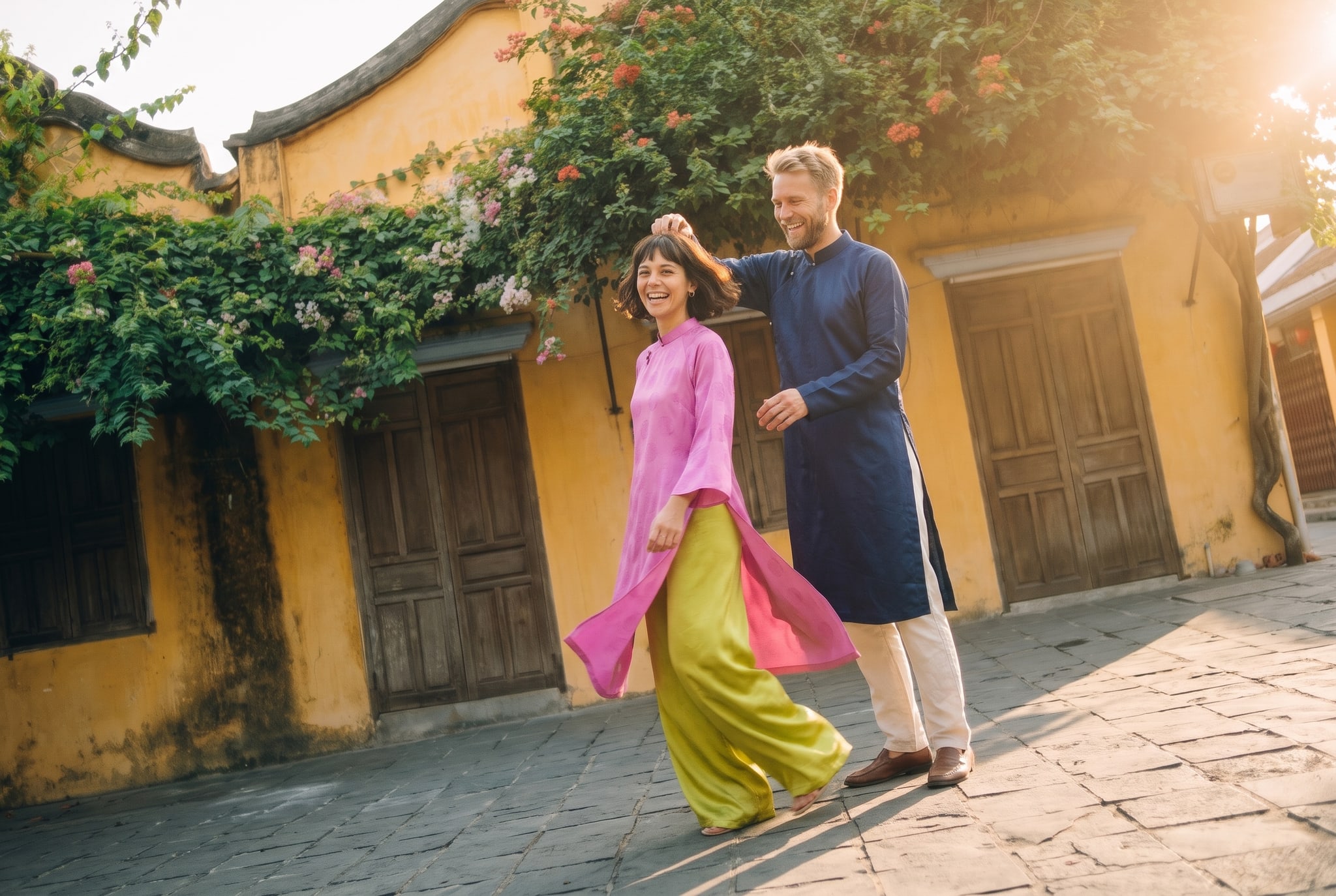
Limestone reflects hard blue and UV light, so pastels (baby pink, pale lavender, cream) wash out in RAW files and require heavy post-processing that muddles skin tones. During a March shoot with a couple in blush tones against the plateau's grey-white stone, our photographer spent 40 minutes in Lightroom recovering separation; reshot the same couple in emerald and terracotta, and the files needed half the work. Jewel tones (deep teal, burgundy, forest green) and warm earth neutrals (rust, ochre, charcoal) hold saturation and contrast without blown highlights. We've also noticed that couples wearing jewels move with more confidence on the uneven terrain—the color psychology seems real on-site. When booking your pre-wedding session, ask our team for a color consultation during your WhatsApp briefing; we'll send swatches that photograph well in Dong Van's specific light angle at your chosen time. Saturation and warmth beat lightness every time at altitude.
See packages and prices on vietnamphotoshoot.com
What Footwear Survives Limestone Fractures and Muddy Paths?
We've seen broken heels, twisted ankles, and mud-caked sneakers turn a joyful shoot into a safety liability. Dong Van's limestone pathways are uneven, water-logged near streams, and dotted with sharp edges that puncture thin soles. Flat leather hiking boots (not heavy trekking boots—too bulky for photos) with rubber treads grip wet stone better than canvas or mesh. Court shoes and ballet flats offer zero ankle support and catch on fractures. Platform heels look elegant in portraits but snag constantly; we've had to pause shoots to free stuck soles three times in 2024. Couples who wear low-rise leather ankle boots (1–2 cm heel) or minimalist hiking shoes (like Salomon or Merrell, in neutral colors that blend in close-ups) finish shoots with intact feet and clean cuffs. One detail: bring a second pair of shoes for formal portraits at the plateau's viewing platforms, where you'll stand briefly without walking. Leave the fancy shoes in the car, wear them for 5 minutes of photos, then switch back to safety. This hack lets you have glamour and stability.
How Do Wind and Mist Change Your Outfit Strategy?
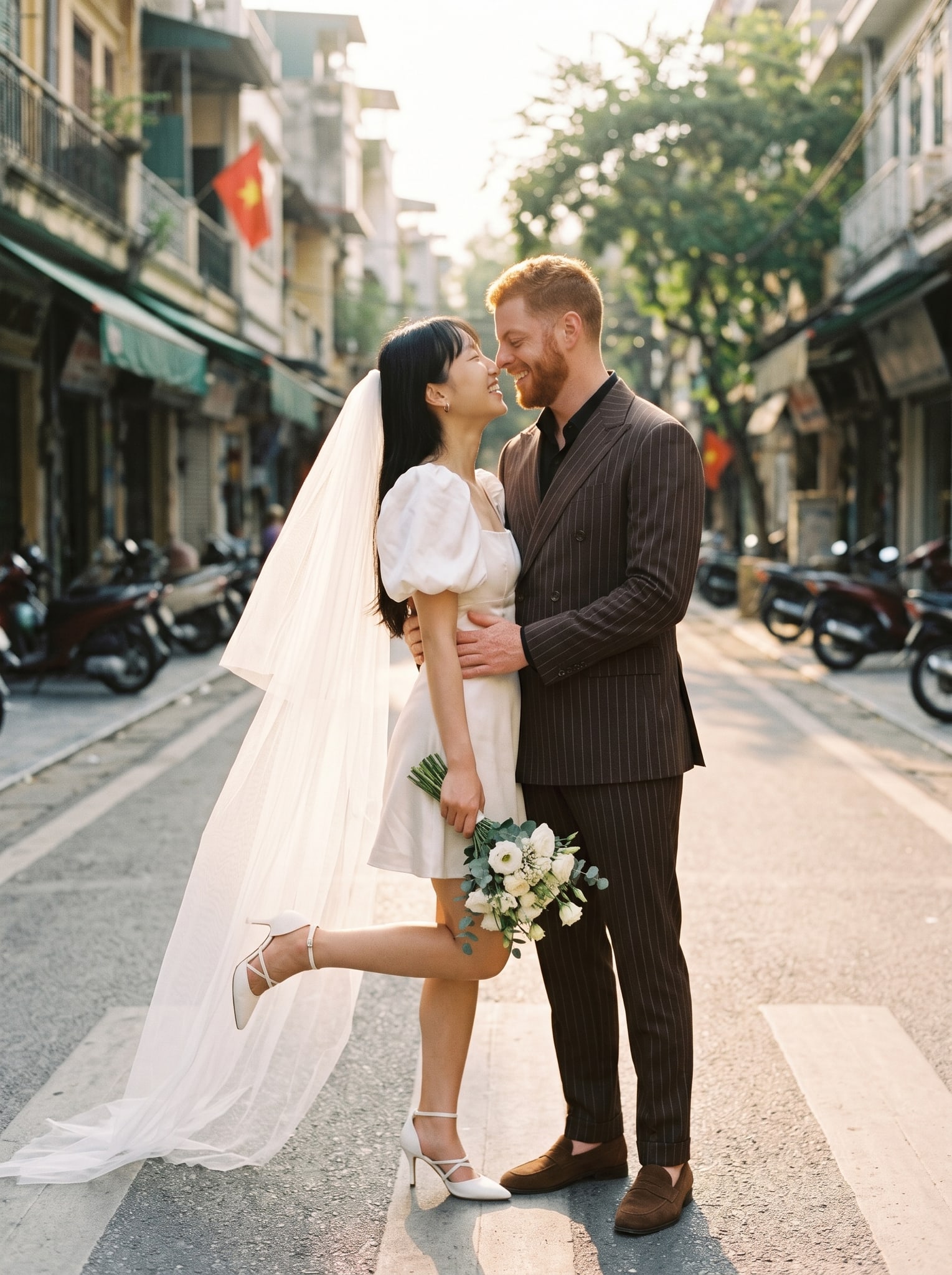
Morning mist (5–8 a.m.) adds ethereal backdrop drama but also drops temperature 3–5°C below forecast and dampens fabric, making thin layers cling uncomfortably. Wind gusts up to 40 km/h at exposed ridge viewpoints, so loose fabrics billow unpredictably in frames—beautiful for movement shots, terrible for intimate couple moments where you need clean lines. We schedule hair and makeup teams to arrive 45 minutes before mist clears; if wind hits, hairspray dries in seconds at altitude, so we use heavier wax-based products instead of aerosols. Couples in structured fabrics (linen blends, cotton-poly, wool) look composed; those in gauzy materials (chiffon, tulle, loosely woven cotton) battle constant reshuffling. During a May shoot in 35 km/h wind, a guest's dupatta wrapped around her partner's head mid-kiss shot—memorable, but not the tender moment she'd hoped for. Our conclusion: reserve flowing fabrics for calm afternoon slots; use wind-proof structures (fitted blazers, tailored dresses) for dawn sessions. If you're booking makeup and hair support for your Dong Van date, mention the weather window so our stylists can prep products and timing accordingly.
What About Seasonal Shifts—Rain, Dry Season, Altitude Variation?
Dong Van's dry season (October–April) offers clearer light and cooler temps (8–18°C mornings); wet season (May–September) brings afternoon storms and slippery paths but thinner crowds and moodier skies. A couple shooting in January can wear sleeker, fitted silhouettes; one in July needs quick-dry fabrics and waterproof layers. We advise couples booking summer shoots to choose darker, matte fabrics that hide water stains; winter shooters can wear lighter neutrals. The altitude compounds: a 500-meter climb mid-shoot raises heart rate and body temp 1–2°C, so initial layers feel too warm within 30 minutes. Our team always carries a humidity meter and checks weather radar the morning of every session, adjusting the shoot route if storms approach. One honest truth from our 2025 logs: no outfit choice survives poor planning—confirm your shoot date four weeks ahead so we can send you accurate weather data and fabric recommendations via WhatsApp. This gives you time to source or tailor pieces if needed. Ask about our special concept shoot options if you want to explore themed looks tied to seasonal moods.
Outfit Comparison: Fabric Types for Dong Van Light & Terrain
| Fabric Type | Best For | Why It Works | Why It Fails |
|---|---|---|---|
| Merino wool blend base layer | Cool mornings, layering | Breathable, wicks moisture, regulates temp | Too visible if worn alone; needs overshirt |
| Linen-cotton blend shirt | Midday heat, movement shots | Natural texture photographs warm, dries fast | Wrinkles heavily; needs pressing between outfit changes |
| Structured cotton-poly dress | All-day wear, windy ridges | Holds shape, resists wind billow, quick-dry | Can feel stiff; test mobility before booking |
| Silk dupatta/scarf (supporting layer only) | Accent color, formal moments | Catches light beautifully in close-ups | Tears on sharp limestone; shows stains; too cold for base wear |
| Terracotta or rust linen pants | Neutral base, earth tones | Saturates well against grey stone, warm undertone | Creases visible in tight shots; uncomfortable if damp |
| Emerald structured blazer | Jewel-tone contrast, layered look | High saturation, photographs sharp, adds depth | Too formal for hiking; needs removal space mid-shoot |
What to Check Before You Book Your Dong Van Couple Session
- Footwear testing: Wear your planned shoes on gravel or rough paving for 20 minutes. If your ankle twists, heel catches, or foot slides, change shoes. Bring a backup pair in your shoot kit.
- Fabric weight and fiber content: Check garment tags. If 100% silk or pure cotton, pair with breathable layers underneath. Blends (cotton-poly, linen-cotton) perform better at altitude.
- Color samples in outdoor light: Photograph your outfit outdoors at dawn and noon on a clear day. If pastels wash out or jewel tones look muddy, adjust before your Dong Van date.
- Mobility test: Walk, sit, crouch, and climb stairs in your full outfit. Can you move freely for 10 minutes? If breathing or movement feel restricted, the outfit won't survive a 3-hour shoot.
- Weather briefing: Two weeks before your shoot, ask us for Dong Van's 10-day forecast. We'll send a WhatsApp message with specific temp range, wind likelihood, and rain probability—adjust layers accordingly.
- Backup outfit storage: Plan where your second outfit change will stay during the shoot (a duffel bag in the guide's backpack, or a small bag locked in the vehicle). Damp fabric left exposed will mold within 2 hours at altitude.
Real-Life Shoot Timing: What Happens Hour by Hour
6:00–6:30 a.m.: Guide meets couple at hotel. Mist is still heavy; temperature is 12°C. Couples usually regret not wearing base layers. We check footwear and adjust route if needed.
6:30–7:15 a.m.: Drive to trailhead. Couple changes into first outfit if needed. Photographer and stylist assess light. If mist lingers, we move the formal shots to 9:30 a.m. and do candid walks now.
7:15–8:45 a.m.: Main hike to Fairy Frog Peak or Trekking Road viewpoint (90–120 minutes). Temperature rises to 14–16°C. Most couples remove jackets by minute 40. Our crew monitors energy and suggests water breaks every 30 minutes.
8:45–9:30 a.m.: First outfit-change window at scenic plateau. Guide finds a sheltered spot (usually a rocky alcove out of wind). Couple changes, applies fresh hairspray. Stylist checks makeup for sweat and mist.
9:30–11:00 a.m.: Formal couple portraits. Light is clear, shadows are short. Temperature is 17–20°C. This is our money hour—sharp focus, saturated colors, no blown highlights.
11:00–11:30 a.m.: Casual walks, candid moments. Light is harsher now. We use stone formations as natural reflectors to soften shadows. Couple may feel tired; we keep this segment light and playful.
11:30 a.m.–12:30 p.m.: Second outfit change and final segment (optional, based on couple energy). Many choose to wrap here because the altitude fatigue is real. If proceeding, we photograph in shaded areas near vegetation or under overhangs to avoid harsh noon glare.
12:30–1:00 p.m.: Return hike downhill (easier, faster). By now, couples regret wearing non-breathable fabrics and are grateful for removal-friendly layers. We stop at a scenic overlook for final candid shots.
1:00 p.m.: Return to vehicle. Couple changes back into comfortable clothes. We discuss photo review date and next steps.
FAQ
Can I wear a traditional áo dài to Dong Van Karst Plateau for couple photos?
Áo dài works beautifully for formal portraits at plateaus, but only if you're not hiking to the shoot location. The long tunic and silk fabric snag on limestone, and the flat slippers offer zero ankle support on uneven ground. We recommend hiring our ao dai photoshoot team for a vehicle-based session where you're photographed at accessible viewpoints without walking rough terrain. If you want to combine hiking and áo dài, we can arrange a private car dropoff at a high viewpoint so you change into the outfit on-site, do 30 minutes of photos, then change back to hiking clothes for the descent.
How many outfit changes should I bring to a 4-hour Dong Van couple shoot?
Two outfit changes are standard and give you recovery time. First outfit for early-light candid hiking shots, second for midday formal portraits when light is clearest. A third change (emerging outfit, outfit of the day clothes, or a surprise element like a leather jacket over formal wear) is optional but costs extra setup time. Most couples find two changes are enough and prefer to maximize photo time over logistics.
Will wet clothes ruin my couple photos if it rains during the Dong Van shoot?
Light rain actually photographs beautifully—it adds mood and glossy skin tones. Heavy downpour shuts down shoots for safety (lightning risk at altitude). Our team carries microfiber towels and checks the 10-day forecast weekly. If rain is forecast, we brief you on quick-dry fabrics before the date and adjust the shoot route to sheltered terrain. We've had to reschedule only three times in the past two years due to dangerous weather, and we offer a full re-shoot date with no rebooking fee.
What's the best color to avoid washing out next to grey limestone rock?
Pure white, cream, and pale pastels wash out in RAW files due to limestone's blue-grey undertone. Jewel tones (emerald, sapphire, deep plum, burgundy) and warm earth neutrals (rust, ochre, charcoal, sage) hold saturation and pop visually. Test your outfit color outdoors under morning and noon sun on a clear day before booking; if it fades or looks muddy, swap it for a warmer tone. Bring fabric swatches to your WhatsApp consultation with us—our stylist will confirm colors that photograph well.
Can my partner wear casual clothes (jeans, T-shirt) to Dong Van if I'm wearing formal dress?
Yes. In fact, many couples choose one formal outfit and one casual-to-elevated outfit (nice jeans, linen shirt, structured blazer) to show different relationship moods. The contrast photographs well and feels authentic. Just ensure his casual clothes are breathable blends, fit well enough to move in, and are in warm or neutral tones (avoid pure white or pale grey). Ask our team for mixed-formality outfit guidance during your WhatsApp pre-brief—we'll send examples of balanced couple looks.
Do I need to hire makeup and hair services for a Dong Van shoot, or can I do it myself?
Self-makeup works if conditions stay dry and cool, but wind and mist at 1,000 meters make touch-ups difficult mid-shoot. Our hotel makeup and hair service arrives 90 minutes before your shoot start, applies makeup suited to mountain light and wind, and brings touch-up supplies. Many couples hire us for early-morning prep so they have 30 minutes to relax and feel confident before hiking. It's optional but reduces stress on the day—you focus on your partner and the terrain, not whether your eyeliner is still even. === End of article.
Pre-Wedding & Elopement
Inclusions, prices and booking are on our booking site.
FAQ
Can I wear a traditional áo dài to Dong Van Karst Plateau for couple photos?
Áo dài works beautifully for formal portraits at plateaus, but only if you're not hiking to the shoot location. The long tunic and silk fabric snag on limestone, and the flat slippers offer zero ankle support on uneven ground. We recommend hiring our [ao dai photoshoot team](/go/ao-dai-photoshoot) for a vehicle-based session where you're photographed at accessible viewpoints without walking rough terrain. If you want to combine hiking and áo dài, we can arrange a private car dropoff at a high viewpoint so you change into the outfit on-site, do 30 minutes of photos, then change back to hiking clothes for the descent.
How many outfit changes should I bring to a 4-hour Dong Van couple shoot?
Two outfit changes are standard and give you recovery time. First outfit for early-light candid hiking shots, second for midday formal portraits when light is clearest. A third change (emerging outfit, outfit of the day clothes, or a surprise element like a leather jacket over formal wear) is optional but costs extra setup time. Most couples find two changes are enough and prefer to maximize photo time over logistics.
Will wet clothes ruin my couple photos if it rains during the Dong Van shoot?
Light rain actually photographs beautifully—it adds mood and glossy skin tones. Heavy downpour shuts down shoots for safety (lightning risk at altitude). Our team carries microfiber towels and checks the 10-day forecast weekly. If rain is forecast, we brief you on quick-dry fabrics before the date and adjust the shoot route to sheltered terrain. We've had to reschedule only three times in the past two years due to dangerous weather, and we offer a full re-shoot date with no rebooking fee.
What's the best color to avoid washing out next to grey limestone rock?
Pure white, cream, and pale pastels wash out in RAW files due to limestone's blue-grey undertone. Jewel tones (emerald, sapphire, deep plum, burgundy) and warm earth neutrals (rust, ochre, charcoal, sage) hold saturation and pop visually. Test your outfit color outdoors under morning and noon sun on a clear day before booking; if it fades or looks muddy, swap it for a warmer tone. Bring fabric swatches to your WhatsApp consultation with us—our stylist will confirm colors that photograph well.
Can my partner wear casual clothes (jeans, T-shirt) to Dong Van if I'm wearing formal dress?
Yes. In fact, many couples choose one formal outfit and one casual-to-elevated outfit (nice jeans, linen shirt, structured blazer) to show different relationship moods. The contrast photographs well and feels authentic. Just ensure his casual clothes are breathable blends, fit well enough to move in, and are in warm or neutral tones (avoid pure white or pale grey). Ask our team for mixed-formality outfit guidance during your WhatsApp pre-brief—we'll send examples of balanced couple looks.
Do I need to hire makeup and hair services for a Dong Van shoot, or can I do it myself?
Self-makeup works if conditions stay dry and cool, but wind and mist at 1,000 meters make touch-ups difficult mid-shoot. Our [hotel makeup and hair service](/go/makeup-and-hair) arrives 90 minutes before your shoot start, applies makeup suited to mountain light and wind, and brings touch-up supplies. Many couples hire us for early-morning prep so they have 30 minutes to relax and feel confident before hiking. It's optional but reduces stress on the day—you focus on your partner and the terrain, not whether your eyeliner is still even. === End of article.
More from the team
Pre-wedding photoshoot in Phu Quoc June: weather, light, crowds
June is Phu Quoc's monsoon season. Our studio has shot dozens of couples there in early summer—here's what weather and crowds really mean for your pre-wedding day.
Pre-wedding photoshoot in Phu Quoc July: weather, light, crowds
July is Phu Quoc's wet season, but it opens creative possibilities: moody skies, empty beaches after storms, and dramatic backlighting. We'll walk you through what happens on the ground.
Pre-wedding photoshoot in Phu Quoc November: weather, light, crowds
November is peak season for pre-wedding shoots in Phu Quoc: weather is stable, light is soft, but crowds peak mid-month. We share what our team sees on the ground.