 Cáo Studio
Home › Blog › Pre-Wedding & Elopement
What to Wear for Couple Photos at Duong Lam Ancient Village
By the Cáo Studio team · Hanoi & Saigon · 2026-11-02
Duong Lam Ancient Village, 45 km northwest of Hanoi, hosts couple shoots on narrow stone lanes, under tile roofs, and in brick courtyards. Most sessions run 3–4 hours starting early morning or late afternoon to dodge midday heat and harsh shadows. Lightweight cotton or linen layers—ao dai, vintage shirts, or loose trousers—suit the uneven ground and subtropical humidity. We recommend two outfit changes: one traditional (ao dai or silk tunic) for intimate courtyard shots, one contemporary (relaxed shirt, cropped trousers) for walking scenes. Avoid stiff fabrics, tight waistbands, and dark colors that trap heat; whites, pastels, and earth tones read better in stone surroundings. Cáo Studio pairs outfit planning with hair, makeup, and styling during your pre-wedding session so every shot feels intentional. Most couples book our pre-wedding package and coordinate outfits via WhatsApp weeks ahead.
Why lightweight fabric wins in Duong Lam's climate
Cotton voile, linen, and rayon breathe in 32–35°C heat and don't cling to skin or create sweat marks in photos. We've seen couples arrive in polyester-blend trousers and spend the afternoon uncomfortable and shiny in images. Duong Lam has zero air-conditioned shelter on the main lanes, so your outfit is your thermostat. Linen wrinkles easily—that's a feature, not a flaw, because it catches light and adds texture to close-ups. Avoid nylon, acrylic, or synthetic blends that hold humidity and photograph dull. Test any piece by wearing it for 30 minutes indoors on a warm day; if your back feels wet, it won't work there. We always remind couples by WhatsApp: "Breathable = happy + beautiful."
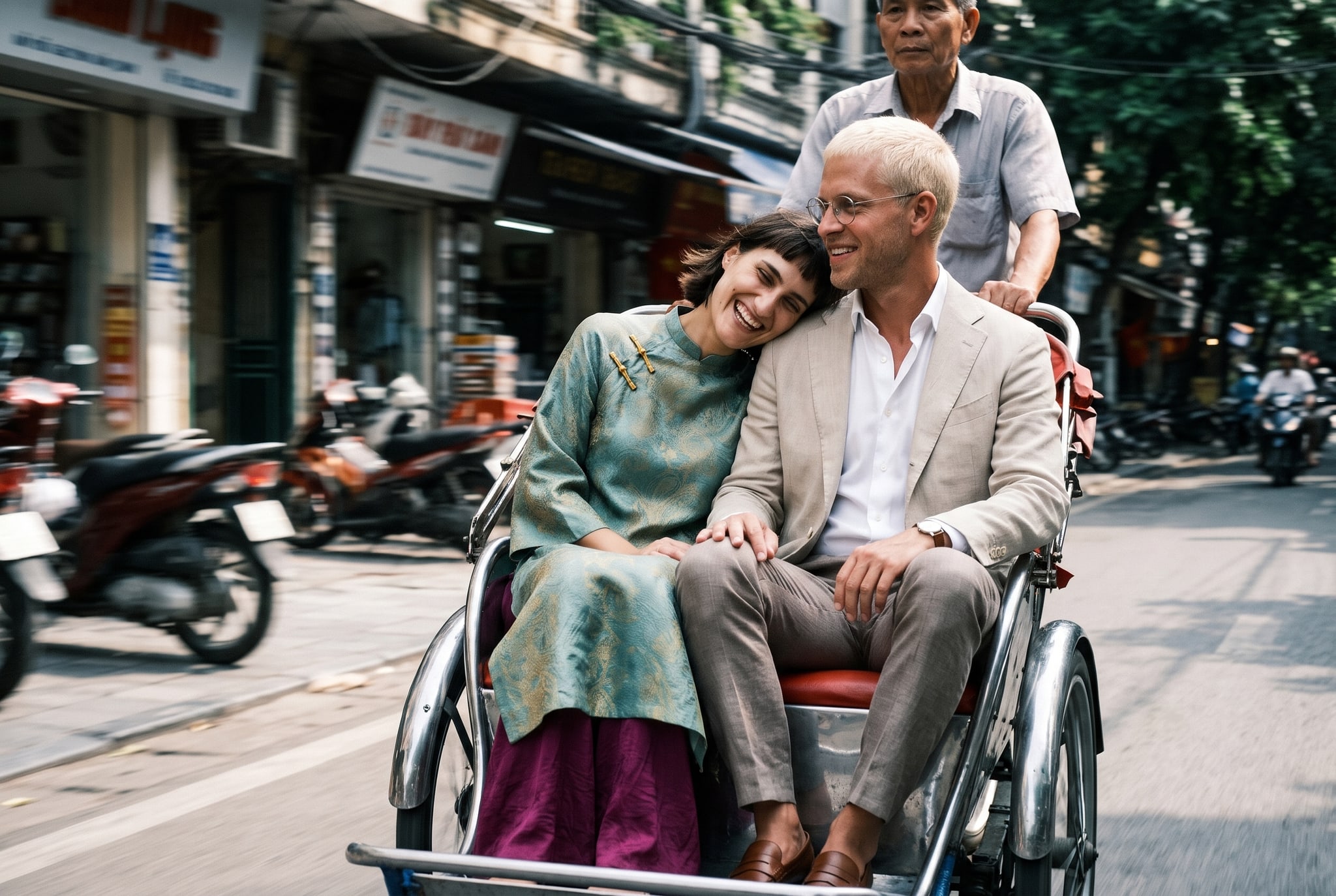
Should you wear traditional ao dai or contemporary clothing?
Both work—the choice depends on your story. Ao dai (the floor-length silk tunic over straight trousers) dominates in Duong Lam because the village's architecture was built in an era when ao dai was daily wear; it photographs like it belongs there, and the tunic's movement adds drama on stone steps. Contemporary outfits (neat linen shirt, cropped trousers, leather belt) suit couples who want modern, relaxed energy and plan to walk between scenes. We typically recommend one outfit change: ao dai for the opening intimate shots in courtyards and covered areas, casual wear for movement and outdoor scenes. This strategy lets you move freely in your second outfit and gives editors clean visual rhythm across the gallery. If you book a couple photoshoot with us, we discuss this split early so you pack correctly and our team plans lighting around each look.
What colors and patterns read best on Duong Lam's stone and brick?
| Clothing Type | Best Colors | Why It Works | What to Avoid |
|---|---|---|---|
| Ao dai | Cream, soft white, blush, sage green, dusty blue | Complements aged brick and moss; photographs warm without glare | Black, neon, busy patterns (compete with architecture) |
| Shirt/blouse | White, ivory, camel, muted tan | Stands out on dark stone; soft shadows highlight fabric texture | Bright primary colors, horizontal stripes (flatten in shadows) |
| Trousers | Cream, light gray, dark indigo | Neutral base lets upper body tell the story | White on white (merges with shirt); pale pastels (read washed out in overcast light) |
| Accessories | Gold jewelry, fabric belts, woven bags | Warm tones echo rust and oxidized surfaces | Silver (conflicts with aged patina); shiny acrylic (photographs harsh) |
We've shot over 80 sessions in Duong Lam since 2020. Couples in whites and earth tones consistently get the richest color grading in post-production because the stone and brick provide natural contrast. Neon or hot pink gets flattened by the warm, mossy light filtering through overhead vines. Patterns work only if they're subtle (linen texture, fine weave)—bold checks or graphic prints pull focus from your faces and the 500-year-old surroundings.
See packages and prices on vietnamphotoshoot.com
How do you manage layers without looking overdressed or cold?
Layer intentionally: start with a fitted base (t-shirt or simple blouse), add an unstructured overshirt or cardigan for warmth early morning, and remove it by 9 AM when light gets harsh. Duong Lam's humidity means sweat is real—a cardigan lets you cover up in soft-light scenes, then shed it as the session moves into brighter hours and you're more active. Avoid bulky sweaters or jackets that hide your silhouette; instead, choose a linen shirt one size larger than usual, unbuttoned. We've seen couples arrive in three layers and regret it by hour two because they're damp and can't move freely. The trick we use: bring a small backpack so your photographer (from Cáo Studio) can hold pieces while you walk, and you switch looks between locations, not during a scene. If you're unsure, chat with us on WhatsApp—we'll send a packing checklist 2 weeks before your shoot.
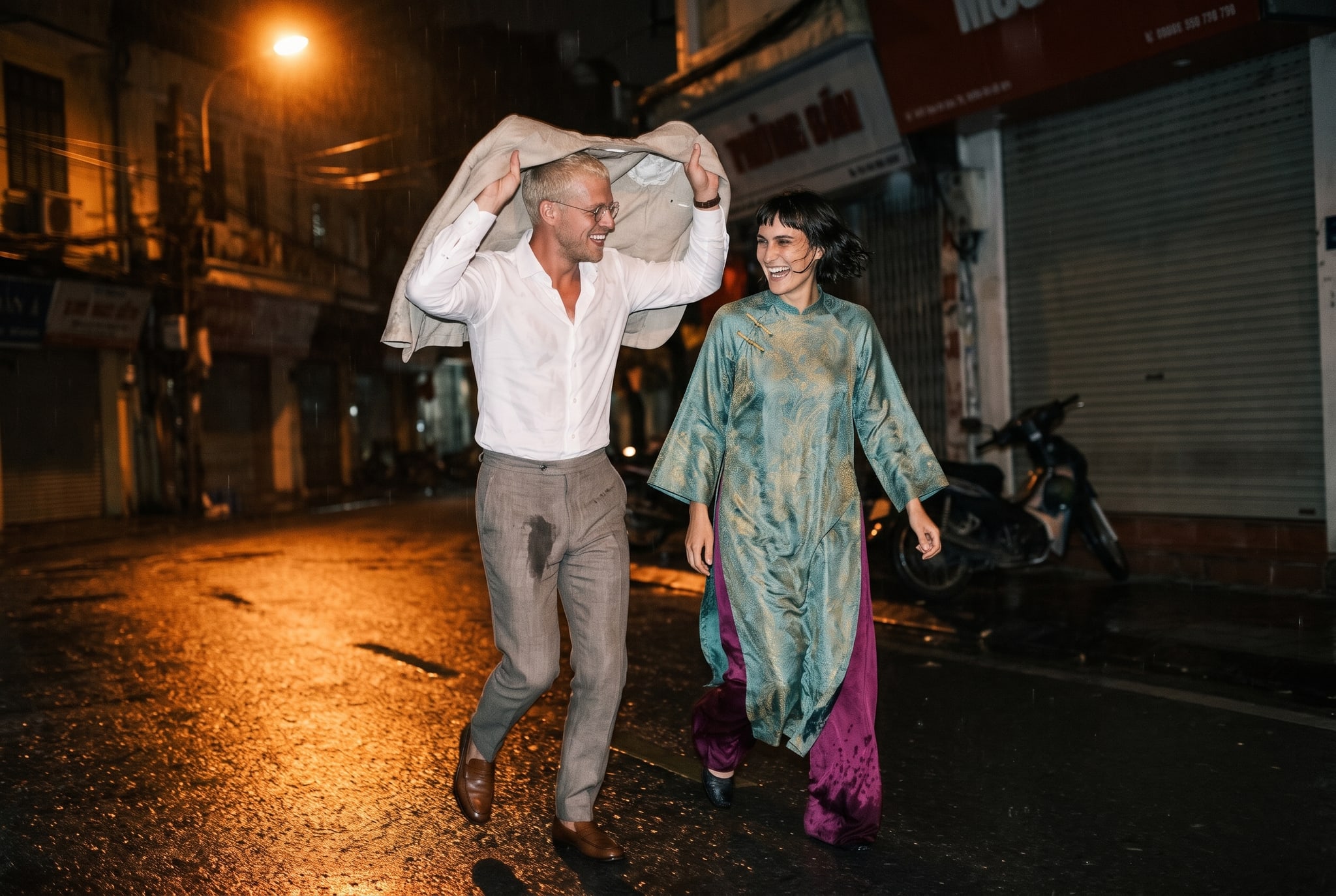
What shoe choice matters for uneven 500-year-old stone?
Flat, closed-toe shoes grip well on worn stone; sandals and heels are risky on slopes and uneven surfaces where you could twist an ankle mid-shot. We've had couples arrive in heels thinking they'd look taller in frame—they end up tensing their posture to stay balanced, and their faces show strain. Leather flats, canvas sneakers in neutral colors, or traditional Vietnamese slip-on shoes (like giày lê) work best. Test your shoes on a staircase before the session; if your foot slides in the heel or your toes jam, they won't work on Duong Lam's worn lanes. Barefoot shots are stunning for intimate moments under covered areas—if you choose this, bring a small cloth to clean your feet between locations. Our stylists always remind couples: "Comfortable feet = relaxed shoulders = better expressions." Ask about shoe recommendations when you book your pre-wedding session.
What to check before you order or pack
- Fabric weight: Hold it up to light; if you see your hand clearly, it's too thin and will cling. Aim for medium-weight cotton or linen.
- Fit at the shoulder and armpit: Raise your arms overhead; if fabric pulls or rides up, it's too tight for a 3–4 hour session with lots of movement and reaching.
- Color in natural light: Step outside your home or shop in daytime; indoor lighting lies about how colors photograph. Pastels can look washed out; test outdoors.
- Wrinkle tolerance: Linen and cotton wrinkle—that's fine. If you need pressed, pristine fabric, choose a blend with 15–20% polyester for structure, not 100%.
- Humidity test: Wear the piece for 30 minutes on a warm day indoors; if your back or underarms feel clammy, it won't breathe in Duong Lam's heat.
Where to find the right pieces
We don't sell clothing, but our stylists (available via hotel makeup and hair services) know Vietnamese and Hanoi-based tailors who can alter or create custom pieces in 2–3 weeks. Duong Lam has a few local shops on the main lane selling ao dai and simple cotton tunics—quality varies. For reliable pieces, shop Hanoi's Old Quarter (Hàng Gai Street for silk and ao dai) or online retailers specializing in Vietnamese textiles. When you book a pre-wedding package, our team sends a detailed styling guide with specific recommendations based on your chosen session time and vision.
We also offer special concept shoots if you want to coordinate multiple outfit changes or work with a stylist during the session. If you're traveling from abroad and want hair, makeup, and outfit consultation all together, book our hotel services in Hanoi a few days before your Duong Lam shoot—we'll help you finalize looks and test pieces in your space.
FAQ
Can I wear the same outfit for the whole Duong Lam session?
Yes, but most couples regret it. One outfit across 3–4 hours means your body may look tired or sweaty in later frames. Two looks (traditional + casual, or two color stories) keeps the gallery visually fresh and gives you cleaner edits. Ask us for advice when you book.
How early should I arrive to change outfits between scenes?
Plan 5–10 minutes per outfit change, including a quick touch-up by our makeup artist if you booked her. We schedule changes between major location moves—for example, after the courtyard series, before walking the main lane. Build this into your pre-wedding timeline.
What if the weather turns rainy or cooler than expected?
Bring a lightweight rain jacket or shawl in your backpack. Duong Lam's covered walkways offer shelter, but we'll shoot around wet conditions rather than force uncomfortable poses. Contact us by WhatsApp the morning of your session if weather changes—we'll adjust timing and locations on the spot.
Do I need to buy new clothes, or can I wear pieces I already own?
Wear pieces you already own and feel confident in. New, unworn fabric often feels stiff and photographs rigidly. A favorite linen shirt or cotton tunic you've worn dozens of times will move naturally and feel like you, which shows in your expression.
Should my partner and I wear matching colors or complementary colors?
Complementary usually wins: one person in cream, the other in soft blue or olive. Matching (both in white, for example) can flatten depth in photos and make you look like a set rather than a couple. Discuss color pairing with our team when you chat with us on WhatsApp—we'll send reference images from past Duong Lam sessions.
Can I wear jewelry or accessories in Duong Lam photos?
Yes—gold jewelry, fabric belts, and simple bags complement the warm, aged tones of the village. Avoid heavy statement pieces that distract from your faces, or shiny metals (silver can conflict with oxidized surfaces). Keep accessories minimal and intentional.
Pre-Wedding & Elopement
Inclusions, prices and booking are on our booking site.
FAQ
Can I wear the same outfit for the whole Duong Lam session?
Yes, but most couples regret it. One outfit across 3–4 hours means your body may look tired or sweaty in later frames. Two looks (traditional + casual, or two color stories) keeps the gallery visually fresh and gives you cleaner edits. Ask us for advice when you [book](/go/).
How early should I arrive to change outfits between scenes?
Plan 5–10 minutes per outfit change, including a quick touch-up by our makeup artist if you booked her. We schedule changes between major location moves—for example, after the courtyard series, before walking the main lane. Build this into your [pre-wedding timeline](/go/pre-wedding-photoshoot).
What if the weather turns rainy or cooler than expected?
Bring a lightweight rain jacket or shawl in your backpack. Duong Lam's covered walkways offer shelter, but we'll shoot around wet conditions rather than force uncomfortable poses. Contact us by WhatsApp the morning of your session if weather changes—we'll adjust timing and locations on the spot.
Do I need to buy new clothes, or can I wear pieces I already own?
Wear pieces you already own and feel confident in. New, unworn fabric often feels stiff and photographs rigidly. A favorite linen shirt or cotton tunic you've worn dozens of times will move naturally and feel like *you*, which shows in your expression.
Should my partner and I wear matching colors or complementary colors?
Complementary usually wins: one person in cream, the other in soft blue or olive. Matching (both in white, for example) can flatten depth in photos and make you look like a set rather than a couple. Discuss color pairing with our team when you [chat with us on WhatsApp](https://wa.me/84338762340)—we'll send reference images from past Duong Lam sessions.
Can I wear jewelry or accessories in Duong Lam photos?
Yes—gold jewelry, fabric belts, and simple bags complement the warm, aged tones of the village. Avoid heavy statement pieces that distract from your faces, or shiny metals (silver can conflict with oxidized surfaces). Keep accessories minimal and intentional.
More from the team
Boho pre-wedding photoshoot in Vietnam: Hanoi, Saigon, Hoi An
Boho pre-wedding shoots mix romantic, free-spirited aesthetics with Vietnam's landscapes and heritage sites. We run full-day sessions in three cities, handling styling, makeup, location scouts and edits.
Avoid crowds at Hoang Su Phi rice terraces: timing for wedding shoots
Hoang Su Phi's terraced landscape draws couples and tour buses in equal measure. We show how to shoot there alone, when to arrive, and what to arrange with us before you go.
Photography rules at Con Dao beaches: permits, drones and what to check
Con Dao's beaches demand prep before you shoot—permits, drone zones and tide timing all affect your day. We share what the Cáo Studio team verifies on every booking.