 Cáo Studio
Home › Blog › Pre-Wedding & Elopement
What to wear for couple photos at Ha Long Bay cruise
By the Cáo Studio team · Hanoi & Saigon · 2026-11-02
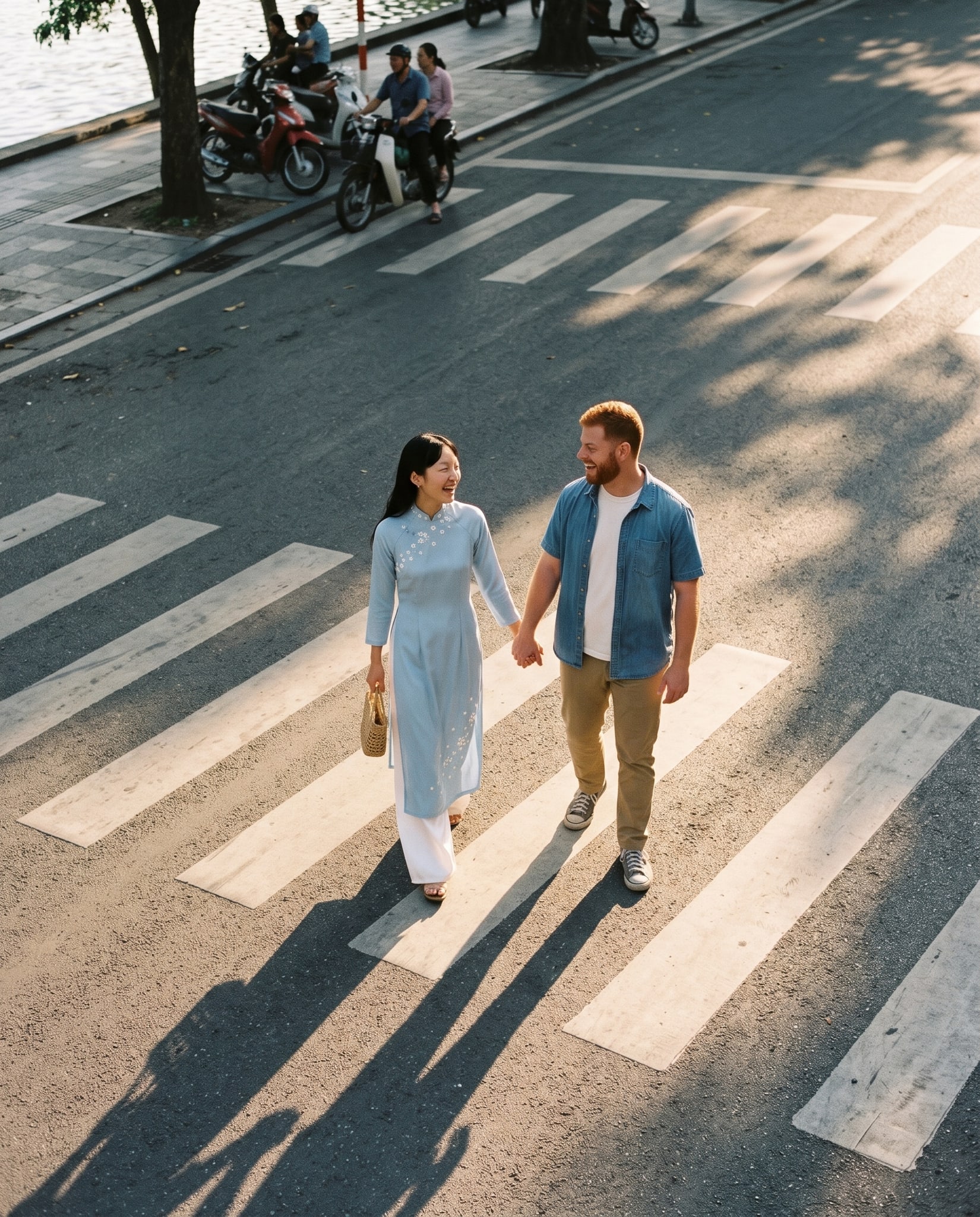
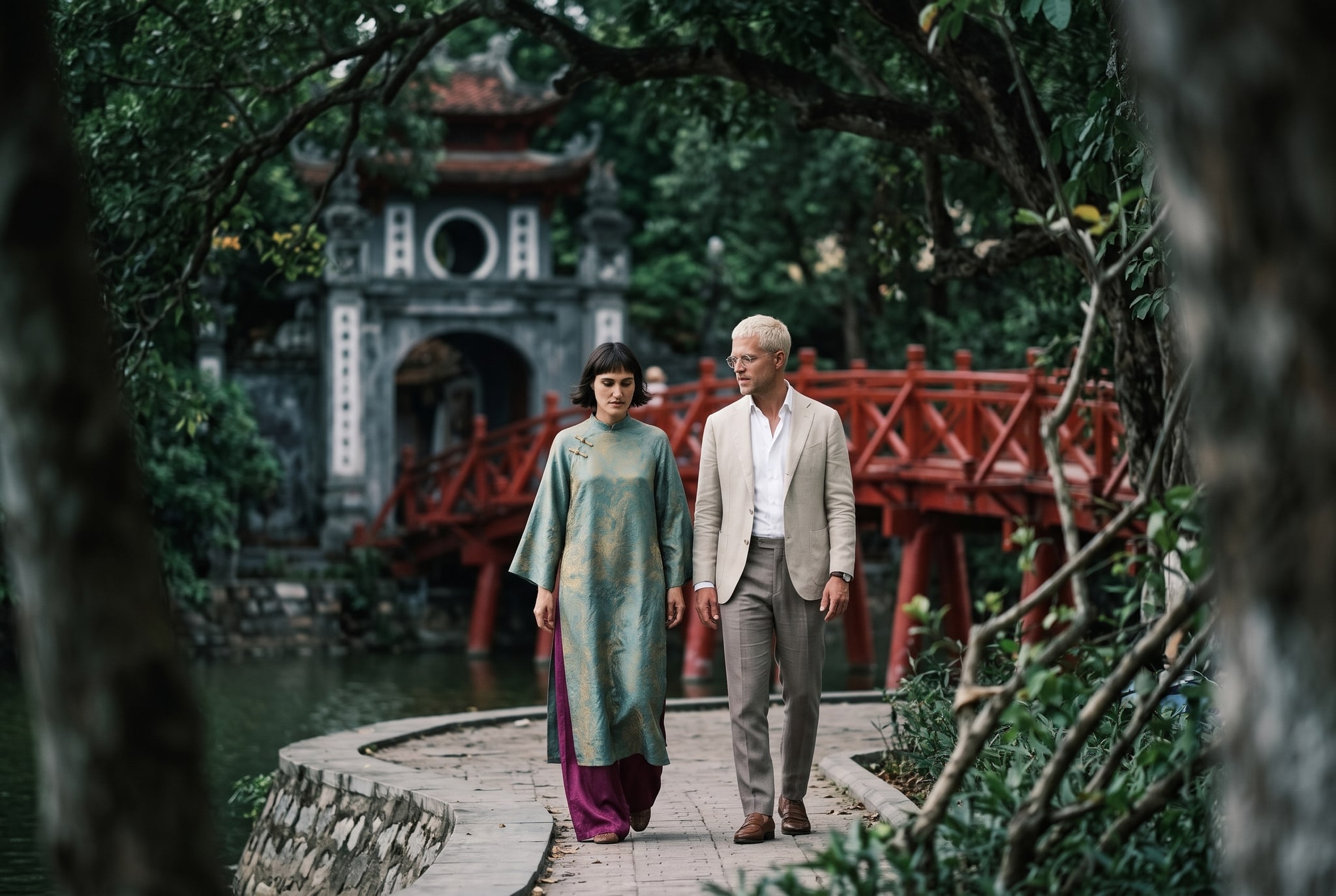
Ha Long Bay couple shoots span 3–5 hours on deck or shoreline near Halong City. Light layers beat heavy fabrics: the bay wind shifts, sun moves fast, and wet deck spray ruins thick silk. We recommend a neutral base (cream, ivory, soft grey) with one jewel-tone or patterned accent—a scarf, jacket, or shirt—so you stand out against the grey-green water without clashing. Avoid all white (blends with sky), busy patterns (compete with geology), and stiff jeans (look rigid in candid frames). Our Cáo Studio team typically suggests flowing cotton shirts, linen pants, a structured blazer, or an áo dài if you're doing a mixed pre-wedding and elopement package: it photographs like water against water, and the boat's movement becomes a bonus.
Why white and bright colors backfire on the water
All-white outfits seem logical near water, but they blow out in camera—the bay reflects sky, your clothes reflect sky, and the frame reads as a pale blob with a face. We've shot hundreds of couples here; the ones in cream or ivory with a colored layer consistently see better contrast in finals. Bright fuchsia, electric blue, or neon patterns also flatten because they compete with the natural drama of the karst. Pick a single bold accent instead: a burgundy scarf, forest-green jacket, or navy linen shirt over cream. This gives the photographer a focal point and your body a frame within the frame.
How temperature and wind shape what actually works
Ha Long Bay's mid-deck temperature swings from 22 °C to 28 °C between dawn and noon, depending on season. Wind gusts come off the water every 10–15 minutes and mess with loose fabrics; we've watched silk scarves sail overboard twice in the past two years. Choose layers you can tie down or tuck: a structured blazer, a slim sweater, or a lightweight shawl pinned at the shoulder. Linen breathes and moves naturally; cotton blends wrinkle but recover fast if you layer them. Avoid rayon and viscose—they cling when damp and take an hour to dry between shots. We tell guests to bring a small dry cloth in their bag and wear water-resistant flats or slip-ons so you can move between deck, cabin, and shoreline without changing shoes mid-session.
Coordinating two outfits without matching like twins
Couples often ask if both partners should wear the same color palette. The answer: echo, don't mirror. If one wears cream + navy, the other might wear cream + forest green. This keeps you visually connected—the bay becomes your common background—while each person retains identity in the frame. We avoid putting both partners in patterns, or both in pastels, or both in structured blazers. One flowing, one tailored; one bright, one neutral; one textured, one smooth. When we're shooting couple photoshoots, this rhythm makes the image read faster to a viewer's eye.
Here's a quick decision table from our shoot notes:
| Partner A | Partner B | Why it works | Why it fails |
|---|---|---|---|
| Cream shirt + navy jacket | Cream shirt + forest blazer | Echo in base, different accent | Too much navy can muddy water |
| Neutral linen pants + burgundy scarf | Neutral linen pants + gold belt | Unified silhouette, separate detail | Gold can glare in midday sun |
| Ivory áo dài (female) | Cream cotton shirt + light vest (male) | Áo dài flows; vest anchors him | Heavy vests read stiff in candids |
| Soft grey layered knit | Taupe linen overshirt | Monochrome harmony, tonal depth | Greys match karst stone too closely |
| White base + emerald shawl | White base + deep teal jacket | High contrast, season-proof colors | All-white still blows out if shawl slips |
See packages and prices on vietnamphotoshoot.com
Seasonal shifts: what works March through October
Water color, light angle, and humidity change which colors sing. March–May brings clearer water (grey-green turning blue-green), lower humidity, and golden hour light that favors warm neutrals—cream, taupe, soft orange. June–August is monsoon-adjacent: humidity spikes, water gets murky grey-brown, and you need bright accents (jewel tones, deep reds, forest shades) to pop. September–October clears again but brings cooler water temperature and longer shadows by 4 p.m., so avoid dark colors that absorb what little warmth the sun provides. We always ask clients their session month on WhatsApp and suggest a color swatch to test against their phone camera under that season's light.
What to pack in your cabin and what to avoid bringing
Don't bring: leather shoes (salt spray stains them; we've seen it happen in 90 minutes), silk that isn't pinned down, full makeup that needs reapplication (the wind and sun destroy it by hour two), or more than two outfit changes (the boat schedule doesn't flex for wardrobe swaps).
Do bring: a lightweight cardigan or windbreaker, a cotton scarf in a jewel tone, water-resistant flats, a small pouch with blotting papers and lip balm, sunscreen (reapply every 90 minutes), and a hair tie in case the wind wins. Most couples on our ao dai photoshoot package or pre-wedding sessions arrive with a second outfit anyway—that's fine if it stays in the cabin as backup. We'll text you 48 hours before the shoot with a packing checklist based on the forecast.
How styling changes if you're mixing áo dài with Western wear
If one partner wears an áo dài (traditional Vietnamese silk tunic and pants), the other should wear tailored linen or cotton—no floral prints, no athletic wear, no oversized silhouettes. The áo dài is already a statement; the partner in Western wear becomes the quiet anchor. Cream, taupe, soft grey, or one jewel tone works here. Avoid wearing an áo dài plus Western bright colors on both; it confuses the frame. An áo dài shoot on the bay is almost always part of a pre-wedding and elopement package, and our stylists can help you pick complementary fabrics during the consultation—just ask on WhatsApp before you book.
What to check before you order or rent
Before you buy or rent clothes for Ha Long Bay:
- Test the color under natural light. Hold fabric against your phone camera facing a window. Does it still stand out, or does it blend?
- Check the fit when layered. If you plan to wear a jacket over your base, try it on together; restrictive layers limit movement in candid shots.
- Verify the fabric content. Read the tag: 100 % linen, 95 % cotton blend, or certified water-resistant. Rayon and viscose are high-maintenance on a boat.
- Measure the hem and sleeve length. Longer hems drag on wet deck; longer sleeves get caught when you're climbing to a viewpoint. Aim for ankle and wrist.
- Choose non-reflective shoes. Glossy leather and sequined flats bounce light and look cheap in photos. Matte leather, suede, or canvas works.
- Count your outfit changes. One base outfit + one optional backup is standard. More than that eats time we could spend shooting.
Rental vs. purchase: which makes sense for one shoot
Rent if: you live abroad and don't want to pack, or you're wearing an áo dài (custom tailoring is expensive; renting costs less and we can coordinate with local tailors near Hanoi or Saigon). Look for rental shops in Hanoi's Old Quarter (near Hoan Kiem Lake) or Saigon District 1; book at least two weeks ahead.
Buy if: you already own neutral basics (cream shirt, navy or forest blazer, linen pants) and just need an accent piece. A scarf, belt, or structured jacket from a mid-range brand (H&M, Uniqlo, local Vietnamese brands like Xuân Kiến or Khoang) costs less and works for future trips.
What Cáo Studio does: We don't sell clothing, but we connect you with tailors in Hanoi and Saigon if you want a custom áo dài fitted for your shoot, or we advise you on layering the pieces you already own.
Makeup and hair: a quick alignment
We often offer makeup and hair at your hotel for couples on a cruise schedule. Waterproof foundation, long-wear lipstick, and secured hair pins are non-negotiable; loose waves fail in boat wind within 20 minutes. If your makeup artist isn't familiar with Ha Long conditions, tell them: "This is a boat shoot, three hours, ocean spray, and wind gusts." A good artist will adjust. Our team always boards with backup hairpins, a powder compact, and a wig-safe setting spray.
See packages and prices on vietnamphotoshoot.com
FAQ
Can we wear matching outfits on the boat?
Matching (identical outfits) reads as costumes in couple photos. We recommend coordinating—same palette, different pieces. One cream + navy, one cream + forest green, for example. This keeps visual harmony while letting each person breathe in the frame.
Is an áo dài practical for a moving boat?
Yes, if it's fitted and secured. The tunic won't tangle in railings, and the flowing skirt moves naturally with the boat's sway. Pair it with a partner in tailored linen to avoid doubling the flow. Book your pre-wedding and elopement package early so we can coordinate a tailor if needed.
What if the weather turns cold or rainy the morning of the shoot?
We reschedule 99 % of the time if monsoon is predicted; the bay becomes dangerous. For cool mornings (16–20 °C, not rare in October), bring a structured wool blazer or quilted vest. Test the fabric in your mirror first—puffy jackets read bulky in photos.
Should we both wear the same shoe color?
No need. One partner in cream flats, the other in taupe slip-ons works fine. Just ensure both are matte (non-reflective) and comfortable for three hours of standing and climbing. Avoid heels; the deck is slippery and uneven.
How much time do we need to change outfits between shots?
About 12–15 minutes in the cabin, plus 5 minutes for touch-ups. We don't recommend more than one outfit change on a boat day because the schedule is tight and the light moves fast. If you want two very different looks, book a couple photoshoot in Hanoi or Saigon where location changes give you the time you need.
Pre-Wedding & Elopement
Inclusions, prices and booking are on our booking site.
FAQ
Can we wear matching outfits on the boat?
Matching (identical outfits) reads as costumes in couple photos. We recommend coordinating—same palette, different pieces. One cream + navy, one cream + forest green, for example. This keeps visual harmony while letting each person breathe in the frame.
Is an áo dài practical for a moving boat?
Yes, if it's fitted and secured. The tunic won't tangle in railings, and the flowing skirt moves naturally with the boat's sway. Pair it with a partner in tailored linen to avoid doubling the flow. Book your [pre-wedding and elopement package](/go/pre-wedding-photoshoot) early so we can coordinate a tailor if needed.
What if the weather turns cold or rainy the morning of the shoot?
We reschedule 99 % of the time if monsoon is predicted; the bay becomes dangerous. For cool mornings (16–20 °C, not rare in October), bring a structured wool blazer or quilted vest. Test the fabric in your mirror first—puffy jackets read bulky in photos.
Should we both wear the same shoe color?
No need. One partner in cream flats, the other in taupe slip-ons works fine. Just ensure both are matte (non-reflective) and comfortable for three hours of standing and climbing. Avoid heels; the deck is slippery and uneven.
How much time do we need to change outfits between shots?
About 12–15 minutes in the cabin, plus 5 minutes for touch-ups. We don't recommend more than one outfit change on a boat day because the schedule is tight and the light moves fast. If you want two very different looks, book a [couple photoshoot](/go/couple-photoshoot) in Hanoi or Saigon where location changes give you the time you need.
More from the team
Boho pre-wedding photoshoot in Vietnam: Hanoi, Saigon, Hoi An
Boho pre-wedding shoots mix romantic, free-spirited aesthetics with Vietnam's landscapes and heritage sites. We run full-day sessions in three cities, handling styling, makeup, location scouts and edits.
Avoid crowds at Hoang Su Phi rice terraces: timing for wedding shoots
Hoang Su Phi's terraced landscape draws couples and tour buses in equal measure. We show how to shoot there alone, when to arrive, and what to arrange with us before you go.
Photography rules at Con Dao beaches: permits, drones and what to check
Con Dao's beaches demand prep before you shoot—permits, drone zones and tide timing all affect your day. We share what the Cáo Studio team verifies on every booking.