 Cáo Studio
Home › Blog › Pre-Wedding & Elopement
What to Wear for Couple Photos at Han River Bridge
By the Cáo Studio team · Hanoi & Saigon · 2026-11-04
Han River Bridge couple shoots demand clothes that pop against concrete pylons and the Hoan Kiem Lake expanse behind you. We've shot over a hundred sessions there and learned fast: pastels wash out by 11 a.m., black can overheat you by hour two, and matching outfits flatten couples into one silhouette. The shoot runs 60–90 minutes. Most couples wear one outfit (change happens at a second location), though some book our pre-wedding and elopement package with multiple looks. Avoid heavy fabrics that wrinkle by frame 40; bring a portable steamer in your luggage. Our team meets you at the bridge entrance with a styling mirror and will reshoot a section if your collar shifts or the light catches fabric wrong—we've learned that sunglasses on your forehead photograph better than on your face, and untucked linen shirts age better than pressed collars over two hours. Chat with us on WhatsApp
Should we wear matching outfits or contrast colors?
Matching clothes (his linen shirt, her linen dress in the same cream tone) feels romantic but reads flat on camera—the bridge's strong horizontal lines already merge backgrounds. We recommend one partner in a warm, saturated color (rust, coral, deep plum) and the other in a neutral anchor (cream, light grey, soft black). This creates visual rhythm without costume feel. One recent couple wore her deep emerald áo dài wrap and his stone linen shirt; the emerald held the frame while the stone grounded the composition against the concrete pylons. We suggest picking one "hero" piece between you and letting the other person recede slightly—it's a visual trick that looks natural in still images and prevents the "two dolls" problem we see in couples who buy identical outfits. Test this on your phone camera in your Hanoi or Saigon hotel room before the shoot day.
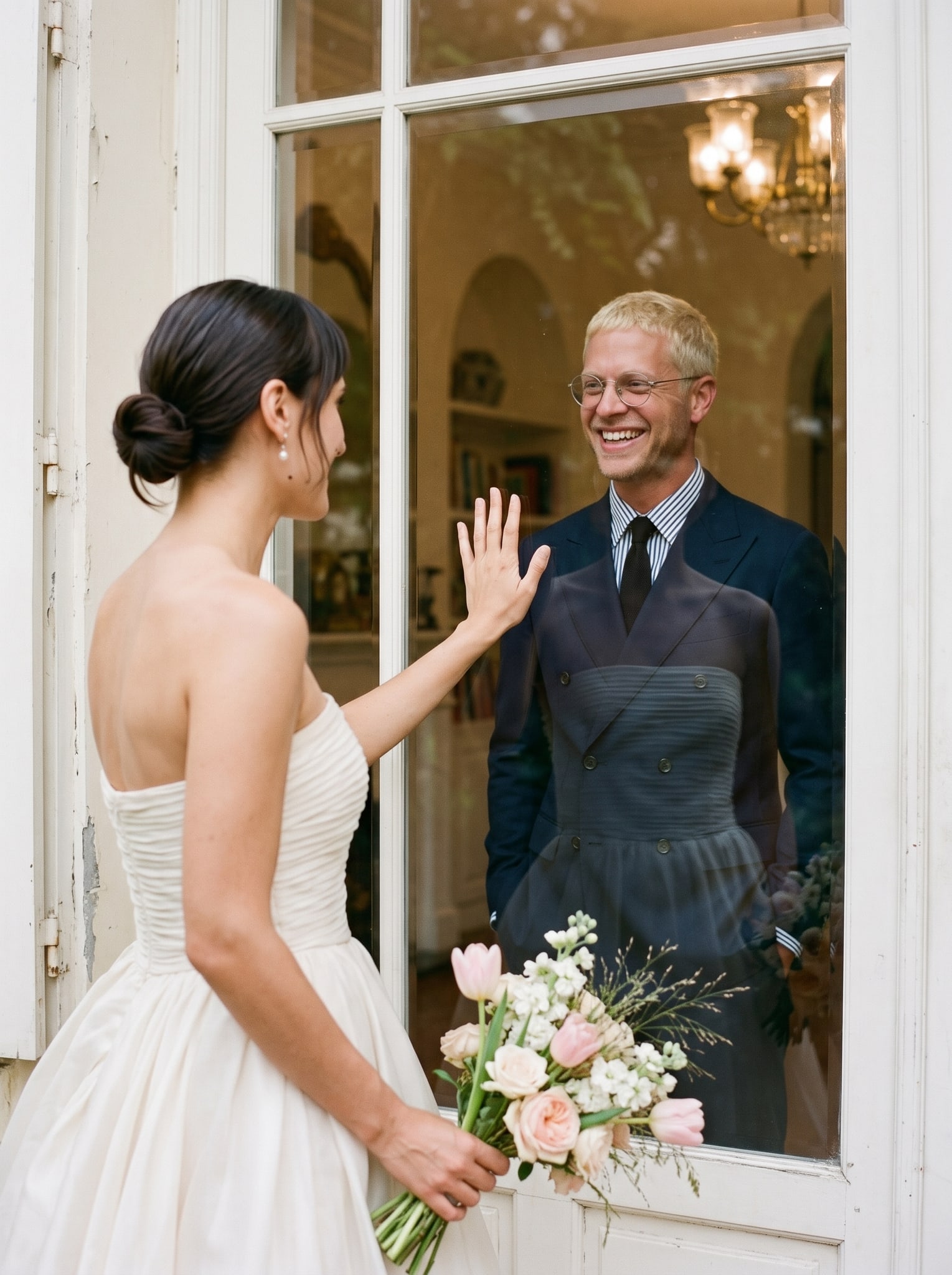
What fabrics survive two hours at the bridge in heat?
Linen, cotton blends, and lightweight silk-cotton mixes breathe and reset when you pause for repositioning. Polyester holds sweat lines and wrinkles permanently; we've had to pause shoots to steam jackets on location. Linen creases intentionally—that's part of its charm—so don't fight it. One couple wore matching oversized linen shirts over simple tanks; by frame 60, the wrinkles looked lived-in and honest. Avoid anything with a plastic sheen (faux silk, cheap polyester blends) because the bridge's reflecting water bounces light into weird highlights. We always ask guests on WhatsApp 48 hours before: "Send us a photo of what you're wearing in your bedroom mirror, in daylight, with your phone's natural camera app." This lets us spot fabric shine, wrinkles, or color clashes before you travel to the bridge. If something looks washed out on your screen, it will on the bridge. Bring a lightweight cardigan or overshirt—wind off the lake surprises couples at 7 a.m. sessions, and we've learned to layer.
Does color matter more than fit?
Fit shapes your silhouette; color catches light and emotion. A perfectly fitted grey shirt reads as "business casual" against the bridge's brutalist backdrop. The same fit in warm terracotta reads as intentional and alive. We tell couples to choose fit first (nothing too loose, nothing that pulls), then test color outdoors in indirect sunlight before buying. One mistake we see: buying clothes specifically for a shoot and not trying them on until the day before. Wrinkles, stains, or a zipper that sticks become crisis points on location. Shop early and wear the outfit around your apartment for an evening. Does it bunch at your waist? Do the arms ride up when you hug? Does the fabric feel restricting after 20 minutes? If yes, return it. We've had couples pivot outfits 90 minutes before shooting because something felt wrong on their body. On the bridge, your comfort translates to natural poses—tension reads as stiffness. Dark colors (navy, charcoal, burgundy) hold detail better than mid-greys but can overheat; test them in a warm room with a fan before the session.
Which styles photograph better against concrete and water?
Flowing fabrics (linen dresses, oversized shirts, light scarves) create movement that stills look dynamic. Structured silhouettes (tailored blazers, fitted trousers) read formal and can feel staged unless you're deliberately going for that mood. We've noticed asymmetrical necklines, rolled sleeves, and unbuttoned chest details work harder than symmetrical looks—they give our photographer's eye something to anchor to besides your faces. One couple wore matching simple cotton t-shirts with an unexpected oversized linen overshirt; the layers created visual interest without costume. Bare shoulders (when culturally comfortable) and visible collarbone photograph longer and softer than high necklines. Avoid turtlenecks or high collars; they cut your frame and trap heat. If you wear jewelry, skip anything that clanks or catches sunlight erratically (watch chains, dangling bracelets). We once had to pause because a woman's bracelet was throwing light flares into almost every frame. Simple gold or silver studs, one necklace per person, one ring if it matters to your story—that's the formula we recommend.
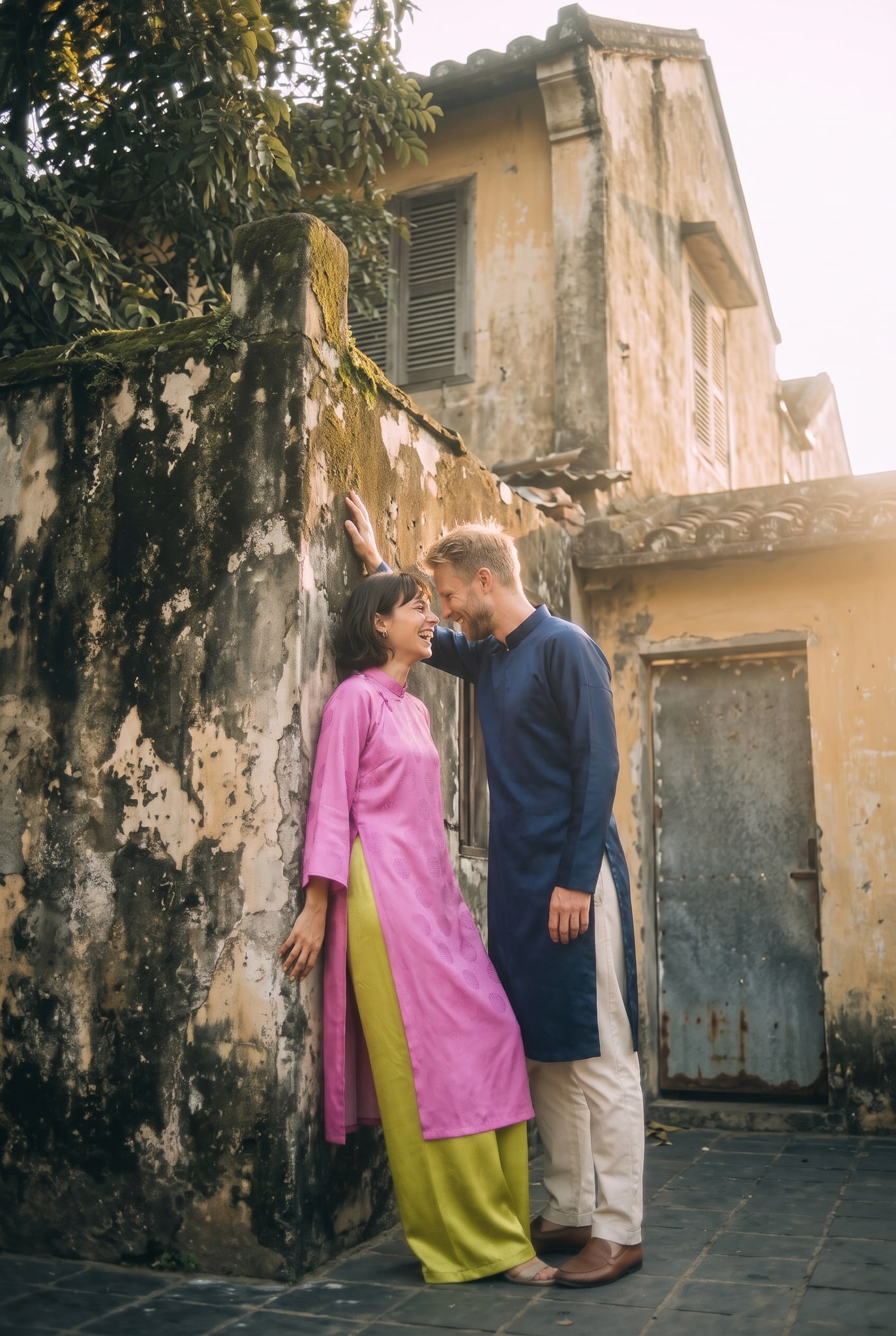
What's our outfit decision framework before you arrive?
We use this checklist with every couple over WhatsApp:
- Color test: Photograph yourselves in the outfit outdoors, mid-morning, in indirect sunlight. Does it hold color, or does it flatten? If flattened, return it and choose something one tone deeper or warmer.
- Fabric feel: Wear it indoors for 30 minutes. Does it ride, itch, or wrinkle beyond fixing? If yes, swap it.
- Heat fit: Run upstairs or walk briskly for 2 minutes while wearing it. Do you sweat visibly? Does it cling? The bridge is exposed—you'll warm faster than indoors.
- Silhouette mirror: Stand side-by-side in front of a mirror. Does one person look significantly larger or smaller? Does it feel balanced visually? If one outfit is loose and one is fitted, the loose person may look larger—adjust fit or swap colors to balance scale.
- Story check: Without talking, look at your outfits together. Do they say "couple" or "colleagues meeting for coffee"? If the latter, add one intentional touch (a matching colored accessory, or a contrast that makes sense) to signal togetherness.
- Second location prep: If you're shooting at the bridge AND another location, pick outfits that pack small and don't crease. Pack them in a garment bag, not a suitcase. We've had couples arrive with outfit two rolled in a backpack—it looked like they slept in it. A garment bag costs nothing and saves 20 minutes on location.
Once you've cleared these checks, you're 90% of the way to outfits that photograph well on the bridge.
See packages and prices on vietnamphotoshoot.com
| Outfit Type | Best For | Lasts How Long on Camera | Heat Performance | Why We Recommend It |
|---|---|---|---|---|
| Linen shirt + neutral trousers (him); linen dress (her) | Timeless, minimal couples | 60–90 min without touching up | Breathes; wrinkles age well | Classic reads across decades of photos |
| Matching oversized linen or cotton tees + light overshirt | Relaxed, modern couples | 45–60 min; wrinkles become style | Excellent air flow | Movement and layering add visual depth |
| Flowing midi dress + simple fitted tee | Romantic, asymmetric pairs | 60–90 min if no wind | Dress breathes, shirt won't sweat-stain | Silhouette contrast without costume feel |
| Tailored blazer + fitted jeans + simple tank | Editorial, intentional mood | 40–50 min; can feel stiff if hot | Poor; heat traps in chest/shoulders | Works for evening shoots; risky in midday heat |
| Contrasting jewel tones (rust dress, grey shirt) | Bold, saturated couples | 90+ min; color holds | Both breathe if natural fiber | Strong color contrast pops against bridge grey |
What to check before you finalize your outfit choice
Fit: Sit down, bend forward, reach overhead. If anything pulls, rides, or gaps, don't book the shoot in that outfit. We can't shoot around a waistband that digs.
Wrinkles: Hang the outfit overnight. Do existing wrinkles fall out? Iron one small section; does the crease reset when you wear it? If fabric retains wrinkles after 10 minutes of movement, it's not ready for a 90-minute shoot.
Color bleed: Wash each piece in warm water once before wearing. Does the darker piece dye the lighter one? If yes, dry them separately every time or pick different colors.
Sweat marks: Wear the outfit while doing light exercise (climb stairs, walk briskly) for 10 minutes in a warm room. Do sweat stains appear? If yes, choose a darker fabric or switch to a breathable blend.
Photos on your phone: Take a selfie in mirror-bright daylight wearing the full outfit. Does it read as intentional, or does it feel incomplete? Most couples add one small accessory (a scarf, a simple belt, a watch) after seeing themselves this way.
Size: Don't size down for a photo. A tight waistband shows tension in your neck and shoulders—the camera catches it. Buy a size that lets you breathe and move freely.
Why Han River Bridge needs a different outfit strategy than studio shoots
Our proposal and anniversary package and other session types let us control light and background. The bridge gives us none of that. Harsh sun, grey concrete, reflective water, and wind are facts. Your outfit is your only control variable. Couples often assume "nice clothes" work everywhere; they don't. The same black blazer that photographs beautifully in a studio darkens your face in bridge sunlight. Neutral colors that work indoors wash out in the brightness. We've learned to be specific: if you're shooting at Han River Bridge, bring one outfit tested in outdoor daylight, and if you're doing our vacation and solo photoshoot in multiple locations, bring two outfits suited to each backdrop (one for indoor café light, one for outdoor sun). The bridge specifically demands warm or saturated colors and breathable, natural fabrics. Test before you travel from your hotel.
How we help you on the day
Our team arrives 15 minutes early with a portable mirror, steamer (battery-operated), and a small toolkit: bobby pins, double-sided tape for fabric wrinkles, stain remover, and a lint roller. If your shirt collar flipped in the taxi, we fix it. If your linen creased wrong, we steam it. We don't charge extra for these adjustments—they're part of the couple photoshoot package. What we can't fix: clothes chosen the night before, fabrics that don't breathe, or outfits picked without outdoor testing. By the time you stand on the bridge, your outfit should feel like a second skin. Discomfort reads in your face and posture. We'd rather you change into something that feels right 10 minutes before we start than shoot 90 minutes of photos where you're tugging your collar or feeling overheated. Many couples shoot with us at the Hanoi location and book travel and a second session; if that's your plan, pick one bridge outfit, then coordinate with us on our blog for ideas on where to shoot outfit number two.
See packages and prices on vietnamphotoshoot.com
FAQ
Should we wear the same outfit for photos at Han River Bridge and another location?
No. The bridge's bright sun and grey backdrop need warm, saturated colors and breathable fabrics. A different location (café, garden, alley) will have different light and mood—a second outfit lets you match energy to place. Most couples change at the second location. Ask us on WhatsApp which outfits photograph best at both sites before you pack.
What if I'm worried my outfit will wrinkle or get dirty during the shoot?
Linen wrinkles intentionally and looks better the more lived-in it is. If you're afraid of sweat marks or stains, the fabric isn't right for a 90-minute outdoor session. We bring a steamer and stain remover, but they can't fix a fundamentally wrong choice. Test your outfit in warm, outdoor conditions beforehand.
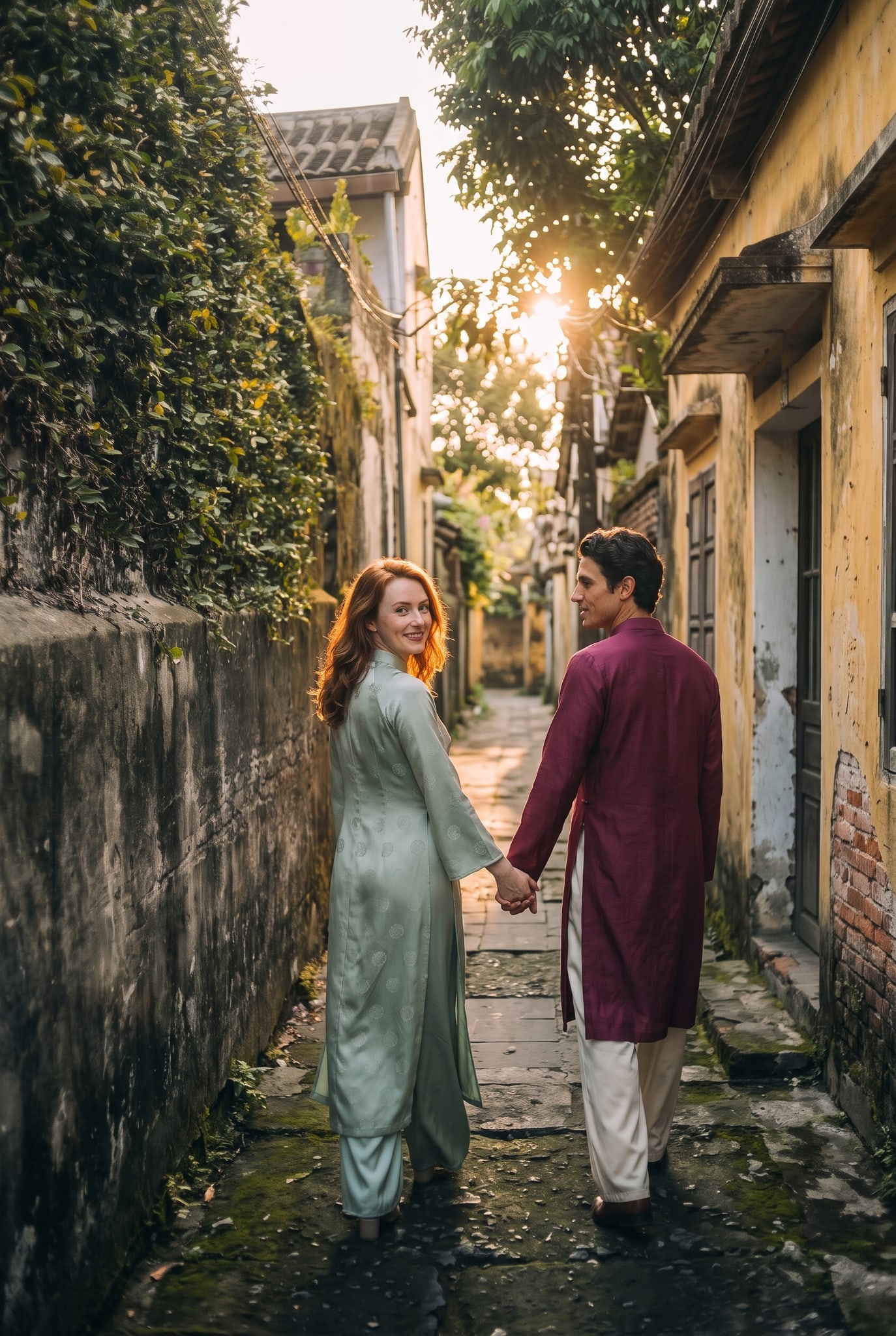
Can we wear traditional áo dài instead of Western clothes at the bridge?
Yes. Many couples choose áo dài for the bridge—the flowing silk photographs beautifully, and the color contrast between áo and trousers creates visual interest against concrete. Áo dài breathes well in heat. Coordinate with us to ensure the áo color reads distinctly in midday sun. Our ao dai photoshoot package covers styling and fabric guidance for traditional looks.
How do I know if a color will photograph well before buying?
Photograph yourself outdoors in the item, mid-morning, in indirect sunlight. Use your phone's natural camera app (no filters). Does the color read the same as in-person, or does it look duller? If duller, choose one tone warmer or deeper. If it looks accurate in your photo, it will photograph well at the bridge.
Should we buy new clothes for the shoot, or wear something we already own?
Wear something you already own if it passes all our checks (fit, fabric, color, wrinkle, sweat). Buying new clothes means testing them once and risking fit problems or wrinkles on shoot day. If you do buy new, wear it indoors for a full evening, wash and dry it once, then test it outdoors in daylight before the shoot.
What if one of us runs hot and the other gets cold easily—how do we pick an outfit together?
Layer differently. Wear matching linen tees and give the person who runs hot an open linen overshirt (unbuttoned), and the person who gets cold a lightweight cardigan or sweater (tied at the waist or worn on top). This looks intentional and solves comfort at the same time. Comfort keeps poses natural.
Pre-Wedding & Elopement
Inclusions, prices and booking are on our booking site.
FAQ
Should we wear the same outfit for photos at Han River Bridge and another location?
No. The bridge's bright sun and grey backdrop need warm, saturated colors and breathable fabrics. A different location (café, garden, alley) will have different light and mood—a second outfit lets you match energy to place. Most couples change at the second location. Ask us on WhatsApp which outfits photograph best at both sites before you pack.
What if I'm worried my outfit will wrinkle or get dirty during the shoot?
Linen wrinkles intentionally and looks better the more lived-in it is. If you're afraid of sweat marks or stains, the fabric isn't right for a 90-minute outdoor session. We bring a steamer and stain remover, but they can't fix a fundamentally wrong choice. Test your outfit in warm, outdoor conditions beforehand.
Can we wear traditional áo dài instead of Western clothes at the bridge?
Yes. Many couples choose áo dài for the bridge—the flowing silk photographs beautifully, and the color contrast between áo and trousers creates visual interest against concrete. Áo dài breathes well in heat. Coordinate with us to ensure the áo color reads distinctly in midday sun. Our [ao dai photoshoot package](/go/ao-dai-photoshoot) covers styling and fabric guidance for traditional looks.
How do I know if a color will photograph well before buying?
Photograph yourself outdoors in the item, mid-morning, in indirect sunlight. Use your phone's natural camera app (no filters). Does the color read the same as in-person, or does it look duller? If duller, choose one tone warmer or deeper. If it looks accurate in your photo, it will photograph well at the bridge.
Should we buy new clothes for the shoot, or wear something we already own?
Wear something you already own if it passes all our checks (fit, fabric, color, wrinkle, sweat). Buying new clothes means testing them once and risking fit problems or wrinkles on shoot day. If you do buy new, wear it indoors for a full evening, wash and dry it once, then test it outdoors in daylight before the shoot.
What if one of us runs hot and the other gets cold easily—how do we pick an outfit together?
Layer differently. Wear matching linen tees and give the person who runs hot an open linen overshirt (unbuttoned), and the person who gets cold a lightweight cardigan or sweater (tied at the waist or worn on top). This looks intentional and solves comfort at the same time. Comfort keeps poses natural.
More from the team
Photography rules at Ta Phin village: permits, drones and what to check
Ta Phin village in Sapa draws photographers for its Hmong culture and layered mountain light. We've shot dozens of sessions there—here's what actually works and what stops shoots cold.
Pre-Wedding Photo Ideas and Poses at O Quy Ho Pass
O Quy Ho Pass sits on the Hanoi–Sapa border at 1,200 metres. Our couples shoot there for its curves, mist and isolation—but the weather and logistics demand a different approach than valley shoots.
Is O Quy Ho Pass Good for Pre-Wedding Photos? Pros, Cons, Alternatives
O Quy Ho pass in Sapa draws couples seeking high-altitude drama, but tight timelines, unpredictable fog, and logistics make it risky for pre-wedding shoots. We've scouted it; here's what actually works. #