 Cáo Studio
Home › Blog › Pre-Wedding & Elopement
What to wear for couple photos at Hanoi Train Street
By the Cáo Studio team · Hanoi & Saigon · 2026-11-04
Train Street couple sessions are 2–3 hours on a narrow, century-old railway corridor between buildings, where motion, humidity, and reflected light change every 20 minutes. Most couples choose between traditional ao dai, coordinated casual (matching tones, loose cuts), or a mix—and the right choice depends on how much time you want in hair and makeup, your comfort level moving around tight spaces, and how the garment photographs under northern Vietnamese morning or afternoon light. Cáo Studio has shot Train Street in every season; we recommend loose natural fabrics, avoid pure white (it clips in shadow), and bring a backup top because sweat and dust settle fast in the alley. Ask us for a quote on WhatsApp to discuss your style with our stylists before booking. Chat with us on WhatsApp
Why Train Street light ruins most fabrics—and how to fix it
Train Street sits between six-story buildings on both sides. Sunlight grazes the alley at a sharp angle, bouncing off brick and concrete into deep shadows. Shiny synthetic fabrics—polyester blends, silk charmeuse—create harsh reflections that blow out skin tone in photos. Cotton, linen, and natural silk diffuse light; they sit softer on camera. We've shot couples in glossy ao dai and watched the fabric glow brighter than their faces. Matte finishes, raw cotton, and heavy crepe work best under those conditions. If you're buying or renting, check the fabric under a phone flashlight indoors; if it gleams, it will fail outdoors.
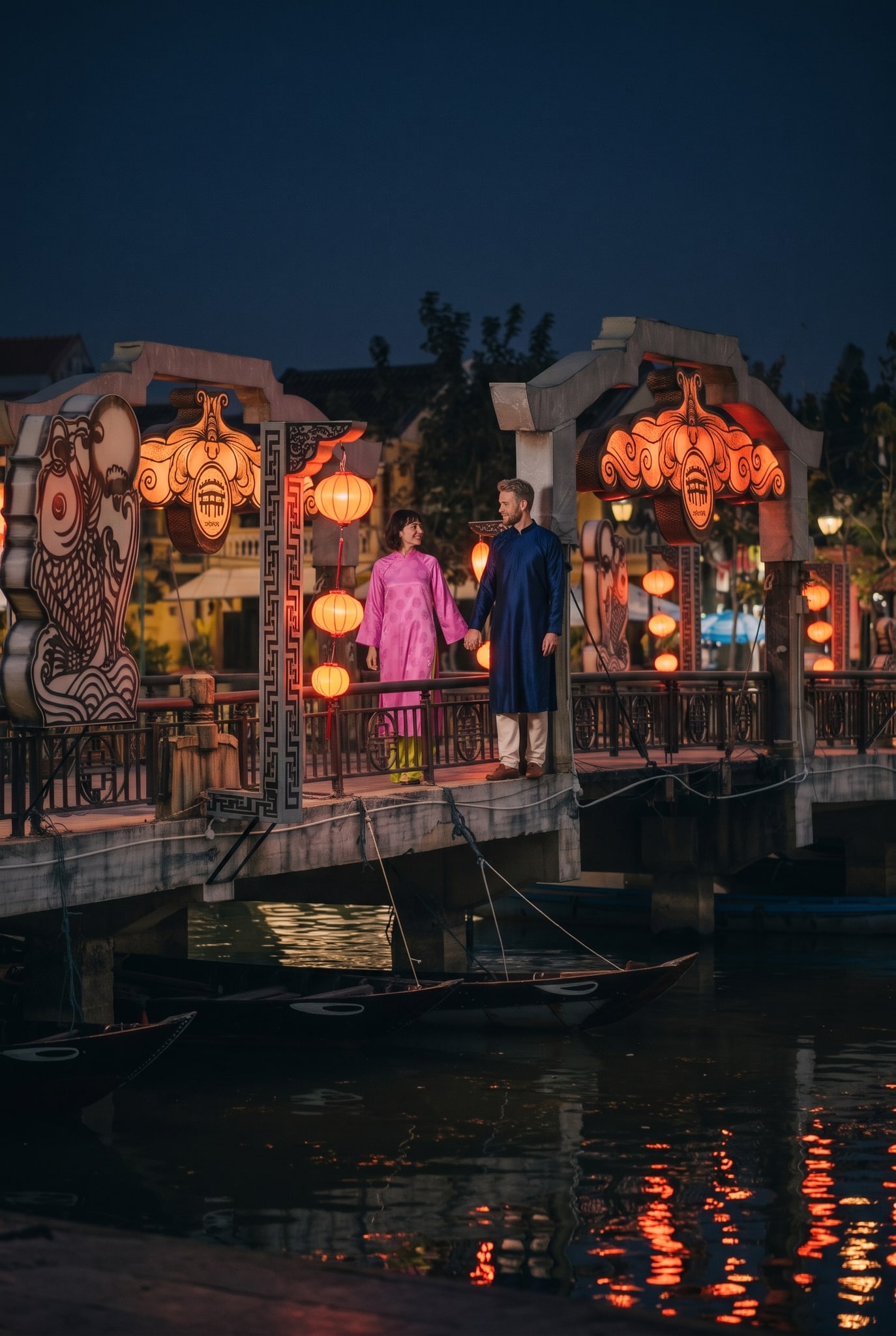
Ao dai: timing, tailoring, and the humidity trap
An ao dai session takes 60–90 minutes once you're in the alley—changing clothes, fixing layers, resetting after motion. Our stylists arrive early to steam, fit, and prep the garment because wrinkles photograph like stains in Train Street's flat, documentary light. The split skirt design moves beautifully on camera, but humidity in Hanoi (often 80%+ in summer and autumn) causes the fabric to absorb moisture, stick to your skin, and lose its crisp silhouette within 30 minutes of walking. Cotton-silk blends breathe better than pure silk; ask a rental shop about undergarments that wick sweat. We always carry a steamer on set and touch up every 20–25 minutes. If you're renting, schedule a fitting two days before the shoot to test comfort and movement; a tight ao dai looks stiff in video.
See packages and prices on vietnamphotoshoot.com
Matching casual outfits: color choice and layering strategy
Most couples who skip ao dai choose coordinated looks—same color family, similar silhouette, loose fit. Matching white or cream tones look ethereal in photos but photograph muddy in Train Street's shadows unless backlit. Navy, charcoal, olive, or rust tones hold texture and depth in dim light. Layering matters: a linen shirt over a fitted tee lets you move, adjust in tight spaces, and look intentional rather than underdressed. We've noticed couples in oversized button-ups and simple trousers photograph more confidently than those in tight jeans or form-fitting dresses, because they can bend, sit on the railway tracks, and lean on brick without tugging at their clothes every frame. Avoid horizontal stripes (they vibrate on camera in narrow alleys) and patterns smaller than your thumbnail (they blend into visual noise). Neutral base + one accent piece per person = a look that ages well in photos.
The fabric-fit checklist: what to test before the shoot
| Aspect | What to check | Red flag | What works |
|---|---|---|---|
| Fabric type | Natural vs. synthetic blend | Shiny polyester, stiff acetate | Linen, cotton, silk—all matte finish |
| Weight | Does it move when you walk? | Sticks to skin, shows sweat | Breathes, has flow, drapes |
| Color saturation | How it looks under phone flashlight | Washes out pale or too dark | Medium tone, warm undertone |
| Fit around shoulders/chest | Can you move arms freely? | Tight, restricted motion | 2–3 fingers space at seams |
| Hem/leg length | Clears your feet on the tracks? | Drags, tangles, catches | Clears ankle, intentional length |
| Wrinkle resistance | Creases visible on phone photo? | Permanent folds after sitting | Natural texture, no deep creases |
We pull garments two hours before a Train Street shoot and steam everything once more. Even a slight wrinkle becomes obvious under midday sun bouncing off brick. If you're wearing something new or rented, arrive 15 minutes early to walk through the alley so your body heat and sweat adjust the fit; clothes that feel tight in an air-conditioned fitting room often settle and relax once you're moving.
Shoes, props, and the things we tell couples on WhatsApp the day before
Train Street is not flat. Cobblestones, uneven brick, and railway ties mean shoes need grip and ankle support. We warn couples: avoid heels (you will twist an ankle), flip-flops (no traction), or brand-new shoes (blisters kill the mood by hour two). Clean sneakers, leather flats, or sandals with back straps work. We've shot couples barefoot on the railway tracks for one frame—dramatic, but your feet blacken with grime. Bring a second pair or wet wipes. Props—flowers, vintage bicycles, fabric—add depth but take up space. The alley is 1.5–2 meters wide on average. A large bouquet or prop means you lose positioning options; we often leave props to the far end of the alley where light is better and you have room to pose without knocking brick. Ask your photographer ahead of time if you're bringing something; we can scout a spot and brief you on how to hold it.
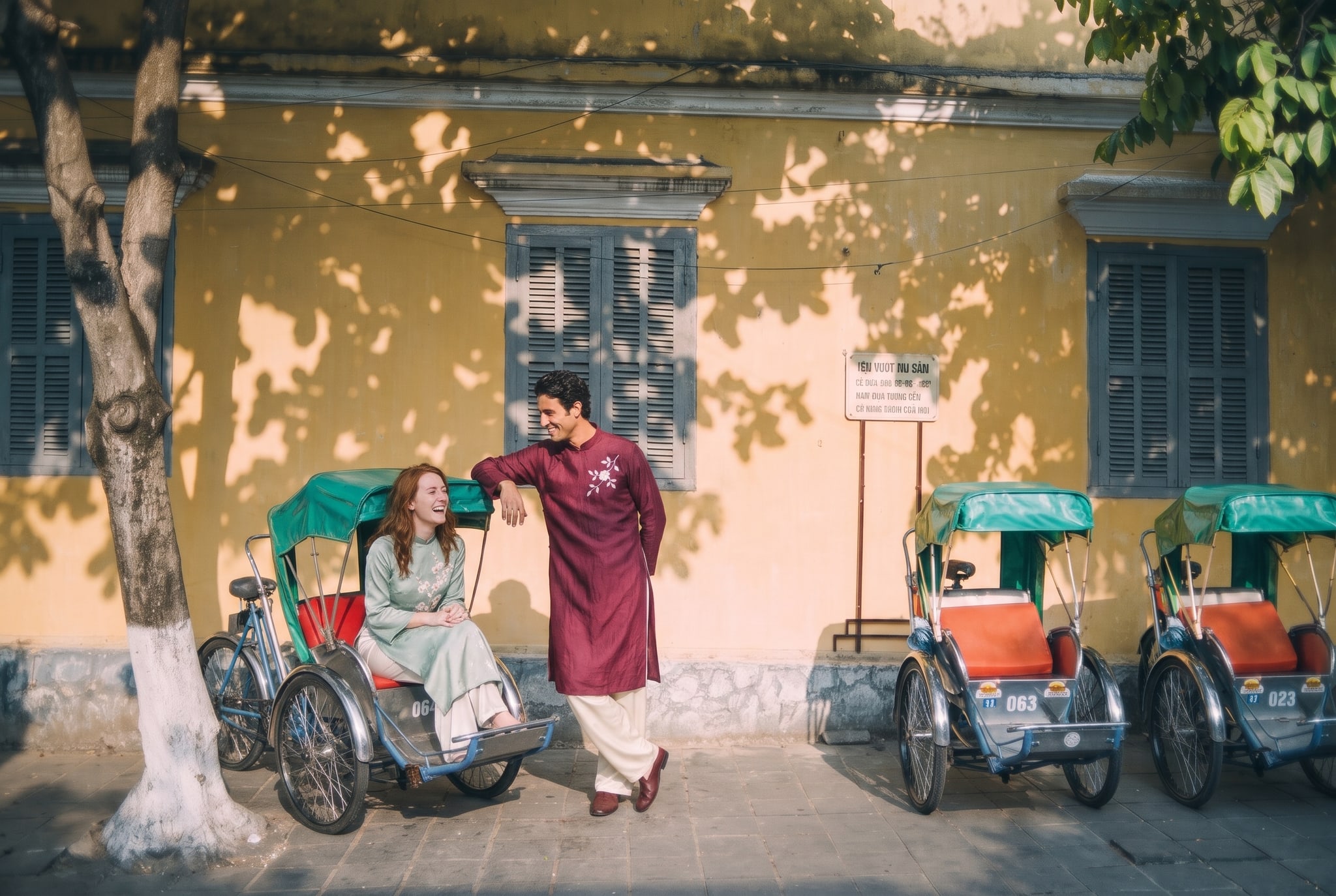
Seasonal shifts: what changes when you shoot Train Street in winter versus summer
Train Street in November–January stays cooler (15–22°C) and drier; clothes hold their shape, sweat is minimal, and light is softer in the early morning. We recommend lighter layers—a linen overshirt over a tee—because you won't overheat walking, and the images feel crisp without harsh shadows. In May–September, humidity peaks and afternoon light turns golden-orange after 4 p.m. Cotton and breathable blends are non-negotiable; many couples shift their sessions to early morning (7–9 a.m.) when light is gentle and heat hasn't peaked. We've learned that summer Train Street sessions work better if you go in with a 90-minute plan instead of 2–3 hours, because clothes wilt, makeup melts, and energy dips. Our stylists pack extra blotting papers and a portable fan. Check the weather forecast with us on WhatsApp before buying new clothes; if a monsoon is due, we'll adjust your color palette and fabric choice.
What to avoid: five things we see go wrong in Train Street couple photos
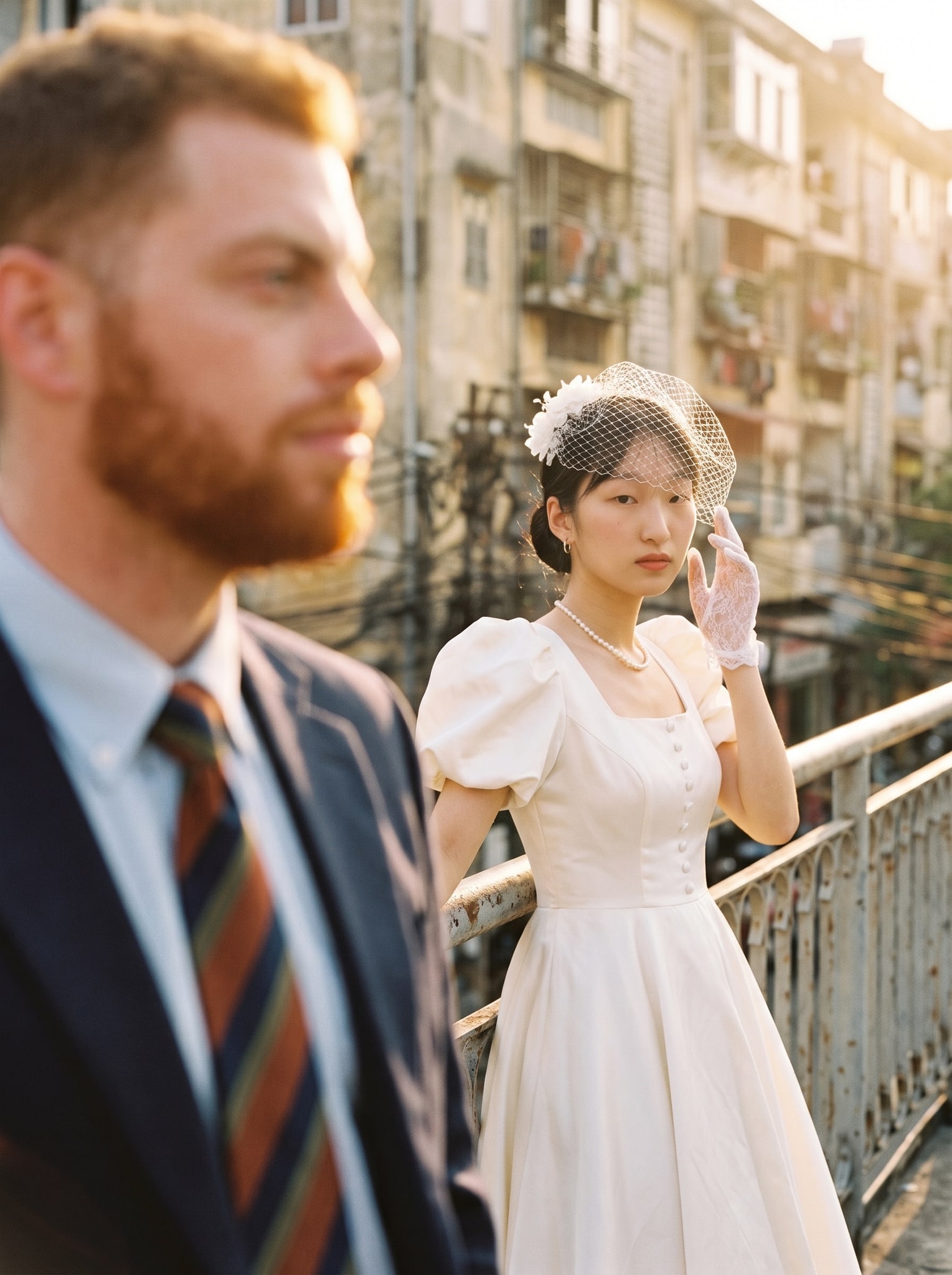
Pure white: Clips in shadows, exposes every skin flaw under harsh light. Cream, off-white, or ivory photograph softer.
Stiff, heavy brocade ao dai: Beautiful to wear standing still, exhausting after 40 minutes in humidity. Lightweight linen ao dai or cotton-silk blend moves better.
Busy patterns or logos: Distract the eye; the alley itself is visual chaos. Solid colors and subtle textures let your faces anchor the frame.
Overdressed shoes or jewelry: Too formal looks jarring in a working-class alley with graffiti and old brick. Minimalist jewelry and clean shoes feel intentional.
Matching head-to-toe outfits with no individuality: Couples wearing identical twins' outfits photograph stiff. Coordinate color and silhouette, but let one person wear their favorite shoe or scarf to inject personality.
What to check before you buy or rent
- Wear it for 30 minutes indoors. Does it hold its shape? Does it itch? Uncomfortable clothes photograph uncomfortable.
- Test it under indoor lighting. Phone flashlight is enough. Does the fabric shine or stay matte?
- Check the fit at shoulders and hips. You'll be moving, bending, and walking on uneven ground. One size too small kills mobility.
- Ask about breathability. If renting from a shop, ask how much it absorbs sweat. Linen and cotton are best in humidity.
- Bring a backup. Dust, sweat, or a spill ruins a garment. We always have a spare tee or shirt on set, but your own backup outfit is peace of mind.
Ready to book? Start here
Our couple photoshoot package includes Train Street as one of three locations and covers styling consultation via WhatsApp. We'll brief you on fabrics, fit, and seasonal light so you arrive confident. Many couples layer a Train Street session into a pre-wedding shoot to capture both the alley and a secondary location (lake, café, temple grounds). If you're planning an ao dai photoshoot, our stylists can source rentals, steam, and adjust fit on the morning of your session.
Ask us for a quote on WhatsApp—mention your season, whether you're renting or buying, and how much time you want on camera. We'll guide you through fabric choices and help you avoid the mistakes we see every month.
See packages and prices on vietnamphotoshoot.com | Chat with us on WhatsApp
Pages from our team you may need
FAQ
What fabric breathes best for Train Street in summer?
Linen, cotton, and cotton-silk blends (70% cotton minimum). Avoid polyester and pure silk charmeuse; they cling to skin and show sweat stains. Our stylists recommend unlined linen shirts and loose cotton pants.
Do I have to wear an ao dai for Train Street photos?
No. Matching casual outfits photograph just as well if the colors are chosen carefully and the fit allows movement. Many couples choose casual because it's faster to change, more comfortable in heat, and feels natural in the alley's informal setting.
How long do Train Street couple sessions last, and will my clothes survive the whole time?
Sessions are typically 2–3 hours. In summer, humidity causes fabrics to absorb sweat and lose shape after 60–90 minutes, so we recommend 90-minute sessions or bring a backup top. Our stylists steam and touch up every 20–25 minutes.
Can I wear heels or fancy shoes on Train Street?
No. The cobblestones, brick, and railway ties are uneven and slippery, especially after rain. Clean sneakers, leather flats, or sandals with back straps are safest. We've treated twisted ankles; it's not worth the risk.
What color should I avoid for Train Street photos?
Pure white clips and looks washed out in the alley's shadows. Navy, charcoal, olive, rust, and cream tones photograph with more depth. Test your color choice under a phone flashlight before buying or renting.
Should I get my outfit tailored before the shoot, or is rental fitting enough?
If renting, a shop fitting 2–3 days before is standard and usually free. If buying, have it tailored to your body so you can move comfortably. Many couples don't account for tailoring time; plan 1–2 weeks if ordering new.
Pre-Wedding & Elopement
Inclusions, prices and booking are on our booking site.
FAQ
What fabric breathes best for Train Street in summer?
Linen, cotton, and cotton-silk blends (70% cotton minimum). Avoid polyester and pure silk charmeuse; they cling to skin and show sweat stains. Our stylists recommend unlined linen shirts and loose cotton pants.
Do I have to wear an ao dai for Train Street photos?
No. Matching casual outfits photograph just as well if the colors are chosen carefully and the fit allows movement. Many couples choose casual because it's faster to change, more comfortable in heat, and feels natural in the alley's informal setting.
How long do Train Street couple sessions last, and will my clothes survive the whole time?
Sessions are typically 2–3 hours. In summer, humidity causes fabrics to absorb sweat and lose shape after 60–90 minutes, so we recommend 90-minute sessions or bring a backup top. Our stylists steam and touch up every 20–25 minutes.
Can I wear heels or fancy shoes on Train Street?
No. The cobblestones, brick, and railway ties are uneven and slippery, especially after rain. Clean sneakers, leather flats, or sandals with back straps are safest. We've treated twisted ankles; it's not worth the risk.
What color should I avoid for Train Street photos?
Pure white clips and looks washed out in the alley's shadows. Navy, charcoal, olive, rust, and cream tones photograph with more depth. Test your color choice under a phone flashlight before buying or renting.
Should I get my outfit tailored before the shoot, or is rental fitting enough?
If renting, a shop fitting 2–3 days before is standard and usually free. If buying, have it tailored to your body so you can move comfortably. Many couples don't account for tailoring time; plan 1–2 weeks if ordering new.
More from the team
Photography rules at Ta Phin village: permits, drones and what to check
Ta Phin village in Sapa draws photographers for its Hmong culture and layered mountain light. We've shot dozens of sessions there—here's what actually works and what stops shoots cold.
Pre-Wedding Photo Ideas and Poses at O Quy Ho Pass
O Quy Ho Pass sits on the Hanoi–Sapa border at 1,200 metres. Our couples shoot there for its curves, mist and isolation—but the weather and logistics demand a different approach than valley shoots.
Is O Quy Ho Pass Good for Pre-Wedding Photos? Pros, Cons, Alternatives
O Quy Ho pass in Sapa draws couples seeking high-altitude drama, but tight timelines, unpredictable fog, and logistics make it risky for pre-wedding shoots. We've scouted it; here's what actually works. #