 Cáo Studio
Home › Blog › Pre-Wedding & Elopement
What to Wear for Couple Photos at Ho Chi Minh City Hall
By the Cáo Studio team · Hanoi & Saigon · 2026-11-04
Ho Chi Minh City Hall—the yellow French colonial palace on Nguyen Hue Boulevard—has hosted thousands of couple photos. Cáo Studio shoots there regularly and sees three outfit patterns work best: traditional ao dai (Vietnamese silk tunic and pants), Western formal wear (tailored suits, floor-length dresses), or elevated street style. The shoot typically runs two to three hours including travel from our Saigon studio, wardrobe changes, and golden-hour timing near the gates. Most couples choose ao dai for at least half the session because it photographs against the architecture without visual clash, and the fabric moves beautifully on camera. Budget your outfit shopping early—good ao dai requires fitting and embroidery if custom—and confirm outfit colors with us via WhatsApp before the day so our makeup and lighting match your palette. Chat with us on WhatsApp
Ho Chi Minh City Hall sits at the intersection of Nguyen Hue and Le Loi, and every couple who books a session there asks the same question: "What do I actually wear?" The answer shifts depending on your story, the season, and what our camera sees in that light. We've shot hundreds of sessions in front of that yellow facade, and here's what we've learned on the ground.
Why does ao dai work so well for Ho Chi Minh City Hall photos?
Ao dai—the flowing tunic and high-waisted pants in silk—photographs with zero visual noise against the Hall's ornate pale-yellow walls and dark wooden doors. The tunic's vertical lines echo the building's columns; the fabric catches wind and creates layered frames in a single shot. When a couple wears ao dai, the Hall becomes a backdrop instead of a competitor. We also see that ao dai works across seasons: summer humidity makes Western formal wear cling uncomfortably, but silk ao dai breathes and still looks structured on camera. Our stylists recommend custom ao dai ordered six to eight weeks before your shoot if you want embroidery or specific colors; ready-made options exist but often need tailoring at the chest or shoulders. Explore our ao dai photoshoot package for sessions built around traditional dress and cultural detail.
What Western formal outfits photograph best at the Hall?
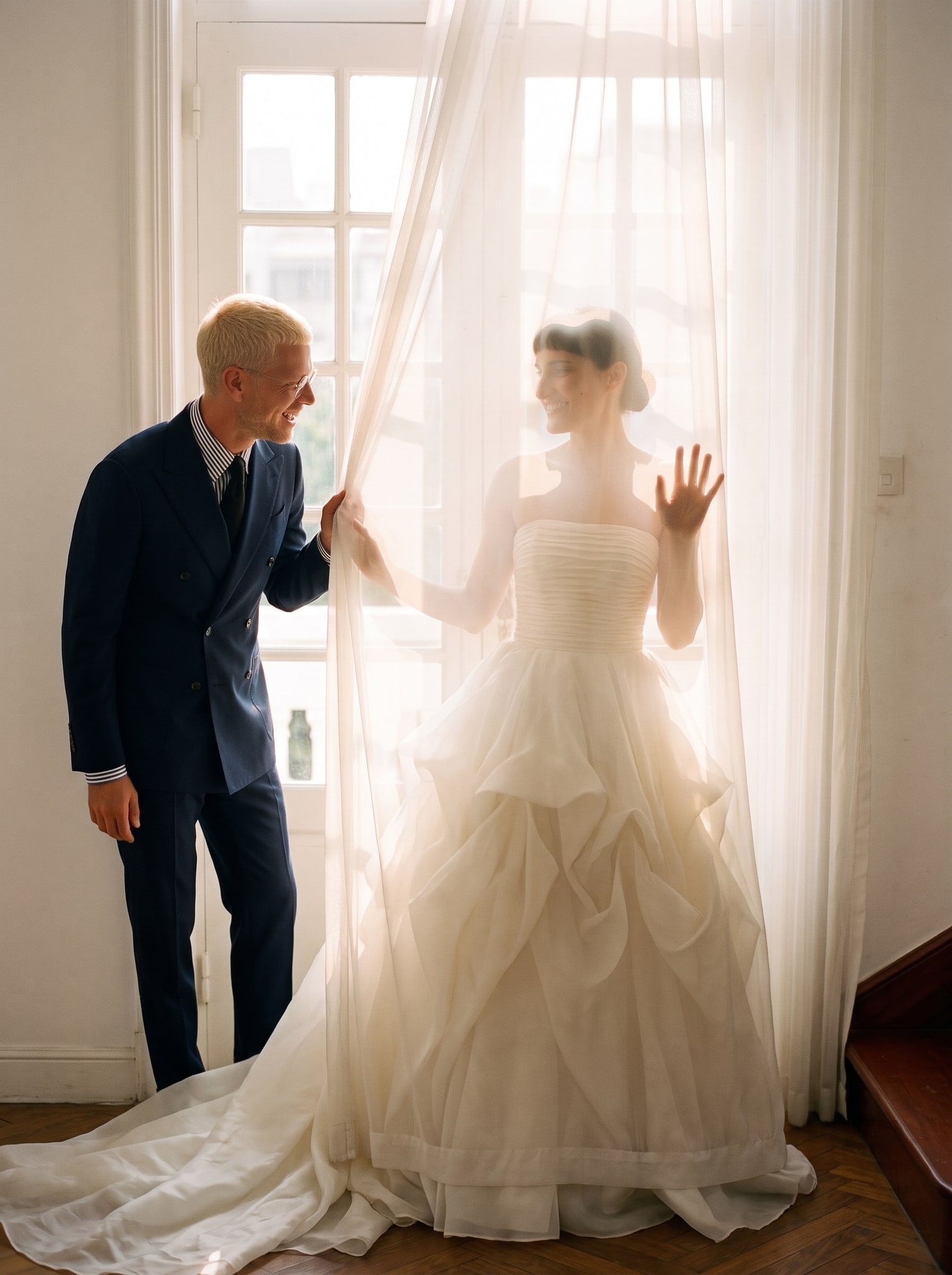
Tailored suits in navy, charcoal, or black, paired with floor-length dresses in jewel tones or ivory, hold their own at Ho Chi Minh City Hall because formality matches formality. The building is a palace; formal wear signals respect for the space. We see grooms in well-fitted three-piece suits and brides in structured gowns create graphic contrast—dark figures against pale walls—that reads powerfully in still photos and video. However, Western formal has limits in Saigon humidity. Jackets crease within minutes of sitting; heavy fabrics weigh down during the 2 p.m. to 4 p.m. midday window when visitors crowd the gates. Our couples who choose Western formal usually schedule shoots for early morning (6:30–8:30 a.m.) or late afternoon (4:30–6:30 p.m.) to avoid heat damage and harsh light. Brides also tell us that getting in and out of formal gowns during wardrobe changes takes ten to fifteen minutes per change—factor that into your session length. We advise bringing a steamer or lint roller in your bag because the Hall's stone courtyard collects dust.
Can street style work, or does it look too casual?
Elevated street style—tailored separates, designer sneakers, statement accessories, minimal jewelry—works if the styling is intentional, not accidental. We've shot couples in designer blazers, high-waisted trousers, and leather loafers who looked editorial and romantic against the Hall. The risk is that street style reads as "not dressed up" on camera if pieces are too loose or colors too muted. Our photographer notices that neutral, oversized pieces disappear into the Hall's beige tones, so we ask couples choosing street style to add one bold element: a red coat, a patterned scarf, or gold accessories. We also see street style work beautifully for second-outfit changes—many couples do ao dai or formal wear for the first hour, then change into comfortable street style for candid walking shots on Nguyen Hue Boulevard itself. This hybrid approach lets you photograph in two different stories without the physical discomfort of staying in formal dress for three hours. Check out our couple photoshoot package to see examples of mixed-wardrobe sessions in urban Saigon locations.
What colors photograph best against the Hall's pale-yellow walls?
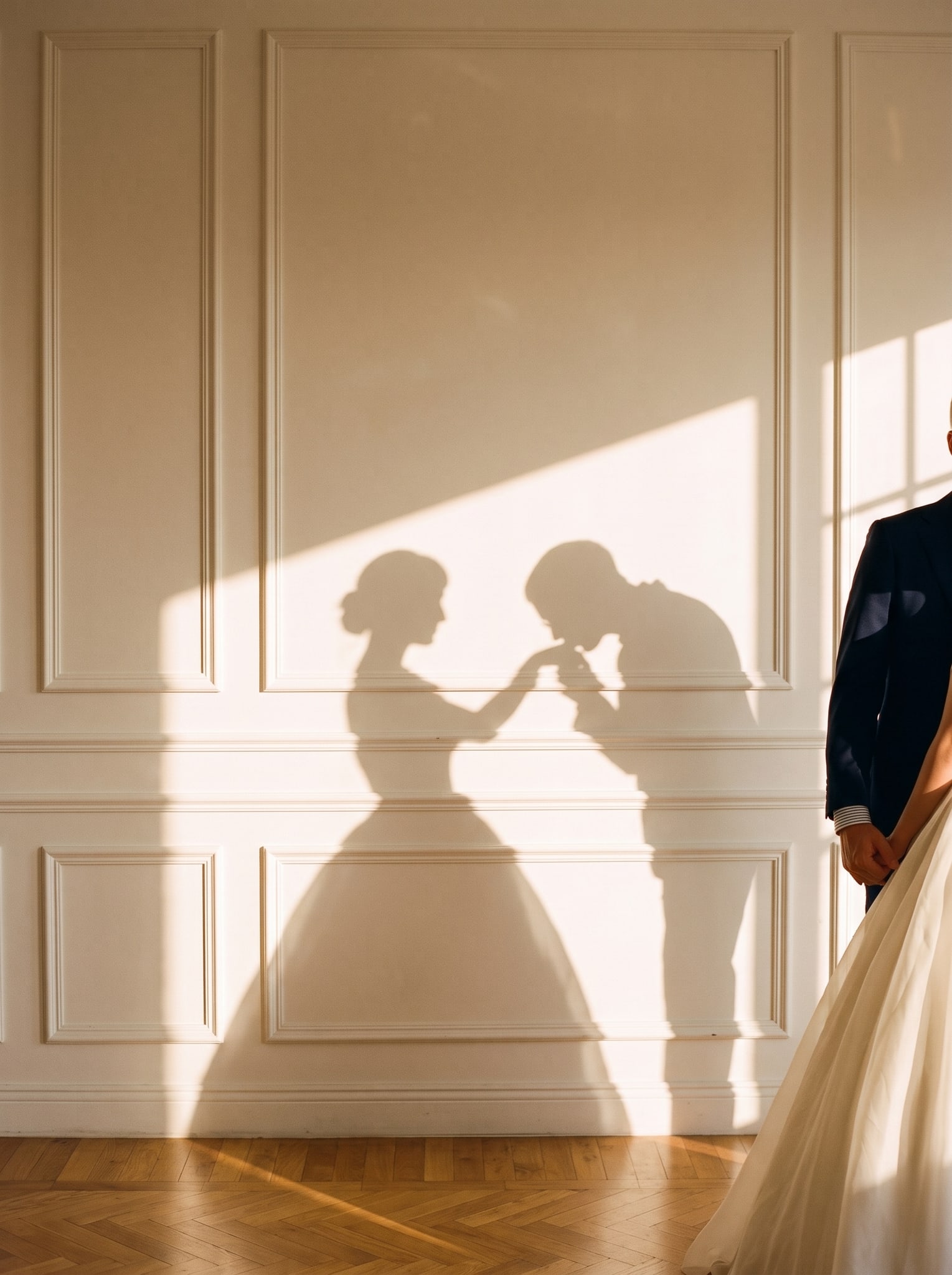
The Hall's butter-yellow facade with white trim and dark interior shadows creates a cool, formal backdrop. Colors that pop: deep jewel tones (emerald, sapphire, burgundy), warm golds and champagne, and pure black or white. Pastels—blush, lavender, soft gray—merge into the building and flatten the couple; we rarely recommend them unless you're going for an intentionally soft, dream-like mood. Red reads as power and romance; gold reads as luxury; black reads as timeless formality. We also notice that the Hall photographs differently depending on the time of day: morning light is cool and blue-toned, so warm jewel tones feel richer; afternoon light yellows the walls slightly, so cooler teals and sapphires stand out. Avoid wearing the exact shade of the Hall's walls—pale yellow clothing disappears entirely. Our makeup artist adjusts lip and cheek tones to complement your outfit color, so sharing outfit photos with us in advance helps us plan makeup timing and intensity. See packages and prices on vietnamphotoshoot.com
How do seasonal weather and crowds affect outfit choice?
Saigon's weather shifts outfit strategy throughout the year. November to February (cool and dry, 70–80°F) is ideal for formal wear and layers; humidity is low enough that fabrics hold shape for three hours. March to May (hot and dry, 85–95°F) demands breathable textiles—ao dai in lightweight silk, linen blazers, moisture-wicking dress shirts. June to October (rainy season, 80–90°F with 80% humidity) complicates formal wear: heavy fabrics absorb sweat, makeup runs, and rain can destroy carefully styled hair. We've learned to schedule monsoon-season shoots earlier in the day and recommend waterproof makeup and hairstyles that work wet. Crowds also matter: weekday mornings before 9 a.m. have five to ten people around the Hall; weekends and afternoons have forty to sixty. If you want solo or couple-only framing, schedule early. If you want energy and life in the background, weekends work. Your outfit tone should also account for crowd energy: formal wear looks striking with busy backgrounds; street style blends better into crowds. We always ask clients their crowd preference during the WhatsApp briefing so we can suggest timing and outfit mood accordingly.
| Outfit Type | Best For | Humidity Tolerance | Wardrobe Change Time | Season | Crowd Vibe |
|---|---|---|---|---|---|
| Ao dai (traditional silk) | Couples wanting cultural narrative | Excellent | 10–12 min | Year-round | Formal, romantic |
| Western formal (suit + gown) | Black-tie aesthetic, maximum contrast | Fair | 15–20 min | Nov–Feb only | Elegant, timeless |
| Elevated street style | Second outfit, editorial feel | Good | 8–10 min | All seasons | Modern, candid |
| Blazer + high-waisted trousers | Hybrid formality, comfort | Good | 10 min | All seasons | Professional, relaxed |
What to check before you book your Ho Chi Mihn City Hall shoot
Outfit Readiness: Have ao dai fitted or Western formal pressed at least three days before. Bring backup shoes (heels slip on stone; flats or sneakers work better). Confirm outfit colors with us via WhatsApp—we'll match makeup intensity and advise on clashing hues.
Photography Rights: Ho Chi Minh City Hall is a government building; tourists can photograph outside the gates freely, but official portraits inside the courtyard sometimes require permission. We handle this for you; let us know if you want exterior-only or courtyard access so we brief you on what's allowed.
Timing & Reserves: Book your shoot four to six weeks ahead so we can schedule your preferred time slot. If you're ordering custom ao dai, start ten to twelve weeks before your shoot date. Share a Pinterest board of reference images with us early so our makeup artist and photographer align on your vision.
Backup Plan: Saigon rain can hit fast. We always have a covered backup location (nearby hotel lobby or sheltered courtyard) if afternoon downpours arrive during your shoot.
Chat with us on WhatsApp | See packages and prices on vietnamphotoshoot.com
We've run couple photoshoots at Ho Chi Minh City Hall in every season and every weather pattern—what works in December looks different in August. Our team on the ground handles timing, outfit coordination, and weather pivots so you focus on connection and joy. Reach out early, share your story, and we'll guide your outfit choices toward images you'll treasure. Message us anytime on WhatsApp.
For first-time couple shoots or if you're planning a pre-wedding session with multiple locations and outfits, we offer coordinated makeup and styling. Couples often pair a Hall session with Saigon street photography or a rooftop sunset shoot—let us know your vision and we'll build the day around it. See all pre-wedding packages.
FAQ
Can we wear white formal attire at Ho Chi Minh City Hall, or will it wash out?
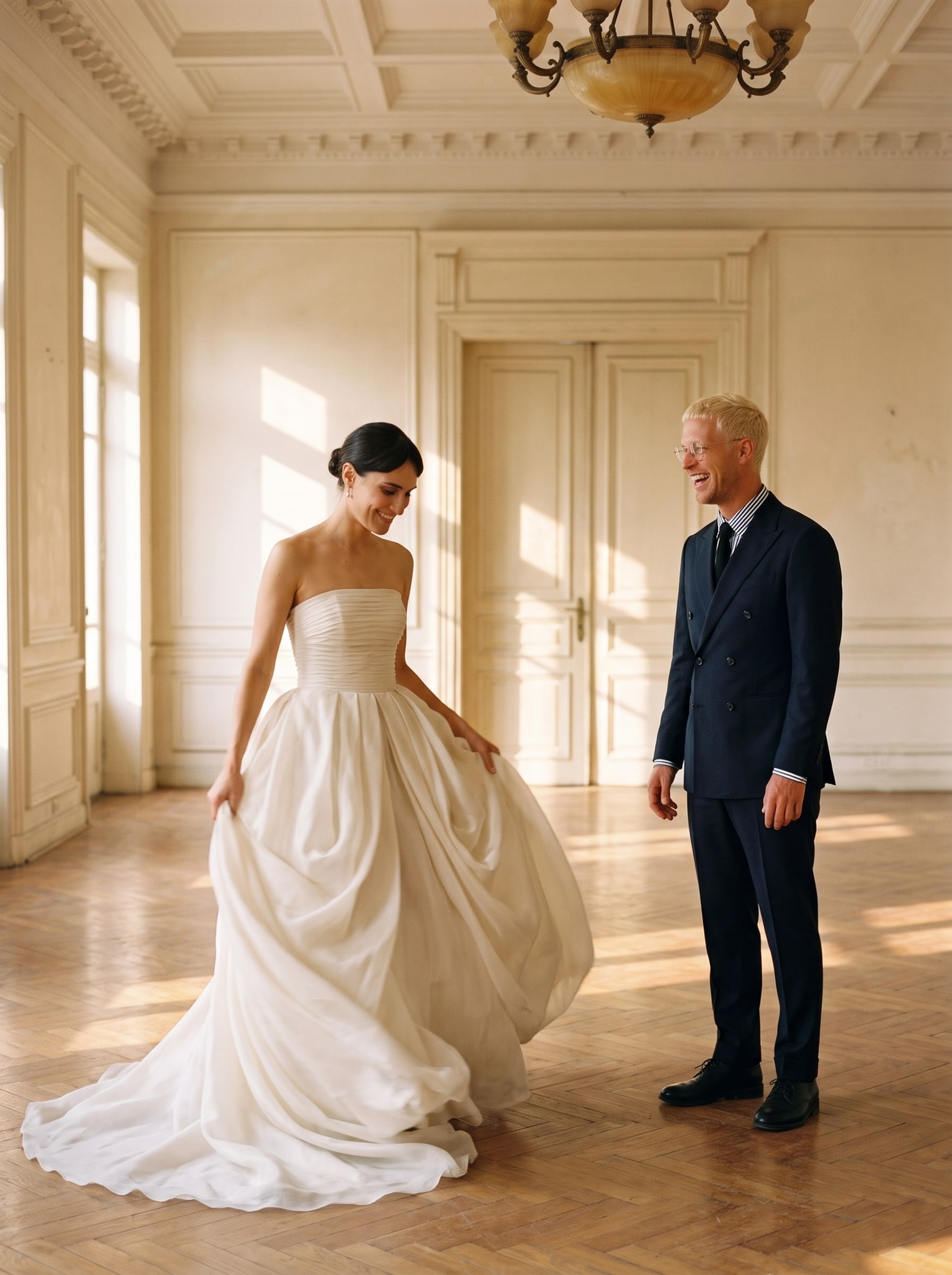
White photographs beautifully if it's intentionally styled—think ivory gowns with gold jewelry or crisp white suits with colored shirts. The Hall's yellow walls provide warm contrast. We ensure makeup and lighting compensate, but we do recommend a bold accessory (colored sash, gold clutch, statement ring) to anchor the look and prevent flatness on camera.
How many outfit changes can we fit into a three-hour shoot?
Realistically, two to three outfit changes. We allocate ten to fifteen minutes per change depending on how different each outfit is. Couples who want four or more changes need to book longer sessions or do a second shoot day. We tell clients to prioritize: choose your one "hero" outfit, one contrast outfit, and one playful option if time allows.
Do we need to buy or rent ao dai, or can we wear a loaner?
You should own or rent the ao dai from a reputable tailor in District 1, Saigon (we can recommend shops). Borrowed pieces often don't fit properly, and a poor fit shows on camera immediately. Rental or purchase takes three to six weeks if custom; ready-made sizes run XS–XL and cost less if you're not doing heavy embroidery.
What if we're not sure what colors work together?
Send us photos of your outfit ideas on WhatsApp at least one week before. Our makeup artist and photographer will give honest feedback: "That shade works beautifully," or "Try jewel tones instead." We also advise on makeup intensity based on outfit tone, so formal dark fabrics get stronger eye makeup; soft pastels get subtle, natural makeup.
Is Ho Chi Minh City Hall the only colonial building we can shoot at in Saigon?
No—the city has the War Remnants Museum, the Reunification Palace (government building, harder to book), and historic shophouses in District 1. Ho Chi Minh City Hall is the most iconic and easiest to access. If you want a different aesthetic, we'll suggest alternatives and build your shoot accordingly.
Pre-Wedding & Elopement
Inclusions, prices and booking are on our booking site.
FAQ
Can we wear white formal attire at Ho Chi Minh City Hall, or will it wash out?
White photographs beautifully if it's intentionally styled—think ivory gowns with gold jewelry or crisp white suits with colored shirts. The Hall's yellow walls provide warm contrast. We ensure makeup and lighting compensate, but we do recommend a bold accessory (colored sash, gold clutch, statement ring) to anchor the look and prevent flatness on camera.
How many outfit changes can we fit into a three-hour shoot?
Realistically, two to three outfit changes. We allocate ten to fifteen minutes per change depending on how different each outfit is. Couples who want four or more changes need to book longer sessions or do a second shoot day. We tell clients to prioritize: choose your one "hero" outfit, one contrast outfit, and one playful option if time allows.
Do we need to buy or rent ao dai, or can we wear a loaner?
You should own or rent the ao dai from a reputable tailor in District 1, Saigon (we can recommend shops). Borrowed pieces often don't fit properly, and a poor fit shows on camera immediately. Rental or purchase takes three to six weeks if custom; ready-made sizes run XS–XL and cost less if you're not doing heavy embroidery.
What if we're not sure what colors work together?
Send us photos of your outfit ideas on WhatsApp at least one week before. Our makeup artist and photographer will give honest feedback: "That shade works beautifully," or "Try jewel tones instead." We also advise on makeup intensity based on outfit tone, so formal dark fabrics get stronger eye makeup; soft pastels get subtle, natural makeup.
Is Ho Chi Minh City Hall the only colonial building we can shoot at in Saigon?
No—the city has the War Remnants Museum, the Reunification Palace (government building, harder to book), and historic shophouses in District 1. Ho Chi Minh City Hall is the most iconic and easiest to access. If you want a different aesthetic, we'll suggest alternatives and build your shoot accordingly.
More from the team
Elopement Photos at Mui Ne Fishing Village: What We Shoot
Mui Ne fishing village offers intimate sand dunes, colourful boats, and golden-hour light that feel timeless for elopement photography. We've shot dozens of couples there—here's what we learned.
Pre-wedding photoshoot in Hue in November: weather, light and crowds
November in Hue is one of Vietnam's most predictable months for outdoor photography. We've run dozens of sessions there and want to share what actually happens on the ground—the light, the crowds, and the decisions we make hour by hour.
Pre-wedding photoshoot in Hue in August: weather, light and crowds
August in Hue brings intense heat and unpredictable afternoon rain. We've run dozens of pre-wedding shoots there and learned what time of day works, which locations stay dry longest, and how to keep your hair and makeup perfect in the humidity.