 Cáo Studio
Home › Blog › Pre-Wedding & Elopement
What to wear for couple photos at Hoi An Ancient Town
By the Cáo Studio team · Hanoi & Saigon · 2026-11-02
When we book a couple session in Hoi An, the wardrobe makes or breaks the story. Most guests ask us: "Should we wear ao dai, or something Western?" The answer depends on how you want to feel in the photos. Ao dai photographs beautifully because the drape catches light and reads well in architectural frames; linen and natural fabrics work equally well for relaxed portraits on the lantern bridge or near the Japanese covered bridge. We recommend choosing one primary outfit—the one you want in your album—and bringing a second if you have time. Pale, warm tones (cream, sand, dusty rose, soft gold) harmonize with Hoi An's ochre walls and reflect its colonial charm. Avoid bright white, which creates harsh contrast and dates fast; avoid busy prints, which compete with the town's textures. Most couples spend 2–3 hours with us; bring comfortable shoes you can walk in. Cáo Studio's stylists prep you on WhatsApp before arrival so nothing surprises you on the day. Chat with us on WhatsApp | See packages and prices on vietnamphotoshoot.com
Should we wear traditional ao dai or modern Western clothes?
Ao dai wins for timeless Hoi An shoots because the fabric (silk or cotton-silk blend) moves naturally in the narrow streets and photographs well against old walls. It reads "destination portrait," not holiday snapshot. Western outfits (linen shirts, soft dresses, cotton trousers) work equally well if tailored and neutral—the key is fabric weight and texture. We've shot couples in both. Ao dai requires no styling decisions once it's on; Western clothes need tucking, layering, shoe choice. Pick ao dai if you want traditional elegance, modern clothes if you prefer comfort and mobility during a longer session.
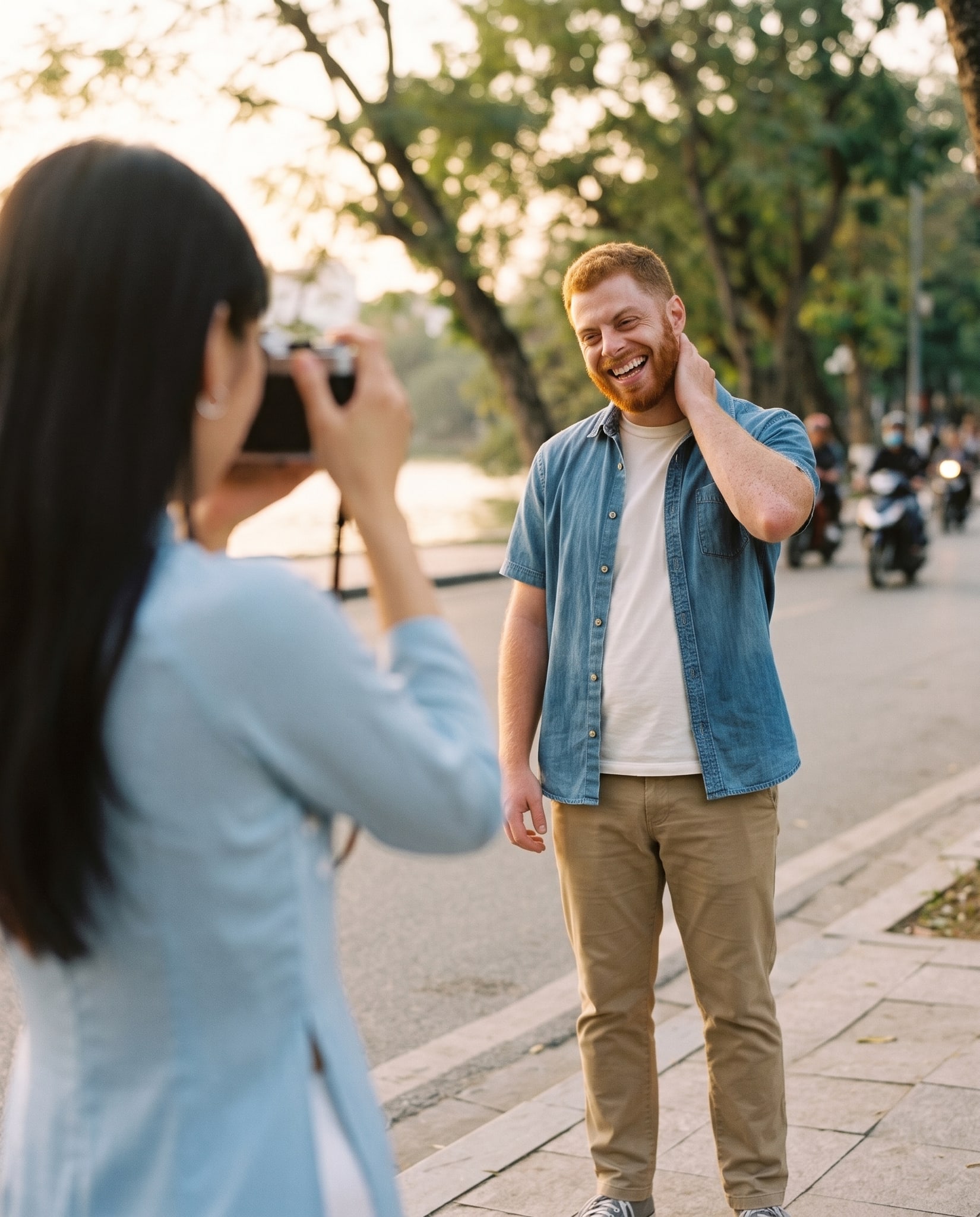
What colors actually work against Hoi An's architecture?
Hoi An's walls are ochre, yellow, rust-red, and aged charcoal. Pale tones (cream, sand, sage, dusty rose, soft mauve) sit naturally within that palette. We avoid blacks because they create dead zones in the frame; we avoid bright whites because they read as blown-out or clinical. Muted jewel tones (dusty teal, terracotta, soft burgundy) work if worn as secondaries (scarves, belts). Greens harmonize with the plants and lanterns. Test your color choice against the old wall outside your accommodation; if it feels warm and integrated, it will photograph that way. Pastel tones fade in harsh midday sun, so we always book shoots early morning (6:30–9:00 a.m.) or late afternoon (4:30–6:30 p.m.) to avoid color-flattening light.
How do we layer clothes for unpredictable weather?
Hoi An shifts between humid and rainy without warning, especially May through September. We advise couples to bring a lightweight scarf or shirt they can shed or add. Linen overshirts work because they photograph well open or closed. Silk scarves tie around shoulders without adding bulk. Avoid heavy jackets or cardigans—they read as defensive rather than intimate. For rainy days, we've shot under umbrellas (cream or natural linen, never black), which softens light beautifully if framed right. We check the forecast at 6:00 a.m. on shoot day and message you by 6:30 a.m. if we're moving indoors (to your hotel room or our studio in central Hoi An). Moisture affects fabric drape: cotton clings, linen wrinkles intentionally (which can look good), and silk slips. We have a steamer on-site and press outfits in the last 10 minutes before the first frame.
What shoe choice helps or hurts the final images?
We see this mistake often: guests wear pristine sneakers or formal shoes that fight the aesthetic. Hoi An's cobblestones require shoes you can walk in for two hours without pain; they must also not look anachronistic in the frame. Bare feet (if you're brave and the stones aren't too rough) photograph beautifully in close frames and read as intimate. Leather sandals, woven slides, or soft ballet flats vanish visually. Avoid neon, bright logos, or chunky soles. We sometimes ask couples to go barefoot for 20–30 minutes during the session—usually near water or lanterns—then swap back to shoes. If you're walking uphill to a less-photographed temple or garden, wear trainers and change on arrival. Pack shoes in a small bag we carry; it's invisible in the final images. Shoe continuity matters for album flow: we note what you wore in each location so edits feel cohesive.
What's the real difference between outfits that feel natural versus posed?
Natural looks happen when fabric moves, fits without restriction, and colors let your skin and faces own the frame. Stiff looks come from overstarch, oversizing, or clothes so formal you're protecting them instead of inhabiting them. We coach couples to walk, pause, turn, and laugh—not stand and smile. Your clothes need to forgive that movement. Silk and linen do; rigid cotton blends don't. We also avoid matching outfits identically (same brand, same cut) because it reads as costume. If you both wear cream and linen, that's cohesion; if you wear identical coordinated sets, it's a uniform. On location, our photographer says things like "walk toward the light," "hold her hand and don't look at the camera," "sit on the step and let your dress settle"—these cues only work if your clothes don't demand conscious adjustment. The best outfits are the ones you forget you're wearing.
Pre-shoot Wardrobe Checklist
- [ ] Primary outfit chosen and tried on at home (no surprises at 7 a.m.)
- [ ] Backup outfit (optional; adds 30–45 minutes to session) packed and accessible
- [ ] All shoes tested on hard surfaces; no new, unbroke-in footwear
- [ ] Undergarments fitted so they don't show lines (we'll ask if unsure)
- [ ] Jewelry chosen (simple reads better; we'll advise via WhatsApp)
- [ ] Lightweight scarf or overshirt for layering, if weather uncertain
- [ ] Clothes steamed or pressed the night before—no wrinkles except intentional linen texture
- [ ] Confirmation message from Cáo Studio on WhatsApp 12 hours prior (double-check time, location, weather note)
Chat with us on WhatsApp | See packages and prices on vietnamphotoshoot.com
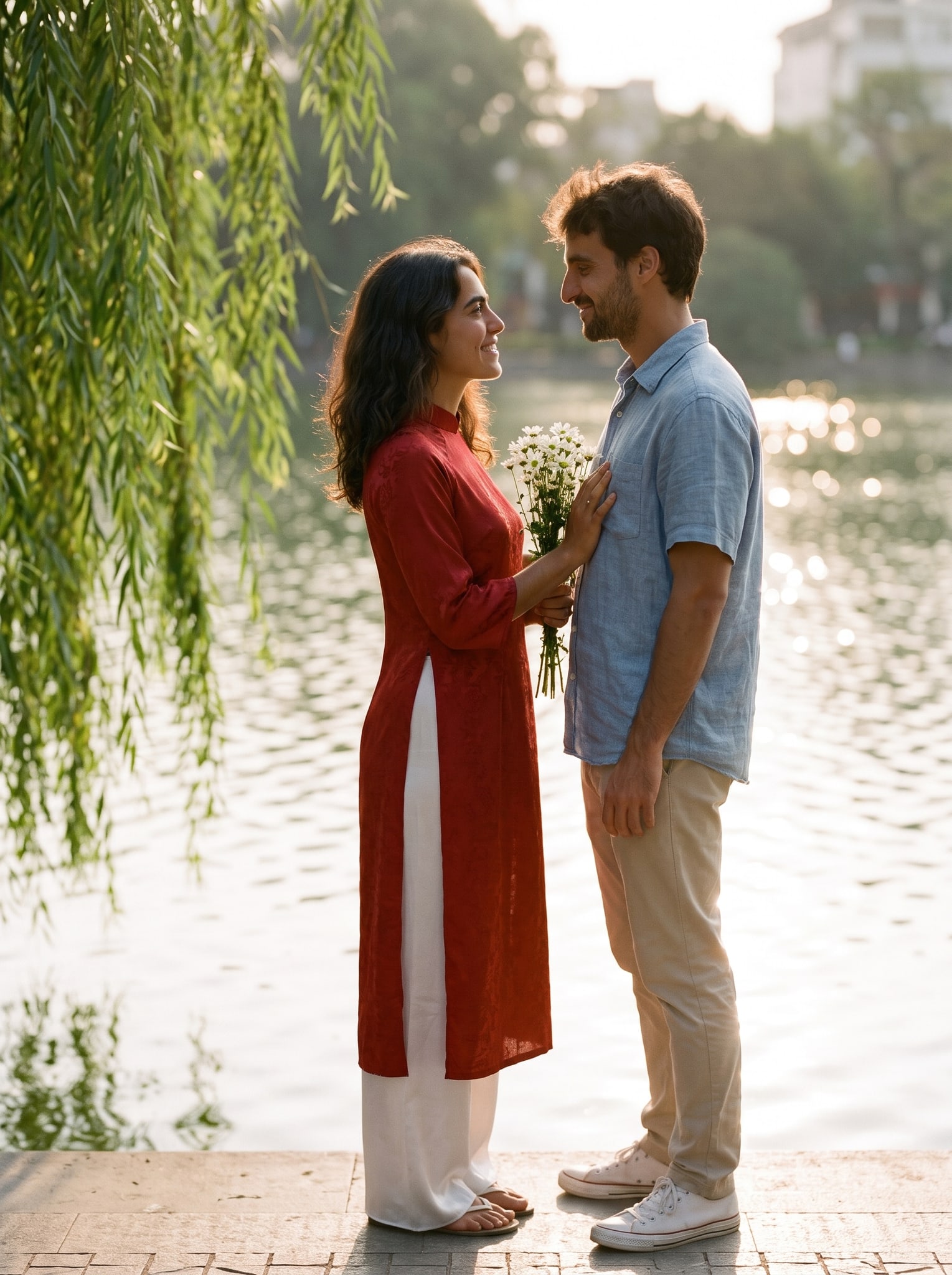
Comparison: Ao Dai vs. Linen vs. Silk Casual
| Outfit Type | Best For | Fit Challenge | Camera Readability | Weather Resilience | Mobility Score |
|---|---|---|---|---|---|
| Ao dai (silk blend) | Traditional elegance, symmetrical framing | Requires proper tailoring; loose fit hides shape | Excellent—fabric catches light, reads as intentional | Good—breathes, dries fast | 8/10 (flows but long hem needs awareness) |
| Linen shirt + trousers | Modern couples, temple walks, candid moments | Wrinkles unless starched; needs tucking | Good—texture complements stone, reads casual | Poor—wrinkles with humidity, needs steaming | 9/10 (unrestricted movement) |
| Silk dress or shirt | Intimate close-ups, lantern-lit evening shoots | Slips if oversized; shows every wrinkle if undersized | Excellent—drape photographs beautifully | Moderate—clings in heat, slips in humidity | 7/10 (smooth but requires careful sitting) |
How we prepare you before you arrive
We message every couple on WhatsApp 5–7 days before your session. We ask: "What colors are you bringing?" If you describe black jeans and a white shirt, we gently steer you toward alternatives (we don't force, we suggest). We share photos of Hoi An's light at your booking time, so you see why pale tones work. We ask your ao dai tailor's name and size—if you haven't ordered yet, we recommend three trusted tailors in Hoi An's Old Quarter who deliver in 4–5 days. Three days before, we send the weather forecast and what we're bringing (reflectors, umbrellas, a portable steamer). The morning of, we confirm the meeting point, remind you to eat breakfast, and ask "Are your clothes comfortable? Can you breathe?" One couple texted us tight ao dai photos at 6:45 a.m.; we told them to loosen it and resteam it. They did. The images are some of our favorites—relaxed, genuine, no tension in the shoulders.
Chat with us on WhatsApp | See packages and prices on vietnamphotoshoot.com
The outfit decisions that surprised us
We once shot a couple in matching cream linen; we expected it to read as costume. It didn't. They moved so naturally that the visual echo felt romantic instead of staged. Another session, a bride wore a custom silk ao dai in pale blue; the tailor had cut the armholes too tight, and she couldn't lift her arms. We paused, she changed into her backup (a linen sundress), and the images from that second outfit are the ones in her album—she looks alive. We've also learned that couples who bring three outfits almost always use only two (they run out of light or energy); those who bring one are committed and move faster. We tell guests to think of one outfit as their "hero" shot (the one in your save-the-date or album cover) and anything else as bonus. That permission to simplify helps people relax, which is the real invisible fabric in every good portrait.
What to check before you book or pack
Fit over fashion: Does your outfit fit without alteration on the day you're shooting? Hoi An tailors are fast (24–48 hours), but custom tailoring on arrival is stressful. Order or confirm fit two weeks ahead.
Fabric weight in June–September humidity: Linen wrinkles, but that can look intentional. Cotton-silk blends breathe better than 100% cotton. We avoid synthetics because they cling and photograph as cheap.
Color testing: Hold your outfit against Hoi An photos (search "Hoi An Ancient Town" on Instagram). Does it feel warm and integrated, or does it pop out? If it pops, reconsider.
Shoe walk test: Walk in your chosen shoes for 30 minutes at home on hard surfaces. If your feet hurt, they'll hurt in the 90-minute walk through Old Town. We choose comfort.
Backup plan: If you're flying in and can't pack multiple outfits, we'll scout a local tailor for a quick rental or purchase. Message us early so we have time.
Our studio support during your session
When you arrive at our Hoi An location near the lantern market, we offer you tea or water. We take a phone photo of your outfit in natural light and text it to our photographer so they're mentally prepared for color and tone. We have a private changing room, a mirror, and a steamer. If your ao dai needs adjusting (hemming, tightening a shoulder seam), our seamstress can fix it in 20 minutes while we do your hair and makeup with our makeup and hair team. We keep safety pins, double-sided tape, and fabric clips for last-minute adjustments. We've pinned a gaping ao dai side seam, taped a slipping shirt collar, and clipped excess fabric to flatter a silhouette—all invisible in the photos. You'll never know we did it, and that's the point.
Next steps: booking your session
If you're planning a couple photoshoot in Hoi An, start here: message us on WhatsApp with your dates and outfit ideas. We'll reply within 12 hours with available times and a link to our booking site. For something more formal—engagement or pre-wedding coverage—we offer fuller-day packages that include outfit changes and multiple locations. If you're in Hanoi or Saigon, we also shoot couple portraits in those cities; ask us about Cáo Studio Hanoi or Cáo Studio Saigon options. Whether you're traveling solo, with your partner, or as a family, we'll guide your wardrobe choices and make sure you feel like yourself in every frame.
Chat with us on WhatsApp | See packages and prices on vietnamphotoshoot.com
FAQ
Can we wear the same color if we're a couple?
Yes. Matching pale tones (both cream, both sand) reads romantic. Matching bright or dark colors reads costume. We recommend one color in the same tone family, not identical—he in cream linen, she in cream silk, for example. Variation in fabric keeps it natural.
How much time should we budget for outfit changes?
15 minutes per outfit change on location: 5 minutes to walk to a private space, 5 minutes to change and adjust, 5 minutes for our photographer to reset. If you're changing twice, add 30 minutes to your session length. Most couples book once and do one outfit.
Will our ao dai tailor in Hanoi or HCMC work, or do we need Hoi An tailors?
Your own tailor is fine if you trust them and the fit is tested before you travel. Hoi An tailors are fast (24–48 hours) and familiar with our shoots, so if you order on arrival, we know their quality. Message us with photos of your tailor's past work, and we'll tell you if we'd choose them.
What if it rains on shoot day—do we reschedule or change outfits?
Light rain is beautiful for Hoi An (wet stones, reflections, soft light). We shoot. Linen and silk handle light rain well. Heavy rain, we move indoors to your hotel or our studio space, and your outfit choice becomes less critical. We decide together at 6:30 a.m. based on the forecast.
Can we wear Western wedding dress or tuxedo in Hoi An?
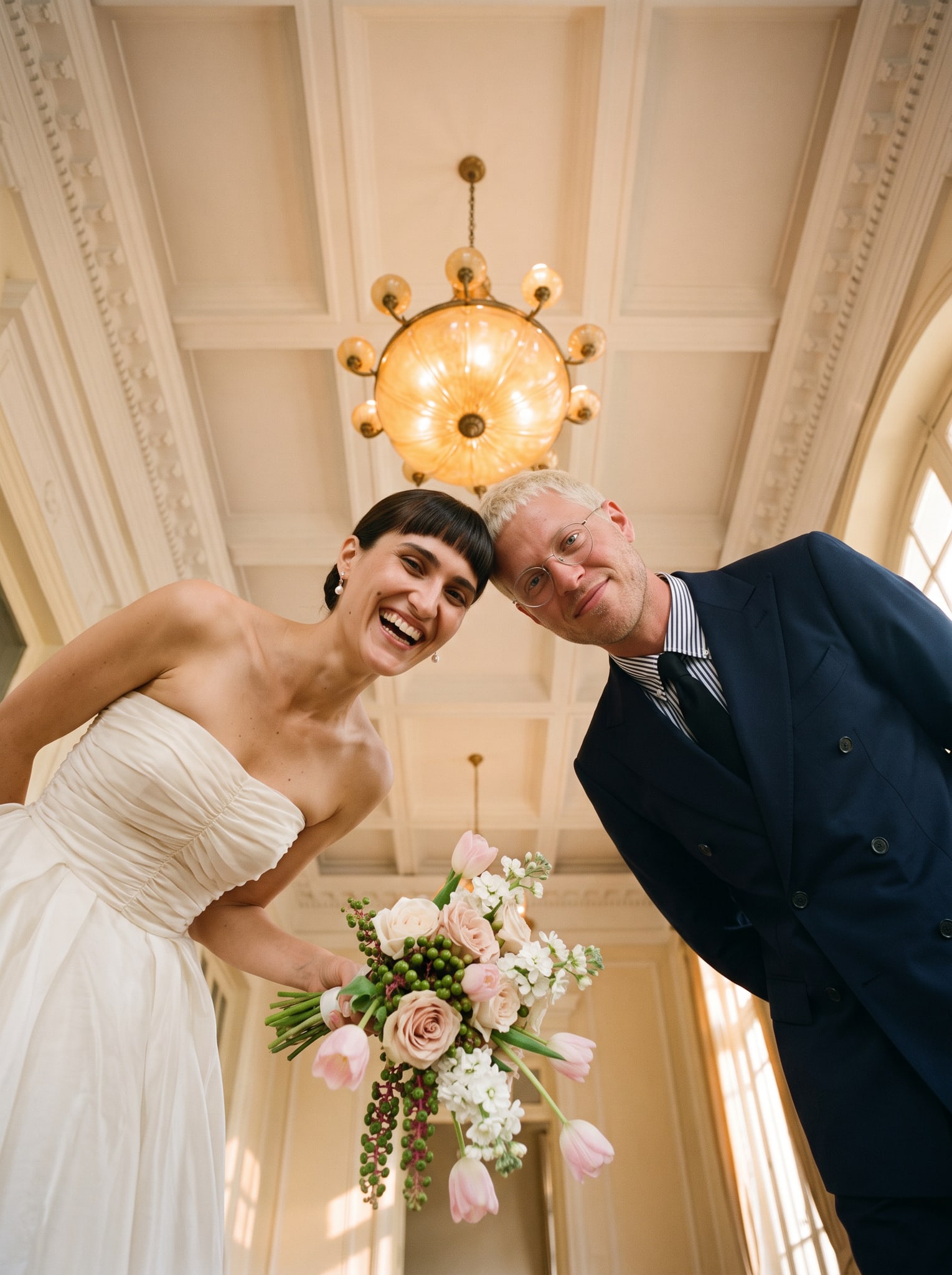
Yes, if formal is your vision. Strapless or thin-fabric dresses require a shawl or lace overlay in Hoi An's light (sun is strong early morning). Black tuxedos read formal but can feel stiff among the town's warm textures; we often suggest a cream linen shirt instead of the jacket. Message us your dress or suit photos, and we'll advise on fabric, color, and layering.
How do we know if our outfit is "too much" or "too plain"?
Film a selfie video walking and turning in your outfit. Does it feel confident and comfortable? Do the colors feel warm? Does the fabric move? If yes to all three, it's right. "Too much" is anything rigid, ornate, or logo-forward; "too plain" is almost impossible—simple is what photographs best in Hoi An.
Pre-Wedding & Elopement
Inclusions, prices and booking are on our booking site.
FAQ
Can we wear the same color if we're a couple?
Yes. Matching pale tones (both cream, both sand) reads romantic. Matching bright or dark colors reads costume. We recommend one color in the same tone family, not identical—he in cream linen, she in cream silk, for example. Variation in fabric keeps it natural.
How much time should we budget for outfit changes?
15 minutes per outfit change on location: 5 minutes to walk to a private space, 5 minutes to change and adjust, 5 minutes for our photographer to reset. If you're changing twice, add 30 minutes to your session length. Most couples book once and do one outfit.
Will our ao dai tailor in Hanoi or HCMC work, or do we need Hoi An tailors?
Your own tailor is fine if you trust them and the fit is tested before you travel. Hoi An tailors are fast (24–48 hours) and familiar with our shoots, so if you order on arrival, we know their quality. Message us with photos of your tailor's past work, and we'll tell you if we'd choose them.
What if it rains on shoot day—do we reschedule or change outfits?
Light rain is beautiful for Hoi An (wet stones, reflections, soft light). We shoot. Linen and silk handle light rain well. Heavy rain, we move indoors to your hotel or our studio space, and your outfit choice becomes less critical. We decide together at 6:30 a.m. based on the forecast.
Can we wear Western wedding dress or tuxedo in Hoi An?
Yes, if formal is your vision. Strapless or thin-fabric dresses require a shawl or lace overlay in Hoi An's light (sun is strong early morning). Black tuxedos read formal but can feel stiff among the town's warm textures; we often suggest a cream linen shirt instead of the jacket. Message us your dress or suit photos, and we'll advise on fabric, color, and layering.
How do we know if our outfit is "too much" or "too plain"?
Film a selfie video walking and turning in your outfit. Does it feel confident and comfortable? Do the colors feel warm? Does the fabric move? If yes to all three, it's right. "Too much" is anything rigid, ornate, or logo-forward; "too plain" is almost impossible—simple is what photographs best in Hoi An.
More from the team
Boho pre-wedding photoshoot in Vietnam: Hanoi, Saigon, Hoi An
Boho pre-wedding shoots mix romantic, free-spirited aesthetics with Vietnam's landscapes and heritage sites. We run full-day sessions in three cities, handling styling, makeup, location scouts and edits.
Avoid crowds at Hoang Su Phi rice terraces: timing for wedding shoots
Hoang Su Phi's terraced landscape draws couples and tour buses in equal measure. We show how to shoot there alone, when to arrive, and what to arrange with us before you go.
Photography rules at Con Dao beaches: permits, drones and what to check
Con Dao's beaches demand prep before you shoot—permits, drone zones and tide timing all affect your day. We share what the Cáo Studio team verifies on every booking.